Industry Views

The Problems Facing Radio Were Not Caused by Consolidation

By Walter Sabo
Consultant, Sabo Media Implementers
A.K.A. Walter Sterling
Radio Host, “Sterling On Sunday”
Talk Media Network

imAs your friends get fired and on-air hosts are replaced with WideOrbit and Profitable Software, the mournful refrain is to unfairly blame consolidation. Consolidation has, in fact, made the medium financially viable and brought hundreds of individual stations from a river of red ink to the glow of black ink. Prior to consolidation, over half the radio stations in the U.S. lost money – year after year. Not a secret stat, those numbers were revealed annually by the NAB.

The flaw in the deregulation law was the elimination of the rules regarding financing of station acquisitions. Previous regulations required a licensee to prove it had the financial resources to cover expenses through the term of the license. Licenses could not be purchased with debt. Licensees could not sell the license until it expired. Radio stations could not be used for speculatory financial gain. When those rules were tossed, the industry hit a financial tailspin from which it has not recovered. That’s the problem.

That is not a “problem” with radio. In talks with publisher Michael Harrison about his exciting role in the United Nations as executive advisor to World Radio Day 2024, we shared a key observation: The world’s radio industry is overwhelmingly enthusiastic. Working with clients in London, Toronto, Montreal, Amsterdam, Athens and Sydney, the passion for the medium continues to grow and is supported by audience engagement and response.

Internationally, there is a robust radio set design and manufacturing industry. European listeners seek clothing featuring radio set themes and artwork. Believe me, the food at the NAB Europe is much better than that crap served here.

Follow the money. Radio is not legacy media. Radio is proven media – proven for over 100 years. Local retail advertisers are a practical lot. They buy advertising that works for this weekend. If it doesn’t bring feet to the floor and dollars to the door, sponsors just don’t repeat-buy.

I was the in-house programming guru at SiriusXM Satellite Radio for eight years starting pre-launch. The reason Sirius exists is test after test revealed that Americans liked radio so much, used radio so much, they wanted more stations. More choice. More.

Consolidation, with considerable credit to Randy Michaels, allowed radio to convert from a frequency media buy to a reach media buy. That puts radio in budgets with TV. The opportunity right now is to actually monetize radio’s clout as a reach medium. Create scarcity. More spots mean cheaper spots, smaller budgets and higher expense. More spots mean much less efficiency for media buyers. Media buyers have to spend their budgets. They would prefer to spend that money with one or two outlets before lunch rather than having to “make the buy” by purchasing dozens and dozens of stations acquiring spots that are cheap, bonused, thrown in, flanked, and here are some tickets.  The fix starts with raising the price to meet the public’s perception and usage levels of radio.

Walter Sabo has grown audience share for a roster of clients that has included SiriusXM Satellite Radio, RKO, ABC, Apollo Advisors, Hearst, Wall Street Journal Radio and many others. Reach him at walter@sabomedia.com. Learn about his unique radio show at www.waltersterlingshow.com

Industry Views

ENOUGH! The Selling Culture Has Failed Radio

By Walter Sabo
Consultant, Sabo Media
A.K.A. Walter Sterling
Radio Host, Sterling On Sunday
Talk Media Network

The creeping culture of sales-determines-all has brought the industry to this moment of despair. The selling culture has failed the medium. It is time to, once again, segregate the sales and programming departments. Take the budgets away from the program directors and inspire them to create exciting UNPREDICTABLE programming.

Earnings calls for most radio companies were held this week. Not pretty. Declarations of the demise of radio are constant, emotional, and desperate. Bleak conditions in the radio industry have occurred before. A review of past crises and how they were overcome is constructive, urgent, and essential.

For example, in 1952, network TV was launched and showed signs of success. NBCABC, and CBS moved their money from radio to TV. Longform radio shows were cancelled leaving stations across the country with a problem. At the time, most radio stations were small shops, usually family-owned, therefore the need to add hours of local programming was a financial challenge. The solution was presented by a programmer.

Todd Storz’ family owned stations in Omaha, Kansas City, Minneapolis, New Orleans, St Louis and Oklahoma City. He was young and obsessed with radio. His stations were losing money and the future, without network show blocks, was uncertain. Todd ate at a diner daily and noticed that even after it closed, the waitresses put their own money in the jukebox to hear the same songs they had heard all day. Hit after hit. Todd created a list of the top 40 songs, built a production sound and put it on his Omaha station. The station was #1 overnight. His top 40 format was aired on his owned stations with the same results.

Ruth Meyer was the program director of WMCA, New York where she established the GOOD GUYS dynasty. Before WMCA Ruth was the PD of Storz’s station in Kansas City. I asked her who did what at Storz and she said, “It was all Todd.” Todd was a programmer who never spent a day in sales. Storz’s programming idea changed and, yes, saved the industry.

When Todd died at 38 years of age his father – a businessman – took over the company. After Todd’s death, the stations died too. Why? Storz station manager Deane Johnson explained, “Todd’s death [and the control of the radio stations falling to Todd’s father] brought about a shift from a ‘programming company’ to a ‘money company.’”

Radio’s next challenge was FM. It is a popular myth that the shift from AM listening to FM was driven by the higher quality of the FM signal. FM’s signal had been available since 1948. No one listened.

You don’t go to iMAX to watch the huge, superior white screen. You go to watch a movie on the huge superior white screen. When the FCC mandated an end to AM/FM simulcasts, the general managers had no idea what to do and isn’t it time for golf?

Obsessed, very young radio fanboy programmers such as Michael Harrison and Allen Shaw joined with frustrated senior programmers like B. Mitchel ReedScott MuniMurray the K and Tom Donahue to EXPERIMENT with new programming techniques. They imagined and implemented progressive rock, free-form, album rock. THEN the crowds came to FM to hear exciting UNPREDICTABLE programming.

In 1966, Tom O’Neil, the founder/chairman of RKO General owned many money-losing, major market stations. The solution? Better sellers? Better sales training? A sales master course? No. The answer was Bill Drake. O’Neil hired Bill Drake and allowed him to create exciting UNPREDICABLE programming. Drake’s programming saved many RKO stations and was copied by hundreds of stations across the country. Drake’s programming saved them, too.

ALL of radio’s challenges today can be solved with programming invented by programmers free to program. Enough with “it’s not in the budget.” Enough with “it will bring in money.” Enough with “it’s good for sales.” Enough with talent having to generate half their salary in billing to be retained. Enough!

Unleash today’s program directors to follow their instincts, their facts and no more having to check with corporate. Why? Because checking with corporate hasn’t worked. Checking with corporate stops the flow of ideas, it freezes them in time. Radio is live, in the moment. When radio programming is frozen in time it MUST failGive up corporate engagement. Let programmers surprise you.

To quote a mentor, ABC Radio Network’s VP Dick McCauley (a sales guy), “A great salesperson is one who has a great product.” He said it a lot.

Walter Sabo was the youngest executive vice president in the history of NBC. He was the programming consultant to RKO General longer than Bill Drake. According to a Sirius corporate EVP, “Sirius exists because of what Walter Sabo did.”  He hosts a Talk Media Network radio show as Walter M. Sterling, “Sterling on Sunday.” Find out more here: www.waltersterlingshow.com  Contact him at walter@sabomedia.com or 646.678.1110

Industry Views

Sabo Sez: Consolidation Has Been Radio’s Savior

By Walter Sabo
Consultant, Sabo Media
A.K.A. Walter Sterling
Radio Host, Sterling On Sunday
Talk Media Network

imHALF of all radio stations in the United States lose money – at least they did back in 1991. The NAB used to put out an annual report revealing how many radio stations were profitable. Usually half the stations in America lost money. Since consolidation, the NAB stopped putting out that report. It is reasonable to believe that far, far fewer stations lose money today.  Shared costs, real estate, technical economies due to digital equipment versus analog all indicate that there must be fewer money-losing properties.

The business of radio is very strong and appealing to investors. Apollo Advisers was the first money-in Sirius. The Apollo fund recently bought Cox radio. Marc Rowan, Apollo’s CEO is the smartest guy in any room. Rowan doesn’t invest in hunches; he buys businesses that grow return on investment.

In 1970, 7% of all ad dollars went to radio. Today, 7% of all ad dollars go to radio.  In 1970, Procter & Gamble spent almost zero dollars in radio. Thanks to consolidation and the vision of Randy Michaels, radio has shifted from a “frequency” ad buy to a “reach”  buy. Reach commands higher rates and more sophisticated advertisers. The RAB’s Erica Farber and Sound Mind’s Kraig Kitchin focused on winning P&G dollars. Today, Procter & Gamble is a top-five radio advertiser.

Are you sick and tired of “experts” saying that radio is slow to digital?  Radio is not slow, radio was first-in. Mark Cuban put thousands of stations on Broadcast.com in the 1990s. Today radio leads the list of most downloaded podcasts. NPR has been the leader in podcasting since Alex Bennett started the industry. Under Bob Pittman and Jarl MohniHeart and NPR dominate downloads.

Why the pessimism and anxiety in the hallways?  It started with the management of consolidation. There are major consulting firms to help employees go through mergers. Consolidating an industry and its workforce is both an art and science. No radio company sought or engaged experienced expertise to manage consolidation. Instead, when a quarter’s revenue was missed, people were fired. Your friends in the next office were suddenly out of work. Layoffs should have happened all at once, based on a strategic plan. There is no plan. Firings are executed on random dates, with no notice; a horrible practice that continues. That’s why you’re miserable. No plan.

Radio stations in Canada, Europe, Australia and the UK are having excellent years. Canadian Music Week conventions, Commercial Broadcasters of Australia and European conferences are bursting with optimism and good news about radio. Why? Consider this possibility: Most radio companies outside the US are owned and managed by executives with a programming background. To do their jobs, programmers must be optimistic about the future. A salesperson’s job requires them to spend their days listening to media buyers’ objections to advertising on radio – negotiators! It sucks.

Consumers like or love radio. The reason SiriusXM Satellite Radio has 34 million listeners PAYING for radio is that listeners want MORE stations. Much, perhaps most, “music discovery” comes from radio listening. 53% of Americans will listen to radio today. In 1970, 53% of Americans listened to radio daily.

Walter Sabo was the youngest executive vice president in the history of NBC. The youngest VP in the history of ABC. He was a consultant to RKO General longer than Bill Drake. Walter was the in-house consultant to Sirius for eight years. He has never written a resume. Contact him at walter@sabomedia.com. or mobile 646-678-1110. Hear Walter Sterling at www.waltersterlingshow.com.

Industry Views

Don’t Leave Cash on the Nightstand

By Walter Sabo
Consultant, Sabo Media
A.K.A. Walter Sterling
Radio Host, Sterling On Sunday
Talk Media Network

imAmazing fact: In ancient times, from 1962-1972, the highest-paid on-air talent in New York City was “an overnight guy.” He was paid salary plus sales response. I’m talking about Long John Nebel on WOR, WNBC, then WMCA. Long John’s live reads moved product because his audience was captive. One-to-one his listeners were attached to their radios in the truck cab, night watchman’s building lobby, parents pacing with their babies, students cramming. His background was not in radio; he was a skilled auctioneer. Obviously, the same listeners exist today – and are anxious for someone to talk to them. Check out this old clip of Nebel in action: https://youtu.be/wYMCkpYFtbk

One of today’s bizarre misconceptions is that overnights/late nights are not important for sales or audience share. Totally and completely wrong!

— As an executive, when launching a new format, any new format, the first time period I staffed was overnights. Late-night, overnight is the doorway to a station. Listening patterns to AM drive are habitual, hard to change. Late night listening is discretionary. Audiences will sample new radio offerings when they seek pure entertainment rather than essential utility elements.

— Late-night cume feeds morning drive. Study the flow of audience from late-night to morning drive, you will be surprised how much of the AM drive cume depends on the last station heard before turning off the radio.

— No distractions. It is easier to sell any product or idea to a person who is giving you 100% of their attention rather than rushing to work, calming the kids and remembering to avoid road construction. As George Noory’s success confirms, the percent of listeners who act on a commercial message is higher overnights than at any other time period.

— Every format has a default hour – one hour of the day when it will have its largest audience share. For all-news, for example, it’s always 5:00 am – 6:00 am. Lite FM’s, 1:00 pm. Live, local talk: 11:00 pm.  Listeners seek companionship, sympathy and empathy from talk shows.  If a station offers a “best of” at 11:00 pm, it is ignoring the built-in strategic advantage of the talk format. 11:00 pm is primetime.

— Rate integrity. A station may charge top dollar for morning drive. Upon further study those high rates usually come with nighttime bonus spots.  Bonus spots cut the rate in half. The nighttime results story can stand on its own and command premium pricing without bonusing.

Walter Sabo was the youngest executive vice president in the history of NBC. The youngest VP in the history of ABC. He was a consultant to RKO General longer than Bill Drake. Walter was the in-house consultant to Sirius for eight years. He has never written a resume. Contact him at walter@sabomedia.com. or mobile 646-678-1110. Hear Walter Sterling at www.waltersterlingshow.com.

Industry Views

Speaking the Conversation of the Listener

By Walter Sabo
Consultant, Sabo Media
A.K.A. Walter Sterling
Radio Host, Sterling On Sunday
Talk Media Network

In the strum and dirge of daily radio life, it is easy to forget the mad skills required to do what we do. Consider the TV sitcom. 22 minutes of content, 22 times a year. The cast ad libs – nothing! Between eight and 11 writers scribe every word. Hair, makeup… handled by others! A donut run? No, there’s the crafts services table that will make you, the star, whatever you want any time you want it. Hot? A production assistant sprays mint scented water on you.

How’s your day? You or your on-air talent create a three- or four- or perhaps even five-hour show out of thin – or should I say rarefied – air! Writers? You mean that kid who has to go to class at 11? Production? Sure, as soon as the spots for the weekend are cut. Food? Ya got quarters?

You are a miracle of creativity, ambition and sheer talent. Reward? The company wants to cut your live read fees and could you help out in sales? As a point of reference, when Dr. Ruth Westheimer killed in the ratings at WYNY, we gave her a Seville.

GOOD NEWS. You can fix this. Talk radio is the last frontier of free form radio. Fact is you can do whatever you want.

Most talk shows and stations peaked about six years ago. The audience is not growing, it’s not attracted to talk radio’s offerings of endless political theory. So, stop.

What works? Take a look at the ratings of KMBZ-FM Kansas City; KFGO, Fargo; KFBK, Sacramento; WABC, New York’s Frank Morano; WTAM, Cleveland’s Bill Wills; WLW, Cincinnati; KFI, Los Angeles; KDKA, Pittsburgh’s midday. (I will now be flooded with other examples but listen to those stations.) Hosting a network radio show, “Sterling On Sunday,” I have learned what those audio outlets exemplify works!

Talk about your day. Talk about what two best friends would discuss over a quick lunch. The topics that generate ratings are not always the “hot talk radio topics.” The list that works reads like this, try it:

— Trouble with the in-laws.

— Is “Storage Wars” fake?

— Tip at the drive-thru?

— Cell phone for a 10-year-old?

— Married? Is texting cheating?

— How can I do less and earn more?

— Yes, it was a controlled demolition.

— Taylor Swift bi? Harry Styles bi?

— Are you kidding? Women ARE in charge!

— Turn on the AC, shut the damn window.

The power of the mirror. When the radio speaks the conversation of the listener, the ratings go up. Guaranteed.

Walter Sabo was the youngest executive vice president in the history of NBC. The youngest VP in the history of ABC. He was a consultant to RKO General longer than Bill Drake. Walter was the in-house consultant to Sirius for eight years. He has never written a resume. Contact him at walter@sabomedia.com. or mobile 646-678-1110. Hear Walter Sterling at www.waltersterlingshow.com.

Industry Views

Lessons from Rush

By Walter Sabo
Consultant, Sabo Media
A.K.A. Walter Sterling
Radio Host, Sterling on Sunday

Rush Limbaugh’s initial success spawned a nation of imitators.  Throughout the country hosts and executives heard Rush and concluded that the key to success was bashing liberals for three hour – or all day!

Oddly that wasn’t Rush’s mission.  When Ed McLaughlin launched Rush’s show an article appeared quoting Rush and his role.

Rush said, “I’m here to inform, inform, inform.”  Ed was the founding GM of KGO, he ran the ABC Radio Networks for about 20 years. He knew how to make great radio because that’s all he knew how to do.  I was in his office the day the article quoting Rush appeared.

Ed said to me, “I will have to talk to Rush about that. His job is to entertain.”  Following Ed’s conversation with him, Rush carried out his mission, he entertained.

Rush did not get ratings and cash for espousing conservative views. There were other spokespeople who did that very well such as William F Buckley – an erudite conservative who never got ratings.

Listening hard to Rush airchecks, he was mostly entertaining. How did he do that?  First, he never offered duplicate arguments for his opinions. Every single day he presented brand new evidence and facts and stories to support his point of view. Secondly, he riffed. There were long periods featuring funny, human stories. Cat stories!  Third, Rush understood radio to a pristine point of science. When he had nothing to say, he used the medium’s most powerful tool… silence!

He understood the essential bond with the listener and therefore we never heard his producer on talkback, rarely, rarely, rarely a guest interview.  Phone calls were extremely well screened, coached and ready for air. Sharp produced bits were designed to drive the conversation.  The show was a show not a lecture.

Rush understood that the biggest mistake he could make would be to change his position on anything. Regardless of a caller’s absolute facts, Rush would say, “So what of it sir, I’m right.”  His battle against facts made the show work. Radio wrestling.

Today’s winning hosts don’t waste time forming political opinions, they invest their time in building an entertaining show.

Walter Sabo was the youngest Executive Vice President in the history of NBC. The youngest VP in the history of ABC. He was a consultant to RKO General longer than Bill Drake. Walter was the in-house consultant to Sirius for eight years. He has never written a resume. Contact him at walter@sabomedia.com. or mobile 646-678-1110. Hear Walter Sterling at www.waltersterlingshow.com.

Industry Views

Talk Radio’s $4 Billion Mistake

By Walter Sabo
Consultant, Sabo Media
A.K.A. Walter Sterling
Radio Host, Sterling on Sunday

imIn the early 1980s, talk radio made a $4 billion mistake. Prior to then, there were approximately 50 full-time talk stations in America. They were predominantly found in major markets and had been in the format since Marconi. The original talk stations had two key traits: They were dominant in ratings and much of their popularity was driven by women hosts.

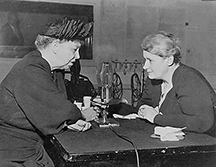
Mary Margaret McBride hosted an NBC, then ABC Network show based from WOR, New York at 12:00 noon.  From 1938-1957 she led midday radio listening. Nope, not a cooking show. She featured the most powerful, newsworthy guests and grilled them. She prepped for 23 hours a day and sweated every minute. Her popularity was so great that she required five secretaries just to answer her mail. Her 10th anniversary was held at Yankee Stadium. McBride’s 15th  anniversary filled Madison Square Garden, hosted by Eleanor Roosevelt. Correct, Mary Margaret and her listeners were honored by Mrs. Roosevelt.

How about the money? During many early years, it was believed that no advertiser would buy daytime radio.im Then Mary Margaret read live copy. OR Mary Margaret had her guests read live copy. Sales for advertisers exploded. (Source: It’s One O’ Clock, Time for Mary Margaret McBride by Susan Ware https://a.co/d/iHShiad)

The historic galaxy of remarkable women talk show hosts is vast: WOR (Always number one through most of its history) Martha DeaneDora McCannPatsy McCannMary HealyPegeen FitzgeraldArlene FrancisSherrye HenryJoan Hamburg — yes, all at the same time. Throughout the country the stars include: Sally Jessy Raphael (20+ years on major market radio), Dr. Ruth WestheimerDr. Tony GrantAnnie AielloMimi BenzellDorothy KilgallenJohnnie Putman and the most powerful broadcaster in Ireland, Marian Finucane. (Worth the listen: https://www.rte.ie/radio/radio1/clips/21683976/)

The audience for the content featured by those hosts is thriving and watching daytime TV. Before 1982, daytime TV was the happy land of soap operas and game shows. Then, as content delivered by women hosts left radio, it was embraced by TV. Sally! Dr. Ruth! Oprah! Ellen! The View, The Chat, The Chew, Jenny JonesJoan RiversQueen LatifahKelly ClarksonRicki Lake.

Today daytime talk TV is a $4 billion business. I take credit for… a lot. I am proudest of the fact that few execs have hired as many women managers and women hosts.

Question to talk radio chieftains, where are the women hosts?

Walter Sabo was the youngest Executive Vice President in the history of NBC. The youngest VP in the history of ABC. He was a consultant to RKO General longer than Bill Drake. Walter was the in-house consultant to Sirius for eight years. He has never written a resume. Contact him at walter@sabomedia.com. or mobile 646-678-1110. Hear Walter Sterling at www.waltersterlingshow.com.

Industry Views

Passion Versus AI

By Walter Sabo
Consultant, Sabo Media
A.K.A. Walter Sterling
Radio Host, Sterling on Sunday

imLast week I had the privilege of moderating a panel at the TALKERS conference. Confession: I listen to speech patterns and tones more than words.

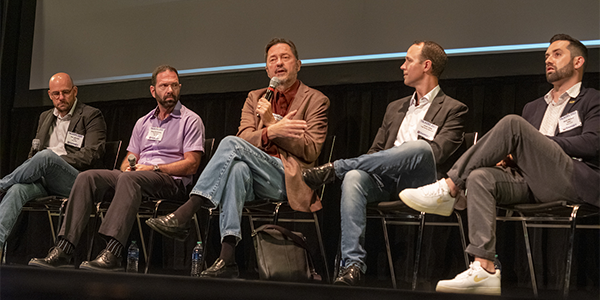
The prestigious panel featured Dan Mandis, program director and host, WTN-FM, Nashville; Ross Kaminsky, host KOA, Denver; Phil Boyce, SVP, spoken word format, Salem Media Group/ops VP, New York region/WMCA/AM 970; Josh Leng, CEO, Talk Media Network; and Matt Meany, program director, WABC, New York/Red Apple Media.

Yes, their collective knowledge and experience is unbeatable. They answered questions of great interest: How does iHeart measure social media accomplishments? Should one be fired for social media or podcast content or just for their air work? Establishing a syndication base, how does that happen? Where are the women – kudos to Salem’s Phil Boyce for celebrating their women hosts. What do programmers really look for in hosts? All valuable answers.  See the video of this session here.

Their words aren’t the “win.” The win is the fact that each of these pros has passion, passion and more passion. Their knowledge results in caring, heartfelt, supportive shares. They care about the future; they care about their craft. Programmers have to be optimistic about radio’s positive impact in order for them to do their jobs. Their descriptive tones make radio appealing.

The panel represents radio’s caretakers, gardeners, guides. The executives on the stage reveal qualities and qualifications that become overwhelmingly apparent in their demeanor and speech patterns. That’s what I hear.

Radio does not have to compete or fret over AI.  AI coders have to fret over their inevitable failure to capture or even coldly mimic the depth of emotion and confidence expressed by Matt, Josh, Phil, Ross and Dan. Good luck with that algorithm …losers.

Walter Sabo was the youngest Executive Vice President in the history of NBC. The youngest VP in the history of ABC. He was a consultant to RKO General longer than Bill Drake. Walter was the in-house consultant to Sirius for eight years. He has never written a resume. Contact him at walter@sabomedia.com. or mobile 646-678-1110. Hear Walter Sterling at www.waltersterlingshow.com.

Industry News

TALKERS 2023: Video of “Programming News/Talk Radio in the Digital Era – Part 2” Posted

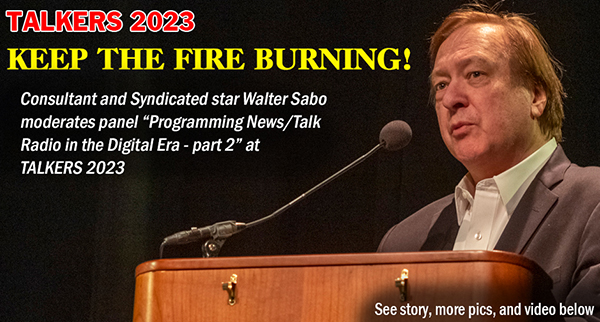
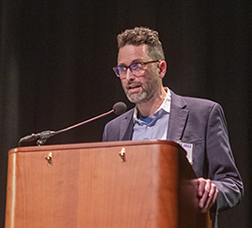
During the coming days, videos of all of TALKERS 2023’s numerous sessions conducted June 2 at Hofstra University will be posted, continuing today with the panel discussion “Programmingim News/Talk Radio in the Digital Era – Part 2.” The session, sponsored by “Our American Stories,” is introduced by Alex Fife, VP operations, Southeast, iHeartMedia – Total Traffic & Weather Network (pictured at right) and moderated by Walter Sabo, CEO, Sabo Media and host (Walter Sterling) of Sterling on Sunday (pictured above). Panelists (pictured below from left to right) include Dan Mandis, program director and host, WTN-FM, Nashville; Ross Kaminsky, host KOA, Denver; Phil Boyce, SVP, spoken word format, Salem Media Group/ops VP, New York region/WMCA/AM 970; Josh Leng, CEO, Talk Media Network; and Matt Meany, program director, WABC, New York/Red Apple Media.  See the video of this session here

im

Industry Views

A Carefully Planned Moment of Spontaneous Magic

By Walter Sabo
Consultant, Sabo Media
A.K.A. Walter Sterling
Radio Host, Sterling on Sunday

imMichael Harrison, founder and publisher of TALKERS, and the man who invented the term AOR – let’s not forget – strongly requested that I share this story about a remarkable event we experienced. Michael describes it as the “greatest promotion” he ever witnessed at a non-commercial function involving broadcasters… so I really have no choice but to accommodate him.

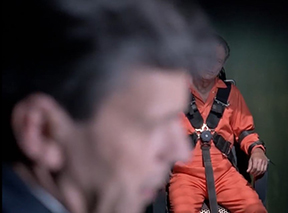
Deep background: My wife Katie and I amazed each other that for all the zillions of hours of TV we watched, we agreed that this scene from X-Files (see the still below) was the best ever: https://youtu.be/wUL7y8AMeU8. This single realization rushed us to a marrying minister. Really, who falls in love over a common passion for a scene like that?

Married six years, I wanted to create a memorable event that would “promote” our marriage. I know! My mania dropped this idea in my brain-on-fire: Recreate that scene with the actual actors – LIVE! I had time. Six months to our anniversary.

William B. Davis, who plays “cancer man” on the series, owned an acting school in Oregon – it says so in hisim biography. I wrote him a letter inviting him to fly to New York to perform the scene live at our anniversary lunch at the National Arts Club. Two appealing prospects: Manhattan and the famous Club on Gramercy Park. Shockingly, he actually called and said if I would also fly his girlfriend in, he would do it! HE WOULD DO IT. Crap, now I had to do everything else. Invite all 200 wedding guests, stage a show, and not tell anyone that it was going to happen. Katie did not know.

But contacting the alien, Roy Thinnes, was harder. I didn’t want to call his listed agent because his listed agent would quote me a real performance price. But Roy was in a soap opera. From my days at ABC, I became friends with several stars of “General Hospital,” including the kindest person who ever Lived, Jackie Zeman. I called her and asked if she knows how to contact the alien. Miraculously, she said, “Oh I know Roy. I’ll tell him you’re going to call.”

One month out, I called Roy who thankfully lives in Westchester, New York. Roy answered the phone in a 20-ball voice… terrifying.  Skittishly, I told him my plan. LONG, PAINFUL PAUSE. Painful. Mr. Thinnes answered, “It would be good to see Bill [Davis] again.” He wanted nothing, neither a limo nor car fare.

Every guest from our wedding showed up including TV reporter Sandy KenyonBob Weinstein of Miramax (the good brother), Kurt and Terry Johnson of

Townsquare fame, Bob McAllan – partner in Press BroadcastingMichael Ewing and Jay Clark who saved my butt on several occasions, the most powerful people in the room, the owner and staff of The Bagel restaurant in Greenwich Village, TV whiz Edward Hersh and his wife Hillary and, of course, Michael Harrison. That’s a lot of pressure.

Working with a video savant, we found the “X-Files” scene, put it on a DVD and pretended to be ready to show it to the audience as a tribute to our happy marriage. Moments after it started, we made it look like it was skipping. Appearing disappointed and frazzled, I apologized to the crowd and stammered that, we would just have to perform it LIVE.  The two stars came from behind a curtain to gasps from the crowd and performed the scene. Wife was thrilled, guests were amazed. I was grateful.  It all worked.

Magic. Unexpected. Those are the ingredients of great radio. Unexpected comes from show prep content that stands out, doesn’t fit in. The difference between a person on the radio and a star on the radio is unexpected, surprising content. The stars showed up to the lunch because I asked them. I did not know them nor them me. I asked for what I wanted. And Magic. That’s your talent.

Walter Sabo was the youngest Executive Vice President in the history of NBC. The youngest VP in the history of ABC. He was a consultant to RKO General longer than Bill Drake. Walter was the in-house consultant to Sirius for eight years. He has never written a resume. Contact him at walter@sabomedia.com. or mobile 646-678-1110. Hear Walter Sterling at www.waltersterlingshow.comMeet Walter Sabo at TALKERS 2023 on Friday, June 2.

Industry Views

The Birth of the Car Radio

By Walter Sabo
Consultant, Sabo Media
A.K.A. Walter Sterling
Radio Host, Sterling on Sunday

imA beautiful night. Paul Galvin and William Lear took their girlfriends to a romantic look-out view. Paul asked, “Isn’t this great?” His girlfriend replied, “It would better if we could hear music.”

That set Galvin and Lear on a mission to get entertainment into the car. A car radio. They were tinkerers. Galvin owned a failed battery manufacturing company. Lear and Galvin were smart but broke.

They ultimately invented a prototype radio for the car, but it was massive and complicated. No car battery could power it, the radio required its own big battery which was stored under the seat. The antenna was netting covering the roof. Their biggest challenge was static generated by the car’s starter, transmission, battery, lights – you name it. Galvin and Lear traced each source to correct the trouble-making components one by one. Parts of the radio had to be placed in different locations throughout the car. For example, the receiver was mounted on the engine, the controls on the dash.

Finally, still broke, they drove their Studebaker loaded with radio to the bank to apply for a loan to back the venture. The banker agreed to test drive the car for a night. Unfortunately, it caught fire in his garage and no loan was granted. Next Galvin traveled 800 hundred miles to a radio manufacturer convention. He sat outside the convention hall, played the radio loud and attracted enough orders for the radio to continue his quest.

The trouble continued. It was an expensive install: $600 for a $3,000 car. Many people thought it was dangerous to listen to the radio in the car – a distraction. Municipalities tried to ban it fearing it was a driver attention hazard. Supporters of the ban argued that many types of radio programming could put drivers to sleep. Surveys showed most Americans believed car radios were dangerous.

Oh, and the name they gave the device was horrible: 7FT1. Galvin came up with a new name that was both descriptive and synched with the times, Motorola. Partner William Lear went on the invent the Lear Jet.

Chevrolet installed the first reasonably priced Motorola radios in the early 1920s.

The objections were overcome by an initiative of the Radio Manufacturers Association: They argued that car radios actually helped people become better drivers. They pointed out that radios informed drivers about hazardous road conditions that lie ahead and weather conditions that may disrupt their travel. Supporters of car radios also said that radios actually helped to keep drivers awake when they became drowsy.

Conclusion: Are they nuts? A car can park itself but can’t handle an AM radio, those tech challenges were solved in 1920 – by the inventors of the Lear Jet and of your cell phone. Are manufacturers looking for a “display allowance?” Satellite radio was launched by paying zillions for a slot in the dash. Do carmakers want that for AM radios? Forget the EAS which nobody has ever heard and wasn’t activated during 9/11 in New York City. Weather, traffic, gospel, more gospel, compelling talk shows. (One Cleveland AM station runs the SAME Al Sharpton show from dusk Fridays till dawn Monday.) The better the shows, well, the better.

Sure, write your Member of Congress but you will find more vigilant allies among the preachers. You may recall that in the 1990s there was great debate about the proper deployment of the UHF spectrum. Allegedly, at his inauguration President Bill Clinton shook the hand of UHF TV icon, Billy Graham, who looked the president in the eye and said, “Don’t take away my TV stations.”

Walter Sabo was the youngest Executive Vice President in the history of NBC. The youngest VP in the history of ABC. He was a consultant to RKO General longer than Bill Drake. Walter was the in-house consultant to Sirius for eight years. He has never written a resume. Contact him at walter@sabomedia.com. or mobile 646-678-1110. Hear Walter Sterling at www.waltersterlingshow.comMeet Walter Sabo at TALKERS 2023 on Friday, June 2.

Industry Views

Attracting Younger Demos

By Walter Sabo
Consultant, Sabo Media
A.K.A. Walter Sterling
Radio Host, Sterling on Sunday

Reaching younger listeners requires a combination of topics, pacing, and production values. As a consultant, when launching talk stations the client had an opportunity to identify the target demo.  Based on their target, the station was built to own that demo.  To attract a specific target, they followed these steps:

— Identify the target listener: sex, age, preferences and which stations are they currently listening to?

— Commit to attract the specific listener 24/7. A music station can’t win if it plays Taylor Swift in the morning and Pavarotti at night. Consistency of all format elements delivers a consistent audience profile.

— Topics. From experience, younger listeners have no time for theoretical discussions of politics or the contents of the op-ed page. Any op-ed page. Topics must be based on urgent, current eye-level aspects of a younger person’s life in order to attract them to a radio show. On “Sterling On Sunday” I mentioned that my 14-year-old daughter was going into the slime business. That was followed by 10 lines lit of 30-year-old fathers who were coaching their 14-year-olds on managing a – slime business!

Respect that whatever topic the target listener cares about is an important, serious topic. 

— Production. The competition for younger listeners are music stations. The production on your station should be as good or better than any music station. That means, no stale promos, they have to be freshened every day, or every hour.

— Pace. Match the pace of the life of your target listener. If you want to reach a 30-year-old (and you can), remember that they have to drop off the kids at school, get milk, take the back way to get to work on time and make that call to the dentist – all between a given moment and your next weather report. Kudos to Bill Wills morning host on WTAM, Cleveland who delivers a fast-fast-paced show – worth a listen.

When taking phone calls, screen them for age. Let the caller say one thing and then bye. The more calls you take the more calls you’ll get. The shorter the calls, the younger the callers will be. And PLEASE do not thank callers for “holding on.”

Walter Sabo was the youngest Executive Vice President in the history of NBC. The youngest VP in the history of ABC. He was a consultant to RKO General longer than Bill Drake. Walter was the in house consultant to Sirius for eight years. He has never written a resume. Contact him at walter@sabomedia.com. or mobile 646-678-1110. Hear Walter Sterling at www.waltersterlingshow.comMeet Walter Sabo at TALKERS 2023 on Friday, June 2.

Industry Views

The Power of Live and Unpredictable

By Walter Sabo
Consultant, Sabo Media
A.K.A. Walter Sterling
Radio Host, Sterling on Sunday

imThe decision to change WABC from music to talk back in 1982 was not made by corporate, it was made by its then-program directorJay Clark. Corporate was hoping he would approve the change, “they” lobbied for it, but the call was the ultimate responsibility of the program director. The business plan for WABC as a talk station predicted it to be profitable in year 10. (That’s because KABC, Los Angeles took 10 years to turn a profit.) As it turned out, WABC turned a profit in year 11.

At the time of the WABC format change back in the early 80s, the role of a program director was to be a disruptor. They were expected to cause trouble, get headlines, keep the energy coming out of the speakers up-up-up. It was my experience that the best program directors were extremely unpleasant, difficult people. They knew how to stir up their world on and off the air.

They did not get along with sales: “I’ll get you ratings, you go sell them” was the essence of their relationship with sales!

As co-worker relationships within radio stations became more important than results, the industry suffered. The death knell was the first time a program director dismissed a new idea by saying, “It’s not in the budget.” Until that tragic moment, good/great program directors would greet new ideas with, “They will just have to give us the money.”

The primary reason radio is losing younger demos is not technology, it’s the show. Technology attracts no audience. No one goes to a movie theatre to see a blank white screen no matter how good they may find the air conditioning and popcorn. If younger listeners are listening to another audio medium it’s because the show is UNPREDICTABLE, new, energetic, fun or on-demand.

Radio of any genre can be unpredictable, new, energetic, fun and on-demand. (Request lines built top 40. But what happened to them?) The actions of unpredictability are free.

Those unpleasant, autonomous program directors often earned more money than any general manager and more than almost any program director working today. A lot more. Why? Because radio stations attracted cume by acting as a 24/7 barker. The barker sizzle came from the single mind of the program director.

The programming mind that wins by disruption is not limited to top 40. For example, classical music WGMS in Washington featured promos declaring that “WGMS plays real oldies,” “mostly Mozart” and “Celebrate the bicentennial and Beethoven’s birthday.”  Unexpected programming proves that radio is live and “LIVE” is the most powerful word in electronic media.

Walter Sabo was the youngest Executive Vice President in the history of NBC. The youngest VP in the history of ABC. He was a consultant to RKO General longer than Bill Drake. Walter was the in house consultant to Sirius for eight years. He has never written a resume. Contact him at walter@sabomedia.com. or mobile 646-678-1110. Hear Walter Sterling at www.waltersterlingshow.comMeet Walter Sabo at TALKERS 2023 on Friday, June 2.

Industry Views

Better Than a Tornado – What You Can Control

By Walter Sabo
Consultant, Sabo Media
A.K.A. Walter Sterling
Radio Host, Sterling on Sunday

The whining is non-stop. Many in radio mourn the advent of consolidation, corporate dictates, staff cuts. They miss the way the industry was – before.

A few reminders about – before. Half the radio stations in the U.S. lost money. Voice tracking? Yes, it was called automation, analog automation and it was a technical nightmare. The meta forces that control our industry today were not created by your current boss. They were created by irresponsible venture capitalists who only looked at the fifth-year projections. A budget projected to the fifth year is at best a guess, but it is most probably a lie.

What can you control? If you are a host, you can control your next show. If you are a program director, you can control your next promo, next break, next collection of shows. You control the product and that makes you the most powerful person in the radio ecosystem. You control the product. Let’s improve the product right now. Listeners know or believe that all radio is live. Live means surprises, the unexpected, the urgent!

— Prep the surprises. Rather than sourcing the New York PostDaily Mail and your local newspaper, try throwing them away for just a day and tap brand new, unexpected sources. Search “Siberia news” and “Alaska news.”  You will be stunned at the unique menu of stories and fresh material. Surprise! Did you know the biggest challenge in Siberia is rampant forest fires? How about the fact that melting permafrost has given up well preserved woolly mammoths and new breeds of humanoids? Live means surprise.

— Build the stage. Your station or network has a vast, digital production library that you don’t use. Take the time to sit with that library for a whole day and let your creativity explore the sounds and SFX. You will discover new beds, sounders and dramatic effects to build your show’s image and present the unexpected. Already use production? Scrap it and start fresh.

— Water in the basement is the most urgent news in a listener’s life. Not the debt ceiling or January 6. Water in the basement! Other urgent news is: The moving van is two days late. The mother in-law is speaking. Logan died on “Succession.” Give yourself permission to talk about what happened to you over the weekend rather than what happened in Washington, DC.

Your current list of topics is old news, no surprises, nothing urgent. Stop, it’s not working. The typical talk radio topics reach people who typically cannot stand up to change the dial. Surprises, the unexpected and the urgent could boost the survival probability of the AM band — better than a tornado.

Walter Sabo was the youngest Executive Vice President in the history of NBC. The youngest VP in the history of ABC. He was a consultant to RKO General longer than Bill Drake. Walter was the in house consultant to Sirius for eight years. He has never written a resume. Contact him at walter@sabomedia.com. or mobile 646-678-1110. Hear Walter Sterling at www.waltersterlingshow.comMeet Walter Sabo at TALKERS 2023 on Friday, June 2.

Industry Views

How to Bounce Back and Get a Job

By Walter Sabo
Consultant, Sabo Media
A.K.A. Walter Sterling
Radio Host, Sterling on Sunday

A shocking number of highly qualified broadcasters have lost their jobs.  The venture capitalists that financed the big radio companies are the people who should be fired, but that’s the next column. Let’s get you a job.

When you lose a job there are three actions that will help you land the next job.

— For the first few days, say nothing. Don’t post on social media, don’t answer the phone. You will say something very wrong.

— Every word from you should be that the company that fired you is a great company and you were proud to be there.

— File for unemployment. It’s your money.

Get the Job

— Resumes are a waste of time. I’ve never written one. Focus on the exact job you want, identify the decision maker (which is never in HR) and study. Learn everything you can about the target company and their problems. Write a solution plan. Identify exactly how you can be of service to your potential employer.

— Go to the gym. Just go. A lifetime of pizza delivery doesn’t look great! Get busy. The busier you are the faster you’ll get the job you want. Goodwill, the Salvation Army, and Dollar Tree will hire you today. Get into the stream of work life, it will change your energy.

— In your solution plan, write out how you will help your new employer. The more knowledge you show of your “new” job and company, the more flattered and impressed the decision-maker will be. No one will hire you because you need a job, they will hire you because you will solve a problem. Your plan and solutions will probably be very wrong. It doesn’t matter. You have demonstrated a sincere, studied interest in the company and have made a remarkable effort. Then they have to deal with you. A plan in a three-ring binder cannot be filed. Your plan will sit on the top of a credenza and every time an exec walks into that office, there you are at eye level!

— When you get the interview, show up 20 minutes before the meeting (not an hour). Check out in advance how the employees of the company dress and dress like that. This is no time for self-expression. After the interview, send thank you notes to everyone you met on real paper with a real postal stamp, no emails.

— The goal is to start doing the job weeks or months before you are actually hired. Bring a sales order. Write a positive critique from a listening monitor. Show up at a remote and help.

— TIP. Your odds of landing a job are much greater if you aim for one in the city where you now live.

— Go to the gym.

Walter Sabo was the youngest Executive Vice President in the history of NBC. The youngest VP in the history of ABC. He was a consultant to RKO General longer than Bill Drake. Walter was the in house consultant to Sirius for eight years. He has never written a resume. Contact him at walter@sabomedia.com. or mobile 646-678-1110. Hear Walter Sterling at www.waltersterlingshow.comMeet Walter Sabo at TALKERS 2023 on Friday, June 2.

Industry Views

The Power of Magical Contesting

By Walter Sabo
Consultant, Sabo Media
A.K.A. Walter Sterling
Radio Host, Sterling on Sunday

Radio is good at contests. TV and print suck at contests. However, when listeners are asked why they tune to radio, contests are at the bottom of the list.

Contests are at the bottom because the question is not worded correctly. Dozens of focus groups reveal that nobody admits to entering radio contests. Wrong question. We changed the question: “Most people enter radio station contests, which ones have you entered?

Nine out of 10 hands shot up – all groups all demos. Every time.  That’s not the news. The news is that all participants STILL HAD THE PRIZE.  Yes, they kept it as a valued treasure.

The contesters remembered the station, the time they won and the DJ, even if they won 20 years ago. Why? Because it was their brush with show business magic. Radio makes magic. The more magic radio makes, the greater its engagement with listeners.

There is no magic awarding “$1,000 in our national contest.” Imagine following the $1,000 station promo with a news story about $2 billion Powerball drawings. Radio cannot compete for prize money, but radio can compete with magic. Yes, the research will show that most people want to win cash, but radio can’t give away enough cash to be memorable or emotional. Radio can make magic with creativity for very little money.

At the end of this column I’ll share with you the most magical contest ever produced by a radio station. To make magic first dive into the list of needs in a person’s mind. In 1974! I launched the first PAY YOUR RENT OR MORTGAGE contest. It was on WOR-FM in New York City.  Every winner came to the station to pick up their check and made the same statement, “I bet no one else had a bigger rent.” The rent or mortgage payment looms so large in our collective brain that it is overwhelming. What else looms large in your listener’s brain -solve the need, award the prize. Turn the $1,000 cash from corporate into something cool and top of mind.

For true engagement, award a specific element from your station or show. For example, Robert Clotworthy is the VO announcer on History Channel’s Ancient Aliens and The Curse of Oak Island. You know the voice. Clotworthy is a frequent guest on my show, “Sterling on Sunday.”  As a prize, we offer Robert to voice your voice mail greeting: “IS PETER A REMNANT FROM OUR DISTANT PAST? ANCIENT ALIEN THEORISTS SAY…LEAVE A MESSAGE.”

Every winner will be asked by their friends “How did you get that???”

Three keys to a successful contest: The prize, the prize, the prize. Very important: The magic of the right prize benefits the overall appeal of the station to every listener, not just contest players. That urgent suggestion is rooted in this astonishing fact first revealed by early PPM data: Contest players are primarily contest players. The PPM measures actual people and actual behaviors. Most contest players float to ANY station offering contest prizes. When the contest is over, the players migrate to the next station offering a contest prize.

This is the most magical contest ever produced, please listen to the whole, humbling aircheck. https://youtu.be/yt3io2nFlt4

 Walter Sabo, consultant, can be contacted at Sabo Media: walter@sabomedia.com. Direct phone: 646-678-1110.  Check out www.waltersterlingshow.com.

Industry Views

Stop Throwing Away Weekends

By Walter Sabo
A.K.A. Walter Sterling
Radio Host

Every radio sales presentation should start with one powerful number. This number – often found under the Sphinx – will dazzle any buyer, but is rarely revealed. The number is Homes Using Radio (HUR). Once upon a time it was part of the conversation. HUR shows how many people are using radio at any given time, a total number.

Studying hour-by-hour HUR reveals the most surprising fact: Saturday 10:00 am – 3:00 pm is the second-most, listening-to-radio daypart after Monday – Friday morning drive. If a station suffers in total weekly audience, the first culprit is often squandering Saturday 10-3!

John Catisimatidis, owner of WABC, New York has taken the station from the depths of despair and turned it into a strong contender. His first act as owner was to dump the paid-for weekend programming and replace it with live, local shows. You could trace the ratings jump on WABC to the moment he placed live shows on Saturday midday.

Bart Walsh, a very successful Washington, DC general manager taught me the secret of Saturday midday. He explained that if Saturday midday’s share is higher than the station’s overall total week share, the next book will go up. If it is lower than the total share, the next book will go down. Amazingly this phenomenon has always proven to be true. I always paid attention to Bart because when he ran WKYS it had a higher percentage of profit than anything else owned by RCA and when he and Donnie Simpson ran it, the station was always #1, 12+.  Bart never expensed lunch – or anything else.

The puzzler is that weekends on radio are a built-in win. Americans love weekends. Weekends conjure good feelings and offer discretionary time. Smart stations tap the positive imagery of weekends. Imagine how easy and cheap it would be for a talk station to talk up weekends!

Become the go-to source of weekend activity information. Give away fun prizes that are all weekend related. Go shopping. Share information about local sales and retailer events. The result will be – guaranteed – a significant jump in Monday AM drive cume.

Walter Sabo is a long-time radio industry consultant and thought leader.  He hosts and produces a network radio show titled “Sterling on Sunday” 10:00 pm-1:00 am ET.  www.waltersterlingshow.com.   walter@sabomedia.com

Industry Views

SABO SEZ: RECEPTIONISTS AND GROUND INTELLIGENCE – Be nice to the human at the front desk (if there is still one).

By Walter Sabo
Producer/Host
Sterling on Sunday
Media Consultant

When thinking about the changes in the radio industry I’ve seen during my career, I’m dragged to memories of the lobby of WXLO-FM in New York (WOR’s FM sister).  The station was on the second floor of 1440 Broadway. WOR-AM was on the 24th and 23rd floors.  In technical terms, the place was a dump. Dirty linoleum. Ancient office furniture.  The original ceiling was spray painted black to hide the fact that it was not an acoustic drop down ceiling. Not one window in the place. BUT the signal was the best on the FM band. WXLO was the first station to hire me almost out of college. I needed a summer job between my junior and senior year but WXLO did not have summer jobs.  The general manager, Arthur Adler offered me a full time job which I accepted immediately.

For my on-boarding process Arthur walked me to the fluorescent sales area and pointed to an empty cubicle.  Then, he vanished. Next his secretary escorted me to the personnel department many flights up.  I was seated next to an official person who was gathering many forms for me to fill out. These forms included the all-important TUITION REIMBURSEMENT form which compelled RKO General (the station’s then-owner) to pay for my last semester in college. (I attended Rutgers at night and had the credits transferred to my diploma school, Syracuse University.) On the official person’s desk sat a three-ring binder wide opened to the KHJ (Los Angeles) TALENT page.  Wide open. Staring at me, beckoning, teasing me to look. What could I do? Robert W Morgan, morning man, HIGH five figures a year.  The Real Don Steele, PM drive mid-five figures. Every other jock was paid AFTRA scale.  It was a crash course in radio economics and I wasn’t even a legal adult.  But I digress. Now for the point.

A few days later the front door on the second floor was banging. The receptionist, a kind, timid person, hit the intercom key and asked who was knocking?  Even back then, at 40th and Broadway visitors were a high security issue. That door was locked for about a million good reasons. Who was at the door?  A “menacing” man in a fancy suit and perfect hair said his name, but the receptionist did not recognize him or his name. He repeated,  “I’m THE PRESIDENT OF THE COMPANY.”  That’s what he said.  But he wasn’t. He was the vice president.  I learned a lot then too.

A receptionist is not just the gatekeeper to the business. He/she could be the gatekeeper to your career, or fortune. That is, of course, if the establishment you are visiting still has a receptionist.  My brother, the smart one, is a financial big shot. Highly respected, oddly humble. Companies come to him for funding. Executives seeking financial backing sit with his receptionist for an unusually long time. When the visitors are invited from the lobby to the conference room, they are ALL invited into the conference room – including the receptionist. The meeting starts with my brother asking the “receptionist” for her impressions of the guests.  Then it is revealed that the receptionist is actually a high ranking, decision-making executive.

The second floor receptionist at WXLO let her feelings about the boisterous vice president be known and said VP was not titled for long. Dumb companies have eliminated receptionists and instead greet visitors with touch tone wall phones and posted extensions directories.  The loss of ground intelligence is significant – especially if the station is located in a high-priced downtown office building designed to impress.

Plus a lot of executives waste time running to the door to get food orders. False economy.

Walter Sabo is a long-time radio industry consultant and thought leader.  He hosts and produces a network radio show titled “Sterling on Sunday” 10:00 pm-1:00 am ET.  www.waltersterlingshow.com.   walter@sabomedia.com

Front Page News Industry News

Thursday, June 16, 2022

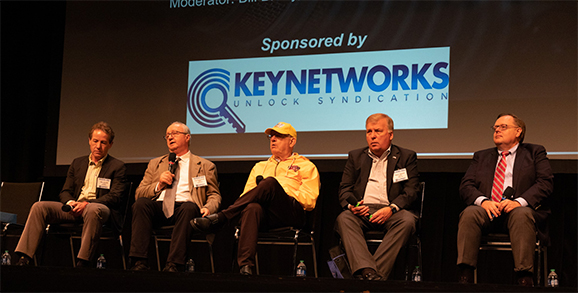
TALKERS 2022 Addresses Concerns of Independent Radio Station and Small Group Operations. At the TALKERS 2022 convention held at Hofstra University on Friday, June 10, the first panel session of the day was titled “Independent Radio Station and Small Group Operations” and probed the issues most pressing to owners of independent stations and those operating small groups of stations. The panel was moderated by KFNX-AM, Phoenix owner Bill Brady (inset), who was introduced by Binnie Media director of brand operations Michael Czarnecki. Appearing on the panel in the photo above were (from l-r): Marc Beaven, general manager, WCBM-AM, Baltimore; Paul Vandenburgh, owner/host, WGDJ-AM, Albany; Michael Zwerling, owner, KSCO-AM, Santa Cruz, California; Paul Gleiser, owner/host, KTBB, Tyler Texas; and Todd Starnes, owner, KWAM-AM, Memphis (and host of the syndicated Todd Starnes Show). Video of this complete session will be made available in the coming weeks.
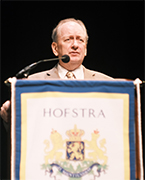
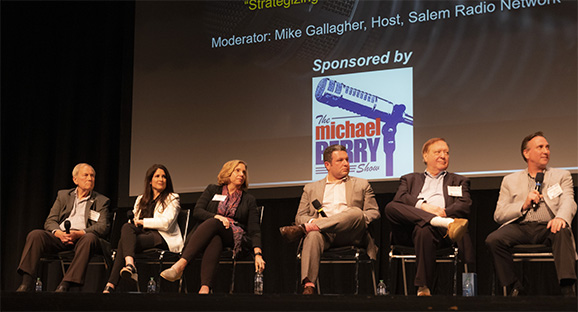
 

‘Strategizing a Talk Show Hosting Career’ Among Panel Discussions at TALKERS 2022. Last Friday’s TALKERS 2022 convention held at Hofstra University also featured a panel discussion that illuminated some of the challenges that talk hosts face in the modern era, as well as presenting some solutions to those challenges. The panel was moderated by Salem Radio Network personality Mike Gallagher (inset), who was introduced by WPHT, Philadelphia morning drive personality Rich Zeoli. Appearing on the panel in the photo above were (from l-r): Bruce Avery, general manager, WRHU-FM/WRHU.org, Hofstra University; Heather Cohen, EVP, The Weiss Agency; Martha Zoller, WDUN-AM, Gainesville, Georgia; Frank Morano, host, WABC, New York; Walter Sterling, host, “Sterling on Sunday”; and Brett Winterble, host, WBT-AM/FM, Charlotte. Video of this complete session will be made available in the coming weeks.

 

Round Three of May 2022 PPMs Released. The third of four rounds of ratings information from Nielsen Audio’s May 2022 PPM survey has been released for 12 markets including Portland, Charlotte, San Antonio, Sacramento, Pittsburgh, Salt Lake City, Las Vegas, Orlando, Cincinnati, Cleveland, Kansas City, and Columbus. Nielsen’s May 2022 sweep covered April 28 – May 25. Today, TALKERS magazine managing editor Mike Kinosian presents his Ratings Takeaways from this group of markets. In Portland, Alpha Media’s news/talk KXL-FM repeats in the #4 rank despite dipping three-tenths to a 7.9 share (weekly, 6+ AQH share), while iHeartMedia’s crosstown news/talk KEX-AM loses seven-tenths to finish with a 1.9 share good for the #20 rank. iHeartMedia’s KNRS-AM/FM, Salt Lake City is #1 again this month even though it shed 1.2 shares and wrapped the survey with a 9.6 share. Across town, Bonneville’s KSL-AM/FM falls from #2 to #4 after losing 1.5 shares for a 6.1 share finish. You can see Mike Kinosian’s complete Ratings Takeaways from this group of markets (as well as the first two rounds) here.


Cumulus Media Brings ‘The Score’ Back to Providence. Gone for 15 years, Cumulus Media is reviving the sports talk format on WPRV-AM, Providence as “790 The Score.” The station has been airing a business news format since sports talk was jettisoned in 2008. In a YouTube video promoting the change, the company says the new incarnation of “The Score” will include programming from BetQL, CBS Sports Radio’s “Jim Rome Show,” and local personality Kevin McNamara, as well as New York Yankees baseball, Boston Celtics basketball and Brown University football and basketball.

 

WBZ-AM, Boston Brings ‘Tough as Nails’ Back for a Fifth Season. Local real estate and construction celebrity Cindy Stumpo’s “Tough as Nails” radio show is returning to iHeartMedia’s WBZ-AM, Boston “NewsRadio 1030” Saturday evenings at 8:00. The station says, “Each week, Cindy and [daughter] Samantha welcome guests to unpack the worlds of construction, real estate, renovations, design and more. Cindy and her team are world-renowned for creating opulent floor plans coupled with impeccable attention to detail. Cindy is also known for her raw and uncensored perspective on everything about being a woman in a man’s world. Almost nothing is off limits: panic attacks, menopause, abuse, domestic violence, you’ll never know what’s coming next while being entertained and informed every show. Cindy’s social media presence is unstoppable with over 75,000 followers on Instagram and videos on her YouTube channel regularly garnering 100,000-plus views.  Cindy has shown that she is a multimedia force.”

 

BIA Advisory Services Downgrades U.S. Local Ad Revenue Projections; Significant Growth Still Expected in Radio Digital. This year’s U.S. local advertising forecast is being revised by BIA Advisory Services. The firm says its new estimate is $167.4 billion, down from its original estimate of $173.3 billion issued in December 2021. It cites “headwinds from overseas conflicts, continuing supply chain issues and deep cuts in ad spending from large verticals like automotive” for precipitating the reduction. Positives for the ad market still include an anticipated strong political ad year, the expansion of online gambling local advertising and consumer spending on leisure and recreational activities. BIA SVP and chief economist Mark Fratrik comments, “The year didn’t start as strong as we had anticipated, making for a difficult first two quarters as some expected advertising spend started to retract. On the one hand, personal income continues to rise, but the cost of consumer goods, rising gas prices and inflation are having a major impact and we believe that will influence how advertisers will choose to use their ad dollars in the coming months. All of that must be weighed against what we see as positives for local advertising this year.” The latest forecast estimate still gives traditional media ad revenue a slight advantage over digital at 52.5 % of the ad spend ($87.9 billion), while digital media will get 47.5 % of the ad spend at $79.5 billion. Overall, BIA is decreasing digital estimates slightly from the original 2022 forecast due to mobile facing headwinds amid new privacy measures on iPhones. Additionally, there has been slower than anticipated growth. Even as both digital channels continue to grow, it’s at a reduced pace than originally expected. Significant growth is expected in TV OTA (+30.3 %), TV Digital (+18.3 %) and Radio Digital (+14.5 %).
 

47th Annual Gracie Awards Luncheon Set for June 22. The leadership of the Alliance for Women in Media Foundation announces that ESPN SportsCenter anchor Hannah Storm, will host the 47th Annual Gracie Awards Luncheon set for June 22 at Cipriani 42nd Street in New York City. The Gracie Awards recognize exemplary content created by, for and about women in all facets of media and entertainment. AWMF chair Heather Cohen comments, “Throughout this past year we have seen a number of remarkable projects by and about inspirational women and Hannah Storm will serve as the ideal host to recognize their work.” AWMF president Becky Brooks adds, “We are honored to shine a spotlight on these women, whose stories have driven cultural awareness, offered entertainment that has made us laugh, cry, and everything in between. We are delighted to return to an in-person format so that we can properly celebrate together.”
 

TALKERS News Notes. The relationship between ESPN and Peyton Manning’s Omaha Productions is expanding beyond the Monday Night Football “Manningcast.” Now, the two content organizations will premiere a new lineup of original shows, which will launch with six titles produced by Omaha Productions beginning June 20. Manning says, “One of the best parts of the Monday Night Football show is getting to talk about a sport I love with other folks who share the same passion for the game. With this audio network, we want to deliver those same entertaining and informative conversations from a great crew of folks at Omaha Audio, who are not only informed but genuinely love the sports and topics they cover.”…..Sports USA announces that it will cover live broadcasts of the NHL’s 2022 Stanley Cup Final between the Tampa Bay Lightning and the Colorado Avalanche. John Alhers will handle play-by-play, Joe Micheletti will serve as color analyst, Billy Jaffe will be the on-ice reporter and Ted Sobel will host the pre and post-game shows, along with the intermission reports…..ARC Software, Inc enters into an agreement with Compass Media Networks tp provide the service that allows networks, producers and other radio service providers to quickly find any radio station to connect with, affiliate, maintain agreements, compliance and much more…..iHeartMedia announces a new partnership with Martha Stewart to produce a new iHeartRadio Original Podcast. iHeartMedia says “The Martha Stewart Podcast” is a talk show style series that will feature intimate, in-depth, probing interviews with some of the most fascinating people in the world – all who are at the top of their respective fields. Stewart says, “I am thrilled to partner with iHeartMedia on my first-ever original podcast series. I think listeners will deeply enjoy these engaging conversations on life and business, which include many interesting takeaways from the notable guests I have the pleasure of interviewing.”


Former KMJ, Fresno Personality Bill Woodward Passes at 81. Former longtime KMJ, Fresno personality Bill Woodward passed away last month at the age of 81. For 37 years, Woodward served as the radio voice of the Fresno State Bulldogs. KMJ program director Blake Taylor says, “Bill was a wonderful mentor. Such gravitas. A true professional. A legend in the broadcasting industry. There’s a reason he’s forever remembered in the Fresno State Athletics Hall of Fame. I miss him, and his play-by-play of Bulldogs sports will always have a place in my heart.”

 

The Economy/Fed Interest Rate Hike, Primaries/Trump & the GOP, January 6 Hearings, Roe v Wade/Kavanaugh Plot, COVID-19, Russia-Ukraine War, and Western Drought & Extreme Weather Among Top News/Talk Stories Yesterday (6/15). Soaring gas prices, inflation, and the Fed’s decision to hike interest rates; Tuesday’s primary races and Donald Trump’s influence over the GOP; the January 6 Committee hearings; the Supreme Court’s likely reversal of Roe v Wade and the plot to kill Justice Brett Kavanaugh; the rate of COVID-19 cases across the U.S.; Russia’s progress in securing the Luhansk region of Ukraine; and the drought and heatwave in the U.S. West and extreme flooding in Yellowstone were some of the most-talked-about stories on news/talk radio yesterday, according to ongoing research from TALKERS magazine.

Opinions

The Vastness of Night

by Walter Sterling
Talk Show Host


NEW YORK — The two most effective, engaging forms of advertising are in-theatre and overnight radio. Surrounded by darkness without distractions, the audience choses to receive the advertising message in the comfort of a bed, perfectly adjusted car seat, or reclining throne.

Overnight radio is 25% of the broadcast day. Twenty-five percent. A locally hosted all-night show in a major city is a gift to listeners and advertisers. The audience identifies with the references made by their neighbor, the radio host. Bonding is immediate.

(more…)

Front Page News Industry News

Tuesday, May 10, 2022

Townsquare Media Reports Q1 Net Revenue Up 13%; Tops Pre-COVID Net Revenue by 7%. For the first quarter of 2022, Townsquare Media is reporting net revenue of $100.2 million, an increase of 13% over the same period in 2021 and an increase of 7% over the same period in Q1 of 2019. Townsquare is also reporting net income of 2.74 million for Q1 of 2022 compared to the loss of $6.1 million it reported in the first quarter of last year. Townsquare reports in three segments: 1) Subscription Digital Marketing Solutions – including its subscription digital marketing solutions business, Townsquare Interactive. That segment reported revenue of $21.8 million, an increase of 15% over Q1 of 2021; 2) Digital Advertising – marketed externally as Townsquare Ignite that includes digital advertising on its owned and operated digital properties and its digital programmatic advertising platform. That segment reported revenue of $29.2 million, an increase of 16.6% over last year; and 3) Broadcast Advertising – including the company’s local, regional, and national advertising products and solutions delivered via terrestrial radio broadcast (plus other miscellaneous revenue associated with the broadcast advertising platform). That segment’s revenue was $48.1 million, an increase of 7.7% over the same period a year ago. Townsquare CEO Bill Wilson states, “I am proud to announce our strong start to 2022, with net revenue, Adjusted EBITDA and net income increasing year-over-year by +13%, +10%, and $8.9 million, respectively. In addition, net revenue and Adjusted EBITDA exceeded our previously issued guidance due to strong growth and strong margins. As a Digital First Local Media Company, our first quarter performance was driven by our digital platform and solutions, with total digital revenue increasing +16% year-over-year in the first quarter (representing 51% of our total Q1 net revenue) and total digital Adjusted Operating Income increasing +11% year-over year (representing 55% of our total Q1 Adjusted Operating Income). As we move forward, we expect double-digit digital net revenue growth to continue at strong margins, fueling our overall growth and subsequent debt reduction, from 4.66x net leverage today to 4.0x by year end. We are also pleased to re-affirm our 2022 guidance and our 2024 digital revenue target of at least $275 million. These results and confidence in our outlook are due, in part, to the fact that Townsquare is the only local media and digital marketing solutions company of scale focused principally on markets outside of the Top 50 in the United States, a vital differentiator for our company. Our new reporting segments highlight the profit characteristics of our digital platform, which is essentially equal to those of our broadcast platform, each with profit margins of approximately 30%. While we view local radio as an extremely valuable asset with significant and attractive cash flow properties, unparalleled consumer reach, and an important and trusted local connection to our audience and communities, it is not our primary growth driver. With approximately half of our total revenue and profit coming from digital today, we have a strong digital growth engine that will drive significant and consistent growth in the coming years. It is our belief that as a Digital First Local Media Company providing a detailed breakout of our digital revenue and digital profit, Townsquare should be afforded a sum-of-the-parts valuation that gives credit to our digital assets.”


MIW Launches State Broadcasters Partnership Program. The non-profit organization Mentoring and Inspiring Women in Radio, Inc., dedicated to the advancement of female leadership in radio broadcasting, announces a new national program designed to create mentorship opportunities in every state in the union. This three-to-five-year strategic plan exponentially expands the organization’s mentoring outreach across the United States. The first pilot program partners MIW with the Minnesota Broadcasters Association to create, “Mentoring and Inspiring Women in Minnesota.” MIW’s long term plan includes establishing close working relationships with leadership from all interested state broadcasters associations and broadcasters across the country to create mentorship curriculums for female professionals in radio broadcasting. With MIW’s guidance, these state-centered programs will be based on the tenets, structure, and best practices of MIWs broad array of successful and established mentoring opportunities. MIW Board president Ruth Presslaff says, “This program is designed to dramatically expand our mentorship outreach. We couldn’t ask for a better first partner than president Wendy Paulson and the Minnesota Broadcasters Association as we work toward a mentee in every state. Cheers to the first. Forty-nine to go!” Find out more here.


TALKERS News Notes. When the Radiodays Europe conference takes place in Malmö, Sweden May 15-17, Beasley Media Group CEO Caroline Beasley will take part in two sessions. She will participate in a special one-on-one session titled, “American Regional Radio in the Digital Age,” hosted by Benztown president Dave “Chachi” Denes. In addition, Beasley will take part in the “Audio Summit” panel, featuring Sibyle Veil (CEO Radio France), Linda Pamgren (CEO Bauer Media Sweden) and Cathinka Rondon (head of Radio-NRK). The session will be moderated by Folder Media creative director Matt Deegan…..The nationally syndicated, weekend shooting sports program “Tom Gresham’s Gun Talk” adds WBIN Media’s WTPL-FM, Hillsborough, New Hampshire and Berkshire Broadcasting Corp’s WLAD-AM/W231DJ, Danbury, Connecticut to its roster of affiliate stations. The program is syndicated by Talk Shows USA…..Chicago-based MediaTracks Incorporated sells “Radio Health Journal” and “Viewpoints Radio” to American Urban Radio Networks, LLC. The two weekly public affairs programs are syndicated on a total of nearly 1,500 stations in more than 200 U.S. markets. Bob Heymann of the Chicago office of Media Services Group served as the exclusive broker for the seller in this transaction…..Audio content, marketing, and advertising services firm Gemini XIII, joins forces with Diversion Podcasts through an investment that will grow Diversion’s offerings under a new premium podcast network called Diversion Audio. Diversion Audio will become Gemini XIII’s content division. The division will leverage sister company Diversion Books’ publishing assets and author relationships to offer a focused content model it says is unique to podcasting: expanding IP from books, authors, and personalities into the podcast medium as original audio content across both high-frequency episodic shows and engrossing narrative limited series. Gemini XIII co-founder and CEO Spencer Brown says, “Through Diversion Audio, we will build upon the successful franchises and proven track record that Scott [Waxman] and his talented team have created at Diversion Podcasts. Together with our recent acquisitions of Phantom Producer and The Infinite Agency, Gemini XIII is well-positioned to optimize these premium assets and capabilities to build and grow a new breed of audio company. The creation of Diversion Audio advances that strategy considerably. We think podcast listeners and readers alike will love what they hear as we launch new podcasts tied to Diversion’s expansive intellectual property library.”


The Economy, Russia-Ukraine War, Roe v Wade, Midterms/Trump & the GOP, COVID-19, Vicky White/Casey White Manhunt, and Western Drought/Texas Wildfire Among Top News/Talk Stories Yesterday (5/9). The falling Dow and NASDAQ, the high price of gas & food, and concerns about a full-blown recession; Russia’s invasion of Ukraine and concerns about Vladimir Putin’s health and willingness to use nuclear weapons; the aftermath of the leak of a draft of the Supreme Court’s ruling to overturn Roe v Wade; the November midterm elections and Donald Trump’s influence over the GOP; the rate of cases, hospitalizations & deaths from COVID-19; the manhunt for Alabama corrections officer Vicky White and convict Casey White ends; and the drought in the U.S. West and the Texas wildfires were some of the most-talked-about stories on news/talk radio yesterday, according to ongoing research from TALKERS magazine.

Front Page News Industry News

Friday, April 8, 2022


NOW POSTED: This Weekend’s Installment of “The Michael Harrison Wrap: An Overview of the National Conversation.” The latest installment of the one-hour weekend special, “The Michael Harrison Wrap,” that looks back each week at the hottest topics discussed in American talk media per the research of TALKERS, is now posted. This new episode titled, “Atrocities,” looks back at this past week of 4/4 to 4/8. The program features guests (in order of appearance): Kevin Casey, executive editor, TALKERSDerek Hunter, talk show host, WCBM, Baltimore; Jim Bohannon, talk show host, Westwood OneWalter Sterling, talk show host, “Sterling on Sunday”; Arthur Aidala, criminal trial lawyer/talk show host, AM 970 The Answer, New York and Matthew B. Harrison, associate publisher, TALKERS/law professor, Western New England University School of Law. The show airs weekends on WONK-FM, Washington, DC; WTIC, Hartford; KSCO, Santa Cruz, CA; KDFD, Denver; KFNX, Phoenix; KTLK-FM, St. Louis; WPG, Atlantic City, NJ; SuperTalk 99.7 WTN, Nashville; KMZQ, Las Vegas;  WTPL, Manchester, NH; WEMJ, Laconia, NH; WTSN, Dover-Portsmouth, NH; WVLY, Wheeling, WV; WTRW-FM, Scranton/Wilkes Barre, PA; WVOX, Westchester, NY; KBDT, Dallas; KQSP, Minneapolis; WGDJ, Albany, NY; WJFN-FM, Richmond, VA; WZFG, Fargo; KTGO, Tioga, ND; KWAM, Memphis; K-NEWS, San Luis Obispo; WGMD, Rehoboth Beach, DE; WCHM, Clarkesville, GA; WPHM, Port Huron, MI; KSYL, Alexandria, LA; KTOE, Mankato, MN; WCED, DuBois, PA; K-NEWS 101.3, Owensboro, KY; WWTK, Sebring, FL; WSAR-AM/FM, Fall River, MA; WIZM-AM/FM, La Crosse, WI; WMVA, Martinsville, VA; KQEN, Roseburg, OR; the Virginia Talk Radio NetworkCRN Digital Talk Radio NetworkPodcast Radio UK and many more. To listen to this week’s episode, please click here. To view the latest TALKERS topic research, please click here. “The Michael Harrison Wrap” is now available in syndication via Talk Media Network to stations across America on a market exclusive basis. For affiliation information, please click here or call 616-884-8616.


KVI, Seattle to Add Rita Cosby Show to Program Lineup. Programming changes will take place at Lotus Communications’ talk outlet KVI-AM, Seattle “Talk Radio 570” on Monday (4/11). The station will move the Radio America syndicated “The Dana Show” starring Dana Loesch to the 6:00 pm to 9:00 pm daypart and will add “The Rita Cosby Show” in the 9:00 pm to 11:00 pm slot. Lotus says, “Cosby is one of the most recognized and respected broadcasters in America who has attained an extraordinary level of success in multiple arenas that few in the media landscape have achieved. Cosby was named Radio Ink’s 2018 Most Influential Woman Legend of the Year and has won six Gracie Awards in radio, including for Outstanding Host and Outstanding Talk Show. She is also a renowned Emmy-winning TV host, who anchored highly rated primetime shows on both FOX News Channel and MSNBC.” KVI program director Rick Van Cise adds, “Dana Loesch has proven to be a great addition to KVI’s nighttime lineup – so much so that we are expanding her show and moving it to an earlier timeslot. We are also thrilled to announce the addition of Rita Cosby who will help KVI listeners wrap up their evening with a deep-dive into the latest news along with powerful and compelling interviews.”


Former Missouri House Speaker Elijah Haahr to Host Afternoon Show on KWTO-AM, Springfield. Beginning Monday (4/11), former Missouri House Speaker Elijah Haahr will host the 4:00 pm to 6:00 pm show on Zimmer Midwest Communications’ news/talk KWTO-AM/K227AO, Springfield, Missouri. The station says that Haahr graduated with honors from the law school at the University of Missouri and practiced law before serving eight years in the Missouri General Assembly, including as Speaker of the House from 2018-21. The station employs another former House Speaker in morning host Tim Jones. Zimmer-Springfield operations manager Tom Ladd says Haahr was a “no-brainer for a station that’s quickly becoming known as the ‘Speaker’s House.’ Elijah brings so much passion for radio and a connection with listeners. His show will be informative, bit it will also be a lot of fun.”


Good Karma Brands Announces New Digital Program ‘Good Karma Wrestling.’ Last night (4/7), Good Karma Brands debuted its new digital content venture, “Good Karma Wrestling (GKW),” across its social and digital platforms. The weekly show, hosted by ESPN Chicago’s Jonathan Hood, ESPN Milwaukee’s Gabe Neitzel, and ESPN West Palm’s Brian Rowitz, now streams every Thursday at 7:00 pm ET. Good Karma Brands VP of content Evan Cohen says, “We are extremely excited to launch our first coast-to-coast show with Good Karma Wrestling. Jonathan, Gabe and Brian will bring a fresh insight and fun energy to the show, and nothing speaks to sports and entertainment quite like wrestling.” GKB adds that every “Good Karma Wrestling” show will be viewable to watch back and linked on GKB’s platforms.


‘Island Time in the Desert with TMac & Noah’ Joins Up On Game Presents Podcast Lineup. A new podcast joins the Up on Game Podcast Network led by FOX Sports Radio’s LaVar Arrington.  The new show, “Island Time in the Desert with TMac & Noah,” featuring University of Arizona freshman football players Tetairoa “TMac” McMillan and Noah Fifita to the Up On Game Presents podcast lineup. The podcast gives “listeners a front row seat as two student athletes navigate the rigors of college life in the classroom and on the field. The duo will share their thoughts and opinions on the week’s trials and victories, as well as interviews with guests along their journey.” Arrington says, “I’m excited to welcome these young men, who I watched grow up in front of my eyes, to the Up on Game Presents feed. Noah and TMac changed the whole landscape of high school football in the Trinity League – arguably the toughest league in the country. They played a vital role in making Servite High School football relevant again and I believe they will do the same for Arizona. Powerful, impactful, young voices are needed and essential for our youth in this day and age, and I’m proud and honored to welcome Noah and TMac to the Up On Game Presents family.”


The Russia-Ukraine War/U.S. Foreign Policy Top News/Talk Story for Week of April 4-8. The ongoing Russian invasion of Ukraine, allegations of war crimes against Russian soldiers, and the U.S. foreign policy combined as the most-talked-about story on news/talk radio this week, landing atop the Talkers TenTM. At #2 this week was the economy, including still-high gas prices, the high cost of food, and the supply chain, followed by the actions of the January 6 Committee at #3. The Talkers TenTM is a weekly chart of the top stories and people discussed on news/talk radio during the week and is the result of ongoing research from TALKERS magazine. It is published every Friday at Talkers.com. See this week’s complete chart here.