The forthcoming 27th annual installment of the talk media industry’s longest running and most important national gathering will be meticulously documented on video for posterity. TALKERS publisher Michael Harrison states, “Because the entire agenda of this year’s event will take place on the state of the art television soundstage ‘A’ at Hofstra University’s Lawrence Herbert School of Communication and a special staging area for individual interviews will be set up on the adjacent TV soundstage ‘B,’ the opportunity to create an in-depth video time capsule of this remarkably transitional moment in talk media history will be unprecedented.” Harrison adds, “The number of heavyweight players from all ends of the business gathered in one place for one day on a television soundstage will be of tremendous historical significance. We will grab the opportunity to save everything we can for posterity. This conference will be more than just another industry ‘convention.’ It will be a ‘symposium’ for the ages reflecting and preserving a remarkably colorful and historic era in American media and culture. People all over the world and for years to come will bear witness to this ‘happening.’”
All TALKERS 2024 activities take place in the Lawrence Herbert School of Communication on the campus of Hofstra University
REGISTRATION DESK OPEN
7:30 am to 5:00 pm
Registration Director: Barbara Kurland, Business Manager, TALKERS
Assistant Registration Director: Debbie Bernstein, Associate, TALKERS
EXHIBITION DISPLAYS OPEN
8:00 am to 5:00 pm
Backbone Networks
Representatives: George N. Capalbo, CTO; George L. Capalbo, Marketing Communications Director; Richard Cerny, President
Broadcasters General Store
Representatives: David Antoine, CBRE/CBNT, Sales Engineer; Buck Waters, Outside Sales Rep
Comrex
Representative: Chris Crump, CBNE, Senior Director of Sales & Marketing
BREAKFAST
8:00 am to 9:00 am
“Studio A” Television Sound Stage
Master of Ceremonies: Kevin Casey, VP/executive editor, TALKERS
Special Conference Kickoff: “Gaining Traction in a Noisy World”
Speaker: Joe “Pags” Pagliarulo, Host, “The Joe Pags Show”
Presentation of the Lifetime Achievement Award
Presenter: Mark Goldman, Co-founder/Media Relations Specialist, Goldman McCormick Public Relations.
Recipient: Howie Carr, Host, Howie Carr Radio Network
Sponsored by Sean Hannity / Premiere Networks
OPENING SESSION
9:00 am to 9:40 am
“Studio A” Television Sound Stage
Singing of the National Anthem
Performed by: Daliah Wachs M.D., Host, “The Dr. Daliah Show”
Welcoming Greetings: “Radio and Beyond”
Speaker: Michael Harrison, Publisher, TALKERS
Presentation of the Woman of the Year Award
Special Remarks: Dave Gorab, VP/GM Talk Programming, SiriusXM Satellite Radio
Presenter: Larry Young, Host, WOLB, Baltimore
Recipient: Sharon “Sherry” Madison, Executive Producer, the Joe Madison Show, SiriusXM Satellite Network
Award Acceptance: TBA
Special Presentation: The Case for AM Radio
Introducer: Alex Fife, VP/Operations, Southeast, iHeartMedia, Total Traffic & Weather Network
Speaker: Bill Brady, Owner/Host, KFNX, Phoenix
Sponsored by the Doctor Asa Show
PANEL DISCUSSION: “GENERATING NEWS/TALK REVENUE IN THE DIGITAL ERA”
9:45 am to 10:25 am
“Studio A” Television Sound Stage
Introducer: Joe Thomas, Owner/PD/Host, WTON, Staunton, VA
Moderator: Steve Lapa, President, Lapcom Communications Corp.
Panelists: Vince Benedetto, CEO, Bold Gold Media Group; John Caracciolo, President/CEO, JVC Broadcasting; Kathy Carr, President, Howie Carr Radio Network; Ron Hartenbaum, Managing Member, Crossover Media; Julie Talbott, President, Premiere Networks
Sponsored by The Martha Zoller Show
FIRESIDE CHAT: “THE STATE OF SPORTS TALK RADIO”
10:30 am to 10:55 am
“Studio A” Television Sound Stage
Host: Michael Harrison, Publisher, TALKERS
Guest: Fred Toucher, Co-host, Morning Show, WBZ-FM (98.5 The Sports Hub), Boston
Sponsored by Backbone Networks
PANEL DISCUSSION: “BRAVE NEW WORLD”
11:00 am to 11:35 am
“Studio A” Television Sound Stage
Moderator: Harry Hurley, Morning Host, WPG, Atlantic City
Panelists: Scot Bertram, GM, WRFH/Radio Free Hillsdale 101.7 FM; Heather Cohen, President, The Weiss Agency; Steven Goldstein, CEO, Amplifi Media; Matthew B. Harrison, Esq., VP, associate publisher TALKERS / Senior Partner, Harrison Media Law; John T. Mullen, GM, WRHU-FM/WRHU.org, Hofstra University.
Sponsored by Premiere Networks
PANEL DISCUSSION: “PROGRAMMING NEWS/TALK RADIO”
11:40 am to 12:20 pm
“Studio A” Television Sound Stage
Introducer: Paul Vandenburgh, Owner/Host, WGDJ (Talk 1300), Albany
Moderator: Mike McVay, President, McVay Media Consulting
Panelists: Grace Blazer, VP, National NTS Brand Coordinator, Director of News and AM Programming Florida Region, iHeartMedia Miami; Phil Boyce, SVP, spoken word format, Salem Media Group; Ops VP, New York region/WMCA/ AM 970 The Answer; Bill Hess, Corporate PD, News/Talk, Cumulus Media / PD WMAL, Washington, DC; Scott Lakefield, APD, WOR, New York; Doug Stephan, CEO/founder, Stephan Multimedia/host “Good Day” morning show; Greg Stocker, Brand Manager, WPHT, Philadelphia.
Sponsored by The Ramsey Show
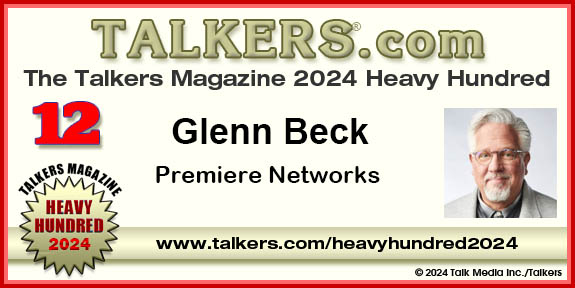
KEYNOTE ADDRESS: GLENN BECK
12:25 am to 12:55 pm
“Studio A” Television Sound Stage
Speaker: Glenn Beck, Host, “The Glenn Beck Show” / Premiere Networks
Sponsored by Resorts Casino Hotel Atlantic City
LUNCH
1:00 pm to 2:25 pm
“Studio A” Television Sound Stage
Lunch Master of Ceremonies: Michael Harrison, Publisher, TALKERS
Dean’s Message: “Welcome to Hofstra”
Speaker: Mark Lukasiewicz, Dean, Lawrence Herbert School of Communication, Hofstra University
Special Greeting: “In Front of the Camera”
Speaker: Rob Finnerty, host, “Wake Up America,” Newsmax TV
Presentation of the Humanitarian of the Year Award
Recipient: John Curley, Host, KIRO, Seattle
Broadcasters Foundation of America Donation/Spotlight
Presenter: Harry Hurley, Morning Show Host, WPG, Atlantic City
Acceptance: Scott Herman, Chairman, Broadcasters Foundation of America
Sponsored by Newsmax TV
SPECIAL PRESENTATION: “THE GREAT DEBATE”
2:30 pm to 3:00 pm
“Studio A” Television Sound Stage
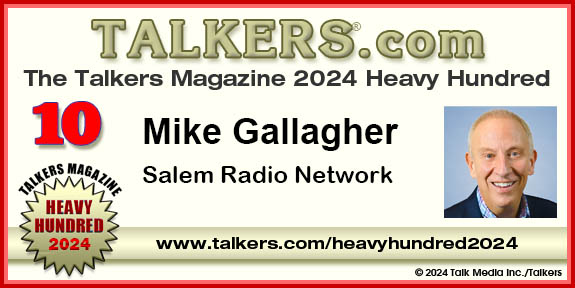
Debaters: Mike Gallagher, Host, Salem Radio Networks; Thom Hartmann, Host, WYD Media
Moderator: Lee Harris, Director, Integrated Operations, NewsNation / WGN, Chicago
Sponsored by Our American Stories
PANEL DISCUSSION: “BEYOND POLITICS”
3:05 pm to 3:40 pm
“Studio A” Television Sound Stage
Moderator: David Bernstein; GM, Broadcast Operations, TALKERS
Panelists: Asa Andrew, M.D., Host, the Doctor Asa Show; Mike “Bax” Baxendale, Co-host, Morning Show, WAQY (Rock 102), Springfield, MA; Lee Habeeb, CEO/Host/Producer, “Our American Stories”/American Private Radio; Danielle Lin, Producer/Host, “The Art of Living and the Science of Life”; Walter Sabo, consultant, Sabo Media Implementers/Host “Sterling On Sunday”; Daliah Wachs, M.D., Host, “The Dr. Daliah Show.”
Sponsored by Doug Stephan’s “Good Day”
PANEL DISCUSSION: “BEHIND THE MIC”
3:45 pm to 4:20 pm
“Studio A” Television Sound Stage
Moderator: Joe “Pags” Pagliarulo, Host, “The Joe Pags Show”
Panelists: Howie Carr, Host, Howie Carr Radio Network; Dom Giordano, Host, WPHT, Philadelphia; Jeff Katz, host, WRVA, Richmond; Chris Krok, Host, WBAP, Dallas; Frank Morano, Host, WABC, New York/Red Apple Audio Networks; Martha Zoller, Host, WDUN, Gainesville, GA
Sponsored by Radio America
PANEL DISCUSSION: “THE BIG PICTURE”
4:25 pm to 5:05 pm
“Studio A” Television Sound Stage
Moderator: Michael Harrison, Publisher, TALKERS
Panelists: Kraig T. Kitchin, CEO, Sound Mind, LLC; Chad Lopez, President, WABC, New York/Red Apple Audio Network; Chris Oliviero, Market President, Audacy New York; Deborah Parenti, Publisher, Radio Ink / RBR+TVBR; Tavis Smiley, Host / Owner, KBLA, Los Angeles/Smiley AudioMedia; Lisa Wexler, Host, WICC, Bridgeport.
Sponsored by The Michael Berry Show
CLOSING RECEPTION
5:10 pm to 6:15 pm
“Studio A” Television Soundstage
Presentation of Freedom of Speech Award
Closing Reception Master of Ceremonies: Harry Hurley, Host, WPG, Atlantic City
Special Guest Speaker: Brian Kilmeade, Host, FOX News Radio / FOX News Channel
Presenter: Michael Harrison, Publisher, TALKERS
Recipient: John Catsimatidis, CEO/Owner, WABC, New York / Red Apple Audio Network
Sponsored by C. Crane
More TBA
Program agenda subject to change without notice
Attendance at the conference is limited to members of the working media and directly associated industries as well as communication students enrolled in accredited learning institutions. All attendees will be required to register in advance on the phone payable by credit card. Because attendance will be limited and the agenda outstanding, the conference is again expected to be an early sellout. The all-inclusive registration fee covering convention events, exhibits, food, and services for the day is $379. Because space will be limited and a sellout is anticipated, all registrations are non-refundable. To register for TALKERS 2024 or to obtain sponsorship information, call Barbara Kurland at 413-565-5413. The closest hotel to the conference is the nearby Long Island Marriott-Uniondale but it is nearly sold out. For a list of area hotels within a short drive to Hofstra, please click here.
Share this with your network



 workers’ first contract. The union says iHeartMedia has “violated Section 8(a)(1) of the National Labor Relations Act ‘by restricting protected Section 7 speech, by engaging in intimidating conduct and by interrogating employees about their support for the union.’”
  The union’s complaint adds, “When we have posted flyers about the union, management has removed these materials within the day, often within minutes… union members have received emails discouraging this activity, pointing out company policies about distributing literature in working areas, without acknowledging our federally protected right to discuss our working conditions or to distribute information about our union to our colleagues. Non-bargaining-unit employees and managers have used common work areas to openly disparage our union literature and efforts to inform unit members.” iHeartMedia has not responded publicly to the grievance. Read THR’s story here.
  Commerce vowed to sue the FTC to block the proposal, calling it ‘an unlawful power grab’ in a statement shortly after the vote. The chamber, as well as the two dissenting [FTC] commissioners, has argued that the FTC doesn’t have the authority to address this issue and that it should be left to the states.” The Times piece notes that the rule becomes law 120 days after being published in the Federal Register – meaning sometime in late August – but that legal challenges could block or delay the change. In the radio industry, most on-air talent, programmers, and sales staff who work under written contracts have a noncompete clause that prevents them from working “across the street” usually for six months. If this new policy stands, it will be a monumental change for radio companies.
  Interestingly, marketers and media agencies massively underestimate the immense sales effect power of creative. NCSolutions says that creative drives half of sales, about two-and-a-half times what advertisers perceive. The Advertiser Perceptions February 2024 study reports brands and media agencies say creative only represents 19% of total sales effect. NCSolutions science reveals creative generates an eye-popping 49% of incremental sales. According to System1 chief customer officer Jon Evans, “Creative is the number one factor in explaining the performance of your advertising and yet most marketers still don’t realize it. That means that those who focus on getting the creative right have a huge competitive advantage. Firstly, marketers need to wake up to the importance of creative and secondly realize it isn’t some dark art but something you can measure and improve to give you an advantage over the competition who haven’t realized this yet.”
  I asked ChatGPT: “Vendors are now offering radio stations a service that delivers advertising commercial copy generated by AI. Because AI draws from what’s already been done, this risks sound-alike scripts. Is there a list of commercial clichés users should instruct AI to exclude?”
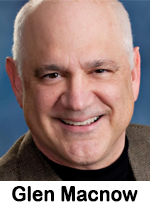 sports talk outlet where he’s been an on-air personality for the past 31 years. Currently, Macnow hosts the Saturday and Sunday 10:00 am to 1:00 pm shows and the Eagles pre-game show. Macnow says his last weekend program (which he co-hosts with Mike Sielski) will be July 13.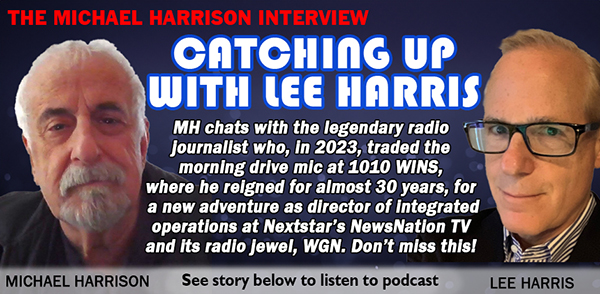
 Growing a brand is a memory game. Which message will a target consumer value, remember it and take it to the cash register? The answer is not complicated but it is complex.
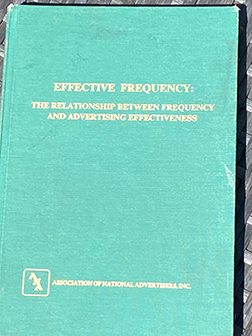 about all the science any of us have been tutored in on the subject of effective frequency.
 caused controversy as Berliner criticized the organization saying it “had allowed liberal bias to affect its coverage.” This comes as there is renewed interest among conservative legislators in challenging the use of federal funds for public media with allegations of editorial bias as a primary reason to end federal underwriting of media. NPR managing editor for standards and practices Tony Cavin spoke to The New York Times about Berliner’s piece and said it “mischaracterized NPR’s coverage of crucial stories.”
  radio’s most respected storytellers. Highlights included the BBC being honored with the 2024 Broadcaster of the Year Award. NYFestivals honored legendary sports journalist Donna de Varona with the 14th annual NYF Lifetime Achievement Award. “Murder in Boston: The untold story of the Charles and Carol Stuart Shooting,” produced by the Boston Globe was recognized by NYFestivals with the 2024 National Press Club Award, which honors the highest scoring news program. View the
  If you’re looking to jump-start – or optimize – your video interview technique, this session alone was worth the trip to Las Vegas. Washington-based video content strategist/producer/interviewer
 purpose is to ensure Cruz’s reelection. The amount donated would exceed the $5,000 ceiling on solicitation of funds for a super PAC. The Texas Tribune reports that the terms of iHeartMedia’s payments are unclear because the company’s agreement with Cruz for distributing his podcast is not public, hence the complaint seeking an investigation. However, the complaint asserts “the payments were improperly reported as ‘other receipts’ rather than campaign contributions. ‘Other receipts’ is generally reserved for interest or income on assets already owned by a PAC.” The complaint continues, “By soliciting or directing $630,850.08 of iHeartMedia’s corporate funds to or on behalf of TCP in connection with his 2024 election, Cruz appears to have brazenly violated these federal campaign finance laws.”
  media budget, adding AM/FM radio to a digital/TV plan sharply builds reach. Via Nielsen Commspoint, the media allocation planning tool, a wide range of monthly digital/TV media plans were examined. Very small, light, medium, and heavy campaigns were examined. The lightest digital/TV campaign reached 10% of the market. The heaviest reached 60%. Then a 20% allocation of AM/FM radio was introduced. The results were stunning. Across the seven monthly campaigns, from the lightest to the heaviest, the addition of AM/FM radio generated significant lifts in reach. Shifting 20% of the lightest TV/digital campaign to AM/FM radio caused reach to double. Introducing the 20% allocation of AM/FM radio to medium-sized campaigns causes reach to soar by 36% to 55%. Even the heaviest TV and digital campaign saw reach grow 20% with the addition of AM/FM radio to the plan.”
  Having written thousands of commercials and promos, I’ve become a copy connoisseur. And, admittedly, a tough grader when it comes to delivery. Sell me and you’re good.
 It seems every hour Nielsen and Pierre Bouvard of Cumulus fame (formerly of Westwood One) put out a release stating that radio is just fine, thank you. Radio is more persuasive than TV, direct mail, streaming and print. Radio is a proven success for over 100 years. Most of the buildings housing Procter & Gamble were built on radio – not TV – advertising success. Happily, P&G realized radio’s clout and is now a dominant radio advertiser – again!
 the station. The piece notes that LaVicka said co-host Theo Dorsey will remain with the station hosting his own show beginning on Monday (4/8). The Post reports that GKB West Palm Beach general manager Stephanie Price issued the following statement: “LaVicka is still a teammate, and we are working with him on his future. We are always on the lookout for talent who can bring a new perspective to the market. We are putting more resources into both our radio and digital platforms to engage and reach the most fans, as consumption continues to evolve, as well as provide our partners more opportunities to reach those fans.”
  in population take place in the U.S. – with growth often seen in southern markets – the ratings giant adjusts its rankings. Among the notable changes are the Dallas-Fort Worth market leapfrogging San Francisco to the #4 market and San Francisco now at #5. Other markets moving up include Miami-Fort Lauderdale-Hollywood to #11 and San Diego to #18.
  Podcasting deserves a larger role in media plans as opposed to “test and learn” experimental buys. 135 million Americans, 47% of persons 12+, are reached monthly. Among demographics such as persons 18-34, 18-49, and 25-54, monthly reach is in the low 60% range; 2) It is feasible to consider shifting TV budgets to podcasting given that podcast 18-34 reach performance is as big as TV; 3) The ratio of monthly audiences who also listen weekly is an excellent measure of podcast habituation. At present, 71% of the monthly female podcast audience also listen weekly. This is the strongest female podcast habituation in the last decade; and 4) Currently, podcasts only represent 1% of total national ad spend, per Guideline’s Standard Media Index reporting. At the dawn of cable TV, legendary BBDO media chief Arnie Semsky created the “5% solution,” which stipulated that brands devote 5% of media budgets to cable. 5% is enough of allocation to generate meaningful impact. Semsky was prescient. His brands hugely benefited from taking an early, bold, and strong position in a growing new medium, a lesson for the marketers of today when it comes to podcasts.
 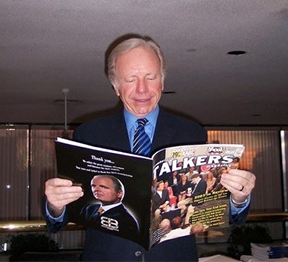 week’s installment of the award-winning PodcastOne series, “The Michael Harrison Interview.” The program includes an archived interview conducted with Lieberman in 2018 for the podcast which offers valuable insight into his perspective on the Electoral College and the presidency of Donald Trump among other historic issues. Harrison describes the late senator and former VP candidate as, “one of the last true American statesmen of the modern era.”


















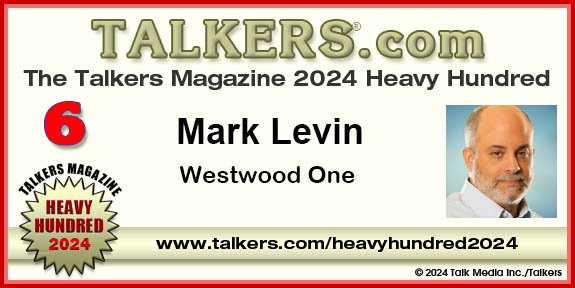
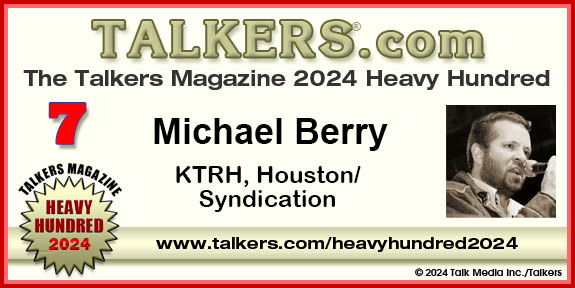
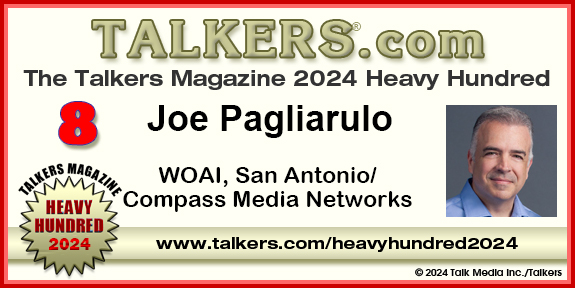
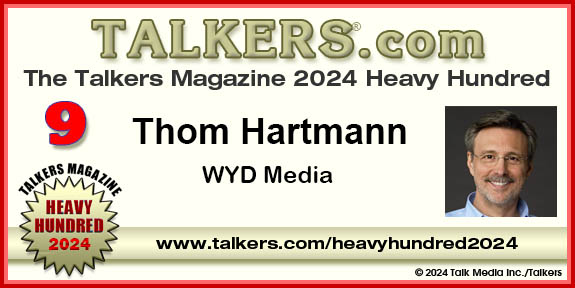





 Pick a day, any day. At least one news item will have the little voice in your head hollering “TELL me you’re kidding!” After recent headlines, and as various plots thicken, that little voice might need a lozenge.
 population has listened to a podcast in the last month, up 12% year over year; 34% of the U.S. 12+ population has listened to a podcast in the last week, up 10% year over year. Despite changes in how downloads are being delivered and counted, listening levels are up markedly; 2) Growth in podcast reach is driven by large increases among the number of female listeners: 45% of women in the U.S. age 12+ have listened to a podcast in the last month, up from 39% in 2023, an increase of 15%; 32% of women in the U.S. age 12+ have listened to a podcast in the last week, up from 27% in 2023, an increase of 19%; 3) Online audio listening hits the highest mark ever: 76% of those in the U.S. age 12+ have listened to online audio in the last month, an estimated 218 million people, 90% of those age 12-34 and 85% of those age 35-54 have listened to online audio in the last month; 4) 70% of those age 18+ who have driven or ridden in a car in the last month currently ever listen to radio as an audio source in their primary car; 55% listen to online audio and 32% listen to podcasts; and 5) 60% of those age 12+ have a traditional AM/FM radio set in their home.