Features
On a February night in 1964, a veteran TV host and four young musicians from England changed music, broadcasting, popular culture… they changed everything.
By Mark Wainwright
 In early December 1963, America was a very gloomy place. The assassination of President John F. Kennedy on November 22 brought the country to a virtual standstill for four days, and the emotional and psychological hangover lingered for weeks. The nation needed a dose of uplifting energy and fun, and the Beatles were the ideal remedy.
The Beatles were hardly newcomers. They had already been a successful act in the UK and mainland Europe (especially in Germany) for several years; oddly, they never got much traction in the United States. They had released a handful of songs in the US on smaller, independent record labels as far back as 1962, but they received little attention.
“She Loves You,” one of their early signature songs, was a failure when it was first released here in 1963. Dick Clark tried to feature it on “American Bandstand,” but the young dancers on his show didn’t know what to make of it and rated it poorly. But as the year went on, their popularity in England dramatically turned into a phenomenon that featured wildly enthusiastic crowds of screaming teenage girls. No one seems to be able to pinpoint what the catalyst was, but their already established popularity quickly grew into what became known as “Beatlemania.”
The Beatles first appeared on American TV on network news broadcasts. NBC’s “Huntley-Brinkley Report” aired a segment about the Beatles and Beatlemania in England on November 18,1963. Edwin Newman was the correspondent, and he and his colleagues were rather dismissive of the group, their music, and their young fans. Meanwhile, over at CBS, Walter Cronkite’s take was more generous. Their reporter in London, Alexander Kendrick, was pretty condescending as well, but Cronkite liked the segment when he saw it on the “CBS Morning News” on November 22 and planned to run it on his evening newscast. Sadly, what happened in Dallas hours later preempted everything.
A few weeks later, Cronkite thought his viewers could use a lift from the gloom that had descended upon the country, and he thought that segment would be a nice diversion. He ran it on his newscast on December 10, and that story really got the nation’s attention.
Young America was soon clamoring for everything Beatles. Radio stations dug up the records that hadn’t been successful and started playing them constantly. Beatles paraphernalia was heavily marketed and sold well. Capitol Records released “I Want to Hold Your Hand” in the United States on December 26 — the boys finally had a deal with a major record company in the US — and by New Year’s Eve, it was already a hit. It was the first of six Beatles’ songs that reached #1 on the Billboard “Hot 100” chart in 1964.
Meanwhile, Ed Sullivan was the host/master of ceremonies of a long-running CBS variety show that dominated the Sunday night ratings for years. Unlike most of his contemporaries, he was happy to present many of the early stars of rock-and-roll; Elvis Presley, Buddy Holly, and Jackie Wilson were among the pioneering artists of the new music genre who got their first major television exposure on Sullivan’s program.
Sullivan heard about the Beatles, saw them receive a tumultuous reception at Heathrow Airport in London, saw the CBS news segment, and was determined to present them on his show. Whatever he thought of their music, he respected talent and knew a hot act when he saw one.
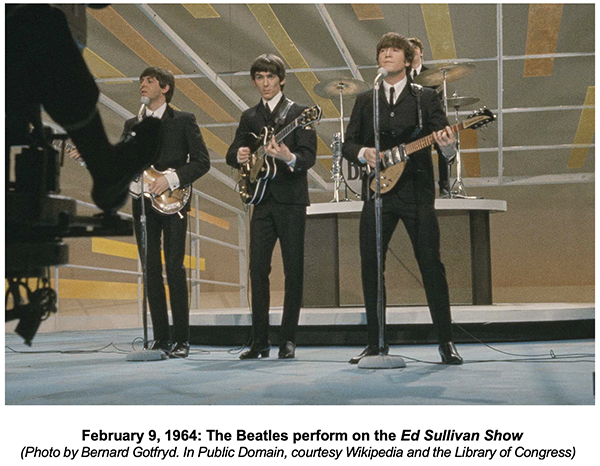
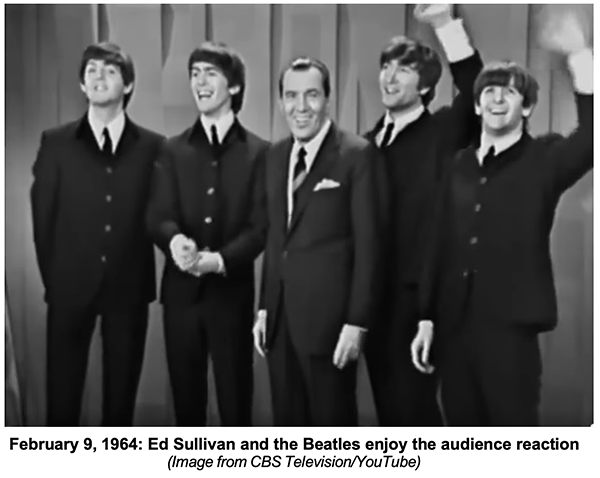
A deal was quickly arranged between Sullivan and Brian Epstein, the Beatles’ long-time manager. Sullivan would bring them to the United States for three consecutive Sunday night shows. The February 16 performance would be broadcast live from the Deauville Hotel in Miami Beach, the third appearance on February 23 would be taped in advance. But the first of the three, a live performance on the Ed Sullivan Show February 9, was the one most anticipated. The two New York shows would be presented at the studio venue now known as the “Ed Sullivan Theater.”
When word got out, the demand for tickets was insane. CBS received more than 50,000 ticket requests (the tickets were free) for a studio theater that held 728. Getting one of the tickets was largely a matter of luck. Numerous notables and VIPs called upon favors owed and contacts at CBS to get tickets for their daughters (or granddaughters). Only a few succeeded.
When the Beatles arrived in New York on a Pan Am 707, they were greeted by a near-hysterical crowd of teenage girls (this had become a routine occurrence). They needed a police escort to get into Manhattan, and they needed a phalanx of New York cops to get them in and out of their hotel. All of this, of course, was breathlessly reported in the news media.
They arrived at the theater on Saturday, February 8, for a lighting and sound check and a brief rehearsal. George Harrison was recovering from a throat infection and was still tired and feverish, so he stayed at the hotel to rest, while a member of their entourage and a CBS production assistant took turns as stand-ins for George.
The following evening, at 8:00 pm Eastern Time, the “Ed Sullivan Show” went on the air, and shortly after the opening credits, Sullivan came on stage and offered a few brief remarks about the Beatles and their spectacular overnight success (“overnight” at least as far as Americans were concerned). Then… “Ladies and Gentlemen… THE BEATLES!” The theater erupted.
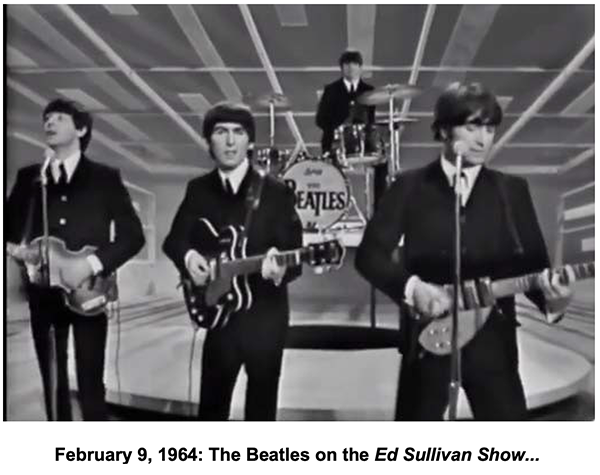
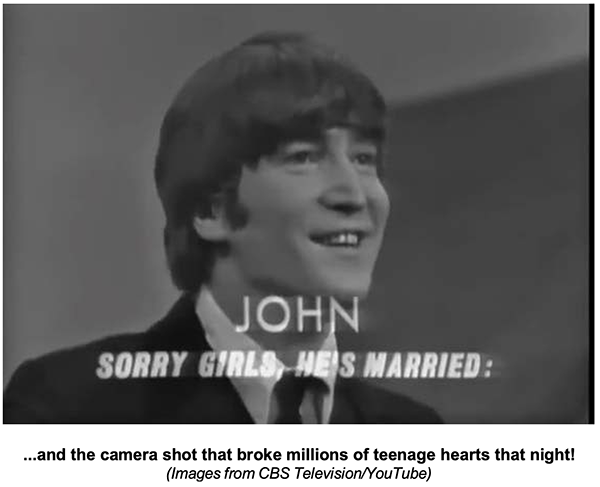
This moment led to one of the enduring music/broadcasting history trivia questions: What was the first song the Beatles performed live on their first “Ed Sullivan Show” appearance? No, it wasn’t “She Loves You” or “I Want to Hold Your Hand” (although they did those later in the show). Hint: while it was one of their most popular early songs, it was never officially released as a single. Okay, it was “All My Loving,” track #6 on side one of their iconic Meet the Beatles! album.
The ratings for the show were unprecedented. More than 73 million viewers – 39% of the country’s population – saw the performance. The broadcast drew a 60 share, which meant that 60% of American TV households were tuned in. Ed Sullivan always had pretty good ratings, but this was more than triple the size of his usual audience.
The Beatles were far from finishing their first American visit. Brian Epstein had managed to squeeze a couple of concert appearances into their tight schedule. One of those took place in Washington, DC two nights later, at the old Washington Coliseum. The old barn had seen some big events in its history, but nothing like this. The folks who owned and managed the building had barely heard of the group, but a concert promoter in the region convinced them to book a show. There was minimal promotion and advertising, but it wasn’t necessary. The tickets sold out in only a few hours.
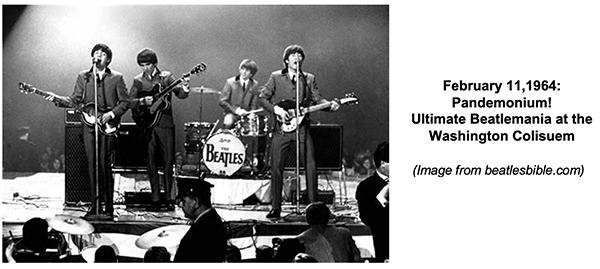
It turned out to be one of the most intense and intimidating concert environments ever seen, and is still regarded as such. The Beatles performed one of their few (maybe their only?) concerts “in the round,” on a small stage at the center of the arena, placed where the boxing ring would normally be situated. The building was packed with 8,092 ticket holders, most of them (as usual) screaming teenagers, with the front rows only a few feet from the stage. Imagine the frenzy in Ed Sullivan’s studio theater, now multiplied by a factor of ten. Fortunately, nothing really serious occurred, and the band handled the situation flawlessly, even making adjustments on the fly to handle audio and microphone issues…although it’s hard to believe they could even hear themselves amidst the screaming. They returned to New York to perform at Carnegie Hall the following day, then flew to Florida to spend a few days before returning to England. They returned for a North American concert tour in late summer. That tour was much better organized and promoted, although Beatlemania had not subsided at all, and the receptions they received were just as frenzied as their earlier appearances.
Typically, in an article like this, you would see links to various sources on the web. It would be superfluous here. There are countless sources of audio, video, photographs, and text of all these events and many others relating to that weekend in 1964. They are easily accessed on YouTube and other online locations. You can use one of the popular search engines or simply type a few key words into the YouTube search bar. All sorts of material will pop up; you’ll never run out of stuff to enjoy. If you are looking for maximum available audio and video quality, there are many downloads and DVD’s available from Amazon and other merchants.
The Beatles’ first weekend in America – particularly that first appearance on the “Ed Sullivan Show” – is widely regarded as a sort of cultural watershed that ignited Beatlemania here and opened America to other performers of the “British Invasion” era… artists like the Rolling Stones, the Dave Clark Five, Dusty Springfield, and many others. Many sociologists and cultural historians have opined that the Beatles coming to the United States was (at least in a pop culture sense) the beginning of the era that we now commonly view as “The Sixties.” Indeed, a veteran television host and four young musicians from the UK changed everything that night.
EPILOGUE
If their first “Ed Sullivan Show” performance was the “penthouse suite” of their first visit to America, the foundations of that structure were the countless radio stations around the United States that highlighted the band and played their music incessantly. There are endless stories about the big AM Top-40 stations of that era, their star disc jockeys, and their various encounters with the Beatles, both on and off the air.
I was a youngster in Baltimore at that time, and I was already hooked on radio and everything about it. I was a big fan of AM Top-40 powerhouse WCAO. The “Big 60” was the radio station for young Baltimore in that era, and their on-air staff were all celebrities in the community. Noted radio entrepreneur Kerby Confer was a WCAO disc jockey then, using the name “Kerby Scott” on the air.
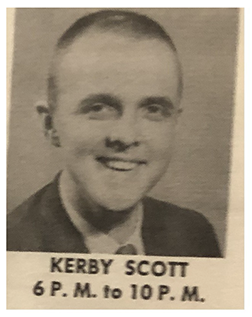 1964 WCAO Promotional Material: “Kerby Scott photo
(Photo courtesy Kerby Confer)
I recently spoke with Kerby Confer (almost two hours on the phone!) and reminisced about that era and WCAO’s role in it. When the Beatles took the train from New York to their gig in Washington, one of Kerby’s colleagues, veteran WCAO newsman Frank Luber, managed to board the train when it stopped at Pennsylvania Station in Baltimore and recorded an interview with the Beatles. The tape was brought back to the station and aired.
If WCAO was already immersed in Beatlemania, that episode had the station and its staff absolutely swimming in it. Kerby Confer told me that moment influenced his life and his career in ways he didn’t fully appreciate at the time. He said he was just another guy doing pretty well on the air in Baltimore, but that moment led to him becoming Baltimore’s “Fifth Beatle.” Wait, what? Baltimore’s “Fifth Beatle?”How did that come about?
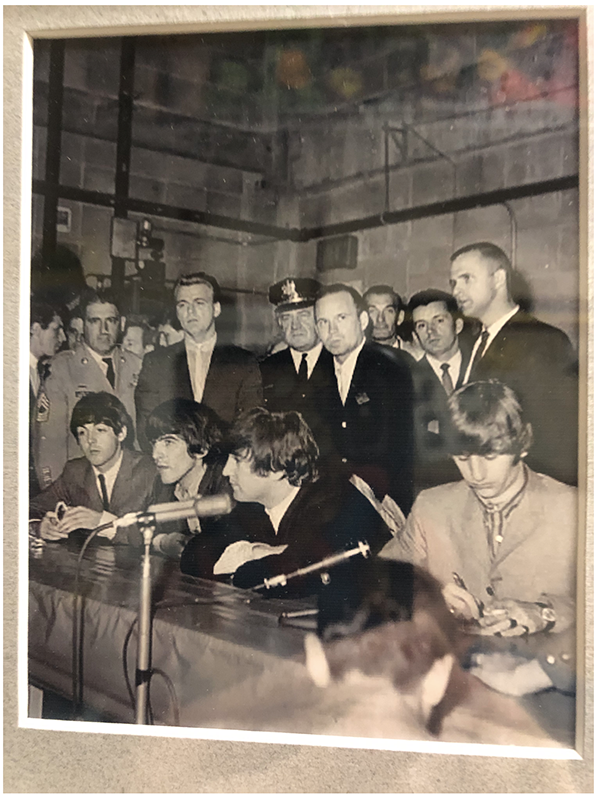
September, 1964: The Beatles and Baltimore media. “Kerby Scott” Confer is at the far right, directly behind Ringo (Photo courtesy Kerby Confer)
As it turned out, Kerby Scott soon became the host of WCAO’s “Liverpool Hour,” an evening program in conjunction with his regular on-air work at the station. The program featured the music of the Beatles and the many other artists who came out of the UK at that time.
Kerby usually wore his hair short in a buzz cut, but Paul Rodgers – his lifelong friend, WCAO colleague, and business partner later – convinced him to grow his hair out enough to solidify the “Fifth Beatle” persona. Kerby eventually sported a very restrained Beatles-style haircut to complete the image (I don’t think he kept the haircut for very long). He was an obvious choice to emcee one of the Beatles’ shows when they performed at the Baltimore Civic Center in September of 1964, and he later hosted “The Kerby Scott Show” on WBAL-TV; it was a dance party program, Baltimore’s version of Dick Clark’s show “American Bandstand,” and I believe it was eventually syndicated elsewhere. Before long, Kerby Confer moved over to the business side of radio in management and ownership. He was very successful in that endeavor, and still owns and operates many radio stations today.
So, Kerby Scott Confer and Mark Wainwright were just two more young radio guys whose lives and careers were influenced by that first Beatles weekend in the United States. It bears repeating: a veteran television host and four young musicians from England changed everything on the night of February 9,1964.
Mark Wainwright is a long-time radio personality, talk show host, and voiceover performer who has worked on the air at numerous respected radio stations around the United States. He was most recentlythe morning host at WSYR in Syracuse, New York. A Baltimore native, Mark currently resides inSaratoga County, New York. He can be reached at: markwainwright@earthlink.net
Share this with your network

 It’s complicated, this whole Federal Trade Commission ruling potentially banning the non-compete. Considering where you stand on the non-compete concept, it’s really all about evaluating the five “C” profile of your media business.
 available across iHeartMedia’s broadcast, digital and podcast platforms and everywhere podcasts are heard. Talent to be heard on the platform include sports media personality Sarah Spain and WNBA legend & three-time Olympic gold medalist, Sheryl Swoopes, with more talent to be announced in the coming weeks. Deep Blue is led by agency veteran Laura Correnti as founder and CEO and WNBA legend Sue Bird as chief strategy officer. iHeartMedia chief marketing officer Gayle Troberman states, “Women’s sports are on fire and so is audio. The timing is perfect to deliver on the massive fan excitement today and most importantly use the power of iHeart’s massive audience reach to ensure women’s sports gets the attention it deserves.
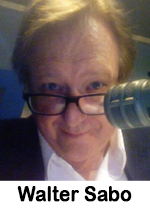 Growing a brand is a memory game. Which message will a target consumer value, remember it and take it to the cash register? The answer is not complicated but it is complex.
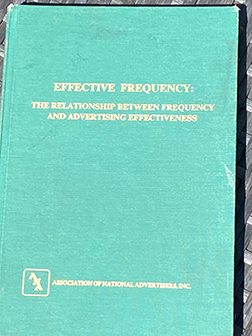 about all the science any of us have been tutored in on the subject of effective frequency.
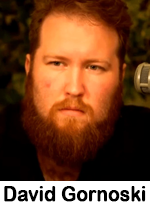 the “show biz” side of his outgoing personality and large physical stature. Booked in a “Battle Royal” elimination match, “Handsome” David Gornoski snatched victory in the bout. Afterwards, Gornoski proceeded to announce his intentions to be a wrestling manager looking for the right client and serenaded the crowd with a rendition of Britney Spears’ “Oops I Did It Again.” Gornoski started his broadcasting career at iHeartRadio’s WFLA, Orlando and later, WHBO, Tampa before moving to podcasting. While he covers current events and culture, Gornoski has recently interviewed wrestling icons like Glenn “Kane” Jacobs, Mayor of Knox County, TN and fitness guru Diamond Dallas Page. Gornoski says he hopes to bridge the gap between the media world and the world of wrestling in a completely new way. He points to successful radio host and physician Doctor Asa (Asa Andrew, M.D.) whom he met at the TALKERS 2023 conference and is working with TNA Wrestling promotions as both a wrestler and ringside physician on Impact Wrestling as being a significant inspiration in his choice of this new path.
  Having written thousands of commercials and promos, I’ve become a copy connoisseur. And, admittedly, a tough grader when it comes to delivery. Sell me and you’re good.
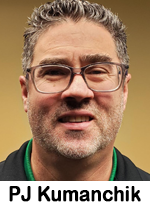 Spacciapolli states, “I first want to congratulate Dave on an incredible career. It has been a privilege to work with him over the past two years. We’re delighted to promote PJ, a mainstay at KDKA for the last 35 years. The trust he has built within our organization and with listeners and partners makes him a great fit to steward this iconic brand into the future as we grow on many levels.” Kumanchik, who has worked in multiple capacities at both KDKA News Radio and “93.7 The Fan” (KDKA-FM) as news producer and editor, morning show producer, sports producer and program director, comments, “I look forward to working with our leadership team, including Michael, to boost the momentum we have created at KDKA News Radio in the past couple of years. As the Voice of Pittsburgh, we will continue to provide news-driven talk that encourages interactions from our listeners.”
 originate content using FM boosters and is intended to do so without raising the potential for harmful co-channel interference to the reception of the primary station’s signal outside the coverage area of the booster station or to previously authorized secondary stations.” GBS filed a petition on March 13, 2020, proposing to give FM broadcasters the option to use boosters to originate programming to specific zones within their stations’ service area, proposing to allow program origination for a limited period totaling three minutes per hour… During that limited period, GBS proposes that the FCC allow the booster to originate geo-targeted advertisements, promotions for upcoming programs, and other hyper-localized content, suggesting it would benefit small and minority-owned broadcasters, because potential advertisers that currently find it prohibitively expensive to buy spots reaching a radio station’s whole service area might purchase lower-cost airtime reaching a more targeted area, thereby becoming a new source of station revenue.”
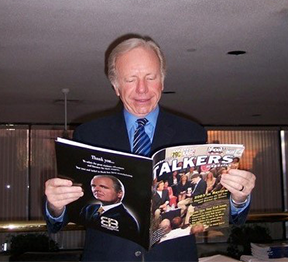 ideology on an issue-by-issue basis – although infuriating his fellow Democrats on many an occasion. After leaving the Senate in 2012, he withdrew somewhat from the political spotlight to serve as an attorney in private practice and a college professor but remained outspoken on issues of politics and public policy. His most recent activities included founding the No Labels Group which condemns what Lieberman described as the “partisan polarization of our politics which prevents us from making the principled compromises on which progress in a democracy depends.” Lieberman said, “We need bipartisan leadership to break the gridlock in Washington that will unleash all the potential that is in the American people.” TALKERS publisher Michael Harrison had the opportunity to get to know Joe Lieberman very well while serving as a talk show host on Connecticut’s leading talk station, WTIC, Hartford in the early 1990s. Harrison states, “Joe Lieberman was always available at a moment’s notice to appear on the air with me during those golden days of talk radio’s modern era and it was apparent to me – as well as talk show hosts across the nation – that he wasn’t your ‘run of the mill politician’ who put party over country and avoided answering the tough questions. There was a profound honesty in his words and tone that inspired confidence, among even those who disagreed with him, that they were talking to a very solid, principles-based man.” Harrison continues, “Talk show hosts on both sides of the political divide loved him for his warmth, candor and accessibility.” Harrison concludes, “Al Gore would have been better served during his run for the presidency to have let Joe have freer reign over his media availability during the campaign, something the VP failed to do. Every request for Joe to be a guest – many of which were squashed – had to go through the Gore campaign which turned off a lot of Joe’s friends and admirers in both radio camps.”
 Before the bound copy arrived – at which point all work stopped – Arbitron would send “Advances.” Even those topline numbers ground things to a halt, and had some PDs doing cartwheels, others out on the ledge. ‘Seems quaint now.
 producers.” All Entries in the 2024 competition were screened online by NYF’s Radio Awards international Grand Jury of 200-plus producers, directors, writers, and other creative media professionals from around the globe and judged on the following set of criteria: production values, creativity, content presentation, direction, writing, achievement of purpose and audience suitability. Award-winning entries will be announced during the New York Festivals 2024 Storytellers Gala virtual event on April 16 at 6:00 pm ET. The virtual event will include featured global audio and video highlights, award winners’ acceptance speeches from around the world, and up-close and personal spotlights featuring some of radio and television’s most respected storytellers. All winners will be showcased on the Radio Awards winners gallery.
  ‘entertainment,’ ‘sports,’ ‘travel’ etc., in accordance with Interactive Advertising Bureau (IAB) standards. With this capability, Audacy will dynamically insert ads into podcasts more precisely than ever.” Audacy chief revenue officer Brian Benedik adds, “The promise of Audacy’s cross-platform audio campaigns to deliver unprecedented reach coupled with powerful precision targeting becomes even more pronounced with the integration of contextual podcast advertising into our Ad Tech stack. Our clients are realizing better returns on their advertising investments and better outcomes for their business when they leverage our holistic audio strategies, which is why Audacy boasts one of the highest renewal rates in audio and digital media.”
 Sell a local advertiser a promotion – a contest which awards a major prize from the advertiser’s inventory – to the winner who creates the best commercial for the advertiser.
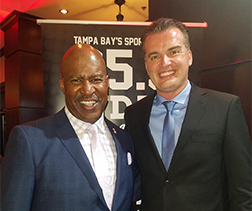 program currently in development with executive producer Chris Mathis. Lane will take on a new role as host of the signature Rays pre-game show “The Inside Pitch.” He will also continue his seasonal hosting duties with the Tampa Bay Buccaneers radio network. WDAE program director John Mamola says, “We couldn’t be more excited for Ronnie and Tom as they embark on their new opportunities at WDAE. These programs promise fresh content and compelling, engaging experiences for our listeners. We will continue the legacy of high performance the hosts built as a duo and the voice of Tampa Bay sports fanatics everywhere.”
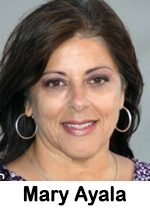 been serving as assistant program director and executive producer. iHeartMedia San Diego market president Noreen Ippolito says, “Mary has been a part of our cluster for many years and is more than ready to take the lead role of our talk stations. She’s smart, experienced, and incredibly detailed with her work.” Ayala comments, “This is an exciting time to be taking over the program director position for these brands. Each station has its own distinct flavor, and all of them are filled with great talent I’m looking forward to working with.”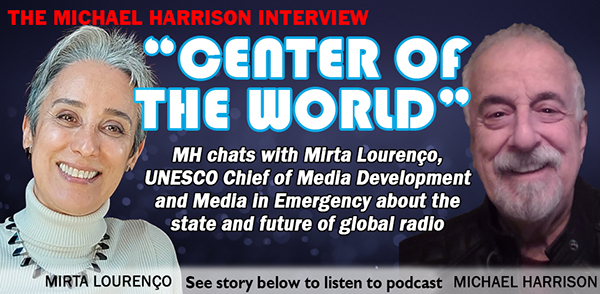
 Radio programming is like any business. Our best prospects are existing customers (getting people already listening to listen more often). And – without spending a dime on outside promotion – we can if the station is known-for-knowing. Set the expectation that we have listeners’ backs and optimize the information we deliver.
 president and Sara Morris is elevated to vice president of government affairs. Pigue joins iHeartMedia following seven years advising U.S. Senator Dan Sullivan (R-AK) on technology, telecommunications, consumer protection, finance, banking, budget, tax, health care and judiciary policy issues. Gonzalez most recently served as deputy director of scheduling and assistant to the chief of staff for Senator Jon Ossoff (D-Georgia). iHeartMedia chairman and CEO Bob Pittman states, “Our company is deeply appreciative of iHeartMedia’s Government Affairs team and their hard work on behalf of our company as well as on issues of critical importance to the broadcast radio industry. I congratulate Jessica and Sara on their promotions, and welcome David and Sophia to the iHeart team.”
 January 24, 2024, the Group reported beneficial ownership of approximately 10.01% of the company’s outstanding Class A shares and stated its intent to acquire 20% of Cumulus. The Group has investments in other media companies, including a sizeable holding in a direct competitor of Cumulus Media. According to Investopedia, a poison pill “is a defense strategy used by the directors of a public company to prevent activist investors, competitors, or other would-be acquirers from taking control of the company. Poison pills are executed by buying up large amounts of its stock. They effectively block the accumulation of a company’s outstanding shares. Companies promise to distribute additional free or heavily discounted shares to all existing shareholders, which dilutes the shares so outsiders can’t take over the company by purchasing a controlling amount of shares.” Cumulus board chairman Andrew Hobson says, “Given the facts, the Cumulus board firmly believes it is necessary to adopt a limited-duration rights plan to protect the interests of all Cumulus shareholders. The Rights Plan is intended to enable the company’s shareholders to realize the long-term value of their investment, ensure that all shareholders receive fair and equal treatment in the event of any proposed takeover of the company, and guard against tactics to gain control of the company without paying all shareholders an appropriate premium for that control. Cumulus Media’s leadership maintains open dialogue with its investors, including the Group, and intends to continue that practice.”
 When reviewing our industry’s awards such as the Crystals or Marconis there are two categories missing. They are: “Best New” and “Best Innovation.” Imagine if winners were announced for these prizes:
 If
If