
Monday Memo: The 2026 Win-Win Audio Alliance
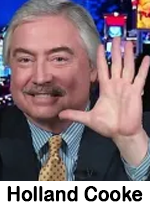
By Holland Cooke
Consultant
 Stations I work with are confronting a generational revenue issue: Local direct retail business owners who are Baby Boomers are retiring. And their heirs are moving the radio dollars that built their parents’ businesses to search engine optimization and elsewhere-digital. The narrative we present them: “Radio is ‘a reach engine’” for the digital content people their age personally favor. In this mode, the station feels less like “your father’s Oldsmobile;” and more present tense. Many of these next-generation businesspeople are avid podcast listeners, and that presents an opportunity.
If you still have a stack of TALKERS issues going back 36 years to when it was a newsprint trade delivered by snail mail – you will find my reports from the very first podcasting conventions. I wrote then that the energy in those rooms felt like radio conventions felt before consolidation thinned our herd. As AM/FM programming was settling into predictable grooves – music “safe lists” and talk radio’s political caricature – enthused podcasters were gleefully coloring outside the lines. Many podcast topics were too narrowcast for broadcast radio, whose superpower will always be relevant, helpful local content. Yet podcasters were already building listener communities, and finding related advertisers, on what we then called “the World Wide Web.”
Back to the future: Among takeaways from last week’s NAB Show: Podcasters are no longer the Rodney Dangerfields of audio. 2026 Edison Research pegged the turning point: Time Spent Listening to podcasts has surpassed TSL to spoken word radio. Podcasting is now mainstream media, available on smartphones and smart speakers, which outnumber many households’ radio receivers.
Meanwhile, radio’s own podcast efforts have been – putting it charitably – underoptimized.
- Too many talk stations simply post hourlong airchecks. No highlights. No hooks. Magic moments – the caller who lit up the board, the guest who surprised you, the host who finally said the thing everyone else tiptoed around – are buried inside a 48minute block like a prize in a cereal box. And listeners won’t dig. Research also tells us that podcast listeners’ attention span is less-forgiving than radio listeners.
- Without stopping the music on FM, some smart DJs are also podcasting about their personal passions. Ditto the radio talkers who podcast hobby topics and other things off topic to their on-air show. But for many radio personalities, being told to – effectively – do a second show for the station’s podcast repertoire? It’s just one more thing dumped on them as cutbacks continue.
Here’s the opportunity: Radio has what podcasters want, and podcasters have what radio needs.
- Radio = credibility. Anyone with a USB mic can podcast. But stations have earned trust. While many podcasters toil in obscurity, radio can promote them to its habitual listeners. Where better to find audio consumers? People tune-in without being nudged by an algorithm. And even as touchscreen dashboards now hide AM/FM among umpteen audio alternatives, broadcast radio is still #1 in-car.
- Podcasters excel where radio rarely ventures: narrowcast depth. They cover high affinity topics that don’t justify live airtime but can absolutely attract targeted advertisers. These would-be influencers build communities. They create evergreen content. They understand digital promotion instinctively.
Put these two together and you get a synergy that moves the needle for broadcasters and podcasters… and advertisers.
For all these reasons – and because consolidation, automation, and syndication have clobbered radio’s farm team – stations and podcasters should seek each other out. 1 + 1 can = 3… or more, with coordinated, scalable workflow. Here’s the schematic.
There’s more on podcasting in my daily TALKERS updates from last week’s NAB Show. If you missed any, they’re archived at HollandCooke.com
Holland Cooke is a consultant working the intersection of broadcasting and the Internet. Follow HC on Twitter @HollandCooke and connect on LinkedIn

 YouTube less than 20 minutes after the shots were fired with analysis and perspective including multiple videos from different angles, as well as his own experiences over the years attending D.C. events. Tradup adds, “I am so very proud of our Salem news professionals at SRN News and TOWNHALL.com who quickly and concisely kept our audiences up-to-the-minute as this unprecedented drama unfolded.”
 South Florida and Florida State University. Radio broadcasts for Rowdies home matches on Florida Alumni Radio will feature the same crew from the club’s television broadcasts on Tampa Bay 44 – longtime Rowdies play-by-play commentator Drew Fellios, Rowdies legendary goalkeeper and color commentator Jeff Attinella, and sideline reporter Diandra Loux.


 Louisville area president Kristy Beebee says, “Christopher brings an exceptional track record of leadership, creativity and strategic vision, and will be a tremendous asset to our teams and listeners. Louisville is a dynamic, growing market, and we’re excited to see the impact he’ll make as we continue to elevate and strengthen our brands, talent and community connections.” Layfield most recently served with Cumulus Media as SVP of programming for Indianapolis.

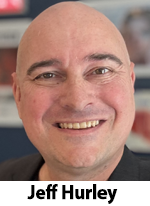 responsibilities outside of Philadelphia, including the Upstate New York, Mid-Atlantic and New England areas. iHeartMedia EVP of programming Thea Mitchem says, “Jeff is a proven leader with a deep understanding of our brands, our audiences and the power of strong programming. His ability to strategically elevate stations while developing great teams makes him the right choice to lead programming in Philadelphia, and I’m confident he’ll continue to drive success in this important market.”
 provocative podcasts, unexpected live experiences, and new research, tools and planning solutions, Bubbler is designed to get brands into the conversation in fresh ways.” As part of its launch, Bubbler announces a partnership with iHeartMedia to develop and distribute a slate of original business and marketing podcasts, with more than 10 original podcasts slated for this year. President of iHeartPodcasts Will Pearson says, “The iHeartPodcast Network has always been focused on the new genres and audiences we can reach through this incredible medium – and the ‘business-to-business’ space is a perfect example of that. Creating a slate in podcasting for marketing executives to have meaningful, deep conversations with each other about the world of business and advertising will have immense value for our listeners and brand partners alike.”
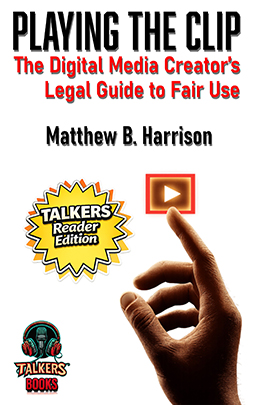 TALKERS magazine associate publisher) Matthew B. Harrison, a work designed for today’s news/talk media environment where audio, video, screenshots, and quotes are not just supporting elements – but serve as the actual content itself. This technique has become particularly prevalent on YouTube and even cable news/talk TV but increasingly appears in audio form as what used to be called “actualities” – sound from another source.
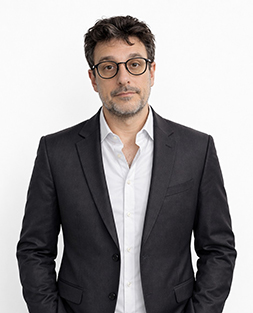 book explains the legal concept of fair use not as a permission structure, but as a legal defense raised after copying has already occurred – an uncomfortable but essential distinction that underpins the entire analysis.
 Cumulus’s relationships with advertisers, goodwill, and market share, and push it towards financial collapse. The District Court accordingly enjoined Nielsen’s anticompetitive conduct.
  Nielsen’s brief attacks those findings as speculative, asserting that Cumulus never showed any real risk of bankruptcy or any other non-compensable harm, but one of those irreparable harms has now come to pass: After a motions panel stayed the injunction, Cumulus declared bankruptcy—citing “the Nielsen network tying policy” as a significant contributing cause. The other harms identified by the District Court remain today and have become increasingly urgent, as Cumulus will lose access to Nationwide this September.” TALKERS associate publisher and Harrison Media Law senior partner Matthew B. Harrison comments, “Cumulus has fundamentally shifted the posture of this case. What began as a forward-looking claim of irreparable harm is now being presented as a realized outcome, following its Chapter 11 filing. The appellate court is no longer being asked to prevent potential damage, but to assess whether the harm that has already occurred can be attributed to Nielsen’s challenged conduct — or to broader economic pressures facing the radio industry.”
 My notes from a real useful session with Amazon’s Andy Slater, Audacy’s Michael Biemolt, and YouTube’s Neha Taleja, moderated by WTOP’S John Wardock.
 government studies report most commutes are a solo affair. In the car, Honda drivers cannot be reached by social media, online video, or any digital platform while commuting to work. What are the audio habits of Honda drivers in all locations (home, work, vehicle, and some other place)? Edison examined audience shares among Honda drivers to ad-supported audio platforms at home, in the car, at work, and some other place. In all locations, Honda drivers devote 62% of all their ad-supported audio time spent to AM/FM radio.”
 ratio of the three measurement types and it’s notable that more than half of Joe Rogan’s consumption is audio. For comparison, the audience for Candace Owen’s “Candace” (#9) is mostly from video and video clips – split evenly between the two. “The Tucker Carlson Show” (#10) audience is predominantly from video clips, while The New York Times’ “The Daily” (#6) is almost exclusively consumed via audio.
 iHeart Audience Network’s “Stuff You Should Know” returns to the #1 spot. Cumulus Podcast Network’s “The Dan Bongino Show” is steady at #3, while Salem Podcast Network’s “The Charlie Kirk Show” falls eight places to #14.
  radio industry and listeners. Voting for inductees begins Friday (4/24) and runs through May 8. The top six vote recipients will gain induction as part of the 2026 Radio Hall of Fame Induction class. The additional inductees that will make up the induction class will be selected by the Radio Hall of Fame Nominating Committee. Spoken-word nominees include: Boomer Esiason, Joey Reynolds, John & Ken, and Larry Elder.
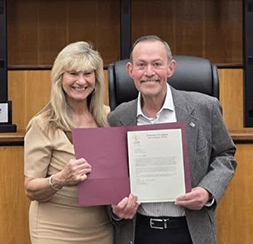 WRVA, Richmond afternoon drive host Jeff Katz (right) is pictured here with Richmond city council member Reva Trammel (left), while being recognized on the 10th anniversary of Katz’s Lieutenant Jan McTernan Blue Friday Honor Award. Katz, a former police officer, has been honoring Central Virginia law enforcement heroes on the final Friday of each month. The award is named in memory of Janice Ann McTernan a retired, longtime veteran of the Richmond Police Department.



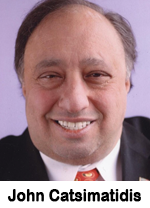 a financial backer of the table tennis phenom played by Timothée Chalamet in the film. Safdie told Vanity Fair he liked Catsimatidis’ ‘larger-than-life regional businessman’ look, which he noticed when the mogul ran for New York City mayor in 2013.” Interestingly, a key focus in the piece is on Catsimatidis’ ownership of news/talker 77WABC. He writes, “Catsimatidis made millions from buying New York real estate on the cheap in the 1970s when the city was in deep economic trouble. So, he recognized a bargain when his Red Apple Media group bought WABC for $12 million from Cumulus Media.”
 newscast that some 700 stations respected enough to put on their air. Schwalb tells the Tribune, “Conversations have been going on since the announcement, and I think we get closer and closer to a decision every day. But we have to be very careful and be very diligent about making sure the product that we select is going to make sense from a listener perspective and a revenue perspective as well… CBS has been a great top-of-the-hour news piece for a long time, but it’s a very small percentage of what we do in a given hour between business, traffic and weather together on the eights, local news – the strongest local newsroom in Chicago radio.”
 contributing their time, expertise, and resources. Honorees are true champions of service, demonstrating an unwavering commitment to fostering growth and progress within the industry.” McVay was presented with the award by Erica Farber on April 20, at the MIW Lipstick & Lobster Dinner at Maggiano’s. MIW board president Sheila Kirby states, “Mike McVay has been a consistent and powerful advocate for both the radio industry and the advancement of women within it. His willingness to share his time, expertise, and influence has made a lasting impact on MIW and the broader community we serve. Mike doesn’t just support the mission, he actively helps move it forward, and that kind of leadership is exactly what the Erica Farber Impact Award represents.”
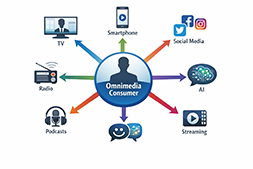 with the station across town anymore. It’s competing with 50,000 news brands, nearly half a million podcasts, and an infinite scroll of feeds that never sleep.