By Holland Cooke
Consultant
 By 2009, I had been making my living consulting and coaching talk hosts for 14 years, but I myself had not yet hosted a talk show. Like Rush Limbaugh before he went-talk, I had lots of on-air time under my belt as a music DJ. And that same skill set contributes to talk radio success: “Play the hits” (topics) and convert Cume to AQH (technique).
This month and next, when so many take vacation time, guest-hosts are often local somebodies who are not career broadcasters and don’t share our second-nature performance routines. For their benefit, these tips, based on my experience on both sides of the mic:
My hosting debut was “The Jim Bohannon Show.” And Jimbo told me I was only the third person to ever guest-host, after Joan Rivers and Chris Matthews jump-started their broadcast careers there. But, to these listeners, who-the-heck was I? Lacking the back-story of an A-list comedian or former presidential speechwriter, I simply told the truth, saying, “I’m Jim’s pal, Holland Cooke” as I quickly invited callers into the hour’s topic or teed up the guest. I had promised myself I would avoid “The Sitting-In For Rush Syndrome:” unscripted monologue about myself and blah-blah-blah until the first break. TALKERS publisher Michael Harrison – himself a well-traveled guest host – recommends nonchalance and warns against, “It’s such an honor to be here!”
So, if you’re filling-in, that’s Tip #1: Cut to the chase. Don’t devalue the show by committing lots of time explaining that the familiar host is away and who you are. Tee-up what the show is about this hour… why it matters to those listening… how they will benefit from not wandering-off when they hear a stranger… and how to join-in.

Demonstrating this technique when “FOX Across America” host Jimmy Failla is off: my long-suffering client Paul Gleiser. His day job is owning KTBB, Tyler-Longview, Texas; and his side hustle is guest-hosting Jimmy’s show, which he’s done a half-dozen times this month. Understanding Tip #2: You’re a guest in someone’s home, Paul asked Jimmy for advice. Always in-character, Failla quipped “Drive it like you stole it!” So Gleiser is all about call count, teeing-up TWO tempting propositions, one topical, the other a softer “Bonus Question.” As I write this, he’s asking, “Which Democrat do we [Republicans] want to run-against in 2024?” and – as new employment numbers are announced – “The WORST job you ever had?” Callers are telling stories.
That’s Tip #3: Invite callers. Admittedly, my debut was a snap, with Jimbo’s show on 500-plus stations. But later, when then-PD Bill White had me do three nights on WBT, Charlotte, he texted me after my first hour to say that I had taken more calls that hour than other hosts get-around-to in a week. In a recession, I asked if callers were “Seeing ‘green shoots’ of recovery?” and “The best car you ever owned?” They all told stories about both. “DON’T beg for callers,” Harrison says. And bring more than just your voice, i.e., guests and sound bites from news feeds. Gleiser: “Prep like the phone is broken.”
Tip #4: Invite participation multiple ways. Many listeners would rather text than call. Do so and you’ll sound accessible and at-the-speed-of-life. And follow @smerconish to see how (effectively) he polls listeners via social media.
Tip #5: “Know what the show was about yesterday,” Gleiser urges, because political topics tend to change little day-to-day. Avoid this trap: The guest host’s outspoken narrative is a point that’s already been talked-to-death BUT this is HIS shot on a big show, so this is HIS turn to me-too the unison. Better approach: Come up with a new wrinkle; like Paul’s aforementioned “Who [Democrat] do we [Republicans] have the best chance of beating in 2024?”
Tip #6: Empower callers, by asking their FEELINGS, rather than asking for facts or their expertise. They’re not experts. Instead, use The Magic Words (“you” and “your”): “Should you be fined for installing or replacing your gas stove?” Or empower them with access to a guest they can Q+A about matters that matter to their lives. When the fill-in host is “a somebody” – the mayor or an athlete or an expert – the host him/herself is an opportune topic. As we say when inviting calls to hosts who broker weekend airtime: “The lawyer is in, the meter is off.”
Tip #7: Establish a relationship with the producer “BEFORE the show” Gleiser advises: “Don’t just show up.” Ascertain who-does-what. In some cases, the producer will have booked guests and may suggest or assign call-in topics. Or – in Jimmy Failla speak – you’re driving, if the producer is simply call-screening and running-the-board (which you should NOT attempt if you’re not an experienced broadcaster or if you are unfamiliar with this particular station’s set-up).
Tip #8: Keep re-setting – succinctly, “matter-of-factly” as Michael Harrison puts it — introducing yourself and your guest-or-topic — when you’re going-into and coming-out-of breaks, and at the beginning of each hour. Why: Listeners are constantly tuning-in.
Tip #9: Always and only announce the call-in number immediately after you tell them WHY to call. Most common mistake I hear, even from experienced hosts: They give-out the phone number at the very beginning of the show or hour or segment, then (eventually) they tell you why to call, possibly minutes later (an eternity in live radio). So, they’re haunted by those dreaded “regulars” who already have the number memorized. Make announcing the number the punch line, whether you’re asking opinions on topic du jour or offering access to a guest they’ll want to interact with. ‘Seems like a little thing, but this can make a big difference in how popular you make the station sound.
Tip #10: “Be a convenience to the station,” not high maintenance. Harrison: “If you’re a diva they won’t ask you back.”
Tip #11: Afterward, give it a listen. If you do this for a living, wait a week, so you hear your work with fresh ears. Not a broadcaster? Was there a segment worth sharing on your blog or via social media? Did you or a guest explain something real useful? On Twitter, link to an audio clip of “Pet Pro Dr. Donna Johnson’s tips for helping your critters keep their cool during a long, hot summer,” so you’re useful to those who weren’t listening live. For LOTS of clicks and shares, include pictures of cuddly kittens and puppies.
Tip #12: If you are a career broadcaster, “always be available (and prepared) on short notice,” Michael Harrison recommends. 😉
Holland Cooke (HollandCooke.com) is a consultant working at the intersection of broadcasting and the Internet. He is the author of “Spot-On: Commercial Copy Points That Earned The Benjamins,” a FREE download; and the E-book and FREE on-air radio features “Inflation Hacks: Save Those Benjamins;“and Multiply Your Podcast Subscribers, Without Buying Clicks,” available from Talkers books. Follow HC on Twitter @HollandCooke
Share this with your network





 inked in 2021 and included Cadence13 and APM developing and producing new shows and made Audacy the exclusive podcast sales rep for APM. The piece further notes that Audacy CEO David Field referenced the deal during his Q2 2023 earnings commentary saying, “In June, we successfully negotiated an early exit to an onerous Podcast ad representation contract, which resulted in a restructuring charge of $5.9 million in the quarter and the accelerated recognition of $4.5 million of prepaid content expense. We believe exiting this agreement will have a positive impact on our podcast margins, without materially impacting our future podcast revenue growth opportunity.”
  were not paid but given the ability to get their message out. Adell promoted the station as “Detroit’s Only Urban Tall Station” via billboards throughout the metro area. The Metro Times piece says hosts learned of the change in an email delivered last Friday night that said, “Your show will no longer air on WFDF 910AM Superstation. All access passes have been revoked and you are no longer allowed on the premises. The guard has been notified not to give you entry.” The piece goes on to say, “The terse email and sudden change infuriated some of the hosts and prompted others to accuse the owner, millionaire Kevin Adell, of exploiting Black people by turning racial anxiety into entertainment and failing to pay the hosts for their shows.” But Adell tells the paper “the format was no longer profitable and only attracted about 2,100 listeners a month, an abysmally small audience for a radio station. ‘When you look at it, no one supported it. I couldn’t get the community to support it.’”
  Those are the two consultant buzzwords that hosts I coach are hearing in their sleep. And a couple more “E” words: Empathy and Empower.
 December and now hosts a show on the Outkick platform. With Query’s move to middays, the Kevin & Query Show that’s been airing in morning drive becomes “The Wake Up Call With KB and Andy,” as Kevin Bowen is joined by new co-host Andy Sweeney. Urban One Indianapolis operations manager David Wood tells the Indianapolis Business Journal, “While Jake loves working with Kevin, the show is a complete antithesis to his body clock. He’s a huge night owl. It dawned on me, ‘Why don’t I put a known quantity in this noon to 3 p.m. show?’ Everybody knows Jake. He’s well-respected and he’s an entertaining person.”
 Tuesday (8/8), Cumulus filed suit against the duo on August 4 claiming they are in violation of several clauses in their contracts with the company. McDowell and Kemp left Cumulus last month after they were unable to come to terms on a renewal to remain with “The Ticket.” The sticking point was their desire to explore digital initiatives outside of their work with Cumulus. They have since launched a podcast via Patreon that Cumulus says violates their six-month non-compete. The company also alleges the two have violated the non-solicitation and non-disparagement clauses of their contract and additionally alleges they have “commandeered” company-owned social media accounts, threatened to release “conversations Defendants illicitly recorded” with company executives. Cumulus is seeking “emergency injunctive relief” plus attorneys’ fees and costs. McDowell told listeners to the podcast released on Sunday (8/6), “We’re working with certain advisors. We’ve been advised that we are doing nothing wrong, so don’t stop, for now. So right now, we are putting this out there, and what’s in store for tomorrow? I don’t know.”
  program. The story notes that Slaten last worked at KFNS seven years ago and this will be his sixth stint with the station. Slaten has a reputation in the market for being controversial. He also hosts a conservative political podcast called “The King’s Court” and previously worked for the late Bob Romanik, a political raconteur whose talk station KQQZ-AM was shut down by the FCC after it was discovered that Romanik, a convicted felon, was illegally operating the station. In his new position with KFNS-AM, Slaten is agreeing to stick to sports talk.
 She was the agent I enjoyed working with most over three decades I was an active real estate investor. We remain good friends, and her technique informs the work I do coaching agents – and attorneys and financial advisors and other professionals – who host ask-the-expert radio shows.
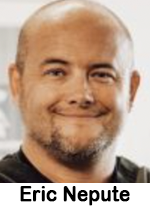 court under the COVID-19 Consumer Protection Act for peddling false information about the COVID pandemic in order to sell supplements and vitamins. The trial was set to begin on August 21 before Nepute and prosecutors agreed to pay an $80,000 fine and refrain from marketing his vitamin products as effective preventatives against COVID-19. Nepute and Quickwork LLC – a company in which he is part owner – were targeted by federal officials after Nepute claimed on his “Real Talk with Dr. Eric Nepute” program that vitamin D and zinc supplements could prevent or cure COVID-19. Nepute signed a consent order in 2021 agreeing not to disseminate information that his supplements could prevent COVID but in 2022 he caught the government’s attention for saying vitamins were more beneficial than the COVID vaccine.
  the journal refers to AM, FM, online and satellite talk radio, cable news/talk TV, and talk podcasting.
 Springfield, MA, joined TALKERS as its managing editor almost a quarter-of-a-century ago in 2000. The big story during that pre-9/11 year was the excruciatingly inconclusive presidential election between Texas Governor George W. Bush and Vice President Al Gore that took over a month to settle.
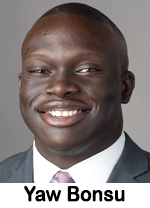 as the sports director at WRHU-FM, Hempstead, New York on campus and holds positions as a weekend news anchor for WABC-AM, New York and is a sports department intern for WABC-TV, New York. RTDNA Foundation says, “Yaw’s impressive journey includes internships at prominent companies like NBC 4 New York, FOX News Channel, Turner Sports, NBA on TNT, and SiriusXM. He looks up to journalist Jeremy Schaap for his impactful storytelling beyond the field of play and aims to make a similar difference in communities. As someone who largely relies on loans to cover school costs, receiving this scholarship means the world to him.”
  HALF of all radio stations in the United States lose money – at least they did back in 1991. The NAB used to put out an annual report revealing how many radio stations were profitable. Usually half the stations in America lost money. Since consolidation, the NAB stopped putting out that report. It is reasonable to believe that far, far fewer stations lose money today. Shared costs, real estate, technical economies due to digital equipment versus analog all indicate that there must be fewer money-losing properties.
 content, distribution and marketing its audio segment. Good Karma chief Craig Karmazin tells SBJ, “This is the culmination of what we’ve been working towards for the last 20-plus years. For us over the last 20 years, we’ve been focused on the medium and focused on the ESPN brand. Now for us to be able to run the sales operations of the entire network and the podcast business, it truly is like a culmination of everything we’ve been working towards in this partnership with them.”
  (7/28) and terminated his employment on Saturday. iHeartMedia issued the following statement: “After an internal review, Don Geronimo is no longer an employee of WBIG. We take matters of this nature very seriously and this behavior does not align with our core values.” McBride commented to ESPN, “When I heard the comments made about me on the radio show, I felt incredibly insulted and embarrassed. In my 17 years as a professional journalist, I have never been disrespected in such a blatant manner while trying to do my job. Their words were sexist and misogynistic. No woman should experience this in the workplace, and I appreciate the Commanders’ swift response in handling this matter.” For his part, Geronimo stated via social media, “At this time I will not be providing comment on the events of the last few days. I am consulting with my advisers as to my options moving forward, including an accurate reflection of the situation.”
 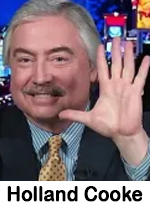 Fellow longtime, long-ago DJs: You know what I’m talking about. And it’s a life sentence, eh?
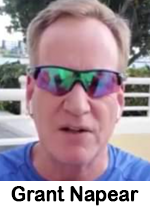 responded to former Sacramento Kings player DeMarcus Cousins’ social media post asking him what he thought of Black Lives Matter and Napear responded, “ALL LIVES MATTER… EVERY SINGLE ONE.” Bonneville fired him citing a clause in his contract that holds him responsible for anything that “might discredit the goodwill, good name or reputation” of the company. In allowing the wrongful termination suit to go forward, Judge Drozd wrote that Napear “has stated a plausible cause for retaliation” under California Labor Code sections 1101 and 1102, stating further that “the court finds that plaintiff has sufficiently alleged a ‘rule, regulation, or policy’ under (section) 1101 by alleging … defendant used his termination ‘as an example to all other employees of the Company as an implicit warning that anyone that dared to speak out publicly and criticize the politics of the Black Lives Matter movement would be summarily terminated.’”
  Amazing fact: In ancient times, from 1962-1972, the highest-paid on-air talent in New York City was “an overnight guy.” He was paid salary plus sales response. I’m talking about Long John Nebel on WOR, WNBC, then WMCA. Long John’s live reads moved product because his audience was captive. One-to-one his listeners were attached to their radios in the truck cab, night watchman’s building lobby, parents pacing with their babies, students cramming. His background was not in radio; he was a skilled auctioneer. Obviously, the same listeners exist today – and are anxious for someone to talk to them. Check out this old clip of Nebel in action:
  talkers Boomer Esiason and Gregg Giannotti of Audacy’s WFAN, New York and George Dunham, Craig Miller and Gordon Keith of Cumulus Media’s KTCK, Dallas-Ft. Worth are finalists in the Major Market Personality of the Year category. WDBZ, Cincinnati’s Lincoln Ware is a finalist in the Large Market Personality of the Year category and Kayla Blakeslee of Pathfinder Communications’ news/talk WOW, Ft. Wayne and Kevin Miller of Townsquare Media’s KIDO-AM, Boise are finalists in the Medium Market Personality of the Year category. Winners will be announced on October 25 at the Marconi Radio Awards Dinner during NAB Show New York.
  underestimate time spent with AM/FM radio. While they believe Americans spend 9% of their media time with AM/FM radio, the reality is 15%.” Why is this? The report cites two reasons. First, longtime ad agency executive Bob Hoffman says, “How can professional people who work in an industry that is largely constructed on media behavior be so astoundingly misinformed? The answer is pretty simple… marketers always overestimate the attraction of new things and underestimate the power of traditional consumer behavior.” Second, marketing professor Mark Ritson adds, “There is increasing global evidence that marketers are basing their media choices on their own behavior or that stoked by the digitally obsessed marketing media, rather than actual audience data.”
 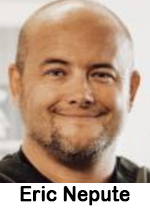 “Real Talk Radio Network” on Missouri stations KRTK-FM, Hermann; KVMO-FM, Vandalia; and KTRE-FM, Steelville, is being sued by the feds under the COVID-19 Consumer Protection Act for peddling false information about the COVID pandemic in order to sell supplements and vitamins. The trial is set to begin on August 21 and as a result of the rulings, Nepute is not allowed to testify as a medical expert as the judge ruled he does not practice medicine and has no “experience treating infectious diseases, and more specifically, COVID-19.” The judge also ruled that Nepute’s program is a form of advertising and as such falls under the laws that regulate commercial speech.
 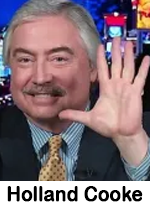 THE Best Bit I’ve Heard This Month was by Gene Valicenti, morning host, WPRO-AM/WEAN-FM, Providence.
 drive program alongside Kevin “KT” Turner and takes on “The Downbeat” as its name. Jeff Cavanaugh and Julie Dobbs move from the morning daypart to afternoons alongside Mike Rhyner for “The Speakeasy” program. The show times are altered by an hour with the morning program airing from 6:00 am to 10:00 am, the midday “Ben and Skin” show airing from 10:00 am to 2:00 pm, followed by the afternoon show airing from 2:00 pm to 6:00 pm. Zaccagnini tells the Dallas Morning News, “The catalyst for this change was to make a better fit for our same staff to further excel in a weekday lineup that best suits their professional and personal lifestyles.”
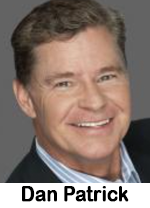 he plans to retire from the business in four years at the end of 2027. Patrick’s radio program is nationally syndicated via Premiere Networks and is simulcast via YouTube. The former ESPN personality responded to fans who questioned his decision by saying, “This is a young man’s game. I’m the oldest guy doing this. And I enjoy doing it, but by the end of 2027, that’ll be it. You have my word, so plan accordingly.”

 touches, including PR best practices, recent industry trends, case studies, the media, marketing, strategy, career development, and profiles of PR pros. Goldman says, “I’m excited to launch this show and have the opportunity to talk with so many smart, inspiring, and insightful people. I’m learning so much during the conversations I’m having with them on my show, and I know everyone who listens to the show, whether on the radio or as a podcast, will find value in these conversations.” The program airs Mondays at 5:00 pm on Hofstra University’s WRHU-FM, Hempstead, NY and is available nationally on the station’s livestream online and on most streaming devices. Check it out on Goldman Communications Group’s website (
 Former President Trump Effectively Working Talk Radio. Syndicated Newsmax Radio star Rob Carson conducted an exclusive interview with former President Donald Trump yesterday morning (6/13) for his popular midday radio show (12:00 noon – 3:00 pm EDT). Newsmax played it at 12:00 noon and then repeated it during the 2:00 pm hour to the delight of the show’s national roster of affiliates. According to a Newsmax spokesperson, “President Trump called Rob this morning and we were supposed to have 15 minutes. After 20 minutes, the former President’s people started asking us to wrap up but Trump said to ignore them, stating that he wanted to spend more time with Rob, and that he is a fan of Rob’s TV and radio shows. The two ended up speaking for a half hour.” The interview covered topics including the White House cocaine controversy, Trump’s criticism of the Dept. of Justice, the 2024 campaign, the border, human trafficking, the economy and even Elvis Presley. The full interview can be heard by clicking here:
 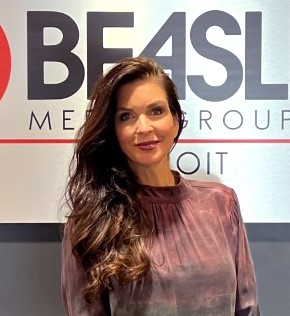 Lynn Montemayor Promoted to Director of Sales at Beasley Media Group Detroit. The Beasley Media Group announces sales pro Lynn Montemayor has been promoted to director of sales at the company’s Detroit-based radio properties. Montemayor most recently served as the GSM of 101 WRIF-FM, 94.7 WCSX-FM, 105.1 The BOUNCE, 105.9 KISS-FM, Detroit PRAISE Network, and Motor City Sports Talk The ROAR. Beasley Media Group Detroit VP/market manager Patti Taylor tells TALKERS, “Lynn is one of the most passionate and adept leaders I have ever worked with. She is thoughtful and fair, a creative teammate and a tenacious partner. I feel lucky and grateful to be working alongside Lynn in this next chapter of the Beasley Detroit cluster.” Montemayor is stepping up to fill the shoes of Taylor who was also recently promoted to her current position.