Industry News Sarugami

AM Radio Bill Speeds Through Markup in Congress

The House Energy and Commerce Committee advanced the “AM Radio for Every Vehicle Act” during a full committee markup on a 50-1 vote. The bill now goes to the House floor for a vote. Amendments to the bill include a shortening of the sunset of the proposed law from 10 to eight years as well as the bill now directing the Government Accountability Office to study the potential impacts of the requirement on automotive innovation and vehicle safety, as well as the feasibility of alternative emergency alert systems. National Association of Broadcasters notes that public sentiment if behind the bill as a recent survey indicates 83% of respondents strongly support keeping AM radio in new cars so drivers can access free emergency warnings and public safety information while on the road. NAB president and CEO Curtis LeGeyt says, “Today’s decisive committee vote sends a clear message: AM radio remains essential to public safety, and every American deserves access to it in their car. We thank Chairmen Guthrie and Bilirakis, Ranking Member Pallone and members of the committee for overwhelmingly advancing this bipartisan legislation. Policymakers and consumers alike recognize AM radio’s essential role in delivering emergency alerts and reliable information when it matters most. We urge House and Senate leadership to move swiftly to pass this bill and preserve this vital service for the American public.”

Industry News Sarugami

Kirk Slaying Pushes First Amendment into Spotlight in Talk Media Industry

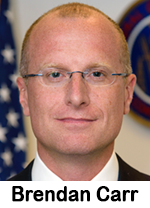
The aftermath of the killing of Charlie Kirk last week has made the First Amendment an issue being discussed not only by the public but also one hitting home for talk media practitioners. Wednesday’s suspension of the “Jimmy Kimmel Live!” program by ABC/Disney after television giants Sinclair Broadcast Group and Nexstar Media Group complained about Kimmel’s comments on Kirk’s death and said they would stop carrying the show dominated the news cycle. While FCC Chairman Brendan Carr stated at the POLITICO AI & Tech Summit that the FCC should not be investigating social media posts celebrating Kirk’s slaying, saying, “I think you can draw a pretty clear line, and the Supreme Court has done this for decades, that our First Amendment, our free speech tradition, protects almost all speech,” his statement comes not long after Attorney General Pam Bondi suggested her office should be investigating hate speech, infuriating many conservatives who outright reject the concept of hate speech. ABC/Disney’s decision to air or not air the Kimmel program is not an infringement of Kimmel’s First Amendment rights but both Sinclair and Nexstar have mergers or acquisitions before federal bodies – including the FCC – and some critics of the Kimmel suspension note that the Trump administration will consider Kimmel’s ouster a “friendly” move. It is also worth noting that FCC Chairman Carr appeared on the Benny Johnson podcast and called Kimmel’s statements “some of the sickest conduct possible” and added, “This is a very, very serious issue right now for Disney… We can do this the easy way or the hard way.” Finally, there are those who are pointing out that Charlie Kirk was an adamant supporter of the First Amendment who would disagree with the calls to suppress free speech – even callous speech mocking his own death.

Industry Views Sarugami

When AI Fools the Host: Mistake, Missed Opportunity, or Legal Minefield?

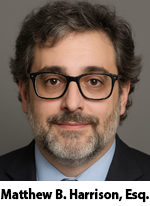
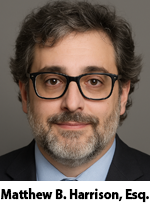
By Matthew B. Harrison
TALKERS, VP/Associate Publisher
Harrison Media Law, Senior Partner
Goodphone Communications, Executive Producer

imgCharlie Kirk’s tragic assassination shook the talk radio world. Emotions were raw, and broadcasters across the spectrum tried to capture that moment for their audiences. Charles Heller of KVOI in Tucson shared in these pages yesterday (9/16) how he, in that haze of grief, played what he thought were tribute songs by Ed Sheeran and Adele. Only later did he realize they were AI-generated.

Heller deserves credit for admitting his mistake. Many would have quietly moved on, but he turned the incident into a public reflection on accuracy and the challenges of this new AI age. That honesty does not weaken him – it underscores his credibility. Audiences trust the host who owns a mistake more than the one who hides it. In this business, candor is currency.

Still, the programmer in me sees an on-air opportunity. Imagine a segment called “AI or Authentic?” – play generated songs alongside real ones and invite the audience to decide. It could be informative and fun: interactive, funny, and a perfect spotlight on the very problem that fooled him. I’m sure there are folks out there who have already done this.

Here’s where the lawyer in me speaks up. Falling for a convincing fake is a mistake, not malice. For public figures like Adele or Sheeran, defamation requires proof that a host knew something was false or acted recklessly. A one-off error doesn’t reach that bar.

But liability doesn’t end there. Misattribution can raise right-of-publicity concerns. Saying Adele recorded a song she didn’t isn’t defamatory – but it can still be an unauthorized use of her persona. Intent doesn’t always matter. The safer route is clear labeling: “This may be AI.”

For those of us behind the glass, the lesson is simple: mistakes happen. But doubling down without context? That’s how little errors become legal problems. The law is forgiving of a slip in judgment. It is less forgiving if the same content is repackaged as fact without transparency.

Heller’s story isn’t embarrassing – it’s instructive. In the AI era, every broadcaster faces the same challenge: how to verify what feels authentic. The answer isn’t to shy away from the technology. It’s to make sure you control the punchline – not the algorithm.

Matthew B. Harrison is a media and intellectual property attorney who advises radio hosts, content creators, and creative entrepreneurs. He has written extensively on fair use, AI law, and the future of digital rights. Reach him at Matthew@HarrisonMediaLaw.com or read more at staging.talkers.com/.

Industry Views

An Attack on One Is an Attack on All: Why the Radio Industry Must Respond

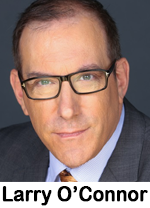
By Larry O’Connor
Talk Radio Host
WMAL-FM, Washington, DC

imgIn the wake of Charlie Kirk’s murder, one would expect every company that owns a talk radio station, every network that syndicates conservative voices, and every corporation that employs talk radio hosts to issue a unified statement of defiance. This was not just an attack on Charlie; it was an attack on the entire industry of talk radio, on the free exchange of ideas, and on the First Amendment itself. Yet, shockingly, most of these companies have remained silent. That silence is unacceptable. At a moment like this, the industry should stand shoulder to shoulder and declare to the world: we will not be intimidated, we will not be silenced, and we will never abandon the microphone.


We Will Not Be Silenced

The news of Charlie Kirk’s brutal murder has shaken us to our core. For those of us behind a microphone each day, it was not just an attack on a friend, a colleague, or a leader – it was an attack on our entire industry, our movement, and the very principle of free speech.

Charlie was more than a conservative activist. He was a broadcaster, a communicator, a man who understood the power of radio and its unmatched ability to reach Americans where they live, work, and drive. He embraced our medium because he knew it could bypass the gatekeepers and speak truth directly to millions. And for that reason – because he was effective, fearless, and unrelenting – he was targeted.

Let’s be clear: this was not random violence. This was political violence. It was meant to silence a voice. And in silencing that voice, it was meant to intimidate the rest of us. To scare us into pulling our punches. To warn us that telling the truth has consequences.

Well, here’s the truth: we will not be intimidated, and we will not be silenced.

Conservative talk radio is the last truly free public square in America. We don’t answer to corporate boardrooms in New York or Silicon Valley. We answer to our listeners – the American people. Every morning and every afternoon, millions tune in because they know they will hear what the mainstream media refuses to cover. They come to us because they trust us to tell it straight. And if anyone thinks the murder of Charlie Kirk is going to drive us off the airwaves, they don’t understand who we are.

The history of talk radio is the history of resilience. From Rush Limbaugh to Charlie Kirk, our voices have endured smear campaigns, advertiser boycotts, government threats, and now, tragically, deadly violence. Yet every time they try to shut us down, we come back stronger. Every time they think they’ve broken us, our audience grows.

Charlie’s death is a wound, but it is also a call to arms – not with weapons, but with words. Words of truth. Words of conviction. Words that cannot be cancelled, cannot be censored, and cannot be silenced by fear.

As an industry, we stand together today. Whether you broadcast from a major market station or a small-town affiliate, whether your show runs nationally or locally, we are united. Charlie’s microphone may have been forced into silence, but ours will burn brighter because of it. We will carry his message, his courage, and his relentless pursuit of truth forward.

To Charlie’s family, we grieve with you. To our listeners, we stand with you. And to those who think violence can silence ideas: you are wrong. The ideas of liberty, faith, and American exceptionalism will ring louder than ever.

Charlie Kirk is gone, but the cause he championed lives on. His voice echoes in every one of ours. And we will keep talking. We will keep broadcasting. We will keep fighting – together.

Because in the end, freedom always wins.

Larry OConnor is the morning drive host at Cumulus Media’s WMAL-FM, Washington, DC. He can be emailed at stagerightblogger@gmail.com.

Industry News

Penn State to Shutter Non-Com WPSU-FM

According to a report at TribLive.com, Penn State will shut down its public radio station, WPSU-FM at the end of the 2025-26 academic year. The report says trustees voted against a proposal to transfer its operating assets to public radio WHYY-FM, Philadelphia. WPSU has depended on annual subsidies of atimg least $3.4 million from the university to operate the station. TribLive reports, “Penn State officials said they proposed transferring the operating assets of WPSU to WHYY and provide a $17 million subsidy structured to decrease over five years, to give WHYY an opportunity to help WPSU reach a financial break-even point and continue broadcasting across central Pennsylvania.” That proposal was not accepted by the trustees. See the TribLive story here.

Industry Views

The Opportunity Before Radio: Boldness with Balance

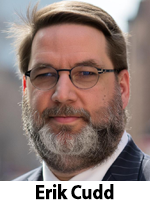
By Erik Cudd

imgFrom my teenage years to today, radio has been the career of my adult life. When I first began listening in my teens, I was drawn less to the music and more to the conversation. I tuned into stations not for my favorite songs, but because I enjoyed hearing people talk, debate, and share ideas. Over my lifetime, I have seen many changes in the medium. The news/talk format, in particular, has always fascinated me for its mix of news, commentary, and immediacy.

In such a time as this, because radio is the medium I know best and love most, I write this appeal to those influential in news/talk. My hope is that you will step forward once again as the architects and innovators you have always been, and raise a rallying cry for this unique moment. The freedoms and ambitions that make the format so vital also create challenges. By design, it invites sharp opinions, spirited disagreement, and cultural edge. Those qualities are its strengths. But in our current climate, they also carry the risk of drifting into tribalism and rhetoric that can spill over into something more dangerous.

This is not an implication that I believe news/talk is responsible for the death of Charlie Kirk. I would like to be crystal clear. What I am saying is that a perfect storm has been gathering for many years, and no one can deny the polarized, charged landscape we now inhabit. And that storm is not radio’s sole responsibility. Television, social media, and digital platforms have found their profit margins in spaces that thrive on provocation. Cable news leans on conflict. Social media algorithms reward outrage. Digital outlets chase clicks and controversy. Radio is part of this broader ecosystem, not apart from it. And while no single medium created our current atmosphere, each has a role to play in reflecting on its impact and considering how best to move forward.

This is not about drawing a simple line between “toxic” and “non-toxic” content. Such judgments are rarely clear, and program directors deserve the benefit of the doubt. Yet it may be worth asking whether radio, like all media, could benefit from a renewed look at how editorial choices can help keep conversations as civil and constructive as possible. Debate and controversy will always be part of the medium, but escalation does not need to be the only outcome.

The September 10 tragedy underscored this in more ways than one. Beyond the event itself, the aftermath played out across digital spaces, where ordinary citizens made comments that, while protected speech, resulted in lost jobs, reputational damage, and news coverage. The lesson is not that speech should be curtailed, but that our civic discourse is increasingly fragile. And because radio is one of the most intimate and influential media, its choices ripple outward into that discourse in profound ways.

Audiences are noticing. As someone in my early 50s, squarely within talk radio’s target demographic, I should be a loyal listener. Yet I find myself tuning in less often, not from a lack of loyalty, but because I long to hear more voices who can thoughtfully engage both sides of an issue, giving each perspective a fair hearing and treating every listener as though their view matters. That is why I believe there may be room to pull back a bit, to allow for more variety, nuance, and genuine curiosity in how issues are approached.

Serious does not mean boring. Civility does not mean dull. Across platforms, authenticity and curiosity consistently earn audiences. Podcasts like SmartLess and Armchair Expert succeed not by stoking outrage but by elevating storytelling and connection. Public affairs series such as Frontline and American Experience continue to attract loyal audiences through rigorous, measured reporting. Nonfiction authors like Malcolm Gladwell and Brené Brown demonstrate that thoughtful exploration can reach mass audiences. These examples are proof that depth and balance can succeed when executed with energy and creativity.

Radio is uniquely positioned to do the same. The path forward is not retreat from controversy but innovation. Maybe it begins by encouraging new hosts who bring curiosity, empathy, and an equal openness to both sides of an issue, alongside conviction. It could include piloting alternative formats in off-peak slots where experimentation can thrive. It will require recalibrating success metrics to value loyalty, digital engagement, and cross-platform trust, not just short-term spikes. And it may also mean weaving national voices together with local conversations so that stations strengthen both their reach and their roots.

I do not write this from a high perch. I write as a member of the audience who also walked the halls of the station and still believes in the power of the medium. My words are not meant as accusation but as an open hand in friendship. What I am asking is simple: perhaps it is time for a more purposeful, deliberate engagement of conversation in the conference room. To sit together and ask if everything that airs is doing what it should. To take a long, hard look at whether anything might need to be discussed, reconsidered, or rebalanced in light of what we have all just witnessed.

Radio, because of its intimacy and reach, is uniquely positioned to lead by example. By being more proactive in its own yard, radio could encourage the same self-reflection across media, and even among the public itself. That is not retreat. That is leadership.

Radio still matters. Its intimacy can at times divide, but it can also renew. The question is not whether talk radio will remain bold, it always will, but whether it can channel that boldness in a way that builds the public square rather than fractures it.

The opportunity is here: to prove that freedom and responsibility can coexist, and that doing so is good for the culture, and good for the business.

Erik Cudd has worked in radio and media since 1991. He can be emailed at erik@cudd.us. 

Industry News

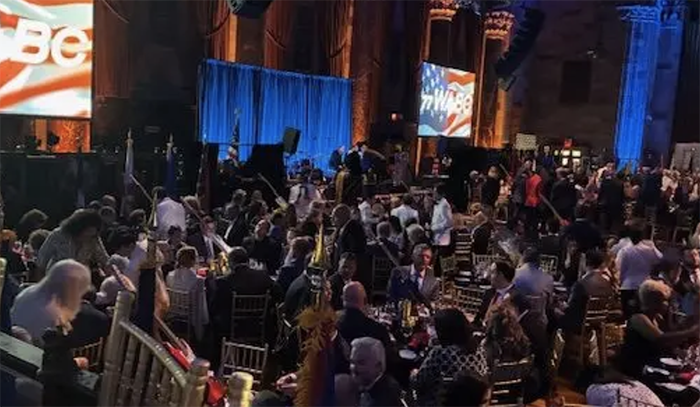
WABC Gala Marks Patriotism, Prestige, and Power Launching America’s 250th Anniversary Celebration

img

by Robert Pearl
Exclusive to TALKERS

imgNew York’s Cipriani 42nd Street once again played host to one of radio’s most anticipated annual events of the year: the annual “77 WABC Gala,” held this past Friday (9/5). The spectacular evening blended star-studded entertainment, heartfelt tributes, and plenty of radio family camaraderie – all while raising funds for three cornerstone charities: Tunnel to Towers Foundation, the Police Athletic League, and Shriners Children’s Hospital.

The night doubled as the unofficial kickoff to America’s 250th anniversary celebrations, with patriotic spirit filling the storied hall. Guests were treated to a spectacular mix of tradition and pageantry: bagpipes opened the evening, followed by the Pledge of Allegiance and a soaring rendition of the national anthem from tenor Chris Macchio, fresh from performing at President Donald Trump’s 2025 inauguration. Later, country music legend Lee Greenwood brought the house to its feet with “God Bless the USA,” a fitting soundtrack to the night’s theme.

Radio Legend Served as Emcee

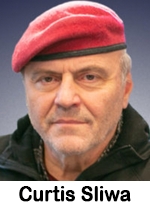
The event was emceed by “Cousin” Bruce Morrow, who set the tone with trademark warmth and humor. Featured performances by Vinnie Medugno, and Joe Piscopo with homage to Frank Sinatra classics. Fellow WABC hosts and personalities were out in force: Sid Rosenberg (with wife Danielle), Curtis and Nancy SliwaDominic CarterGreg Kelly (joined by his father, longtime NYPD commissioner Ray Kelly), Lionel and his wife Lynn Shaw (founder of Lynn’s Warriors), Brian KilmeadeRita CosbyLisa GAnthony Cumia, news director James Flippant, and anchor Liz Ratoballi.

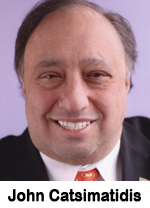
WABC owner John Catsimatidis and Red Apple Media president Chad Lopez anchored the front row, alongside Margo Catsimatidis, who was celebrated as the event’s “First Lady of WABC.”  Longtime friend (and WOR personality) Mark Simone – dubbed “Mr. New York”- was on hand, underscoring the collegiality of the broader talk radio community. The gala also drew figures beyond radio, including Mayor Eric Adams and his electoral rival Curtis Sliwa sitting a few tables apart, economic voice Larry Kudlow, the relentless patriot and activist artist Scott LoBaido, Newsmax’s Johnny Tobacco of Wiseguys, and philanthropist Frank Siller of Tunnel to Towers.

Charity with Purpose

While the evening sparkled with entertainment and personality, its heart was rooted in the causes it championed. The Tunnel to Towers Foundation, founded in honor of fallen firefighter Stephen Siller, continues its mission of supporting first responders and veterans, promising to pay off the mortgages of the fallen. The Police Athletic League, New York City’s largest independent youth development nonprofit, provides educational and recreational programs to children in need. And Shriners Children’s Hospital, a global leader in pediatric specialty care, ensures children receive treatment regardless of a family’s ability to pay. These organizations were not just beneficiaries but central characters in a story of service, community, and giving back.

A Night of Theater and Patriotism

Beyond the music, the gala leaned into a spectacle. Impersonators dressed as George WashingtonAbraham Lincoln, and Uncle Sam strolled the ballroom, taking pictures with guests. Later, Lady Liberty herself dramatically popped out of a massive birthday cake as red, white, and blue balloons cascaded from the ceiling. Guests waved WABC-branded light sticks in rhythm with the performances, further amplifying the carnival-like energy.

And as tradition dictates, September’s Virgo birthdays were honored in grand style. Joe Piscopo led a rousing “Happy Birthday” for John Catsimatidis and fellow celebrants, which seamlessly transitioned into a full-throated “God Bless America,” with the entire ballroom on its feet.

Political Undertones in a Festive Setting

While the evening was designed as a patriotic celebration, politics were never far from the surface. Just hours before the gala, Mayor Adams publicly doubled down on his mayoral campaign, brushing aside speculation of a possible exit. At Cipriani, Adams was greeted politely – but the room roared when Republican candidate Curtis Sliwa was announced, highlighting the unique political currents swirling through the city and this radio community.

Still, the prevailing message was unity and celebration. “We celebrate America together,” said Greenwood before launching into his anthem. It was a fitting capstone to an event that blended entertainment, politics, and philanthropy in a way unique to WABC.

As the gala wound down, guests departed with gift bags in hand, many still humming Greenwood’s refrain. With its mix of glamour, gravitas, and good causes, the 2025 WABC Gala set the stage not just for America’s 250th birthday, but also for the enduring influence of talk radio as a cultural and political force.

Robert Pearl is a New York City-based freelance journalist.  He can be reached at pearlknows@yahoo.com.

Industry News

NAB Fires Up Campaign to Modernize Ownership Rules

The National Association of Broadcasters is urging Congress and the Federal Communications Commission to modernize decades-old broadcast ownership rules. news, emergency information and the live sports that bring communities together. Since April, NAB’s campaign has aired nearly a quarter million television andimg radio spots across 192 media markets, generating more than 1 billion impressions and $43 million in airtime from TV and radio stations. NAB president and CEO Curtis LeGeyt says, “Local stations are serving communities with live sports, trusted local news and life-saving emergency coverage – all available for free to every American. But outdated rules are shackling these stations from growing and innovating at a time when Big Tech operates with limitless scale and zero public interest obligations. Consumers deserve more – not fewer – local journalists on the ground and live sporting events accessible without a subscription. The FCC must act quickly to level the playing field so broadcasters can continue investing in the content communities rely on most.”

Industry News

Salem COO Stepping Down

Salem Media Group chief operating officer David Evans exited his role with the company on August 31. Evans joined Salem in 2000 as chief financial officer and later served as president of new media before becoming COO for the past three years. The company says that over his 25-year tenure, Evans played aimg significant role in shaping Salem’s growth and direction. Under his leadership, Salem launched and developed four major digital properties: Salem Web Network, Salem Church Products, Townhall Media, and Eagle Financial Publications. Salem CEO David Santrella says, “David has been an important part of Salem’s journey, and we are deeply grateful for his dedication, professionalism, and leadership over the years.” Salem co-founder Ed Atsinger adds, “David’s impact on Salem has been profound. From his early days as CFO to his leadership in building our digital media presence, his contributions have helped define who we are today. We thank him for his many years of service and wish him continued success in the future.”

Industry News

NAB: Support for AM Radio Bill Surges

National Association of Broadcasters says that congressional support for the AM Radio for Every Vehicle Act accelerated during the August congressional recess, with the bill now backed by 280 bipartisan cosponsorsimg in the U.S. House of Representatives and a filibuster-proof 61 in the U.S. Senate. NAB president and CEO Curtis LeGeyt says, “We thank the growing, bipartisan group of lawmakers standing up for their constituents who depend on AM radio. This support demonstrates a deep understanding that AM radio remains an essential lifeline for emergency alerts, local news and community connection. With significant momentum behind this bill, NAB urges House leadership to bring it to the floor without delay and preserve this vital service for the American public.”

Industry News

TALKERS News Notes

SiriusXM Adds New NFL Shows. Joining the SiriusXM NFL Radio team this season are two experienced pro personnel executives – former Los Angeles Chargers and Las Vegas Raiders general manager Tom Telesco and former Tennessee Titans general manager and NFL running back Ran Carthon – who will host on SiriusXM NFL Radio this season, bringing a front office perspective on the game to the channel. Also joining SiriusXM this season is Carolina Panthers long snapper J.J. Jansen, an 18-year veteran of the league, who will join Miami Dolphins running back Alec Ingold to host the weekly show, “The Players’ Point.” Airing Tuesdays at 7 pm ET, “The Players’ Point” is the only radio show hosted entirely by active NFL players.

New Director of Development Joins BPM. Baltimore Public Media (BPM) is proud to announce the appointment of David Belew as its new Director of Development, leading the organization’s philanthropic strategy across membership, grants, major giving, events, and community engagement. “We are thrilled to welcome David to Baltimore Public Media. His passion for connecting people to ideas, culture, and community — combined with his proven success in advancing major institutions — will help us grow stronger and more resilient as we enter this pivotal moment,” says Craig N. Swagler, President and General Manager of Baltimore Public Media.

Industry News

Spadea Back on “New Jersey 101.5” Mornings

Talk radio host Bill Spadea will return as host of the morning show on Townsquare Media’s WKXW-FM, Trenton “New Jersey 101.5” on September 2. Spadea took leave of his radio duties in late January of this year to run as a Republican for governor of New Jersey. He lost to Jack Ciattarelli in the June primaryimg election. About returning, Spadea says, “I’m excited to be returning to the airwaves with ‘New Jersey 101.5’ and the largest audience in the state. I’m looking forward to continuing our mission of fighting for common-sense solutions to save New Jersey. Our show has always been about the listeners, and I’m ready to keep amplifying the voices of small business owners, parents, teachers, first responders, nurses, and everyone else committed to digging in and staying in New Jersey. Stay tuned – there’s more to come!” Townsquare Media regional VP Brian Lang says, “Bill’s audience and the team at ‘New Jersey 101.5’ are looking forward to his return. There’s no doubt he’ll have great stories to share. I also want to thank Eric Scott and the entire morning show team for doing an outstanding job while Bill was away.”

Industry News

Detrow to Host “All Things Considered”

NPR names Scott Detrow full-time host of the weekday edition of “All Things Considered,” effective September 29. Detrow will continue as a host of NPR’s daily news podcast “Consider This.” Detrow hasimg hosted the weekend edition of “All Things Considered” since May of 2023. He says, “I’m really excited and honored to step into this role. I’m mindful of just how important All Things Considered’s legacy is for listeners, and I also know just how much I’ve loved working with the show’s team these past two years on weekends. I can’t wait to bring listeners the news five days a week now. And at this moment where we are all focusing on strengthening the entire public media network and working together more closely than ever before, I’m proud that I started out as an ‘All Things Considered’ host at a NPR Member station, and now will be doing that job nationally.”

Industry News

WHYY and PRX to Syndicate “Sports in America”

WHYY, Philadelphia and public media distributor PRX are launching “Sports in America,” a new weekly public radio show and podcast hosted by journalist David Greene, on Tuesday, September 30. PRX is representing the show from WHYY in the public radio marketplace and also serves as podcast distributor. Greene comments, “I’ve always felt unique in the public radio world. I love immersive conversations thatimg breathe, peel back layers, and allow a person to reveal their truth. I’m also an obsessive – and my wife would say, annoying – sports fan who will joyously listen to hours of loud Pittsburgh sports talk radio. What’s missing in my life? A show that honors the best of what we do in public media and also brings the spark and energy sports fans relish. We’ve nailed it with ‘Sports in America.’ And what better time than now, as sports are one rare thing we all still show up for together.” Greene hosted NPR’s “Morning Edition” for more than a decade and hosted NPR’s morning news podcast, “Up First.” He also serves as the host of public radio’s politics program “Left, Right & Center” from KCRW and PRX.

Industry Views

Monday Memo: Unmet Needs?

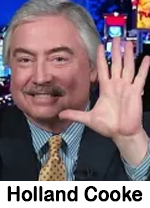
By Holland Cooke
Consultant

imgLast week’s column previewed “CeaseFire,” C-SPAN’s antidote to the caricature cable news shouting match. Thanks to all who offered feedback when we wondered “WHAT IF…?” for talk radio.

Recent report from Reuters Institute for the Study of Journalism: People are disabling news alerts, “either because they feel they get too many or because they are not useful.”

People are anxious. Even a robot can read-the-room, as I learned by asking ChatGPT: “In USA society generally, list unmet needs.” Among them:

Belonging Without Division

— People crave community but are tired of being forced to choose sides.
— Unmet need: A way to feel connected and purposeful without being tribalized by politics, race, class, or ideology.

Trusted, Nuanced Information

— There’s information overload, but trust is at an all-time low.
— Unmet need: Sources that feel both credible and fair-minded, without sensationalism, bias, or agenda-chasing.

Civility in Public Discourse

— Public conversation often feels like a battleground.
— Unmet need: Spaces — digital or real-world — where disagreement is safe, not destructive or humiliating.

im

Mental & Emotional Support

— Rising anxiety, loneliness, and burnout affect people across all ages.
— Unmet need: Accessible, non-stigmatized mental health support, including community-based emotional infrastructure (not just therapy apps).

Work That Feels Worthwhile

— Many jobs pay the bills but feel meaningless.
— Unmet need: Opportunities to do work that’s valued, not just productive — where dignity and contribution matter as much as output.

Financial Security That Isn’t Fragile

— Even middle-class households feel one emergency away from disaster.
— Unmet need: Stability and predictability — not just income, but housing, healthcare, and retirement that won’t evaporate with one bad break.

Intergenerational Connection

— Older and younger generations increasingly live in separate realities.
— Unmet need: Meaningful contact across age lines, where wisdom flows both directions — not just tech tutoring and nursing homes.

Shared Purpose

— Many feel like they’re drifting — or living someone else’s script.
— Unmet need: A sense of contribution to something bigger than self, not through ideology but through everyday roles, responsibilities, and relationships.

Consider as you pose call-in topics and choose interview guests.

Holland Cooke (HollandCooke.com) is a media consultant working at the intersection of broadcasting and the Internet. Follow HC on Twitter @HollandCooke

Industry Views

The Annual (Radio Station) Physical

By Jonathan Little
TroyResearch
President

imgAn annual physical is a wise idea. Doc asks, “How are you doing?”. Then he or she asks some detailed questions based on your medical history. Then “how have you been feeling? Any issues?” Doc always orders blood draws to see what might be lurking. Is the statin drug keeping your cholesterol in check? Are you getting plenty of exercise, plenty of sleep? How’s your diet? Over the years, I’ve visited about my health with at least a dozen different doctors. I’m convinced that the good ones always ask good questions and then listen carefully. Good questioner – good listener. That’s the doc I can respect and put my trust in. 

If you operate a radio station, your station could benefit from an annual physical. You already know how it’s doing based on ratings, revenue, and profit. Your listeners know how you’re doing for them personally because they’re the users of your radio product. Is it pleasing, challenging, inspiring or annoying, irritating, and easily ignored with a click? If you ask them, they’ll tell you. You should ask them at least once a year. 

TroyResearch has been in the business of asking listeners what they think for 27 years. We recently teamed up with Midwest Communications, Inc., in Green Bay to conduct an exploratory research project with their news/talk station WTAQ. TroyResearch’s association with MCI goes back nearly 27 years, doing music and perceptual research for the Duke Wright music stations. The WTAQ project was something new. Our goal was to discover what actionable data the opinions of loyal listeners might produce. TroyResearch worked with VP Programming Jeff McCarthy and Operations Manager Jason Hillery to develop a 25-question study. 

Survey respondents were recruited over the air and were encouraged to go to the WTAQ website to take a brief survey. Clearly, we wanted to hear from P1’s, those listeners who produce 60%+ of reported listening. Their answers provided a clear picture of WTAQ loyalists – what they like, what they don’t like, their political affiliation, their listening behaviors (radio, podcasts, TV news, cable news, etc.), favorite news outlets, trustworthiness of news outlets, their thoughts about protests becoming riots, and their favorite podcasts to mention a few. 

More than 200 respondents, Persons 18+, completed the WTAQ perceptual study. (32% 18-54, 68% 55+). With Jeff’s and Jason’s permission, we share some results. 

Political Affiliation

1% Democrat
78% Republican
15% Independent
6% Other, like Libertarian, Socialist

In car listening

80% Local radio
10% Satellite radio
6% Streaming services like Spotify
3% Podcasts
1% Other like personal playlists 

Listening to WTAQ, which simulcasts

76% FM
9% AM
8% Streaming from WTAQ app
6% Streaming from a smart device
1% Streaming from WTAQ.com

Where do you get your news? (Select all that apply)

93% Radio
46% Broadcast TV (local channels)
41% Cable news like Fox, CNN, MSNBC
29% Social Media like X, Facebook, Tiktok
16% Internet news like NY Post, Washington Post
10% Newspaper
12% Other 

Your primary news source

58% Radio
15% Cable news like Fox, CNN, MSNBC
8% Broadcast TV (local channels)
7% Internet news like NY Post, Washington Post
7% Social Media like X, Facebook, Tiktok
3% Other
1% Newspaper

When does a protest/demonstration become a riot? (Select all that apply)

85%+ When protesters strike police, throw projectiles, set fires, do property damage
75% When protesters spit on police officers
60% When protesters burn the American flag
37% When protesters curse at police officers

Do you listen to podcasts?

23% Frequently
29% Occasionally
35% Rarely
13% Never

What podcast platform do you use? (Select all that apply)

32% YouTube
25% Spotify
19% iHeart
19% Apple
10% Amazon
2% Rumble
1% The Blaze
1% Daily Wire 

As a broadcaster that reports news and information, WTAQ is interested in knowing how trustworthy you consider the reporting presented by these companies. (1 = very untrustworthy, 5 = very trustworthy)

4.43 WTAQ Radio, Green Bay
3.78 Fox News
3.59 Fox 11, Green Bay
2.92 WBAY, Channel 2, Green Bay
2.83 WFRV, Channel 5, Green Bay
2.77 WHBY Radio, Appleton
2.71 NBC 26, Green Bay
2.22 Green Bay Press Gazette
2.01 Wisconsin State Journal
1.99 Milwaukee Journal Sentinel
1.46 MSNBC
1.37 CNN 

WTAQ asked the 0-10 Customer Endorsement Score question – “On a scale of 0-10 how likely would you be to recommend WTAQ to a friend or colleague?” Those scores reflect the listeners’ opinions of how the station is doing and it’s a forecast of WTAQ’s future. As a rule, a CES of 50 or higher indicates a healthy and sustainable product. WTAQ scored a strong 73 Customer Endorsement Score. 

VP Jeff McCarthy and OM Jason Hillery are pleased with the results of this exploratory study. The WTAQ Sales Team is delighted with the data. 

Good questioner … Good listener! WTAQ asked good questions. And now their leadership team is “listening” to the answers and determining what adjustments, if any, may result in improved ratings, revenue, and profit, on the way to an 80 Customer Endorsement Score with the next WTAQ study. 

Jonathan Little is president of TroyResearch. He can be phoned at 608-219-1077 or emailed via: jlittle@troyresearch.net

Industry Views

Monday Memo: CeaseFire

By Holland Cooke
Consultant

imgAs TV touts its perennial New Fall Season, our DVR is already set to “record series” so we can pick-up where the “Matlock” sequel left-us-hanging; and for a third season of quirky “Elsbeth” (a closet reboot, the female “Columbo”). And where I live – where everyone seems to know everyone – we are salivating for “The Real Housewives of Rhode Island.”

Enduring as its hourglass, “The Days of Our Lives” – which NBC punted to Peacock – is renewed for season #61. As Max reverts to the HBO brand, “The White Lotus” will be back for its 4th. “American Idol” will vet a 24th crop of crooners; “America’s Funniest Home Videos” will share a 36th batch of bloopers; and America’s argument will remain unresolved on every channel… except one.

im

Nonprofit C-SPAN – the Switzerland of cable news – presents “CeaseFire,” a weekly show where “Democrats and Republicans come together to solve problems and discuss the great challenges facing our nation… during a time when division and dysfunction dominate the national conversation.”

And who better to U-turn the “Crossfire” template that pits partisan pundits against each other than the suit who oversaw it, longtime CNN EVP and Washington bureau chief Sam Feist, now C-SPAN CEO. “In a media landscape that too often rewards outrage over understanding,” he reckons “‘CeaseFire’ stands out by showing what respectful, principled conversation looks like.”

“Like sands through the hourglass,” radio’s talk format was an early 1990s Revolution. Now – like the AM band it buttressed as long as possible – WHAT IF…

Holland Cooke (HollandCooke.com) is a media consultant working at the intersection of broadcasting and the Internet. Follow HC on Twitter @HollandCooke

Industry News

Missanelli’s Exit from “The Fanatic” Appears to Be Budget Related

Philadelphia sports talk host Mike Missanelli was abruptly let go from Beasley Media Group’s sports talkimg WPEN-FM 97.5 The Fanatic on August 8 after almost a year back behind the mic at the station. Missanelli joined sister rock WMMR’s Kathy Romano – a cast member of the “Steve and Preston Show” – was also let go. Beasley issued the following public statement: “We are very grateful for his contributions to the station and our listeners, and we wish him all the best.”

Industry News

PBS cutting its budget by 21%

b3cf28dd ad8f 4243 a8b3 aa22287f7278

According to a report in The New York Times (8/14) by writer Ben Mullin, PBS is cutting its current budget by more than a fifth in response to the Corporation for Public Broadcasting’s defunding. The cutback is in reaction to the fact that approximately 15% of PBS’s budget derived from the federal grants are about to be slashed per Congressional decision. This move eliminates roughly $500 million in federal funding from public radio and television. This is having a negative rippling impact on the entire PBS local station system. Read the entire NYTimes report here.

Industry Views

Who Said That? A Practical Guide to Voice Imitation Risk

By Matthew B. Harrison
TALKERS, VP/Associate Publisher
Harrison Media Law, Senior Partner
Goodphone Communications, Executive Producer

imgArtificial intelligence now makes it possible to replicate a human voice with striking accuracy. For broadcasters, podcasters, and content creators, the central question is: When does using or imitating a voice become a legal problem? The answer depends on the person being imitated, the purpose of the use, and the rights attached to that voice. Below is a six-bucket framework to help evaluate the risk.

Bucket 1 – Human Imitation of a Living Person
Example: In Midler v. Ford Motor Co. (1988), Ford hired a singer to imitate Bette Midler’s voice for a commercial after she declined. Legal focus: Right of publicity, false endorsement, misappropriation of identity. Risk: High – especially for commercial use without parody or commentary.

Bucket 2 – AI Cloning of a Living Person
Example: AI trained on hours of a broadcaster’s work generates new scripts in that broadcaster’s voice. Legal focus: Same as Bucket 1, plus emerging AI laws in several states. Risk: Very high – AI makes imitation faster, more precise, and harder to defend as coincidental.

Bucket 3 – AI Cloning of a Deceased Person Within Post-Mortem Publicity Window
Example: An AI-generated George Carlin special, written by humans but performed in a Carlin voice model. Legal focus: Post-mortem right of publicity, lasting 20–100 years depending on the state. Risk: High without estate authorization, even if marketed as a tribute.

Bucket 4 – Historical/Public Domain Figures
Example: Voicing George Washington in an original script. Legal focus: Minimal – rights generally end at death and do not extend for centuries. Risk: Low unless portrayal implies a false endorsement of a current product or service.

Bucket 5 – Corporate Library Owner Using AI to Create New Content
Example: A company acquires a complete host archive, such as Howard Stern’s, and uses AI to create new programming in that voice. Legal focus: Copyright in recordings is separate from publicity rights in the voice. Owning the archive does not automatically permit new performances in that voice. Risk: High without explicit contractual rights to name, likeness, and voice for future works.

Bucket 6 – Inspired-By Voice Not Clearly Identifiable as a Specific Person
Example: An AI voice styled as “a gravelly, old-school talk radio host” without matching a real person. Legal focus: Minimal unless resemblance convinces listeners it is a specific individual. Risk: Low to moderate, depending on closeness to a real identity.

Decision Path
Before using a recognizable voice, ask: 1. Is the person living or deceased? 2. If deceased, are they within their state’s post-mortem publicity period? 3. Is the voice a deliberate imitation? 4. Do you have written permission? 5. Is the purpose parody, commentary, or other transformative use?

Takeaways
Talent: Protect your voice rights in contracts, including AI uses. Buyers: Archive ownership does not guarantee the right to generate new voice content. Creators: Parody and commentary may help, but they are not blanket defenses. As voice cloning becomes more accessible, securing clear rights before production remains the safest path. The cost of permission is almost always less than the cost of defending a lawsuit.

Matthew B. Harrison is a media and intellectual property attorney who advises radio hosts, content creators, and creative entrepreneurs. He has written extensively on fair use, AI law, and the future of digital rights. Reach him at Matthew@HarrisonMediaLaw.com or read more at TALKERS.com

Industry News

FCC Commissioner Gomez Issues Scathing Statement on Paramount-Skydance Merger

FCC Commissioner Anna M. Gomez has made no secret of the fact that she’s horrified not by the merger itself but with Paramount’s acquiescence to the Trump Administration in seeking approval to merge with Skydance. Here is her statement in full: “Today marks the final chapter of a dark moment in our nation’s history. After months of cowardly capitulation, including an unprecedented payout to settle a meritless lawsuit in exchange for regulatory approval, Paramount and Skydance have completed their merger, and ‘New Paramount’ will be created.

“This will be a new company, born in shame after trading away fundamental First Amendment principles inimg pursuit of pure profit. It embraced this Administration’s radical notion that discriminatory behavior should be tolerated and even embraced, while efforts to expand opportunity for everyone should be rejected.

“More alarmingly, the company agreed to never-before-seen forms of government control over newsroom decisions and editorial judgment – actions that violate both the First Amendment and the law. A government-sanctioned ‘truth arbiter’ will soon arrive at CBS. Their role will be to ensure that journalists at CBS do not criticize this Administration or express views that conflict with its agenda. That should alarm anyone who values the core democratic principle of a free and independent press.

“All of this is being carried out under the guise of combating so-called ‘media bias,’ a term which, in practice, appears to encompass anything or anyone who disagrees with this Administration. Never mind that those now feigning concern over media bias are the same individuals who have spent the past decade attacking the press and sowing public distrust in journalism. And even if such bias did exist to the extent they claim, the last entity the American people should entrust with defining or policing it is the federal government.

“Sadly, this will not be the end of this Administration’s campaign of intervention in media to silence critics, gain favorable coverage, and impose ideological conformity on newsrooms that should remain independent. With longstanding institutions like CBS compromised in this way, it will be up to us – as citizens – to hold this Administration accountable for its abuses.

“I urge others to take notice and find their courage. And I will continue to call out cowardly corporate capitulation for what it is: a betrayal – not just of journalistic independence, but of the public trust.

“Because if the First Amendment is to mean anything at all, it must mean that no government –regardless of party – gets to decide what is true, who gets heard, or which voices are silenced.”

Industry Views

When the Library Talks Back

2f8c1286 c8c3 4b72 ba11 091cec050fcd
By Matthew B. Harrison
TALKERS, VP/Associate Publisher
Harrison Media Law, Senior Partner
Goodphone Communications, Executive Producer

imgImagine SiriusXM acquires the complete Howard Stern archive – every show, interview, and on-air moment. Months later, it debuts “Howard Stern: The AI Sessions,” a series of new segments created with artificial intelligence trained on that archive. The programming is labeled AI-generated, yet the voice, timing, and style sound like Stern himself.

Owning the recordings might suggest the right to create new works from them. In reality, the answer is more complicated – and the music industry offers a useful comparison.

Music Industry Precedent

Sony, Universal, and others have spent hundreds of millions buying music catalogs from artists such as Bob DylanBruce SpringsteenPaul Simon, and Queen. These deals often include both composition rights and master recordings, giving the buyer broad control over licensing and derivative works.

In music, the song and the recording are the assets. In talk content, the defining element is the host’s persona – voice, cadence, and delivery – which changes the legal analysis when creating new material.

Copyright and Persona Rights

Buying a talk archive usually transfers copyright in the recordings and any scripts. That permits rebroadcast, excerpts, and repackaging of original programs.

It does not automatically transfer the host’s right of publicity – control over commercial use of their name, likeness, and in many states, their distinctive voice. In Midler v. Ford Motor Co. (1988), the court ruled that imitating Bette Midler’s voice in a commercial without consent was an unauthorized use of her identity.

This means a company can own the shows without having the right to make new performances in the host’s voice unless the contract clearly grants that right.

The AI Factor

AI technology can replicate a host’s voice, tone, and style with high accuracy, producing entirely new programming.

Outside broadcasting, a recent AI-generated George Carlin special – written by humans but performed by a voice model trained on decades of his work – sparked debate about rights and legacy.

In talk radio, similar AI use could create “new” episodes featuring well-known hosts. Even with clear labeling, right-of-publicity claims may arise if the host or their estate never authorized it. Disclaimers may address consumer confusion but do not remove identity-rights issues.

Why It Matters

This applies to more than national figures. Any broadcaster or podcaster with a substantial archive could face it. Selling or licensing a library could give the buyer the tools to replicate your voice without your participation.

For buyers, the ability to produce new content from archived material has commercial appeal. But without the right to use the host’s voice for new works, it carries significant legal and reputational risk.

Contracts Decide

The key is in the contract:

— Did the talent assign rights to their name, likeness, and voice for future works?
— Is use limited to original recordings or extended to derivative works?
— Does it address future technologies, including AI?

Older agreements often omit these points, leaving courts to decide. Future contracts will likely address AI directly.

Takeaways

For talent: Know what you are transferring. Copyright ownership does not necessarily include your future voice.

For buyers: Owning an archive does not automatically give you the right to create AI-generated new material in the original host’s voice.

For everyone: As AI advances, control over archives will depend on the contracts that govern them.

Matthew B. Harrison is a media and intellectual property attorney who advises radio hosts, content creators, and creative entrepreneurs. He has written extensively on fair use, AI law, and the future of digital rights. Reach him at Matthew@HarrisonMediaLaw.com or read more at TALKERS.com.

Industry Views

They Say YOU Infringed – But Do THEY Own the Rights?

By Matthew B. Harrison
TALKERS, VP/Associate Publisher
Harrison Media Law, Senior Partner
Goodphone Communications, Executive Producer

imgYou did everything right – or so you thought. You used a short clip, added commentary, or reshared something everyone else was already posting. Then one day, a notice shows up in your inbox. A takedown. A demand. A legal-sounding, nasty-toned email claiming copyright infringement, and asking for payment.

You’re confused. You’re cautious. And maybe you’re already reaching for the fair use defense.

But hold on. Before you argue about what you used, ask something simpler: Does the party accusing you actually own the rights?

Two Main Reasons People Send Copyright Notices

1. They believe they’re right – and they want to fix it.  Sometimes the claim is legitimate. A rights-holder sees their content used without permission and takes action. They may send a DMCA takedown, request removal, or ask for a license fee. Whether it’s a clip, an image, or a music bed – the law is on their side if your use wasn’t authorized.
2. They’re casting a wide net – or making a mistake. Other times, you’ve landed in a mass enforcement dragnet. Some companies send thousands of notices hoping a few people will pay – whether or not the claim is strong, or even valid. These are often automated, sometimes sloppy, and occasionally bluffing. The sender may not own the rights. They may not even know if what you used was fair use, public domain, or licensed.

Mistakes happen. Bots misidentify content. Images get flagged that were never protected. Even legitimate copyright holders sometimes act too fast. But once a notice goes out, it can become your problem – unless you respond wisely.

The First Thing to Check Is Ownership

Most creators instinctively argue fair use or say they meant no harm. But those aren’t the first questions a lawyer asks.

The first question is: “Do they have standing to bring the claim?”

In many cases, the answer is unclear or flat-out “no.” Courts have dismissed copyright lawsuits where the claimant couldn’t show ownership or any active licensing interest. If they can’t demonstrate control over the work – and actual market harm – they may not have the right to sue.

What To Do If You Get a Notice

Don’t panic. Not all claims are valid – and not all claimants are in a position to enforce them.
Don’t assume fair use will protect you. It might, but only after ownership is clear.
Don’t engage emotionally. Responding flippantly can escalate things fast.
Do get help early. A media attorney can help you assess whether the claim is real – and whether the sender has any legal ground at all.

Matthew B. Harrison is a media and intellectual property attorney who advises radio hosts, content creators, and creative entrepreneurs. He has written extensively on fair use, AI law, and the future of digital rights. Reach him at Matthew@HarrisonMediaLaw.com or read more at TALKERS.com.

Industry Views

TV Trend is Radio Wake-Up Call

By Holland Cooke
Consultant

imgSouth Florida viewers are confused. WPLG, which brands as “Local 10,” was an ABC-TV affiliate for 69 years… until yesterday. Now it’s more local than ever, after divorcing its network, whose programming moved to the FOX affiliate’s digital channels 18.1 and 7.2, now branded “ABC Miami.” Among courteous FAQs about this change on WPLG’s web site: “How do I rescan my TV?” to find ABC programming.

FAQ #1: Why is this happening? 

WPLG GM Bert Medina explains, “We made a generous offer to ABC, but it became clear the two sides were not going to agree to a new deal.”

Citing the FCC’s “interest in and the authority to promote the public interest and to ensure that local broadcast TV stations retain the economic and operational independence necessary to meet their public interest obligations,” Chairman Brendan Carr is investigating what he calls networks’ “attempt to extract onerous financial and operational concessions from local broadcast TV stations.” His recent letter to Comcast CEO Brian Roberts announced an inquiry into NBC practices that will also scrutinize other networks’ affiliation agreements. He reckons that networks threatening long-held affiliations “could result in blackouts and other harms to local consumers of broadcast news and content.”

“That’s why we have an FCC license.”

WPLG’s GM explains that “our job is to serve this community with news and local programming.” He – and his Berkshire Hathaway ownership – determined that “if we agreed to the ABC terms, that mission would have suffered.” The last straw? “Exclusivity, which is the core to our relationship, is disappearing. Even when ABC airs high-quality programming, like the Oscars, ABC airs that same programming on other platforms. We no longer feel we are getting what we pay for.”

Proud that “a majority of our staff grew up here,” Medina announced that WPLG is staffing up. “Instead of sending our money to New York, we will keep it in our community and use that money to finance a massive expansion in local news and other local programming. We are excited for the future of Local 10. Just watch us. We are about to serve this community in an even bigger and better way.”

Music has been commoditized 

It’s all over the other platforms and devices increasingly siphoning-off radio listening time and ad revenue. And unlike six-spot (or longer) stopsets now common on FM, streams’ spots are shorter and fewer. And there are NO commercials for paid subscribers who’ve had-it-up-to-here with broadcast music radio.

TV networks aren’t shy about hijacking affiliates’ viewers. ABC offers Disney+, CBS lures us to Paramount+, NBC touts Peacock. And network radio spots are plugging iHeart podcasts.

So, yuh. Make your station as smartphone friendly as possible. But when I jump in the car, and my phone pops-up on the dashboard radio once owned, what comes out the speaker still has to compete. And what is the ONE thing that streams that your robotic FM competitors don’t offer? “Local.”

Holland Cooke (HollandCooke.com) is a media consultant working at the intersection of broadcasting and the Internet. Follow HC on Twitter @HollandCooke

Industry News

TALKERS News Notes

Salem Acquires Jim Fink Investing. Salem Media Group is acquiring Jim Fink’s suite of investment advisory products, including “Seasonal Stock Alert,” “Options for Income,” “Velocity Trader,” and “Inner Circle.” Salem is launching a dedicated online platform for Fink’s services at JimFinkInvesting.com. Roger Michalski is VP and publisher of Salem’s Eagle Financial Publications and he says, “Jim brings a unique depth of expertise in option spreads and seasonal trading strategies that perfectly complements Eagle’s existing offerings. We are excited to welcome Jim and his colleague Derek Myers to our growing team and to offer their proven insights to our subscribers.”

New Adds for “Amazing Americans.” Kate Delaney’s Talk Media Network syndicated weekend show “Amazing Americans” adds new affiliates as KLIS, St. Louis; WORD-FM, Daytona, and KBNP Portland add the show to their program schedules.

Rob Carson Back in DC. Newsmax talk host Rob Carson reveals that he has relocated to the Washington, DC area after 10 years in Kansas City. Carson says that he has built a studio in Alexandria, Virginia with the assistance and generosity of WGMD owner, Mark Guiliani. He adds that he decided to make the move to be “closer to the action” in DC.

Industry News

TALKERS News Notes

WSKY, Ocala Recognizes Police & First Responders. Audacy’s news/talk “97.3 The Sky” WSKY-FM, Gainesville/Ocala concludes its 9th annual SKY Valor Honors Program, an initiative that recognizes North Central Florida’s police and first responders for their dedication to protecting the community. The program began in June featuring stories of heroism that aired during “The Bob Rose Show.”

Cheri Marquart Joins Paragon.  Cheri Marquart is named music scheduling and air talent consultant at Paragon. Company CEO Mike Henry says, “Adding Cheri to Team Paragon is a dream come true for me. Her commercial radio career, including decades overseeing multiple formats as SVP/programming at Westwood One, is perfectly suited to helping Paragon’s public radio clients up their game. She has already made a positive impact with our music stations.”

Industry News

FPF Files Ethics Complaint Against FCC’s Carr

The Freedom of the Press Foundation files an ethics complaint against Federal Communications Commission Chairman Brendan Carr alleging “egregious misconduct.” The complaint was filed with the District of Columbia Court of Appeals’ Office of Disciplinary Counsel and points to Carr’s public statementsimg and actions prior to the Paramount-Skydance merger. Paramount’s CBS agreed to a settlement with President Donald Trump over a Kamala Harris interview on “60 Minutes.” The complaint says, “Everyone from U.S. senators to CBS employees to a dissenting FCC commissioner has said the settlement appears to have been a bribe to grease the wheels for Carr’s FCC to approve the merger. Even putting Paramount aside, Carr has pursued numerous other frivolous and unconstitutional legal proceedings and threatened more of them in furtherance in his efforts to intimidate broadcast licensees to censor themselves and fall in line with Trump’s agenda.” It goes on to say, “Carr’s actions brazenly violate legal and ethical standards that govern the practice of law and public officials, undermining the First Amendment, the FCC’s credibility, and the laws he is trusted to administer. His abuse of his office to force an unwarranted settlement of a private lawsuit is shameful and warrants disbarment.”

Industry News

TALKERS News Notes

KUT, Austin Promotes MacLaggan. Public radio outlet KUT, Austin, Texas names Corrie MacLaggan executive editor of KUT News and The Texas Newsroom, effective September 1. She will lead editorial strategy, support collaboration across teams, and focus on growing audiences across digital, radio, and on-demand platforms. She currently serves as managing editor of The Texas Newsroom and will retain oversight of that collaborative, while dedicating more time to KUT News and Texas Standard.

WOR Renews NYC Marathon Deal. iHeartMedia’s news/talk WOR, New York and New York Road Runners (NYRR), the nonprofit that produces 60 annual adult and youth races including the TCS New York City Marathon, agree to a new multi-year expansion of their official radio broadcast partnership. The deal is part of New York Road Runners’ newly launched content studio, East 89th St Productions, and aims to bring the transformative stories of the running community to iHeartMedia’s listeners across broadcast, streaming, and digital platforms.

RMWorldTravel Hosts Secretary Duffy. Last weekend, U.S. Secretary of Transportation Sean Duffy was the guest of hosts Robert and Mary Carey during the live national broadcast of RMWorldTravel during the “Chief Travel Leader” conversation. Secretary Duffy and the Careys talked about what’s been accomplished in the first six months of the Trump administration and what lies ahead. Listen to the segment here.

WFAN and Giants Extend Deal. The New York Giants and Audacy’s WFAN, New York extend their play-by-play partnership. WFAN will continue as the flagship station of the team, and as part of the extension, the team will produce monthly Giants programming throughout the year and will continue its weekly preview show, “Big Blue Kickoff Live.” Tiki Barber joins Giants.com’s John Schmeelk as the new pre- and post-game co-host for Giants gameday broadcasts. The voice of the Giants, Bob Papa, alongside Carl Banks and Howard Cross, will continue their in-game responsibilities.

Industry News

Date and Details Set for 10th Annual Music Industry Reunion in SoCal

img

Many readers and subscribers of TALKERS trace their radio industry roots back to the golden days when the radio programming and record promotion businesses were so symbiotic that the major trade publication serving this two-headed conglomeration was actually called Radio & Records: “The Industry’s Newspaper.”

On September 10, 2025, music and radio industry veterans from across the USA will come together at the 10th Annual Music Industry Reunion. The event will again take place at the Sagebrush Cantina in Calabasas, CA. Doors open at 6:30 pm. The Music Industry Reunion prides itself on bringing together the best of the music business from around the world for this special evening of memories, laughter, and hugs. Past reunions in New York and Los Angeles have reunited over 500 industry influencers, industry legends and icons as well as the brightest radio, music, management, publicity, and marketing professionals in the business. Attendees can enjoy hot hors d’oeuvres as well as chips and salsa, along with $5 tequila shots. Additionally, the Sagebrush Cantina’s full menu will be available to purchase.

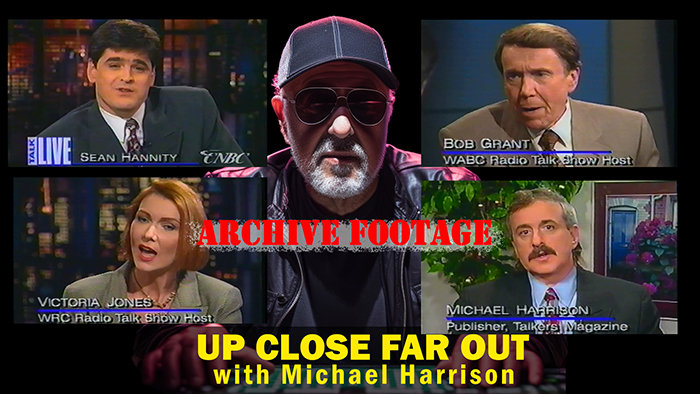
According to TALKERS publisher Michael Harrison, “For those of us who were lucky enough to be a part of that wild and crazy chapter of pop culture biz history – especially as it played out in Southern California – this is one of the greatest, most beloved industry events of the year… pure history, nostalgia, and fun!”

Advance tickets are $35 (+Eventbrite service processing fee) and available at this link: https://tinyurl.com/mir10th

The luxurious Anza Hotel has King Suites available at a special Music Industry Reunion rate of $118, which includes access to the hotel’s bar, pool, gym, and free parking. It’s just a few minutes’ walk to the event. Use Code: 250911LA10 at 818.222.5300 or follow this link: https://tinyurl.com/mir10hotel

Connect with The Music Industry Reunion: https://www.facebook.com/groups/MusicBusinessReunion The 10th Annual Music Industry Reunion is coordinated by legendary music biz promoters Jon Scott and Kenny Ryback. Jon Scott 818.601.1283 jonpaulscott@gmail.com Kenny Ryback 747.666.5465 kenny.ryback@gmail.com

Industry News

Commissioners Differ Starkly on Paramount-Skydance Merger

Last week’s FCC approval of the Paramount-Skydance merger on a 2-1 vote revealed dramatically different takes on the matter from FCC Commissioner Olivia Trusty – who voted for it – and FCC Commissioner Anna Gomez – who voted against. While Trusty issued a statement about the merger positioning it as a winimg for free markets, Gomez called out the FCC’s role and Paramount for “cowardly capitulation.” Trusty said, “This transaction reflects the free market at work, where private investment, not government intervention, is preserving an iconic American media institution. During its review of the transaction, the Commission determined the merger was lawful and would serve the public interest.  This deal brings fresh imgleadership, new capital, and a clear plan to compete with dominant tech platforms.” Gomez stated, “In an unprecedented move, this once-independent FCC used its vast power to pressure Paramount to broker a private legal settlement and further erode press freedom. Once again, this agency is undermining legitimate efforts to combat discrimination and expand opportunity by overstepping its authority and intervening in employment matters reserved for other government entities with proper jurisdiction on these issues. Even more alarming, it is now imposing never-before-seen controls over newsroom decisions and editorial judgment, in direct violation of the First Amendment and the law… The Paramount payout and this reckless approval have emboldened those who believe the government can – and should – abuse its power to extract financial and ideological concessions, demand favored treatment, and secure positive media coverage. It is a dark chapter in a long and growing record of abuse that threatens press freedom in this country.”

Industry News

Eric Bolling Joins New Citizen-Owned Media Platform

Former FOX Broadcasting, Red Seat Ventures, and Newsmax talk host and journalist Eric Bolling is the new senior communications manager and partner at Re:Public, the new “citizen-powered media platform forimg local communities and civic issues.” According to a press statement, Bolling will assist in guiding Re:Public’s strategic communications, serve as voice of the platform in national and regional media, and assist with outreach as Re:Public expands throughout the United States. Bolling says, “Re:Public is an innovative new platform that returns the voice of ordinary Americans to the center of our public life. Local news has been dominated by goliath corporations for too long. Re:Public empowers people with the ability to report what is important in their own neighborhoods — unfiltered, uncensored, and held accountable.”

Industry News

WJR’s Lloyd Jackson Named Voice of Detroit People Mover

Cumulus Media announces that “JR in the Morning” co-host Lloyd Jackson is the official voice of the Detroitimg People Mover, the city of Detroit’s elevated public transportation system. The city makes the announcement as the People Mover celebrates its 38th anniversary and Jackson becomes the first new voice for the system’s on-board station announcements in over 30 years. The WJR personality’s voice will now greet thousands of riders daily, both on the trains and from the station platforms. In addition to station announcements, Jackson will also be heard on a series of welcome messages, greeting riders from the station platforms.