Industry Views

Providing Support and Comfort to the Suffering Masses

By Pamela Garber, LMHC
Grand Central Counseling Group
New York

imgIn ongoing discussions about the dwindling relevance of radio in the modern world, the medium is grudgingly defended as a reliable “first responder” during times of public emergencies.

Nothing beats having an old-fashioned battery powered radio handy when confronted by hurricanes, tornados, blizzards, earthquakes, wildfires, floods, blackouts, and (dare I say it) weapons of war. Yes, radio is quite useful in the thick of natural “disasters” when the grid goes down, and the lights go out.

However, we are missing a huge opportunity by limiting radio to the roleimg of modern-day media Sterno.

I’ve been a practicing therapist in New York and South Florida for the past 25 years, and although not a host, I have served, and continue to participate, as a guest on broadcasts across the nation, discussing the emotional connections between hot news topics and people’s feelings. I am not alone in the perception that people of my profession have performed for decades as fully invested members of the talk radio family.

During this period, it has become obvious that the one-time talk radio mainstay of the in-house or “go to” mental health professional has become an endangered species. Some of the biggest names in radio were practicing therapists. They were a familiar part of the talk (even news/talk) format. Without turning this into a historical essay or a scold, it is sad to note that most of them are gone.

Ironically, now more than ever, the deeply troubling events in the world, the nation, and our local communities, constituting news and statistics, are bringing deep emotional pain and crippling anxiety to the masses… especially the kind of people likely to tune in to talk radio. Professionals. Businesspeople. Workers. Parents.

Looking for younger demos? Gen-Z is perhaps the most anxiety-plagued segment of the population. These “kids” need support, guidance, and understanding.

Hurricanes and heat waves are not the only disasters that call for the helpful and healing power of radio.

The hot topics of the day: crime, inflation, corruption, disease, ignorance, racial strife, and identity politics – not to mention the ever-lingering threat of nuclear devastation – are not merely subjects (and excuses) to vent blame, anger and hate. They contribute to an environment of deep fear and institutionalized discomfort. There are millions of real-life, personal “disasters” going on out there, exacerbated by relationship betrayals and family breakdowns, that make a heavy snowstorm feel like an adventure by comparison.

Stoking people’s fear and anger with cherry-picked cherry bombs is only a small part of the equation when it comes to serving the desperate needs of both current and potential listeners.

It would be a good thing to bring back to the talk radio menu some psychology shows and professional purveyors of emotional clarity, available in the local communities, as guests to dole out much sought compassion, empathy, guidance, and old fashioned advice.

Pamela Garber, LMHC is a practicing therapist based in NYC and South Florida and a longtime guest mental health commentator on radio and television news programs across the nation. She can be contacted by phone at 646-745-6709 or email at Pamelagarber@gmail.com.  Her website is Grandcentralcounselinggroup.com.

Industry News

FCC Commissioner Gomez Criticizes “Unlawful” Nexstar-Tegna Merger

FCC Commissioner Anna M. Gomez issued a statement on Friday (3/20) after the FCC’s Media Bureau approved the Nexstar/TEGNA merger, which Gomez notes violates the existing 39% national ownership cap inimg federal law. She says, “The FCC has once again chosen bureaucratic cover over public accountability. This merger was approved behind closed doors with no open process, no full Commission vote, and no transparency for the consumers and communities who will bear the consequences. A transaction of this magnitude, which includes new and novel issues before the FCC, demands open deliberation before the full Commission, not a quiet sign-off meant to avoid public scrutiny. Given the increasingly alarming pace of reckless media consolidation, the American public deserves to know how and why this decision was made.

“Local journalism is under extraordinary strain. Across the country, newsrooms are being consolidated, reporters laid off, and editorial decisions made far from the communities broadcast stations are licensed to serve. The Nexstar/TEGNA merger will accelerate exactly that trend, concentrating broadcast power in fewer corporate hands, shrinking independent editorial voices, and prioritizing national business interests over local needs. Nexstar has already begun cutting newsrooms throughout the country, and as these billion-dollar companies grow even larger, their increased negotiating leverage will drive up fees that translate into higher monthly bills for those families who can least afford them. The consequences of this rubber stamp approval will be felt in living rooms and newsrooms across the country, resulting in fewer voices, less competition, and higher costs for consumers.”

Industry News

Gomez Calls Out FCC’s “Intimidation Tactics”

FCC Commissioner Anna M. Gomez responds to FCC Chairman Brendan Carr’s recent statements tying broadcasters’ public service obligations to reporting about the Iran conflict and warning them about airing “hoaxes and news distortions.” She writes: “Once again, this FCCimg pretends it has the power to control news coverage. In reality, the FCC has vanishingly little power over national news networks. It licenses local broadcast stations, not networks, and no licenses are up for renewal until 2028. Early renewal attempts are exceedingly rare, and the process is so demanding that any effort would almost certainly fail, especially given the well-documented First Amendment violations underlying these moves. These threats are grounded in neither reality nor law and would not survive judicial scrutiny, just as other recent attempts by this Administration to push beyond constitutional limits have repeatedly failed in court.

“The concern over the chilling effect of these actions, however, is very real. Over the past year, this FCC has attacked the media as part of a years-long campaign by this Administration and its allies to discredit factual, independent coverage while blaming the press for growing public distrust. Meanwhile, it is the FCC’s own credibility and public trust that are rapidly eroding.

“Out of the many politically motivated FCC investigations targeting perceived government critics, not a single one has resulted in an enforcement action. This follows a well-established pattern of threatened investigations, broadcast license revocations, and regulatory harassment aimed at pressuring broadcasters and their corporate parents to comply or capitulate in advance. We cannot give this FCC more power than it has. Broadcasters, journalists, and the public should recognize these empty threats for what they are and fight to defend the First Amendment against any attempt to control or intimidate the press.”

Industry News

FCC Chair Threatens Licenses of Those Broadcasting “Fake News”

Over the weekend, Federal Communications Commission Chairman Brendan Carr posted to social media a warning to licensees that they face losing their licenses when renewal time comes. He posted: “Broadcasters that are running hoaxes and news distortions – also known as the fake news – have a chance now to correct course before theirimg license renewals come up. The law is clear.  Broadcasters must operate in the public interest, and they will lose their licenses if they do not. And frankly, changing course is in their own business interests since trust in legacy media has now fallen to an all time low of just 9% and are ratings disasters. The American people have subsidized broadcasters to the tune of billions of dollars by providing free access to the nation’s airwaves. It is very important to bring trust back into media, which has earned itself the label of fake news. When a political candidate is able to win a landslide election victory after in the face of hoaxes and distortions, there is something very wrong.  It means the public has lost faith and confidence in the media.  And we can’t allow that to happen. Time for change!” Carr included a Truth Social post from President Donald Trump in which he complains about papers such as The New York Times and The Wall Street Journal reporting on a strike against the U.S. base in Saudi Arabia that hit five refueling tanker planes. Trump said the reporting was intentionally wrong.

Industry News

Michael Harrison Discusses His Rock Radio Days (and More) on Video Podcast

TALKERS publisher and iconic radio programmer/personality Michael Harrison talks about his colorful 59-year career in radio including his early days as a pioneer in the progressive rock genre and founder of the “Album Oriented Rock” (AOR) format in the early 1970s through his present-day involvement in spoken word media.  All this and more was recorded (3/5)img during an informal conversation with his longtime friend, music industry publicist Anne Leighton on her YouTube program, “The Anne Leighton Inclusion Interview.”  Harrison talks about the evolution of radio and its influence on popular culture through more than a half century of imgbroadcasting adventures including his present-day role as a member of the classic rock band, Gunhill Road.  Harrison states, “Anne is such a unique player in this business – a longtime proponent of music discovery – she has such a respect for the artists and their fans.  Her podcast is SO refreshingly grassroots. It was a remarkable, fun experience talking with her about all that cool stuff.” Fans of music and radio history should not miss this.  To view this installment of the Anne Leighton Inclusion Interview in its entirety, please click HERE.

Industry News

TALKERS News Notes

Koehl Named Senior Fellow at D2C. Longtime talk radio professional Corny Koehl, whose career includes positions producing Dr. Laura Schlessinger, Suze Orman, Satellite Sisters, and Harpo Radio, is named Inaugural Senior Fellow at The Dedication to Community (D2C) Justice Institute at University of Mount St.Vincent. In this new role. Koehl will play a foundational role in shaping the Institute’s mission to advance justice-centered communication, public engagement and narrative change.

Tom Donahue Show to Launch on April 4. Talk media pro Tom Donahue says his program Truth Matters will debut on April 4 and will transition from SRN satellite distribution to online streaming and podcast audio file delivery to stations. The show will still air at 9:00 pm ET Saturday nights via direct stream from K-Star Talk Radio Network and will be heard on Talk Stream Live, World Broadcasting Network, “930 AM The Answer,” and later Sunday nights on KCAA Radio.

Industry News

Curtis Sliwa Joins Larry Mendte for WOR Mornings

img

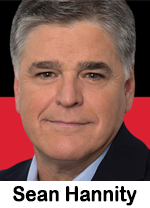
iHeartMedia news/talk WOR, New York announces that longtime NYC media personality Curtis Sliwa is joining the station’s morning drive show alongside Larry Mendte. “Curtis Sliwa and Larry Mendte in the Morning” will debut on Monday (3/9) in the 6:00 am to 10:00 am daypart. Sliwa had been working for crosstown news/talk WABC but took leave to run for mayor of New York on the Republican ticket. He says, “It’s been four months since the end of the New York City Mayoral election and most places I go people have asked me to come back to talk radio, so that’s what I’m going to do. I’m going to the best radio station in New York City, joining my friends of 30 years Mark Simone and Sean Hannity. It’s a full circle moment for me as my first radio station appearance for me was in 1971 when WOR’s Arlene Francis interviewed me as a kid, and I’ve been talking on the radio since.” Larry Mendte comments, “I couldn’t be more excited. Curtis is not only a legendary talk radio host, but an iconic New Yorker. What an honor to get to team up with him to get New Yorkers started every weekday.” The station adds that Gracie Award winner and 29-year WOR veteran Natalie Vacca will serve as executive producer for the new show.

Industry News

LeGeyt Reiterates Need for Ownership Deregulation at NAB State Leadership Conference

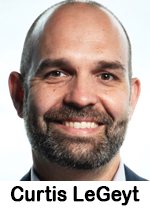
During yesterday’s gathering of broadcasters in Washington, DC for the National Association of Broadcasters’ annual State Leadership Conference, NAB president and CEO Curtis LeGeyt delivered remarks to some 570 attendees, “outlining the urgent need to modernize outdated regulations that prevent local stations from competing on a level playingimg field with global technology platforms.” He underscored broadcasters’ unique and essential role in public safety, civic engagement and strengthening local democracy. Additionally, broadcasters heard from key policymakers shaping broadcast policy, including Sen. Ed Markey (D-MA), who spoke about the enduring value of broadcast radio and his leadership on the bipartisan effort to pass the AM Radio for Every Vehicle Act… and U.S. Rep. Richard Hudson (R-NC), chairman of the House Energy and Commerce Subcommittee on Communications and Technology, who spoke about the need for broadcast ownership rules to reflect today’s landscape and the importance of keeping AM radio in cars.

Industry News

TALKERS News Notes

New York Archbishop to Host New Program. SiriusXM announces that new Archbishop of New York Ronald Hicks will host a new program for SiriusXM’s Catholic Channel, titled, “All Good Things with Archbishop Hicks. The program takes over the time slot previously held by Cardinal Timothy Dolan, who hosted “Conversations with Cardinal Dolan.”

Louisville Public Media Adds New Programs. Louisville Public Media expands its lineup with three new programs: “Sports in America” with David Greene from PRX and WHYY; “Click Here” with Dina Temple-Raston from PRX and Recorded Future News; and “Eastern Standard” from WEKU in Richmond, Kentucky. LPM president and CEO Kenya Young comments, “In listening to our audiences — those who have supported LPM for years and those we have yet to reach — one thing is unmistakably clear: people value programming that speaks to where they live. They want journalism and storytelling grounded in their communities, their state and the issues that shape their lives.”

Kevin Frazier to Appear at BFOA Gala. Broadcasters Foundation of America announces that “Entertainment Tonight” co-host Kevin Frazier will introduce Stephen A Smith, the recipient of the BFOA’s inaugural Broadcast Personality of the Year Award at the organization’s Gala and Fundraiser taking place Monday (3/9) at the Plaza Hotel in New York City.

Industry Views

Reckless Disregard in the Age of AI: What Verification Now Requires

By Matthew B. Harrison
TALKERS, VP/Associate Publisher
Harrison Media Law, Senior Partner
Goodphone Communications, Executive Producer

imgAI is now embedded in the modern newsroom. Not as a headline, not as a novelty, but as infrastructure. It drafts outlines, summarizes complex reporting, surfaces background details, and accelerates prep for live conversations. For media creators operating under relentless deadlines, that efficiency is not theoretical. It is practical and daily.

That reality raises a quiet but consequential legal question. When AI contributes to your research, what does verification now require?

Professional hosts are not reading raw chatbot answers on air and calling it journalism. That caricature misses the real issue. What is actually happening is subtler and far more common.

AI now sits inside research workflows. Producers use it for background. Hosts use it to summarize reporting. Teams use it to outline controversies or draft rundowns. Most of the time, it works. Sometimes, however, it invents.

When that invention involves a real person and a serious allegation, the legal analysis looks familiar.

For public figures, defamation requires proof of actual malice – knowledge of falsity or reckless disregard for truth. For private figures, negligence is usually enough. In both cases, the focus is not on the tool. It is on the content creator’s conduct.

AI does not change the elements. It changes the context in which reasonableness is judged.

Courts have long held that repeating a defamatory statement can create liability, even if someone else said it first. If you rely on a blog, and that blog relied on AI, and the allegation is false, the question becomes whether your reliance was reasonable.

Was the source reputable? Was the claim inherently improbable? Were there obvious red flags?  Was contradictory information readily available?

AI’s reputation for “hallucinating” facts now forms part of that backdrop. Widespread awareness that these systems can fabricate citations, merge identities, or invent accusations becomes relevant when a court evaluates your verification choices.

This does not mean using AI indicates reckless disregard. It means using AI does not excuse skipping verification when the stakes are high.

The more specific and damaging the claim, the greater the duty to confirm it through independent, reliable sources. Not another prompt. Not a circular reference to the same unverified blog. Rather, a primary record, official statement, or established reporting.

Documentation matters. If challenged, being able to show that you checked multiple sources before broadcast can be decisive.

None of this is new doctrine. What is new is how seamlessly AI blends into ordinary research habits. That integration makes it easier to forget that the legal question is still about human judgment.

The law will not ask whether your workflow was efficient. It will ask whether your conduct was reasonable under the circumstances.

In the age of AI, verification is not a courtesy. It is risk management.

Matthew B. Harrison is a media and intellectual property attorney who advises radio hosts, content creators, and creative entrepreneurs. He has written extensively on fair use, AI law, and the future of digital rights. Reach him at Matthew@HarrisonMediaLaw.com or read more at TALKERS.com.

Industry Views

Progressive Talk Media Star Thom Hartmann Interviewed

UFCO Hartmann copy

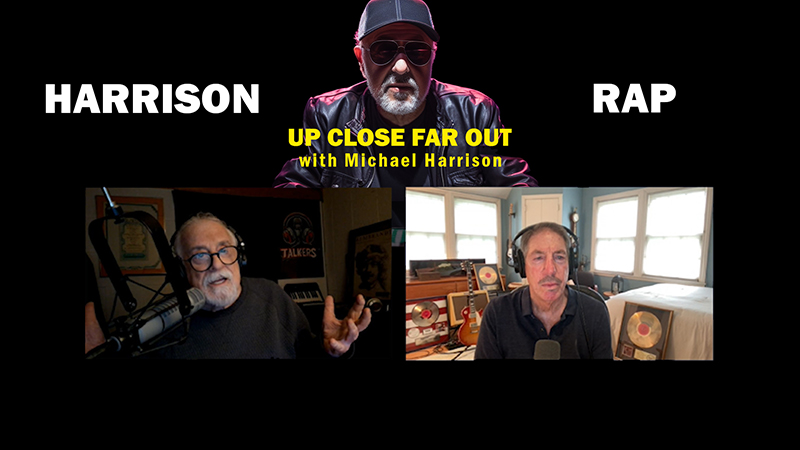
WYD Media nationally syndicated progressive talk show host, Thom Hartmann is Michael Harrison‘s guest this week on Up Close Far Out – a YouTube video presentation of broadcast industry trade publication TALKERS magazine.  Hartmann is one of – if not THE – most influential and longest running progressive radio and talk media commentators on the scene today.  His daily program is heard on several hundred radio stations as well as the SiriusXM Progress 127 channel, Free Speech TV, Substack, YouTube, and Facebook. He is a prolific best-selling author and publishes a widely read daily newsletter, the Hartmann Report. Hartmann is currently ranked number 8 on the prestigious TALKERS Heavy Hundred list of the 100 Most Important Radio Talk Show Hosts in America.  Harrison and Hartmann discuss the state of news/talk media, the challenge of covering the Trump presidency, and both commentators’ concern about the administration’s escalating infringement on First Amendment rights. To experience the video in its entirety please click HERE.

Industry News

SAG-AFTRA Criticizes Nexstar News Cuts

SAG-AFTRA is condemning Nexstar Media Group’s decision to eliminate SAG-AFTRA positions at WGN-TV in Chicago and lay off multiple journalists at KTLA in Los Angeles and at stations across the country. SAG-AFTRA says, “These cuts strike a serious blow to a trusted source of news and information on which these communities depend.” SAG-AFTRA president Sean Astin comments, “By laying off journalists across the country, Nexstar is eroding the resources and talent that local communities rely on for trusted news. These actions highlight the risks of media consolidation and underscore the urgent need for regulators and the company to prioritize the public interest and the professionals who serve it.”

Industry Views

If the Bot Lies, Who Pays?

By Matthew B. Harrison
TALKERS, VP/Associate Publisher
Harrison Media Law, Senior Partner
Goodphone Communications, Executive Producer 

img

A reporter recently asked a clean question with sharp edges: “Who is responsible when an AI defames someone?”
It sounds futuristic. It isn’t. It’s a standard defamation analysis dressed in new technology.
The most publicized early test involved radio host Mark Walters, who sued OpenAI after ChatGPT falsely stated he had been accused of embezzlement. The case was dismissed in federal court in Georgia in 2024. The court concluded the complaint did not plausibly allege the required level of fault. No federal appellate court has yet imposed defamation liability on an AI developer for a hallucinated statement alone.
That matters.
Defamation still requires a false statement of fact, publication to a third party, fault, and damages. An AI system cannot form intent. It cannot know falsity. It is not a legal person. But an AI output can absolutely contain a false statement about a real individual.
Courts will not ask whether “the AI defamed.” They will ask who published the statement.
Publication is broader than many assume. It does not require a broadcast tower. It requires communication to at least one third party. If a chatbot produces a false statement visible only to the person who prompted it and that person is the subject of the statement, there is typically no publication. The moment that output is emailed, posted, quoted, aired, or incorporated into a script, publication is satisfied.
The AI session itself is not the problem. Distribution is.
That is where fault enters the picture.
For public figures, plaintiffs must prove actual malice: knowledge of falsity or reckless disregard for truth. “The computer said it” is not a defense. If a host repeats a serious allegation generated by a system widely known to hallucinate and fails to verify it, a plaintiff will argue reckless disregard. For private figures, negligence is usually enough. Failing to check an AI-generated accusation against readily available sources may meet that standard.
The technology does not lower the bar. Nor does it create a new type of immunity. It simply changes the source of the words.
The unsettled frontier is developer exposure under Section 230 and product liability theories. Courts have not yet produced a controlling appellate decision holding a model developer liable in defamation solely because a model generated a false statement. That question remains open, but it is not yet answered in plaintiffs’ favor.
Here is the practical reality for media professionals.
An AI can generate the sentence.
You are the one who makes it public.
That’s where liability is found.
Matthew B. Harrison is a media and intellectual property attorney who advises radio hosts, content creators, and creative entrepreneurs. He has written extensively on fair use, AI law, and the future of digital rights. Reach him at Matthew@HarrisonMediaLaw.com or read more at TALKERS.com.
Industry News

FCC Chairman Carr Announces Pledge America Campaign

Federal Communications Commission chairman Brendan Carr is announcing the agency’s Pledge America Campaign designed to dovetail with the celebration of the 250th anniversary of America’s independence. The announcement says that “consistent with their longstanding public interest obligations, America’s broadcasters play a key role in educating, informing, and entertaining viewers and listeners all across America, and they are particularly well suited to air programming that is responsive to the needs and interests of their local communities.  The Pledge America Campaign enables broadcasters to lend their voices in support of Task Force 250 and the celebration of America’s 250th birthday by airingimg patriotic, pro-America content that celebrates the American journey and inspires its citizens by highlighting the historic accomplishments of this great nation from our founding through the Trump Administration today.” Carr adds, “On July 4, 2026, America will celebrate the 250th Anniversary of the signing of the Declaration of Independence. That revolutionary document set forth our founding principles – including Life, Liberty, and the pursuit of Happiness – and put America on a collision course with destiny.  Over the following centuries, the American story has defined modern history and spread freedom, opportunity, and prosperity across the globe.  As America’s 250th anniversary approaches, it is important to reflect on the ideals and events that have defined our past while keeping an eye towards our country’s bright future. The White House is leading our national celebration of this historic event with the Salute to America 250 Task Force, which calls on the federal government, among others, to mark this momentous occasion.  As part of this effort, I am calling on broadcasters to pledge to provide programming that promotes civic education, national pride, and our shared history.” Carr shares some examples stations could use, including:

Running PSAs, short segments, or full specials specifically promoting civic education, inspiring local stories, and American history.

  • Including segments during regular news programming that highlight local sites that are significant to American and regional history, such as National Park Service sites.
  • Starting each broadcast day with the “Star Spangled Banner” or Pledge of Allegiance.
  • Airing music by America’s greatest composers, such as John Philip Sousa, Aaron Copland, Duke Ellington, or George Gershwin.
  • Providing daily “Today in American History” announcements highlighting significant events that took place on that day in history.
  • Partnering with community organizations and other groups that are already working hard to bring America’s stories of unity, perseverance, and triumph to light.
Industry Views

TALKERS Magazine Enthusiastically Supports the 2026 IBS Conference in New York as its Presenting Sponsor

By Matthew B. Harrison
TALKERS, VP/Associate Publisher
Harrison Media Law, Senior Partner
Goodphone Communications, Executive Producer 

imgTALKERS magazine, the leading trade publication serving America’s professional broadcast talk radio and associated digital communities since 1990, is pleased to participate as the presenting sponsor of the Intercollegiate Broadcasting System (IBS) conference for the second consecutive year. The conference is currently underway in New York.

IBS NYC 2026 – America’s preeminent annual college radio and media gathering began last night (2/19) and continues today and tomorrow (2/20-21) at the Sheraton Times Square Hotel in midtown Manhattan. The non-profit, volunteer-driven, IBS has been diligently serving student broadcasters since 1940, and its services are needed today more than ever.

Campus broadcasting continues to take on growing importance as theimg radio industry (and its related fields) seeks to connect with and develop a next generation of professional practitioners as well as engaged audiences. TALKERS is honored to again provide financial support, encouragement, experience, and advice to the dedicated organizers of this very special event.

We highly recommend that radio and media professionals attend this dynamic gathering because the grass roots future of the field oozes out of its content-rich meeting rooms, exhibition areas, and hallways. It provides fertile ground at which to network with almost a thousand wide-eyed up and coming stars in both talent and management – the next generation of professional industry movers and shakers. From the high school, college, and university perspective, the fact that it continues to be a must-attend conference for dedicated students of communication and professional media hopefuls remains a self-evident truth. Here, in the early stages of the second quarter of the 21st century, everybody’s in show biz and everybody’s a star. To quote Ray Davies, “There are stars in every city, in every house and on every street.”

The skills of modern communication are a vocational necessity well beyond entering a career in radio, TV or podcasting. The abilities to produce a podcast, YouTube video, social media campaign, cogent press release, or “talk show” constitute a minimal level of modern age literacy needed in almost all fields of endeavor going forward.

Since its launch nearly four decades ago, TALKERS magazine has been a potent presence at the intersection of media creation, education, and accountability. That’s why our support of the Intercollegiate Broadcasting System (IBS) conference isn’t just symbolic – it’s practical.

The next generation of broadcasters, podcasters, digital hosts, producers, and media entrepreneurs is already building the future of this industry. IBS has been helping them do that – consistently, seriously, and without shortcuts – for decades.

Campus stations are often where experimentation happens first:

  • New formats
  • New voices
  • New distribution models
  • New cultural conversations
  • New technology
  • New legal frontiers

IBS recognizes that reality and treats student media creators with the same seriousness the industry demands at the professional level. This aligns directly with our TALKERS mission: supporting informed, responsible, creative media across emerging platforms.

We’re not simply sponsoring a conference.  We’re investing in the people who will define the next era of media.

For more information on the 2026 IBS conference, please click HERE.

Matthew B. Harrison is a media and intellectual property attorney who advises radio hosts, content creators, and creative entrepreneurs. He has written extensively on fair use, AI law, and the future of digital rights. Reach him at Matthew@HarrisonMediaLaw.com or read more at TALKERS.com.

Industry News

Colbert-Talarico Interview Draws Attention to Equal Time Rule as FCC Commissioners Disagree About its Interpretation

It’s no surprise to regular TALKERS readers that FCC Chairman Brendan Carr and Democratic Commissioner Anna M. Gomez disagree – at least to some degree – on how the equal time rule should be appliedimg to television and radio programming. After the back-and-forth between The Late Show’s Stephen Colbert and CBS attorneys over the interview with U.S. Senate candidate U.S. Rep. James Talarico that did not air on CBS television but was pushed out on the show’s social media accounts instead, broadcasters – including news/talk radio programmers and hosts – may be confused about how the equal time rule is being applied.

For her part, Gomez issued the following statement: “This is yet another troubling example of corporate capitulation in the face of this Administration’s broader campaign to censor and control speech. The imgFCC has no lawful authority to pressure broadcasters for political purposes or to create a climate that chills free expression. CBS is fully protected under the First Amendment to determine what interviews it airs, which makes its decision to yield to political pressure all the more disappointing. It is no secret that Paramount, CBS’s parent company, has regulatory matters before the government, but corporate interests cannot justify retreating from airing newsworthy content. The FCC is powerless to impose restrictions on protected speech, and any attempt to intimidate broadcasters into self-censorship undermines both press freedom and public trust. I once again urge broadcasters and their parent companies to stand firm against these unlawful pressures and continue exercising their constitutional right to speak freely and without government interference.”

As far as news/talk radio is concerned, TALKERS editors have pointed out that in most cases, talk radio stations and their hosts are usually happy to have any qualified candidate be interviewed – whetherimg Republican or Democrat. Often, Democratic candidates balk at being interviewed by conservative hosts for fear they will not get a “friendly” interview as their Republican opponent might have. Regardless, the law is about equal time, and the matter late night shows are dealing with is assuming they qualify for the “bona fide news” exemption that excuses them from the equal time rule. Chairman Carr’s position is there is no blanket exemption; it is taken on a case-by-case basis.

Industry News

CBS Pulls Planned Colbert Interview with Texas Senate Candidate Amid FCC Equal-Time Concerns

A planned interview between “The Late Show with Stephen Colbert” and Texas State Rep. James Talarico, a Democratic candidate for U.S. Senate, was pulled from broadcast at the last-minute last night (2/16) after CBS executives cited concerns related to federal broadcast regulations.

Colbert talked about the decision during the show’s opening monologue, telling viewers that network attorneys had advised against airing theimg interview due to potential implications under the Federal Communications Commission’s “equal time” rule. The rule requires broadcast licensees to provide equal opportunities to legally qualified candidates for public office if one candidate is given airtime.

Historically, late-night talk shows have relied on exemptions to the rule, including classifications as “bona fide news interviews” or entertainment programming. However, recent statements from FCC leadership have prompted renewed scrutiny.

imgFCC Chairman Brendan Carr has indicated that the Commission is reviewing how those exemptions are applied, particularly in the context of high-profile entertainment programs that feature political figures. While no formal rule change has been adopted, CBS reportedly acted out of caution, concerned that airing the interview could trigger equal-time obligations for opposing candidates.

Colbert said CBS had initially instructed him not to reference the decision on air, a directive he chose to disregard. During the broadcast, he explained the network’s reasoning to viewers and criticized the uncertainty surrounding the FCC’s current posture on candidate appearances.

The interview itself was recorded but not broadcast on CBS. Instead, it was released online through The Late Show’s digital platforms. The FCC’s equal-time rules apply to over-the-air broadcasters but do not extend to online streaming or social media platforms, allowing the interview to be distributed outside the broadcast context.

Colbert took the opportunity to point out what he characterized as uneven regulatory treatment across media platforms, noting that political commentary on talk radio continues without comparable intervention. The FCC has not announced any new enforcement actions related to talk radio or late-night television programming.

Neither CBS nor the FCC issued formal statements Monday night addressing the specific decision. Carr has not publicly commented on the Colbert episode but has previously stated that the Commission is obligated to ensure consistent application of federal communications law.

The incident has renewed debate within the media industry over how equal-time rules should apply in a fragmented media landscape where political discourse routinely occurs across broadcast, cable, and digital platforms.

Industry News

iHeartRadio’s “Thank a Teacher” Campaign Announces 2026 Winners

For more than a decade, iHeartRadio has partnered with education non-profit DonorsChoose to launch the Thank a Teacher contest in 160 radio markets to ask listeners to nominate their favorite teacher for a chance toimg be celebrated on-air and transform their classrooms with a $5,000 DonorsChoose gift card. iHeartMedia president of programming operations and digital music says, “iHeartRadio’s ‘Thank a Teacher’ aims to shine a light on the quiet and positive work happening in classrooms across the country and to offer a very public thank you to the teachers who are doing so much.” Over the course of the contest 60,000 teachers were nominated for $50,000 in gift cards shared by the 10 final winners. See the winners here.

Industry News

Michael Sol Warren Joins WNYC/Gothamist Newsroom

Journalist Michael Sol Warren joins WNYC/Gothamist on the Day-of Desk as a dedicated New Jersey reporter. The public media organization says Warren’s primary focus has been coverage of environmental issues.

Industry News

TALKERS Magazine Enthusiastically Supports the 2026 IBS Conference in New York as its Presenting Sponsor

By Matthew B. Harrison
TALKERS, VP/Associate Publisher
Harrison Media Law, Senior Partner
Goodphone Communications, Executive Producer

imgTALKERS magazine, the leading trade publication serving America’s professional broadcast talk radio and associated digital communities since 1990, is pleased to participate as the presenting sponsor of the forthcoming Intercollegiate Broadcasting System (IBS) conference for the second consecutive year.

IBS NYC 2026 – America’s preeminent annual college radio and media gathering – will take place February 19-21 at the Sheraton Times Square Hotel in midtown Manhattan.  The non-profit, volunteer-driven, IBS has been diligently serving student broadcasters since 1940, and its services are needed today more than ever.

Campus broadcasting continues to take on growing importance as the radio industry (and its related fields) seeks to connect with and develop a next generation of professional practitioners as well as engaged audiences. TALKERS is honored to again provide financial support, encouragement, experience, and advice to the dedicated organizers of this very special event.

We highly recommend that radio and media professionals attend this dynamic gathering because the grass roots future of the field oozes out of its content-rich meeting rooms, exhibition areas, and hallways. It provides fertile ground at which to network with almost a thousand wide-eyed up and coming stars in both talent and management – the next generation of professional industry movers and shakers. From the high school, college, and university perspective, the fact that it continues to be a must-attend conference for dedicated students of communication and professional media hopefuls remains a self-evident truth.  Here, in the early stages of the second quarter of the 21st century, everybody’s in show biz and everybody’s a star. To quote Ray Davies, “There are stars in every city, in every house and on every street.”

The skills of modern communication are a vocational necessity well beyond entering a career in radio, TV or podcasting. The abilities to produce a podcast, YouTube video, social media campaign, cogent press release, or “talk show” constitute a minimal level of modern age literacy needed in almost all fields of endeavor going forward.

Since its launch nearly four decades ago, TALKERS magazine has been a potent presence at the intersection of media creation, education, and accountability. That’s why our support of the Intercollegiate Broadcasting System (IBS) conference isn’t just symbolic – it’s practical.

The next generation of broadcasters, podcasters, digital hosts, producers, and media entrepreneurs is already building the future of this industry. IBS has been helping them do that – consistently, seriously, and without shortcuts – for decades.

Campus stations are often where experimentation happens first:

  • New formats
  • New voices
  • New distribution models
  • New cultural conversations
  • New technology
  • New legal frontiers

IBS recognizes that reality and treats student media creators with the same seriousness the industry demands at the professional level. This aligns directly with our TALKERS mission: supporting informed, responsible, creative media across emerging platforms.

We’re not simply sponsoring a conference.  We’re investing in the people who will define the next era of media.

For more information on the 2026 IBS conference, please click HERE.

Matthew B. Harrison is a media and intellectual property attorney who advises radio hosts, content creators, and creative entrepreneurs. He has written extensively on fair use, AI law, and the future of digital rights. Reach him at Matthew@HarrisonMediaLaw.com or read more at TALKERS.com.

Industry News

WIBC, Indy Lets Rob Kendall Go

Two days ago, TALKERS reported that WIBC, Indianapolis late morning host Rob Kendall had been ordered off the air at the Urban One news/talker but was still on the payroll. Now, TALKERS learns via Kendall’s Facebook post that he has been let go. He writes I his post: “Today was my last day as a part of 93.1 WIBC. I want to thank the literally hundreds of thousands of you who became a part of my radio family theimg last 9 years. Being your voice, using my platform to speak up for you, to take on the powerful, the connected, the politicians, has been the greatest honor of my professional life. You have responded with incredible ratings and support of our advertisers that stood behind me. In the process we have formed an unbreakable bond. In the end, the show was always about us. In a battle together. I also want to thank those of you who have written letters in support of me the last 3 weeks. I was so moved by the outcry demanding this beautiful thing we’ve forged together keep going at the place we made it happen. If you want the answers why it will not occur, that’s a question for Urban One. We have some amazing things coming soon! Our bond is so much bigger than any singular platform or frequency. You have proven that in recent weeks. I can’t wait to tell you all about our new opportunities together in the near future. In the meantime, thank you for all YOU have given to me the last 9 years. Your loyalty and dedication allowed me to live out my boyhood dream. I will never be able to thank you enough.” Kendall hasn’t publicized his plans for the future but appears to be leaning toward a digital platform as he’s continuing to post Indiana and Indianapolis news via social media.

Industry News

NRG to Sell Omaha Stations to Usher Media

NRG Media is getting out of the radio business in the Omaha market as it files to sell news/talk KOIL-AM, sports talk KOZN-AM, along with music formatted stations KQKQ-FM, KZOT-AM, and KOPW-FM to Usher Mediaimg LLC. Separately it is filing to sell KOOO-FM to Nebraska Public Media. This is NRG Media’s second deal with Usher Media. In November of last year, it agreed to sell its Tri-Cities, Nebraska station group to Usher for $3.75 million. Company officer Alan Usher comments, “This acquisition is a statement of belief in Omaha and in Nebraska. Local radio matters. Local leadership matters. We are committed to building a broadcast presence that reflects the strength of this community and delivers real value to the businesses and people who call it home.” Kalil & Co. was the exclusive broker for this deal.

Industry News

Andrew Cuomo to Host Weekly Show on WABC, New York

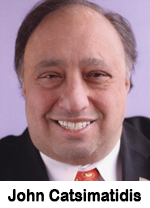
Former New York Governor Andrew Cuomo was a guest on 77WABC Radio owner John Catsimatidis’ “Cats Roundtable” show last month and during that appearance Catsimatidis told Cuomo, “I hear you may beimg talking a little bit more on WABC radio in the near future.” That has become reality as Red Apple Media announces the launch of “The Pulse of the People,” starring Cuomo. The one-hour show premiered yesterday (2/1) at 5:00 pm. Catsimatidis states, “Today on WABC Radio we are introducing a new program, ‘The Pulse of the People,’ hosted by former Governor Andrew Cuomo. The show will focus on listener calls and open discussion about the issues, concerns, and views of New Yorkers. WABC Radio believes in bipartisan conversation and thoughtful discussion of solutions, and we invite listeners to tune in and be part of the discussion.” Cuomo comments, “This is a moment when our country has rarely felt more divided, politics more polarizing, and public discourse more toxic. ‘The Pulse of the People’ is about cutting through the noise and the rancor to have real, substantive, fact-based conversations about the issues that actually affect people’s lives. I’ve spent my career focused on making government work and getting results, and that’s the same straightforward, problem-solving approach I’ll bring to this program.”

Industry News

Local Officials Extend Deadline for Data Center at WGN, Chicago Transmitter Site

According to the Daily Herald, officials in suburban Elk Grove Village are extending the deadline to begin construction on a data center campus on the current site of WGN-AM, Chicago’s broadcast towers. The original dealimg required that construction was to have begun in 2025, but village officials agreed to push the deadline back to September of 2017. The Daily Herald story reports, “Nexstar Media Group’s original plans called for selling off the southern 35 acres of the 102-acre property for a three-building data center campus, ancillary electrical substation, and six public pickleball courts to be leased to the Elk Grove Park District. The primary 750-foot radio tower and its 250-foot backup were to be demolished, replaced and relocated slightly to the north, while the small building that houses the station’s transmitters and backup studio would have remained intact.” Nexstar says the transmitter move would not affect listeners’ ability to hear the station. See the Daily Herald story here.

Industry News

WNYC/Gothamist Honored for Rikers Island Sexual Assault Story

Public media organization WNYC/Gothamist is being honored with an Alfred I. duPont-Columbia University Award for its investigation into allegations by 24 women of sexual assault by a single corrections officer on Rikers Island. The audio story – which aired on WNYC’s NYC Now local news podcast – revealed how an officer known as “Champagne” had been accused of abusing female inmates for years. Interim editor-in-chief Stephanie Clary says, “We are grateful for this recognition of the newsroom’s work. This investigation required months of difficult and deep reporting, and it led to meaningful change — underscoring the essential role of local journalism in holding people in power to account. We are especially thankful to the women who entrusted us with their stories. Their voices and interviews were critical to this reporting and ultimately helped make the city safer for others.”

Industry Views

You Are the Asset: Why Protecting Your Voice and Likeness Is No Longer Optional

img

By Matthew B. Harrison
TALKERS, VP/Associate Publisher
Harrison Media Law, Senior Partner
Goodphone Communications, Executive Producer

imgFor years, “protect your name and likeness” sounded like lawyer advice in search of a problem. Abstract. Defensive. Easy to ignore. That worked when misuse required effort, intent, and a human decision-maker willing to cross a line.

AI changed that.

When Matthew McConaughey began trademarking his name and persona-linked phrases (“alright, alright, alright”), it was not celebrity vanity. It was an acknowledgment that identity has become a transferable commodity, whether the person attached to it consents or not.

A voice is no longer just expressive. It is functional. It can be sampled, trained, replicated, and redeployed at scale. Not as a parody. Not as commentary. As a substitute. When a synthetic version of you can narrate ads, read copy, or deliver endorsements you never approved, the injury is not hypothetical. It is economic.

We have already seen this play out. In the past two years, synthetic versions of well-known voices have been used to sell products the real person never endorsed, often through social media ad networks. These were not deep-fake jokes or parody videos. They were commercial voice reads. The pitch was simple: if it sounds credible, it converts. By the time the real speaker objected, the ad had already run, the money had moved, and responsibility had dissolved into a stack of platform disclaimers.

This is where many creators misunderstand trademark law. They think it is about logos and merchandise. It is not. Trademarks protect source identification. Meaning, if the public associates a name, phrase, or expression with you as the origin, that association has legal weight. McConaughey’s filings reflect that reality. Certain phrases signal him instantly. That signaling function has value, and trademark law is designed to prevent identity capture before confusion spreads.

Right of publicity laws still matter. They protect against unauthorized commercial use of name, image, and often voice. But they are largely reactive. Trademarks allow creators to draw boundaries in advance, before identity becomes unmoored from its source.

This is not a celebrity problem. Local radio hosts, podcasters, commentators, and long-form interviewers trade on recognition and trust every day. AI does not care about fame tiers. It cares about recognizable signals.

You do not need to trademark everything. You do need to know what actually signifies you, and decide whether to protect it, because in an AI-driven media economy, failing to define your identity does not preserve flexibility. It invites identity capture.

Matthew B. Harrison is a media and intellectual property attorney who advises radio hosts, content creators, and creative entrepreneurs. He has written extensively on fair use, AI law, and the future of digital rights. Reach him at Matthew@HarrisonMediaLaw.com or read more at TALKERS.com.

Industry News

RTDNA to Honor Steve Bertrand with Lifetime Achievement Award

Retired WGN, Chicago journalist Steve Bertrand is being honored with the Lifetime Achievement Award as part of the RTDNA Foundation’s 2026 First Amendment Awards taking place at the Watergate Hotel in Washington on March 12. RTDNA says it “is celebrating Steve Bertrandimg with the Lifetime Achievement Award, an honor designated contributions to local news. Bertrand has been a trusted voice on WGN Radio for four decades, anchoring news since 1992 and earning the confidence of generations of Chicago listeners. Over his career, he covered many of the most significant local and national events of the past 40 years while mentoring colleagues and helping define the standard for excellence in local radio journalism. His retirement in 2025 marks the culmination of a lifetime dedicated to informing the public and strengthening the role of local news.”

Industry News

Audacy Sells RI Sports Signal to Pubcaster

Ocean State Media announces that it has acquired WVEI-FM, Westerly, Rhode Island from Audacy to replace its five-signal network that carries public radio content from NPR and others. WVEI has been theimg Providence market outlet for Audacy’s sports talk WEEI-FM, Boston for more than two decades. Audacy closed the WVEI offices in 2023. Ocean State Media president and CEO Pam Johnston says they are spending $4.9 million on the new FM. “From an operational and financial standpoint, we are going to be financing the cost of this frequency, which will allow us to eventually sell all the frequencies that we currently have. And so over time we believe that this transaction actually is going to pay for itself.” She says making it easier for listeners is important, “One signal reaching much farther than our current series of five different signals, a greater experience where you don’t have to change the channel as you move your way through Rhode Island and southeastern Massachusetts.”

Industry News

FCC Issues Guidance on Equal Opportunity Issues

On the heels of FCC Chairman Brendan Carr’s testimony before the U.S. House Subcommittee on Communications and Technology Committee on Energy and Commerce last week in which he reiterated the Commission’s duty to enforce broadcast licensees’ obligations toimg serve in the public interest, the FCC yesterday issued a Guidance on Political Equal Opportunities Requirement for Broadcast Television Stations. While the memorandum is written to television stations, it obvious applies to radio stations as well. The memo ultimately addresses the 1959 order that exempts broadcasters from providing equal time to qualified candidates on any: (1) bona fide newscast; (2) bona fide news interview; (3) bona fidenews documentary (if the appearance of the candidate is incidental to the presentation of the subject or subjects covered by the news documentary); or (4) on-the-spot coverage of bona fide news events (including but not limited to political conventions and activities incidental thereto). Programs such as “The Tonight Show” and “The View” are cited as entertainment shows in which an interview segment can qualify as a bona fide news interview. Regarding this, the memo concludes with two important paragraphs:

“Concerns have been raised that the industry has taken the Media Bureau’s 2006 staff-level decision to mean that the interview portion of all arguably similar entertainment programs whether late night or daytime—are exempted from the section 315 equal opportunities requirement under a bona fide news exemption. This is not the case. As noted above, these decisions are fact specific, and the exemptions are limited to the program that was the subject of the request.

Importantly, the FCC has not been presented with any evidence that the interview portion of any late night or daytime television talk show program on air presently would qualify for the bona fide news exemption. Moreover, a program that is motivated by partisan purposes, for example, would not be entitled to an exemption under longstanding FCC precedent. Any program or station that wishes to obtain formal assurance that the equal opportunities requirement does not apply (in whole or in part) is encouraged to promptly file a petition for declaratory ruling that satisfies the statutory requirements for a bona fide news exemption.”

Industry News

Priebus Joins FOX News Media as Analyst

FOX News Media brings Reince Priebus aboard as a political analyst, in which he’ll appear across all platforms. He made his debut last nightimg (1/20) on make his debut on FOX News Channel’s “Hannity.” Priebus is a former Republican National Committee chairman and served as White House chief of staff to Donald Trump in 2017. He currently is president of Michael Best & Friedrich LLP, chairman of Michael Best Strategies and is a senior adviser to Centerview Partners. He also holds roles on President Trump’s Intelligence Advisory and Oversight boards.

Industry News

FCC’s Gomez Testifies About First Amendment Concerns

At last week’s appearance before the U.S. House Subcommittee on Communications and Technology Committee on Energy and Commerce, FCC Commissioner Anna M. Gomez testified about her concerns withimg the way the commission is operating. She took issue with FCC Chair Brendan Carr’s interpretation of how the Commission should ensure that licensees operate in the public interest. She stated, “For months, this FCC has asserted an apparent roving mandate to police speech that this Administration does not like, invoking an undefined and unchecked concept known as the ‘public interest’ standard.

Instead of functioning as a principle intended to serve the public, this standard is being treated as a license to weigh in on content, viewpoint, and editorial judgment.

This is not what the FCC was created to do. The Commission’s job is not to police content, root out media bias, or guarantee favorable coverage for any administration. Its responsibility is to regulate communications infrastructure and markets, not censor the speech that flows through them.

The First Amendment protects against government interference with speech, and the Communications Act prohibits the FCC from engaging in censorship. In a free society, the government does not decide what speech is acceptable or aligned with its views. When the government’s media regulator claims the power to judge content or police bias, we move away from oversight and closer toward censorship and control.

That is why it is so important for the FCC to clearly define what it means by the public interest standard, something I have called on it to do repeatedly. It is also why Congress must insist on guardrails that prevent content-based regulation and protect against the FCC acting as an arbiter of speech.”

Industry News

NAB Goes to Bat for Removal of Ownership Caps

The National Association of Broadcasters is testifying on behalf of over-the-air broadcasters who would like to see the Federal Communications Commission’s radio and television station ownership caps eliminated. In lengthy testimony regarding the 2022 Quadrennial Regulatory Review – Review of the Commission’s Broadcast Ownership Rules and Other Rules Adopted  Pursuant to Section 202 of the Telecommunications Act of 1996, NAB says that, unlike those arguing to keep or even strengthen ownership caps, those asking for their removal are providing real-world testimony. The NAB writes, “They documented in detail the vastimg competition local radio stations today face for audiences and vital advertising revenues from online and satellite content providers and digital ad platforms not subject to any comparable restrictions on their scale and scope; the dire negative effects that consumer and advertiser substitution of competing digital audio content and advertising for traditional radio has had on the listenership and advertising revenues garnered by local radio stations, including in mid-sized and small markets; and how the retention of asymmetric ownership restrictions has prevented radio broadcasters from gaining local scale to take advantage of important economic efficiencies, obtain investment capital, and better compete for audiences and advertising revenues, and thus enhance – or even maintain – their provision of news, emergency information, and valued entertainment and sports programming in local communities across the country at no cost to the public.”  Responding to testimony from musicFirst Coalition and the Future of Music Coalition – referred to as the Coalitions – NAB writes, “First, the fact that the Coalitions continue to hold themselves out as protectors of small, local independent broadcasters not just borders on the absurd but crosses over into full-blown absurdity. The Coalitions represent the interests of the music industry, which is dominated by three consolidated international record labels. Compared to even the largest radio station groups, the giant record labels are the 800-pound gorillas of the music world. Those three labels earn billions more in revenue than the approximately 11,000 full-power commercial AM/FM stations combined. As NAB earlier reported, the three major music companies jointly generated about $2.9 million per hour in 2023. In remarkable contrast, in 2023 and 2024 the vast majority of radio stations garnered less – and often much less – than $2.9 million per year in advertising revenues. Needless to say, the Coalitions have never explained how local radio stations earning such low levels of revenue (and even lower, if any, profits) are supposed to keep talented employees and provide high quality programming, including popular music, sports, and informational programming, such as weather updates and emergency information, OTA and free to the public without achieving increased local scale, greater economic efficiencies, and more robust ad revenues. See the NAB’s complete testimony here.

Industry News

Urban One Moves on Reverse Stock Split

After Urban One shareholders approved the company’s request to consider a reverse stock split last June, the company’s board of directors announces that it is going forward with a reverse stock split of all classes of its common stock, including its publicly traded shares of Class Aimg Common Stock and Class D Common Stock at a ratio of 10 for 1. The company states, “The reverse stock split is being conducted to regain compliance with the $1.00 minimum bid price requirement for continued listing on the Nasdaq Capital Market with respect shares of the Company’s Class D Common Stock.” No fractional shares of Common Stock will be issued in connection with the reverse stock split. Holders of stock who would otherwise receive a fractional share will receive cash in lieu of the fractional share equal to the closing sales price of the stock on the effective date – in this case January 22.

Industry News

TALKERS News Notes

AdLarge Acquires Inlet Media. AdLarge is acquiring the assets of technology platform Inlet Media, Inc that it has used for nearly two years to onboard, distribute, and monetize audio and video content through its AI-powered podcast and creator workflows. As part of the transaction, Patrick Cedrowski, co-founder of Inlet Media, has been named chief technology officer of AdLarge and the fwd. network. Brian Egan, co-founder of Inlet Media and longtime AdLarge and fwd. network team member, has been promoted to vice president and head of product.

NHPR Partners with The Podglomerate. New Hampshire Public Radio enters into an exclusive sales partnership with Portsmouth-based podcast agency The Podglomerate,, in which The Podglomerate will serve as the exclusive sales partner for podcasts produced by NHPR. NHPR director of on-demand audio Rebecca Lavoie says,“Partnering with The Podglomerate is a natural next step in our relationship. We’ve worked with them on several marketing campaigns, and are impressed with their steadfast advocacy for our journalism. They also have some of the most innovative approaches to monetization I’ve seen in the industry.”

Edison Presenting “Evolving Ear” Webinar. Edison Research will present, “The Evolving Ear: How New Listeners are Shaping Podcast’s New Chapter,” in a webinar on January 27 at 2:00 pm ET.  Edison says, “The future of podcasting may be unpredictable, but listener trends offer the best clues about where it’s headed. Drawing from over 20 years of Edison Research data, senior research director Gabriel Soto will explore how the next wave of podcast consumers is shaping the medium.” Get more info and register here. 

Radio Mercury Awards Call for Entry. Call for Entry for the 2026 Radio Mercury Awards is officially open. Entrants have the opportunity to be awarded in 17 categories along with the Best of Show recognition. Call for Entry deadline is Monday, April 6, 2026. Finalists for the show will be announced in early May, and winners will be announced at the live Radio Mercury Awards event on Wednesday, June 3, 2026, at SONY Hall in New York City. For more information regarding entry categories, guidelines, entry fees and deadlines, available sponsorship information and more, click here.

Industry News

TALKERS News Notes

“Truth Matters” Show to Launch. A new weekend program titled, “Truth Matters with Tom Donahue Angeline Marie” is debuting next Saturday (1/17) on the Salem Radio Network. Donahue says, “We have been friends and colleagues for over 15 years. We co-hosted several popular podcast series in the past. We hold similar political views, and we are both inspired to deliver our takes reporting on the most compelling topics from a factual and rational perspective. Always from a Christian, America First, independent conservative vantage point. We plan to shed light and insight on the prevailing controversies, coverups, and conspiracies.” 

WBUR to Debut New Business Show. Public radio outlet WBUR, Boston announces the debut of a new business-focused series titled, “The WBUR Breakfast Club,” designed to bring Boston decision makers together to connect and explore the most pressing issues facing business leaders today. The inaugural event on Thursday, January 22, features Patagonia CEO Ryan Gellert in conversation with Ari Shapiro, former host of NPR’s “All Things Considered.”

Industry News

Ramsey Press Publishes What No One Tells You About Money

Ramsey Press announces the publication of, What No One Tells Youimg About Money, the newest release from bestselling author and “The Ramsey Show” co-host Jade Warshaw. Ramsey Press says, “Warshaw draws from her own journey of paying off more than $460,000 of debt to offer readers a clear, practical way forward. She pairs honest storytelling with simple, hands-on tools readers can use to break cycles and build confidence that lasts. Unlike traditional money books that focus only on tactics. Warshaw adds, “People don’t need just another plan — they need a way to understand what keeps pulling them off track. When you deal with the emotional weight behind your money choices, that’s when real progress starts.”