

Pakman Suggests YouTube Systems are Reducing Exposure for Left-Leaning Indie Channels
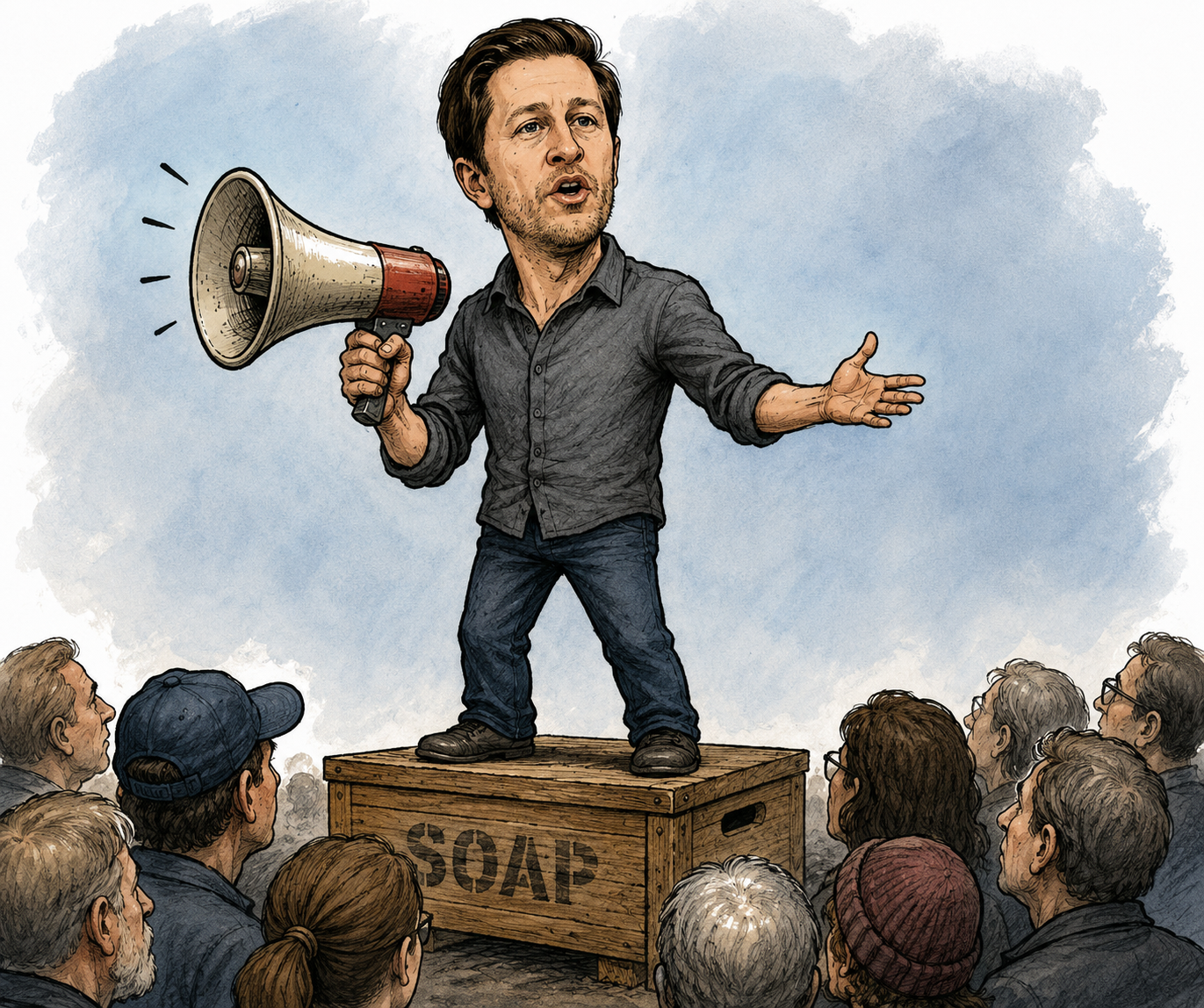
David Pakman, a major online liberal political commentator, is publicly alleging that YouTube’s recommendation and distribution systems are dramatically reducing exposure for left-leaning independent media channels, creating what he describes as an “existential crisis” for progressive political creators on the platform.
In a recent video, Pakman said that since early April, “YouTube has dramatically reduced performance for the vast majority of left-leaning independent media shows,” while asserting that right-leaning content does not appear to be experiencing the same decline.
Pakman framed the issue primarily through platform analytics rather than overt accusations of intentional censorship. He pointed to a sharp decline in impressions – the number of times YouTube displays a video thumbnail to users – while claiming audience engagement metrics remain largely stable.
“We were getting 15 million impressions a day,” Pakman said, explaining that the figure later dropped to approximately 10 million despite what he described as an unchanged audience response rate. “The click-through rate is still close to 8%. But impressions go from 15 million down to 10 million.”
Pakman argued that the consistency of click-through rates undermines the idea that audiences have simply lost interest in progressive political content. “It appears that people are just as interested in hearing from the left on YouTube right now, but they are not being shown the videos,” he said.
He also cited viewer feedback as evidence that something unusual may be occurring within YouTube’s recommendation ecosystem. According to Pakman, subscribers have repeatedly reported needing to manually search for his content despite being subscribed and having notifications enabled.
“You were being suppressed in distribution,” Pakman quoted one viewer as saying. Another viewer reportedly wrote: “I’m not seeing your new videos, and I’ve been subscribed for years.”
Pakman stopped short of alleging direct political targeting by YouTube employees or executives. “I am not arguing that someone at YouTube has flipped a switch and is deliberately suppressing left-wing channels,” he said. Instead, he suggested the platform’s recommendation systems may be reacting to engagement patterns or retention metrics in ways that inadvertently disadvantage certain political content.
At the same time, Pakman said performance on other digital platforms remains strong, including TikTok, Instagram, Snapchat, Facebook, and podcast distribution channels. “Every single other platform is doing fine,” he said. “It’s only YouTube.”
The comments add to a broader ongoing debate among digital creators regarding algorithmic visibility, platform transparency, and the growing dependence of independent media companies on recommendation systems they neither control nor fully understand.
Pakman urged viewers to subscribe directly, enable “all notifications,” and join his Substack mailing list in an effort to reduce reliance on platform algorithms. “We don’t want to rely on AI for recommendations,” he said. “We have to go back to telling the platforms what we want.”
 Adam Smith‘s “invisible hand” is a metaphor he used to describe how individuals pursuing their own self-interest in competitive markets can unintentionally produce socially beneficial outcomes – such as efficient allocation of resources and increased wealth. Smith uses the phrase in The Theory of Moral Sentiments in 1759 and more famously in The Wealth of Nations in1776.
 with those breaks filled by exclusive bonus segments, behind‑the‑scenes moments, extended discussions and original content – resulting in nearly three continuous hours of programming each day.” iHeartMedia chairman Bob Pittman comments, “The Breakfast Club has always been at the center of culture, breaking artists, shaping conversations, and reflecting real life in real time. Taking this show live every day to a global audience on Netflix is a powerful example of how we’re expanding the reach of our biggest brands while giving audiences entirely new ways to experience them. Whether it’s morning in NYC or the afternoon in London, the conversation is live and reaching the world in real time.”
 high since 2022 and 28% indicate they commute some days; 2) 85% of average Americans are commuting to work, slightly less than marketers and media agencies (92%); 3) Since AM/FM radio is the “soundtrack of the American worker,” it is the ideal media platform for advertisers; 4) AM/FM radio’s share of ad-supported audio in the car has been consistently dominant at an 83% share, according to Edison Research’s Q1 2026 “Share of Ear” report; 5) Average Americans are clocking slightly more days at work (4.7) compared to the advertising industry (4.4); and 5) Marketers/agencies and average Americans are most likely to work in the office Monday through Thursday with Friday seeing the lowest % of in-office work for both groups.
  downloads for participating networks – and “The Joe Rogan Experience” is #1, followed by audiochuck’s “Crime Junkie” at #2 and The New York Times’ “The Daily” at #3. Other podcasts of interest to TALKERS readers include: “The Tucker Carlson Podcast” at #19, “The Ramsey Show” at #30, “The Ben Shapiro Show” at #34, “The Megyn Kelly Show” at #43, and “The Dan Bongino Show” at #66. Triton also notes in this quarterly report that the top podcast categories by reach remain Comedy (43.6%), News (23.7%), and Society & Culture (21.2%).
  Although I don’t have a machine to play it, I have saved the cart. December 9, 1980, the sad morning-after John Lennon died, Charles Osgood, doleful: “I read the news today. Oh boy.” That morning’s CBS World News Roundup – and on-hour newscasts throughout that day – delivered more moments that would keep you sitting in a parked car at your destination. As they would 3 months later when President Reagan was shot. Then soon again when Pope John Paul II was severely wounded in St. Peter’s Square. And five years yonder, when the Space Shuttle Challenger exploded just 73 seconds into its flight.
 formats. The program is hosted by talk radio personality Larry O’Connor and tells the stories of America’s military heroes, the families who serve by their side, and how Fisher House plays a role in their journey. Fisher House Foundation provides a home away from home for families of patients receiving medical care at major military and VA medical centers. Fisher Houses provide temporary, free lodging so families can be close to their loved ones during medical care because “A Family’s LOVE is Good Medicine.” This year’s program features a special focus on the incredibly inspiring victories our wounded warriors enjoy on the field of competitive, adaptive sports. Fisher House supports the Wounded Warrior Games and the Invictus Games as a vital part of the physical, emotional, and mental healing process for our wounded veterans. Listeners will hear about the riveting war stories detailing the injuries these heroes sustained, the ensuing medical and therapeutic healing process, right through the triumph on the field of international sports, as these brave veterans continue their dedication of service, representing America in international competition.
 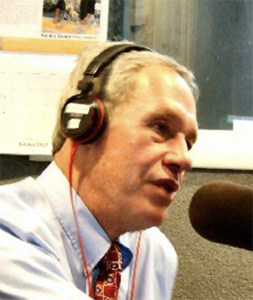 was heard on Datatech Digital’s WGMD, Rehoboth Beach and WUSX-FM, Seaford in Delaware. Wade’s primary career was in engineering and technology. But he ran for the U.S. Senate unsuccessfully became a regular guest host on “The Talk of Delmarva.” The station says, “Friends, colleagues, and listeners remember Wade as a determined advocate who never hesitated to stand up for his beliefs. Despite facing health challenges in recent years, he remained engaged in public discourse and continued contributing to conversations important to the Delmarva community.”
 syndication.” Red Apple says is has brought aboard former CBS Radio broadcast journalists Michael Wallace, Cooper Lawrence, Bill Rehkopf, and Matt Pieper as “the first major hires in what will be a rapid buildout of the network’s team of elite news anchors, correspondents, writers, and producers.” Harris says, “We are assembling top-tier journalists and building a modern radio news operation rooted in speed, authority, and facts – one that stations can rely on and listeners can trust.” Red Apple Media owner and CEO John Catsimatidis adds, “Our mission is to be the most trusted news gathering organization in media. We are creating a powerful, around-the-clock newsroom designed to compete at the highest level of broadcast audio news. Facts are what will drive the Worldwide News Network. We’re looking forward to our expansion in the European markets.”
 Kevin Kinkead at Crossing Broad reports, The station will be ending local weekday programming at 6:00 pm, airing a two-hour “best of” show from 6 to 8, and then shifting to national programming afterward. That’s according to super-secret sources. It means the Fanatic will broadcast its normal daypart lineup – Kincade and Salciunas in the morning, Marks and Brace middays, and then ‘Unfiltered’ with Bill Colarulo and Ricky Bo in the afternoon, but there will no longer be Fanatic hosts doing local shows after 6 p.m. For instance, no Kevin Cooney or Brendan Gunn on the evening shift, which had been generically branded as “Philly Sports Tonight.”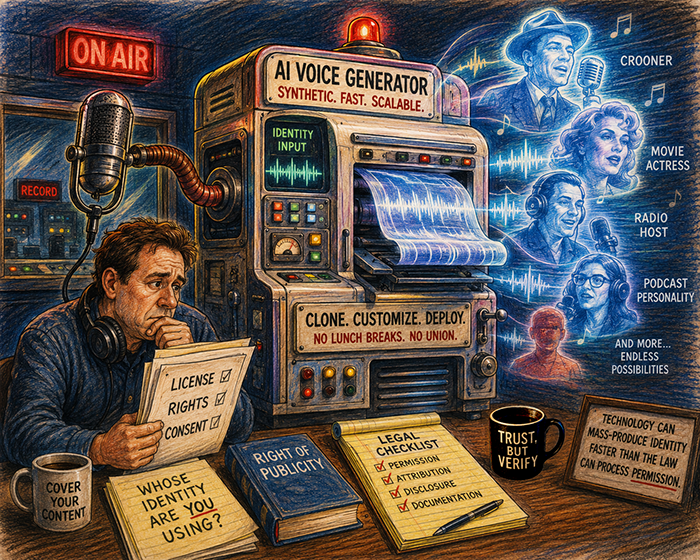
 For years, Harrison Legal Group has informed media creators about the legal risks of using copyrighted clips, songs, images, and broadcasts without permission. The issue became central enough to inspire my book, Playing the Clip: The Definitive Digital Media Creator’s Guide to Fair Use (TALKERS Books, 2026). The premise was straightforward: modern media runs on borrowed material, but borrowing comes with legal exposure.
 adds that it recorded operating income of $7.7 million in the first quarter of 2026, compared to an operating loss of $0.3 million in Q1 of 2025. The increase in operating income was driven primarily by the sale of its Fort Myers stations. Beasley also reported net income of approximately $3.2 million compared to a net loss of $2.7 million, reported a year ago. Beasley CEO Caroline Beasley comments, “While first quarter results continued to reflect pressure in certain legacy advertising categories and an uneven pace of recovery across our markets, we made meaningful progress against the strategic priorities we outlined over the past year. Importantly, we continue to see strong momentum in digital, particularly in our owned and operated products, which grew year-over-year on a same station basis and now represent an increasingly important contributor to both revenue quality and long-term profitability. Markets with stronger digital adoption continue to demonstrate greater revenue stability, reinforcing our confidence in the long-term direction of the business.”
 These are scary times. People on all sides of the mic are on the front lines. Not just “them,” otherwise referred to as the audience. We try to fool ourselves into thinking that society and civilization are relatively “safe.” However, simply being alive and stepping outside in the morning, turning on the computer, or checking the annoyingly smart phone, puts us smack dab in the middle of a war. Literally and figuratively. But like so much else in this modern era, this war lacks foundation.
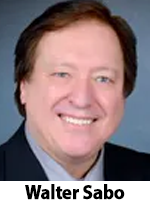 Jay Clark was the first program director of WABC as a talk station. He set the tone and path for modern talk radio. This week I had Jay on as a special guest on the Red Apple Audio Networks all night show, “The Other Side of Midnight.” We celebrated the anniversary, May 10, (1982) of WABC’s switch from music to talk on the giant signal at 770 AM.
 format in America. KGO was the killer biller in San Francisco. The execs who ran them were mighty proud: Ben Hoberman, Ed McLaughlin, Al Racco, Chuck Debere. Yes, they ran those stations, but they also invented the caller-driven talk format. There were other winning talk stations, but they were guest centric rather than listener centric (i.e. WOR, WGN). At the time, there were 43 stations listed as “talk” stations. 43. Not many models.
 journalist Lars Sivertsen will join ‘The KickAround’ in studio for the duration of the World Soccer coverage alongside the show’s long-standing hosts, Andy Swift and Peter Welpton. KTCK program director Jeff Catlin states, “This is our fourth year to cover World Soccer with expanded programming on ‘The KickAround.’ Interest this year is at an all-time high with key tournament games being played in Dallas-Fort Worth. ‘The KickAround’ will be a destination for Ticket listeners and both soccer fans and casuals.”
 company outside of the New York City market. The station is currently airing a news/talk format of local, syndicated and brokered programming. Local air personalities include the daily morning show hosts Hank Stolz and Ben White (“Talk of the Commonwealth”) and longtime New England talk host Frankie Boyer who is heard in middays. Red Apple will assume operations under a local marketing agreement until the deal closes. Red Apple and Catsimatidis have made no indication of the company’s intent for future programming.
 Jason Reddick’s The Complete Guide to AI Side Hustles is aimed at beginners trying to build passive income. But read it through a broadcaster’s lens and it suggests a blueprint for how radio talent and podcasters can leverage AI to expand their influence, diversify revenue, and stay indispensable in a media economy that rewards relevance and speed.
 d replaces it with FOX Sports Radio’s “The Odd Couple” with Rob Parker and Kelvin Washington. Napear broke the news himself tweeting out, “BREAKING NEWS: I was just informed they are pulling the plug on my show. My thanks to you for your support and @RyaninSactown who did a great job.” Napear references on-air producer Ryan Bohamera. Napear was a host on KHTK, Sacramento and TV voice of the NBA’s Kings but was fired after a media exchange with DeMarcus Cousins over the Black Lives Matter movement.
 advertisers are currently buying audio programmatically, up two times from 2022 (41%); 2) The most used programmatic audio demand-side platforms are Google Display & Video 360, The Trade Desk, and Amazon DSP; 3) Among publishers, the most utilized supply-side platforms for digital audio ads are Google Ad Manager, distantly followed by Amazon Publisher Services, Open X, and PubMatic; 4) Among those who purchase podcasts, Google DV360, The Trade Desk, and Amazon’s DSP are the most utilized demand-side platforms; and 5) Recent announcements from Amazon Ads indicate a major expansion of over-the-air AM/FM radio and audio advertising capabilities within the Amazon Demand Side Platform. Regarding that last point, the study notes that those moves “focus on bridging the gap between traditional broadcast AM/FM radio and digital, programmatic buying, allowing advertisers to use Amazon’s first-party signals for targeting and measurement.”
  local journalism across the state.” GBH president Susan Goldberg tells the paper the proposed merger of GBH, NEPM, and Cape and Islands radio station CAI will form “one of the largest and most trusted statewide public media newsroom networks in the Commonwealth.” Goldberg adds, “In a media landscape that is constantly changing, and particularly in the
  wake of federal defunding of public media, we are finding new ways to be as impactful as possible for the communities we serve. Simply put, we are stronger together.” Goldberg tells the Globe they have no plans to reduce staff and are planning to invest in new roles. The story adds, “According to the proposal. NEPM will continue to operate as the primary public media provider in Western Massachusetts, maintaining its studios in Springfield and at the University of Massachusetts. Its brand and programming – including local news, music, and educational shows – will remain in place.”