 Incorporating copyrighted material, such as video clips or actualities, can enhance your content, but understanding fair use is critical to avoid legal trouble. Fair use permits limited use of copyrighted material for purposes like criticism, commentary, news reporting, or parody without needing permission. Courts assess fair use based on four factors: purpose and character of the use (is it transformative?), nature of the work (factual vs. creative), amount used, and the effect on the market. Learn practical tips on safely navigating fair use, including using brief excerpts, transforming content, and considering market impact.
This is the second in a series of articles addressing the broader topic of fair use for media creators. Click here for the first installment.
Understanding Fair Use: Purpose and Character of the Use. When using copyrighted material belonging to others in the creation of your own media content, it is important to understanding the concept of fair use. Fair use allows copyrighted material to be used without permission for purposes like criticism, commentary, news reporting, education, or parody. It’s not an absolute right but rather a defense you can claim if challenged. Courts assess fair use based on four key factors, all which broadcasters should carefully consider.
The first factor of fair use that courts consider is the purpose and character of the use. Specifically, is the use of the material transformative? Transformative use is a key concept that can often determine whether your content qualifies as fair use or not – and really is the heart of the inquiry.
What Does Transformative Mean? In legal terms, a use is considered transformative when it adds new expression, meaning, or message to the original work. This is different from merely copying the work or using it for the same purpose as the original creator. By transforming the material, you’re creating something that serves a different purpose or offers new insights, rather than simply replicating the original content.
Example: Auto-Tune the News. One of the most famous examples of transformative use is the Gregory Brothers’ viral “Auto-Tune the News” series, which turned news clips into catchy, auto-tuned songs. In 2010, they took an interview clip with Antoine Dodson, who was describing an attempted home invasion, and turned it into the widely popular “Bed Intruder Song.” In this case, the original news segment was purely factual—a straightforward broadcast of a local news report. However, by remixing the clip with auto-tuned vocals and adding music, the Gregory Brothers transformed the clip into a piece of entertainment and social commentary. This new purpose—entertainment and humor—was distinct from the original intent of simply delivering news, making it a classic example of transformative use. Although the raw news footage was copyrighted, the remix was so different in tone, presentation, and purpose that it was protected under fair use. The transformation added new creative elements and reframed the original material as a humorous, catchy song.
How Does This Apply to Radio? Let’s take this concept and apply it to radio, a medium that often uses clips from other sources. Imagine you’re running a talk show, and you want to use excerpts from a political speech to make a satirical point about current events. If you simply play the speech on air without any changes, it may not qualify as fair use because you haven’t transformed the original material – you’re just rebroadcasting it. However, if you take portions of the speech and then critique, analyze, or poke fun at it, you’re more likely to be in the clear. For example, if your show involves playing clips of political speeches interspersed with humorous commentary or parody, you’re repurposing the original work in a new and transformative way—much like “Auto-Tune the News.”
Another example could be a radio show that plays clips from popular songs but recontextualizes them within a larger discussion of musical trends or cultural history. If the song clips are used to illustrate a point and not simply for entertainment value, the new purpose—educational or critical analysis—can qualify the use as fair. In cases involving parody or political commentary on radio, the fair use defense has sometimes been successful. For instance, radio shows that use short clips from speeches, interviews, or news broadcasts for commentary, satire, or criticism can invoke fair use if the content is transformed for a new purpose.
One example is when talk radio shows play brief excerpts of copyrighted works (e.g., speeches, news clips) to critique or analyze them. If the use is transformative and doesn’t replace the original work in the marketplace (i.e., people wouldn’t listen to the radio show as a substitute for the original), courts have shown a willingness to accept fair use in such contexts. However, detailed legal battles involving radio stations using copyrighted material for parody or commentary are less common than those involving music licensing.
Example: Rogers v. Koons (Rebroadcast of News Content). While not as widely reported as music-related cases, one example of a copyright infringement suit involving the rebroadcast of talk content was a case where a news organization sued a radio station for replaying portions of its copyrighted interviews and reports without permission. In cases like this, radio stations or broadcasters may try to claim fair use based on the purpose of the rebroadcast, such as using a portion of an interview for commentary, satire, or news reporting. However, if the content is used purely to replay the original, as opposed to being transformed into a new, critical, or educational piece, the fair use defense may not succeed. For example, news stations may license their talk content (like interviews or original reporting) through syndication deals. If a radio station broadcasts this content without securing the necessary licensing agreement, they may face a copyright lawsuit.
Example: Talk Show Hosts and Syndicated Content. A real-world scenario can involve syndicated talk shows or podcasts that are copyrighted. Radio stations can face lawsuits if they replay this content without proper authorization. An example would be stations rebroadcasting popular talk radio shows or political commentaries (such as those by syndicated hosts like Rush Limbaugh or Howard Stern) without purchasing broadcast rights. This unauthorized use can lead to legal action from the copyright holders. For example, if a station replays clips of an interview conducted by NPR or a news network for entertainment or even news purposes, and it doesn’t transform the content for criticism or commentary, it may be violating copyright law. Radio companies might try to claim fair use, but the courts will look closely at whether the replay served a new, transformative purpose or was simply a verbatim rebroadcast.
Key Considerations for Broadcasters. To better understand whether your use of copyrighted content is transformative, ask yourself:
• Are you adding new meaning or message? The more your work transforms the original content – such as using it for commentary, criticism, or satire – the more likely it qualifies as fair use.
• Does your use serve a different purpose? If you’re using the content for a new purpose, like entertainment, education, or social commentary, rather than simply duplicating the original, it can be seen as transformative.
• Are you just using the original for its own sake? If the copyrighted material is used in a way that does not add new expression or meaning, it’s less likely to fall under fair use. Transformative use is a powerful defense in fair use claims, but it’s not a guarantee. Always make sure your purpose and character are different from the original intent of the work, and when in doubt, seek legal counsel.
Media attorney, Matthew B. Harrison is VP/associate publisher, TALKERS; Senior Partner, Harrison Media Law; and executive producer, Goodphone Communications. He is available for private consultation and media industry contract representation. He can be reached by phone at 724.484.3529 or email at matthew@harrisonmedialaw.com



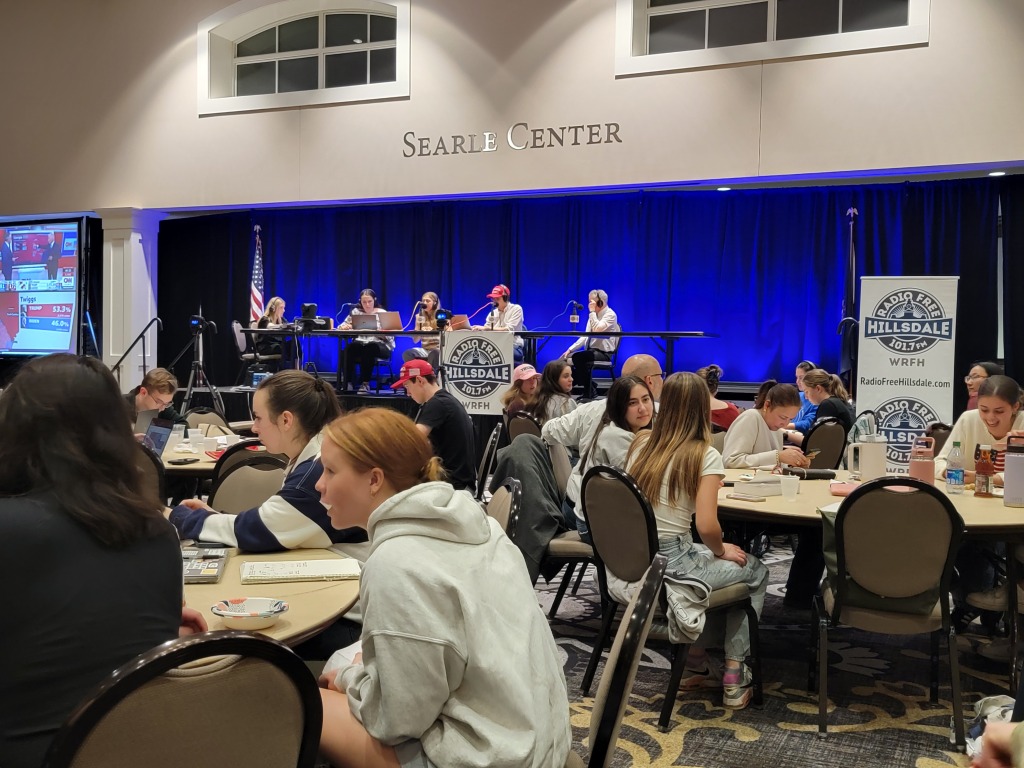 Journalism is alive and well within certain college radio circles. On Election Night (11/5), the WRFH/Radio Free Hillsdale 101.7 FM student broadcast team hosted live coverage from the Searle Center on Hillsdale College’s campus in Hillsdale, MI and invited students, faculty, and staff to attend and watch election results roll in and listen to analysis. Student anchors were joined by the presidents of Hillsdale College Republicans and Hillsdale College Democrats, three members of the Hillsdale faculty, a candidate for the Michigan State House, a candidate for the Michigan Supreme Court, and reporters from the Detroit News, the Daily Caller, the Center Square, and the Daily Signal. Back at the WRFH studios, the station’s news team worked to update listeners with results from state and local races all night long. More than 200 people came out to the broadcast in action. WRFH GM Scot Bertram tells TALKERS, “It was a home-run event! Students work hard to prep for this quite unpredictable night. There’s an enormous amount of planning and research involved to set everything up. Then the night unfolds, and they realize it’s a ton of fun, as well. I’ve heard from more than a few students who took part in our previous Election Night events that it’s one of their best experiences on campus and really drew them deeper into the journalism program here at Hillsdale.”
 moment.” Striegle tells TALKERS, “There are so many amazing memories. For me, what I will miss most are the people. Everywhere we go, we meet wonderful people, great race fans that tell us, ‘We have been listening to MRN for years…’ they always want to thank us for what we do. Without the fans, there would be no need for the Motor Racing Network.” “Throughout his time with the network Jeff has lent his talents to a number of positions around the racetrack before finding his way to the broadcast booth in 2013,” said MRN president Chris Schwartz. “His broadcast career began like so many others by working the public address booth providing the soundtrack for thousands of fans at his local racetrack, in Jeff’s case Berlin Raceway in Marne, Michigan. He has been involved with calling some of the sport’s most iconic moments, and it is fitting that the checkered flag will fall on his broadcast career by calling the final laps of another NASCAR Cup Series Championship.” Motor Racing Network will have flag to flag coverage of the NASCAR Cup Series Championship Race Sunday, November 10th beginning at 2pm ET. The NASCAR Cup Series Championship Race will be carried LIVE on approximately 300 radio station partners across the United States, the NASCAR mobile app, and at MRN.com. For affiliation in your area, contact Bob Quick, director, radio partnerships & traffic at Motor Racing Network by email at
  As the practice of “clip jockeying” becomes an increasingly ubiquitous and taken-for-granted technique in modern audio and video talk media, an understanding of the legal concept “fair use” is vital to the safety and survival of practitioners and their platforms.
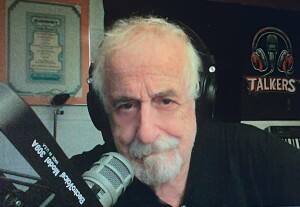 Today is Election Day in America. Finally! Now the talk media industry is about to learn what’s next? No matter which way the presidential race goes, the results will have a measurable impact on news/talk media’s positioning and strategy going forward for years to come. According to TALKERS publisher Michael Harrison, “That’s what happens when the news media operates within the paradigm of primarily ‘targeting’ audiences based on their pre-existing biases, opinions, and passions. The only objective seeking of truth that takes place within the formulation of media strategy, in this transactional environment, focuses on one basic concern – where does the audience, that we so zealously covet, stand on this?” During an editorial conference this morning, Harrison stated, “The two major media-base ‘camps’ that have emerged in the past decade on talk radio, news/talk TV, YouTube and podcasting, fall under the basic headings of the pro-Trump media industry and the anti-Trump media industry. Yes, both have grown into full-fledged industries – and their interests are deeply entangled. As cynical as this might sound, the deck is about to be reshuffled to one degree or another and talk media industry practitioners are going to have to pull off some fancy steps to avoid sinking into the quicksand of inevitable changes in public opinion – regardless of what shape these movements take.” Harrison adds, “If you’ll pardon the ancient reference, no one wants to be left playing Frankie Avalon and Bobby Rydell records the day after the Beatles’ and their British buddies invaded our pop culture.”
 Take advantage of the new media order. Initially, TiVo was a hit because you could pause live TV and go to the bathroom whenever you wanted. Bathroom breaks while watching live TV was a revelation. As you were going to the bathroom, your relationship with media was being re-wired in your brain. In a matter of months, you were able to watch what you wanted, whenever you wanted. DECADES of TV scheduling strategies became anachronistic. It’s November. Do you know when your favorite shows are airing on TV? No! No need you’ll watch them whenever you want!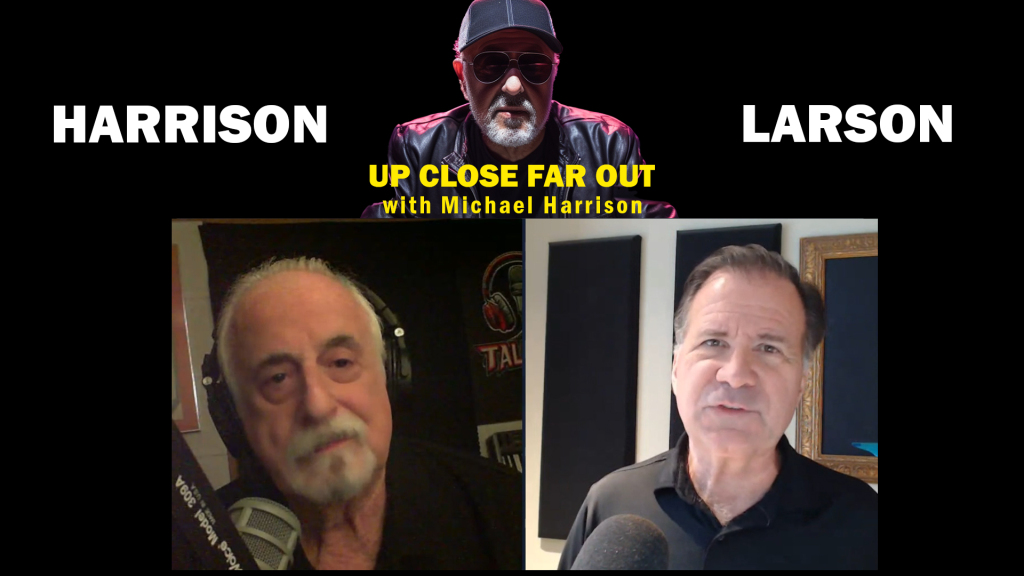
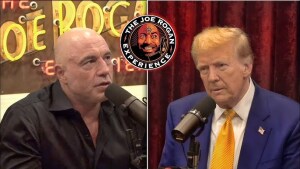 At the Monday morning (10/28) TALKERS editorial meeting, Harrison said, “The hoopla over this podcast appearance and its enormous profile within election news coverage clearly indicates we have arrived at a point where the terms ‘mainstream,’ ‘legacy,’ ‘alternative,’ ‘grassroots,’ and the like have to be reevaluated in conveying impact and importance – both individually, and certainly collectively – in the marketplace of ideas and the industries that serve it.” Harrison added, “This is especially true of Rogan’s individual impact as indicated by 1) the deference he was paid by a former president and major party candidate in showing up three-hours late for a live rally attended by thousands in which he actually implied that this podcast interview was a priority and more important to ‘winning’ than arriving on time for the event; 2) the tsunami of news coverage this podcast generated; 3) the passive aggressive irreverence granted a somewhat oblivious Trump by Rogan both during and following the interview; and 4) the sheer enormity of Rogan’s raw numbers on Spotify and YouTube, unfettered by FCC regulation.”
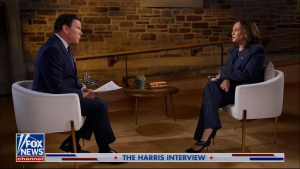 Ideology and, as Michael Harrison calls it, “the daily dance of affirmation” aside – perhaps there’s something to be said about booking “opposition” political luminaries as guests on our industry’s highly “targeted” venues. FOX News Channel’s (FNC) “Special Report with Bret Baier” delivered 7.8 million viewers and 1,126,000 in the 25-54 demo during anchor Bret Baier’s exclusive interview with VP Kamala Harris from 6:00 pm – 6:30 pm ET this past Wednesday (10/6), according to Nielsen Media Research. The interview marked the highest rating of the Harris-Trump political season, outrating Harris’s individual appearances on “60 Minutes,” “The View,” “The Late Show with Stephen Colbert,” CNN and MSNBC. For the full 6:00 pm ET hour, “Special Report” drew 6.7 million viewers and 901,000 in the 25-54 demo. Combined with the show’s midnight airing 12:00 midnight -12:30 am ET, the interview with VP Harris nabbed 9.2 million viewers and 1.4 million in the 25-54 demo, beating ABC’s interview with President Joe Biden before he dropped out of the race (8.5 million viewers).
  Andrea Mitchell to Receive Prestigious Award. Alliance for Women in Media (AWM) has announced that Andrea Mitchell, NBC News chief foreign affairs correspondent and chief Washington correspondent, will be honored with the prestigious Gracies Icon Award at the 2024
 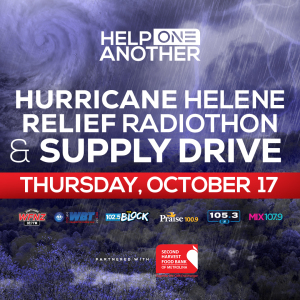 Radio One Charlotte, in partnership with Second Harvest Food Bank of Metrolina, is presenting an all-day radiothon today (10/17) to support those affected by Hurricane Helene. This event is taking place from 6:00 am to 7:00 pm across Radio One Charlotte stations: WOSF, WFNZ, WLNK, WPZS, WOSF-HD2 and heritage news/talk WBT. Marsha Landess, Radio One Charlotte regional VP, tells TALKERS, “We are focusing the power of our six radio stations to help raise funds for the relief efforts for our neighbors in the western part of our state. We know their lives have been turned upside down, and we want to do our part to assist them in rebuilding and recovering. Our goal is to raise a substantial amount to help them begin to put their lives back together. Every dollar counts, whether large or small.” Kay Carter, CEO of Second Harvest Food Bank of Metrolina, adds, “Everyone at Second Harvest Food Bank of Metrolina is so grateful to Radio One for all their efforts to assist us as we work to help the many victims of Hurricane Helene. The needs are great, and we want to thank all the radio stations and their listeners for considering a donation to the Radiothon. We promise to use the donations wisely to provide food and other supplies throughout the affected areas.”
 Even as its stations were airing hundreds of hours of continuous live news and storm coverage during hurricanes Helene and Milton, Cox Media Group (CMG) was raising nearly $1 million and providing food, water and necessities for impacted people and communities. That includes taking mobile charging stations into communities for people to charge their phones and other devices. Hurricane relief efforts took place across CMG’s southeast TV and Radio stations. “These efforts by our CMG family highlight the indispensable role of our stations – and our entire broadcasting industry – as we work together to make a powerful and positive impact on the communities we live in and serve,” said Dan York, CMG’s president/CEO. “As importantly, none of this would have been possible without the incredible support from our local partners and audiences. The response of our viewers and listeners has been nothing short of remarkable.” CMG radio stations include news/talker WDBO 107.3 / AM 580 in Orlando.
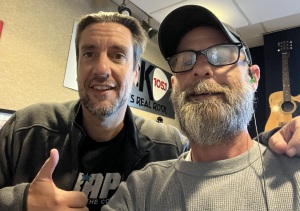 Premiere Networks personality Clay Travis co-hosted “The Clay Travis and Buck Sexton Show” live from affiliate News Radio 570 WWNC in Asheville, NC (10/11). Travis toured the area via helicopter to witness the extensive damage from Hurricane Helene in an effort to continue raising awareness, funds and volunteers for hurricane relief that will be needed for months to come. During the visit, WWNC morning host/news director Mark Starling joined the broadcast for a powerful conversation about the devastation the community has experienced. He detailed how the station covered Hurricane Helene, providing vital information to the Asheville community including coordinating rescue efforts and reuniting families. Starling, who stayed at the station for 14 days straight during the hurricane, said: “…when TV couldn’t do it, the newspaper couldn’t do it, there was nothing online, the only thing left was AM/FM radio. All seven stations stayed on the air simulcasted… we were wall-to-wall…what we wanted to do here at the radio station, at iHeart Asheville, was we wanted to show the community that we can get through this. And we’ve been kind of repeating this line: ‘community is the answer to this crisis.’ …what we have seen is the absolute best in humanity in an absolute horrific, horrific time.” Listen to their full conversation