



By Matthew B. Harrison
TALKERS, VP/Associate Publisher
Harrison Legal Group, Senior Partner
Goodphone Communications, Executive Producer
 A viewer watches the same political clip three times. The platform sees a powerful signal: this person stopped, stayed, and came back. What it cannot reliably know is whether the viewer loved the argument, hated it, was factchecking it, or was showing it to someone else in disbelief. The algorithm knows a viewer watched. It does not necessarily know why. That is why YouTube looks beyond viewing itself to other signals of appeal, engagement, and satisfaction.
That distinction matters to broadcasters because digital analytics can look much more intelligent than they really are. An algorithm can measure behavior with extraordinary precision, but behavior is not motive. PPM taught radio a version of the same lesson. Nielsen’s meter can passively detect exposure to encoded audio, but the resulting audience measurement cannot tell a programmer why someone listened or why audience levels changed.
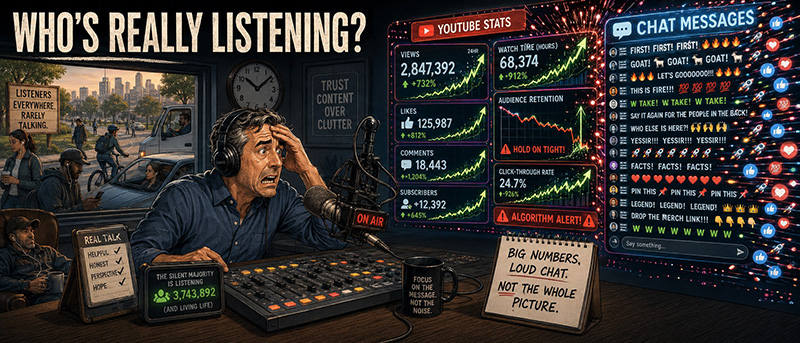
Livestreaming creates the opposite problem. Instead of too little explanation, the host suddenly gets too much of it. The chat is moving. People are demanding another topic, praising a guest, attacking a caller, or announcing that the segment is dying.
That feedback is valuable, but the people typing are not necessarily representative of the people listening. Radio hosts should already understand this because callers have never represented the entire audience. They represent the portion motivated enough to pick up the telephone. Livestream chat is the same phenomenon at digital speed.
The danger comes when these two imperfect signals reinforce each other. The dashboard says engagement jumped. The chat says, “More of this.” A host can easily conclude that the audience has spoken when what actually happened is that a particularly active portion of the audience became particularly visible.
Good broadcasters have always listened to the audience without surrendering the show to it. Digital tools make that listening faster and more detailed, but they do not eliminate the need for judgment.
The algorithm knows what people did. The chat tells you what some people said. The programmer still has to decide what either one means.
For the larger discussion of ratings, PPM, algorithms and digital distribution, read The Algorithm Is Listening here: https://talkers.com/category/industry-views/
Matthew B. Harrison is a media and intellectual property attorney who advises radio hosts, content creators, and creative entrepreneurs. He has written extensively on fair use, AI law, and the future of digital rights. Reach him at Matthew@HarrisonLegalGroup.com or read more at TALKERS.com.