


Is the Algorithm Your New Program Director?
By Matthew B. Harrison
TALKERS, VP/Associate Publisher
Harrison Legal Group, Senior Partner
Goodphone Communications, Executive Producer
 You post five clips from yesterday’s program. Four do fine. The fifth, an argument with a caller, explodes. It gets more views, more comments, more shares and more click time than anything else you posted.
So tomorrow you post another argument.
That one performs too. Before long, you are clipping more confrontations because confrontation travels. Then maybe the show itself begins to change. You stay on the angry topic a little longer. You take the provocative call you might once have dumped. You learn what gets rewarded.
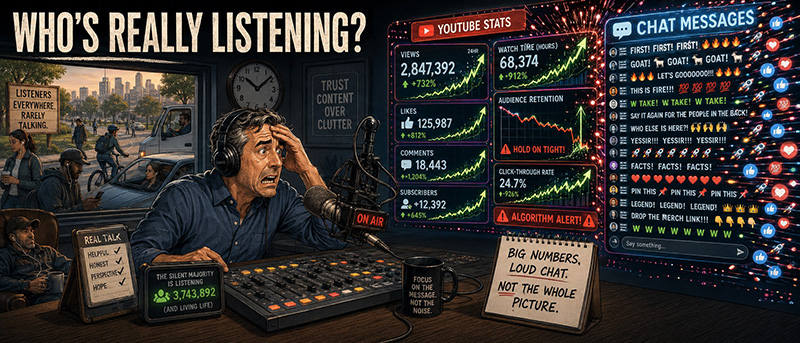
Nobody at YouTube, Facebook or TikTok called and told you to make an angrier show. The algorithm did not order you to do anything. It simply showed you what produced a reaction, and you reacted to the reward.
Radio people have seen versions of this forever. The phones light up, so we stay with the topic. A feature appears to perform well in PPM, so it gets another quarter hour. Ratings rise, so management asks for more of whatever seems to be working.
Digital distribution makes that feedback faster, more visible and harder to ignore. It also adds another wrinkle: the platform may use strong engagement to give the next clip more distribution. The reward is not just a good number on a report. It may be a bigger audience tomorrow.
That makes analytics tremendously useful. They can show what attracts attention, what holds audience and what helps people discover your program. But a measurement tool can become a programming influence if you start chasing every spike.
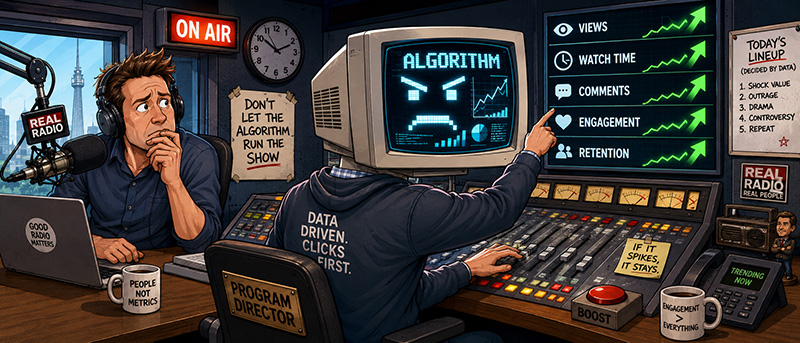
A good host learns from the audience without becoming a hostage to it. A good programmer knows what works without assuming that whatever gets the biggest reaction is automatically the best show.
Use the algorithm to distribute your work. Learn from what it tells you. Make money wherever the audience finds you.
Just don’t appoint it the role of program director.
For the larger discussion of ratings, PPM and digital distribution, read The Algorithm Is Listening at TALKERS.com here.
Matthew B. Harrison, associate publisher of TALKERS, is a media and intellectual property attorney who advises radio hosts, content creators, and creative entrepreneurs. He has written extensively on fair use, AI law, and the future of digital rights. Reach him at Matthew@HarrisonLegalGroup.com or read more at TALKERS.com.