Industry News

CLARIFICATION: New Bongino Show Won’t Be “Live”

In Monday’s edition of TALKERS, we wrote that the new, nationally syndicated afternoon drive show from Westwood One starring Dan Bongino and Shawn Farash would “air live from 3:00 pm to 6:00 pm ET,” giving the impression the program will be produced live during that time. To clarify, the two hours of the program hosted by Bongino are repurposed from his daily podcast – produced by Silverloch Productions and distributed and repped by the Cumulus Podcast Network – and will be delivered to affiliates during the 3:00 pm to 6:00 pm ET daypart.

Industry Views

Who talks like THAT???

img

At the end of the day, when all is said and done, broadcasters and podcasters should avoid clichés like the plague. And redundancies, “Period, full stop.”

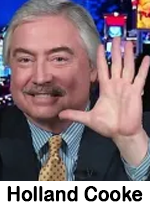
Consultant, longtime TALKERS columnist – and, yes, long, long-ago English teacher – Holland Cooke has been collecting verbal misdemeanors for decades. His new quick-read e-book Who Talks Like That??? skewers broadcast-ese, bloated wording, antique vocabulary, redundancies, mispronunciations and other ways we accidentally make listeners notice how we’re talking instead of what we’re saying.

“Because radio and podcasts are intimate media, and unforgiving,” Cooke urges, “sound human.” Especially now that every word is competing for attention with SO many audio competitors. FREE download to TALKERS readers: https://getonthenet.com/OOPS.pdf

Industry News

Top News/Talk Media Stories This Past Week (August 10-14)

Here are the most talked about stories of the past week (8/10-14) on news/talk radio and related talk media according to TALKERS:

Stories

  1. U.S.-Iran War / Strait of Hormuz Control
  2. Primary Races / DSA Candidates
  3. Trump’s Air Force One Ruse
  4. Trump Vaccine Order
  5. Reflecting Pool Controversy
  6. Karoline Leavitt to Exit Post
  7. Cyberattacks on U.S. Water Systems
  8. Cyclosporiasis
  9. Gas Prices / The Economy
  10. AOC on ABC

People

  1. Donald Trump
  2. Masoud Pezeshkian
  3. Abdul El-Sayed
  4. Max Miller
  5. Francesca Hong / David Crowley
  6. RFK Jr.
  7. Karoline Leavitt
  8. David Hearn
  9. Todd Blanche
  10. AOC

To see the full TALKERS Stories, Topics, and People Charts, please click HERE.

Industry Views

Is the Algorithm Your New Program Director?

img

By Matthew B. Harrison
TALKERS, VP/Associate Publisher
Harrison Legal Group, Senior Partner
Goodphone Communications, Executive Producer


imgYou post five clips from yesterday’s program. Four do fine. The fifth, an argument with a caller, explodes. It gets more views, more comments, more shares and more click time than anything else you posted.

So tomorrow you post another argument.

That one performs too. Before long, you are clipping more confrontations because confrontation travels. Then maybe the show itself begins to change. You stay on the angry topic a little longer. You take the provocative call you might once have dumped. You learn what gets rewarded.

Nobody at YouTube, Facebook or TikTok called and told you to make an angrier show. The algorithm did not order you to do anything. It simply showed you what produced a reaction, and you reacted to the reward.

Radio people have seen versions of this forever. The phones light up, so we stay with the topic. A feature appears to perform well in PPM, so it gets another quarter hour. Ratings rise, so management asks for more of whatever seems to be working.

Digital distribution makes that feedback faster, more visible and harder to ignore. It also adds another wrinkle: the platform may use strong engagement to give the next clip more distribution. The reward is not just a good number on a report. It may be a bigger audience tomorrow.

That makes analytics tremendously useful. They can show what attracts attention, what holds audience and what helps people discover your program. But a measurement tool can become a programming influence if you start chasing every spike.

A good host learns from the audience without becoming a hostage to it. A good programmer knows what works without assuming that whatever gets the biggest reaction is automatically the best show.

Use the algorithm to distribute your work. Learn from what it tells you. Make money wherever the audience finds you.

Just don’t appoint it the role of program director.

For the larger discussion of ratings, PPM and digital distribution, read The Algorithm Is Listening at TALKERS.com here.

Matthew B. Harrison, associate publisher of TALKERS, is a media and intellectual property attorney who advises radio hosts, content creators, and creative entrepreneurs. He has written extensively on fair use, AI law, and the future of digital rights. Reach him at Matthew@HarrisonLegalGroup.com or read more at TALKERS.com.

Industry Views

The Algorithm Knows What You Did But It Doesn’t Know Why

img

By Matthew B. Harrison
TALKERS, VP/Associate Publisher
Harrison Legal Group, Senior Partner
Goodphone Communications, Executive Producer


imgA viewer watches the same political clip three times. The platform sees a powerful signal: this person stopped, stayed, and came back. What it cannot reliably know is whether the viewer loved the argument, hated it, was factchecking it, or was showing it to someone else in disbelief. The algorithm knows a viewer watched. It does not necessarily know why. That is why YouTube looks beyond viewing itself to other signals of appeal, engagement, and satisfaction.

That distinction matters to broadcasters because digital analytics can look much more intelligent than they really are. An algorithm can measure behavior with extraordinary precision, but behavior is not motive. PPM taught radio a version of the same lesson. Nielsen’s meter can passively detect exposure to encoded audio, but the resulting audience measurement cannot tell a programmer why someone listened or why audience levels changed.

Livestreaming creates the opposite problem. Instead of too little explanation, the host suddenly gets too much of it. The chat is moving. People are demanding another topic, praising a guest, attacking a caller, or announcing that the segment is dying.

That feedback is valuable, but the people typing are not necessarily representative of the people listening. Radio hosts should already understand this because callers have never represented the entire audience. They represent the portion motivated enough to pick up the telephone. Livestream chat is the same phenomenon at digital speed.

The danger comes when these two imperfect signals reinforce each other. The dashboard says engagement jumped. The chat says, “More of this.” A host can easily conclude that the audience has spoken when what actually happened is that a particularly active portion of the audience became particularly visible.

Good broadcasters have always listened to the audience without surrendering the show to it. Digital tools make that listening faster and more detailed, but they do not eliminate the need for judgment.

The algorithm knows what people did. The chat tells you what some people said. The programmer still has to decide what either one means.

For the larger discussion of ratings, PPM, algorithms and digital distribution, read The Algorithm Is Listening here: https://talkers.com/category/industry-views/

Matthew B. Harrison is a media and intellectual property attorney who advises radio hosts, content creators, and creative entrepreneurs. He has written extensively on fair use, AI law, and the future of digital rights. Reach him at Matthew@HarrisonLegalGroup.com or read more at TALKERS.com.

Industry News

Sabo Sez: Mitch Reed’s Deserved Award

imgBy Walter Sabo
A.K.A. Walter Sterling
Host, The Other Side of Midnight
WABC, New York / Red Apple Audio Networks

The Radio Hall of Fame has just announced their “Legends” inductees, and it includes B. Mitchell Reed. YES!

One of the minor injustices of radio is the curious legacies of Tom Donahue and B. Mitchell Reed relative to the creation of free-form progressive rock radio. They were best friends with parallel careers. Both were top-of-their-game “screaming” Top 40 DJs. Tom in San Francisco, Mitch in LA and NYC. Top earnings, ratings, and both around 40 when they went to the Monterey Pop Festival. There they learned that their teens were changing fast. Harder rock, anger about Vietnam, and drugs. They knew their style of radio was out of synch with the moment.

Every day on his way to work in LA, Mitch drove past the Pasadena Presbyterian church and noticed a radio antenna on the grounds.

The tower was pumping out an FM signal that covered Los Angeles, broadcasting from the basement of the church. Underground. Mitch talked to the preacher he met along the way. And he bought time on the station at night and experimented with playing hard rock and a new form of presentation. His friend Donohue sent tapes from San Francisco, and the two of them created “free form” radio (also referred to as “underground” radio) from the basement of the church. The frequency became KPPC-FM.

Note: both of them created free-form radio at risk to their careers and income while over the age of 40. Tom continued as a progressive rock jock in San Francisco, and Mitch became an icon in Los Angeles as an album rock jock on KLOS and KMET. Oddly, Tom gets more of the image and credit, but they were very much partners.

BMR MH
B. Mitchell Reed (l), his wife Carol (c), and Michael Harrison (r) at KMET, Los Angeles in the late seventies.

Walter Sabo has been a C-Suite action partner for companies such as SiriusXM, Hearst, Press Broadcasting, Gannett, RKO General, and many other leading media outlets. His company, HITVIEWS, in 2007, was the first to identify and monetize video influencers. His nightly show “The Other Side of Midnight” is heard on WABC, New York and the Red Apple Audio Network 1:00 am – 5:00 am. His syndicated show, “Sterling On Sunday,” from Talk Media Network, airs 10:00 pm – 1:00 am ET, and is now in its 10th year of success. He can be reached by email at sabowalter@gmail.com. He can be phoned at 646-678-1110.

Industry News

Top News/Talk Media Stories This Past Week (July 27-31)

Here are the most talked about stories of the past week (7/27-31) on news/talk radio and related talk media according to TALKERS:

Stories

  1. U.S.-Iran War / Hamas Disarmament Deal
  2. Fauci Hearing
  3. Graham Ceremonies
  4. ICE Operations
  5. Gas Prices / Financial Markets / Fed Policy
  6. Trump Polls / November Mid-Terms
  7. Mail-In Voting Reforms
  8. Blanche Confirmation Delay / Comey Prosecution
  9. Mitch McConnell Health
  10. European Wildfires

People

  1. Donald Trump
  2. Benjamin Netanyahu
  3. Anthony Fauci / Rand Paul
  4. Lindsey Graham / Darline Graham
  5. JD Vance
  6. Tom Homan
  7. Kevin Warsh
  8. Mike Johnson
  9. Todd Blanche / James Comey
  10. Mitch McConnell

To see the full TALKERS Stories, Topics, and People Charts, please click HERE.

Industry News

TALKERS News Notes

KIRO-FM Debuts Home Improvement Show. Bonneville’s KIRO-FM, Seattle “Newsradio 97.3 FM” will launch “Inside Out with Tami Michaels” on August 8 airing from 2:00 pm to 3:00 pm. KIRO says the home improvement show will bring listeners an entertaining and informative mix of interior design trends, practical how-to advice, innovative home and lifestyle products and services, pet topics, and more.

WPEN-FM Becomes “97.5 LeBron – Home of King James.” Following Friday’s news that LeBron James is joining the Philadelphia 76ers, Beasley’s sport talk WPEN-FM “97.5 The Fanatic” is celebrating by temporarily rebranding the station “97.5 LeBron… Home of King James!” Program director Scott Masteller comments, “These are the moments sports radio is built for. Philadelphia has been waiting for this day, and every conversation is about LeBron and the Sixers. From the first show this morning through the final segment tonight, we’re bringing fans everything they need to know about one of the biggest stories in NBA history.”

Industry News

Top News/Talk Media Stories This Past Week (July 20-24)

Here are the most talked about stories of the past week (7/20-24) on news/talk radio and related talk media according to TALKERS:

Stories

  1. U.S.-Iran Hostilities Intensify
  2. Houthi Red Sea Attacks / Oil Prices Climb
  3. U.S.-Saudi Arabia Nuclear Deal
  4. House Passes Military Spending Bill
  5. Hegseth on Capitol Hill
  6. Trump Defers CA and MN Medicaid Payments / Trump Tariffs
  7. ICE Killings
  8. Primary Races
  9. Darline Graham to Run for Full Term
  10. Tropical Storm Bertha

People

  1. Donald Trump
  2. Mohammed bin Salman
  3. Benjamin Netanyahu
  4. JD Vance
  5. Marco Rubio
  6. Mike Johnson
  7. Pete Hegseth
  8. Jay Feeley / Amish Shah
  9. Darline Graham
  10. Mitch McConnell

To see the full TALKERS Stories, Topics, and People Charts, please click HERE.

Industry News

TALKERS Marks 36th Anniversary

img

Today marks the 36th anniversary of the launch of the broadcast industry trade journal, TALKERS.  The first issue of TALKERS rolled off the presses as a tabloid-style newspaper on Monday, July 23, 1990.

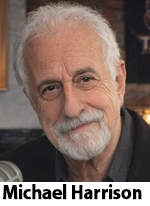
The publication was the brainchild of Michael Harrison, who had already made his mark as a radio broadcasting pioneer (often referred to as “the father of AOR radio”) and trade magazine editor (Radio & RecordsBillboard) when he conceived a periodical imgdevoted to chronicling the development and growth of what he envisioned as “the coming talk radio phenomenon of the nineties.” The publication went on to publish as a newspaper on newsprint evolving into a glossy magazine and eventually an online publication fully devoted to serving the needs of talk radio and eventually a variety of spoken word platforms that have collectively become known as talk mediaTALKERS also contributed to the growth of the field by producing 28 national conventions / conferences in New York and two in Los Angeles, more than 50 groundbreaking radio rows, dozens of talk show host tours of international hot spots, and thousands of hours of spoken word syndicated and online programming. Throughout its colorful history, TALKERS always maintained a neutral position regarding politics except for, as Harrison puts it, “unwavering support of the First Amendment.”

Industry Views

Harrison: Don’t Believe that AI Lacks “Heart”

imgTALKERS founder Michael Harrison is this week’s guest on the National Press Club’s official podcast, Update-1, in which he tackles the topic “Predicting the Future of Media Following the Shutdown of CBS News Radio.” Interviewed by noted American University media professor Gemma Puglisi, Harrison addresses such issues as changes in the tenets of journalism and the general shrinkage of radio news. Along the way, he offers his insights into a variety of media and societal topics including the impact of clickbait and what he describes as “the daily dance of affirmation” resulting imgfrom the trend toward news platforms “targeting” audiences for purely marketing purposes. Harrison defends AI from critics who claim the technology lacks “heart” and that audiences will swing back to the “authenticity” being destroyed by AI slop. Harrison makes the case that what counts is the humanity behind the operation of AI which is “only a tool.” He says, “Blaming AI for shallow content is like attributing shoddy novels to the invention of the word processor.” Harrison boldly predicts that AI and modern technology will hasten the “death of Hollywood” as we know it among other insights into the future of news, entertainment, and communications.  Don’t miss this!  To listen to the podcast in its entirety, please click here.