

By Holland Cooke
Consultant
 Time Spent Listening to podcasts has now surpassed TSL with spoken word radio. And both are fraught.
Anyone can do a podcast, and everyone seems to be. How to get found/subscribed-to/shared?
- And in this listen-when-ever-you-want culture, basing Return On Investment in a brokered-time weekend ask-the-expert radio show that only reaches real-time listeners is increasingly dubious.
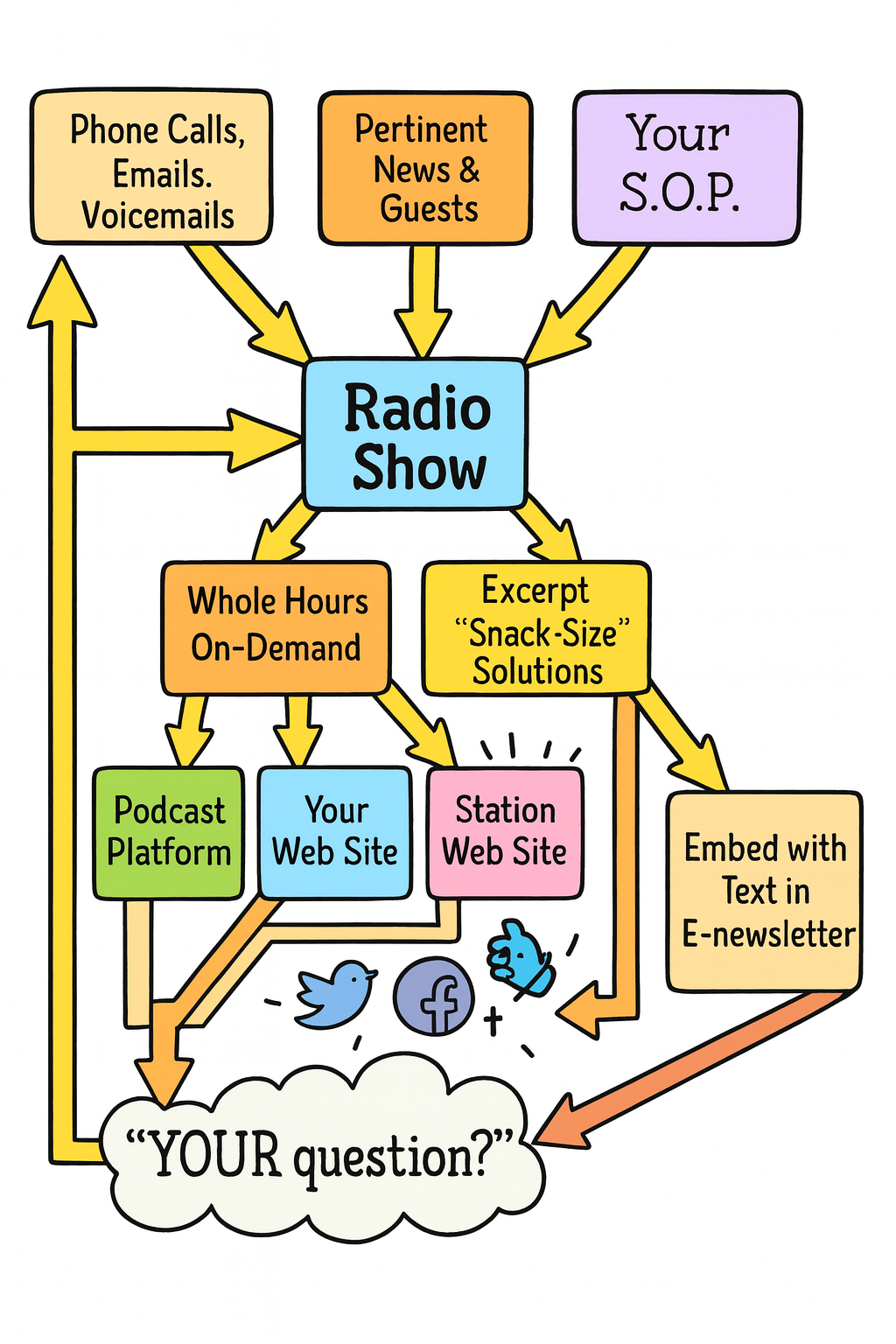
So, I’m helping podcasters I work with to do both. To amplify the impact of all the work you put into a podcast, make radio your content engine.
Yes, radio, for two big reasons:
- Credibility, because? Anyone can do a podcast. But being on broadcast radio makes you seem “real.” The station delivers you an existing audience that trusts its information, supports its advertisers, and listens habitually. You are live, interactive, and “car radio.” And interview guests will be easier to attract to your on-air show than to a podcast.
- As a podcaster, you are already an audio publisher – but you’re doing all the work yourself, reckoning what’s relevant to your listeners – a slow, lonely way to build an audience. Host a call-in radio show, and everything changes. Your callers and guests become the content pipeline that makes your podcast more than just you-talking. Their questions position you as an authority and offer proof of what your audience wants. No guesswork. No blind spots. Just nonstop relevance that keeps listeners leaning-in, coming back, and sharing your podcast with friends.
This 1 + 1 can = lots more than 2, when your show and podcast promote each other; and as this process repurposes content to social media, E-newsletters, video, and other online resources. Here’s the schematic: http://getonthenet.com/workflow.png
Holland Cooke (HollandCooke.com) is a consultant working the intersection of broadcasting and the Internet. Follow HC on Twitter @HollandCooke and connect on LinkedIn