A sports moment for the ages, a botched radio call, a live broadcast believed lost forever… then miraculously rediscovered. What a story!
By Mark Wainwright
 The History Channel calls it “The Most Dramatic Home Run in World Series History.” ESPN has often described it as the greatest home run of all time. To this day, it is the only World Series Game 7 walk-off home run.
Long-time baseball fans know the basic facts: On October 13, 1960, Bill Mazeroski of the Pittsburgh Pirates hit a line drive over the left field wall at Pittsburgh’s Forbes Field to win the World Series for the Pirates.
This was an iconic moment in baseball history, and an iconic moment in baseball broadcasting history, as well … although the Hall of Fame broadcaster who described the moment for the national radio audience probably wished he could have done a second take!
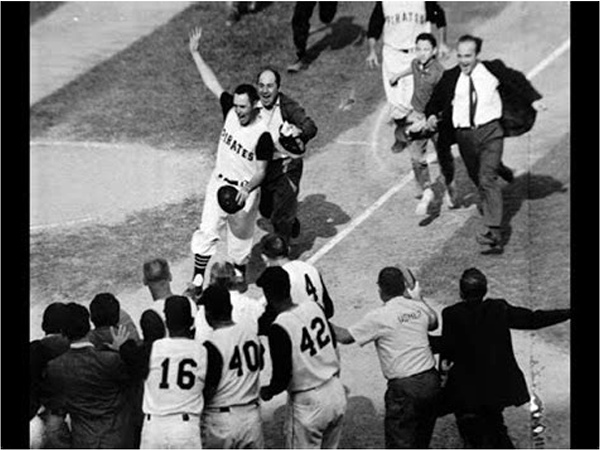
Above: Bill Mazeroski crosses the plate for the Game 7 victory! (photo courtesy YouTube)
It was a dramatic finish to an astonishing World Series, but as often happens, the backstory of that moment and how it was broadcast– and everything that led up to it – has been largely forgotten. As we follow this year’s MLB playoffs (while taking note of the anniversary), it’s worthwhile to look back at an earlier, very different era of post-season baseball…
******************************
The 1960 World Series opponents could hardly have been more different. The New York Yankees of that era were a machine, and the 1960 team easily dominated the American League on their way to the pennant. In contrast, the Pittsburgh Pirates were a surprise. The Pirates had not been to the Series since 1927, they were coming off a mediocre 1959 season, and expectations were low… but they got off to a good start and managed to keep it going. With timely pitching, clutch hitting, lucky breaks, and a never-say-die attitude (21 of their 95 wins came in their final at-bat), the Pirates claimed the National League pennant. The Yankees were studs, while the Pirates were scrappers, and the first six games of the Series reflected the character and personality of the respective teams.
In their three wins, the Yankee sluggers clobbered Pittsburgh pitchers for 38 runs. Yet, the Pirates managed to hang on, squeezing out three close victories in response. It all came down to Game 7 at Forbes Field on the afternoon of Thursday, October 13. Not only were there multiple Hall-of-Famers on the field and in the dugouts, there were Hall-of-Famers in both the TV and radio broadcast booths:
NBC’s national TV broadcast (in “Living Color!”) was handled by Yankees announcer Mel Allen and the Pirates’ Bob Prince, while NBC’s national radio broadcast was called by the Chicago Cubs’ Jack Quinlan, and Chuck Thompson, the play-by-play voice of the Washington Senators… wait, what? The Washington Senators? Wasn’t Chuck Thompson the voice of the Baltimore Orioles forever? For most of his career, yes… but Thompson was caught in a business dispute between the Baltimore brewery that owned the Orioles and the Baltimore brewery that owned his broadcasting contract, so Chuck wound up in Washington for a while (alas, as so often happens in life, it was a battle between money and beer, and money won out).
Game 7 combined and concentrated all the craziness of the previous six. Both pitching staffs were tired, and the hitters took advantage; it is the only game in World Series history where no pitcher from either team recorded even a single strikeout. The Pirates jumped out to an early 2-0 lead, but the New York offense awakened and the Yankees took a 7-4 lead into the bottom of the eighth inning. That’s when things really started to get strange…
In the Pittsburgh half of the 8th, it appeared a routine ground ball would start a double-play and stall a potential Pittsburgh rally… but the ball took a bad hop and hit Yankee shortstop (and later, Hall of Fame broadcaster) Tony Kubek in the throat. He got up bleeding and gasping for air, and was taken to the hospital with bruised vocal cords and a swollen trachea.The injury didn’t damage Kubek’s future career, but it kept the Pirates alive, and they followed with five runs to take a 9-7 lead into the 9th inning. Just three outs away, and yet…
The Yankees scored two runs to tie it at 9-9. The tying run was another odd play; a hard shot toward first base looked like a game-ending (and Series-ending) double play, but Pittsburgh first baseman Rocky Nelson took the easy out at first… which turned the play into a fielders’ choice. Mickey Mantle (the runner already on first) dove back to base and avoided the tag, which gave the Yankee runner on third the opportunity to tie it up. The Yankee inning ended with a routine ground out, so it all came down to the bottom of the 9th.
New York manager Casey Stengel left Ralph Terry in to pitch the 9th, with 15-game-winner Art Ditmar warming in the bullpen, if needed. Second baseman Bill Mazeroski would lead off the inning for the Pirates. Mazeroski was much better known for his outstanding glove work than his hitting, but he had one of the Pirates’ hottest bats late in the season, and it paid off.
Ball one, high. Catcher Johnny Blanchard went to the mound to briefly confer with Terry. Up in the radio booth, Chuck Thompson was obviously caught up in the excitement of the moment and everything leading up to it:
“Well, a little while ago, when we mentioned that this one, in typical fashion, was going right to the wire, little did we know…”
Then, at 3:36 pm, the 1-0 pitch, and…
“Art Ditmar throws…”
(Chuck, no! Ditmar’s still in the bullpen! Terry’s pitching!)
Thompson called the following moments superbly when Mazeroski connected and the ball sailed over the wall at the 406’ mark. Pandemonium ensued as Mazeroski quickly rounded the bases. Fans poured onto the field; it looked like half of Pittsburgh was poised to welcome him at home plate.
Unfortunately, Thompson committed another gaffe in the midst of the uproar:
“Ladies and gentlemen, Mazeroski has hit a one-nothing pitch over the left field fence at Forbes Field to win the 1960 World Series for the Pittsburgh Pirates by a score of ten to nothing!”
(Chuck, no! Look at the scoreboard! Look at your scorecard!)
…to his credit, he corrected himself moments later.
As both a long-time broadcaster and a Baltimore native – someone who heard Chuck Thompson broadcast countless games for the Baltimore Orioles and the Baltimore Colts of the NFL – it’s bizarre to hear Thompson commit these gaffes. Chuck Thompson did NOT make mistakes like this; he just didn’t. In his 1996 autobiography, he called it “easily the most embarrassing moment of my career behind the microphone.” His flawed moment did not derail a stellar career. In 1993, he received the Ford C. Frick broadcasting award from the Baseball Hall of Fame, and his name is honored in Cooperstown alongside the greats of the sport.
There’s a YouTube link, of course. Whoever produced it did a nice job of capturing this iconic event in sports history. You’ll hear Chuck Thompson’s “flawed but endearing” (as Wikipedia describes it) radio call of the homer, combined with the actual broadcast video. Although the audio portion switches over to Mel Allen’s TV call toward the conclusion, this minor deviation from the archived radio recording does nothing to spoil the drama and excitement. And by the way… the story behind how and why the Game 7 telecast was preserved is amazing enough on its own. So stay tuned for our post-game wrap-up!
The Greatest Home Run!
******************************
EPILOGUE
Although NBC videotaped all seven games (in “Living Color!”), those recordings soon disappeared. As I’ve mentioned in previous articles, videotape was very expensive back then, the reels were cumbersome, and storage was an issue. Thus, networks often re-used the tapes for various purposes, wiping everything that was recorded previously. Countless hours of television history have been lost due to this practice. So why did the entire TV broadcast of Game 7 survive intact (at least in black-and-white)?
You can thank Hollywood singing star Bing Crosby. Bing held an ownership interest in the Pirates then and was a huge fan, but he was oddly superstitious about things. He believed that watching the game on television would jinx the team, and showing up at Forbes Field would have been even worse. So he and his wife took off for a brief vacation in France, where he listened to the broadcast on shortwave radio. However…
Crosby had a close relationship with Ampex (including a financial interest), and he asked the folks at Ampex to record the game so he could watch it upon his return (but only if the Pirates won!). It’s not clear whether they taped it and transferred it to kinescope film or if they filmed a kinescope directly from the live broadcast. In any event, a black-and-white kinescope was saved and presented to Crosby. Presumably, Bing enjoyed viewing it and subsequently stashed it in his basement – where it remained untouched for forty-nine years!
In 2009, long after Crosby’s death, Robert Bader – an executive from Bing Crosby Enterprises – was going through materials at Crosby’s former home in Hillsborough, California. He was looking for any useful recorded video that could be transferred to DVD and marketed, and he stumbled onto the five-reel set in Bing’s wine cellar! It is the only known copy of the historic game. The reels were preserved and digitized, and later broadcast as part of several retrospectives covering the 1960 World Series and Game 7 specifically.
So… what’s mellowing in your wine cellar?
******************************
Mark Wainwright is a veteran radio performer and voiceover artist who has spent decades working as a disc jockey, talk show host, and morning personality at well-known radio stations throughout the United States. He was most recently the morning host at WSYR in Syracuse, New York. Mark can be reached through his LinkedIn page or at: markwainwright@earthlink.net



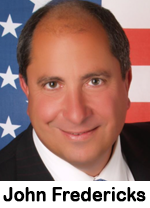 9.4 million views, while TikTok delivered nearly 1.4 million. GETTR Live added 545,800 views, X generated 644,500 impressions, and YouTube and Rumble contributed nearly 250,000 additional views. The company goes on to say its core broadcast and streaming operations remained strong, reaching more than 220,000 terrestrial radio listeners while producing 240,140 internet radio and JFMN.TV streaming sessions. JFMN’s mobile apps generated another 17,535 sessions. JFMN co-founder John Fredericks adds, “This is an absolutely phenomenal milestone for our company. We built JFMN from the ground up – without the corporate media establishment, without billionaire gatekeepers, without Wall Street gangster-banksters and without compromising what we believe. More than 12.7 million in monthly reach proves that Americans are hungry for bold, independent media that respects its audience and tells the truth.”
 station streaming, nearly 3x the next closest format; 2) One in four Americans now identifies as a “News Fanatic,” checking the news five or more times a day and actively seeking deeper context – not just headlines; 3) News/talk listeners are more loyal than sports fans. Fifty-four percent are primary listeners who spend most of their listening time with news/talk, compared with 41% for sports; 4) Trust remains news/talk’s biggest advantage. Local news radio is trusted by 84% of listeners – higher than broadcast TV, national news radio, or social media; 5) The audience has significant buying power. Median household income is approximately $95,000, with listeners over-indexing for net worth above $2 million; and 6) The advertising works. Among ad-exposed consumers, news/talk campaigns drive 56% awareness, 47% consideration, and 49% purchase/conversion, while Audacy campaigns generate an average 24% lift in website traffic, with some categories seeing increases as high as 67%.
  requires Commission approval after a serious look into whether that arrangement serves the American public and protects our national security. Gomez states, “The American public deserves to know who owns the airwaves that carry their news. I am alarmed by what appears to be an effort to rubber stamp a financial structure that places nearly half of one of America’s largest broadcast and media companies into the hands of foreign governments with documented records of press suppression and a troubling willingness to silence journalists. There are serious, unresolved questions about how this foreign investment may jeopardize national security, and this Commission has a legal obligation to answer them before handing wealthy friends of this administration yet another Billionaire Buddy Bypass on a transaction that strikes at the heart of American journalism.” In her statement, Gomez points out that this deal involves sovereign wealth funds from Saudi Arabia, Qatar, and Abu Dhabi investing in a company that controls CBS broadcast stations, as well as major cable news operations including CNN. According to Paramount’s own filing, total foreign ownership of the combined company upon closing would reach approximately 49.5 percent. Nearly half of one of America’s largest broadcast and media companies would be in foreign hands.
 Time Spent Listening to podcasts has now surpassed TSL with spoken word radio. And both are fraught.
 the flagship for the Portland Fire. Select games will also simulcast on KRSK-FM “105.1 The Fan.” Portland Thorns games will air on KNRK-HD2 with 10 select games airing on “910 ESPN Portland.” Audacy Portland SVP of sales Ryan Cooley states, “We’re incredibly proud to welcome the Portland Fire and the Portland Thorns to the FAN Sports Network. Our city has long been a leader in supporting women’s sports, and we’re especially excited to welcome the Fire back to Portland after over two decades.”
 Baseball across South Florida. WQAM will broadcast all regular season Marlins games, delivering live play-by-play coverage along with pregame and postgame programming to listeners throughout the region. The broadcasts will also be available through the Audacy app, expanding access for fans across digital and streaming platforms.
 2024. Urban One CEO and president Alfred C. Liggins, III, states, “As expected, we had a tough fourth quarter due to a combination of non-recurring political advertising, soft radio markets and declining audience delivery in our cable television business. Despite this, we were able to achieve full-year Adjusted EBITDA within our previous guidance range at $56.7 million. The biggest revenue drag in the fourth quarter resulted from weak cable TV prime delivery, down approximately 20.0% from the third quarter, although we have seen a significant recovery in the first quarter 2026 as the revised Nielsen methodology has given us an approximate 40.0% – 50.0% lift compared to the fourth quarter 2025. Radio pacings in the first quarter of 2026 are currently down 5%, but we remain positive on the outlook for mid-term political revenues later in the year. I was pleased that we were able to repurchase a significant amount of our 2028 Notes at a discount, extend out the maturity on all but a small stub of the notes, and increase the size and term of our ABL Credit Agreement. This transaction sets up the company with a stable capital structure and extended maturity runway to allow us to continue to de-lever the business. In January 2026 we also regained compliance with the Nasdaq listing requirements by effectuating a 1-for-10 reverse stock split.”
 TALKERS magazine, the leading trade publication serving America’s professional broadcast talk radio and associated digital communities since 1990, is pleased to participate as the presenting sponsor of the Intercollegiate Broadcasting System (IBS) conference for the second consecutive year. The conference is currently underway in New York.
 radio industry (and its related fields) seeks to connect with and develop a next generation of professional practitioners as well as engaged audiences. TALKERS is honored to again provide financial support, encouragement, experience, and advice to the dedicated organizers of this very special event.
 call the final two games of the regular season and the playoffs. Papa has been off the air this fall as he battles leukemia. While Papa still must go through chemotherapy and receive a bone marrow transplant, his doctors have cleared him to return to the booth to broadcast games.
 demonstrating that they have met their duty of inquiry in seeking to obtain the information needed to determine whether programming is sponsored, paid for, or furnished by a foreign governmental entity.” While this new sponsorship identification requirements for foreign government-provided programming was passed 3-2 by the Commission last summer, it has been challenged in the courts and remains there. Because of this, yesterday’s announcement of the publication of the rules in the federal register also adds that the implementation of the rules are being put off for six months until December 8, 2025. One of the arguments put forth by broadcasters opposed to the new rules is that they put radio and TV stations in the position of having to conduct an investigation in order to comply with the law.
 expectations: core radio advertising finished at -12.4% excluding digital, and Cable TV advertising was -6.3%. Our cable TV ratings stabilized significantly in the first quarter of 2025 and are performing in line with our 2025 budget. Second quarter core radio advertising pacings have weakened over the past several weeks and are now -8.7%. Our first quarter 2025 digital revenues were down 16.1% driven by expected weakness in streaming and podcasting revenues. Based on our year-to-date performance, we reaffirm our full year guidance of $75 million in Adjusted EBITDA. Our cumulative debt repurchases so far in 2025 are $88.6 million at an average price of 53.9%, resulting in reduced gross debt of $495.9 million, and we currently have approximately $79.8 million of cash on hand. In a challenging marketplace, our focus remains on controlling costs, managing leverage and retaining a strong liquidity position.”
 Komando Show’ is a nationally syndicated tech radio show heard on over 510 stations, SiriusXM, podcasts and streaming platforms, reaching millions every week. And guess what? We’re based right here in Phoenix. This is the job if you want to level up your career in broadcast and podcasting without leaving the Valley.”
  their business objectives through effective broadcast and digital advertising. The ideal candidate will possess excellent communication skills, have an enthusiastic and outgoing personality, along with a drive to succeed. Most importantly, we are looking for hard-working salespeople who want to have FUN at work, make money, and help local businesses grow.”
  These conventions used to be about making-the-most-of those towers behind radio stations that played in several rooms at home and occupied two knobs and six buttons in the dashboard. Back to the future…
 operating income was approximately $38.6 million, an increase of 1.7% from the same period in 2023. Net loss was approximately $35.7 million for the quarter, compared to net loss of $11.0 million for the same period in 2023. Urban One CEO and president Alfred C. Liggins, III states, “Our Adjusted EBITDA of $103.5 million came in at the mid-point of guidance, helped by strong political advertising revenues in the radio division. The radio outperformance was offset by declines in both advertising and affiliate revenues at the cable TV segment, as audience delivery continued to underperform expectations. We are however seeing some stabilization in the first quarter cable TV delivery, which should help to mitigate the continuing decline of linear TV subscribers. First quarter core radio revenue demand weakened, with pacings down 13.6%, although the second quarter is showing signs of improvement, with core pacings currently down 1.7%.”
  approach. Audacy SVP of sports monetization Lee Davis states, “We’re thrilled to bring together our unrivaled sports portfolio under Audacy Sports. Consolidating our cross-platform sellable assets under one name creates a compelling opportunity for brands to connect with listeners at scale – through our digital and broadcast network platforms or locally, through our owned sports stations – wherever and whenever they tune into Audacy content.” Audacy Sports is powered by the company’s 40 owned-and-operated all-sports stations and affiliates, 160 sports streaming channels on the Audacy app, a sports podcast network featuring over 600 titles and live events, 150 professional and collegiate teams – including play-by-play broadcasts, the Infinity Sports Network (formerly CBS Sports Radio) and BetQL Network.
 digital content programming, production, and broadcasting processes while creating stickier listener environments and more opportunities for advertisers to engage with them.” Audacy chief technology officer Sarah Foss says, “As the nation’s second-largest radio broadcaster, we’re always integrating cutting-edge technologies into our stack to deliver the best experiences for our 200 million monthly listeners and more efficiencies to our business. This partnership underscores our commitment to building the future of digital audio, and we’re thrilled to see it start coming to fruition.”
 The company states, “Net broadcast revenue decreased 3.7%, or $7.6 million, principally due to a $7.3 million decline in national and local spot advertising revenue. Spot advertising revenue has been declining in the industry due to reduced time spent listening, particularly on AM radio stations. Also, the political revenue decreased $3.6 million, or 61.5% to $2.3 million from $5.9 million. This decrease was partially offset by an increase in our broadcast digital revenue which increased $1.5 million or 4.1% due to increases from Salem Podcast Network, Salem News Channel and digital marketing services through Salem Surround. On a Same Station basis, net broadcast revenue decreased 4.0%, or $8.2 million, which reflects these items net of the impact of stations acquisitions and dispositions.” On the digital side, the company reports, “Net digital media revenue increased 0.7%, or $0.3 million. Net digital advertising revenue decreased due to Facebook algorithms that limit political content, the growing use of browsers that block third-party cookies limiting advertising, and the overall state of the economy that has weakened demand for advertising resulting in a lower number of advertisements and a reduction in rates.”
  “News Talk 1050” and two music brands. Townsquare regional vice president Robert Wawrzyniec says, “Mike is the ideal executive to lead Townsquare’s broadcast and digital operations in West Central Missouri. Most important, he knows the Sedalia market and what resonates with its listeners and advertisers. His expertise in creating, developing and executing exceptional local multi-platform solutions for advertising and marketing clients, as well as driving new business opportunities and forging important community partnerships, has resulted in deep client relationships and a strong commitment to listeners. I am looking forward to working with him in his new role.”
 real-time-bidding across iHeartMedia’s broadcast and digital audio inventory through a single activation channel. iHeartMedia chief data officer and president of revenue strategies Brian Kaminsky says, “With today’s consumers spending a third of their media time with audio, expanding programmatic’s access to iHeart’s audio assets is imperative for the industry. Not only are we expanding what role programmatic can play for advertisers, we are also improving the efficacy of their campaigns by allowing them to use real-time data to message their audience in the most engaging way possible, in an environment of trust and interest. We’re excited to expand our partnership with Magnite because they have proven expertise in programmatic and the ability to build technology fit for the unique needs of audio advertising to take its place in omnichannel.”
 Q3 of 2022. For the fourth quarter of 2022, net revenue was approximately $132.6 million, an increase of 1.6% from the same period in 2021. The company reports operating income of approximately $14.3 million for the period, compared to approximately $20.3 million for Q4 of 2021. Broadcast and digital operating income was approximately $47.6 million, an increase of 7.9% from the same period in 2021. Net income was $856,000 compared to approximately $5.3 million in net income for the same period in 2021. The company has yet to file its operating results for Q1 of this year, but its preliminary results from the quarter show same station radio segment revenue up 2.0% on a same station basis.
 streaming, podcasting, and wagertainment properties. Under Davis’ leadership, the team will be responsible for sales and execution, managing the entire client lifecycle.” Audacy chief revenue officer Brian Benedik comments, “No medium delivers more value for sports than audio. People are spending more time than ever with broadcast radio, streaming and podcasts, and the demand for compelling sports content across these channels is growing exponentially. Through our best-in-
 class sports audio portfolio, powered by over 150 flagship team partnerships, iconic local broadcast brands, award-winning podcasts and sports betting content, Audacy is uniquely positioned to capitalize on a new sales strategy in this arena.” Audacy says, “From 1990 to 2005, Davis was key in building WFAN into America’s #1 sports radio station, overseeing local and national sales, programming and marketing, helping shape it into the highest-grossing station in the country.” Davis rejoined Audacy in 2018 to lead the reboot of Traffic Weather Information Network’s on-air content and ad operations teams.
  increased 17.4% to $67.7 million leading to an operating loss of $4.2 million as compared to operating income of $5 million posted in Q1 of 2022. Salem reports a net loss of $5.2 million, compared to Q1 2022’s net income of $1.7 million. Salem reports in three segments – Broadcast, Digital Media, and Publishing. Broadcast revenue for the quarter was $48.3 million (down 0.2%), Digital Media was $10.5 million (up 2%), and Publishing revenue was $4.6 million (up 19.7%). Looking ahead, the company is projecting total revenue to decline between 5% and 7% from the second quarter 2022 total revenue of $68.7 million and expects operating expenses to increase between 3% and 6% compared to Q2 of 2022.