


Providing Support and Comfort to the Suffering Masses
By Pamela Garber, LMHC
Grand Central Counseling Group
New York
 In ongoing discussions about the dwindling relevance of radio in the modern world, the medium is grudgingly defended as a reliable “first responder” during times of public emergencies.
Nothing beats having an old-fashioned battery powered radio handy when confronted by hurricanes, tornados, blizzards, earthquakes, wildfires, floods, blackouts, and (dare I say it) weapons of war. Yes, radio is quite useful in the thick of natural “disasters” when the grid goes down, and the lights go out.
However, we are missing a huge opportunity by limiting radio to the role of modern-day media Sterno.
I’ve been a practicing therapist in New York and South Florida for the past 25 years, and although not a host, I have served, and continue to participate, as a guest on broadcasts across the nation, discussing the emotional connections between hot news topics and people’s feelings. I am not alone in the perception that people of my profession have performed for decades as fully invested members of the talk radio family.
During this period, it has become obvious that the one-time talk radio mainstay of the in-house or “go to” mental health professional has become an endangered species. Some of the biggest names in radio were practicing therapists. They were a familiar part of the talk (even news/talk) format. Without turning this into a historical essay or a scold, it is sad to note that most of them are gone.
Ironically, now more than ever, the deeply troubling events in the world, the nation, and our local communities, constituting news and statistics, are bringing deep emotional pain and crippling anxiety to the masses… especially the kind of people likely to tune in to talk radio. Professionals. Businesspeople. Workers. Parents.
Looking for younger demos? Gen-Z is perhaps the most anxiety-plagued segment of the population. These “kids” need support, guidance, and understanding.
Hurricanes and heat waves are not the only disasters that call for the helpful and healing power of radio.
The hot topics of the day: crime, inflation, corruption, disease, ignorance, racial strife, and identity politics – not to mention the ever-lingering threat of nuclear devastation – are not merely subjects (and excuses) to vent blame, anger and hate. They contribute to an environment of deep fear and institutionalized discomfort. There are millions of real-life, personal “disasters” going on out there, exacerbated by relationship betrayals and family breakdowns, that make a heavy snowstorm feel like an adventure by comparison.
Stoking people’s fear and anger with cherry-picked cherry bombs is only a small part of the equation when it comes to serving the desperate needs of both current and potential listeners.
It would be a good thing to bring back to the talk radio menu some psychology shows and professional purveyors of emotional clarity, available in the local communities, as guests to dole out much sought compassion, empathy, guidance, and old fashioned advice.
Pamela Garber, LMHC is a practicing therapist based in NYC and South Florida and a longtime guest mental health commentator on radio and television news programs across the nation. She can be contacted by phone at 646-745-6709 or email at Pamelagarber@gmail.com. Her website is Grandcentralcounselinggroup.com.
 If you work in radio, you’ve heard every flavor of AI anxiety. Some fear it will wipe out jobs. Others treat it like a super shortcut – cranking-out spots, promos, and proposals faster and cheaper. Kate O’Neill’s
 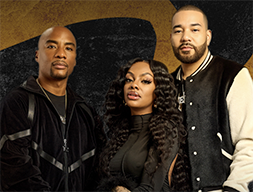 and 25–54 with double-digit shares of 13.9 and 13.1, respectively. The show is hosted by DJ Envy, Jess Hilarious, and Charlamagne Tha God and plays an important role in urban youth culture. iHeartMedia EVP of programming Thea Mitchem states, “The Breakfast Club continues to set the standard for what a truly multiplatform powerhouse looks like. These record‑setting ratings are a direct reflection of the team’s talent, consistency, and cultural impact. DJ Envy, Jess Hilarious, Charlamagne Tha God, and our exceptional production and digital teams deliver a show that resonates deeply with audiences across every platform. We’re incredibly proud of this achievement and grateful to the listeners of New York who make ‘The Breakfast Club’ a defining force in media.”
 If you’re on-air, it’s an important part of your job. Here’s what I see and hear working:
 strategy, cross-platform partnerships, and digital growth to strengthen the company’s competitive position to ensure long-term success.” Beasley Media Group CEO Caroline Beasley comments, “Kevin’s deep experience across broadcast, digital, experiential, podcasting, and sports makes him uniquely qualified to lead our revenue strategy. His proven ability to scale platforms, grow teams, and deliver results on both a national and local level will be instrumental as we continue to evolve and innovate for our clients and communities.” LeGrett says, “I’m excited to join Beasley Media Group at such an exciting time. Beasley’s commitment to local communities, strong culture, and forward-thinking approach to media – especially its transformation across digital, streaming, and multiplatform platforms – aligns perfectly with my passion for building innovative, integrated solutions that drive real impact for advertisers and listeners alike. I’m excited to help lead the next chapter of growth.”
 manager John Gallagher says, “The combination of Dan Proft’s intellect and his exceptional interviewing skills is why he’s the best morning radio host in Chicago. His knowledge of the issues that affect the people of Illinois is unmatched. This contract extension solidifies the Chicago Morning Answer brand and the top conservative talk radio line-up in the nation.” Proft comments, “I’m excited to extend my run on Chicago’s Morning Answer, and I am honored to be trusted with such an important platform during these turbulent times. Nothing short of the future of the United States and Western civilization, by extension, is on the line, and I’m humbled to be able to lend my voice to the fight. I want to thank AM 560’s management, along with our loyal, intelligent listeners and our accomplished and thoughtful guests, for their ongoing support.”
 WGN VP and general manager Mary Sandberg Boyle says, “From joining WGN Radio in 1985 during the Wally Phillips era to anchoring news on the ‘Lisa Dent Show’ today, throughout his 40 eventful years here Steve has faithfully maintained the highest standards of journalistic integrity, combined with his own unique gift for playful on air banter which is sure to be missed by colleagues and listeners alike.” Bertrand comments, “I feel like I’m the luckiest guy in the history of radio. As a kid, I dreamed of one day living in Chicago. I never imagined I’d be part of her daily conversation. I will forever be grateful to the legends I worked with and, most especially, the listeners who made it all happen. I’ve had the privilege of being part of a pretty amazing family for 40 years.”
 Possibly not – beginning Sunday – unless you live in Hawaii and Arizona (except the Navajo Nation) or American Samoa, Guam, the Northern Mariana Islands, Puerto Rico, or the U.S. Virgin Islands. Everywhere else, clocks will change when we “fall-back” on November 2.
 Why we’re already seeing TV tout its coming attractions: They understand how, after Labor Day, routines settle in. Viewers will be ready to re-engage.
 have ever consumed a podcast, 55% have consumed a podcast in the last month, and 40% have consumed a podcast in the last week, each measure being an all-time high; 2) Video podcast consumption has redefined the podcast landscape: Over half (51%) of the U.S. 12+ population has ever watched a video podcast; 37% have watched a video podcast in the last month and 26% have watched a video podcast in the last week. Those who actively watch video podcasts are younger and more diverse than those who only listen to audio-only podcasts; and 3) Podcasts offer high engagement and trust from listeners: 88% of weekly podcast consumers agree that hearing ads is a fair price to pay for free content; 68% say they don’t mind hearing ads on podcasts. You can see
  The addition of these stations fits perfectly into our late founder, my father, Thomas H. Draper’s motto that it is our moral obligation to serve our audience and advertising partners.” In a press release, Draper says it currently operates WBOC-TV, FOX21, WRDE-TV, Telemundo Delmarva, Antenna TV, My Cozi TV, The DSN Sports Network, and multiple FM radio stations across the Delmarva Peninsula. Speaking for seller Forever Media, president Lynn Deppen comments, “We are proud of the legacy these stations have built in their communities and grateful to our dedicated teams who have served listeners with passion and professionalism. We are confident that Draper Media shares our commitment to local broadcasting and will continue to provide outstanding service to audiences and advertisers alike as these stations enter an exciting new chapter.” The transaction is expected to close in the third quarter of 2025, subject to approval by the FCC.
 Radio sells advertisers our listeners’ attention. For a hundred years, our inventory has largely been commercials. Now, as our wandering audience leads us to more revenue channels, are we hooked on spots?
 There has never been more news. And news has never been more quotable. It costs two-plus cents to make a penny.
 Observation, as a heavy CNBC viewer: Artificial Intelligence is to 2025 what Dot Com was to the late 1990s, game-changer… and shiny object.
 Metrics and “Share of Ear” Report, MRI-Simmons, Screen Engine/ASI, Podscribe, and Magellan AI. Four of the key findings from this are: 1) Podcast ad campaigns are too light: No brand is coming close to “saturating” podcast audiences; Brands should allocate 5% of digital budgets to podcasting; 2) After five years with a median age of 33 to 34, podcast audiences finally age to 36, reflecting broader appeal with older audiences; 3) Screen Engine/ASI: Podcast audiences offer CTV advertisers significant incremental reach; and 4) Podcasts tighten their grip on audio audiences: Among podcast listeners, 35% of all audio time spent now goes to podcasts.
  number of retailers shopped, retailers shopped most often, brand perceptions, and advertising recall have recovered; 2) Brand equity and shopping patterns for the top two performers (AutoZone and O’Reilly Auto Parts) are stable to up. The second-tier players are slightly off; 3) AM/FM radio and podcasts are the ideal platforms to advertise auto aftermarket. TV underperforms with category usage and brand equity: Heavy AM/FM radio and podcast listeners visit more retailers in the category, make more shopping trips, and spend far more than the average. Two key consumer segments, do-it-yourselfers and ultra-heavy shoppers are more likely to be heavy AM/FM radio listeners. TV viewers are weak category users.
  Many Americans have been, in the two years since the Supreme Court punted the issue down to the states. For suburban women voters in swing states, it is – by far – the number one issue, per a Wall Street Journal poll. It tipped 2022 midterms and 2023 elections and swung other elections in battleground states.
 We – inside-the-box – live and breathe radio. Listeners have their hands full just living and breathing. Their day is time crunched and financially challenging, and we want to be its soundtrack.
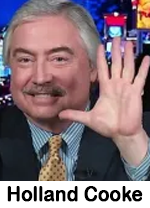 Today, consultant Holland Cooke writes, “With 850-plus confirmed 2024 tornadoes – just halfway through the season – each night’s network TV newscast can make you “thankful that we don’t live THERE…” And with more gnarly weather on the way this week across much of the USA, he reckons that, “regardless of your format, your station can be the weather button that listeners will push, and advertisers can sponsor.” And he suggests a tactic proven over 80 years ago.
  says that key points for advertisers to know about podcast listeners include: 1) More people than ever are listening to podcasts: 67% of the 12+ population has ever listened to a podcast; 47% of the 12+ population are monthly podcast listeners and 34% are weekly listeners; 2) Listeners are spending more time than ever with podcasts: In 2014, out of the daily time spent listening to all audio by those age 13+, 2% was spent with podcasts. In 2024, that number more than quadrupled and podcasts now account for 11% of daily time with audio. Twenty-three percent of weekly podcast listeners spend 10 hours or more listening to the medium each week; and 3) Podcasts reach all generations: 29% of kids age 6-12, 59% of those age 12-34, 55% of those age 35-54, and 27% of those age 55+ are monthly podcast listeners.
  Ratings – and advertisers’ results – reward what listeners remember, what sticks-out, not clichés that blend-in. So, avoid blah-blah-blah such as…
 Pick a day, any day. At least one news item will have the little voice in your head hollering “TELL me you’re kidding!” After recent headlines, and as various plots thicken, that little voice might need a lozenge.
 Before the bound copy arrived – at which point all work stopped – Arbitron would send “Advances.” Even those topline numbers ground things to a halt, and had some PDs doing cartwheels, others out on the ledge. ‘Seems quaint now.
 It’s not your imagination. The world has gone daffy. The USA is all-but boots-on-the-ground in rough neighborhoods around the world. Weather is getting even wackier. The next gun nut could open fire, at any moment, anywhere. 2024 campaign? It’s a long way to November. And even in this rebounding economy, supermarket prices still hit-home… if you can get there.
 Show” airs from 2:00 pm to 4:00 pm. Program director Kathryn Lake comments, “Wisconsinites will play a crucial role this year in determining who represents the state in Madison and in the nation’s capital. The experience Jane Matenaer, Todd Allbaugh and Maggie Daun bring to the midday microphones will provide listeners across the state compelling stories and important updates about what is happening in their communities and throughout Wisconsin.”
 Other notable findings: 1) Older Americans and women are listening to podcasts at a faster rate, with a 22% increase in listeners over the age of 55 and a 19% increase in female listeners 18+ over the past two years; 2) Top podcast genres of 2023 were News (22% of downloads), True Crime (18%), and Comedy (15%). Of True Crime podcast listeners, 67% were female, of Comedy podcast listeners 62% were male, and of News podcast listeners 58% were male; 3) The top sales networks of 2023 in the Triton U.S. Podcast Ranker were SiriusXM Podcast Network at #1, NPR at #2, and Wondery at #3. The top podcast of the year was “NPR News Now.” Triton Digital SVP measurement products & strategy Daryl Battaglia says, “2023 was another year of significant growth for the podcast industry, and with increasing female and over 55+ audiences, we can expect more content production to serve those groups in the coming year. As podcast listenership continues to rise and reach new audiences, we’ll continue to provide our customers with in-depth insights around podcast consumption and listener habits in the coming year.”
  Take a day off. You get one free this year.
 “News Talk 1050” and two music brands. Townsquare regional vice president Robert Wawrzyniec says, “Mike is the ideal executive to lead Townsquare’s broadcast and digital operations in West Central Missouri. Most important, he knows the Sedalia market and what resonates with its listeners and advertisers. His expertise in creating, developing and executing exceptional local multi-platform solutions for advertising and marketing clients, as well as driving new business opportunities and forging important community partnerships, has resulted in deep client relationships and a strong commitment to listeners. I am looking forward to working with him in his new role.”
 Research shows that readers to trade publications like articles with five bullet points. Here are my five bullet points for 2024. If these were to be deployed, you could be thriving by the end of the year. These actions would increase sales and audience share.
 You know the routine.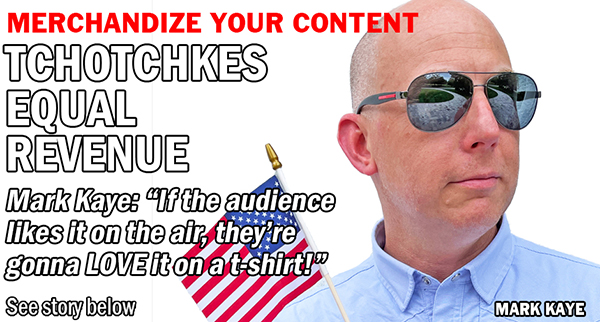
 We have a saying around “The Mark Kaye Show” studio: