By Walter Sabo
a.k.a. Walter M. Sterling
Host, “Sterling Every Damn Night”
WPHT, Philadelphia
Host, “Sterling On Sunday,” TMN
 Right now, dozens of well-suited, over-priced, unpleasant lawyers are fighting in Hollywood over the title credit their client should receive on a movie, TV show, or book cover. Placement within the credit roll at the end of a show is a battleground of egos and legalities. Part of the process of securing proper credit is governed by multiple union rules negotiated by multiple unions and corporate dictates of corporate masters. (You don’t get to be CEO of Paramount by being a nice guy.)
In most mass media, getting credit for the hard work of creating mass media is a very serious matter. What’s the “title slide” credit for you and your colleagues?
To your listener, you are a star. For no cost, you, your station, and our industry would benefit from building a credit roll at the end of each of your shows. Radio has a first class array of production software, processing and SFX libraries. Use those assets to create on air credit rolls for talent, PAs, anyone who touches a show.
The result: Credited employees will grow prouder of their work. They will be recognized by their friends. Advertisers will know their messages are part of a “big thing” and invest with confidence. Subliminally running credits for your station’s team puts radio on the same plateau as movies, TV, print. For free.
Consider every opportunity to elevate the stature of radio stars. When you have a substitute host or DJ please don’t say, “filling in for…” say, “guest starring.” How does your talent present themselves away from the station on remotes or appearances? KMART rack or Dress for Success? Fact: Management of other media say that radio executives and sales people “dress poorly.” Really, that’s their view of radio personnel. Lousy dressers. Easy fix.
Kudos to George Noory. At the end of each show, he credits his predecessors; all-night radio stars who, through the decades, explored UFO’s and non-traditional topics. George’s humble announcement celebrates radio’s robust history and places Noory in an all-hit lineup.
Walter Sabo has been a C Suite action partner for companies such as SiriusXM, Hearst, Press Broadcasting, Gannett, RKO General and many other leading media outlets. His company HITVIEWS, in 2007, was the first to identify and monetize video influencers. His nightly show “Walter Sterling Every Damn Night” is heard on WPHT, Philadelphia. His syndicated show, “Sterling On Sunday,” from Talk Media Network, airs 10:00 pm-1:00 am ET, and is now in its 10th year of success. He can be reached by email at sabowalter@gmail.com



 or Go Home: How Small Thinking is Killing Advertising and What to Do About It. Both publications point to a number of conclusions that advertisers should be aware of: 1) Advertisers have two jobs: Convert existing demand by reaching the five percent who are in the market and create future demand via brand building focused on the 95% of consumers who are not in the market; 2) “Big media ads” (AM/FM radio, TV, and outdoor), are more effective at creating future demand because they create a greater sense of quality, popularity, and trust for brands; 3) Ads from “big media” (AM/FM radio, TV, and outdoor) stick in minds more than digital or social media ads. Over 85% of online ads don’t reach the 2.5 second Attention-Memory Threshold, according to Amplified Intelligence’s Karen Nelson-Field; 4) Don’t be afraid of “waste.” It’s the part of advertising that works. See full blog post here.
  November 1. RAAN says the move “follows the growing demand from stations looking to bring Cohen’s distinctive voice and insider perspective to their listeners.” Red Apple Media owner and CEO John Catsimatidis comments, “Michael worked for the president for over a decade and has a unique perspective on how Trump thinks when we do opinion pieces. ‘When You Know, You Know…’ is an opportunity for stations to add a distinctive personality and compelling content that hyper-engages listeners and attracts advertisers.”
 THANKS to all who offered feedback about my most recent column.
  sales and a record of leading agency sales for national media brands, a combination that allows her to build programs the way agencies plan them.” Skyview CEO and chairman Steve Jones adds, “She knows the audio business, how agencies plan and how to open a door that has never been opened before. Bringing Liz to Skyview is an investment not only in revenue growth, but also in the longterm strength of the relationships that will continue to drive our business forward.” Stillman comments, “Network audio still does something no other medium does, putting a brand in front of a national audience at scale, in an environment people trust. Skyview has the reach, station partnerships and technology to deliver that, and I am looking forward to opening those conversations and building programs that deliver measurable results.”
 Zimmer will take over the operation of sports talk KOSP-FM “102.1 The Won” and three music brands. It currently owns news/talk KWTO/K227KO and sports talk KBFL-AM/K245CA. Zimmer Communications president John Zimmer says,
 “This is an exciting opportunity to bring together two organizations that share the same values and a deep commitment to local broadcasting. By combining our strengths, we’ll be able to offer advertisers even more effective marketing solutions while continuing to provide the trusted local content our audiences rely on.” Mid-West Family president Mike Paterson adds, “As the local radio and media landscape continues to evolve, bringing these two organizations together creates even greater opportunities for our advertising partners, our communities and especially our employees.”
  owned-and-operated digital inventory both locally and nationally, including digital, audio, podcasts and creator-led content, creating a more unified path for advertisers to activate multi-platform campaigns at scale. iHeartMedia chief business officer Lisa Coffey comments, “Advertisers are increasingly looking for media solutions that combine scale, intelligence and simplicity across channels. By combining Amazon Ads’ shopping insights and advertising technology with iHeart’s audio leadership, we’re creating a more seamless, data-informed way for brands to create more effective campaigns across sound and sight.”
 consumption (64%) comes from broadcast radio, yet up until today, it has lacked the targeting and measurement infrastructure available in digital. iHeartMedia’s broadcast radio stations reach more than 278 million consumers every month, and now with AudioGraph, for the first time, advertisers can plan, target, measure, and attribute that audience using privacy-safe, ID-informed insights with digital-like precision.”
 on consumer lifestyles, purchasing behavior and cross-platform media usage while TOMA.Solutions adds a powerful layer of competitive insight by measuring “Top-of-Mind Awareness,” revealing which local brands own the first-to-mind position in their categories. Cumulus president of operations Dave Milner says, “Today’s advertisers want more than audience delivery. They want insight, clarity, and a stronger connection between marketing decisions and business results. By integrating specialized resources like The Media Audit and TOMA.Solutions into our broader research suite, our teams in these markets provide an even deeper level of local intelligence, helping our clients build more precise and effective campaigns.”
 Time Spent Listening to podcasts has now surpassed TSL with spoken word radio. And both are fraught.
 conservative or liberal – depending on the channel – all-news radio’s audience is almost perfectly balanced. Audacy adds that it matters when it comes to election season. “While most national news platforms reach consumers who already lean one way or another, all-news radio’s neutrality makes listeners more willing to hear a message – even from a candidate they might initially distrust. The Alter Agents study found that 77% of listeners considered all-news advertisers to be ‘trustworthy’ simply by running adjacent to the content.”
  “designed to help brands reach and engage multicultural audiences across today’s digital media landscape.” AURN CEO Chesley Maddox-Dorsey says, “AURN has always been committed to helping brands connect authentically with multicultural audiences. Our partnership with AdGrid allows us to expand that connection beyond audio and into the broader digital ecosystem, giving advertisers new ways to reach these influential audiences with scale, cultural relevance and measurable results.”
 last 9 years. Being your voice, using my platform to speak up for you, to take on the powerful, the connected, the politicians, has been the greatest honor of my professional life. You have responded with incredible ratings and support of our advertisers that stood behind me. In the process we have formed an unbreakable bond. In the end, the show was always about us. In a battle together. I also want to thank those of you who have written letters in support of me the last 3 weeks. I was so moved by the outcry demanding this beautiful thing we’ve forged together keep going at the place we made it happen. If you want the answers why it will not occur, that’s a question for Urban One. We have some amazing things coming soon! Our bond is so much bigger than any singular platform or frequency. You have proven that in recent weeks. I can’t wait to tell you all about our new opportunities together in the near future. In the meantime, thank you for all YOU have given to me the last 9 years. Your loyalty and dedication allowed me to live out my boyhood dream. I will never be able to thank you enough.” Kendall hasn’t publicized his plans for the future but appears to be leaning toward a digital platform as he’s continuing to post Indiana and Indianapolis news via social media.
 strategy, cross-platform partnerships, and digital growth to strengthen the company’s competitive position to ensure long-term success.” Beasley Media Group CEO Caroline Beasley comments, “Kevin’s deep experience across broadcast, digital, experiential, podcasting, and sports makes him uniquely qualified to lead our revenue strategy. His proven ability to scale platforms, grow teams, and deliver results on both a national and local level will be instrumental as we continue to evolve and innovate for our clients and communities.” LeGrett says, “I’m excited to join Beasley Media Group at such an exciting time. Beasley’s commitment to local communities, strong culture, and forward-thinking approach to media – especially its transformation across digital, streaming, and multiplatform platforms – aligns perfectly with my passion for building innovative, integrated solutions that drive real impact for advertisers and listeners alike. I’m excited to help lead the next chapter of growth.”
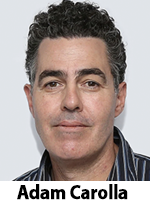 Podcast” joins SiriusXM’s The Megyn Kelly Channel for same-day distribution of Carolla’s daily show, Tuesdays through Fridays at 7:00 am – 9:00 am ET. PodcastOne co-founder Kit Gray states, “PodcastOne is thrilled to extend our relationship with Adam and his ‘The Adam Carolla Show.’ Adam has paved the way for podcasters around the globe and his podcast is continuously growing with audiences and with advertisers. We’re proud to be working alongside one of the greatest in the business as he sets the tone for success in the genre.”
 dashboards and API access that support automated reporting and portfolio-level insights. The collaboration will also support select broadcast attribution initiatives within Audacy’s radio portfolio, complementing existing measurement partners. Audacy president of digital sales Michael Biemolt says, “Audacy consistently strives to deliver measurable results for advertisers, and our partnership with Podscribe further strengthens that promise. With enhanced attribution and transparency across our portfolio, we’re giving clients even greater confidence in how Audacy drives performance at scale.”
 We sell advertisers the attention we earn, and earning it has never been tougher. When we design client stations’ billboards, we’re not “writing a 60” or “a 30,” or even “a 10.” It’s a one-second spot. At a glance, someone driving needs to understand what the station delivers, and why to listen.
 their local market. Bonneville says, “The platform brings together Arizona Sports, Seattle Sports, Denver Sports, Sactown Sports, and KSL Sports in Salt Lake City, delivering more than 63 hours of live sports programming every day across audio, video, digital, and social channels.” Bonneville president and CEO Tanya Vea adds, “Bonneville Sports Network gives advertisers both flexibility and scale. Our network reaches fans wherever and whenever they engage with sports, across every platform. Advertisers can now leverage that strength in a way that aligns with their goals, whether they’re pursuing national reach or meaningful local impact.”
 These aren’t just bulletin boards. They’re extensions of your station, where listeners expect to be acknowledged and advertisers expect to see results.
 president and CEO John Rosso says, “Sharon has been instrumental in our continued success at Triton Digital, and her promotion to chief revenue officer is a reflection of her exceptional leadership, strategic thinking and proven ability to drive results. Her track record in scaling audio technology platforms and her deep understanding of the evolving digital landscape will be invaluable as we accelerate our global growth and deepen partnerships with audio publishers and advertisers.”
 place. This new data fusion will integrate the industry-leading Edison Podcast Metrics into Nielsen’s widely used media planning tool, Nielsen Media Impact
  (NMI).” Nielsen adds, “As podcast listenership continues to grow, it is critical for advertisers to have sophisticated tools and data to effectively plan, measure and optimize their audio investments. Nielsen Podcast Fusion in NMI will provide an even more holistic view of media planning and help users uncover valuable insights and demonstrate the effectiveness of their campaigns. NMI users will also be able to optimize media plans by specific podcast networks and genres, as well as top podcast programs.” NPR and Ocean Media are among the charter subscribers at launch.
 “creative quality is the number one sales driver” and this is often a surprise to advertisers and media agencies who think media tactics (targeting, reach, etc.) drive the most sales. It’s for good reason that everyone wants high brand awareness. A major study from TikTok reveals the greater a brand’s awareness, the greater the purchase conversion. Brands with high aided awareness have 2.86x greater conversion rates compared to low awareness brands. But not all categories operate similarly, Podscribe says that purchase conversion varies widely by advertising category and advises that it’s important to understand the purchase conversion benchmarks for your product category.
  The addition of these stations fits perfectly into our late founder, my father, Thomas H. Draper’s motto that it is our moral obligation to serve our audience and advertising partners.” In a press release, Draper says it currently operates WBOC-TV, FOX21, WRDE-TV, Telemundo Delmarva, Antenna TV, My Cozi TV, The DSN Sports Network, and multiple FM radio stations across the Delmarva Peninsula. Speaking for seller Forever Media, president Lynn Deppen comments, “We are proud of the legacy these stations have built in their communities and grateful to our dedicated teams who have served listeners with passion and professionalism. We are confident that Draper Media shares our commitment to local broadcasting and will continue to provide outstanding service to audiences and advertisers alike as these stations enter an exciting new chapter.” The transaction is expected to close in the third quarter of 2025, subject to approval by the FCC.
 ad-supported media campaign. Among the findings is that in order to ensure that digital audio buys are effective, marketers should commit news/talk and sports stations because they represent 28% of all 25-54 AM/FM radio streaming audiences. Among 25-54s, spoken-word formats have a massive 28% streaming share, 2.4 times larger than the overall spoken word share of 12%. The news/talk format has a 6.7% share of total AM/FM radio listening. The streaming share for news/talk is 15.4% — more than double its total share. The sports format has a 12.5 share of the streaming audience, 2.5 times bigger than its overall 5 share. Further, the data indicates that for the 18-34 demographic, sports and news/talk streaming is a combined 19.6% share.