


Ongoing Coverage of TALKERS 2024: Radio and Beyond
The 27th annual installment of the talk media industry’s longest running, and most important national event took place this past Friday (6/7) at Hofstra University on Long Island. TALKERS 2024: Radio and Beyond was an advance sellout. The power-packed, one-day agenda featured a roster of more than 60 speakers from all ends of the talk radio and related talk media industries including talent, station owners, CEOs, programmers, technical experts, journalists, syndicators, and a wide variety of visionaries. The annual talk media industry tradition was presented by TALKERS in association with the prestigious university’s multi-award-winning station WRHU Radio and Hofstra’s Lawrence Herbert School of Communication. Key discussions included “Gaining Traction in a Noisy World,” “The Case for AM Radio,” “Generating News/Talk Revenue in the Digital Era,” “The State of Sports Talk Radio,” “The Brave New World of Technological and Generational Change,” “Programming News/Talk Radio,” “Perspectives on Hosting Television Talk,” “Philanthropy and Community Service,” “The Art of Story Telling,” “Talk Radio Programming Opportunities Beyond Politics,” “Meeting the Challenges of Being a Talk Talent,” “The Big Picture of Radio’s Role in a Rapidly Changing World,” and “The State of the First Amendment” among others. As the volumes of data generated by this gathering are sorted out, TALKERS will provide in-depth, detailed coverage of the conference in the days and weeks ahead including posting videos of its key segments. See a selection of photos from TALKERS 2024 Radio and Beyond below.
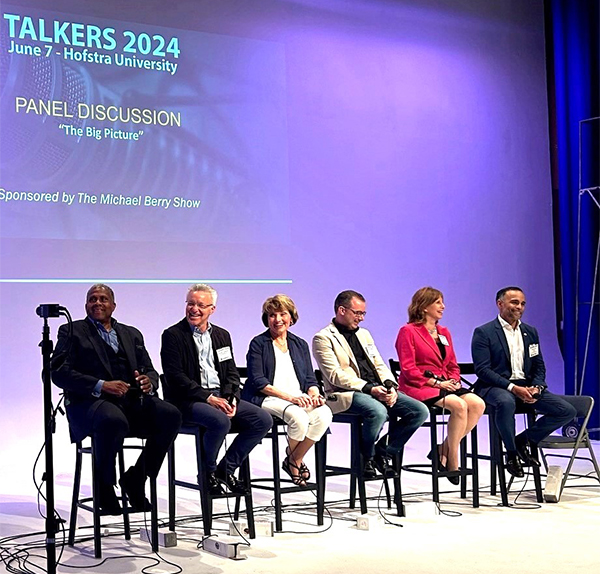
One of the exciting sessions of TALKERS 2024: Radio and Beyond was titled “The Big Picture.” It sparked a dialogue about the state of talk media and radio in general in the face of tremendous technological and sociological change. It put forth the premise that for “radio” to succeed in the multiplatform arena of the digital age, its health and survival will depend upon its practitioners having a clear understanding what the term “radio” means and how that definition differs from the word “audio.” The stellar panels included (l-r): Tavis Smiley, host/owner, KBLA, Los Angeles / Smiley AudioMedia; Kraig Kitchin, CEO, Sound Mind, LLC; Deborah Parenti, publisher, Radio Ink / RBR+TVBR; Chris Oliviero, market president, Audacy New York; Lisa Wexler, host, WICC, Bridgeport; and Chad Lopez, president, WABC, New York / Red Apple Audio Network. (Not pictured, moderator Michael Harrison.)
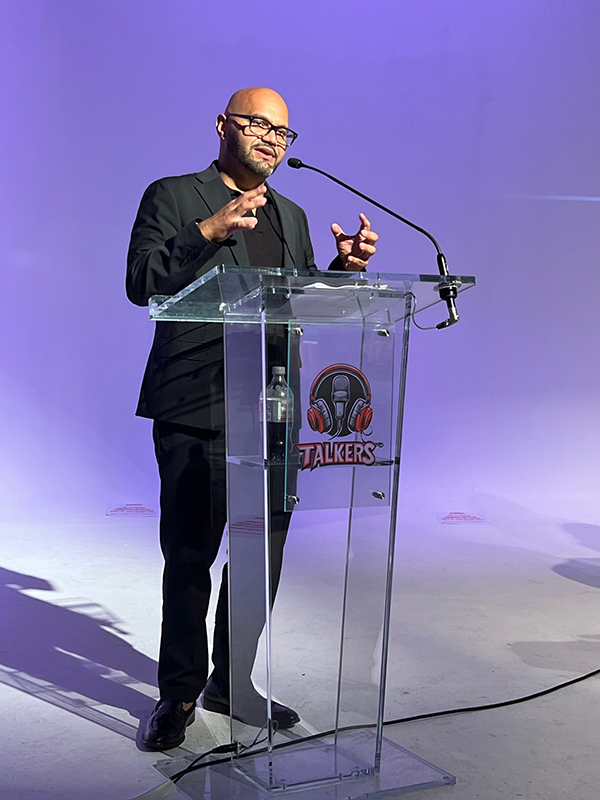
Westwood One host Rich Valdes, host of “America at Night,” introduced “The Big Picture” panel eloquently pointing out that for radio to successfully serve the big picture of American society it will have to grasp the demographic and ethnic changes that are rapidly taking place within the nation’s shifting population.
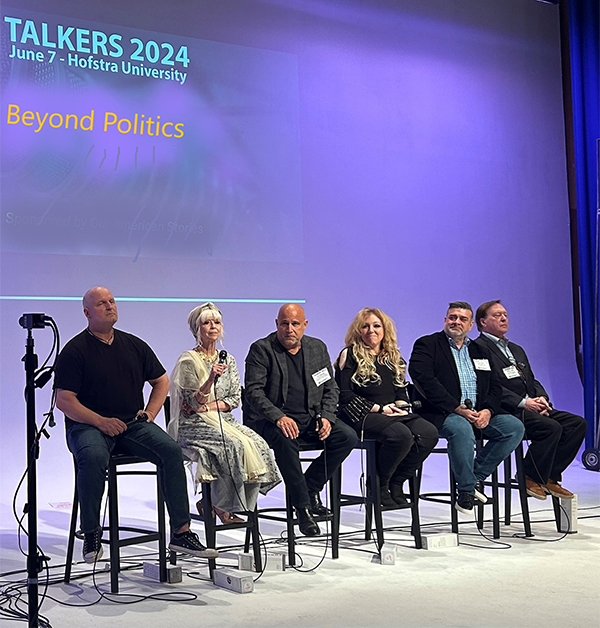
The “Beyond Politics” panel explored the programming options available to talk radio stations – particularly news/talk – to expand programming possibilities that enhance ratings and revenue beyond reliance on the popular paradigm of pure, targeted 24/7 partisan politics. Panelists included (l-r): Asa Andrew, MD, host, “The Doctor Asa Show”; Danielle Lin, C.N., producer/host, “The Art of Living and the Science of Life”; Lee Habeeb, CEO/host/producer, “Our American Stories”/American Private Radio; Daliah Wachs, MD, host, “The Dr. Daliah Show”; Mike “Bax” Baxendale, co-host, morning show, WAQY (Rock 102), Springfield, MA; and Walter Sabo (A.K.A. Walter M Sterling), consultant, Sabo Media Partners / host, “Sterling On Sunday,” TMN / “Sterling at Night,” WPHT, Philadelphia. (Not pictured, moderator David Bernstein.)
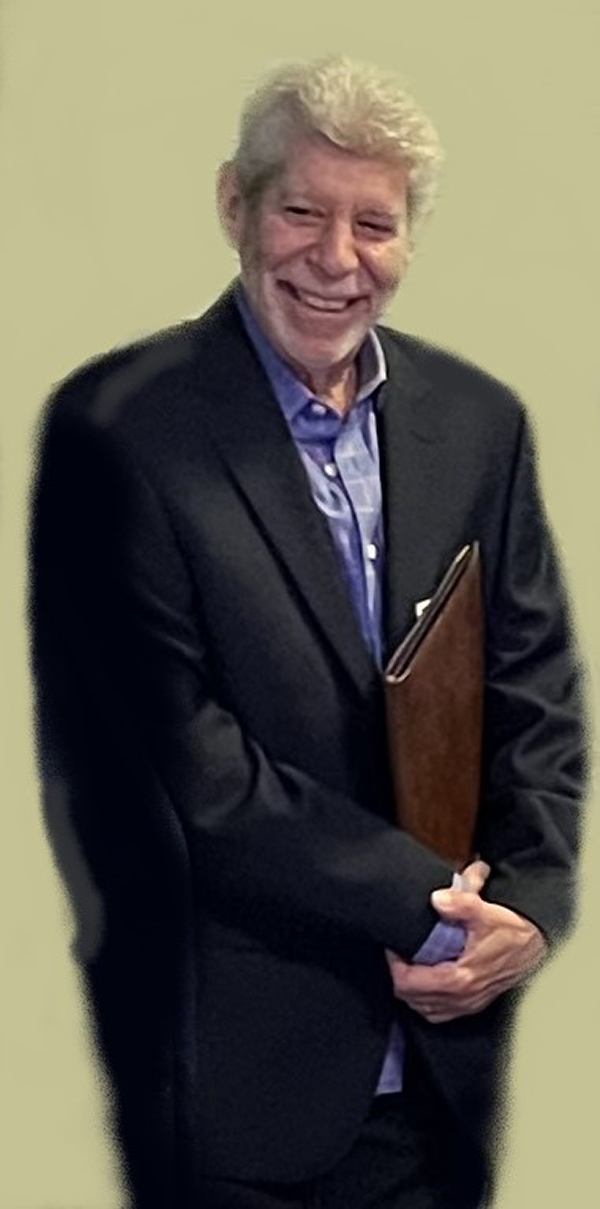
Talk radio programming legend David Bernstein, TALKERS director of broadcast operations, served as moderator of the “Beyond Politics” panel session.
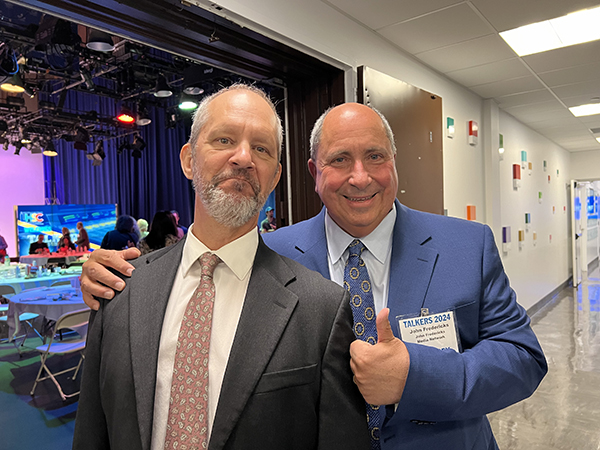
Kevin Casey, TALKERS VP/executive editor (l) served as TALKERS 2024: Radio and Beyond master of ceremonies and John Fredericks, owner/host, the John Fredericks Radio Network (r) delivered the introduction to the “State of Sports Talk Radio” fireside chat.
 When recently starting nightly on WPHT, Philadelphia, I asked program director Greg Stocker if there was anything else management needed from me. Greg said, “Do your show.”
 This week, I started a five-night show on Audacy’s WPHT, Philadelphia. Thank you, market president David Yadgaroff. Because of my tenure in the industry, I received a flattering, humbling number of emails from colleagues in radio. THANK YOU. The support and encouragement are appreciated and certainly needed!
 When a new restaurant opens, smart owners put the phone on busy so would-be diners believe the joint is hot, packed and hard to get in to. At street fairs we are drawn to merchant booths with long lines. Crowds give us confidence.
 “Walter has demonstrated the importance of the late-night talk radio with his Sunday night nationally syndicated program and has welcomed his listeners, who he refers to as ‘friends on the radio,’ to unpack their day-to-day lives. He’s made strides at ‘Talk Radio 1210 WPHT’ for a decade, and we’re ecstatic to finally bring his entertaining brand to the Delaware Valley five nights a week.” Sterling, who as Walter Sabo operates the Sabo Media Partners consultancy, comments, “Late-night radio is golden media time for a live program. It’s a one-on-one stage for lighter conversations, serving as morning drive for late-shift doctors, nurses, bus drivers, hotel managers, security staff and more. Thank you, David Yadgaroff, Greg Stocker, Jeff Sottolano and the incredible programming and engineering teams at Audacy. Over the years, I’ve made strong connections with Talk Radio 1210 WPHT listeners and look forward to building them as I join weeknights!”
 To be an expert in marketing requires expertise in how memory works. Early in my consultant practice, I studied and read every book I could find on the processes of memory. The best book is Effective Frequency: The Relationship Between Frequency and Advertising Effectiveness. Put simply, how many times does a consumer have to hear a message before it has impact? The book, a collection of studies, is the foundation for every qualitative study in the field today.
 Growing a brand is a memory game. Which message will a target consumer value, remember it and take it to the cash register? The answer is not complicated but it is complex.
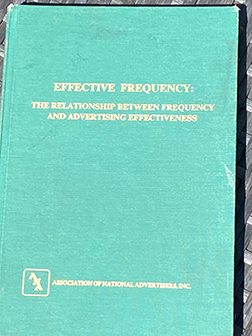 about all the science any of us have been tutored in on the subject of effective frequency.
 It seems every hour Nielsen and Pierre Bouvard of Cumulus fame (formerly of Westwood One) put out a release stating that radio is just fine, thank you. Radio is more persuasive than TV, direct mail, streaming and print. Radio is a proven success for over 100 years. Most of the buildings housing Procter & Gamble were built on radio – not TV – advertising success. Happily, P&G realized radio’s clout and is now a dominant radio advertiser – again!
 1. Financial solvency laws. Consolidation is not the problem; it actually saved the radio industry. The problem is the 1986 rule change that dropped financial solvency requirements for station ownership. Prior to 1986, stations could not be purchased with debt. A potential owner had to prove that they could meet the expenses of a station through the duration of its license. Once the financial efficacy rule was dropped and stations could be purchased with debt, the industry was financially decimated. Prediction: Financial solvency laws will be re-instated.
 Original ideas are golden and rare. Here are five ideas worth stealing because of their novelty, success and oh-wow factor!
 When reviewing our industry’s awards such as the Crystals or Marconis there are two categories missing. They are: “Best New” and “Best Innovation.” Imagine if winners were announced for these prizes:
 For several years I’ve had the surprising privilege of serving as a member of the nominating committee of the Radio Hall of Fame. How does the process work? Let me clear up some of the mystery. FAQ:
 NO ONE has done more to elevate the status and improve the working conditions of on-air talent as much as Howard Stern.
 Acknowledging that this publication is fiercely non-partisan and that I – in my role as a broadcaster – am basically the same, I offer the following, not as a political opinion piece, but rather a personal observation based on experience that might shed light on the deeper nature of a large segment of the American population prone to listen to talk radio.
 Sears used to sell everything. Tractors, tires, insurance, investments, chickens. In 2004, Sears was the dominant retailer in America. By the end of the decade, it was feverishly closing stores and dying.
 Research shows that readers to trade publications like articles with five bullet points. Here are my five bullet points for 2024. If these were to be deployed, you could be thriving by the end of the year. These actions would increase sales and audience share.
 WHAT WOULD YOU DO? A very good major market DJ murders his wife and injures her lover upon catching them in the marital bed. An 11-year-old girl was in the house – a witness. The murderer is convicted (second-degree murder/“situational crime”) sent to prison, does his time and is released after a few years for good behavior while incarcerated.
 Earlier this week, Michael Harrison published his top 10 list of suggestions for being a successful talker. Item number three really caught my eye: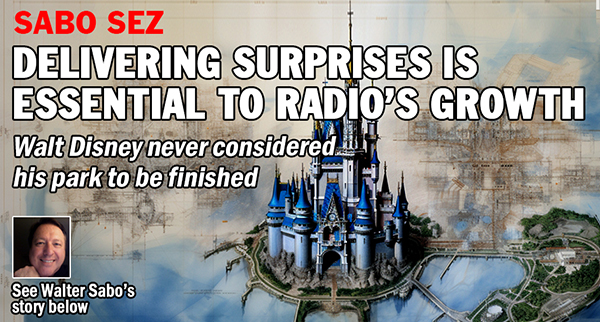
 In May 2007, I was enjoying the brand-new app called YouTube. Still independently owned, still relatively unknown. Some of the videos pulled millions of viewers, more viewers than enjoyed by ESPN or any cable network. More interesting, the videos with high counts were not made by NBC or ESPN or any traditional video source. High view count videos were being made by people with no experience in traditional media, they were experimenters producing in their basements and bedrooms.
 As your friends get fired and on-air hosts are replaced with WideOrbit and Profitable Software, the mournful refrain is to unfairly blame consolidation. Consolidation has, in fact, made the medium financially viable and brought hundreds of individual stations from a river of red ink to the glow of black ink. Prior to consolidation, over half the radio stations in the U.S. lost money – year after year. Not a secret stat, those numbers were revealed annually by the NAB.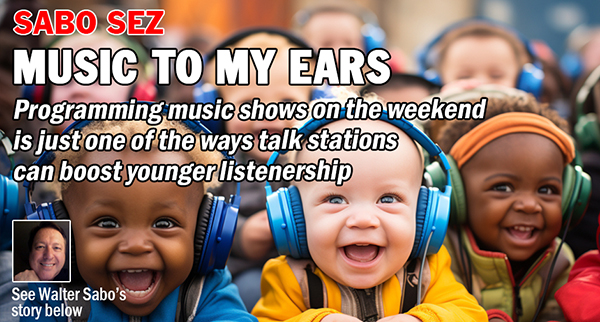
 The persistent liability of most talk stations is that they attract a high percentage of listeners over the age of 65. Consider that many of those older listeners are attracted to radio shows that are talking for companionship and comfort.
 Dependency upon a PPM panel to deliver high time spent listening is a bad business model. Would you rather count on one person listening for one hour or four people listening for 15 minutes? Right.
 For decades the power-lunch spot in Manhattan was the beautiful Four Seasons restaurant. Check it out:
  Mentioning a local street name won’t do it. Constant local references is not LOCAL LIVE, it’s a GOOGLE MAP!