

SABO SEZ: Top 40 is Always the Answer
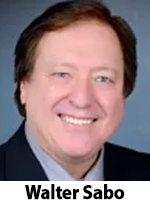
By Walter Sabo
a.k.a. Walter Sterling, Host
WPHT, Philadelphia, “Walter Sterling Every Damn Night”
And TMN syndicated, “Sterling on Sunday”
 Reviewing radio’s challenges:
— Trouble attracting and growing younger demos
— Trouble appealing to youth-oriented advertisers
— Trouble generating excitement in our culture
— Trouble owning a seat in the news media
— Trouble attracting out of college/high school employees
in sales, management on air.
The answer is: Top 40 or, if you must, CHR. The answer has always been Top 40.
The brilliant Allen Shaw, president ABC FM Radio, CEO Beasley Broadcasting, CEO/owner Centennial, said, “And Top 40 will always have an important place in radio because it plays the most popular music therefore it will always have an audience.”
In reviewing Spring Nielsens, it is hard to find a Top 40 station that is #1 6+ in any city. Consider how odd that is. Since 1955 there have been hundreds of Top 40 stations that attracted dominant shares of audience.
No, not audience: fans. Passionate fans because music is passion. New music is more passion. Cultural pebbles between the songs dropped by passionate radio stars compel even more passion.
Big contests. Big promotions. Breaking music trends. Huge voices. Pounding jingles. Prizes: Trips to see Taylor Swift in the studio – in England. A week off from school, on us! Free pizza for 50 of your friends – for a year. A new red, customized Z-93 car in your driveway on your birthday. Ed Sheeran plays your prom! A limo to school on opening day. Big Time Rush sings at your street fair.
Alex Warren writes a song for you – and performs it for you. Gift certificates for CAMEO. The Apple package… an iPhone, iPad and MacBook Air.
Media Buyer: Hop on the station yacht this summer, let’s go for a sunset party cruise. One buyer wins this custom Mustang. Wherever you go on vacation, tab’s on us.
Excited? Radio is good at contesting, better than any other medium. Excitement in thin air is what radio does… well, used to do.
Of course radio is a low choice among fresh grads, 18-24s, and media buyers. Radio stopped making the best radio, stunning, pulsing, sexy, unpredictable. We stopped rolling out the red carpet: Hot, current, daring, dangerous… Top 40.
You were drawn to radio because of Top 40. Make that.
Walter Sabo has been a C Suite action partner for companies such as SiriusXM, Hearst, Press Broadcasting, Gannett, RKO General and many other leading media outlets. His company HITVIEWS, in 2007, was the first to identify and monetize video influencers.. His nightly show “Walter Sterling Every Damn Night” is heard on WPHT, Philadelphia. His syndicated show, “Sterling On Sunday,” from Talk Media Network, airs 10:00 pm-1:00 am ET, and is now in its 10th year of success. He can be reached by email at sabowalter@gmail.com.
 Conventional industry wisdom: “If our morning star leaves, we’re dead. How could we replace them?”
 There are two broad categories of thought: Task. Creative. When in creative mode, a person innovates, imagines, plans, and solves problems. An idea bank is a bank! Money grows from the results of imagination: new products, new music, new formats, new sales strategies. Business growth depends on new!
 The drive to stream video of radio shows has always been risky. Remember your shock when you first saw one of your radio heroes? Video streaming can present a constant disconnect between the show in the listener’s head and the show on the stream. Many stations make the disconnect worse by streaming terrible video images. Combine the trauma of how a host really looks with a dreary TV show and the package cannot benefit the relationship between station and listener/viewer.
 right, two shows… one on the radio, one on the stream. Seamless and fun.
 At first, I thought it was a joke. When I realized there were serious people having serious meetings about the joke, it became both horrific and symptomatic
 Dozens of brand-new audio hardware and software companies have been launched during the past 20 years. These start-ups are usually funded by venture capital money. VC money is not invested to return a profit, it’s poured in to – pour it in. Their money is “different” than the cashflow that fuels your business. Start-up money buys time to profit.
 Right now, dozens of well-suited, over-priced, unpleasant lawyers are fighting in Hollywood over the title credit their client should receive on a movie, TV show, or book cover. Placement within the credit roll at the end of a show is a battleground of egos and legalities. Part of the process of securing proper credit is governed by multiple union rules negotiated by multiple unions and corporate dictates of corporate masters. (You don’t get to be CEO of Paramount by being a nice guy.)
 “It won’t work on FM.” Country. Country was predicted to be a failing format for the FM band. At the dawn of FM proliferation in the 1970s, the future of the band was viewed with fear and skepticism. Why wouldn’t country music work on the FM band? The conventional chatter said that “country needs to be on AM because truckers drive long distances and AM signals cover long distances. FM does not.”
 These books have helped me tell stories, prioritize programming initiatives and manage career strategies. If interested in a book the link connects to its page on Amazon.
 Serious business coaches reveal that a common trait of successful people is their ability to immediately forget their failures and to move on. Next idea. Next project. Surrounded by seas of committees, forms, rules and mediocrity, effective leaders know that just trying something, regardless of the outcome, is the WIN.
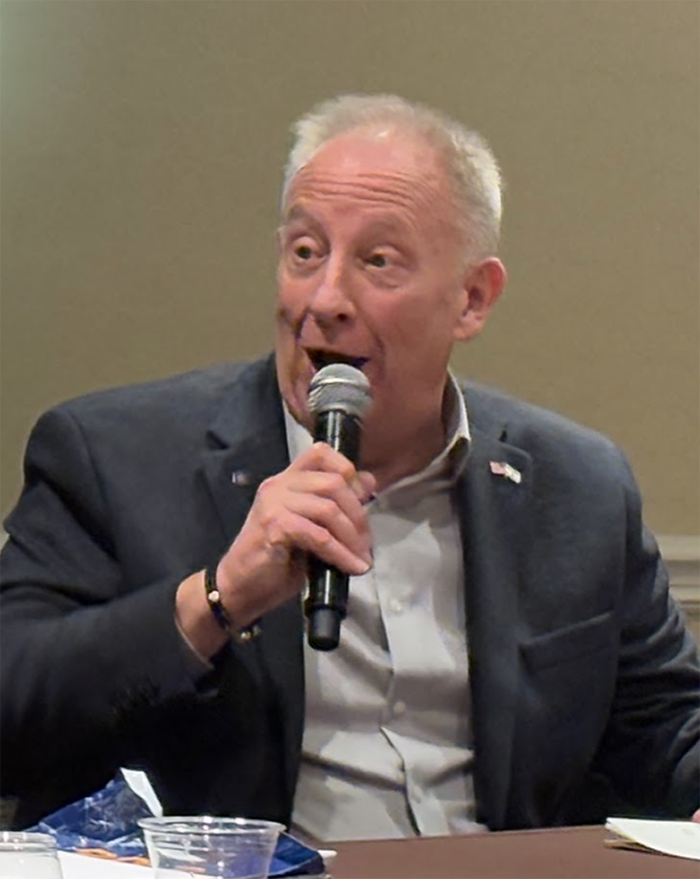
  Thank you, TALKERS for placing me on two panels at the IBSNYC conference. All student conferences have one underlying goal: Attendees want to know how to land a starter job in media. Here’s the information I shared with the eager crowd.
 Thank you, TALKERS for having me on panels at the TALKERS Generations 2025 IBSNYC conference this past Saturday (3/8). Moderator and Philadelphia talk show god Dom Giordano asked us the inevitable: “What is the future of radio?”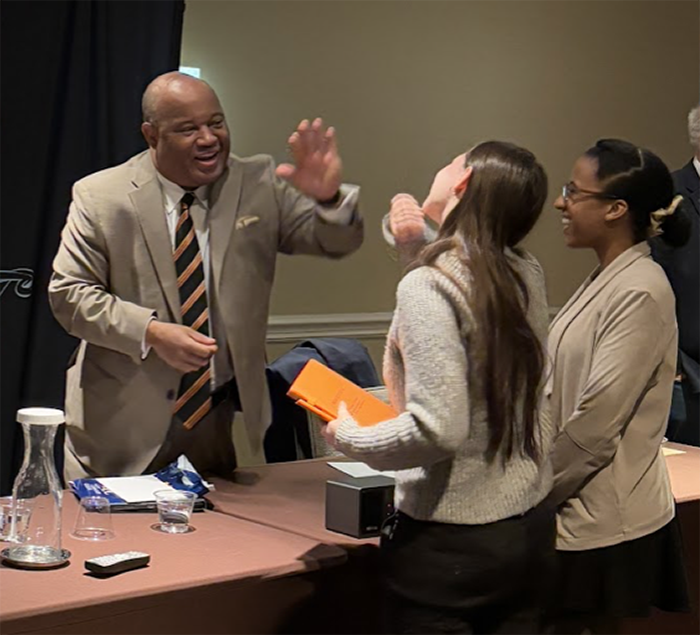
 During my tenure at NBC, once a month the division heads would meet at the behest of the CEO to report on their progress and trends in their sector. As the executive vice president of the FM division, I took a seat in that formidable group and tried to keep my remarks as brief as possible. What could I possibly say that would be more damn important than the words of the president of NBC News or the NBC Television network? In addition to NBC’s CEO, the CEO of owner RCA would often join the fun.
 Jim Gearhart is a remarkable on-air talent who was the AM drive host on New Jerey 101.5 for 20-plus years. In the 1960’s he was a star on WCBS-AM and WNEW. The illustration is an ad for his 2:00 pm to 4:00 pm show on WNBC circa 1968.
 Paired association learning is the primary strategy our brain uses to remember facts: Oh, What a Feeling, Toyota. For several years, our business has worked hard to “save” the AM band by demonstrating how useful radio is in times of Emergency: Floods, fires, hurricanes, tornadoes. Think AM and think local disaster!
 As an industry, radio has a peculiar modesty. We diminish our magic and power in relating to listeners and colleagues by using the wrong slang terminology. May I suggest new “labelling” of commonly used radio terms?
 IBS National Conference Set for 2025. The Intercollegiate Broadcasting System (IBS) has announced its annual conference will be coming back to New York City next year. Set for March 7-8, 2025, the nation’s longest running, largest and most important gathering of college radio broadcasters will be held again at the Sheraton Times Square in the heart of Manhattan. Organizers have plans in the works for activities like additional sessions and tours during the day on Thursday, March 6 as well. Early registrants can save big bucks. $109 per person for up to 10 attendees, then the rest of your staff goes for free! This offer ends October 15, (and then prices and group deals go up). TALKERS publisher Michael Harrison, who was a featured speaker at last year’s conference says, “One of the most dynamic scenes in radio today connecting the present with the future is playing out on college campuses across the nation. Professional broadcasters interested in the future of this medium and industry should attend this event. I always come away from it invigorated and inspired.” For more info on IBSNYC 2025, please
  Sterling Shines in Philly. In the first two months since the debut of “Sterling Every Damn Night” on WPHT, Philadelphia, the quirky 9:00 pm – 12:00 midnight talk show hosted by Walter M Sterling (a.k.a. legendary media consultant Walter Sabo) has been gathering jaw dropping metrics. The show has delivered five times the total share of audience 12+ since the same time last year and has proven to be formidably competitive in every key news/talk radio demo. What makes it so interesting on an industry level is its departure from the standard left-right partisan politics that dominates the news/talk format. It covers what is described as “nightly life” – such as the trouble with customer service, in-laws, schools, and romance. What one talks about with their best friends is what the show discusses. Features on the show include listener calls, plus “People of Walmart,” “True Detective Stories,” and new perspectives on current events: Sterling had the first interview with a citizen of Ukraine while bombs were going off, and a Tel Aviv bus driver sharing thoughts on America’s alleged lack of support for Israel. The show is designed for guards up all night in the building lobby, people getting done with second shift, going on third shift, cramming for finals or trying to get the baby to sleep. This is a show that deserves radio industry attention.
 Wall Street investors do not put up money for traditional radio and television stations.
 Humility means to be teachable. It’s the most important trait of great leaders and managers. For years I looked forward to focus groups to reveal the top-of-mind awareness of media among listeners. These groups always reminded us of a listener’s life priorities which never included radio listening! They taught us the correct secular language to use in promos and slogans, and what they remembered versus what we wanted them to remember.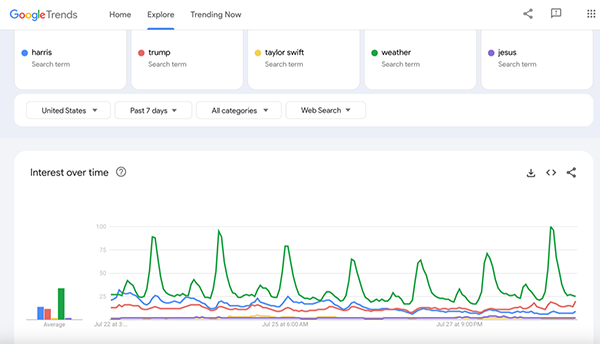
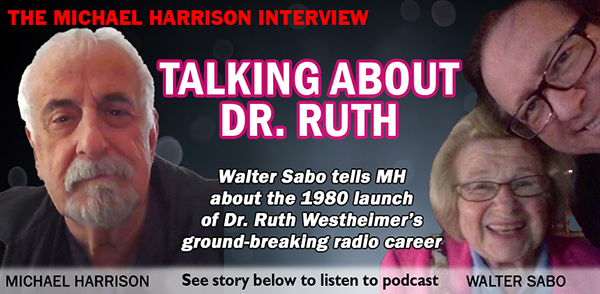
 Dr. Ruth Westheimer holds the audience share record for 18-34s in New York.
 Leonard H. Goldenson was the founder/chairman of ABC, Inc. Before Disney, before Capital Cities, ABC was… ABC and it was run by Mr. Goldenson. He launched the ABC Radio Networks, ABC Television Network, and the original ABC radio and television stations.