
SABO SEZ: Music on the Weekends Can Build Cume
By Walter Sabo
a.k.a. Walter Sterling, Host
WPHT, Philadelphia, “Walter Sterling Every Damn Night”
and TMN syndicated, “Sterling on Sunday”
 Music on the weekend provides multiple positive strategic weapons for talk stations. From launch, “New Jersey 101.5” (1,000,000+ cumer); WTKS-FM “Real Radio,” Orlando; WABC, New York; WPHT, Philadelphia; and other major market winners air music all weekend or on dayparted shows.
When launching WTKS, NJ101.5 and many others, Sabo Media researched talk stations throughout the country to find any facility that did as well or better on the weekend than during the week. Not one. KGO at the time was dominant in San Francisco, but its weekend audience share was HALF its weekday share. Then we studied music formats looking for genre that did better on the weekends than during the week. Answer: oldies and alternative rock.
Music on the weekend works:
— Music prevents an outlet from suffering the negatives of being a “talk station.”Music blows off the chronic callers and people who need the station for companionship. You know who they are.
— A carefully chosen song list targets a specific cume. People sample radio on weekends. They have fewer utilitarian needs for radio listening and can indulge in entertainment. When they hear a song they like—they lock in the frequency. The station enjoys fresh sampling. WTKS FM plays alternative rock all weekend, the result is a very young overall cume base.
— Music is good for sales. Clubs, concerts, festivals, and comic cons buy music radio. Music on the weekend keeps talk stations on those buys!
— Innovative execs replace infomercials with specialty music shows. They sell those shows to wedding venues, wedding suppliers, party stores, mobile DJs, boat and RV rentals, as well as home improvement retailers.
— Publisher Michael Harrison posits that genre and chronological segregation of songs is not as essential today as it was back in the day. 13-year-olds love the Beatles and Beach Boys. Hits are always absolute necessities but “Never My Love” by the Association, “Light My Fire” by the Doors and the #1 song today, “Ordinary,” are all hits and could be played back-to-back.
In most cities, the second highest audience daypart is midday Saturdays. Stations that recognize that fact by offering quality, local, live entertainment grow their cume.
Walter Sabo has been a C Suite action partner for companies such as SiriusXM, Hearst, Press Broadcasting, Gannett, RKO General and many other leading media outlets. His company HITVIEWS, in 2007, was the first to identify and monetize video influencers.. His nightly show “Walter Sterling Every Damn Night” is heard on WPHT, Philadelphia. His syndicated show, “Sterling On Sunday,” from Talk Media Network, airs 10:00 pm-1:00 am ET, and is now in its 10th year of success. He can be reached by email at sabowalter@gmail.com.

 made last year’s mingling of student and professional broadcasters such a resounding success. The dates are set for Friday, February 20 and Saturday, February 21. TALKERS founder Michael Harrison states, “There are exciting things happening at the radio stations and communication departments of high school, college, and university campuses across America. These institutions and creative outposts embody a spirit emanating from its practitioners as well as its audiences that bode well for the future of general radio, talk media and digital communications. This tremendous source of talent, ideas and energy has been burgeoning right under the noses of our professional industry for years. It’s time to harness that obvious synergy at this pivotal juncture.” More details including agenda, registration, hotel and sponsorship information will be posted in TALKERS in the coming weeks. Save the dates!
 House lawn press conference sparked a wave of on-air and online conversations about the state of the media and appropriate use of the English language in the rapidly changing digital era. TALKERS publisher Michael Harrison appeared as a guest this morning (6/25) on the highly popular Gene Valicenti morning drive show on WPRO-AM, Providence sharing his take on the matter including legal and cultural aspects of whether to bleep or “let it fly.”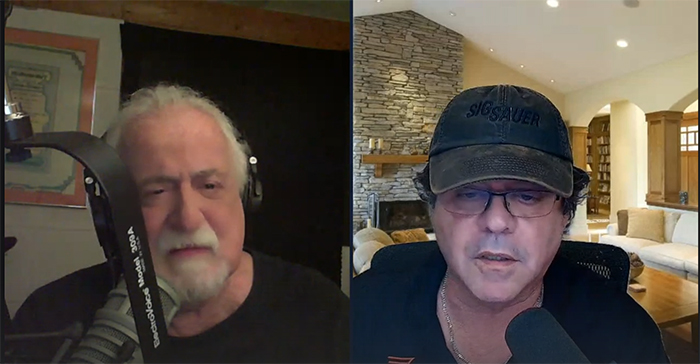
 In a ruling that should catch the attention of every talk host and media creator dabbling in AI, a Georgia court has dismissed “Armed American Radio” syndicated host Mark Walters’ defamation lawsuit against OpenAI. The case revolved around a disturbing but increasingly common glitch: a chatbot “hallucinating” canonically false but believable information.
 TALKERS publisher Michael Harrison introduced the term in the 1990s, inviting us to think-beyond the real-time audio we were sending up those towers. What he described seemed conceptual, even futuristic, back then, when we were still logging-onto AOL via dial-up (screech).
 Music radio’s competitors were vinyl, then tape, then CDs – before smartphone streaming and satellite radio offered more portability and variety. And before consolidation, broadcasters were under less of the revenue pressure that now commercializes many stations beyond listeners’ tolerance.
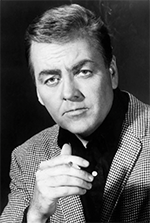 (pictured here) that aired on the program yesterday (3/13). TALKERS publisher Michael Harrison was among those interviewed for the eight-minute segment called Radio Diaries. Pyne began his career as a disc jockey but after injecting political commentary into his show was encouraged to do more talking and that eventually evolved into the Joe Pyne radio show that the NBC Radio Network put into syndication in 1966. Pyne enjoyed bringing controversial guests – including “hippies, women’s libbers, Scientologists, swingers, a snake charmer, members of the Ku Klux Klan and the John Birch Society.” He then segued to television in Los Angeles. Harrison is quoted in the segment saying, “There were a lot of people that didn’t like Pyne, but they watched him anyway because they thought it was — amusing? Entertaining? Sensational? Different? You know, not boring.” Photo: Everett Collection

 International Day of the United Nations, February 13 became World Radio Day (WRD). Each year WRD focuses on a specific theme involving radio that is timely, and important. This year the theme is “Radio and Climate Change.” UNESCO points out: Radio contributes to the achievement of its international objectives by supporting populations through climate disasters such as tropical storms and floods. It helps with the dissemination of fact-based information, listeners’ voices, and dedicated radio shows.
  pm on Saturday, March 8 in the heart of the iconic IBS gathering. It will feature an array of six sessions with 16+ luminary industry speakers (to be named shortly) including a keynote address, fireside chat, and four panel discussions that will tackle such topics as “Launching and Managing a Career in a Changing Media Industry,” “Old School, New School, Next School: Learning from Each Other,” “Radio’s Place in a Digital World,” “Finding and Delivering Truth in an Age of Misinformation,” and much more. TALKERS will also serve as the Presenting Sponsor of the entire IBSNYC 2025 event.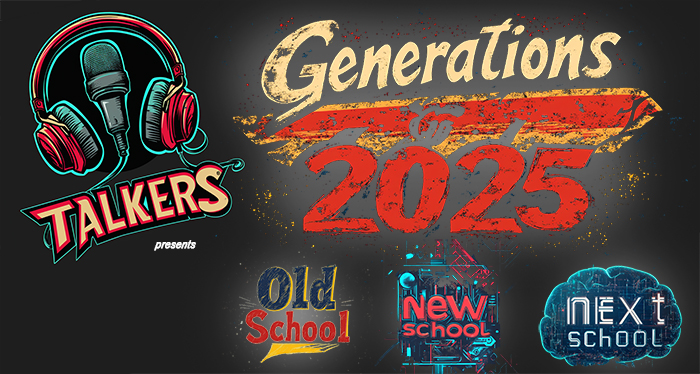
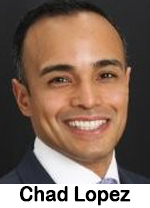 Harrison as “one of the most dynamic and effective radio managers in America” – has served as president of WABC Radio, Red Apple Media Group, and the Red Apple Audio Network since the iconic AM station was acquired and expanded five years ago by New York-based billionaire businessman / talk show host / philanthropist John Catsimatidis. Since then, the station and its associated media group have shown explosive growth that has grabbed the attention and respect of the national broadcasting industry. Prior to joining Red Apple, Lopez had already achieved notable recognition for his leadership as VP/MM of Cumulus New York and before that as GSM of CBS Radio New York. The Fireside Chat will be one of the highlights of the innovative four-hour TALKERS event on Saturday, March 8 that will be co-located with the national Intercollegiate Broadcasting System (IBS) conference March 7-8 at the Sheraton New York Times Square hotel. More speakers will be announced next week. For more information about the event including discount conference registration and room registrations, please see the story immediately below.
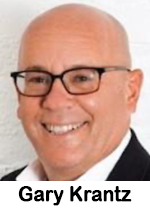 acquisition of AMFM, took on an EVP role at Premiere Networks. He was the president of the fledgling liberal talk radio company Air America and joined Westwood One after Air America shut down in 2006. TALKERS publisher Michael Harrison states, “This is a devastating loss to the radio industry. I had the privilege of working with Gary all the way back to my music radio days when he was a young executive at the old MJI Broadcasting with major industry players like Julie Talbott and Josh Feigenbaum in the early days of our careers. He has subsequently worn a number of key management and entrepreneurial hats in the business – all reflecting his dedication to professionalism and quality. He was very well liked and respected by broadcasters on both sides of the Atlantic. He will be missed.” A service will be held on January 26, 2025 at Riverside Memorial Chapel at 180 West 76th Street, New York, NY 10023. In lieu of flowers, the family requests donations be made to the American Foundation for Suicide Prevention in Gary Krantz’s memory.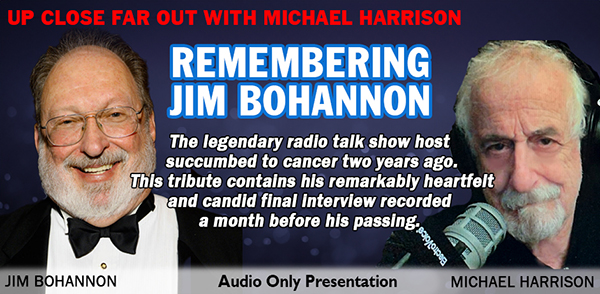
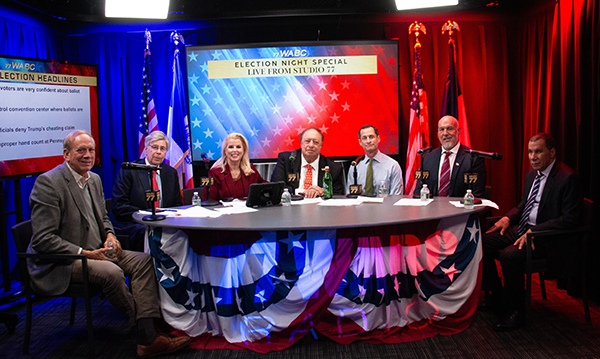
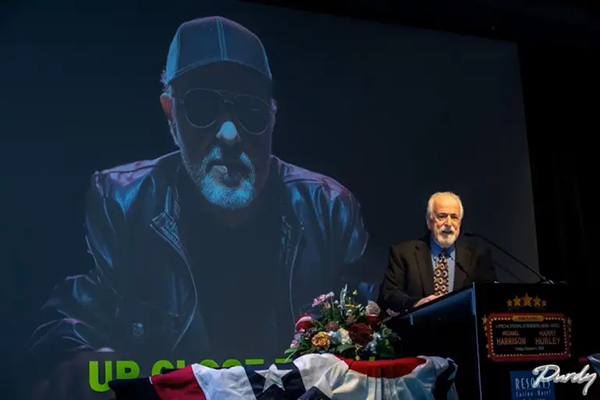
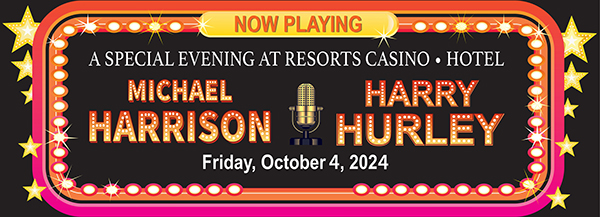
 philanthropist Harry Hurley, has raised more than $1.4 million for worthy causes across New Jersey and beyond. It has become one of the most important annual civic events in the Garden State drawing 270+ guests including government officials, media representatives and community-minded business leaders. The gala will be at Resorts Casino Hotel in Atlantic City. Harrison says, “This is a huge honor and I’m looking forward to addressing this distinguished event with observations about the media’s position at the crossroads between politics, journalism and changing social norms.” Hurley tells TALKERS, “Our special event will be taking place four weeks before one of the most consequential national elections in American history… arguably, the most important election since the Civil War era. It deserves to have a keynote speaker as even-handed and eloquent as Michael Harrison.”
 In the opinion of TALKERS publisher Michael Harrison, we are entering an era in which it is possible – even likely – for robot voices generated by artificial intelligence to replace at least some human talk show hosts, especially in the wake of relentless corporate cost-cutting by radio’s largest companies. On the music radio side, the process of “voice tracking,” although initially controversial, has become a widely employed budget-tightening process. However, voice tracking still employs organic talent to generate the verbal content.
 AI, on the other hand, bypasses the human element completely. In a guest appearance yesterday (8/22) on the Manny Munoz mid-morning show on WIOD, Miami, in which the subject of AI was being discussed, Harrison said, “AI is upping the bar. If talk show hosts don’t stay on their game and avoid relying too heavily on the talking points – if they are not creative thinkers and leaders – they can easily be replaced by computer operators.” Harrison continued, “It won’t be too long from now – actually, it is already possible – that two robots could be having a plausible conversation if both have been fed all the talking points.” Harrison explained, “Each robot will have instant access to all the existent talking points at the speed of light. Robots are already beating human experts at Jeopardy or chess. The only thing a robot can’t do – at least for now – is to be creative outside the realm of what already exists in cyberspace. That’s the challenge facing anyone who wants to be a live traditional radio talk show host in this coming brave new world.” Harrison’s appearance on WIOD was part of his ongoing talk radio “Obsolete Slobs” tour in which he’s been promoting the Gunhill Road music video “Artificial Intelligence (No Robots Were Injured in the Production of this Song” (www.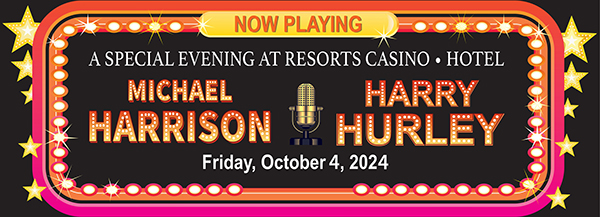
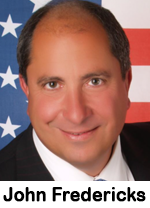 news/talk stations plus the John Fredericks Radio Network. He adds, “This undertaking was never authorized, sanctioned, or endorsed by President Trump or his campaign. Despite several very direct public communications disavowing any affiliation by Trump campaign senior staff, the fake news continued to propagate phony stories, which The Heritage Foundation and their Project 2025 leaders were willing and happy to substantiate. Sources say President Trump made the decision to shut it down himself. Good riddance to yet another grift charade using Trump to raise money.” TALKERS publisher Michael Harrison commented on Fredericks’ statement saying, “It has been disturbing watching the once-honored think tank known for its even-handed academic fastidiousness devolve into what is now perceived as just another fund-raising propaganda machine in the mud-slinging political wars. This is the kind of credibility squandering that damages the true American conservative moment and people’s confidence in all political organizations.”