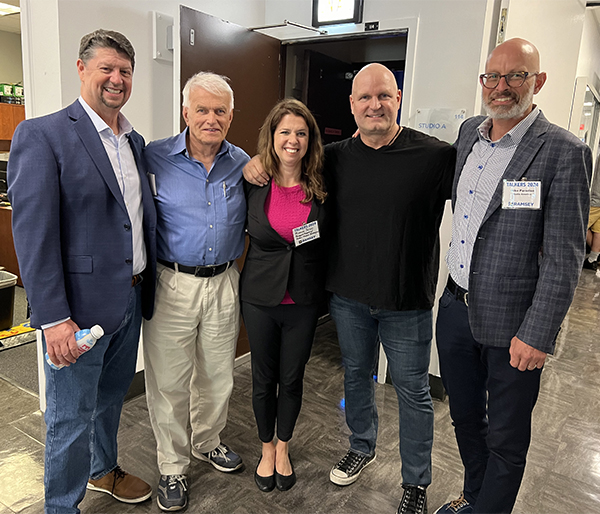
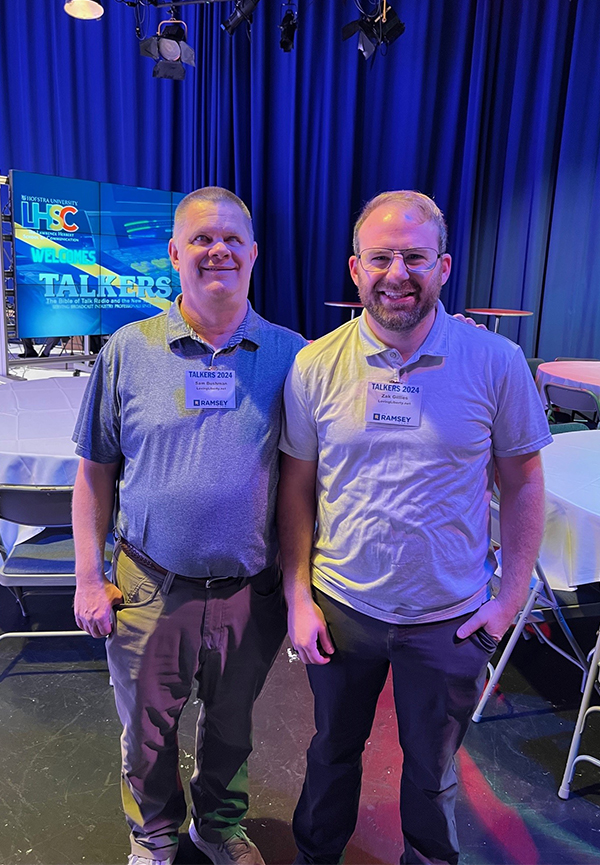
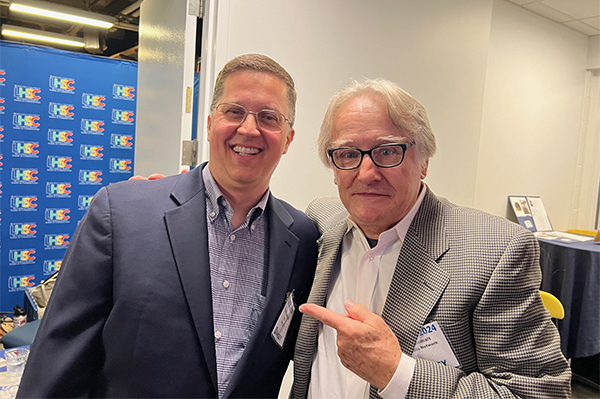
The 27th annual installment of the talk media industry’s longest running, and most important national event took place this past Friday (6/7) at Hofstra University on Long Island. TALKERS 2024: Radio and Beyond was an advance sellout. The power-packed, one-day agenda featured a roster of more than 60 speakers from all ends of the talk radio and related talk media industries including talent, station owners, CEOs, programmers, technical experts, journalists, syndicators, and a wide variety of visionaries. The annual talk media industry tradition was presented by TALKERS in association with the prestigious university’s multi-award-winning station WRHU Radio and Hofstra’s Lawrence Herbert School of Communication. Key discussions included “Gaining Traction in a Noisy World,” “The Case for AM Radio,” “Generating News/Talk Revenue in the Digital Era,” “The State of Sports Talk Radio,” “The Brave New World of Technological and Generational Change,” “Programming News/Talk Radio,” “Perspectives on Hosting Television Talk,” “Philanthropy and Community Service,” “The Art of Story Telling,” “Talk Radio Programming Opportunities Beyond Politics,” “Meeting the Challenges of Being a Talk Talent,” “The Big Picture of Radio’s Role in a Rapidly Changing World,” and “The State of the First Amendment” among others. As the volumes of data generated by this gathering are sorted out, TALKERS will provide in-depth, detailed coverage of the conference in the days and weeks ahead including posting videos of its key segments. See a selection of photos from TALKERS 2024 Radio and Beyond below.
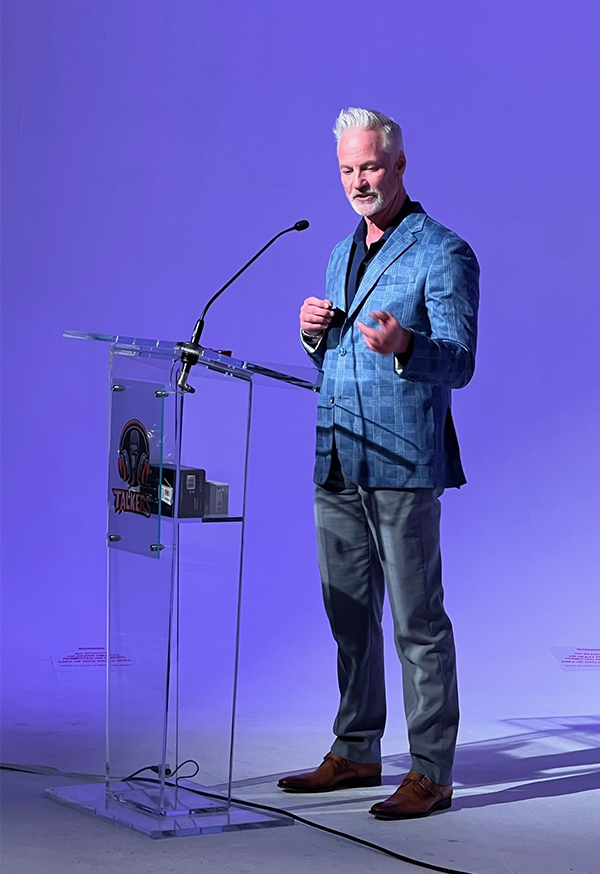
KIRO Newsradio 97.3 FM, Seattle afternoon talk show host John Curley was the 2024 recipient of the TALKERS Humanitarian of the Year award (the Sharon L. Harrison Memorial Award for Community Service). He is pictured delivering his acceptance speech discussing the importance of using your platform for good causes.
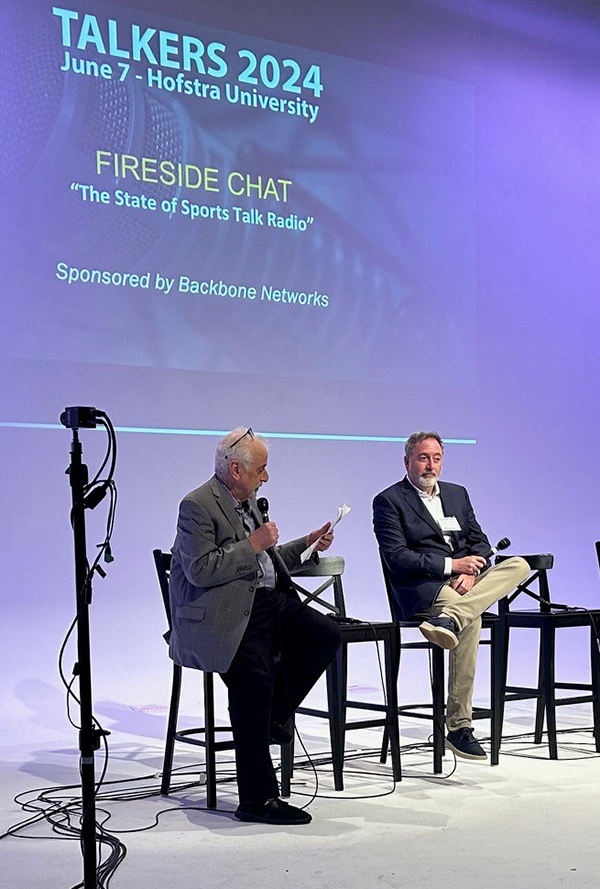
Michael Harrison (l) interviewed Fred Toucher (r), morning show co-host of WBZ-FM 98.5 The Sports Hub, Boston in a fireside chat titled, “The State of Sports Talk Radio.” The discussion included comparisons between sports talk and news/talk radio, the benefit of sports talk hosts operating in on-air teams, the relationship sports talk hosts have with home teams and their ardent fans, dealing with harsh criticism on social media, the impact of gambling on sports talk radio, the challenges hosts are facing in covering women’s basketball and more.
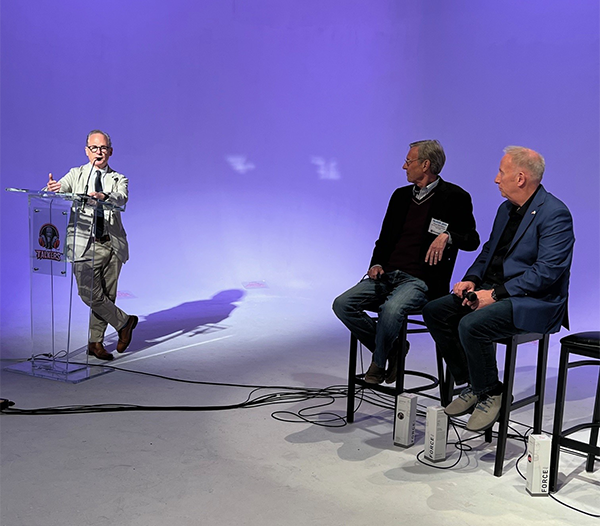
One of the many highlights of the conference was a blessedly civil “Great Debate” between WYD Media syndicated host Thom Hartmann (c) representing the left and Salem Radio Networks host Mike Gallagher (r) representing the right. The session was moderated by Lee Harris (standing l), director of integrated operations, NewsNation/WGN Chicago.
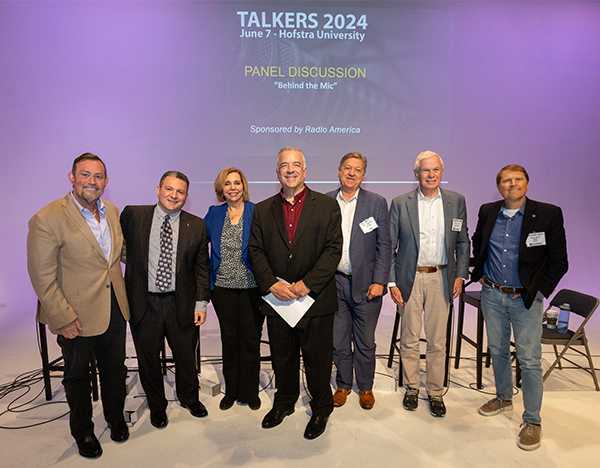
The panel session titled, “Behind the Mic,” delved into the issues and challenges faced today by talk radio talent. Participants included (l-r) Jeff Katz, WRVA, Richmond; Frank Morano, WABC, New York/Red Apple Media; Martha Zoller, WDUN, Athens, GA; Moderator Joe “Pags” Pagliarulo, Compass Media Networks; Dom Giordano, WPHT, Philadelphia; Howie Carr, Howie Carr Radio Network; and Chris Krok, WBAP, Dallas.


 stations mostly for classic hits and adult contemporary music formats. Prior to syndication, Kent worked on the air and in programming at legendary Top 40 stations including WLS, Chicago; KLIF & KFJZ Dallas-Ft Worth; WIBG Philadelphia and more. On the passing of Tom Kent, TALKERS founder Michael Harrison states, “He was a quintessential practitioner of one of America’s great forms of audio art – top 40 radio. The disc jockey, in that now almost completely extinct genre, was a uniquely specialized vocal performer akin to being a singer or musical instrument deftly inserted within the hyper-dynamic backdrop of a symphony known as a radio format. Art Vuolo’s video captures not only the superb talent possessed by Kent in executing this amazing audio choreography – but amply displays his passion for excellence and behind-the-scenes pride. When Kent seamlessly hits the posts on driving rock intros of songs with which he is intimately familiar and pumps his fist with glee when pulling it off, it unleashes an adrenaline rush similar to a pro basketball star landing a slam dunk and swinging that extra second from the rim.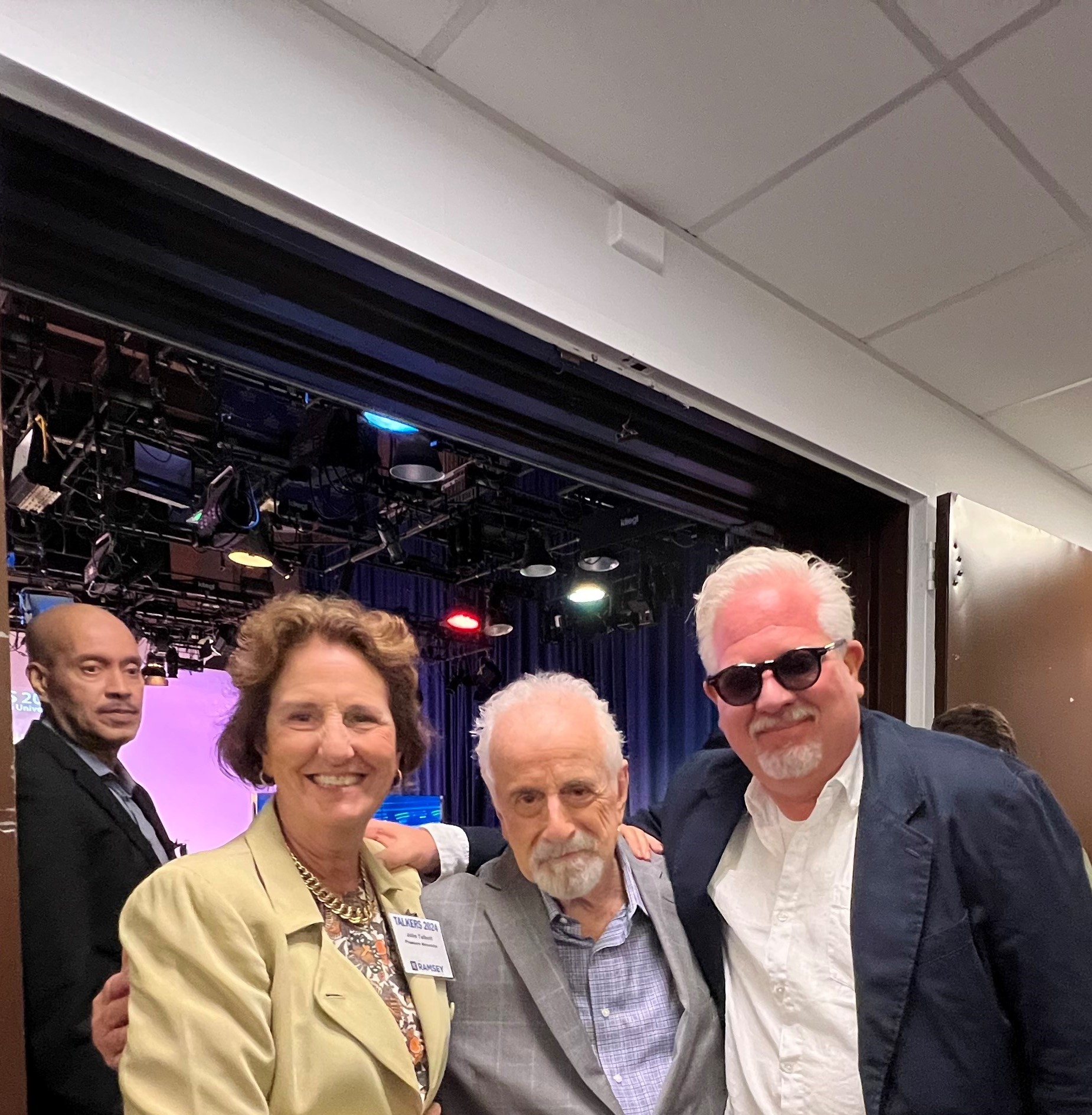
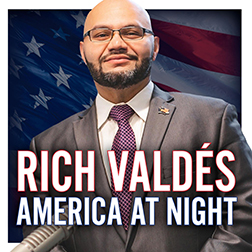 be able to alter the course of established radio stations and the marketplace of ideas before the 2024 election or even soon thereafter. Harrison told “America at Night” host Rich Valdés last night (5/22) that radio is far too idiosyncratic an industry – already run by too many people who don’t understand how it really operates – for someone (who also doesn’t really have first-hand experience in the field) to just step in and make drastic alterations to entrenched stations, formats, audiences and sponsors just to make a political statement. Harrison states, “There are more
  expedient uses of his money if that is his main purpose. After all, not all Audacy stations are conservative news/talkers… many are music, sports and a variety of formats. How inefficient such a move would be!” Harrison went on to say that radio is still an extremely powerful and potentially lucrative medium if only its present owners and operators believed in it and invested in its programming and marketing. He encouraged radio broadcasters to understand and believe in the “esthetic of ‘radio’ and not be so anxious to bail out into the utilitarian term ‘audio.’” Harrison and Valdés tied the discussion into the current news about the AM for Every Vehicle Act currently making its way through Congress stating that radio is still a lifeline for service to the community as a place for information, education, and entertainment and that eliminating it from automobile dashboards would be about “five to 10 years premature.”
  Because you can? Because you aren’t doing AM/FM radio? Because you are on radio, but can’t-do-there what you can-do podcasting? Because you are making money podcasting?
 defaming two Georgia election workers, and they were accusing him of make new false accusations against them.
  talking about the 2020 election for three years and was never made aware that election talk was off limits. In The New York Times story Giuliani states that WABC’s policies on this topic are “a clear violation of free speech” to which TALKERS founder Michael Harrison comments, “As a lawyer, former attorney
 general and former mayor, Giuliani should know better than to muddy the waters about ‘free speech’ by citing it and distorting it for his own defense in this manner. The letter of the law regarding the First Amendment protects the rights and responsibilities of Catsimatidis as the licensee and platform owner in this situation. And as far as the spirit of the law as indicated by the general term ‘free speech’ is concerned, the understanding between these two men as to what Giuliani can discuss on WABC is completely subjective and ultimately based on what the licensee determines at any given moment to be in the best interest of the platform, its listeners and most importantly, the truth.”
 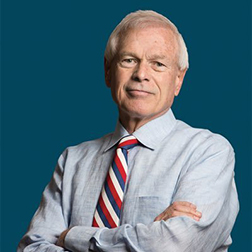 region that carry Carr’s independently syndicated afternoon drive talk show. He is an inductee in the Radio Hall of Fame. With roots in investigative print journalism, Carr is the New York Times best-selling author of The Brothers Bulger and Hitman, in addition to several other Boston organized-crime books and two novels. He has remained in newspaper work that goes back prior to his radio career as an active columnist for the Boston Herald and has received a National Magazine Award for his work with Boston Magazine. Boston organized-crime boss Whitey Bulger was so infuriated by Carr’s groundbreaking reporting that he once put out a murder contract on Carr – a story detailed on “60 Minutes.” At his 2013 trial on murder and racketeering charges, Bulger tried to have Carr banned from the courtroom by calling him as a defense witness. Before he was brutally murdered in a gangland hit, the crime czar still said his greatest regret was not murdering Carr when he had the chance. Carr once taught a course at Harvard, where he had to cross a picket line against himself to get to his class. In making the announcement, TALKERS founder Michael Harrison stated, “Howie Carr is the real deal – the best of both the old and new schools in media. He was practicing ‘cross-platform’ journalism and commentary long before it became the digital-era norm. He’s got ink in his veins and RF in his brains. His impact in the Northeast has been so strong for such a long time that if the six New England States were to consolidate as one, he would possibly be its first governor.” Carr will be one of 60 industry leaders speaking at TALKERS 2024: Radio and Beyond. For more information, see story below.
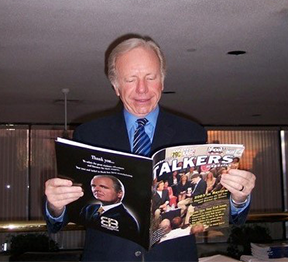 ideology on an issue-by-issue basis – although infuriating his fellow Democrats on many an occasion. After leaving the Senate in 2012, he withdrew somewhat from the political spotlight to serve as an attorney in private practice and a college professor but remained outspoken on issues of politics and public policy. His most recent activities included founding the No Labels Group which condemns what Lieberman described as the “partisan polarization of our politics which prevents us from making the principled compromises on which progress in a democracy depends.” Lieberman said, “We need bipartisan leadership to break the gridlock in Washington that will unleash all the potential that is in the American people.” TALKERS publisher Michael Harrison had the opportunity to get to know Joe Lieberman very well while serving as a talk show host on Connecticut’s leading talk station, WTIC, Hartford in the early 1990s. Harrison states, “Joe Lieberman was always available at a moment’s notice to appear on the air with me during those golden days of talk radio’s modern era and it was apparent to me – as well as talk show hosts across the nation – that he wasn’t your ‘run of the mill politician’ who put party over country and avoided answering the tough questions. There was a profound honesty in his words and tone that inspired confidence, among even those who disagreed with him, that they were talking to a very solid, principles-based man.” Harrison continues, “Talk show hosts on both sides of the political divide loved him for his warmth, candor and accessibility.” Harrison concludes, “Al Gore would have been better served during his run for the presidency to have let Joe have freer reign over his media availability during the campaign, something the VP failed to do. Every request for Joe to be a guest – many of which were squashed – had to go through the Gore campaign which turned off a lot of Joe’s friends and admirers in both radio camps.”

 questions as it did answers about what young broadcasters entering professional media today should be prepared for in navigating the unpredictably turbulent waters of the next decade and beyond. Among the sweeping panorama of topics covered in his address, Harrison told the students, “When looking to the future, don’t be too sure that current events will follow a predictable script. There are always ‘black swan events’ that change the storyline and our expectations in an instant. Plus, there are multiple outcomes, possibilities, and forks in the road for almost every situation.” Regarding the current focus on artificial intelligence, Harrison advised, “All technology is a double-edged sword and AI will prove to be a particularly consequential one with both positive and negative implications. However, don’t fall into the age-old trap of thinking that productions and performances created or enhanced by new technology are necessarily ‘artificial’ or ‘fake.’ New tools not only create new art, they have an irrepressible influence on giving rise to new culture. The immediate years ahead are likely going to provide us with the challenging question of ‘what does it mean to be truly human?’” Harrison concluded, “As young broadcasting students in 2024 looking to make a difference in the world, be prepared to face the challenge of following your dreams, ideals and inspiration while confronting the harsh realities of making a living in a stressed environment of relentless change. We live our lives in this business at the dangerous intersection between art and commerce.”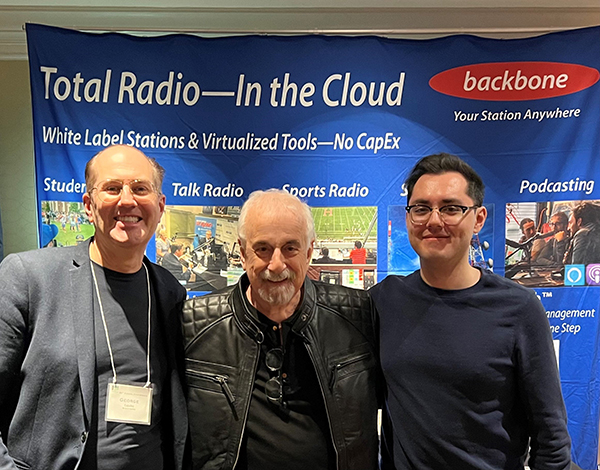
 -2) at the Sheraton Times Square hotel in New York City. Harrison’s address titled, “The Next 10 Years of Media and Popular Culture is…?,” is scheduled to take place between 11:00 am and 12:00 noon on Saturday (3/2). Harrison states, “I have always believed that the future of broadcasting, for better or worse, brews on the campuses of America and this observation is truer now than ever before. I am very excited to bring an array of provocative and pertinent observations, predictions and possibilities, born of my perspective as a future-minded immigrant from the 20th century to such a vital and dynamic group of young communicators.”