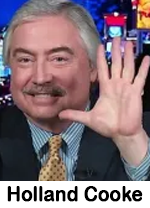
By Holland Cooke
Consultant
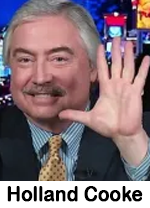 Companies hire consultants to avoid experiments. We improve results by customizing and implementing Best Practices proven elsewhere. So, I’m about to break a rule, because advertisers in a super-opportune category have become a noisy blur.
Personal Injury: The gift that keeps-on-giving
Legal representation of purported victims of fender benders, slip-and-fall accidents, and other “injuries caused by the negligent, careless, or reckless actions of others” is an industry in which supply exceeds demand. Thus, all the outdoor and TV advertising. And too little radio.
In the Providence, RI TV market I watch at home, this category stands shoulder-to-shoulder with look-alike automotive spots in sheer dollars over-spent. And their message is the same on billboards:
— The attorney’s head shot (also a real estate agent cliché); and
— 6-figure settlements touted.
Because they’re all shouting the same thing, they resort to tactics:
— Attorney Rob Levine is “The Heavy Hitter,” and runs enough TV that viewers in Southern New England can sing the jingle: “The Heavy Hitter is the one for you. Call one-eight-hundred-law-one-two-two-two.” To his credit, it’s a different phone number than his web site offers, so he can track TV results.
— Easier to remember: Bottaro Law: 777-7777.
Watching local Las Vegas TV while at CES recently was a deep dive into Law advertising. The pitch from several I saw was we charge less, like a shameless radio competitor dropping-trou’ to get the entire buy.
If we don’t win, you don’t pay
“What are your rights? What is your case worth?” Possibly a cash amount divisible-by-3, if that’s the attorney’s contingency.
Those expensive nationally syndicated TV spots (customized for the local firm) depict fearful insurance executives eager to settle. And the attorney may threaten that, “if they don’t, we’ll beat ‘em in court.” Baloney, that’s the last thing the lawyer wants. Too time-consuming and risking a losing verdict.

Like radio commercials, attorneys’ inventory is perishable
— We can’t sell yesterday’s empty spot avail; and lawyers’ closing opportunity is “B.I.S.,” Butts In Seats for that free, no-obligation consultation, in-person, where the seller goes for the close.
— If nobody was sitting in that chair today (“intake”), no sale.
— And that’s how attorneys are missing a bet not using radio.
“The lawyer is in, the meter is off”
That’s the proposition when they field listener calls in brokered weekend talk radio shows.
— DONE RIGHT, these shows can run-rings-around TV and outdoor ROI.
— Forgive caps lock in that last sentence, but it’s a crying shame how – at too many stations – the audition for pay-for-play weekend talkers is the-check-didn’t-bounce. One of the things I do for client stations is coach-up weekend warriors — in hosting fundamentals that are second-nature to us — but not to non-career broadcasters. Results = renewals. Otherwise brokered hosts churn, a management distraction, and upsetting listening habits.
— Occasionally, in markets where I don’t even have a client station, I’m working with lawyers (and real estate agents, financial advisors, foodies, and other ask-the-expert hosts), because nobody at the station is doing airchecks with them.
— No billboard or tacky TV spot can humanize the attorney – and demonstrate the comforting counsel – like eavesdropping on a conversation with a caller’s relatable situation.
Think “sales funnel”
We know how to make the phone ring, specific dance steps. The more callers, the better.
— When lines are full, screeners can choose callers whose dilemma is in the attorney’s lane. If, for instance, the host specializes in Personal Injury (or “Family Law,” translation divorce; or another specialty), calls about real estate transactions are off-topic.
— Do this right, and – before the host can offer – callers will often ask “May I call you in the office on Monday?”
Admittedly, this is an experiment…
…because I am frustrated witnessing all this noisy me-too advertising.
Personal Injury cases are he-said-she-said. So try this, and tell me if it works.
— Sales 101: That first call is Needs Assessment, right? Know the prospect’s pain.
— Yet too many radio reps resemble Herb Tarlek, telling the station’s story. Amoeba-shaped coverage maps and ratings rankers and rate cards all look alike…like Law firm marketing.
— I’m telling any attorney willing to listen to make four words the centerpiece of the marketing message, and they’re the same four words that turn callers into clients for weekend talkers: “Tell me what happened.”
The Free Prize Inside: Podcasts
Lifting weekend calls to repurpose as on-demand audio is digital marketing value-added.
Holland Cooke (HollandCooke.com) is a consultant working at the intersection of broadcasting and the Internet. He is the author of “Multiply Your Podcast Subscribers, Without Buying Clicks,” available from Talkers books; and “Spot-On: Commercial Copy Points That Earned The Benjamins,” a FREE download; and the E-book and FREE on-air radio features “Inflation Hacks: Save Those Benjamins.” Follow HC on Twitter @HollandCooke


 Among Black monthly podcast listeners, 55% are women, but among Black weekly podcast listeners 52% are men; 2) Many Black monthly podcast listeners have begun listening to podcasts recently: 48% have been listening to podcasts less than a year; 27% have been listening less than six months; 3) 34% of Black monthly podcast listeners have stopped listening to a podcast they used to listen to regularly, but creators can address some of the reasons why: 24% of those who stopped listening said it was because the show stopped producing new episodes, 20% said they forgot about the show between seasons, 12% said the host offended them; and 4) Black weekly podcast listeners are more likely to engage with podcast advertisers than the overall U.S. weekly podcast listener: After hearing an ad on a podcast they regularly listen to, 61% of Black weekly podcast listeners (compared with 49% of U.S. weekly podcast listeners) recommended a product to a friend or family member; 68% of Black weekly podcast listeners (compared with 63% of U.S. weekly podcast listeners) gathered more information about a company or product; 52% of Black weekly podcast listeners (compared with 44% of U.S. weekly podcast listeners) purchased a product or service. Find out more about the report here.
  audience is far more passionate and engaged. This distinction has a significant impact on advertising effectiveness.” Highlights of the analysis include: 1) NCAA Basketball AM/FM radio listeners are a desirable group of consumers: They are more likely to work full time and are younger than the average American; 2) The NCAA March Madness AM/FM radio audience is highly engaged with sports: MRI Simmons finds NCAA March Madness AM/FM radio listeners attend many sporting events, seek out sports information on their phones, and are likely to play fantasy sports. The high levels of engagement translate into greater advertising effectiveness; and 3) NCAA March Madness AM/FM radio listeners are likely to make purchases across key consumer categories: AM/FM radio delivers consumers who are likely to buy a new or used vehicle, switch insurance providers, move residence, and refinance their mortgage.
  broadcasting remotely from a business center in a New Orleans hotel in which two Black people were sitting behind him. Referencing a previous trip to New Orleans in which Felger’s vehicle was stolen, Massarotti asked Felger if the two could hear him and when Felger replied that they couldn’t, he said, “OK, so I would be careful if I were you because the last time you were around a couple of guys like that, they stole your car.” During his apology on Monday, Massarotti said he gets why the joke, intended to be poking fun at Felger, was wrong. “It didn’t come off that way. It came off as something far broader and ignorant, and I’m regretful of that… I sincerely apologize, and I will do my best to make sure it never happens again.”
 says of their decision in 2021 to go with Outkick, “The timing was perfect, but we also had a chance to grow what we were already doing. We didn’t have to leave Nashville. We own our intellectual property; you don’t have that with radio companies. We’re able to form our own show company, so to speak, and we’re part of the much larger grand scheme of Clay’s vision.” Gallagher’s piece looks at the digital frontier the trio began exploring with Outkick and chronicles their return to the Nashville airwaves.
  It looks like the podcast business is hitting those ever-present speedbumps.
 Weekend ask-the-expert shows can be a powerful marketing tool.
 appeared on the “Parkins & Spiegel” show. Olivia Finestead is the mother of Clevinger’s 10-month-old who went on the radio show to discuss the allegations against Clevinger, a move he called “really trashy of them. That was some lowlife material right there.” He was also quoted saying, “My lawyers are paying attention. My lawyers are getting in contact with them, and they probably already sent a cease-and-desist for defamation. So [they] just got themselves involved in this, too, so good for them.”
  agreement to eliminate the burden and expense of further litigation.” It also says, “The plaintiffs believe that all claims ‘have merit,’ but they decided to settle due to ‘the inherent risks, difficulties and delays in complex ERISA litigation such as this.’” The settlement requires court approval. The Pensions & Investments report says, “The plaintiffs sued in December 2022, alleging that the defendants ‘did not try to reduce the plan’s expenses or exercise appropriate judgment to scrutinize each investment option that was offered in the plan to ensure it was prudent.’…The Cumulus Media 401(k) Plan, Atlanta, had $260 million in assets as of Dec. 31, 2021, according to the company’s most recent Form 5500 filing.”
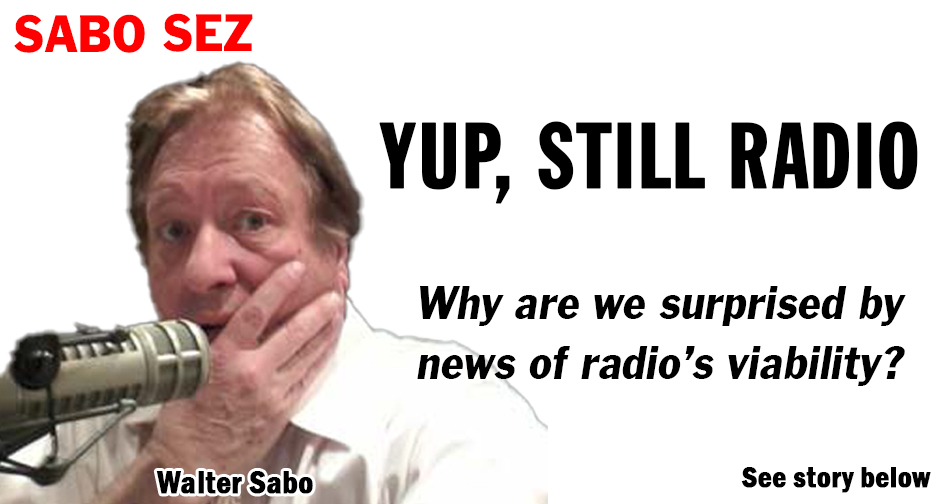
  Surprisingly, my company Sabo Media has bought commercial time on radio stations. It’s a surprise because brands have come to us because the word “media” is in the name. Some brands think Sabo Media is a media buying company. Hysterical.
 stations. In the bigger picture, Fischer writes, “Today, no one radio host commands the same level of power and influence that Limbaugh did, but a number of new voices are emerging — blending the reach of traditional and digital platforms — and collectively proving to be more powerful in shaping conservative opinion for younger audiences.” TALKERS magazine publisher Michael Harrison is quoted in the piece saying, “The world is changing and there are questions as to how Limbaugh, had he lived and remained healthy — based upon his mindset and his approach to the business — would have remained as pertinent as he was. He was not as flexible when it came to social media and some of the other forms that it takes right now to be a media presence as opposed to just a radio presence.”
  sold-out schedule, and is part of an emerging genre of progressive hosts seen regularly by loyal political talk media consumers. Only 39, Pakman has been a practitioner of progressive talk media since his early 20s. “The David Pakman Show” started in August 2005 as a community radio program called “Midweek Politics” in the basement of WXOJ’s studio in Northampton, Massachusetts. Today, it is a daily internationally syndicated politics and news talk show airing on radio, television, and the internet, as well as on Free Speech TV via DirecTV and DISH Network. Pakman is a naturalized citizen of the United States having moved here with his family at the age of five from Buenos Aires, Argentina. Harrison and Pakman discuss the rewards and challenges – financially and otherwise – of multi-platform digital broadcasting.
 “while AM/FM radio represented only 16% of the media budgets, AM/FM radio generated 25% of site and search traffic.” Further, it discovered that “AM/FM radio delivered +58% greater site traffic than its share of spend. In contrast, TV delivered -11% less conversion lift than its share of the budget.” A Nielsen sales effect study of a campaign for a major retailer matched Portable People Meter panel data with credit card data to reveal how TV and AM/FM radio impacted sales. The AM/FM radio-only segment, those consumers only reached by the AM/FM radio campaign, had 3 times the sales lift of the consumers reached by the TV ads. Consumers only exposed to the TV ads generated a +4.6% sales increase. Those who saw both the TV ads and the AM/FM radio ads had a +4.8% sales lift. The segment only exposed to the AM/FM radio ads had an outsized +13.4% increase in sales.
  I asked ChatGPT, “What IS ChatGPT?”
 increases in advertising awareness, brand relevance, brand trust, and brand consideration.” Other key findings include: 1) AM/FM radio increases the efficiency of automotive media plans: Colourtext and Radiocentre compared AM/FM radio’s average share of total media spend to the increase in advertising awareness, brand relevance, and brand trust generated by AM/FM radio campaigns. In each case, the auto brand lift is four to 11 times greater than AM/FM radio’s share of media spend; 2) the best performing auto campaigns place an emphasis on creative consistency; 3) AM/FM radio creates future demand for automotive brands; 4) Nielsen Scarborough: American auto intenders clock a lot of miles in their vehicles: A Nielsen Scarborough study of 199,118 Americans finds new car buying intentions in the next year increase as miles traveled grows; 5) among ad-supported audio, AM/FM radio has a dominating 89% share of in-car time spent; 6) Nielsen Scarborough: Heavy AM/FM radio and digital consumers are way above the norm for auto purchase intention; and 7) new vehicle purchasers are similar in profile to heavy AM/FM radio listeners, and heavy Internet users, and podcast listeners.
 Every radio sales presentation should start with one powerful number. This number – often found under the Sphinx – will dazzle any buyer, but is rarely revealed. The number is Homes Using Radio (HUR). Once upon a time it was part of the conversation. HUR shows how many people are using radio at any given time, a total number.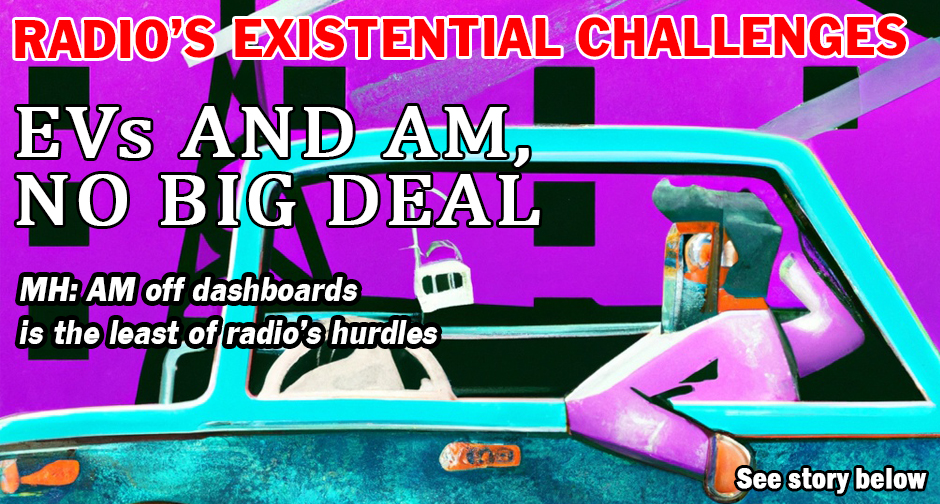
 piece’s “background” information and premises. In the article, Harrison supports the observation that the sale of EVs constitutes a small fraction of the current automotive marketplace and it will be years before they achieve a critical mass to impact the health of AM radio. In the meantime, Harrison asserted at this morning’s meeting of the TALKERS editorial board, “There are far more immediate existential threats to AM radio, not to mention FM radio, with which the broadcasting industry must contend.” He points out, “Relevance and identity! AM radio being dumped from dashboards is an innocuous thing to worry about. FM radio will be dumped from the dashboard as well… the entire idea of a radio-exclusive appliance is on the verge of obsolescence… and we’re not just talking about electric vehicles – we’re talking about all vehicles! We’re faced with an all-encompassing computer system at the fingertips and voice control of the driver and passengers.” Harrison continues, “In the meantime, today’s media consumers are savvy enough to know how to find their entertainment and information brands via the combination of Bluetooth and smartphone. Thus, the challenge facing both AM and FM radio – two increasingly irrelevant designations – is to maintain the importance, distinguishability and brand of the medium itself – R-A-D-I-O – and not let it get lost in an endless ocean of options available to the potential audience.”
  and listeners has provided for excellent conversations and deliberations amongst our nominating committee members, each of them also bringing their own suggestions to the difficult decision making that goes on. When we hear from as many interested people as we do with suggestions, it only reinforces the value of a nomination, let alone an induction.”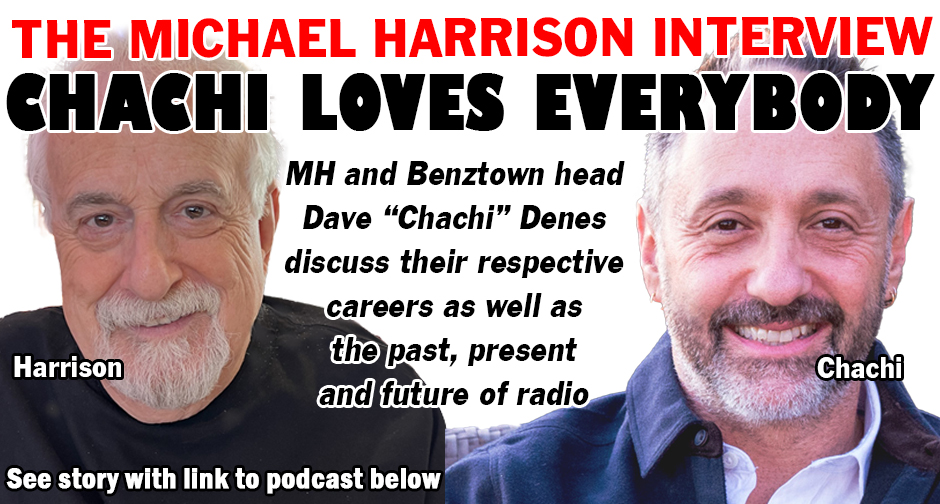
 In last week’s column,

 NFL, and this year’s Super Bowl coverage marks the 50th time that the network will broadcast the game. Some of the key takeaways from this study are: 1) NFL postseason AM/FM radio listeners are a desirable group of consumers: They are more likely to work full time and have higher disposable incomes compared to NFL postseason TV viewers; 2) The NFL postseason AM/FM radio audience is more engaged with sports: MRI Simmons finds NFL postseason AM/FM radio listeners attend more sporting events, seek out sports information on their phones more often, and play more fantasy sports than NFL postseason TV watchers. The higher levels of engagement translate into greater advertising effectiveness; and 3) NFL postseason AM/FM radio listeners are more likely to make purchases across key consumer categories: Compared to the NFL postseason TV audience, AM/FM radio delivers more consumers who are likely to buy a new or used vehicle, start a new business, or hire a financial advisor. You can see the complete report
  Edward R. Murrow award?” The webinar is titled “How to Win a Murrow: Tips & Tricks Webinar – All you need to know to win an Edward R.
  Murrow Award. ” It is being presented by RTDNA director of awards programs Kate McGarrity, the RTDNA Awards committee, and experienced Murrow judges and winners. The RTDNA says, “We will answer your questions about the entry process, judging criteria, and how to put your best foot forward with your entries. See what’s new and different for 2023. Learn the secrets of putting together a compelling entry, the most common mistakes to avoid, and judges’ pet peeves. Anyone involved in the entry process will gain valuable insights to get you set up for success this entry season.” You can find out more and register