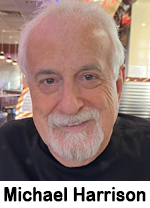
TALKERS 2023, the 26th annual edition of the talk media industry’s longest running and largest convention is shaping up to be one of the storied event’s most important installments. The power-packed, one-day event will be presented by TALKERS on Friday, June 2, 2023 on the campus of Hofstra University in Hempstead, New York in association with the prestigious university’s multi-award-winning station WRHU Radio. TALKERS publisher Michael Harrison says, “We are delighted to be able to join forces again with our colleagues at Hofstra – the site of our very successful 2022, 2021 and 2016 events – and enjoy the remarkable resources that its Lawrence Herbert School of Communication brings to the table.” As was the case last year, this event will be held in a COVID-19 compliant environment based upon the circumstances at the time of the convention. TALKERS 2023 will boldly address key issues – some existential – facing the talk radio and talk media industries at this dramatically critical juncture of rapidly accelerating technological and societal change as well as identifying the remarkable opportunities inherent in these developments. It will also provide participants with unique and powerful networking opportunities.
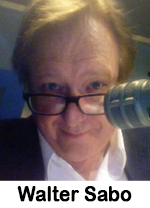
In-person speakers at TALKERS 2023 include (in alphabetical order): Arthur L. Aidala, Esq. founding partner, Aidala, Bertuna & Kamins PC/talk show host AM 970 The Answer, New York; Asa Andrew, M.D., talk show host, the Doctor Asa Show; Vince Benedetto, CEO, Bold Gold Media; Guy Benson, talk show host, FOX News Radio; David Bernstein, director of broadcast operations, TALKERS; Grace Blazer, VP, national NTS brand coordinator, director of news and AM programming Florida Region, iHeartMedia; Phil Boyce, SVP/Spoken Word Format, Salem Media Group; Ops VP, New York Region/ WMCA/AM970 The Answer; John Caracciolo, president/CEO, JVC Broadcasting; Kevin Casey, VP/executive editor, TALKERS; Mark Chernoff, sports reporter, 1071 – The Boss, Livingston, NJ/sports talk talent coach; Heather Cohen, SVP, The Weiss Agency; Mandy Connell, talk show host, KOA, Denver; Tom Cuddy, program director, WOR, New York; Michael Czarnecki, VP/programming, Binnie Media; Kevin DeLany, VP, News & Talk Programming, Westwood One; Spike Eskin, VP of Programming at WFAN, New York and CBS Sports Radio; Jimmy Failla, talk show host, FOX News Radio; Alex Fife, VP, operations, Southeast, iHeartMedia/Total Traffic & Weather Network; Dom Giordano, talk show host, WPHT, Philadelphia; Paul L. Gleiser, talk show host/owner, KTBB-AM/FM, Tyler, TX; Lee Habeeb, talk show host/producer, Our American Stories; Michael Harrison, publisher, TALKERS; Matthew B. Harrison, VP/associate publisher, TALKERS/media attorney; Harry Hurley, talk show host, WPG, Atlantic City, NJ; Victoria Jones, executive director, DC Radio Company; Ross Kaminsky, talk show host, KOA, Denver; Jeff Katz, talk show host, WRVA, Richmond; Brian Kilmeade, talk show host, FOX News Radio/FOX News Channel; Kraig Kitchin, president, Sound Mind, LLC; Steve Lapa, president, Lapcom Communications Corp; Josh Leng, CEO, Talk Media Network; Matt Meany, program director, WABC, New York; Mike McVay, president, McVay Media Consulting; Frank Morano, talk show host, WABC, New York; John T. Mullen, general manager, WRHU-FM/WRHU.org, Hempstead, NY; Chris Oliviero, market president, Audacy, New York; David Pakman, talk show host/commentator, the David Pakman Show; Christopher Ruddy, CEO, Newsmax Media; Walter Sabo, president, Sabo Media/talk show host, Sterling On Sunday; Tavis Smiley, talk show host/owner, KBLA 1580, Los Angeles; Todd Starnes, talk show host, the Todd Starnes Show/owner KWAM, Memphis; Doug Stephan, talk show host, the Good Day Show/CEO Stephan Multimedia; Greg Stocker, brand manager, WPHT, Philadelphia; Joe Thomas, talk show host/program director, WCHV – Charlottesville, VA/PD, WRAD, New River Valley, VA; Paul Vandenburgh, talk show host/owner, WGDJ, Albany, NY; Jeff Warshaw, CEO/founder, Connoisseur Media; Lisa Wexler, talk show host, WICC, Bridgeport, CT; Brett Winterble, talk show host WBT, Charlotte; Larry Young, talk show host, The Larry Young Podcast; Michael Zwerling, talk show host/owner, KSCO, Santa Cruz; Martha Zoller, talk show host, WDUN, Gainesville, GA. More will be named in the days ahead.
Attendance at the conference is limited to members of the working media and directly associated industries as well as students enrolled in accredited learning institutions. All attendees will be required to register in advance on the phone payable by credit card. Attendance will be limited, and the conference is again expected to be an early sellout.
The all-inclusive registration fee covering convention events, exhibits, food, and services for the day is $379. Take advantage of the early bird fee of $329 available until 5:00 pm ET on Friday, March 31. Because space will be limited and a sellout is anticipated, all registrations are non-refundable. The recommended nearby hotel is the Long Island Marriott at 101 James Doolittle Blvd., Uniondale, NY. For room reservations click here. To register for TALKERS 2023 or to obtain sponsorship information, call Barbara Kurland at 413-565-5413.
Share this with your network


 National TV advertising sells things, local radio advertising sells services. And in a recent column here, we outlined the opportunity to exploit what, in my experience, is “the gift that keeps on giving” – the Personal Injury sub-category. Attorneys courting fender-bender, and other settlement cases are an industry in which supply exceeds demand, and for which radio can be super-opportune.
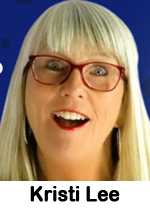 wont, the rest of the cast toasted – and roasted – her after she announced the engagement on the nationally syndicated show.
 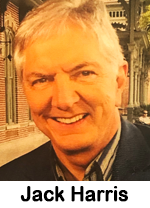 Harris tells the Tampa Bay Times that there is interest from other broadcasters but the six-month non-compete in his iHeart contract prevents him from working elsewhere right away. Harris says he didn’t get the chance to do a farewell show – something iHeartMedia West Florida president Chris Soechtig denies. Salem Media Group says it’s offered to host a farewell show on its crosstown news/talk WGUL “AM860 The Answer,” but also doesn’t want Harris to get into a legal tussle.
 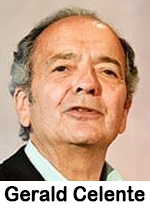 outspoken opinions about contemporary issues.” Celente is a longtime forecaster of economic, political and social trends and has been a guest voice familiar to the hosts and audiences of talk radio and television for decades. Based in historic Kingston, New York, he publishes a magazine called Trends Journal, co-hosts a podcast with noted media figure Judge Andrew Napolitano, promotes rallies for peace, and has even launched a non- sectarian entity called the Universal Church of Freedom Peace and Justice from which – as its deacon – he delivers a weekly YouTube sermon denouncing America’s role in foreign wars… a position that has cost him a number of former allies in business and the media. Celente describes himself as a “political atheist.”
  A shocking number of highly qualified broadcasters have lost their jobs. The venture capitalists that financed the big radio companies are the people who should be fired, but that’s the next column. Let’s get you a job.
 In Dominion Voting Systems’ $1.6 billion lawsuit, testimony and internal communications demonstrate that FOX News management and talent privately doubted election fraud claims they were broadcasting. Tucker Carlson messaged Laura Ingraham: “Sidney Powell is lying by the way. I caught her. It’s insane.”
 them. I was making a seventh of what I made three or four years ago.” As is often the case when a host is let go, they wish they’d had a chance to say good-bye and Harris is no different. He says he’d liked to have said thanks. “Just tell them that they have been great to me over the years. They are what I will miss most.” Harris had been hosting the first two hours of morning drive – from 5:00 am to 7:00 am. “The Ryan Gorman Show” had been airing from 7:00 am to 10:00 am but will absorb the early hours and shift to the 5:00 am to 9:00 am daypart. Harris and the late Ted Webb co-hosted “AM Tampa Bay” for almost 30 years. About his future, the 81-year-old Harris says, “I might look for part-time work on the radio somewhere. Or maybe I will retire. I am an old geezer, after all.”
  Media’s mission is to refocus our attention on state and local issues, and we’re doing that by building a network across Wisconsin of hometown radio stations that are bringing as much local and state-based content to the airwaves as we possibly can.” The piece says that Civic Media has been acquiring radio stations, but it appears it is leasing at least some of them, such as WMDX-AM/W224EG, Madison “Mad Radio” which is owned by Good Karma Brands. Regardless, it is presenting programming on about a dozen stations with its eye on having about 20 stations in its network.
  We’ve seen autopsies depicted on various cop shows. As the doctor dispassionately probes the deceased, he or she is dictating into an audio recorder: “I’m opening up the chest cavity…”
 million. NPR CEO John Lansing says, “We literally are fighting to secure the future of NPR at this very moment by restructuring our cost structure. It’s that important. It’s existential.” The report notes that “NPR intends to cut back its workforce from approximately 1,200 to about 1,050 employees. The nonprofit network’s layoffs represent its largest reduction in staff since the 2008 recession.” In other moves, NPR is bringing its newsroom and programming divisions together as Lansing notes the “current separation artificially cleaved NPR’s journalism and editorial creations.” At this time, none of the NPR radio programs have been canceled.
  bottles commonly known as nips. When Cox asked about each host’s favorite nip and named several brands of liquor, Curtis replied, “I’d probably go Mina Kimes.” Nip is also a pejorative term for Japanese. Kimes is of Korean descent. When the Boston Globe reached out to Audacy for comment, the spokesperson declined to address it specifically but suggested Curtis meant to say Mila Kunis. Today, Curtis apologized on air and said he’s been suspended until next week. Curtis explained he didn’t intend to say Mina Kimes. “In a pathetic, failed attempt at a one-liner, I attempted to bring up Mila Kunis, which was not really that funny, sophomoric and sexist. But for reasons I don’t understand, I said Mina Kimes.”
 It was a cruel trick. Hulu started streaming “For the People” from Shondaland Productions last month and I bit. It is a show about Manhattan, ambition and really well-tailored clothes. Then I looked at the more information tab and discovered that the show was cancelled… in 2018. Crushed. Two seasons on ABC. Cancelled.
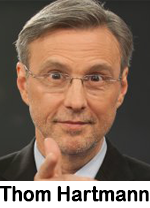 notable exceptions. Thom Hartmann is one of the leading examples of a progressive talk radio host operating successfully within the commercial arena. Year after year, going back well over a decade-and-a-half, TALKERS has ranked this political thought leader among the top 10 in its annual list of the 100 Most Important Radio Talk Show Hosts In America – the Heavy Hundred. Hartmann is also the prolific author of more than 35 books on politics, the environment and social issues. He puts out a daily multi-distribution point program heard on commercial broadcast radio, non-commercial public radio, SiriusXM Satellite Radio, streaming services, mobile app, cable radio and subscription and ad-supported podcasts. The show is also seen on Free Speech TV, and YouTube. Harrison and Hartmann discuss a variety of modern media-related issues and phenomena including the host’s liberal perspective on the current blockbuster Donald Trump indictment drama. Not to be missed.
  Does anybody really know what time it is? Does anybody really care? YES.
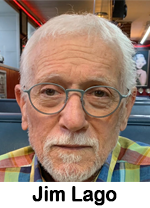 treatment. “He just took a turn for the worse.” The Caller Times obit says, “Lago worked in the oilfields as a young adult and returned to the job after Vietnam War service in the Marine Corps. Some of the oil company workers told him that he should try radio because he was entertaining and outspoken. In the mid-1970s he gave radio a try, first in Longview, near his hometown, before moving on to bigger cities.” Lago was inducted into the Texas Radio Hall of Fame in 2016.
 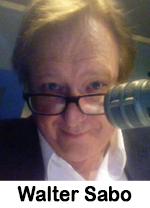 Oh, excuse me, hold on. Here it is! The hourly report from quasi research companies or real research companies like Nielsen declaring that radio is just fine, thank you! Massive surveys (choose one) reveal that radio works! Radio appeals to younger demos! Radio moves product! Radio has more listeners in AM drive than the “Tonight Show” has viewers! A landslide of data proves that after 100 years of success, radio is a viable medium.
 incredible talent and wide variety of leaders across the podcasting industry.” The event was exclusively video streamed on iHeartRadio’s YouTube channel and Facebook page and broadcast across iHeartMedia radio stations nationwide and on the iHeartRadio app. The winners included: “Las Culturistas” honored with the Podcast of the Year Award presented by Autonomy; FOX Sports Radio personality Colin Cowherd presented the Best Sports Podcast of the Year Award to “The Draymond Green Show”; Angela Yee presented the Audible Audio Pioneer Icon Award to technology journalist and podcaster Kara Swisher; The New York Times won Best News Podcast for “The Daily”; and “NPR Politics Podcast” was named the Best Politics Podcast.
  I’m an SU fan. I’m sorry, but I bleed Orange. I’m not going to apologize for that, and I think a fair reading of the Orange is appropriate. I understand [Galaxy has] a business relationship [with Syracuse], that Coach [Jim] Boeheim and I are personal friends and he’s an investor in my company. I understand and acknowledge all of that. We’ve called it pretty fair, and I would argue we’ve been tough on SU when the on-field or off-field events warrant it. I just think over the past six months it took a different tone and became overly dark and negative. I don’t think that’s what Syracuse fans want to hear.” For his part Axe tells Syracuse.com, “I had a responsibility to give an honest, fair and thorough opinion to my audience. I certainly wasn’t perfect, but I don’t regret anything about the approach of the show. We put listeners on the air, and we gave them the opportunity to say what they needed to say. I don’t have any regrets.”
 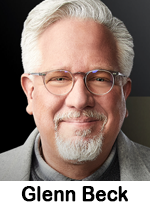 archives via an independent auction house and paid more than $600,000 for it. The Tribune quotes Beck saying on his radio show, “Roe vs. Wade is history, and now that history is in the hands of a pro-life conservative.” He also says “Coffee’s archives will debut this summer as part of an exhibit called ‘The Blueprints of Freedom,’ adding, “The Roe archives’ inclusion in the exhibit will underscore Coffee’s bloody legacy that has been undone in the service of life and the proper reading of the Constitution.”
  censorship” from conservatives. The rhetoric surrounding these deals is part and parcel of the politicized nature of media in the modern world. In the piece, Montlake observes, “The $60 million takeover – and the reactions it has sparked – is another flashpoint in the national battle to win over Latino voters, a fast-growing demographic that has long leaned Democratic but has lately grown more receptive to Republicans. So far, most Spanish-language radio in the U.S. has been focused on music and entertainment, not news or commentary. Which in the eyes of many makes it an untapped and lucrative means of political persuasion.”
  Mandy Connell
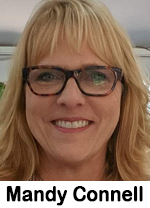 insights as a wife, a mom, a foodie, and a self-proclaimed “mediocre driver who never sees the speed traps until it’s too late.” At last year’s national TALKERS convention, she was awarded the prestigious honor – 2022 Talk Radio Industry Woman of the Year. As we are about to celebrate International Women’s Day, Harrison and Connell engage in a candid conversation about the current status of women in talk radio and her experiences being a female in the broadcasting business for more than a quarter century. They also discuss the impact of rapidly evolving 21st century communications technology and the challenges these dizzying changes are imposing on parenting.
  April 18 on the Main Stage at NAB Show in Las Vegas. NAB will also present Bonneville International’s news/talk KTAR-FM, Phoenix with the esteemed Crystal Heritage Award during the ceremony. The Heritage Award recognizes radio stations that have won a total of five Crystal Radio Awards for exceptional year-round community service efforts. Only 10 other stations have received this honor.
  Whenever possible, USA consumers will pay cash, and they’re paying-down credit card balances, per recently released
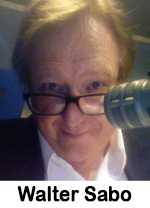
 It’s tough enough for radio talent to navigate stable careers in these days of consolidated station ownership, personnel cutbacks and drastic salary reductions – but the NAB’s newly stated stance on non-competes adds insult to injury and is out of step with the interests of beleaguered professionals still hanging on for dear life in the programming sector of this industry. I understand that the National Association of Broadcasters is at heart a lobbying group representing the interests of the medium’s ownership but, c’mon – non-competes really are of another era and egregiously unfair.
 2023 who carry a computer – a smartphone – with them all the time. Other findings from this year’s edition of the study include: 1) 75% of Americans 12+ have listened to online audio in the last month; 2) Among U.S. adults age 18+ who have ridden in a car in the last month, 37% are listening to online audio in the car, up from 32% last year; 3) 42% of Americans 12+ have listened to a podcast in the last month, a new all-time high and up from 38% in 2022; and 4) 38% of U.S. adults age 18+ who have ridden in a car in the last month say they listen to podcasts in the car, up from 32% in 2022. Edison Research VP Megan Lazovick says, “After two previous annual studies that showed clear effects from the COVID-19 disruptions, the trends in audio and social media habits seem to be back on pattern. The growth of online audio and podcasting to record high levels is exciting to reveal.”