By Walter Sabo
Consultant, Sabo Media
A.K.A. Walter Sterling
Radio Host, Sterling on Sunday
 Michael Harrison, founder and publisher of TALKERS, and the man who invented the term AOR – let’s not forget – strongly requested that I share this story about a remarkable event we experienced. Michael describes it as the “greatest promotion” he ever witnessed at a non-commercial function involving broadcasters… so I really have no choice but to accommodate him.
Deep background: My wife Katie and I amazed each other that for all the zillions of hours of TV we watched, we agreed that this scene from X-Files (see the still below) was the best ever: https://youtu.be/wUL7y8AMeU8. This single realization rushed us to a marrying minister. Really, who falls in love over a common passion for a scene like that?
Married six years, I wanted to create a memorable event that would “promote” our marriage. I know! My mania dropped this idea in my brain-on-fire: Recreate that scene with the actual actors – LIVE! I had time. Six months to our anniversary.
William B. Davis, who plays “cancer man” on the series, owned an acting school in Oregon – it says so in his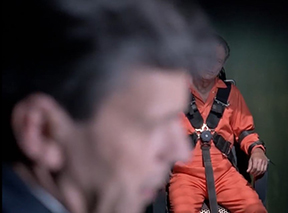 biography. I wrote him a letter inviting him to fly to New York to perform the scene live at our anniversary lunch at the National Arts Club. Two appealing prospects: Manhattan and the famous Club on Gramercy Park. Shockingly, he actually called and said if I would also fly his girlfriend in, he would do it! HE WOULD DO IT. Crap, now I had to do everything else. Invite all 200 wedding guests, stage a show, and not tell anyone that it was going to happen. Katie did not know.
But contacting the alien, Roy Thinnes, was harder. I didn’t want to call his listed agent because his listed agent would quote me a real performance price. But Roy was in a soap opera. From my days at ABC, I became friends with several stars of “General Hospital,” including the kindest person who ever Lived, Jackie Zeman. I called her and asked if she knows how to contact the alien. Miraculously, she said, “Oh I know Roy. I’ll tell him you’re going to call.”
One month out, I called Roy who thankfully lives in Westchester, New York. Roy answered the phone in a 20-ball voice… terrifying. Skittishly, I told him my plan. LONG, PAINFUL PAUSE. Painful. Mr. Thinnes answered, “It would be good to see Bill [Davis] again.” He wanted nothing, neither a limo nor car fare.
Every guest from our wedding showed up including TV reporter Sandy Kenyon, Bob Weinstein of Miramax (the good brother), Kurt and Terry Johnson of
Townsquare fame, Bob McAllan – partner in Press Broadcasting, Michael Ewing and Jay Clark who saved my butt on several occasions, the most powerful people in the room, the owner and staff of The Bagel restaurant in Greenwich Village, TV whiz Edward Hersh and his wife Hillary and, of course, Michael Harrison. That’s a lot of pressure.
Working with a video savant, we found the “X-Files” scene, put it on a DVD and pretended to be ready to show it to the audience as a tribute to our happy marriage. Moments after it started, we made it look like it was skipping. Appearing disappointed and frazzled, I apologized to the crowd and stammered that, we would just have to perform it LIVE. The two stars came from behind a curtain to gasps from the crowd and performed the scene. Wife was thrilled, guests were amazed. I was grateful. It all worked.
Magic. Unexpected. Those are the ingredients of great radio. Unexpected comes from show prep content that stands out, doesn’t fit in. The difference between a person on the radio and a star on the radio is unexpected, surprising content. The stars showed up to the lunch because I asked them. I did not know them nor them me. I asked for what I wanted. And Magic. That’s your talent.
Walter Sabo was the youngest Executive Vice President in the history of NBC. The youngest VP in the history of ABC. He was a consultant to RKO General longer than Bill Drake. Walter was the in-house consultant to Sirius for eight years. He has never written a resume. Contact him at walter@sabomedia.com. or mobile 646-678-1110. Hear Walter Sterling at www.waltersterlingshow.com. Meet Walter Sabo at TALKERS 2023 on Friday, June 2.
Share this with your network




 hosts. The ideal candidate will be able to execute either two- or four-hour air-shifts on WICC, along with booking guests, creating compelling local content, fielding listener phone calls, and pivoting subject matter as the news cycle dictates. This position will have different hours based on need. Find out more about the position here. Please send your resume and 3-minute demo to allan.lamberti@connoisseurct.com with “SWING TALK SHOW HOST” in the subject line.
 show on the station for nearly three decades. Leach tells the news outlet that his role as “a smart, local progressive-leaning talk show on a commercial radio station is going the way of the dinosaur. ‘It was certainly my hope to make sure that we had a wide array of viewpoints and to make sure a lot of people’s views and opinions were heard, and I feel like we accomplished that. I find that a really gratifying part of the job. We opened up that platform and that ability to be heard to a wider audience.’” Additionally, the new lineup does not include current early evening host Frank McNeil, who tells the State Journal Register that station management suggested another time for his program that “wasn’t acceptable at this point in time.”
  talk hosts he might be able to beat in a cage match, used the recently published 2023 TALKERS Heavy Hundred to muse over potential opponents. Kaye – ranked #81 on this year’s Heavy Hundred – says he’s pretty sure Sean Hannity (#1 on the Heavy Hundred) would kill him.
 In the early 1980s, talk radio made a $4 billion mistake. Prior to then, there were approximately 50 full-time talk stations in America. They were predominantly found in major markets and had been in the format since Marconi. The original talk stations had two key traits: They were dominant in ratings and much of their popularity was driven by women hosts.
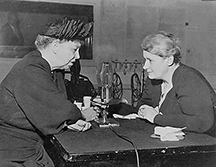 Then Mary Margaret read live copy. OR Mary Margaret had her guests read live copy. Sales for advertisers exploded. (Source: It’s One O’ Clock, Time for Mary Margaret McBride by Susan Ware
 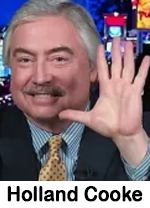 Has this happened to you? Moments after you have met someone, you forget his or her name? OOPS.
 monthly podcast listeners started listening as a child, 57% started listening as a teenager and 25% started listening as an adult. This means 73% of Gen Z monthly podcast listeners began listening before the age of 18; 3) Those who began listening earlier in life, listen longer: Gen Z monthly podcast listeners who started listening as a child consume 10.6 hours of podcasts per week; those who started as a teenager consume 7.5 hours per week, and those who started as an adult consume 6.6 hours of podcasts per week. The average for all Gen Z monthly podcast listeners is 7.7 hours per week; and 4) Gen Z act as a result of podcast ads: 82% of Gen Z monthly podcast listeners have taken any action as a result of hearing a podcast advertisement; 70% have either purchased or wanted to purchase the product or service they heard advertised, 61% have visited a company or product website, 44% have used a promo code or discount code mentioned in the podcast, and 42% have recommended a product to a friend or family member.
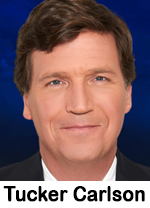 Dominion Voting Systems settlement but Carlson remains under contract to FOX (through the end of 2024) and is still being paid by FOX. This is a fairly standard non-compete situation found in most television and radio contracts. Carlson and his attorney, Harmeet Dhillon, argue that FOX is attempting to stifle Carlson’s First Amendment rights. This case appears to be headed to court.
  Mark Twain reckoned that “the difference between the almost right word and the right word is the difference between the lightning bug and the lightning.”
 These DMA analyses are based on all radio stations in the U.S., not just Nielsen subscribers. The top DMA is Glendive, Montana with 72.1% of the population using AM radio. While the most AM radio listening tends to be done in Midwestern DMAs, there is still substantial AM listening done in Eastern markets. For example, Chicago is the #8 DMA for AM listening with 51.2%, but Seattle-Tacoma is not far behind at #14 with 42.8%, San Francisco-Oakland-San Jose is #20 with 41.3%, and the top two DMAs by population – New York and Los Angeles – show AM listenership is done by 31.8% of the population.
  Last week I had the privilege of moderating a panel at the TALKERS conference. Confession: I listen to speech patterns and tones more than words.
 Innings with Pledger,” airing from 6:00 pm to 7:00 pm. Pledger says, “I’m excited for the opportunity. This has legitimately been a dream to have a weekday show.” Pledger will continue to produce the “The Blitz” as well as host “The Saturday Morning Hangover” program. He adds, “I’ve worked for this for so long. I have long wanted to be in both worlds because of the creativity that I use when producing, how it differs from creating a show. I love flexing both of those creative muscles.”
  Farber
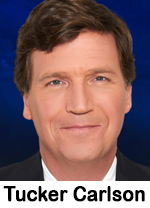 was a violation of the non-compete portion of his contract. Axios reports that Carlson’s lawyers say, “Any legal action by FOX would violate [Carlson’s] First Amendment rights.” The Axios piece goes on to say that Carlson is accusing FOX News of breach of contract for breaking their promise to not settle the Dominion Voting Systems lawsuit in a manner in which it would indicate wrongdoing on the part of Carlson. It’s been reported that firing Carlson was a part of FOX’s settlement agreement with Dominion.
  47, James Norman Swank, 35, and Elizabeth Ann Caruso, 35, have been charged with burglary. The report goes on to note that Caruso and Swank admitted being at the station but denied stealing anything. While MacDowell admitted breaking into the station and stealing two demolition bags, sanitary wipes, and a fire extinguisher. They’ve each been released on $25,000 unsecured bail.
  How will AI tools like ChatGPT impact the way we work? The clues are everywhere. Several client stations have automated weather, and even with your consultant’s trained ear, I had to ask. And yes, she’s a robot.
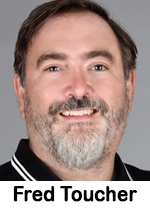 locking myself up so I wouldn’t drink anymore, so I knew I wouldn’t drink. That’s how I felt like, I was like, all right, I’ve lost control, I’ve lost control of alcohol, I’ve lost control, I’m not thinking like me, I need to make sure that I’m in a position where I do not have the opportunity to drink. Was it fun? It was the worst five days of my entire life.” Toucher says he intends to continue the outpatient therapy treatments. “The setup I have right now is by far the most gnarly setup I’ve had. I’m talking about like four hours a day of intense therapy for alcohol and intense therapy for anxiety… Got out yesterday morning and immediately went to an outpatient facility, then went to a therapist. Right after the show today, I’m going back to that outpatient facility. So, I’m taking this recovery very, very seriously.”
 tours that provide a significant revenue stream for stations (or syndicators) as well as world-wide free travel for their top personalities. Collette is planning a major presence at TALKERS 2023 tomorrow (6/2) at the 26th annual sold-out installment of the talk media industry conference at Hofstra University on Long Island. Jim Edwards, VP, US affinity development (
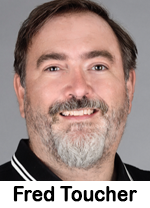 hands are tied as anything he could say has to be approved by management. The Boston Globe reports that Shertenlieb said, “The last time he was out for an extended period, I gave an update and was gently asked for a lot of different reasons that any statement regarding him has to be approved by management. There have been statements that have been submitted, some have been approved, some haven’t been. It just turns into asking, ‘What can I say? What can I say?’ Listen, no one wants to be in this position. Fred doesn’t want to be in this position, the station doesn’t want to be in this position, I certainly don’t want to be in this position, but as of now, all I’ve been approved to tell you, because you’re such great listeners and we love you, is that he’s not here today, I’m not sure exactly when he’ll be back, but I’ve been a friend of Fred’s for years and I hope the best for him.”
  an estimated 24 million Gen Z US monthly podcast listeners. Gen Z listeners are also more diverse than the general population of podcast listeners; 2) 66% of Gen Z podcast listeners say they listen to or watch podcasts to stay up to date with the latest topics, and 61% listen/watch to keep up to date with social issues; 3) While many listen to podcasts while multitasking, 82% say that they listen to podcasts while doing nothing else, and this is especially true for Teens (86%). Podcasts are an important way for this generation to unwind and take a break from other media; 4) Over 80% of Gen Z listeners listen to/watch podcasts to relax, about 2 in 3 listen to escape, and over 50% listen to help them understand how they’re feeling about something. Additionally, almost 1 in 3 think that being on social media has had a negative impact on their emotional well-being; and 5) Over 4 in 10 Gen Z listeners (43%) have purchased a product after hearing a podcast ad for it (*among ages 16+), and 1 in 3 have asked someone to buy a product for them.
  for listening for 60% of consumers. According to a study by MARU/Matchbox, there are a number of reasons listeners gravitate to AM/FM. First is comedic relief: 90% strongly or somewhat agree that their favorite DJs make them laugh. Second is local feel: 73% say personalities understand what makes my city/town unique. And third is thought-provoking: 64% agree that they make them think. Additionally, Magna and Vox Media surveyed 2,028 weekly podcast listeners and asked, “Whose influence matters most?” A stunning 75% cited podcast hosts while only 15% named social media influencers or TV/movie celebrities (10%).
  Ramsey, bestselling author Malcolm Gladwell, clinical psychologist Dr. Jordan Peterson, Food Network celebrity chef and restaurateur Maneet Chauhan and more. Dave Ramsey comments, “World-class leadership is becoming more important because that’s who people want to follow. Something happens when you get thousands of powerhouse leaders in one room. After leaving Summit, you’ll be ready to hire and retain top talent, lead with confidence, and strengthen your company culture.”
 was stepping back from his duties, that allowed the station to use internal research to consider the best options to tweak its programming. That resulted in the station naming longtime station reporter and anchor Chris Chandler the new morning host, swapping late morning and afternoon hosts Mark Arum and Eric Von Haessler, and making Shelley Wynter solo host in evenings and giving his former co-host MalaniKai Massey her own Saturday night program. Charles says, “I feel very comfortable that we’ve got the right people in the right slots. We are set to grow our success.”
  A beautiful night. Paul Galvin and William Lear took their girlfriends to a romantic look-out view. Paul asked, “Isn’t this great?” His girlfriend replied, “It would better if we could hear music.”
 Warning: The Commonwealth of Massachusetts certified me to teach high school English, in the early 1970s, the last year certifications were for life. Though I was lured-away by VU-meter hypnosis, I still carry a red pen. And radio news has it running-dry.