 LOS ANGELES – As students, enthusiasts and caretakers of this wonderful medium, we’re keenly aware that radio’s “Golden Age” boasted an incredible array of entertainers and broadcasters.
With lifestyles, technology and society being what they are today, it’s almost inconceivable to imagine that families would actually gather around the radio and attentively listen – and indeed hang onto – each and every word that emanated from that mysterious entertainment-laden box sitting in the living room.
Fundamentally important back then, of course, was a concept known as “Theater Of The Mind.”
No one embodied and personified it better than one of the bigger-than-life talents of that era: Orson Welles.
Most are familiar with his epic “War Of The Worlds.”
Pictures Set In Songs
The list of other outstanding “Mercury Theater” presentations Welles was responsible for is much too lengthy to cite here, but his legendary “Theater Of The Mind” mystique lived on nightly in Los Angeles, where Jim Ladd was a welcome guest for Southern California listeners dating back to 1969 and hosted a regular show on SiriusXM’s Deep Tracks channel the past 11 years.
Theater Of The Mind so perfectly describes what Ladd tried to do, although it’s not radio drama in the pure sense. “What I [attempt] at night is to show you pictures and do that by playing sets of songs,” the (then) highly popular KLOS-FM, Los Angeles 10:00 pm – 2:00 am personality remarked to me. “If you follow the lyric content of each song, as well as the song’s emotional feel, it should tell you a story with a beginning, middle and end. Thus, it’s theater.”
Throwback To Creativity
In addition to providing his special spin to Theater Of The Mind, Ladd was also responsible for keeping another bit of radio history on life-support.
Most air personalities are required to adhere to strictly enforced music lists, but Ladd’s nightly, four-hour, Los Angeles air-shift was a throwback to the days of “free-form” radio.
The result was similar to what existed in April 1967, when a new phenomenon started taking shape. “That was the beginning of FM and this multi-billion dollar industry,” Ladd recalled. “[Free-form] started on a station [KMPX, San Francisco] where the phone was literally disconnected, because they couldn’t pay the bill. [Tom Donahue] had an idea; he went there and it took off. For a while before deregulation, that’s what all FM radio did in any market. Free-form worked great, until they killed the golden goose.”
Right Place, Right Time
Southern California native Ladd was extremely fortunate to have been able to launch his radio career in the country’s second-largest market. “Part of it was timing,” he admitted. “I was at a little station in Long Beach [KNAC-FM] that decided it was going to try this new, hippie, underground thing. They didn’t know what it was, but [the feeling was to] hire some hippies and see if they could make some money with it. I happened to be right there at that time.”
A frustrated musician, who wanted to be a songwriter, Ladd recounted a life-altering conversation he and a buddy had in a car. “My friend said that I should be in radio. I was 19 or 20 at the time and your friends at that age seldom notice anything but themselves. For some reason, that stuck with me. Thank God, FM was in its infancy and they’d take complete novices like me off the street and give us shows. Owners didn’t know anything about the Grateful Dead or The Who, but we did.”
Check Mate
Instead of walking into a studio and following a computer-generated music log, Ladd was given freedom to use his imagination. His only preparation was what was happening in life.
Resulting sharp, clever music sets he composed weren’t written out in advance. “The way I work is to turn the music up loud and get the song working on me,” he commented. “Once [that happens], it keys in my mind what will fit next.”
Such an intricate process included a mental checklist. “I’ve figured out the lyrics will work, but I need to know how the song I’m playing ends and how the next song begins,” he explained. “If I’m playing a balls-out rocker, I can’t go into some acoustic piece. In that way, it’s really like a chess game. I have to plan these things to start every single segue as I’m doing it. That’s the way that works best for me.”
There were nights, however, that Ladd knew that he “[didn’t] have it,” but as he maintained, “I’ve been doing it long enough to put on a good professional show. Sometimes, I don’t have what I’m striving for, which is to make a connection with the audience. Without having to prompt them or explain anything, my audience lights up the phones. They call because they get what I’m doing. Once that connection is made, then look out, because the rocket is taking off.”
Gracefully Handling The Tragedy
Recalling the horrific September 11, 2001 “Attack On America,” Ladd noted that although it was one of the country’s greatest tragedies, “It was easy to immerse myself into something like that. It so moved me that I had no problem thinking of songs to play or what I wanted to say.”
Judy Collins’ version of “Amazing Grace” was the first song he played when he went on the air that night. “Believe it or not, it set the tone for what I did for … the next two weeks.”
As it usually did, the audience – even or perhaps especially in this painful period – stepped up to the plate. “This is the thing about free-form radio that’s so precious to me,” Ladd emphasized. “Nobody called me on 9/11 with an idiot request. When I played sets of 9/11 songs, everybody was calling in with [appropriate] suggestions. Second only to dealing with the tragedy, the hardest part was to know when I could play groups like AC/DC again. I found that very difficult; you can only feel your way through it.”
Loyal Listeners
In his third tour of duty at (then ABC-owned) classic rocker KLOS, Ladd was a legitimate cult figure in the Southland for his work at legendary cross-town rocker KMET.
Southern California listeners were stunned on Valentine’s Day 1987 when the “The Mighty Met” (now Audacy smooth AC KTWV) – became smooth jazz “The Wave.”
Also on Ladd’s impressive resume were stints at Los Angeles outlets KLSX and KEDG.
The notion of an air personality “connecting” with the audience is both elementary and elusive. Ladd was a rare case of a non-drive time music personality who amassed a loyal, vocal following.
Grateful for such audience allegiance, Ladd didn’t take it for granted. “My audience has been that loyal from KMET to KLOS and all the [other] stations in between. My part of the bargain is that I won’t lie to them or let them down by doing a format. I was off the air twice in my career for two years each. That was very difficult, but because I did that, I’ve earned the right to do this and I think the audience responds to that.”
Offered jobs by stations that wanted the “Jim Ladd” name, he opined, “They didn’t understand what that meant. They thought they could just plug in my name, not let me do what I did and it would be the same thing.”
Your Attention Please
Evenings and nights were Ladd’s domain throughout his career. “I wouldn’t want to do middays or afternoon drive,” pointed out the personality known for his “Lord have mercy” exclamations. “Listening habits are such that you can’t sit and listen like you can at night. People are working, picking up the kids and doing life.”
Much like Welles’ Mercury Theater, Ladd’s show required attention. Otherwise, it was just like playing one song after another, without making that all-important connection. “The audience’s side of the bargain is that they have to bring their attention to the show,” he insisted. “I’ve done [6:00 pm – 10:00 pm] in my career and that worked out very well. The show is a bit different, in that, it’s not quite as eclectic. I don’t know if I’d be playing Judy Collins and Johnny Cash in [that time]; maybe – but maybe not.”
Convinced his free-form style could be utilized elsewhere, Ladd, nevertheless, pondered that to his knowledge, “I’m the Alamo – the last guy standing. That’s certainly the case in a major market. The big tragedy is that there are so many talented [personalities] who, although they wouldn’t do the same show that I do, could do free-form radio. We’re losing all that talent. I’m not the only guy in the world who can do it. I’m the one who was stubborn enough to say that I won’t follow a list – I just won’t do it.”
Powerful Trinity
Among those who influenced Ladd’s on-air style were former MTV personality and ex-KEDG program director J.J. Jackson; veteran Los Angeles air talent Raechel Donahue, who went on to do 7:00 pm -12:00 midnight in Denver at KQMT “The Mountain”; longtime KMET personality the late B. Mitchel Reed; KMET’s Pat Kelley; Cynthia Fox; Jack Snyder; and the late, underrated Mary Turner. “The wonderful, beautiful part of free-form radio – and most importantly – at KMET was that it wasn’t about being a star,” Ladd asserted. “What we were doing was our part of the ‘social revolution’ at the time. It was like a triad: The people on the street, the music, and us. We took the message of Dr. [Martin Luther] King and combined it with the music of Bob Dylan.”
One highly significant aspect in noting those former KMET staffers was that they’d each listen to everyone else’s show and it elevated their own game. “I’d hear Cynthia do a great segue, or Mary would do a great segment and that would inspire me,” Ladd enthused. “What I miss most is that kind of camaraderie – it’s just me now. I can’t tune in to hear someone else’s great segue. When I heard one of my colleagues do something that touched me, the first thing I wanted to do was to call them and tell them it was great. The second thing was that – from their subject matter – I got 15 different ideas to use when I got to work that night. That was the beauty of it.”
Role Model
National audiences became aware of the iconic Los Angeles talent through shows such as “Innerview,” “Headsets,” and “Jim Ladd’s Living Room.”
Considerably more than someone who voiced a script for a syndicated show, Ladd spent a great deal of time scrutinizing the fine art of interviewing. “I ripped off just about everything I know about interviewing people from Elliot Mintz,” he confided to me. “Elliott was my role model. He’d interview the Shah of Iran one week and John Lennon & Yoko Ono the following week. He’d talk with everyone in a warm, low-key and intelligent manner. It was completely unlike anything [else] I’d heard at the time and that really impressed me.”
The “Innerview” show had an 11-year run and was carried by 160 stations. “It was the first of its kind,” boasted Ladd, whose other syndication work involved voiceovers for an overseas television show. “I’m very proud of the work we did [on ‘Innerview’]. I did 99% of the interviews in the front room of my house in an artistic community in Laurel Canyon. People would immediately be put in a very comfortable place. It’s not a studio – it’s my home.”
The Work Is The Key
Another reason why people felt at ease was that, instead of focusing on a person’s life, Ladd addressed their work. “They loved that. Rather than talking about how many girls they had, what kind of drugs they did and life backstage, I studied every word of every lyric of the new album they wanted to talk about and grilled them about their songs on the environment. It would require six to eight hours of preparation. Then there was another 20 – 25 hours to write the one-hour show; it was a lot of work.”
Writing became such a worthwhile experience that, in 1991, he penned “Radio Waves: Life And Revolution On The FM Dial.”
As a result of these syndicated projects, this immensely respected rock personality diversified himself; the book became a big hit. “I guess I’m a radio guy who learned how to become a writer,” Ladd mused. “In order to get up enough courage to write my book, I read authors I like. I was required to do a great deal of writing for ‘Innerview’ and would write out what I’d say – which is something I never do [on my live show]. You’d also end up with two hours of tape and pick out what the person was going to say, how I was going to introduce it and what song would follow it.”
A Distant Second
Whenever anyone asked Ladd to name his favorite band, he qualified his answer by separating the Beatles.
The quartet, he stressed, had to be placed in a completely different category.
After that’s been done, he named the Doors as his favorite.
The same applied to his most memorable radio experiences, with KMET being the Beatles’ equivalent. “We were at the right place at the right time with the right people. We loved each other and there’s never been anything else like it.”
Nonetheless, he quickly stated that his favorite time is the next time he was able to sit behind a microphone. “The reason for that is [KLOS’-then program director] Rita Wilde,” he proclaimed. “I don’t know how I got so lucky to have a boss who was [such a great on-air personality] and so supportive. If it weren’t for Rita Wilde, I wouldn’t be on the air – that’s just a fact. I want to keep free-form radio alive for the audience, but I also owe her to make this happen. She’s under a lot of pressure [when it comes to my show]. When I go in at 10:00 pm, the format literally stops. I can’t think of another boss in the world who would understand that.”
Numbers Game
His multi-decade Los Angeles track record and loyal following notwithstanding, Ladd still realized that ratings played a role in dictating his employment; however, as he declared, “Rita is one of the first people I’ve ever worked for in this business I trust when she says the numbers are up or down. Sometimes in my career I’ve found out from people who didn’t work at the station that my show was doing great. When there’s a down book, [management is usually] right there.”
Ultimate People Skills
Certain managers and programmers, he claimed, kept good books a secret from him; however, “Rita calls immediately when I have an up book. If I have a down book, I don’t hear from her; I have to call her. That says volumes to me. We’ll deal with a problem, but she doesn’t want to get me upset. She might tell me that I’m playing too much of this or not enough of that, but she never says anything [threatening]. It’s always from a helpful and suggestive [stance]. When the numbers are good, she leaves me totally alone. From my perspective, you can’t ask for more than that. Her people skills are unbelievable.”
In addition to have wanted to keep free-form radio alive as long as possible, Ladd disclosed that he wanted “to walk away before I can no longer do my job. I don’t know when it will happen, but the next stage in my life will probably be to write fulltime – I’m working on it.”
Contact TALKERS Managing Editor Mike Kinosian at Mike.Kinosian@gmail.com
Share this with your network



 Shelley says, “It is our sacred duty to promote, protect and defend the First Amendment, which makes journalism the only vocation specifically protected in our Constitution. The individuals represented in this group of recipients embody the spirit of such journalism. And their work reminds us why it is so important to defend the First Amendment each and every day.” The honorees include: Gio Benitez, ABC News; Lauren Chooljian, New Hampshire Public Radio; Ingrid Ciprián-Matthews, CBS News; Evan Gershkovich, Wall Street Journal; Dylan Lyons, Spectrum News 13 “Citation of Courage”; Joan and Eric Meyer, Marion County Record, “Citation of Courage”; ProPublica; Rep. Jamie Raskin; Jesse Walden, Spectrum News 13, “Citation of Courage”; Clarissa Ward, CNN; Kristen Welker, NBC News; and Phil Williams, WVTF-TV, “Lifetime Achievement Award.”
 Let’s talk streaming because I don’t get what is happening. Maybe you do.
 compliance reports to the Bureau through the remainder of the current license terms of the two stations, and pay a Civil Penalty to the United States Treasury in the total amount of $500,000.” The violations in question center on a program that aired on Townsquare’s news/talk outlets KIDO-AM, Boise and KLIX-AM, Idaho Falls from October 2021 through March 2023 in which they “broadcast a one-hour episode of, and 30-second advertisements promoting, the Program. The format of each episode nominally resembled a news interview/public affairs program produced and presented by the Stations. In fact, however, all episodes of the Program were paid political presentations. Townsquare was paid to broadcast episodes of the Program and related advertisements initially by and on behalf of the Idaho Republican Party, and later by Tom Luna on behalf of a company doing business as Tom Luna and Associates. The hosts of each episode (Tom Luna and Victor Miller, chairman of the Ada County (Idaho) Republican Party) were solely responsible for producing the Program, including selecting guests and determining program content. Neither station provided any on-air Sponsorship ID announcements for the vast majority of the episodes or promotional advertisements that they aired revealing to listeners the true nature of the broadcasts and the identity of those who paid for them. In addition, multiple episodes of the Program contained appearances that constituted uses by legally qualified candidates for public office and communicated messages relating to political matters of national importance. Neither station uploaded records of any such candidate uses or messages to their respective online political files.”
 become synonymous with insightful, spirited broadcasting. This contract is more than an agreement; it’s a promise of continued excellence and engagement with our beloved San Antonio community and the great state of Texas.” Pags’ program is nationally syndicated and is heard on more than 170 stations. He comments, “It has been an absolute honor to be on WOAI for 18 years now and I’m so thankful to continue talking with the great people of San Antonio and beyond for years to come! Growing with this community and with iHeart has been an incredible ride. Being on this station has given me the opportunity to reach the kind of national audiences I only dreamed would happen one day. I remain driven and motivated to produce the best show I can every day – and am thrilled it will continue from WOAI!”
 WWL-AM/FM, sports talk WWWL-AM, and four music brands. Barron succeeds Kevin Cassidy, who was named SVP and market manager of Audacy Chicago in December. Additionally, Bob Mackay assumes the role of vice president of sales for Audacy Dallas after serving in the same post in Austin. And three regional presidents add responsibilities to their regions as Doug Abernethy picks up regional and direct oversight of Audacy Austin, Brian Purdy adds regional oversight for Audacy Chicago, Madison, and Milwaukee, and Mark Hannon assumes regional oversight of Audacy Minneapolis. Audacy COO Susan Larkin comments, “We have a very strong leadership team that has enabled us to make strategic changes and promote talent with multi-year track records of success. These leadership moves continue to position our local brands to deliver exceptional listener experiences and client value while reinforcing our commitment to excellence in the communities we serve.”
 Take a day off. You get one free this year.
 The United Nations and its specialized agency, the United Nations Educational, Scientific and Cultural Organization (UNESCO) have given the radio industry all around the globe an invaluable gift. It’s called “World Radio Day 2024.” Now in its 13th installment, WRD takes place annually on February 13 with the purpose of spotlighting the accomplishments, importance, and ongoing relevance of the radio medium as it evolves deeper into the 21st century. This year’s theme is “Radio: A Century Informing, Educating and Entertaining.” By officially designating the platform as worthy of its own officially sanctioned UN International Day, the august world body has recognized, spotlighted, and endorsed radio’s continuing relevance and potential for being a vital force for the betterment of humanity.
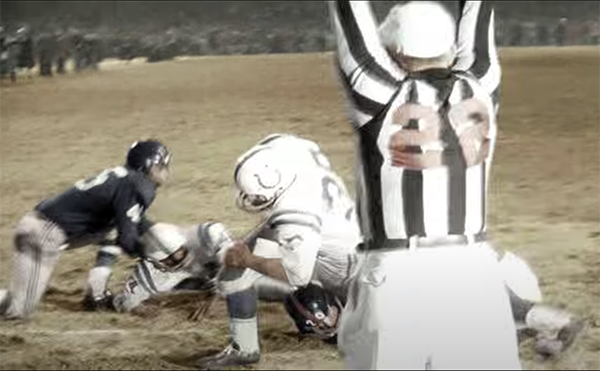
 It was one of those indelible moments in sports history: The 1958 NFL Championship, played on December 28, 1958 at Yankee Stadium in New York. The Baltimore Colts defeated the New York Giants 23-17 in sudden death overtime. 65 years later, the events of that Sunday afternoon still resonate throughout pro sports and sports media.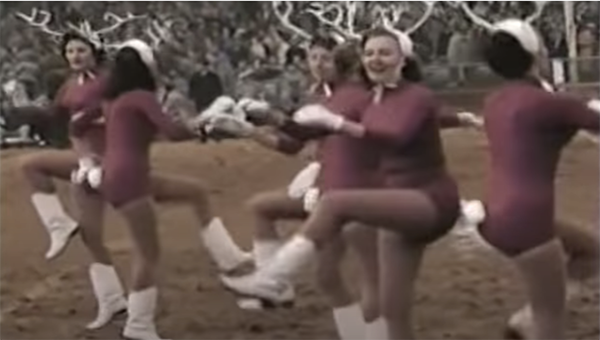
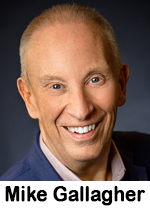 and help people instead of just jawboning and complaining about everything.’ And she was right. So ‘Gallagher’s Heroes – The Fallen Officers Fund’ was created (which assists the families of law enforcement killed in the line of duty and publishes The First Responders Bible) as well as several other charities we help on an annual basis. Each holiday season we partner with Prison Fellowship and get Christmas presents, Bibles and a personalized message from an incarcerated parent delivered to thousands of children. So far this year, my audience has donated over $160,000 which will benefit 6,400 children of prisoners. Over the last few years, my listeners have contributed over $2.5 million to Prison Fellowship. I’m so humbled and blessed to have such a loving, generous audience. It makes it a joy to come to work. And I get to carry my late wife’s wish in my heart. I’m a lucky guy.” Gallagher is not the only SRN host helping the Prison Fellowship cause. Sebastian Gorka is also working hard to promote the organization’s efforts.
 Radio 103.9” and “EnVivo 93.3” – broadcast live from Brookhaven Town Hall to promote the Town’s INTERFACE Toy Drive. This year’s event collected 14 bikes, 4 TV’s $2,900 in donations and over 2,000 toys. The Bikes or Bust! Event in Ft. Walton Beach collected 400 bikes, a storage pod and a half of toys and helmets, and over $26,000 in donations. JVC CEO John Caracciolo says, “I am so proud of the JVC teams, this is truly local radio at its finest. You don’t see Pandora, Spotify or XM doing stuff like this. That’s why I totally agree with Harry Von Zell, live and local radio is the most intimate and socially personal medium in the world.”
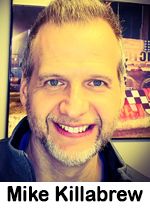 includes sports talk WXNT-AM and five music brands. Killabrew has been serving as the program director for WXNT-AM, classic hits WJJK-FM and rock WNDX-FM since May of 2022. He’ll continue in those roles. Cumulus Indianapolis VP and market manager Darlene Park says, “Mike is an impactful leader who has a strong track record of building and developing great teams, serving the community, and delivering results. He understands our market and our amazing brands will grow under his leadership.”
 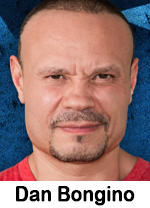 over Cumulus’ mandatory COVID-19 vaccine policy. Bongino says, “It’s been a fascinating couple years of ups and downs both personally and in the political space. I love what I do, and I’m ecstatic that we’ve agreed to move forward with the show after changes were made. I want to thank all the shows’ supporters, the stations, and program directors for their continued support. I promise to keep my foot on the gas pedal.” Westwood One president Suzanne Grimes states, “‘The Dan Bongino Show’ is one of the greatest growth stories in network syndication, with Dan delivering programming unlike anyone else. As we head into what will surely be an unpredictable election cycle, we know Dan will be always insightful, sometimes provocative, and never disappointing, which is why our listeners are wildly engaged, and our advertisers have flocked to the show.”
 issued the following statement: “Regional VP Brian Lang, who manages all of Townsquare’s stations in New Jersey, explains that the company earlier consolidated leadership in sales, promotions, finance, and engineering for the Trenton-Princeton and Monmouth-Ocean markets. Now it has also aligned content for those markets under Sam Gagliardi as VP of content. Gagliardi, who goes by the name Sam Elliot on the air, earlier served as general manager of Northern Lights Broadcasting in Minneapolis-St. Paul.”
 News flash: Time cannot be managed. But tasks can.
 Broadcasting executives spend millions building their radio station’s brand in the marketplace. But is it being spent in the right place?
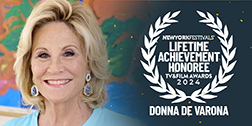 advanced their field and made a lasting impression on the industry. It will be celebrated at the Storytellers Gala honoring TV & Film Awards and Radio Awards trophy winners on April 16. Donna de Varona – a U.S. Olympic Hall of Famer – is currently a member of the board of directors of the United States Olympic and Paralympic Committee. She is renowned for covering 18 Olympic Games from multiple networks including ABC, NBC, CBS, and Turner. As a pioneer for women in sports, she played a key role in establishing the Women’s Sports Foundation, serving as its first president and chairman. She chaired the groundbreaking 1999 FIFA Women’s Soccer World Cup and contributed to the formation of the very first IOC athletes commission in 1981 during the IOC Congress in Baden-Baden, Germany.
 What’s old is new again.
 In
In 
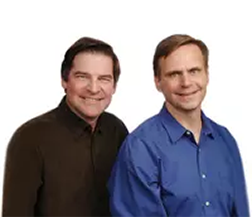 retire from the station on December 6. After his departure, John Kobylt (left) will continue in the daypart as a solo host. He quipped, “I am saying goodbye. After very little thought, this is what I’m gonna do.” The duo rose to prominence during their time at WKXW-FM, Trenton “New Jersey 101.5” beginning in 1988. They moved to KFI in 1992 and briefly went into national syndication in the late 1990s. That move drove a wedge between them and then-KFI owner Cox Communications and they left to do mornings at crosstown Disney-owned KABC, Los Angeles. That didn’t last long, and they returned to KFI where they’ve flourished since 2001.
  Here’s actual news copy, from Joe Connolly’s business report one morning on WCBS, NY: “One third of all domestic flights are now late, by an average of one hour.”
 clients, and industry insiders alike, Cohen has played a pivotal role in shaping the careers of some of the biggest stars in the business. Her dedication to the well-being and success of her clients has set a new standard for excellence in talent representation.” The Weiss Agency founder and CEO Eric Weiss adds, “In Heather, we have not only an exceptional talent agent but a true leader and advocate for positive change. Her dedication, industry acumen, and commitment to her clients embody the values we hold dear at our company.” Cohen says, “I am so fortunate to have a career that I absolutely love. It is a privilege to represent people that I truly believe in. The content they provide is the force behind and the future of our industry. I am beyond grateful to Eric Weiss for his guidance, friendship, and faith in me. There is nowhere that I would rather be, and I look forward to many more years working with Eric and our Weiss Agency family.”