By Erik Cudd
 From my teenage years to today, radio has been the career of my adult life. When I first began listening in my teens, I was drawn less to the music and more to the conversation. I tuned into stations not for my favorite songs, but because I enjoyed hearing people talk, debate, and share ideas. Over my lifetime, I have seen many changes in the medium. The news/talk format, in particular, has always fascinated me for its mix of news, commentary, and immediacy.
In such a time as this, because radio is the medium I know best and love most, I write this appeal to those influential in news/talk. My hope is that you will step forward once again as the architects and innovators you have always been, and raise a rallying cry for this unique moment. The freedoms and ambitions that make the format so vital also create challenges. By design, it invites sharp opinions, spirited disagreement, and cultural edge. Those qualities are its strengths. But in our current climate, they also carry the risk of drifting into tribalism and rhetoric that can spill over into something more dangerous.
This is not an implication that I believe news/talk is responsible for the death of Charlie Kirk. I would like to be crystal clear. What I am saying is that a perfect storm has been gathering for many years, and no one can deny the polarized, charged landscape we now inhabit. And that storm is not radio’s sole responsibility. Television, social media, and digital platforms have found their profit margins in spaces that thrive on provocation. Cable news leans on conflict. Social media algorithms reward outrage. Digital outlets chase clicks and controversy. Radio is part of this broader ecosystem, not apart from it. And while no single medium created our current atmosphere, each has a role to play in reflecting on its impact and considering how best to move forward.
This is not about drawing a simple line between “toxic” and “non-toxic” content. Such judgments are rarely clear, and program directors deserve the benefit of the doubt. Yet it may be worth asking whether radio, like all media, could benefit from a renewed look at how editorial choices can help keep conversations as civil and constructive as possible. Debate and controversy will always be part of the medium, but escalation does not need to be the only outcome.
The September 10 tragedy underscored this in more ways than one. Beyond the event itself, the aftermath played out across digital spaces, where ordinary citizens made comments that, while protected speech, resulted in lost jobs, reputational damage, and news coverage. The lesson is not that speech should be curtailed, but that our civic discourse is increasingly fragile. And because radio is one of the most intimate and influential media, its choices ripple outward into that discourse in profound ways.
Audiences are noticing. As someone in my early 50s, squarely within talk radio’s target demographic, I should be a loyal listener. Yet I find myself tuning in less often, not from a lack of loyalty, but because I long to hear more voices who can thoughtfully engage both sides of an issue, giving each perspective a fair hearing and treating every listener as though their view matters. That is why I believe there may be room to pull back a bit, to allow for more variety, nuance, and genuine curiosity in how issues are approached.
Serious does not mean boring. Civility does not mean dull. Across platforms, authenticity and curiosity consistently earn audiences. Podcasts like SmartLess and Armchair Expert succeed not by stoking outrage but by elevating storytelling and connection. Public affairs series such as Frontline and American Experience continue to attract loyal audiences through rigorous, measured reporting. Nonfiction authors like Malcolm Gladwell and Brené Brown demonstrate that thoughtful exploration can reach mass audiences. These examples are proof that depth and balance can succeed when executed with energy and creativity.
Radio is uniquely positioned to do the same. The path forward is not retreat from controversy but innovation. Maybe it begins by encouraging new hosts who bring curiosity, empathy, and an equal openness to both sides of an issue, alongside conviction. It could include piloting alternative formats in off-peak slots where experimentation can thrive. It will require recalibrating success metrics to value loyalty, digital engagement, and cross-platform trust, not just short-term spikes. And it may also mean weaving national voices together with local conversations so that stations strengthen both their reach and their roots.
I do not write this from a high perch. I write as a member of the audience who also walked the halls of the station and still believes in the power of the medium. My words are not meant as accusation but as an open hand in friendship. What I am asking is simple: perhaps it is time for a more purposeful, deliberate engagement of conversation in the conference room. To sit together and ask if everything that airs is doing what it should. To take a long, hard look at whether anything might need to be discussed, reconsidered, or rebalanced in light of what we have all just witnessed.
Radio, because of its intimacy and reach, is uniquely positioned to lead by example. By being more proactive in its own yard, radio could encourage the same self-reflection across media, and even among the public itself. That is not retreat. That is leadership.
Radio still matters. Its intimacy can at times divide, but it can also renew. The question is not whether talk radio will remain bold, it always will, but whether it can channel that boldness in a way that builds the public square rather than fractures it.
The opportunity is here: to prove that freedom and responsibility can coexist, and that doing so is good for the culture, and good for the business.
Erik Cudd has worked in radio and media since 1991. He can be emailed at erik@cudd.us.
Share this with your network


 from the public media organization based at The University of South Florida, capping a career of 45 years in radio and public media. She says, “My time at WUSF has been incredibly rewarding. I am proud that our commitment to public service – building community through trusted journalism, classical music, jazz, and culture – has remained steadfast. As I step away, I’m confident this mission is in excellent hands with a new generation of talented leaders and innovators dedicated to serving the community through public media.”
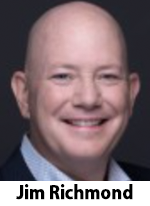 Bonneville president and COO Tanya Vea says, “I’m thrilled for Jim to take on this leadership role in Sacramento. This market has a great lineup of stations, a strong digital sales business, and wonderful employees. Jim has shown himself to be an excellent leader, and his background is the perfect fit. I’m confident that he will build on the strengths of the market, developing the business and the culture at Bonneville Sacramento.” Richmond comments, “I’m honored to join the Sacramento team. These stations have a meaningful connection to the community, and I look forward to supporting our people, growing our digital presence, and serving listeners wherever they are across every platform with purpose and innovation.”
 to vice president of technical success. In this expanded role, Marshall will lead Quu’s technical support and implementation efforts, helping stations seamlessly integrate the company’s patented Visual Radio technology that enable broadcasters to display real-time music, content, and advertiser text and images wherever audiences listen.
 Possibly not – beginning Sunday – unless you live in Hawaii and Arizona (except the Navajo Nation) or American Samoa, Guam, the Northern Mariana Islands, Puerto Rico, or the U.S. Virgin Islands. Everywhere else, clocks will change when we “fall-back” on November 2.
 in which Tirrell used the proceeds for personal expenses and gambling. Now, prosecutors say Tirrell has done pretty much the same thing again, getting investors to give him money to buy luxury tickets for events like the U.S. Open tennis tournament, Taylor Swift concerts, Indiana Fever games and football and baseball playoff games. Tirrell was to sell the tickets and pay investors their original investment plus a share of the profits. Prosecutors say Tirrell did pay some investors back but did so with money from new investors. In fact, they say Tirrell never made the ticket purchases and instead used the money for personal expenses and gambling. Tirrell worked as a sports talk host at KXLQ-AM, Des Moines and later at KXNO, Des Moines.
  the Infinity Networks team. Her exceptional reputation for delivering revenue growth, strategic vision, and innovative approach to developing new revenue paths makes her an invaluable addition as we scale Infinity’s sales strategy.” Condo-Bucknell says, “I am truly honored. This is a fantastic next step, doing what I love, centered on driving revenue with an exceptional team. Infinity Networks is making great strides as a network leader, and I look forward to making a significant impact. Driving revenue requires strategic plans with depth-based concepts, stellar industry relationships, fresh ideas, and new revenue paths, all of which Infinity is 100% focused on. We will leverage strategic audio partnerships, cross-generational audience engagement, and unwavering commitment to client service, driving impactful results.”
 Sports’ 24/7 network will continue to deliver unmatched live coverage, expert commentary, and real-time sports programming to millions of listeners nationwide. This extends a partnership between Westwood One and Audacy that first began with the launch of CBS Sports Radio in 2012.” Westwood One will assume programming
  and distribution for the majority of the lineup of syndicated sports programming, including “The Jim Rome Show,” anchoring the 3:00 pm to 6:00 pm ET daypart. Audacy will continue to produce BetMGM Network programs and additional weekend programming as part of the Westwood One Sports roster. The full programming lineup will be announced in the coming weeks. Audacy chief business officer Chris Oliviero comments, “Audacy and Westwood One have a long, storied history of collaboration,
 and today’s evolution of our national sports partnership is that next chapter in our commitment to our hundreds of affiliates, their listeners, and our client partners. Be it local or national, broadcast or digital, opinion content or play by play, we continue to smartly look at ways to enhance our leadership position in sports content.” Westwood One & EVP corporate strategy & development, Cumulus Media Collin Jones adds, “Westwood One Sports has always been synonymous with the biggest moments in sports audio. Launching Westwood One Sports 24/7 programming strengthens that legacy and positions us to deliver unmatched coverage and commentary to fans coast-to-coast. We’re excited to work with Audacy to make this transition seamless and impactful.”
 operated by CBS Broadcasting Inc., a subsidiary of Paramount, a Skydance Corporation. Audacy chief revenue officer Bob Philips says, “This is a major step forward for Infinity Networks and for our partners across the industry. By bringing together a respected brand like CBS News Radio under the Infinity Networks umbrella, we’re creating a scalable platform that enhances the reach and impact of great local and national content for our advertising partners. This expansion underscores our commitment to helping broadcasters grow audiences, strengthen advertiser relationships and deliver exceptional listening experiences everywhere.”
 Microsoft CEO Steve Ballmer retired with enough do-re-mi to indulge two passions. He bought the NBA Los Angeles Clippers (for a record $2 billion). And he built
  provides insights for marketers on how to curate advertising strategies that authentically connect with audiences and build trust in an increasingly fragmented and technology driven world.” The study was fielded through Critical Mass Media for iHeartMedia and found that 82 percent of respondents worry about AI’s societal impact, and 9 in 10 believe it’s important to know the media they consume is created by a real person. iHeartMedia president of insights Lainie Fertick says, “The data shows us that consumers are emotionally driven, digitally fatigued and yearning for authenticity in an increasingly algorithmic world. This is especially critical with rapid technology advancements and the growing use of AI in the media industry. For marketers, it creates both hurdles and unique opportunities to connect with audiences in this new environment.” Key findings from the study include: 1) Children are struggling to be independent in a tech-forward era; 2) Consumers are all online, but they aren’t happy to be there; 3) Trust in online information is at an all-time low; 4)
  Algorithms rule our lives, and consumers know it; 5) Media is dividing us on current events, but all agree that there’s “something going on with those Epstein files”; and 6) Though 97 percent of consumers know what AI is, with 70 percent actually using AI, distrust remains high. iHeartMedia chairman and CEO Bob Pittman comments, “It’s important for us to remember, as marketers, that we’re in a very delicate position within a turbulent time, both in America and around the world. In a world of digital saturation and AI acceleration, this study reveals that consumers are not just looking for convenience – they’re searching for meaning. Sports, radio, live media and human-led storytelling offer a rare sanctuary of trust, empathy and shared experience. Above all, we must continue listening to Americans more closely than ever before and focus on ways to foster real connection and amplify our collective humanity.”
 legendary Art Lewis on news/talk powerhouse WSGW in Saginaw, Michigan. Art’s show was the first show I’d ever done in talk radio and I’d filled in a time or two before this date. But, on THAT date, the OJ Simpson verdict came in and was announced. I gave my opinion of disbelief. Outlined why I felt that way and the phones melted down for the subsequent three hours. I was in Heaven and realized this is what I was meant to do. I’d done weekend news updates on WSGW before that as I was also finding my way on TV at WEYI (the NBC affiliate) in Saginaw/Flint. But, there was something different about talk radio for me… A few days ago, WSGW brought me back. I am thrilled. Feels like home again. I feel a great kinship with all of my 170+ stations and that will never change. I owe every PD or owner that gives my show and me a shot a ton – but, getting back on WSGW is very special.” Pags adds, Thank you to Jeff Warshaw at Connoisseur Media, Dave Maurer who gave me that first shot back in the day at WSGW, Mark Thomas for bringing me back and great folks like Charlie Rood and Curt Harding who were there back in the day and, of course, Art Lewis who trusted my 29-year-old self with this show when he was off!”
 The Museum of Broadcast Communications announces that Kim Komando will serve as emceefor the 2025 Radio Hall of Fame induction ceremony being held on October 30 in Chicago. Radio Hall of Fame co-chair Kraig Kitchin says, “We’re grateful to Kim Komando for helping us to create a most special evening for each of our 2025 inductees. She knows the hard work and dedication it takes to achieve the recognition of such an induction.”
 it appears that allowing the former programmer to resign, firing half the news department, and pulling back on advertising and marketing didn’t work the ratings magic they originally had hoped for. In my opinion, KFI has seemed rudderless since Robin Bertolucci left the programming spot last November. The current programmer Brian Long, meanwhile, is also in charge of KLAC (570 AM) and KEIB (1150 AM), but with no time, a limited budget, and a decimated news department, the result is what it is. I don’t blame him at all. For his part, O’Kelly is keeping it positive, posting on Facebook, ‘All jobs end. It is not our lives or our health. Perspective is paramount. There is nothing to be sad about here. I’m genuinely excited for the future.’” Kelly is ranked #83 in the TALKERS 2025 Heavy Hundred.
  David Kleppinger says the school received a lot of public comments expressing concern about the loss of the station. As reported by Penn State, the new proposed transition includes commitments for WHYY to operate WPSU for at least three years after the transfer and to offer existing WPSU employees the opportunity to apply for comparable positions. Penn State also plans to transfer endowments and gifts designated for WPSU to WHYY. The story says, “Penn State will not be required to provide additional subsidy funds as previously negotiated. Rather, WHYY will first secure at least $8.36 million in outside financing. WHYY president and CEO Bill Marrazzo said that effort is already well underway and that PSU alumni are making contributions.”
 October 6, it debuted a new morning program it says is designed specifically for Milwaukee commuters. Civic Media says, “‘All News All Morning’ is hosted by veteran broadcaster Dan Hanni and features a format that syncs with the average commute time in Milwaukee. Every 20 minutes, listeners will hear local news, traffic, sports, and weather, ensuring they stay informed no matter when they tune in during their drive.” WAUK regional president and general manager Chris Moreau comments, “This is a no-frills approach to delivering what people look for in the morning. News and information that they can use to start the day without wading through padding, filler, fluff, and partisan opinion. And they can hear it all within the average commute time in Milwaukee.”
 Finateri says, “Marie Osborne is one of Michigan’s most respected broadcasters. Her high standards for broadcasting integrity have earned her this important role with WJR, helping us to maintain our brand as Michigan’s most trusted media outlet serving listeners throughout the Great Lakes region.” Osborne comments, “Being able to help our listeners process all that is unfolding in this impactful moment in history is a privilege and being able to do it at WJR is an honor. The commitment to community and news here at WJR runs deep, it is at the heart of all we do and I’m looking forward to carrying on this vital tradition in my new role.”
 Morning Drive with Casey & Elliott” after almost six years co-hosting the program with Sean Casey. WCBM announces that the program is being re-branded as “Casey & Company” and will feature newscaster Maggie Hunter, the “king of all traffic” Chuck Whitaker, sportscaster Gary Stein and executive producer Kristen Haegerich. Elliott originally joined the program as a part-time guest in 2015 before rising to co-host in 2019.
 With topics ranging from Mars and UFOs to flying cars and ‘civilization starter kits,’ each episode blends science, technology, and imagination with the real choices shaping our world.” For example, on this week’s program Cirilli welcomes Harvard astrophysicist Dr. Avi Loeb for a conversation about comet 3I/ATLAS, alien tech, and the future of space exploration. He also chats with Rich Cooper, vice president of strategic communication and outreach for Space Foundation, about America’s $1 trillion space economy and why investing in space isn’t just about exploration – it’s about building America’s economic future. Premiere Networks president Julie Talbott states, “We’re thrilled to welcome ‘Hello Future’ to the network. With years of experience as a journalist covering global affairs, technology and policy, Kevin has the unique ability to connect the dots between science and the future for listeners who crave bold ideas and fresh perspectives on what’s ahead.”
 Sure, radio’s superpower is that we’re live. But 75% of all advertising dollars are now spent on digital. And Netflix, YouTube, and podcast platforms have conditioned consumers to expect that their content will wait for them (“on-demand”), not the other way around (“linear,” meaning real-time on-air). If your best content disappears the moment it airs, you’re leaking value. Think: time-shifted, searchable, and shareable.
 Jimmy Kimmel’s first monologue back after the recent suspension had the audience laughing and gasping, and, in the hands of countless radio hosts and podcasters, replaying. Within hours, clips of his bit weren’t just being shared online. They were being chopped up, (re)framed, and (re)analyzed as if they were original show content. For listeners, that remix feels fresh. For lawyers, it is a fair use minefield.
 complexities of divorce – helping people navigate every stage of the process faster, more affordably, and with far less conflict. Hello Divorce says its service “goes far beyond digitizing forms and redesigns the entire divorce experience with proprietary technology and AI to eliminate costly errors, reduce delays, and remove the bottlenecks that wreak havoc on divorce timelines.” iHeartMedia president of corporate development and ventures Joe Robinson says, “Hello Divorce offers a powerful solution for one of life’s most challenging transitions. This partnership gives them a unique opportunity to connect with people nationwide through our platforms, delivering resources and guidance that can truly make a difference.”
 Amazon learned that there are high volume sales for specific categories of products. High demand equals high value to the seller. Items such as diapers, printer ink, staplers, batteries, etc. Being brilliant, Amazon created “Amazon Basics.” Same products, white labeled. Amazon doesn’t manufacture batteries; they just slap their logos on what America needs most. That’s why Mr. Bezos has a bigger boat than you.
 Radio programmers and sales managers know the drill: The GM drops an idea, a client makes a request, or a listener offers feedback – and the reflex is to jump straight into execution. But what if the real opportunity lies not in what’s asked for, but in what’s actually needed?
 Audacy’s WFAN, New York enters into a strategic partnership with creator-led digital sports media company Jomboy Media to air the “Talkin’ Yanks” show each Saturday at 2:00 pm ET. Audacy chief business officerand New York market president Chris Oliviero says, “WFAN and Jomboy Media both are committed to bringing Yankees fans the most relevant and engaging content of their favorite team whenever and wherever they want to consume it. Together, the combined influence and reach of both brands will elevate the experience for the pinstripe faithful and shine an even greater spotlight on New York’s all-time pastime, baseball.”