


Salem Media to Syndicate Larry O’Connor Morning Show
Salem Media announces that the “O’Connor & Company” morning show hosted by Larry O’Connor will begin airing across the Salem Radio Network’s 140-plus affiliates and simulcast on the Salem News Channel as its national morning drive program beginning Monday (5/4). The program will continue to air as the 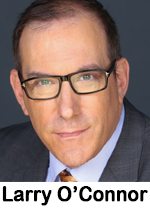 morning program on Cumulus Media’s WMAL-FM, Washington, DC. O’Connor also serves as editor of Salem’s Townhall.com. Salem says, “By aligning O’Connor’s leadership role at Townhall.com with his national radio and television presence – and his growing digital footprint – Salem is further strengthening its integrated, cross-platform content strategy. This move positions O’Connor at the forefront of conservative political discourse while reinforcing Salem Media’s role as a leading destination for news, commentary, and influential voices.” Salem SVP of content Phil Boyce adds, “Larry is the go-to media voice for the people shaping policy in our nation’s capital. He’s built a show insiders rely on and an audience that cares deeply about the direction of the country. We’re proud to
  expand that success across our national lineup, leading the conversation every morning across America.” O’Connor says, “We’re excited to bring ‘O’Connor & Company’ to a broader national audience while maintaining the strong foundation and audience connection the show has built in Washington. At the same time, we’re building the future of media across radio, streaming, and digital platforms with Townhall and the Salem News Channel. Salem’s integrated vision aligns perfectly with my work across platforms, including my daily streaming show “LARRY,” and makes this an incredibly exciting next chapter. I’m also thrilled that my longtime collaborator and executive producer Heather Hunter will continue with the program as we expand nationwide.”
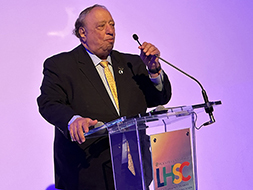 University on Long Island. TALKERS publisher Michael Harrison states, “The selection of ‘Cats’ as keynoter is in keeping with one of the major themes of this year’s edition of the iconic industry event – radio, talk media, and entrepreneurism. John Catsimatidis is presently setting the greatest example of entrepreneurism at work in giving an injection of much needed energy, focus and life to the medium of radio.” Harrison will serve as facilitator of the presentation in a Q&A / interview style format – a role he has played before with the dynamic billionaire media, grocery, and energy mogul.
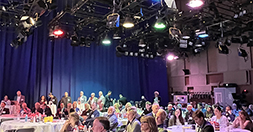 Catsimatidis will be joined by more than 60 speakers comprised of legendary industry figures as well as fresh faces and rising stars. A detailed agenda including speakers and schedule – a “who’s who” of industry luminaries – will be posted in TALKERS this coming Tuesday (4/28). See the link below for the names of all speakers booked to date.
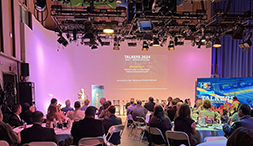 Harrison continues, “This important conference will illuminate the forward path of the expanding talk media universe, including all aspects of digital communications from AI and podcasting to streaming networks. As has been its tradition, this latest TALKERS conference will approach the onrushing future of the talk business from a radio perspective. This crucial gathering will cover the new undeniable realities of the radio business for those who not only want to survive but thrive as well. It will be about opportunities, networking, and entrepreneurism for individuals in talent, programming, sales, marketing, and management who are serious about staying in the game.”
 across audio and digital channels within a unified framework.” Magellan AI’s platform will leverage iHeartMedia’s simulcast data, which maps listeners exposed to broadcast radio to measurable outcomes. Attribution reporting powered by that data will be available exclusively to advertisers working with iHeartMedia. Magellan AI says, “Advertisers using the solution will gain deeper insights into how radio campaigns deliver full-funnel results, including web visits, form fills, leads and purchases. By combining measurement across the full spectrum of audio and digital channels, Magellan AI provides a complete view of how campaigns perform across the media mix.” iHeartMedia Insights president Lainie Fertick states, “iHeartMedia has always focused on helping advertisers understand the power of audio. By combining Magellan AI’s attribution technology with our proprietary in-market simulcast data, we’re providing brands with deeper visibility into how broadcast radio works alongside podcasts, streaming audio, connected TV, and other channels to drive meaningful results.”
 on consumer lifestyles, purchasing behavior and cross-platform media usage while TOMA.Solutions adds a powerful layer of competitive insight by measuring “Top-of-Mind Awareness,” revealing which local brands own the first-to-mind position in their categories. Cumulus president of operations Dave Milner says, “Today’s advertisers want more than audience delivery. They want insight, clarity, and a stronger connection between marketing decisions and business results. By integrating specialized resources like The Media Audit and TOMA.Solutions into our broader research suite, our teams in these markets provide an even deeper level of local intelligence, helping our clients build more precise and effective campaigns.”
 To quote a radio friend, “Some talk show hosts think the news of the day only exists to serve up interesting fodder for their shows.” Many media practitioners, whose jobs encompass letting their audiences know about the pain and suffering of “others,” feel personally exempt from experiencing a connection to the talking points of poverty, ignorance, violence, and injustice that they eagerly collect (and even welcome) as fresh “content” for their platforms. It’s all just “material” to them.
 Stations I work with are confronting a generational revenue issue: Local direct retail business owners who are Baby Boomers are retiring. And their heirs are moving the radio dollars that built their parents’ businesses to search engine optimization and elsewhere-digital. The narrative we present them: “Radio is ‘a reach engine’” for the digital content people their age personally favor. In this mode, the station feels less like “your father’s Oldsmobile;” and more present tense. Many of these next-generation businesspeople are avid podcast listeners, and that presents an opportunity.
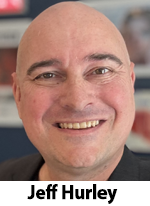 responsibilities outside of Philadelphia, including the Upstate New York, Mid-Atlantic and New England areas. iHeartMedia EVP of programming Thea Mitchem says, “Jeff is a proven leader with a deep understanding of our brands, our audiences and the power of strong programming. His ability to strategically elevate stations while developing great teams makes him the right choice to lead programming in Philadelphia, and I’m confident he’ll continue to drive success in this important market.”
 TALKERS magazine associate publisher) Matthew B. Harrison, a work designed for today’s news/talk media environment where audio, video, screenshots, and quotes are not just supporting elements – but serve as the actual content itself. This technique has become particularly prevalent on YouTube and even cable news/talk TV but increasingly appears in audio form as what used to be called “actualities” – sound from another source.
 book explains the legal concept of fair use not as a permission structure, but as a legal defense raised after copying has already occurred – an uncomfortable but essential distinction that underpins the entire analysis.
 Lenawee Broadcasting president Julie Koehn didn’t sugarcoat it: “We have [competitors] that steal our news.” And she meant literally – lifting her station’s local reporting and republishing it.
 newscast that some 700 stations respected enough to put on their air. Schwalb tells the Tribune, “Conversations have been going on since the announcement, and I think we get closer and closer to a decision every day. But we have to be very careful and be very diligent about making sure the product that we select is going to make sense from a listener perspective and a revenue perspective as well… CBS has been a great top-of-the-hour news piece for a long time, but it’s a very small percentage of what we do in a given hour between business, traffic and weather together on the eights, local news – the strongest local newsroom in Chicago radio.”
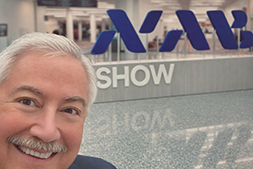
  As a newly minted program director (remember them?), I found the 1980 “NAB Radio Programming Conference” downright enchanting. New-tech cart machines (remember them?) would FIND the splice! And after the cart played, a flashing light saved careless DJs from accidentally playing it again.
 In a
In a  Time Spent Listening to podcasts has now surpassed TSL with spoken word radio. And both are fraught.
 advertising market that was partially offset by the continued expansion of our high-margin, owned-and-operated direct digital revenues. Beasley recorded an operating loss of approximately $230.0 million in the fourth quarter of 2025, compared to operating income of $7.6 million in the fourth quarter of 2024, driven primarily by a non-cash FCC license impairment charge of $224.8 million, reflecting the company’s updated assessment of the fair value of its broadcast licenses in light of continued secular pressures on the radio industry, as well as $1.7 million in other operating expenses.”
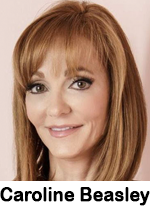 we made tangible progress reshaping this company for long-term value creation. Our digital business delivered record performance, with digital revenue representing approximately 24% of net revenue, up from roughly 19% of net revenue in 2024, and digital segment operating margins reached record levels as our continued shift toward owned-and-operated and programmatic products gained traction across our markets… Building on this progress, we recently announced a debt exchange transaction with our second lien bondholders, pursuant to which we expect to reduce our second lien debt by approximately 50% and repay roughly $15 million of our first lien debt. Upon completion of the transaction, which is subject to bondholder participation and expected to close by the end of April, we anticipate total outstanding debt will be reduced to approximately $110 million from $220 million today. We believe this transaction will meaningfully strengthen our balance sheet, enhance financial flexibility, and better position the Company to execute on its strategic priorities. Following its completion, our focus will shift toward further deleveraging through EBITDA growth and continued portfolio optimization.”
 San Francisco. Cumulus chief content officer Brian Philips says, “Among our strong field of Cumulus programmers, Luis leapt from the pack as the person possessing the energy and imagination to lead WMAL. Luis visualizes the multi-dimensional future of this big brand. The immense benefit of keeping Luis ‘in house’ is that he will continue to offer expert counsel to our revitalized operations in San Francisco and Los Angeles, as needed.” Segura says, “I’m incredibly excited to work with the legendary staff of Cumulus’ flagship news/talk. WMAL is packed with national names like Larry O’Connor and Chris Plante, and I can’t wait to join the team.”
 In “
In “ Markets Group, including the radio stations, the iHeart live events and sponsorships; the radio networks businesses, including Premiere and TTWN; the Enterprise Business Development Group; and data targeting and attribution products for broadcast radio. iHeartMedia chairman and CEO Bob Pittman states, “We couldn’t be more pleased that Ann Marie will be leading the growth and innovation efforts for our company’s largest segment. In addition to helping businesses and brands grow effectively and efficiently, the Multiplatform Group has been an important engine to develop our own important new businesses – including podcasting and the iHeartRadio digital service – as well as our iconic live music events and awards shows. We look forward to the additional growth that will come as we move broadcast radio into the digital buying world through our data services and programmatic platforms.” The company also announced that Bernie Weiss will be promoted to president of the Markets Group. Weiss will oversee the operations of the company’s 160 markets. Weiss was previously COO of the iHeartMedia Markets Group.
 Milner comments, “Joyce is an experienced market leader with deep relationships across Salt Lake City, enabling her to bring sharp local insight and credibility to every client partnership. She excels at delivering integrated marketing solutions, helping clients leverage our multi-platform strategies that maximize the combined power of audio and digital to drive results. Joyce will be a tremendous asset to our Salt Lake City team and a growth catalyst for our clients.”
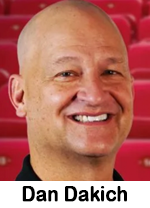 hosting his radio show on Cumulus Media’s WXNT-AM, Indianapolis “Indy’s Sports Ticket 1430 AM” and he will be exclusive to OutKick starting April 1. OutKick senior vice president and managing editor Gary Schreier says, “Dan Dakich has been a vital part of OutKick’s success. He provides unique insight and never hides from sharing his opinion. That combination is what OutKick stands for and we’re thrilled to have him for the years to come.” Dakich comments, “I’m beyond thrilled to continue as the host of ‘Don’t @ Me.’ This journey with OutKick has been incredible and has allowed me to share my opinion unapologetically. I can’t wait for what’s to come as my OutKick show continues to stand out among other sports shows that are afraid to speak their minds.”
 Good News/Bad News: Fender‑benders, slip‑and‑falls, and other “injuries caused by the negligent, careless, or reckless actions of others” will always happen. That’s the good news…for personal injury attorneys. Their bad news is that supply WAY-exceeds demand, and their advertising reflects it.
 directly within Roku’s Live TV guide, allowing viewers to discover as they browse and begin watching instantly. Salem News Channel VP and general manager Cary Pahigian says, “This is a significant expansion of Salem News Channel’s reach, which already increased viewership by over 178% this year. Being part of The Roku Channel opens the door for entirely new audiences to discover the unique news and opinion that SNC provides.” This news comes two weeks after Salem announced Salem News Channel is joining Amazon Prime Video’s free, ad-supported TV (FAST) channel.