


The Advertiser Gave It To Me. Isn’t That Enough?
By Matthew B. Harrison
TALKERS, VP/Associate Publisher
Harrison Legal Group, Senior Partner
Goodphone Communications, Executive Producer
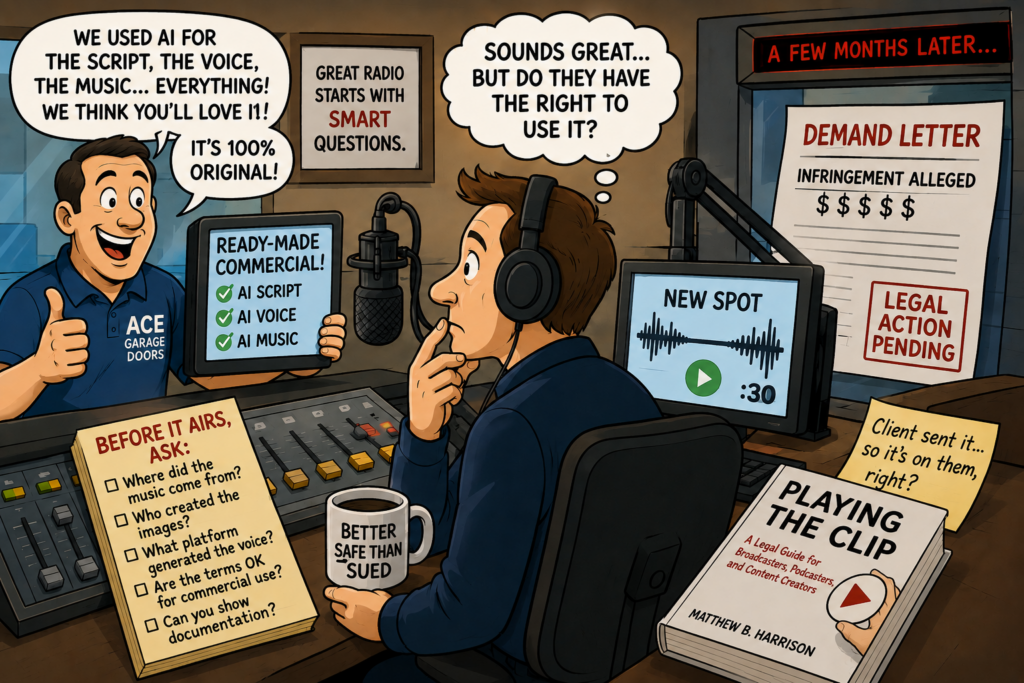
 A local advertiser sends over a ready-made commercial. The music is catchy. The script is polished. The production value is surprisingly good for a company that spends most of its day installing garage doors.
The salesperson approves it. Traffic schedules it. The spot airs.
A few months later, somebody else’s lawyer hears it too.
Many media professionals assume that when an advertiser supplies content, the advertiser has already secured whatever permissions are necessary to use it. Sometimes that’s true. Sometimes it isn’t.
If a commercial contains copyrighted music, photographs, video, artwork, or other protected material, the fact that it came from a client does not automatically end the discussion. The advertiser may have obtained the rights. The advertiser may have assumed someone else obtained the rights. The advertiser may never have asked.
Artificial intelligence is creating new versions of the same problem.
Recently, I was asked about a commercial generated almost entirely through AI. The advertiser used one platform to create the script and another to generate the voice. Everything sounded original. No famous song. No movie clip. No obvious red flags.
Yet one question remained:
How do you know the advertiser had the right to use it?
That question can lead in several directions. Did the AI platform permit commercial use? Was the voice modeled after a real person? Does it sound enough like a celebrity to create endorsement concerns? Can the advertiser demonstrate where the content came from and what rights accompany it?
Fortunately, the solution is usually simple. Ask the advertiser.
Most legitimate advertisers are happy to explain how the content was created and what rights they possess. The conversation often takes only a few minutes.
Broadcasters, podcasters, streamers, and digital creators all face the same reality. Before a commercial airs, someone should know where the content came from and whether the necessary rights exist.
The technology may change. The question remains remarkably durable: How do you know you had the right to use this?
Matthew B. Harrison is a media and intellectual property attorney who advises radio hosts, content creators, and creative entrepreneurs. He has written extensively on fair use, AI law, and the future of digital rights. Reach him at Matthew@HarrisonLegalGroup.com or read more at https://harrisonlegalgroup.com.

 leadership, and business acumen that have helped drive our growth across audio, digital, podcasting, streaming, and emerging media platforms. As we continue expanding our portfolio and creating innovative opportunities for advertisers and strategic partners, Isaiah’s ability to execute forward-thinking solutions makes him the ideal leader for this role.”
 …I’m sharing promo copy now airing on my client stations, which addresses listeners’ – and advertisers’ — 2026 apprehensions:
 Cumulus Media VP of programming operations Doug Hamand says that he is retiring at the end of June. Hamand served for more than two decades with iHeartMedia and its predecessors before joining Cumulus Media in the corporate programming role. He posts to Facebook, “I’ve had a ball. It’s hard to believe that when I started 48 years ago, this day would ever come — but here we are. I’m excited to share that I will be retiring at the end of June.”
 and Gothamist newsrooms, and Delahunty is now head of WQXR. Tanner says, “Stephanie, Emily and Eileen are exceptional, forward-looking leaders with deep commitment to excellence in journalism, culture and storytelling. As audiences increasingly engage with content across multiple platforms, we’re focused on creating experiences that connect our award-winning newsrooms, podcasts, live events and cultural partnerships. I’m excited to see the continued collaboration across NYPR as we strengthen our mission and help shape the future of public media for the next generation.”

















 and television professionals facing acute hardship due to catastrophic illness, disaster, or other life-altering circumstances. BFoA president Tim McCarthy states, “We have a responsibility to stand beside our fellow broadcasters when devastating illness or catastrophe turns their lives upside down. Giving Day is an opportunity for every broadcaster — individuals and companies alike — to make a meaningful difference for colleagues facing unimaginable challenges. Our industry takes care of its own, and together we can ensure no broadcaster faces hardship alone.”
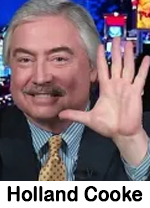 If you are doing talk radio, much of your programming is syndicated. If you do music radio, your most formidable competitors are robotic streams that live in the cloud. Either way, YOU, being local, can make friends — and money — if you plan now to exploit these occasions.
 committed to raising awareness for brain cancer. Audacy Chicago VP of sports programming Mitch Rosen says, “More than 1,900 listeners rallied together to pledge donations, and we are deeply moved by their incredible generosity. Through the stories shared by our hosts and guests, we see firsthand how cancer impacts families. This radiothon is a reminder that no one has to fight alone. Our heartfelt thanks go out to our community, sponsors, team, and our great partner, the Chicago Cubs.”
 Megan Lazovick, vice president, Edison Research at SSRS and will offer a look at the U.S. podcast audience through multiple lenses, including: Reach of podcasts among U.S. consumers from The Infinite Dial; Share of daily time spent with podcasts from Share of Ear; and Content preferences from Edison Podcast Metrics.
 also shining a spotlight on the BFOA’s charitable mission of providing critical financial assistance to broadcasters in need.” The event will feature radio executive Dan Mason, who will meet attendees and share insights from his remarkable career in broadcasting from behind the microphone to the head of the CBS Radio. BFoA president Tim McCarthy comments, “The Broadcasters Foundation’s Media Mixers have become one of the most important gatherings for the future of our industry, bringing together rising broadcast professionals, influential executives, and legendary broadcasters in one room. Broadcasting is built on relationships, mentorship, and community, and this event captures the very best of what makes our business so special while also supporting broadcasters facing critical need.”

 Mike Hulvey says, “Sabina’s leadership experience, industry knowledge and understanding of broadcasters and the local communities which they serve make her an outstanding addition to the RAB team. Her passion for helping media organizations grow and evolve will further strengthen the support, education and resources RAB provides to its members.” Widmann comments, “I’m excited to join RAB during such an important time for the industry. Radio and audio continue to play a vital role for our communities and advertisers. I look forward to working with RAB’s members and team to help provide meaningful resources, education and support that help broadcasters navigate continued change and growth.”
 Adam Smith‘s “invisible hand” is a metaphor he used to describe how individuals pursuing their own self-interest in competitive markets can unintentionally produce socially beneficial outcomes – such as efficient allocation of resources and increased wealth. Smith uses the phrase in The Theory of Moral Sentiments in 1759 and more famously in The Wealth of Nations in1776.
 The Radio Hall of Fame announces this year’s class of inductees and among them are iHeartMedia chairman Bob Pittman and WFAN, New York morning drive personality Boomer Esiason. The 2026 inductees will be honored at the 2026 Induction Ceremony on Thursday, October 8 at the Fairmont Hotel in Chicago.
 high since 2022 and 28% indicate they commute some days; 2) 85% of average Americans are commuting to work, slightly less than marketers and media agencies (92%); 3) Since AM/FM radio is the “soundtrack of the American worker,” it is the ideal media platform for advertisers; 4) AM/FM radio’s share of ad-supported audio in the car has been consistently dominant at an 83% share, according to Edison Research’s Q1 2026 “Share of Ear” report; 5) Average Americans are clocking slightly more days at work (4.7) compared to the advertising industry (4.4); and 5) Marketers/agencies and average Americans are most likely to work in the office Monday through Thursday with Friday seeing the lowest % of in-office work for both groups.
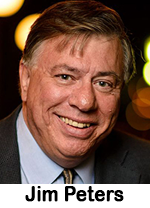 debuted on the internet as a live, video-based podcast on July 31, 2023, and recently streamed its 350th episode. Peters tells TALKERS, “We went from no presence on TikTok to the top one percent in five months. And amazingly, relatively speaking our average views by TikTok standards aren’t that high. But we generate so much content – from four shows weekly we’re posting about 40 shorts a week – that apparently that makes up for it.”
 Although I don’t have a machine to play it, I have saved the cart. December 9, 1980, the sad morning-after John Lennon died, Charles Osgood, doleful: “I read the news today. Oh boy.” That morning’s CBS World News Roundup – and on-hour newscasts throughout that day – delivered more moments that would keep you sitting in a parked car at your destination. As they would 3 months later when President Reagan was shot. Then soon again when Pope John Paul II was severely wounded in St. Peter’s Square. And five years yonder, when the Space Shuttle Challenger exploded just 73 seconds into its flight.
 a year ago. Additionally, Urban One reports a net loss of approximately $3.1 million for the period, compared to the net loss of $11.7 million it reported in Q1 of 2025. Urban One CEO and president Alfred C. Liggins, III states, “First quarter revenue was soft across all divisions, with TV down 18.5%, Digital down 33.5%, Radio down 6.4% and Reach Media dropped by 17.0%. We had budgeted for a down-quarter in our Radio and TV divisions, but not at Reach Media and Digital… In Radio, our Miller Kaplan local Radio revenues were down 5.5% year-over-year vs the market down 7.1% and national was down 8.2%, vs the market down 6.7%. Including local digital, first quarter Radio revenue was down 2.8%. We did approximately $1.0 million in gross political advertising in the first quarter and have another $1.0 million on the books for the second quarter. Radio second quarter is pacing down 2.6%. We are in a turnaround situation at Reach Media, where we continue to be impacted by a weak marketplace, key client attrition and sales team re-building. Digital also had a soft first quarter, driven by weak advertiser demand but second quarter is forecasted to be up, and there is optimism for the back half of the year based on the current sales pipeline.”
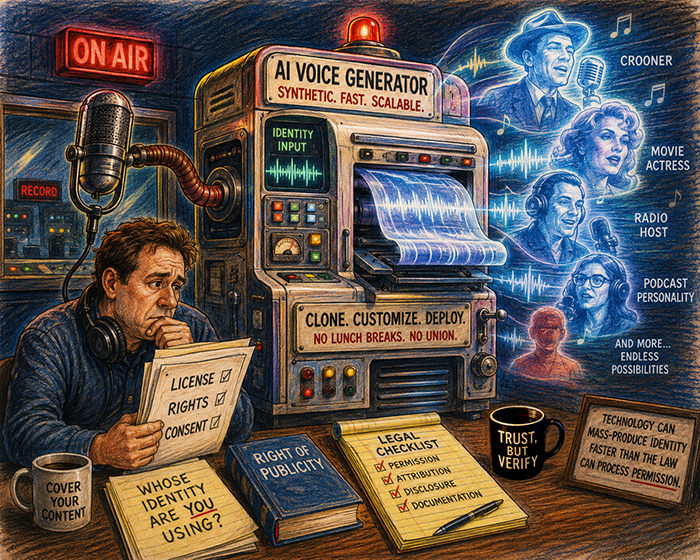
 For years, Harrison Legal Group has informed media creators about the legal risks of using copyrighted clips, songs, images, and broadcasts without permission. The issue became central enough to inspire my book, Playing the Clip: The Definitive Digital Media Creator’s Guide to Fair Use (TALKERS Books, 2026). The premise was straightforward: modern media runs on borrowed material, but borrowing comes with legal exposure.
 SVP, Sport Studio & Entertainment since 2023. ESPN president of content Burke Magnus states, “In his nine years with ESPN, Mike has continually demonstrated his collaborative leadership style and excellent organizational and management skills, as well as his boundless vision, innovation and creativity. I am confident that he will continue to do so in his new role and help make us better every day.” The company says Foss will continue collaborating closely with “The Pat McAfee Show” and he will oversight of ESPN’s Creative Content Unit and Studio Enhancement Team.
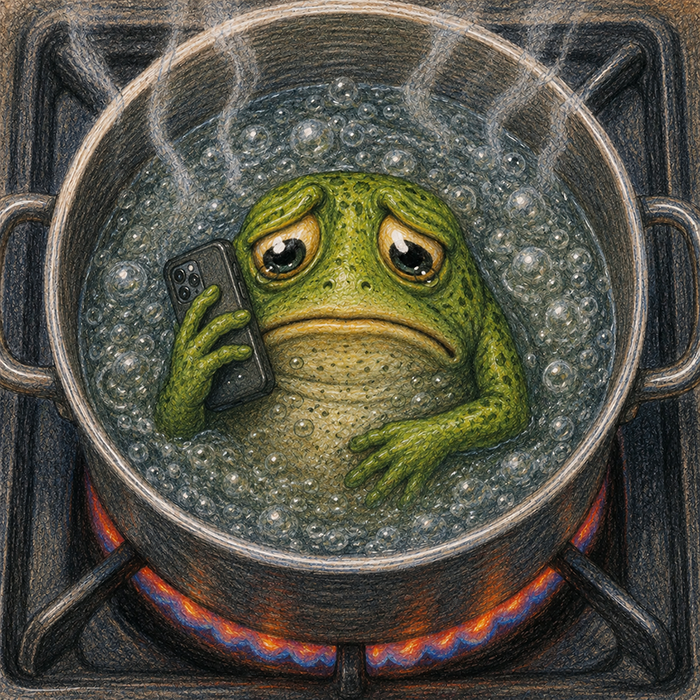
 These are scary times. People on all sides of the mic are on the front lines. Not just “them,” otherwise referred to as the audience. We try to fool ourselves into thinking that society and civilization are relatively “safe.” However, simply being alive and stepping outside in the morning, turning on the computer, or checking the annoyingly smart phone, puts us smack dab in the middle of a war. Literally and figuratively. But like so much else in this modern era, this war lacks foundation.