 Incorporating copyrighted material, such as video clips or actualities, can enhance your content, but understanding fair use is critical to avoid legal trouble. Fair use permits limited use of copyrighted material for purposes like criticism, commentary, news reporting, or parody without needing permission. Courts assess fair use based on four factors: purpose and character of the use (is it transformative?), nature of the work (factual vs. creative), amount used, and the effect on the market. Learn practical tips on safely navigating fair use, including using brief excerpts, transforming content, and considering market impact.
This is the second in a series of articles addressing the broader topic of fair use for media creators. Click here for the first installment.
Understanding Fair Use: Purpose and Character of the Use. When using copyrighted material belonging to others in the creation of your own media content, it is important to understanding the concept of fair use. Fair use allows copyrighted material to be used without permission for purposes like criticism, commentary, news reporting, education, or parody. It’s not an absolute right but rather a defense you can claim if challenged. Courts assess fair use based on four key factors, all which broadcasters should carefully consider.
The first factor of fair use that courts consider is the purpose and character of the use. Specifically, is the use of the material transformative? Transformative use is a key concept that can often determine whether your content qualifies as fair use or not – and really is the heart of the inquiry.
What Does Transformative Mean? In legal terms, a use is considered transformative when it adds new expression, meaning, or message to the original work. This is different from merely copying the work or using it for the same purpose as the original creator. By transforming the material, you’re creating something that serves a different purpose or offers new insights, rather than simply replicating the original content.
Example: Auto-Tune the News. One of the most famous examples of transformative use is the Gregory Brothers’ viral “Auto-Tune the News” series, which turned news clips into catchy, auto-tuned songs. In 2010, they took an interview clip with Antoine Dodson, who was describing an attempted home invasion, and turned it into the widely popular “Bed Intruder Song.” In this case, the original news segment was purely factual—a straightforward broadcast of a local news report. However, by remixing the clip with auto-tuned vocals and adding music, the Gregory Brothers transformed the clip into a piece of entertainment and social commentary. This new purpose—entertainment and humor—was distinct from the original intent of simply delivering news, making it a classic example of transformative use. Although the raw news footage was copyrighted, the remix was so different in tone, presentation, and purpose that it was protected under fair use. The transformation added new creative elements and reframed the original material as a humorous, catchy song.
How Does This Apply to Radio? Let’s take this concept and apply it to radio, a medium that often uses clips from other sources. Imagine you’re running a talk show, and you want to use excerpts from a political speech to make a satirical point about current events. If you simply play the speech on air without any changes, it may not qualify as fair use because you haven’t transformed the original material – you’re just rebroadcasting it. However, if you take portions of the speech and then critique, analyze, or poke fun at it, you’re more likely to be in the clear. For example, if your show involves playing clips of political speeches interspersed with humorous commentary or parody, you’re repurposing the original work in a new and transformative way—much like “Auto-Tune the News.”
Another example could be a radio show that plays clips from popular songs but recontextualizes them within a larger discussion of musical trends or cultural history. If the song clips are used to illustrate a point and not simply for entertainment value, the new purpose—educational or critical analysis—can qualify the use as fair. In cases involving parody or political commentary on radio, the fair use defense has sometimes been successful. For instance, radio shows that use short clips from speeches, interviews, or news broadcasts for commentary, satire, or criticism can invoke fair use if the content is transformed for a new purpose.
One example is when talk radio shows play brief excerpts of copyrighted works (e.g., speeches, news clips) to critique or analyze them. If the use is transformative and doesn’t replace the original work in the marketplace (i.e., people wouldn’t listen to the radio show as a substitute for the original), courts have shown a willingness to accept fair use in such contexts. However, detailed legal battles involving radio stations using copyrighted material for parody or commentary are less common than those involving music licensing.
Example: Rogers v. Koons (Rebroadcast of News Content). While not as widely reported as music-related cases, one example of a copyright infringement suit involving the rebroadcast of talk content was a case where a news organization sued a radio station for replaying portions of its copyrighted interviews and reports without permission. In cases like this, radio stations or broadcasters may try to claim fair use based on the purpose of the rebroadcast, such as using a portion of an interview for commentary, satire, or news reporting. However, if the content is used purely to replay the original, as opposed to being transformed into a new, critical, or educational piece, the fair use defense may not succeed. For example, news stations may license their talk content (like interviews or original reporting) through syndication deals. If a radio station broadcasts this content without securing the necessary licensing agreement, they may face a copyright lawsuit.
Example: Talk Show Hosts and Syndicated Content. A real-world scenario can involve syndicated talk shows or podcasts that are copyrighted. Radio stations can face lawsuits if they replay this content without proper authorization. An example would be stations rebroadcasting popular talk radio shows or political commentaries (such as those by syndicated hosts like Rush Limbaugh or Howard Stern) without purchasing broadcast rights. This unauthorized use can lead to legal action from the copyright holders. For example, if a station replays clips of an interview conducted by NPR or a news network for entertainment or even news purposes, and it doesn’t transform the content for criticism or commentary, it may be violating copyright law. Radio companies might try to claim fair use, but the courts will look closely at whether the replay served a new, transformative purpose or was simply a verbatim rebroadcast.
Key Considerations for Broadcasters. To better understand whether your use of copyrighted content is transformative, ask yourself:
• Are you adding new meaning or message? The more your work transforms the original content – such as using it for commentary, criticism, or satire – the more likely it qualifies as fair use.
• Does your use serve a different purpose? If you’re using the content for a new purpose, like entertainment, education, or social commentary, rather than simply duplicating the original, it can be seen as transformative.
• Are you just using the original for its own sake? If the copyrighted material is used in a way that does not add new expression or meaning, it’s less likely to fall under fair use. Transformative use is a powerful defense in fair use claims, but it’s not a guarantee. Always make sure your purpose and character are different from the original intent of the work, and when in doubt, seek legal counsel.
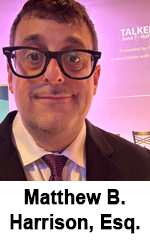
Media attorney, Matthew B. Harrison is VP/associate publisher, TALKERS; Senior Partner, Harrison Legal Group; and executive producer, Goodphone Communications. He is available for private consultation and media industry contract representation. He can be reached by phone at 724.484.3529 or email at Matthew@HarrisonLegalGroup.com
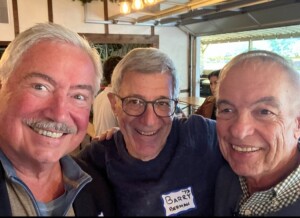 Old Friends and Colleagues Gather for CRN International Reunion. Some 50 long-ago colleagues gathered at a warm weekend reunion at a cozy restaurant in the Nutmeg State for what, in the 1970s, began as “Connecticut Radio Network.” It evolved into CRN International, a major advertising promotion agency, which ceased operations a decade ago. CRN SkiWatch reports aired across the USA, customized for each affiliate, and based on conditions reported by CRN’s army of spotters. Pictured above (l-r): consultant Holland Cooke; CRN International founder Barry Berman; and WABC, New York news personality, Joe Connolly. (NOTE: CRN International is not to be confused with long-active CRN Digital Talk Radio.)
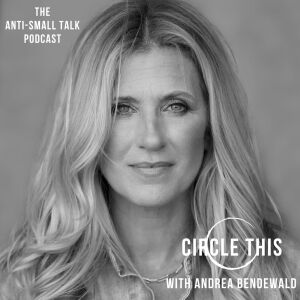 AdLarge Adds Innovative “CIRCLE THIS” Podcast to Client Stable. AdLarge, a pioneering podcast advertising agency, has announces the addition of “CIRCLE THIS with Andrea ‘Dre’ Bendewald” to the
  If a shark doesn’t swim, it dies. Radio is just fine, thank you, but it’s not swimming. Water, check. Tank, check, Sharks, check. Swimming to the next meal, nope. For the past 10 years at least, the radio show in every city is stuck in place and that sound in the distance that wakes you up at night is a death rattle.
 The research notes millennials (ages 27-42) are the most concerned at 83%. The survey finds people are feeling the effects of the higher costs of goods and services, and they remain concerned about inflation. In addition, 37% said their finances are in worse shape than four years ago. Thirty-four percent said their finances are about the same, while only 29% said they’re better off than they were four years ago. The research indicates more than half (52%) of Americans believe the U.S. presidency has a major impact on their personal finances. “We encourage every American to go out and vote,” said Dave Ramsey, personal finance expert and host of “The Ramsey Show.” “But remember, what goes on in your house is a whole lot more important than who’s in the White House. The research shows that less than half of Americans believe a written household budget is the way to win with money. That has to change, or nothing will.”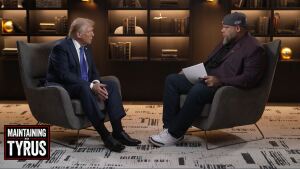
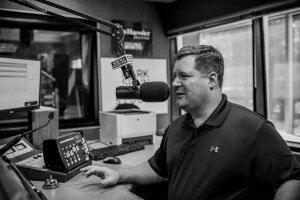
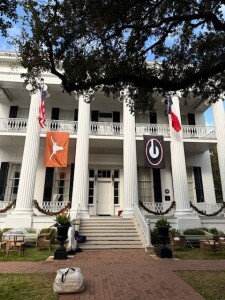 95.5 WSB, Atlanta (and nationally syndicated) TALKERS Heavy Hundred star, Erick Erickson is giving both sides an airing today (10/18) in his midday show that he’s broadcasting from the parlor in the Texas Governor’s Mansion (see pic at left) before UGA battles University of Texas tomorrow. He tells TALKERS, he’ll have on both Governors Gregg Abbott (R-TX) and Brian Kemp (R-GA) to talk about the border, the election, and football.
 Triton Digital has just released its
  Starnes Media Group is hosting a live, six-hour Election Night special for radio stations across the nation.
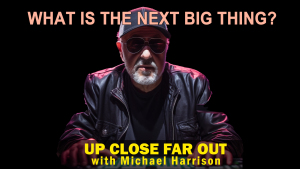 In this clip, he discusses the “next big topics” that will be discussed in talk radio and its associated forms of spoken word media. One of the many highlights of Harrison’s 48-minute keynote address was his observation that one of the next big things on the talk media menu is invariably something that is unknown or unexpected that comes out of the blue and literally changes the conversation. He pointed out that the U.S. Rep. Gary Condit (D-CA)/intern Chandra Levy murder mystery scandal was the biggest talk media story for weeks during the middle of 2001 – until the events of 9/11 completely wiped it off the talk shows in one fell swoop. Beyond that, Harrison discusses the growing national conversation role of such topics as societal anxiety, clean water, time management, privacy and technology’s assault on our humanity. To watch the brief clip on the TALKERS MEDIA YouTube channel, please
 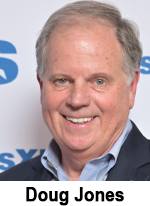 “The CloakRoom with Former Senator Doug Jones” will air live tomorrow from 6:00 pm – 8:00 pm ET on channel 127. According to company sources, with just a few weeks remaining before the November 5 elections, Senator Jones will engage with Progress listeners, taking calls to discuss the pressing news stories of the day. He’ll also leverage his personal political experience to analyze the key senatorial races, as well as the presidential election. In addition, the former senator will be joined by Julie Chavez Rodriguez, VP Kamala Harris’s campaign manager, as well as a surprise guest. “The stakes in this election could not be any higher,” Jones tells TALKERS. “I can’t think of a better way to talk directly with voters nationwide and have real conversations about the issues at the top of their minds as we head into Election Day. As a regular guest on SiriusXM’s Progress channel, I know they have a passionate audience with a lot of important, fresh subjects to discuss, so this should be a lot of fun.” The show will have its first run live during the usual time slot of “The Dean Obeidallah Show.”
  The special will also replay multiple times throughout the week and will be available anytime on demand on the SiriusXM app. Progress is SiriusXM’s channel dedicated to amplifying progressive viewpoints. The channel features a wide range of voices including Zerlina Maxwell, Stephanie Miller, Thom Hartmann, Michelangelo Signorile, Dean Obeidallah, John Fugelsang, and more. Photo by Joy Asico-Smith / AP for SiriusXM.
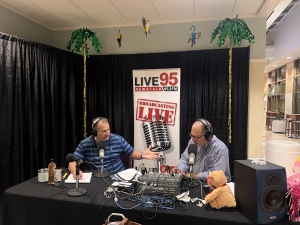 The 22nd annual Children’s Miracle Network Radiothon benefitting McLeod Children’s Hospital was recently held in Florence, SC. During the Radiothon, Community Broadcasters’ stations WWKT 99.3 The Cat, (news/talker) WFRK Live 95.3, WPDT Almighty 105.1 and WSIM 93.7 Frank FM hosted live broadcasts from McLeod Children’s Hospital. Pictured above: former SC Lt. Gov. Ken Ard and station VP operations Dave Baker (r) during broadcast on news/talk Live 95. “As always, at Community Broadcasters, we are always doing our best to live up to our name, and stand for the communities that we broadcast in,” company VP Wayne Mulling tells TALKERS. “And we are proud of what we have been able to do in hosting the Children’s Miracle Network Radiothon each year to raise funds for McLeod Children’s Hospital and Children’s Miracle Network. We are humbled by the amount of people that have been helped directly through the years by these organizations, and glad to play a small part in keeping this active and ongoing to continue to help others every year. We invite you to be a part as well.” DJs and talk show hosts asked listeners for donations in support of the programs and technology that McLeod offers to families in the Pee Dee. Listeners also had the opportunity to hear real stories from those who have benefited directly from the McLeod Children’s Hospital, in addition to interviews with doctors, nurses and employees who all share the same passion. “What an exciting Radiothon we had this year raising more than $127,000 for the McLeod Children’s Hospital!” says Davis Sawyer, Children’s Hospital fund manager. “The hard work and dedication from all involved truly make a difference in the lives of the children treated in McLeod Children’s Hospital. I value the partnership and friendship we have with Community Broadcasters and look forward to growing this partnership as we continue to impact the children we serve.” There was also a live auction throughout the week, with some bids surpassing $500. Auction items were donated from collegiate and professional sports teams, nationally known musicians and local businesses. At the conclusion of the Radiothon, this year’s donations equaled $127,098. All donations will remain here in the Florence area to help fund life-saving McLeod programs, and purchase new technology to better serve the Pee Dee families. To learn more about the annual Radiothon, check out this year’s sponsors, or make a donation, visit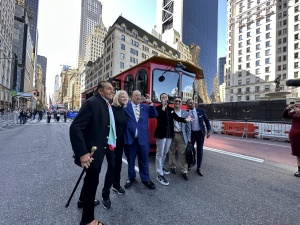
 “The Doug Gottlieb Show” will debut on Northeast Wisconsin airwaves, alongside the return of “The Mike Heller Show” to WSCO, while “The Show” continues with host Eric Balkman. Starting October 28, “The Doug Gottlieb Show,” a FOX Sports Radio nationally syndicated program, will air weekdays from 2:00 pm – 4:00 pm. “Our show is so excited to expand our footprint in Wisconsin!” said Doug Gottlieb. “Everywhere I go, people ask where they can hear us…now the answer is WSCO! Let’s go!” Woodward Community Media’s talk brand manager, B.J. DeGroot, shared, “With Doug now serving as head coach for UW-Green Bay Men’s Basketball and continuing his national show, it was essential to bring his voice to sports fans in Northeast Wisconsin.” Additionally, WSCO will welcome back the statewide syndicated “Mike Heller Show,” which will air weekdays from 12:00 noon – 2:00 pm. Heller, a local favorite and graduate of Appleton East High School and UW-Oshkosh, previously hosted the show on WSCO from 2016 to 2019. “The Show with Leo and Balky’ will now be rebranded as “The Show with Balky” following John Leopold’s decision to step back to focus on his sales executive role. Balky will continue as the solo host from 11:00 am – 12:00 noon. DeGroot added, “We are thrilled to enhance our local and regional sports coverage by bringing Doug’s show to our audience and welcoming Mike back to Northeast Wisconsin.”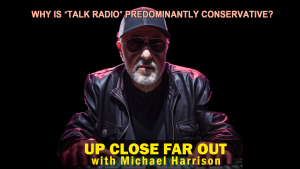
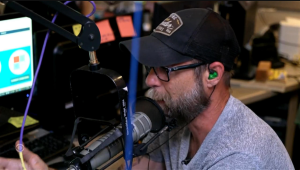
 According to a report in The Forum, Fieldstone Group, which owns Fargo heritage radio station “The Flag” at AM 1100 / FM 92.3, is planning to purchase WDAY Radio from Forum Communications, owner of WDAY-TV and The Forum. In November 2020, Fargo-based Fieldstone Group began managing WDAY. If the sale is approved by the FCC, Fieldstone will own the 102-year-old AM radio station, its online properties, social media accounts, and transmitter/tower site. Terms of the sale were not immediately disclosed by the buyer or the seller. “We are thrilled to see this day arrive,” said Steve Hallstrom, president and managing partner of Fieldstone Group. “We thank the Marcil family and the leaders and staff of Forum Communications for a great partnership these last four years. WDAY Radio has always had a tradition of serving the community with great news, weather, ag, and sports and we’ve enjoyed the journey of growing those elements with the help of our friends and partners at Forum Communications.” Hallstrom said it’s been important to have WDAY Radio “serve the community with quality local programming from sunrise to sunset, which is becoming a rarity in our business. I also want to thank our listeners for their loyalty and the many local businesses and organizations that have trusted us with their advertising and marketing dollars.” Fieldstone Group also owns KTGO “The Flag” in Tioga, N.D, at AM 1090 and FM 92.7, three stations in Grand Rapids, Minn: KOZY 1320 AM / 93.1 FM, KMFY 96.9 FM and KBAJ 105.5 FM; and The McKenzie County Farmer newspaper based in Watford City, N.D. “WDAY Radio is North Dakota’s longest-serving broadcast operation,” said Scott Hennen, VP/partner of Fieldstone Group and general manager of WDAY Radio from 2001-2009. “It is an honor to take ownership of this iconic community source of information.”
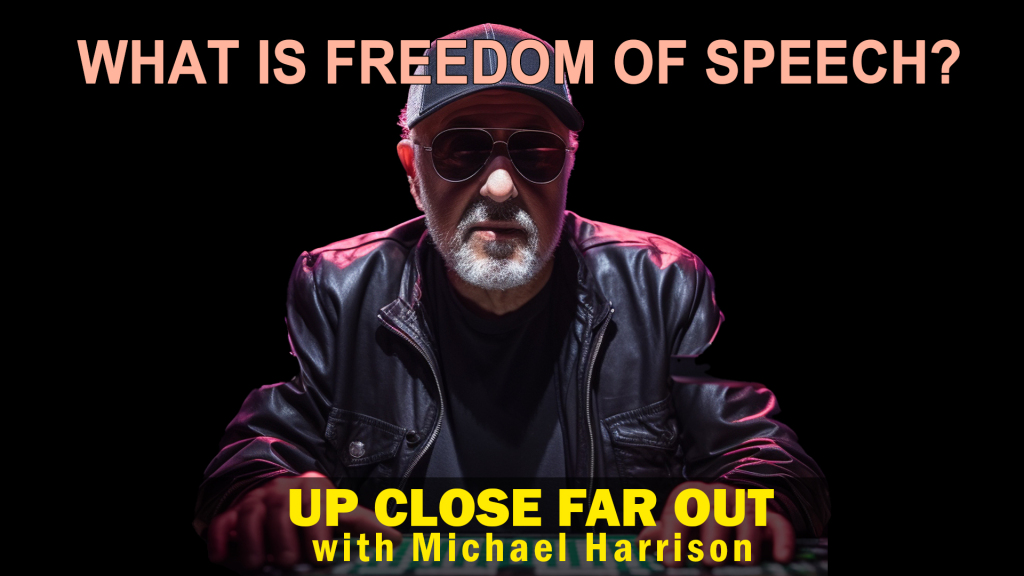
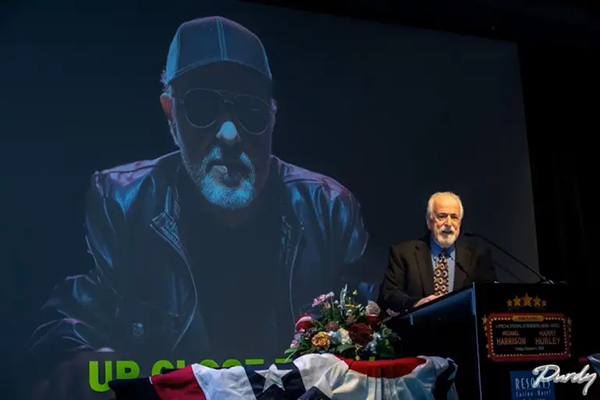 TALKERS publisher Michael Harrison addressed a packed house of New Jersey political, civic, and business leaders at last Friday’s Hurley in the Morning Foundation Charity Dinner in Atlantic City (10/4) discussing the biological and sociological impact of modern era communications technology. In this clip, he discusses the potential influence of AI on the talk show host job market. One of the many highlights of Harrison’s 48-minute keynote address was his observation that it is very possible for robots powered by artificial intelligence to be able to hold multi-faceted on-air conversations with each other or with guests or callers by tapping into their ability to instantaneously access every talking point already out there in cyberspace – left, right, or center – and to present them with an endless array of voices and attitudes. To protect their jobs and future against this formidable competitor, Harrison advises talk show hosts to significantly “up their game” and operate with more originality outside the realm of hackneyed talking points. To see a brief clip of Harrison’s comments please