

Features

“The Greatest Game Ever Played”
im

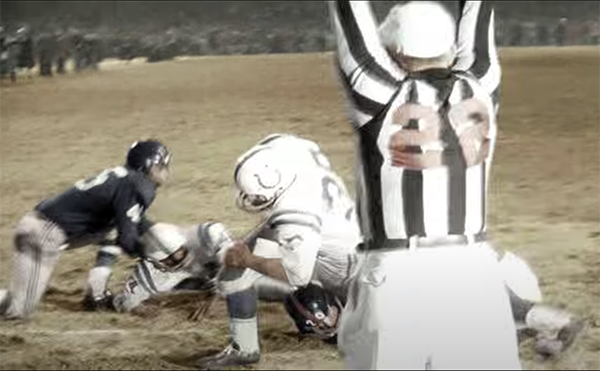
Baltimore’s Alan Ameche plunges over the goal line for the winning touchdown!(courtesy YouTube/NFL Films)

On the field? Maybe. In its impact on pro football and sports broadcasting? Absolutely!

By Mark Wainwright

imIt was one of those indelible moments in sports history: The 1958 NFL Championship, played on December 28, 1958 at Yankee Stadium in New York. The Baltimore Colts defeated the New York Giants 23-17 in sudden death overtime. 65 years later, the events of that Sunday afternoon still resonate throughout pro sports and sports media.

In 1958, the National Football League was far from the huge phenomenon we see today. Americans generally had much more interest in baseball, and during the Fall, college football captured the attention of sports fans on Saturday afternoons. The annual Army/Navy and Harvard/Yale clashes were national news stories, and fans followed the exploits of powerhouses like Notre Dame and Michigan. For most fans, pro football was an afterthought. Even in cities with pro franchises, the NFL clubs often played runner-up to the local baseball teams.

Baltimore and New York were two exceptions. The Colts were upstarts — Baltimore didn’t get an NFL team until 1953 — and the city quickly fell in love with the Colts; on game days, Baltimore’s Memorial Stadium was described as “the world’s largest outdoor insane asylum.” Meanwhile, the Giants had been part of the NFL since 1925, and they were considered the league’s most glamorous team, located in the world’s media capital. Two very different teams, both with passionate fan bases, playing a nationally-televised title game in New York City… indeed, America was destined to notice pro football that day.

Seventeen Pro Football Hall of Fame inductees were in the stadium that afternoon, along with a Heisman Trophy winner (Baltimore running back Alan Ameche). The Colts were led by quarterback Johnny Unitas and defensive end Gino Marchetti. The New York offense revolved around halfback Frank Gifford, while linebacker Sam Huff anchored the defense.

There were all-stars in the broadcast booths, as well. NBC’s national telecast was assigned to Chris Schenkel and Chuck Thompson; both of these gentlemen are now legends of their industry. Joe Bolan and Bill McColgan called the game for NBC’s national radio feed, while Les Keiter did the play-by-play for WCBS Radio in New York. And Bob Wolff did the radio call for Baltimore’s WBAL. Wolff was assisted by an eager teenager who worked as his spotter… a young man named Maury Povich (yes, that guy).

The first half, frankly, wasn’t anywhere near “greatest game” territory. While both defenses played fairly well, the offenses looked sloppy and disorganized, and the two teams combined for six turnovers in the first thirty minutes. The Giants managed only a Pat Summerall field goal, while the Colts — almost in spite of themselves — took a 14-3 lead into halftime. It could have easily been 17-3, but Sam Huff blocked a Baltimore field goal attempt.

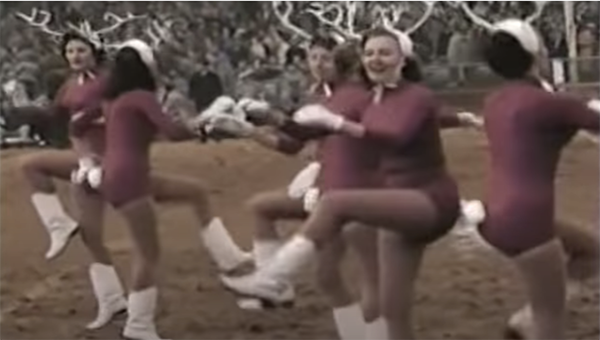
So, what was the halftime entertainment? Over the years, Super Bowl halftimes have featured performers like Lady Gaga and Michael Jackson. What 1950’s superstars would perform in the “super bowl” of 1958? Elvis Presley? Brenda Lee, maybe? Nope. It was the Baltimore Colts Marching Band, with their prancing majorettes looking quite fetching in their red leotards and reindeer antlers…
im

The Baltimore Colts Marching Band majorettes, in “reindeer” mode!  (courtesy YouTube/NFL Films)

Baltimore’s offensive woes continued into the second half. Early on, the Colts drove the ball to New York’s 1-yard line, but Alan Ameche was stopped for no gain on third down, then Ameche was tackled for a loss when he attempted to run wide on fourth down. In an interview decades later, Baltimore’s Lenny Moore revealed that Ameche botched the play; it was supposed to be an option pass, but Ameche didn’t hear Johnny Unitas’ signals correctly, and he ran instead of throwing a short pass to a wide open Colts receiver.

That goal-line stand awakened New York’s offense, and they needed only four plays to score their first touchdown to make it 14-10. The Giants then took a 17-14 lead early in the fourth quarter on a Frank Gifford touchdown reception, and while the Colts responded with two effective drives, they came up empty on both possessions; one ended with a missed field goal, the other ended when Unitas was sacked twice, taking the Colts out of scoring range. The Giants’ offense only needed a first down or two to ice the game, but Frank Gifford was stopped on a critical third down run. For decades, Gifford insisted he made the first down; Baltimore’s Gino Marchetti suffered a badly broken ankle in the pileup, and Gifford often said that amidst the chaos and confusion of tending to Marchetti’s injury, the officials did not spot the ball properly. However, when ESPN restored the footage for a 50th anniversary broadcast in 2008, an accident reconstruction expert analyzed the images and determined that Gifford was, indeed, just short of the first down (more about that ESPN program in our Epilogue). The Giants chose to punt the ball, and the Colts took over on their own 14-yard line.

This was the moment when Johnny Unitas began his ascent to legendary status. With just two minutes left, he moved the Colts downfield quickly. While there were several misfires, he made four critical completions, including three straight passes to his star receiver Raymond Berry. Those last three plays moved the ball 62 yards to the Giants’ 13-yard line, and with just seconds remaining, the Colts rushed Steve Myhra out to attempt a tying field goal. Myhra had struggled with field goal attempts all season, and Baltimore fans held their collective breath until the ball went through the uprights. The fourth quarter ended tied 17-17.

So… what happens next? Many of the players and coaches weren’t sure. It was not unusual for football games to end in a tie, but this game was for the NFL title. Would the teams be declared co-champions? Fortunately, the NFL had recently instituted an overtime rule for championships, and it would be decided on the field. The teams would play pure “sudden death.” The first team to score in any manner would win, and they would play for as long as it took.

The Giants won the toss and chose to receive, but they were not able to mount any kind of drive, and they punted the ball back to the Colts. Unitas now had all the time in the world, and Johnny U methodically moved the Baltimore offense to the New York 8-yard line. It was first-and-goal, and then, suddenly… the NBC Television feed disappeared! Nothing but snow on the screen!

This caused immediate panic in NBC’s control room, not to mention in homes across the nation, as viewers — particularly in Baltimore — bolted from their living rooms and scrambled to find the nearest radio. It was one of the worst possible moments to lose the live feed of a TV broadcast. And then…

A fan ran onto the field! Play was halted for nearly a full minute before New York’s Finest chased him down and escorted him to the sideline. Over the years, there has been endless rumor and speculation about this incident. Photographs show the fan was well-dressed and appeared very cooperative when the cops took him away; he certainly didn’t look like a drunken lout. Who was this guy?

Whoever he was, he is now the stuff of sports broadcasting legend. More than six decades later, it is widely believed that he was an NBC employee who realized the broadcast was interrupted and ran onto the field — or perhaps was told to run onto the field — to delay the game long enough to give the TV crew enough time to find a loose cable and fix the connection. As far as I know, he was never identified and the story has never been confirmed. One hopes the fellow received a bonus and a promotion for his quick thinking!

When the game resumed, the Colts ran two plays to reach third-and-goal from just over a yard away. A field goal attempt might have been the obvious choice, but Baltimore coach Weeb Ewbank was leery of sending a struggling Steve Myhra in to kick. Meanwhile, the coach trusted Unitas completely, and he left Johnny U and the offense on the field. A routine handoff to Alan Ameche secured a 23-17 Baltimore victory.

The game was breaking news nationwide. It was a big topic of Sunday afternoon dinner conversations, and it was headline news on front pages and in sports sections the following day. NFL and television executives soon realized that professional football could become a very valuable property, and they started making plans for increasing television coverage and boosting marketing exposure for the teams, the star players, and the sport overall. And down in Dallas, Lamar Hunt — a son of oil tycoon H.L. Hunt — started thinking about owning his own football team. Those dreams eventually led to his role in establishing the rival American Football League, which merged with the NFL just over a decade later. Historians and sportswriters have studied the 1958 title game, and they generally agree that event was the start of professional football growing into the colossus it has since become. It was the aftermath and the impact  — as much as the drama of the game itself — that led them to calling it “The Greatest Game Ever Played.”

*************************************************************************************************************

EPILOGUE

As I’ve mentioned in previous articles, television did not put a high priority on archiving sports events back then. There is no known videotape of the game; videotape was in its infancy, and while NBC presumably had one or two of the early machines available, it seems nobody bothered racking them up. There is no known kinescope film recording of the television broadcast, either. Fortunately, there was plenty of film footage of the game, both from overhead and from sideline views. This footage was shot by NFL Films, as well as various newsreel cameramen working for different organizations.

On the 50th anniversary of the game in 2008, ESPN produced a special documentary that used the old footage to re-create much of the action. The historic clips were colorized for broadcast, and the action was interspersed with comments and memories from players, fans, and broadcasters who were there. (Sadly, many of these gentlemen have passed away in the fifteen years since.) Most of Bob Wolff’s Baltimore radio broadcast was saved, and the NBC national radio call was saved almost in entirety. This historic audio was used in conjunction with the preserved video. Several versions of the ESPN special can be found on YouTube; here is a link to one of those.

Others have collaborated on an almost-complete reconstruction of the game, using the original newsreel and NFL footage, some of the colorized ESPN content, stock footage, and still photos. The audio portion uses the NBC national radio call by Joe Bolan and Bill McColgan (complete with vintage commercials!). There are several uploads of this project on YouTube, and there is also a version on the Internet Archive, available here. If you’ve never seen any of “The Greatest Game Ever Played,” punch it up on your laptop and enjoy!

Mark Wainwright is a long-time radio personality and voiceover performer. He was most recently the morning host at WSYR in Syracuse; he is also a Baltimore native and life-long Baltimore Colts fan (and he still hasn’t gotten over the Colts leaving town and moving to Indianapolis decades ago!). He can be reached at: markwainwright@earthlink.net
Industry News

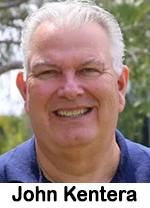
John Kentera Exits 97.3 FM The Fan

The San Diego Union-Tribune’s John Maffei reports that KWFN-FM, San Diego “97.3 The Fan” midday host John Kentera is exiting the station after his Friday (12/22) program. Kentera tells the paper he wasim told by Audacy management he’s being let go as the company is looking for a change in middays and wants a “less caller-driven show.” Kentera adds, “I prepare like crazy, I think my show is good, well-received, so I was stunned when I was told I was being fired.” The 65-year-old Kentera has been in radio for 40 years, the last four with KWFN-FM and says he does not plan to retire. “I’m going to look for an opportunity in sports… in or out of the radio business. I’m not done yet.” Read the Union-Tribune story here.
Industry News

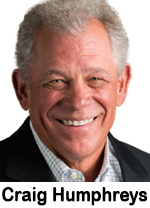
Craig Humphreys Retires from OKC’s “Sports Animal”

The Oklahoman reports that today (12/21) was the last day on the air for Oklahoma City sports talk personality Craig Humphreys on WWLS-FM “The Sports Animal,” where he’s been broadcasting forim more than 30 years. The 71-year-old Humphreys has planned to retire for some time, and he tells the paper that he and his wife Bev, who’s battling cancer, want to spend more time together. Humphreys’ career in OKC sports talk is one that parallels the growth of sports radio in the U.S. Interestingly, he and FOX SportsSkip Bayless are boyhood friends who remain close to this day. Read the Oklahoman story here.
Features

Ladd Have Mercy

imLOS ANGELES – As students, enthusiasts and caretakers of this wonderful medium, we’re keenly aware that radio’s “Golden Age” boasted an incredible array of entertainers and broadcasters.
With lifestyles, technology and society being what they are today, it’s almost inconceivable to imagine that families would actually gather around the radio and attentively listen – and indeed hang onto – each and every word that emanated from that mysterious entertainment-laden box sitting in the living room.

Fundamentally important back then, of course, was a concept known as “Theater Of The Mind.”

No one embodied and personified it better than one of the bigger-than-life talents of that era: Orson Welles.

Most are familiar with his epic “War Of The Worlds.”

Pictures Set In Songs

The list of other outstanding “Mercury Theater” presentations Welles was responsible for is much too lengthy to cite here, but his legendary “Theater Of The Mind” mystique lived on nightly in Los Angeles, where Jim Ladd was a welcome guest for Southern California listeners dating back to 1969 and hosted a regular show on SiriusXM’s Deep Tracks channel the past 11 years.

Theater Of The Mind so perfectly describes what Ladd tried to do, although it’s not radio drama in the pure sense. “What I [attempt] at night is to show you pictures and do that by playing sets of songs,” the (then) highly popular KLOS-FM, Los Angeles 10:00 pm – 2:00 am personality remarked to me. “If you follow the lyric content of each song, as well as the song’s emotional feel, it should tell you a story with a beginning, middle and end. Thus, it’s theater.”

Throwback To Creativity

In addition to providing his special spin to Theater Of The Mind, Ladd was also responsible for keeping another bit of radio history on life-support.

Most air personalities are required to adhere to strictly enforced music lists, but Ladd’s nightly, four-hour, Los Angeles air-shift was a throwback to the days of “free-form” radio.

The result was similar to what existed in April 1967, when a new phenomenon started taking shape. “That was the beginning of FM and this multi-billion dollar industry,” Ladd recalled. “[Free-form] started on a station [KMPX, San Francisco] where the phone was literally disconnected, because they couldn’t pay the bill. [Tom Donahue] had an idea; he went there and it took off. For a while before deregulation, that’s what all FM radio did in any market. Free-form worked great, until they killed the golden goose.”

Right Place, Right Time

Southern California native Ladd was extremely fortunate to have been able to launch his radio career in the country’s second-largest market. “Part of it was timing,” he admitted. “I was at a little station in Long Beach [KNAC-FM] that decided it was going to try this new, hippie, underground thing. They didn’t know what it was, but [the feeling was to] hire some hippies and see if they could make some money with it. I happened to be right there at that time.”

A frustrated musician, who wanted to be a songwriter, Ladd recounted a life-altering conversation he and a buddy had in a car. “My friend said that I should be in radio. I was 19 or 20 at the time and your friends at that age seldom notice anything but themselves. For some reason, that stuck with me. Thank God, FM was in its infancy and they’d take complete novices like me off the street and give us shows. Owners didn’t know anything about the Grateful Dead or The Who, but we did.”

Check Mate

Instead of walking into a studio and following a computer-generated music log, Ladd was given freedom to use his imagination. His only preparation was what was happening in life.

Resulting sharp, clever music sets he composed weren’t written out in advance. “The way I work is to turn the music up loud and get the song working on me,” he commented. “Once [that happens], it keys in my mind what will fit next.”

Such an intricate process included a mental checklist. “I’ve figured out the lyrics will work, but I need to know how the song I’m playing ends and how the next song begins,” he explained. “If I’m playing a balls-out rocker, I can’t go into some acoustic piece. In that way, it’s really like a chess game. I have to plan these things to start every single segue as I’m doing it. That’s the way that works best for me.”

There were nights, however, that Ladd knew that he “[didn’t] have it,” but as he maintained, “I’ve been doing it long enough to put on a good professional show. Sometimes, I don’t have what I’m striving for, which is to make a connection with the audience. Without having to prompt them or explain anything, my audience lights up the phones. They call because they get what I’m doing. Once that connection is made, then look out, because the rocket is taking off.”

Gracefully Handling The Tragedy

Recalling the horrific September 11, 2001 “Attack On America,” Ladd noted that although it was one of the country’s greatest tragedies, “It was easy to immerse myself into something like that. It so moved me that I had no problem thinking of songs to play or what I wanted to say.”

Judy Collins’ version of “Amazing Grace” was the first song he played when he went on the air that night. “Believe it or not, it set the tone for what I did for … the next two weeks.”

As it usually did, the audience – even or perhaps especially in this painful period – stepped up to the plate. “This is the thing about free-form radio that’s so precious to me,” Ladd emphasized. “Nobody called me on 9/11 with an idiot request. When I played sets of 9/11 songs, everybody was calling in with [appropriate] suggestions. Second only to dealing with the tragedy, the hardest part was to know when I could play groups like AC/DC again. I found that very difficult; you can only feel your way through it.”

 Loyal Listeners

In his third tour of duty at (then ABC-owned) classic rocker KLOS, Ladd was a legitimate cult figure in the Southland for his work at legendary cross-town rocker KMET.

Southern California listeners were stunned on Valentine’s Day 1987 when the “The Mighty Met” (now Audacy smooth AC KTWV) – became smooth jazz “The Wave.”

Also on Ladd’s impressive resume were stints at Los Angeles outlets KLSX and KEDG.

The notion of an air personality “connecting” with the audience is both elementary and elusive. Ladd was a rare case of a non-drive time music personality who amassed a loyal, vocal following.

Grateful for such audience allegiance, Ladd didn’t take it for granted. “My audience has been that loyal from KMET to KLOS and all the [other] stations in between. My part of the bargain is that I won’t lie to them or let them down by doing a format. I was off the air twice in my career for two years each. That was very difficult, but because I did that, I’ve earned the right to do this and I think the audience responds to that.”

Offered jobs by stations that wanted the “Jim Ladd” name, he opined, “They didn’t understand what that meant. They thought they could just plug in my name, not let me do what I did and it would be the same thing.”

Your Attention Please

Evenings and nights were Ladd’s domain throughout his career. “I wouldn’t want to do middays or afternoon drive,” pointed out the personality known for his “Lord have mercy” exclamations. “Listening habits are such that you can’t sit and listen like you can at night. People are working, picking up the kids and doing life.”

Much like Welles’ Mercury Theater, Ladd’s show required attention. Otherwise, it was just like playing one song after another, without making that all-important connection. “The audience’s side of the bargain is that they have to bring their attention to the show,” he insisted. “I’ve done [6:00 pm – 10:00 pm] in my career and that worked out very well. The show is a bit different, in that, it’s not quite as eclectic. I don’t know if I’d be playing Judy Collins and Johnny Cash in [that time]; maybe – but maybe not.”

Convinced his free-form style could be utilized elsewhere, Ladd, nevertheless, pondered that to his knowledge, “I’m the Alamo – the last guy standing. That’s certainly the case in a major market. The big tragedy is that there are so many talented [personalities] who, although they wouldn’t do the same show that I do, could do free-form radio. We’re losing all that talent. I’m not the only guy in the world who can do it. I’m the one who was stubborn enough to say that I won’t follow a list – I just won’t do it.”

Powerful Trinity

Among those who influenced Ladd’s on-air style were former MTV personality and ex-KEDG program director J.J. Jackson; veteran Los Angeles air talent Raechel Donahue, who went on to do 7:00 pm -12:00 midnight in Denver at KQMT “The Mountain”; longtime KMET personality the late B. Mitchel Reed; KMET’s Pat Kelley; Cynthia Fox; Jack Snyder; and the late, underrated Mary Turner. “The wonderful, beautiful part of free-form radio – and most importantly – at KMET was that it wasn’t about being a star,” Ladd asserted. “What we were doing was our part of the ‘social revolution’ at the time. It was like a triad: The people on the street, the music, and us. We took the message of Dr. [Martin Luther] King and combined it with the music of Bob Dylan.”

One highly significant aspect in noting those former KMET staffers was that they’d each listen to everyone else’s show and it elevated their own game. “I’d hear Cynthia do a great segue, or Mary would do a great segment and that would inspire me,” Ladd enthused. “What I miss most is that kind of camaraderie – it’s just me now. I can’t tune in to hear someone else’s great segue. When I heard one of my colleagues do something that touched me, the first thing I wanted to do was to call them and tell them it was great. The second thing was that – from their subject matter – I got 15 different ideas to use when I got to work that night. That was the beauty of it.”

Role Model

National audiences became aware of the iconic Los Angeles talent through shows such as “Innerview,” “Headsets,” and “Jim Ladd’s Living Room.”

Considerably more than someone who voiced a script for a syndicated show, Ladd spent a great deal of time scrutinizing the fine art of interviewing. “I ripped off just about everything I know about interviewing people from Elliot Mintz,” he confided to me. “Elliott was my role model. He’d interview the Shah of Iran one week and John Lennon & Yoko Ono the following week. He’d talk with everyone in a warm, low-key and intelligent manner. It was completely unlike anything [else] I’d heard at the time and that really impressed me.”

The “Innerview” show had an 11-year run and was carried by 160 stations. “It was the first of its kind,” boasted Ladd, whose other syndication work involved voiceovers for an overseas television show. “I’m very proud of the work we did [on ‘Innerview’]. I did 99% of the interviews in the front room of my house in an artistic community in Laurel Canyon. People would immediately be put in a very comfortable place. It’s not a studio – it’s my home.”

The Work Is The Key

Another reason why people felt at ease was that, instead of focusing on a person’s life, Ladd addressed their work. “They loved that. Rather than talking about how many girls they had, what kind of drugs they did and life backstage, I studied every word of every lyric of the new album they wanted to talk about and grilled them about their songs on the environment. It would require six to eight hours of preparation. Then there was another 20 – 25 hours to write the one-hour show; it was a lot of work.”

Writing became such a worthwhile experience that, in 1991, he penned “Radio Waves: Life And Revolution On The FM Dial.”

As a result of these syndicated projects, this immensely respected rock personality diversified himself; the book became a big hit. “I guess I’m a radio guy who learned how to become a writer,” Ladd mused. “In order to get up enough courage to write my book, I read authors I like. I was required to do a great deal of writing for ‘Innerview’ and would write out what I’d say – which is something I never do [on my live show]. You’d also end up with two hours of tape and pick out what the person was going to say, how I was going to introduce it and what song would follow it.”

A Distant Second

Whenever anyone asked Ladd to name his favorite band, he qualified his answer by separating the Beatles.

The quartet, he stressed, had to be placed in a completely different category.

After that’s been done, he named the Doors as his favorite.

The same applied to his most memorable radio experiences, with KMET being the Beatles’ equivalent. “We were at the right place at the right time with the right people. We loved each other and there’s never been anything else like it.”

Nonetheless, he quickly stated that his favorite time is the next time he was able to sit behind a microphone. “The reason for that is [KLOS’-then program director] Rita Wilde,” he proclaimed. “I don’t know how I got so lucky to have a boss who was [such a great on-air personality] and so supportive. If it weren’t for Rita Wilde, I wouldn’t be on the air – that’s just a fact. I want to keep free-form radio alive for the audience, but I also owe her to make this happen. She’s under a lot of pressure [when it comes to my show]. When I go in at 10:00 pm, the format literally stops. I can’t think of another boss in the world who would understand that.”

Numbers Game

His multi-decade Los Angeles track record and loyal following notwithstanding, Ladd still realized that ratings played a role in dictating his employment; however, as he declared, “Rita is one of the first people I’ve ever worked for in this business I trust when she says the numbers are up or down.  Sometimes in my career I’ve found out from people who didn’t work at the station that my show was doing great. When there’s a down book, [management is usually] right there.”

Ultimate People Skills

Certain managers and programmers, he claimed, kept good books a secret from him; however, “Rita calls immediately when I have an up book. If I have a down book, I don’t hear from her; I have to call her. That says volumes to me. We’ll deal with a problem, but she doesn’t want to get me upset. She might tell me that I’m playing too much of this or not enough of that, but she never says anything [threatening]. It’s always from a helpful and suggestive [stance]. When the numbers are good, she leaves me totally alone. From my perspective, you can’t ask for more than that. Her people skills are unbelievable.”

In addition to have wanted to keep free-form radio alive as long as possible, Ladd disclosed that he wanted “to walk away before I can no longer do my job. I don’t know when it will happen, but the next stage in my life will probably be to write fulltime – I’m working on it.”

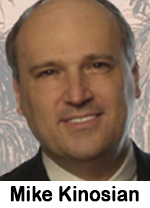
Contact TALKERS Managing Editor Mike Kinosian at Mike.Kinosian@gmail.com

Industry Views

Monday Memo: CES2024, Help Yourself

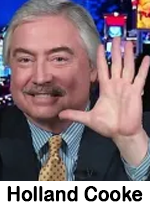
By Holland Cooke
Consultant

imIt’s massive, it’s mind-boggling, and we-the-workin’-press are under strict instructions NOT to call it “The Consumer Electronics Show.” Lotsa luck. 100 thousand+ of us from 150+ countries will descend upon the sprawling Las Vegas Convention Center and other venues up-and-down The Strip.


This long-running expo has evolved from “stereos” and VCRs and drones and smartphones and other thing-in-a-box products, to the new media which are broadcasters’ friends and foes. Yes, CES is still gadget heaven, but Artificial Intelligence – and how it will soon change everyday life – will be the big buzz this year.

im

TV network newscasts and cable news channels cover this event heavily, and you can too. Again, next month, I am offering TALKERS subscribers free daily 60-second radio reports, for air January 8-12, also OK for stream cover-up spots. There’s NO paperwork and NO national sponsor. So, if you sell a local sponsorship, keep the money.

You can hear a sample report (from CES2023), a spec you can use to pitch, at HollandCooke.com, where I will post daily reports the-night-before air.

Holland Cooke (HollandCooke.com) is a consultant working at the intersection of broadcasting and the Internet. He is the author of “Close Like Crazy: Local Direct Leads, Pitches & Specs That Earned the Benjamins” and “Confidential: Negotiation Checklist for Weekend Talk Radio.” Follow HC on Twitter @HollandCooke

Industry News

FOX News Channel Basks in Latest Cable News Ratings

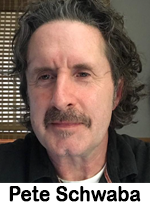
FOX News Channel says that it remains cable television’s most-watched network for the eighth consecutive year in 2023, according to data from Nielsen Media Research. The cable news outfit says the dominance of late afternoon show “The Five,” the launch of FNC’s new primetime lineup, coupledim with the success of its daytime programming, positions it as the number one network in cable news. FNC says it had the largest share of the audience in total day (46%) and primetime (48%), capturing nearly half of the cable news landscape. In primetime, FNC delivered nearly 2 million viewers and 214,000 in the 25-54 demo, topping CNN and MSNBC combined in total viewership. On a 24-hour total day basis, FNC averaged over 1.2 million viewers and 150,000 in 25-54, with a 153% advantage over CNN in viewers. FOX News Media CEO Suzanne Scott says, “During yet another unprecedented news cycle, cable viewers continued to choose FOX News Channel. From moderating debates to reporting in war zones and many stories in between, I am honored to work alongside this unrivaled team of journalists and opinion hosts as they continue to exceed expectations.”
Industry News

TALKERS News Notes

Audacy Buffalo raises $117,000 for the SPCA Serving Erie County during its SPCA Radiothon, held on December 13 and hosted by news/talk WBEN-AM and country WLKK-FM. Audacy Buffalo SVP and market manager Tim Wenger says, “We’re thrilled to have been able to spearhead the radiothon effort for the SPCA in 2023 and excited we exceeded the goal and expectations for the event. The money raised is a testament to our listeners’ commitment to community and will go a long way toward helping the SPCA meet a growing need.”

ARC Software, Inc announces that RADIO.CLOUD enters into an agreement establishing ARC as its primary affiliate research and maintenance platform. RADIO.CLOUD account director Andrew Scaglione says, “Switching to ARC is a no brainer. Speaking from experience using both ARC and other systems in the past, it’s hands down the best CRM for the radio industry with reliable contact information and a seamless digital contract process. It’s going to play a key role in our future growth across the North American radio landscape.”

SiriusXM announces it is presenting 46 games this college football postseason. SiriusXM will carry live play-by-play of every Division I FBS bowl game – including the College Football Playoff Semifinals and National Championship – as well as the Football Championship Subdivision (FCS) National Championship game and other postseason All-Star games. SiriusXM will carry Westwood One’s broadcast of the FCS Football Championship on January 7.  

Industry News

Civic Media Adds New Evening Show to Wisconsin Talk Network

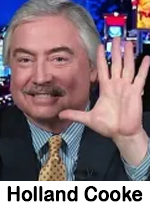
According to a report in the Milwaukee Journal Sentinel, comedian and filmmaker Pete Schwaba is now hosting a nightly talk program on the network of news programs and progressive talk shows that Civic Media is airing on its network of stations in Wisconsin that includes flagship station WAUK-AM,im Waukesha. The “Nite Lite With Pete Schwaba” airs from 8:00 pm to 10:00 pm. Schwaba has hosted programs for PBS Wisconsin in addition to his work in the film industry that includes writing for the 2003 film, A Guy Thing, and his own indie comedy film, The Godfather of Green Bay. He also served as a producer on the Jeff Foxworthy TV show, “Are You Smarter Than a Fifth Grader?” He says, “Entertainment, just like sports, helps bring people together, which is more important now than ever. I’m excited to introduce listeners to people I’ve met over the years in the entertainment business, share experiences, and generally celebrate arts and culture in Wisconsin.” Read the Journal Sentinel piece here.
Industry Views

Monday Memo: Time Management? Don’t Even Try

By Holland Cooke
Consultant

imNews flash: Time cannot be managed. But tasks can.

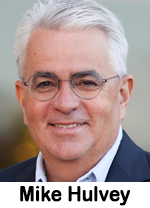
As we install a new PD at a client station, I will share with you what I’m sharing with him: Four techniques I myself have found EXTREMELY helpful over years of dancing-as-fast-as-I-can in several management positions.

1. “Map” your week. Use a spreadsheet, to create a schedule that doesn’t change week-to-week. Slot-in items like:
a) If you’re on-air: Your show + prep + when you do your daily promo/blog, post/social media, etc.
b) Talent meetings.
c) Regularly-scheduled Boss Time (see “folders’) below.
d) Is there a weekly staff meeting or department heads meeting? Do you routinely meet with sales? Slot it in.
e) In-bin and phone time (see below).
f) Days you’re available to do-lunch, or for sales calls.
g) MBWA time (“Management By Walking-Around”). Build it in.
f) What else?

Tip: Round-up. If something takes 45 minutes, slot-in an hour, to allow for bathroom breaks, checking voicemail, or running-across-the-street for a cuppa cawfee. Consider doing so even if there’s free crankcase coffee there at the station. It’s fresh air. Building in a couple short walks each day can really help you clear your mind between events.

This map you are making is “a living document,” subject to ongoing revision. But plan-your-work-and-work-your-plan, and you’ll find that lots more gets done. You’ll also find that people respond by being more punctual for you.

Tip: Find a hiding place. Always-being-in-your-office tempts interruptions. Two decades of management – and 23 years as a landlord – taught me how some issues that seemed “urgent” to people seeking your attention tend to resolve themselves before the would-be interrupter finds you.

2. Show your boss two file folders, one with your initials on the tab, the other with his/her initials on the tab. Give him/her the one with your initials, and keep the other one. Then, schedule a regular meeting (that goes on your map). The meeting can be weekly, daily, Monday/Wednesday/Friday, whatever. Lock it in, show up on-time.

Pledge to each other that you will avoid ad hoc, single-topic conversations. Unless someone is bleeding or something is on fire, the conversation can wait for a scheduled meeting. Toss a note, or pertinent document, into the folder.

I started doing this when I worked for a particularly “spontaneous” GM. NO NAMES. His half-dozen daily “Got a minute?” interruptions were extremely disruptive. And he was flattered when I showed him the respect of blocking-out Quality Time for issues we shared. Sure, he’d back-slide from time to time. When he did, I would ask, politely, “Do we need to handle this now, or should I put it in The Folder?” He took the hint; and praised me later, during my Performance Review, for suggesting the idea, which he instituted with the sales manager, business manager, and chief engineer. THANK ME LATER FOR THIS ONE.

3. Don’t answer the phone! That’s why there’s voicemail (and caller ID). Phone calls about every little thing are a torturous pause button and invite long workdays and more and taller piles of half-finished tasks. Set aside two times per day to schedule and return calls. Quality Time. Try it, and you will REALLY thank me. And I saved the best for last…

im

4. Touch each piece of paper ONCE. See “In-Bin time” in your weekly map above. Do one-of-the-following with every piece of paper or email that finds you:
a) Deal-with-it instantly (i.e., scribble a response and return to sender), or otherwise bring the issue to closure; OR
b) Send it to someone else (“delegation” in management lingo); OR
c) File it; OR
d) Circular-file-it (sort your mail over the wastebasket); OR
e) There is no e).

Ritualistic as all-of-the-above may seem, YOUR LIFE WILL CHANGE if you take these suggestions literally. Things are busy enough that no routine less structured will suffice. And conducting yourself accordingly will send an important message to the people you work with.

Holland Cooke (HollandCooke.com) is a consultant working at the intersection of broadcasting and the Internet. He is the author of “Close Like Crazy: Local Direct Leads, Pitches & Specs That Earned the Benjamins” and “Confidential: Negotiation Checklist for Weekend Talk Radio.” Follow HC on Twitter @HollandCooke

Industry News

Mike Hulvey to Take Over for Erica Farber at RAB

The RAB announces that Mike Hulvey – CEO of Neuhoff Media – is named the new president and CEO of the organization, assuming the role from Erica Farber, effective April 1. The news was announced by RAB board chair and Connoisseur Media CEO and founder Jeff Warshaw. Farber, who has led the RAB for the past 12 years, “decided it is time to step down and pursue other interestsim including continuing to participate in RAB’s Rising Through the Ranks leadership development training and National Radio Talent System, a wholly owned subsidiary of the organization.” The organization goes on to say, “Under Farber’s stewardship, the RAB has reshaped the organization into a full-service integrated membership, business development and training concern as well as forged strong relationships within the advertising marketplace. Additionally, she has diversified and re-invigorated its board of directors to ensure the future of the imtrade association.” Speaking about Hulvey, Warshaw says, “Mike is an excellent selection with the relevant skills and expertise to lead the RAB. He has an impressive track record in corporate management and local radio expertise. In addition, as a past chair of the RAB he has a clear understanding of the organization and what the broadcast industry requires from RAB. He has a tremendous passion for the industry which will serve us all well.” Warshaw adds, “We thank Erica for her leadership over the past decade in helping to shape an organization that meets the needs of broadcasters today as well as for the future of the audio industry. She’s left an indelible imprint on the industry, and we can’t thank her enough for her commitment and passion to radio. It’s been an honor and a privilege to work with her.” Hulvey will work with Farber to ensure a smooth and successful transition during the next few months as her last day with the RAB will be April 30, 2024.

Industry News

Bonneville Denver Names Amanda Brown PD for “104.3 The Fan”

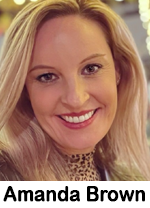
Bonneville Denver names Amanda Brown program director for sports talk KKFN-FM “Denver Sports 104.3 The Fan.” Brown served with ESPN Radio for the past 20 years, most recently as PD of KSPN,im Los Angeles. She takes over for Raj Sharan, who exits the station after four-and-a-half years. Bonneville Denver SVP and market manager Katie Reid says, “We are thrilled to welcome Amanda to the Bonneville family. She brings an extensive amount of experience, knowledge, and leadership to our team. Her understanding of the evolving sports landscape, and tremendous passion for digital media embodies everything we strive for at Denver Sports and on 104.3 The Fan.” Brown begins her new gig on December 4.
Industry News

TALKERS News Notes

Midwest Communications’ news/talk KFGO-AM/FM, Fargo “The Mighty 790” is named Best Radio Station in Inforum’s 2023 The Best of the Red River Valley. The station has held the #1 position in the annual feature for more than 20 years. KFGO operations manager Joel Heitkamp states, “We have by far the biggest and most talented staff and we’re not afraid to add to it. We still go out there and find ways to improve. Our responsibility, first and foremost, is to our listeners. We’ll always realize that.”

Recently retired WIP-FM, Philadelphia morning drive host Angelo Cataldi publishes a book chronicling his career titled, LOUD: How a Shy Nerd Came to Philadelphia and Turned up the Volume in the Most Passionate Sports City in America (Triumph Books, 2023). The publisher’s promotion for the book says, “LOUD is an exuberant chronicle of Cataldi’s life, from his childhood as a self-described ‘king nerd’ in Providence, Rhode Island, to the traditional newspaper career he left behind, and his eventual rise to the top of the Philadelphia sports radio scene on WIP. Through it all, Cataldi remained dedicated to his mission of talking about what the city was talking about, in the same tone. And that tone was loud, passionate, and unapologetically real.”

Industry Views

Pending Business: We Are Growing

By Steve Lapa
Lapcom Communications Corp
President

imSurvey says nearly half of all Americans over 13, nearly 135 million, listen to spoken word formats. The growth curve boasts an eye opening 52% jump in time spent listening at home.
Please keep in mind we are listening in 2023 via different platforms including AM/FM radio, smartphones, computer streaming, smart speakers, and smart TV. Podcasting is a major driver of this growth curve, almost tripling its share of total audio consumption. And the closer is traditional AM/FM radio is still the morning drive, in-car winner controlling 62% of listening, despite the auto industry’s attempt to shun the king of spoken word distribution – AM radio.

Audio marketers, please pound the drum a little louder when you pitch this growth story. I still haven’t seen this new validation pushed aggressively on X (formerly Twitter) among the Taylor Swift running to hug Travis Kelsey posts, have you? Anything on Instagram? Facebook? YouTube? Rumble? Are we reframing a modern version of that 1600s philosophical “if a tree falls in the forest…?”

All sellers need to take a minute to digest, discuss and integrate the findings in the Edison/NPR Spoken Word Audio report and start the drumbeat of growth, impact, engagement and influence. How else will we pushback on the taken-for-granted, same old-same old, spoken word presentation. Freshen up that media kit! Growth is an important sales point to make in any presentation and audio sellers need to keep pointing to that growth curve as competitors lean in on their own story lines.

Let’s get down to how best to answer W.I.F.A (what’s in it for advertisers) on your next presentation.

1) New. One of the most powerful words in sales and marketing. New information can drive new decisions. Let the numbers help make your point as you shape your presentation.

2) The Trend is Your Friend. Every business owner, entrepreneur, investor and CEO always want to be informed and in front of growth trends. You now have the opportunity in front of you.

3) Keep it Simple. Keep your information simple and easy to understand. Many influential newsletters use the simple technique of a bold number followed by a fast fact story line. If it works for the big boys, the technique should work for you.

4) Managers. Bring good news to your sales and marketing teams. Sellers, bring good news to your advertisers. The survey says we are growing, and positive growth is an important part of any business.

Steve Lapa is the president of Lapcom Communications Corp. based in Palm Beach Gardens, FL. Lapcom is a media sales, marketing, and development consultancy. Contact Steve Lapa via email at: Steve@Lapcomventures.com.

Industry Views

Monday Memo: TV Synergies

By Holland Cooke
Consultant

imI am always impressed when I see-and-hear radio and TV stations swapping product.


— The most obvious asset is weather. Many radio stations’ forecasts are voiced by local television meteorologists, often gratis because their boss assigned them to, as part of an information alliance. So, the radio station’s weather cred’ stands on the broad shoulders of the weather brand the TV station promotes so relentlessly.

— For some news/talk stations, simulcasting a television newscast is the only way they can air local news in the afternoon. Turn lemons into lemonade. Radio people who love to hate TV audio under-estimate how loyal viewers are; and how conspicuous and convenient this can make the radio station.

— Especially if the deal includes promos – on both stations – voiced by trusted local TV anchors, offering that “If you can’t be home in time to SEE us, you can HEAR us…”

— In every market where we have executed this strategy, the TV talent has remarked about how many compliments they get for being on radio.

— Deal point: During simulcast newscasts, the TV station supers “Heard live on WXXX 8:50 AM.”

How’s THIS for resourceful?  

— A radio station’s afternoon drive newscast consists of a 60-second live shot (or prerecorded live-on-tape) from a local TV newsroom, voiced by the TV anchor who ticks-off “the stories we’re following” that will be seen on evening newscasts.

— The radio station wraps it into a four-minute package, including:

— that live headline package, at the end of which

— the TV anchor hands off to radio’s traffic reporter, then…

— the traffic reporter teases weather into a radio spot, and…

— after the commercial, the weather comes on.

— And here’s the kicker…that live shot from the TV newsroom is a commercial for the TV station! To the listener’s ear, it’s a free newscast from a credible, branded source. Possibly a trade for TV time to advertise the radio station?

im

Another win-win synergy: Reciprocal excerpting, with attribution 

Translation: Each station gives blanket permission for the other to grab, from the air, whatever it wants, crediting the originating partner.

— There will be times when someone from the radio station is on-scene; or when radio scores a newsworthy interview that TV can use the audio of. More often, thinner-staffed radio will use TV sound more than vice-versa.

— When I programmed WTOP, Washington, WUSA9 let us help ourselves to their newscast audio (“And the mayor told Channel 9…”). Each day, our desk and theirs compared assignments, and we recorded every WUSA newscast.

— True story: The news director from NBC4 came to my office and said, “You can use OUR sound, and you don’t even have to say ‘Channel 4!’ Just STOP saying ‘Channel 9.’”

— It was a flattering offer, but we remained loyal to WUSA, the once-upon-a-time WTOP-TV. Decades later we were still getting mail addressed to “WTOP-TV.” And both stations being CBS affiliates contributed to the lingering impression that we were siblings, so the confusion was actually useful. Does your radio station have a long-lost TV brother? 

Radio takes TV where it otherwise can’t go: in-car

Note how aggressively TV stations are programming their apps and websites. They want to be a news brand, not just a news station.

— A smart TV station should want to give radio a ROSR (Reporter On-Scene Report) during the day (when radio audience is high and TV audience is low), because doing so serves to promote the upcoming evening TV newscast.

— WARNING, based on experience: This can be a tough sell to over-protective TV news directors, who may fret that by going-live on radio they’re alerting other TV stations to the story. Stinkin’ thinkin.’ Other TV stations could show up anyway, and they wouldn’t be as-well-known for covering the story as the TV station that’s also already reporting it on radio.

Local TV news is a hungry critter…

…with a limited budget. Which is why some TV stations toss-live to their radio partner’s host: “Gene, what are your callers saying about the congressman’s abrupt resignation?” Arrangements like this were commonplace even decades ago, when TV had to equip the radio studio with equipment more elaborate than modern day video chat requires.

The calculus is simple

Radio + TV > Radio – TV or TV – Radio

(Radio PLUS television is greater-than Radio MINUS television or television MINUS Radio.)

Even if you’re a music station that doesn’t do much news at all, these opportunities are worth exploring. At least trade spots, because neither station can afford to promote as much as it should.

Holland Cooke (HollandCooke.com) is a consultant working at the intersection of broadcasting and the Internet. He is the author of “Close Like Crazy: Local Direct Leads, Pitches & Specs That Earned the Benjamins” and “Confidential: Negotiation Checklist for Weekend Talk Radio.” Follow HC on Twitter @HollandCooke

Industry Views

International “1World Radio” Co-hosts Andy Gladding (USA) and Jamie-Lee Fredericks (South Africa) are This Week’s Guests on Harrison Podcast

The co-hosts of “1World Radio,” Andy Gladding and Jamie-Lee Fredericks, are this week’s guests on the award-winning PodcastOne series, “The Michael Harrison Interview.” Their weekly international radio show is a co-production of Gladding’s WRHU 88.7 FM, Hempstead, NY, USA and Fredericks’ Bush Radio 89.5 FM, Cape Town, South Africa. WRHU is a highly respected campus radio station broadcasting from Hofstra University on Long Island, just outside of New York City. The American co-host is also the chief engineer at WRHU as well as a college instructor. He simultaneously serves as chief engineer at Salem Media’s WNYM and WMCA in New York. The South African co-host is an air personality on Bush Radio – a dynamic young woman who grew up with an intense love of radio. The conversation explores the differences and similarities between their stations and how they reflect the cultures of their home nations. Not to be missed. Listen to the podcast in its entirety here.

Industry Views

Pending Business: Your 2024 Ad Sales Forecast

By Steve Lapa
Lapcom Communications Corp
President

imYour crystal ball is still foggy, isn’t it?
Even worse, no matter how many times you try and shake it into a predictive submission, the answer is still the same, “Political-not sure, Weather Emergency-unforecastable.”

Nobody in business likes a lack of confidence, so “Not Sure” is a non-starter. For us radio fans, the variables in predicting a 2024 ad sales forecast are the most unforecastable, unpredictable, variables since the original gang of head-in-the-sand radio gurus pegged MTV as a 1981 fad.

And here we are, 42 years later where a pure-play music video channel challenging FM music radio, satellite music radio, music streaming and downloadable audio would include dating games and ridiculousness, once again saving America’s most-listened-to free music source: radio.

Remember 1981 when talk radio was mounting a competitive threat to all-news radio. Rush was 30, Hannity was 20, Bongino was seven and Ben Shapiro was not born yet. Anybody here have 42 years to wait out your 2024 predictions and get it right? How about 42 days late with your forecast?

Our new world of AI, super-speed computer analysis, blended into an ever-changing digital and social media landscape, under pressure from the economy, global events and the melting radio revenue ice cube has made predicting 2024 ad projections a Vegas skill game.

Thankfully, we have the experience, patience, and cooperation of radio’s leadership to adjust forecasting quarter by quarter, sort of. Back to the task at hand and how to navigate this cracked crystal ball as you mount your sales strategy into 2024.

— Keep your eye on the prize. Always remember, your current advertiser is your best advertiser. Take diligent care of your foundational base billing and that means super serving your customers, as competitors from every medium are monitoring, planning, and pricing a counter plan.

— Positive Paranoia. Thank you, Andy Grove. The third CEO of Intel and a driving force behind Silicon Valley’s original exponential growth knew how to channel innovation and competition into a positive zone. How about you?

— Never stop learning. What new strategies and sales techniques will you drive into next year.

— Something will drop out of your sales picture. What is it? Eventually a sale resource will drop out. Identify how you will compensate for the loss and how you will grow your business as a result.

— Do you have minimum and maximum goals? There are only so many accounts you can sell and service in a month. What is that number and how much do each of those accounts need to generate monthly?

— Attrition. The arch-enemy of sales. Some business never returns. Now what?

Many 2024 projections are falling in the ultra-conservative, no risk, under promise/overdeliver category. Yet there is a fine line between being too conservative and a vote of no confidence. What’s in your forecast?

Steve Lapa is the president of Lapcom Communications Corp. based in Palm Beach Gardens, FL. Lapcom is a media sales, marketing, and development consultancy. Contact Steve Lapa via email at: Steve@Lapcomventures.com.

Industry News

LABF Honors David Gleason

Broadcaster David Gleason is being honored with the inaugural Library of American Broadcasting Foundation’s Excellence in Broadcast Preservation Award in recognition of his outstanding dedication and commitment to preserving broadcast history. LABF says, “Working on his own time and with hisim money for the past 20 years, Gleason has built a massive online archive of broadcasting and cable trade publications, books, music magazines, technical manuals, directories, yearbooks, company and station publications, programming guides and more. The archive — www.worldradiohistory.com — now tops nine million pages. Because it is online, the pages are readily available to the public – and searchable.” LABF co-chairs Heidi Raphael and Jack Goodman say, “There is no stopping him. What David has accomplished – virtually single-handedly — is extraordinary. He’s made an unparalleled contribution not only to the history of broadcasting, but to the story of the modern world as reflected and shaped by the media.”

Industry News

North Carolina Broadcast History Museum in the Works

im

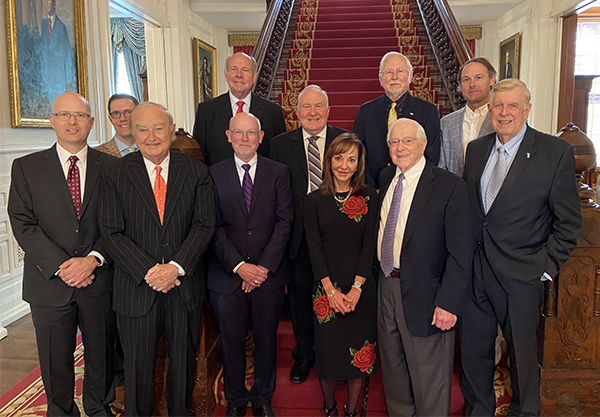
State broadcast leaders in North Carolina are unveiling details of a planned North Carolina Broadcast History Museum. The museum initiative is a 501(c) 3 non-profit corporation dedicated to preserving North Carolina’s broadcasting legacy. The Museum is seeking assistance from the public and people who worked in broadcasting to collect artifacts, documents, photographs and recordings that chronicle the history of prominent radio and television stations, broadcasters, programs and events. Through exhibits and collections, the Museum seeks to highlight the contributions made by North Carolina Broadcasters in shaping the industry and the state’s culture landscape. Among the broadcast professionals pictured above at the North Carolina Governor’s Mansion announcing the new project is Beasley Media Group CEO Caroline Beasley (center).

Features

The Greatest Home Run

A sports moment for the ages, a botched radio call, a live broadcast believed lost forever… then miraculously rediscovered. What a story!

By Mark Wainwright

imThe History Channel calls it “The Most Dramatic Home Run in World Series History.” ESPN has often described it as the greatest home run of all time. To this day, it is the only World Series Game 7 walk-off home run.
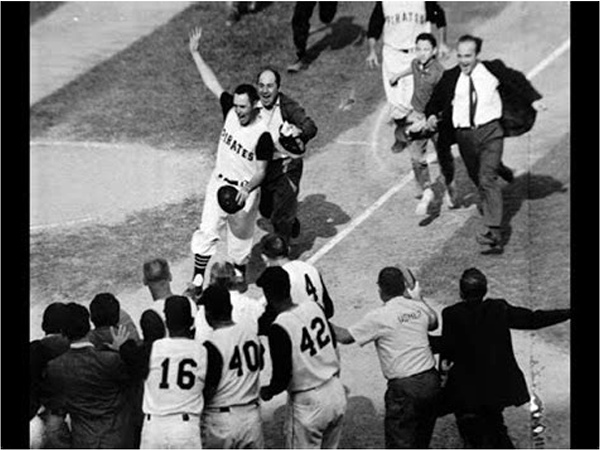
Long-time baseball fans know the basic facts: On October 13, 1960, Bill Mazeroski of the Pittsburgh Pirates hit a line drive over the left field wall at Pittsburgh’s Forbes Field to win the World Series for the Pirates.

This was an iconic moment in baseball history, and an iconic moment in baseball broadcasting history, as well … although the Hall of Fame broadcaster who described the moment for the national radio audience probably wished he could have done a second take!

im

Above: Bill Mazeroski crosses the plate for the Game 7 victory! (photo courtesy YouTube)

It was a dramatic finish to an astonishing World Series, but as often happens, the backstory of that moment and how it was broadcast– and everything that led up to it – has been largely forgotten. As we follow this year’s MLB playoffs (while taking note of the anniversary), it’s worthwhile to look back at an earlier, very different era of post-season baseball…

******************************

The 1960 World Series opponents could hardly have been more different. The New York Yankees of that era were a machine, and the 1960 team easily dominated the American League on their way to the pennant. In contrast, the Pittsburgh Pirates were a surprise. The Pirates had not been to the Series since 1927, they were coming off a mediocre 1959 season, and expectations were low… but they got off to a good start and managed to keep it going. With timely pitching, clutch hitting, lucky breaks, and a never-say-die attitude (21 of their 95 wins came in their final at-bat), the Pirates claimed the National League pennant. The Yankees were studs, while the Pirates were scrappers, and the first six games of the Series reflected the character and personality of the respective teams.

In their three wins, the Yankee sluggers clobbered Pittsburgh pitchers for 38 runs. Yet, the Pirates managed to hang on, squeezing out three close victories in response. It all came down to Game 7 at Forbes Field on the afternoon of Thursday, October 13. Not only were there multiple Hall-of-Famers on the field and in the dugouts, there were Hall-of-Famers in both the TV and radio broadcast booths:

NBC’s national TV broadcast (in “Living Color!”) was handled by Yankees announcer Mel Allen and the Pirates’ Bob Prince, while NBC’s national radio broadcast was called by the Chicago Cubs’ Jack Quinlan, and Chuck Thompson, the play-by-play voice of the Washington Senators… wait, what? The Washington Senators? Wasn’t Chuck Thompson the voice of the Baltimore Orioles forever? For most of his career, yes… but Thompson was caught in a business dispute between the Baltimore brewery that owned the Orioles and the Baltimore brewery that owned his broadcasting contract, so Chuck wound up in Washington for a while (alas, as so often happens in life, it was a battle between money and beer, and money won out).

Game 7 combined and concentrated all the craziness of the previous six. Both pitching staffs were tired, and the hitters took advantage; it is the only game in World Series history where no pitcher from either team recorded even a single strikeout. The Pirates jumped out to an early 2-0 lead, but the New York offense awakened and the Yankees took a 7-4 lead into the bottom of the eighth inning. That’s when things really started to get strange…

In the Pittsburgh half of the 8th, it appeared a routine ground ball would start a double-play and stall a potential Pittsburgh rally… but the ball took a bad hop and hit Yankee shortstop (and later, Hall of Fame broadcaster) Tony Kubek in the throat. He got up bleeding and gasping for air, and was taken to the hospital with bruised vocal cords and a swollen trachea.The injury didn’t damage Kubek’s future career, but it kept the Pirates alive, and they followed with five runs to take a 9-7 lead into the 9th inning. Just three outs away, and yet…

The Yankees scored two runs to tie it at 9-9. The tying run was another odd play; a hard shot toward first base looked like a game-ending (and Series-ending) double play, but Pittsburgh first baseman Rocky Nelson took the easy out at first… which turned the play into a fielders’ choice. Mickey Mantle (the runner already on first) dove back to base and avoided the tag, which gave the Yankee runner on third the opportunity to tie it up. The Yankee inning ended with a routine ground out, so it all came down to the bottom of the 9th.

New York manager Casey Stengel left Ralph Terry in to pitch the 9th, with 15-game-winner Art Ditmar warming in the bullpen, if needed. Second baseman Bill Mazeroski would lead off the inning for the Pirates. Mazeroski was much better known for his outstanding glove work than his hitting, but he had one of the Pirates’ hottest bats late in the season, and it paid off.

Ball one, high. Catcher Johnny Blanchard went to the mound to briefly confer with Terry. Up in the radio booth, Chuck Thompson was obviously caught up in the excitement of the moment and everything leading up to it:

“Well, a little while ago, when we mentioned that this one, in typical fashion, was going right to the wire, little did we know…”

Then, at 3:36 pm, the 1-0 pitch, and…

“Art Ditmar throws…”

(Chuck, no! Ditmar’s still in the bullpen! Terry’s pitching!)

Thompson called the following moments superbly when Mazeroski connected and the ball sailed over the wall at the 406’ mark. Pandemonium ensued as Mazeroski quickly rounded the bases. Fans poured onto the field; it looked like half of Pittsburgh was poised to welcome him at home plate.

Unfortunately, Thompson committed another gaffe in the midst of the uproar:

“Ladies and gentlemen, Mazeroski has hit a one-nothing pitch over the left field fence at Forbes Field to win the 1960 World Series for the Pittsburgh Pirates by a score of ten to nothing!”

(Chuck, no! Look at the scoreboard! Look at your scorecard!)

…to his credit, he corrected himself moments later.

As both a long-time broadcaster and a Baltimore native – someone who heard Chuck Thompson broadcast countless games for the Baltimore Orioles and the Baltimore Colts of the NFL – it’s bizarre to hear Thompson commit these gaffes. Chuck Thompson did NOT make mistakes like this; he just didn’t. In his 1996 autobiography, he called it “easily the most embarrassing moment of my career behind the microphone.” His flawed moment did not derail a stellar career. In 1993, he received the Ford C. Frick broadcasting award from the Baseball Hall of Fame, and his name is honored in Cooperstown alongside the greats of the sport.

There’s a YouTube link, of course. Whoever produced it did a nice job of capturing this iconic event in sports history. You’ll hear Chuck Thompson’s “flawed but endearing” (as Wikipedia describes it) radio call of the homer, combined with the actual broadcast video. Although the audio portion switches over to Mel Allen’s TV call toward the conclusion, this minor deviation from the archived radio recording does nothing to spoil the drama and excitement. And by the way… the story behind how and why the Game 7 telecast was preserved is amazing enough on its own. So stay tuned for our post-game wrap-up!

The Greatest Home Run!

******************************

EPILOGUE

Although NBC videotaped all seven games (in “Living Color!”), those recordings soon disappeared. As I’ve mentioned in previous articles, videotape was very expensive back then, the reels were cumbersome, and storage was an issue. Thus, networks often re-used the tapes for various purposes, wiping everything that was recorded previously. Countless hours of television history have been lost due to this practice. So why did the entire TV broadcast of Game 7 survive intact (at least in black-and-white)?

You can thank Hollywood singing star Bing Crosby. Bing held an ownership interest in the Pirates then and was a huge fan, but he was oddly superstitious about things. He believed that watching the game on television would jinx the team, and showing up at Forbes Field would have been even worse. So he and his wife took off for a brief vacation in France, where he listened to the broadcast on shortwave radio. However…

Crosby had a close relationship with Ampex (including a financial interest), and he asked the folks at Ampex to record the game so he could watch it upon his return (but only if the Pirates won!). It’s not clear whether they taped it and transferred it to kinescope film or if they filmed a kinescope directly from the live broadcast. In any event, a black-and-white kinescope was saved and presented to Crosby. Presumably, Bing enjoyed viewing it and subsequently stashed it in his basement – where it remained untouched for forty-nine years!

In 2009, long after Crosby’s death, Robert Bader – an executive from Bing Crosby Enterprises – was going through materials at Crosby’s former home in Hillsborough, California. He was looking for any useful recorded video that could be transferred to DVD and marketed, and he stumbled onto the five-reel set in Bing’s wine cellar! It is the only known copy of the historic game. The reels were preserved and digitized, and later broadcast as part of several retrospectives covering the 1960 World Series and Game 7 specifically.

So… what’s mellowing in your wine cellar?

******************************

Mark Wainwright is a veteran radio performer and voiceover artist who has spent decades working as a disc jockey, talk show host, and morning personality at well-known radio stations throughout the United States. He was most recently the morning host at WSYR in Syracuse, New York. Mark can be reached through his LinkedIn page or at: markwainwright@earthlink.net


Industry Views

The Problems Facing Radio Were Not Caused by Consolidation

By Walter Sabo
Consultant, Sabo Media Implementers
A.K.A. Walter Sterling
Radio Host, “Sterling On Sunday”
Talk Media Network

imAs your friends get fired and on-air hosts are replaced with WideOrbit and Profitable Software, the mournful refrain is to unfairly blame consolidation. Consolidation has, in fact, made the medium financially viable and brought hundreds of individual stations from a river of red ink to the glow of black ink. Prior to consolidation, over half the radio stations in the U.S. lost money – year after year. Not a secret stat, those numbers were revealed annually by the NAB.
The flaw in the deregulation law was the elimination of the rules regarding financing of station acquisitions. Previous regulations required a licensee to prove it had the financial resources to cover expenses through the term of the license. Licenses could not be purchased with debt. Licensees could not sell the license until it expired. Radio stations could not be used for speculatory financial gain. When those rules were tossed, the industry hit a financial tailspin from which it has not recovered. That’s the problem.

That is not a “problem” with radio. In talks with publisher Michael Harrison about his exciting role in the United Nations as executive advisor to World Radio Day 2024, we shared a key observation: The world’s radio industry is overwhelmingly enthusiastic. Working with clients in London, Toronto, Montreal, Amsterdam, Athens and Sydney, the passion for the medium continues to grow and is supported by audience engagement and response.

Internationally, there is a robust radio set design and manufacturing industry. European listeners seek clothing featuring radio set themes and artwork. Believe me, the food at the NAB Europe is much better than that crap served here.

Follow the money. Radio is not legacy media. Radio is proven media – proven for over 100 years. Local retail advertisers are a practical lot. They buy advertising that works for this weekend. If it doesn’t bring feet to the floor and dollars to the door, sponsors just don’t repeat-buy.

I was the in-house programming guru at SiriusXM Satellite Radio for eight years starting pre-launch. The reason Sirius exists is test after test revealed that Americans liked radio so much, used radio so much, they wanted more stations. More choice. More.

Consolidation, with considerable credit to Randy Michaels, allowed radio to convert from a frequency media buy to a reach media buy. That puts radio in budgets with TV. The opportunity right now is to actually monetize radio’s clout as a reach medium. Create scarcity. More spots mean cheaper spots, smaller budgets and higher expense. More spots mean much less efficiency for media buyers. Media buyers have to spend their budgets. They would prefer to spend that money with one or two outlets before lunch rather than having to “make the buy” by purchasing dozens and dozens of stations acquiring spots that are cheap, bonused, thrown in, flanked, and here are some tickets.  The fix starts with raising the price to meet the public’s perception and usage levels of radio.

Walter Sabo has grown audience share for a roster of clients that has included SiriusXM Satellite Radio, RKO, ABC, Apollo Advisors, Hearst, Wall Street Journal Radio and many others. Reach him at walter@sabomedia.com. Learn about his unique radio show at www.waltersterlingshow.com

Industry News

KYW, Philadelphia to Broadcast Mayoral Debate

Audacy’s all-news KYW-AM/FM, Philadelphia is hosting a mayoral debate ahead of the Philadelphia general election. Democratic nominee Cherelle Parker will face Republican nominee David Oh live on the “Philadelphia’s Morning News” program on October 26 from 8:00 am to 9:00 am. The debate will feature KYW journalists, including morning drive anchor Ian Bush, city hall bureau chief Pat Loeb,im education reporter Mike DeNardo and community impact reporter Racquel Williams. KYW news director Kevin McCorry says, “Since the primary election was decided in May, we have been working diligently to ensure that we could provide this service to our audience. The next mayor of Philadelphia will shape our city for years to come. We need urgent solutions to the city’s most pressing issues, including the gun violence crisis, the opioid crisis, the economy and public schooling. Presenting a format where candidates get to exchange ideas in real time is a fundamental building block of the democratic process, and we’re proud to break our normal format to offer this program.”
Ratings Takeaways

September 2023 PPM Ratings Takeaways – Part Four

imSeptember 2023 PPM Data – Information for the September 2023 survey period has been released for Austin, Raleigh, Indianapolis, Milwaukee, Nashville, Providence, Norfolk, Jacksonville, West Palm Beach, Greensboro, Memphis, and Hartford.
Nielsen Audio’s September 2023 sweep covered August 17 – September 13.

TALKERS magazine managing editor Mike Kinosian provides “Takeaways” for spoken-word stations finishing in their respective markets’ top twenty.

Cited as well are each particular city’s #1 station (6+) and loftiest (6+) upticks and drop-offs.

All comparisons noted are August 2023 – September 2023 (6+).

Note: The NFL season began September 7 – applicable flagships are bolded. 

AUSTIN

News/Talk: Waterloo Media Group’s KLBJ-AM “News Radio” 3.3 – 3.4, +.1, #12 to #10

News: None in the top twenty

Sports Talk: None in the top twenty

Public Radio News/Talk: University of Texas’ KUT 6.1 – 5.3, -.8, repeats in third-place

Number One 6+: Waterloo Media Group adult hits KBPA, ninth month in succession, 9.7 – 9.6, -.1

Largest 6+ August 2023 – September 2023 Increase: triple A KUTX (+.8)

Largest 6+ August 2023 – September 2023 Decrease: public radio news/talk KUT (-.8) 

RALEIGH

News/Talk: iHeartMedia’s WTKK “106.1 FM Talk” 9.2 – 9.4, +.2, repeats in the runner-up slot

News: Capitol Broadcasting-owned WRAL-HD3 “WRAL News+” .1 – .3, +.2, #16 to #15

Sports Talk: Capitol Broadcasting’s WCMC-FM “99.9 FM The Fan” 2.3 – 3.1, +.8, ninth to eighth

Public Radio News/Talk: University of North Carolina at Chapel Hill-owned WUNC 9.5 – 9.1, -.4, first to third

Number One 6+: Urban One urban AC WFXC, first month, 8.5 – 10.1, +1.6

Largest 6+ August 2023 – September 2023 Increase: adult contemporary WRAL (+1.8)

Largest 6+ August 2023 – September 2023 Decrease: urban contemporary WQOK (-2.2)**

*Represents the largest August 2023 – September 2023 decrease (6+) of any station in all 48 PPM-markets

INDIANAPOLIS

News/Talk: Urban One’s WIBC “93.1 FM Indy’s Mobile News” 6.0 – 6.1, +.1, repeats in fourth-place

News: None in the top twenty

Sports Talk: Urban One-owned WIBC-HD2 “The Fan” (Colts) 2.8 – 3.5, +.7, #15 to #13

Public Radio News/Talk: Metropolitan Indianapolis Public Broadcasting’s WFYI 6.3 – 6.4, +.1, third straight month in third-place

Number One 6+: Urban One adult contemporary WYXB, first month, 6.9 – 8.2, +1.3

Largest 6+ August 2023 – September 2023 Increase: adult contemporary WYXB (+1.3)

Largest 6+ August 2023 – September 2023 Decrease: hot AC WNTR (-1.0)

MILWAUKEE 

News/Talk: Good Karma Brands-owned WTMJ “Wisconsin’s Radio Station” (Brewers) 8.7 – 9.8, +1.1, third to first 

iHeartMedia’s WISN “News Talk 1130” 10.7 – 9.6, -1.1, first to second

News: None in the top twenty

Sports Talk: iHeartMedia’s WRNW “97.3 The Game” (Green Bay Packers) 1.4 – 2.4, +1.0, #17 to #13

Good Karma Brands-owned WKTI “ESPN Milwaukee” steady at 1.0, #19 to #18

Public Radio News/Talk: University of Wisconsin-owned WUWM 2.5 – 2.4, -.1, #14 to #13

Wisconsin Educational Communications Board’s WHAD 1.7 – 2.1, +.4, fifth straight month at #16

Number One 6+: news/talk WTMJ, first month, 8.7 – 9.8, +1.1

Largest 6+ August 2023 – September 2023 Increase: news/talk WTMJ (+1.1)

Largest 6+ August 2023 – September 2023 Decrease: news/talk WISN (-1.1)

NASHVILLE

News/Talk: Cumulus Media’s WWTN “Super Talk 99.7” 5.8 – 6.1, +.3, fifth to fourth

iHeartMedia-owned WLAC “Talk Radio 1510” .9 – 1.1, +.2, #21 to #19

News: None in the top twenty

Sports Talk: Cumulus Media’s WGFX “104.5 The Zone” (Tennessee Titans) 4.8 – 7.2, +2.4, eighth to third    

Cromwell Radio Group-owned WPRT “102.5 The Game” 1.6 – 1.4, -.2, repeats at #17

Public Radio News/Talk: Nashville Public Radio’s WPLN-FM 4.2 – 5.5, +1.3, #11 to #6

Number One 6+: Midwest Communications adult contemporary WJXA, eighth month in succession, 10.3 – 9.3, -1.0

Largest 6+ August 2023 – September 2023 Increase: sports talk WGFX (+2.4)**

Largest 6+ August 2023 – September 2023 Decrease: country WSM-FM (-2.0)

**Represents a tie for the largest August 2023 – September 2023 increase (6+) of any station in all 48 PPM-markets

PROVIDENCE

News/Talk: Cumulus Media’s WPRO-AM & WEAN “News Talk 630 AM & 99.7 FM” 6.8 – 6.1, -.7, fifth to sixth

iHeartMedia-owned WHJJ “News Radio 920” .4 – .3, -.1, third straight month at #18

News: None in the top twenty

Sports Talk: Beasley Media Group-owned WBZ-FM “98.5 The Sports Hub” 2.6 – 3.3, +.7, anchored in eighth-place for the twelfth consecutive month

Audacy’s WVEI “Sports Radio 103.7” 2.6 – 2.3, -.3, eighth to tenth

Public Radio News/Talk: WGBH Educational Foundation-owned WGBH 2.0 – 1.9, -.1, #11 to #12

Rhode Island Public Radio’s WNPN 1.4 – 1.5, +.1, fifth straight month at #14

WGBH Educational Foundation-owned WCAI .1, #19 (did not appear in August 2023)

Number One 6+: Cumulus Media adult contemporary WWLI, third month in a row, 9.7 – 10.9, +1.2

Largest 6+ August 2023 – September 2023 Increase: country WCTK (+1.7)

Largest 6+ August 2023 – September 2023 Decrease: news/talk WPRO-AM (-.7)

NORFOLK

News/Talk: Sinclair’s WNIS “News Talk AM 790” 3.1 – 3.5, +.4, fifth consecutive month at #11

News: None in the top twenty

Sports Talk: Max Broadcast Group-owned WVSP “Sports Radio 94.1 ESPN” 2.6 – 2.7, +.1, #14 to #13

Public Radio News/Talk: None in the top twenty

Number One 6+: Audacy urban AC WVKL, eighth straight month, 11.3 – 10.2, -1.1

Largest 6+ August 2023 – September 2023 Increase: rhythmic CHR WNVZ (+.7)

Largest 6+ August 2023 – September 2023 Decrease: country WUSH (-1.2)

JACKSONVILLE

News/Talk: Cox Media Group’s WOKV-FM “104.5 Jacksonville’s News & Talk” 6.5 – 8.2, +1.7, fifth to third

News: None in the top twenty

Sports Talk: None in the top twenty

Public Radio News/Talk: WJCT, Inc.’s WJCT 3.2 – 2.6, -.6, repeats at #12

Number One 6+: Cox Media Group classic hits-oldies WJGL, first month, 9.1 – 10.6, +1.5

Largest 6+ August 2023 – September 2023 Increase: news/talk WOKV-FM (+1.7)

Largest 6+ August 2023 – September 2023 Decrease: rock WWJK (-1.1)

WEST PALM BEACH

News/Talk: iHeartMedia’s WZZR “92.1 Real Radio” 1.8 – 1.9, +.1, repeats in tenth-place

Hubbard Broadcasting-owned WFTL “News Talk 850” 1.6 -1.8, +.2, repeats at #12

WZZR cluster-mate WJNO “News Radio 1290” 1.3 – 1.1, -.2, third straight month at #14

News: None in the top twenty

Sports Talk: iHeartMedia-owned WBZT “Sports Radio 1230 The Gambler” steady at .2, #20 to #19

Hubbard Broadcasting’s WMEN “Fox Sports 640 AM South Florida” .4 – .2, -.2, #18 to #19

Public Radio News/Talk: Dade County School Board’s WLRN 2.3 – 2.6, +.3, ninth to eighth

Number One 6+: Hubbard Broadcasting classic hits-oldies WEAT, third month in a row, 9.2 – 7.9, -1.3

Largest 6+ August 2023 – September 2023 Increase: hot AC WRMF (+1.3)

Largest 6+ August 2023 – September 2023 Decrease: classic hits-oldies WEAT (-1.3)

GREENSBORO

News/Talk: iHeartMedia’s WPTI “News Talk 94.5” 4.7 – 4.5, -.2, locked in eighth-place for the eleventh straight month

News: None in the top twenty

Sports Talk: None in the top twenty

Public Radio News/Talk: Wake Forest University’s WFDD 2.8 – 3.5, +.7, repeats in ninth-place

University of North Carolina at Chapel Hill-owned WUNC flat at 1.4, sixth straight month at #13

Number One 6+: Audacy urban AC WQMG, first month, 11.2 – 13.6, +2.4

Largest 6+ August 2023 – September 2023 Increase: urban AC WQMG (+2.4)**

Largest 6+ August 2023 – September 2023 Decrease: country WPAW (-1.2)

**Represents a tie for the largest August 2023 – September 2023 increase (6+) of any station in all 48 PPM-markets

MEMPHIS

News/Talk: iHeartMedia’s WREC “News Talk 600 AM” 2.0 – 2.1, +.1, repeats in ninth-place

Starnes Media Group-owned KWAM “News Talk Memphis The Mighty 990” .2 – .4, +.2, #15 to #13

News: None in the top twenty

Sports Talk: Audacy’s WMFS “Sports Radio 92.9” 2.8 – 2.4, -.4, seventh to eighth

Public Radio News/Talk: Mid-South Public Communications-owned WKNO 1.8 – 1.7, -.1, #10 to #11

Number One 6+: iHeartMedia urban AC KJMS, seventh straight month, 12.9 – 11.8, -1.1

Largest 6+ August 2023 – September 2023 Increase: urban contemporary WHRK and CHR WEGR (+1.5)

Largest 6+ August 2023 – September 2023 Decrease: adult contemporary WRVR (-1.7)

HARTFORD

News/Talk: Audacy’s WTIC-AM “News Talk 1080” 4.8 – 5.2, +.4, seventh to sixth

Red Wolf Broadcasting-owned WDRC-AM “The Talk of Connecticut” 1.5 – 2.3, +.8, #14 to #12

WTIC-AM’s internet stream flat at .8, third straight month at #17

News: None in the top twenty

Sports Talk: iHeartMedia’s WUCS “97.9 ESPN” 1.3 – 1.7, +.4, repeats at #15

Public Radio News/Talk: Connecticut Educational Communications-owned WNPR 4.0 – 3.7, -.3, repeats in ninth-place

New England Public Media’s WFCR flat at .6, fourth straight month at #18

Number One 6+: Audacy adult contemporary WRCH, 44th month in a row, 10.1 – 10.5, +.4

Largest 6+ August 2023 – September 2023 Increase: news/talk WDRC-AM (+.8)

Largest 6+ August 2023 – September 2023 Decrease: country WWYZ (-1.1)

Email Mike Kinosian at Mike.Kinosian@gmail.com.

Industry News

WFDF, Detroit Owner Kevin Adell Unapologetic About New Programming

According to a piece in the Detroit Metro News, WFDF, Detroit owner Kevin Adell is all-in on the new conservative talk format recently installed on the station after several years airing an urban talk format. The station flipped after Labor Day and has been airing Premiere Networks syndicated shows includingim Glenn Beck, Sean Hannity, Jesse Kelly, and Clay Travis & Buck Sexton, as well as Key NetworksBill O’Reilly. The story indicates the station’s cume has skyrocketed from about 2,100 listeners per month to 29,000 in the first week after the change (Sept. 7-13). Adell tells the paper he has no regrets about the move, “The more divided we are, the better it is for radio. It comes down to one thing — show business. If we live in a utopia, we have nothing to talk about.” Adell also says he expects cume to jump to 200,000 per month as he continues to promote the new lineup. At the time of the change, the Black community was upset with the firing of the (unpaid) hosts and the format flip, but Adell said it was purely a business move. “[T]he format was no longer profitable and only attracted about 2,100 listeners a month, an abysmally small audience for a radio station. When you look at it, no one supported it. I couldn’t get the community to support it.” Read the Metro News piece here.

Industry News

KHTK, Sacramento Unveils New PM Drive Show

Bonneville sports talk outlet KHTK-AM, Sacramento “Sactown Sports 1140AM” launches a new afternoon drive show with Kevin “Whitey” Gleason moving from the midday show and being joined by market sports personality Kyle Draper for “The Drive Guys” airing from 2:00 pm to 6:00 pm. Kevin Gleason recently re-joined “Sactown Sports” and previously was part of the station’s “Rise Guys”im morning show from 1999-2011. Kyle Draper is the Sacramento Kings pre- and post-game host on NBC Sports California and was previously an anchor/host at NBC Sports Boston. Bonneville Sacramento SVP and market manager Steve Cottingim says, “We are excited to continue to elevate the Sactown Sports brand with the addition of ‘The Drive Guys.’ Kevin has been a fabric in the Sacramento community for four decades now and pairing him with Kyle Draper who is a familiar voice to our listeners through the Sacramento Kings broadcast just highlights our commitment to Sacramento sports.”
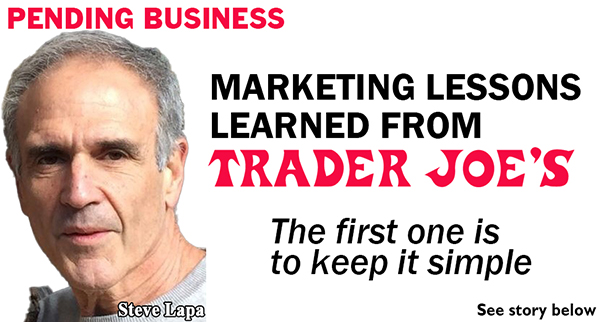
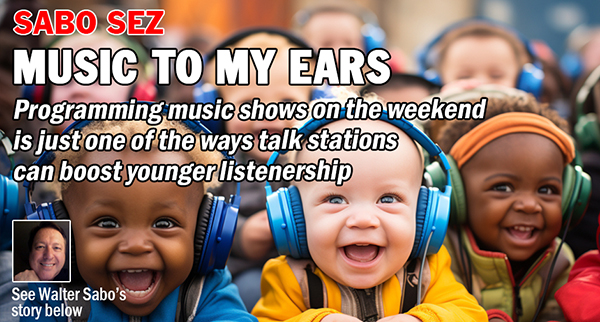
Industry News

TALKERS News Notes

Benztown and Envisionwise are hosting a free webinar for radio professionals titled, “Keeping it Real in the Digital Age,” with host Mike McVay, president of McVay Media, and guests Jackie Parks, founder/CEO of Envisionwise; Peter Smyth, former chairman and CEO of Greater Media, Inc; and Sheri Lynch, co-host of “The Bob & Sheri Show.” The 45-minute webinar on Friday (10/6) at 1:00 pm ET will provide specific tools and strategies for increasing stations’ digital revenue. You can register here.

Audacy announces an expansion of its relationship with Puck and the launch of “About a Boy: The Story of Vladimir Putin” – a five-part documentary podcast series exploring the forces that shaped Russian President Vladimir Putin’s childhood (and life) and why it’s critical to understanding what he might do next in the war against Ukraine. The series is written and narrated by Julia Ioffe, Puck founding partner and Washington correspondent, and one of the leading journalists covering Russia and Putin.

Salem Media Group says “Grace and Truth with Owen Strachan” is joining the Salem Podcast Network. Owen Strachan is provost and research professor of Theology at Grace Bible Theological Seminary and is the author of 20 books, including his latest, The War on Men: Why Society Hates Them and Why We Need Them (Salem Books, 2023). Salem SVP of spoken word Phil Boyce comments, “Salem Podcast Network continues to add multi-talented podcasters who share our worldview. Owen is an amazing voice for what is true and right in America, and adding him to our platform is a home run. I can’t wait to become a regular listener when he gets started.”

iHeartPodcasts announces the return of the “Work in Progress” podcast for its third season. The program features actor, producer, and activist Sophia Bush and in the first two episodes she interviews former White House Press Secretary Jen Psaki along with an interview with actor Matthew McConaughey.

Industry Views

Pending Business: Still Learning

By Steve Lapa
Lapcom Communications Corp
President

I think it was the great Michelangelo who said, “I’m still learning.” Three simple words that can make or break any of us in marketing.

I am still amazed at the success and customer loyalty at Trader Joe’s. Why is it that a homespun marketing approach develops loyalty, when I have found more competitive prices and sometimes higher quality foods elsewhere?

Yet there I was lost in the regular South Florida Sunday crowd, standing in line, basket-to-basket, ready to check out. I have never heard or seen an ad for Trader Joe’s, yet the store was packed. The scene at the 59th Street store in Manhattan was quite similar last year when I spent three months in the city, or the one in D.C. close to my daughter’s home, even the Trader Joe’s in Sandy Springs, Georgia near my other daughter’s home was slammed on a Sunday three years ago.

Too much information for a column on sales and marketing?  Believe it or not, I still can’t figure out how with no frequent buyer program, super discounts, or incentive marketing I became such a frequent shopper. I guess just like Michelangelo, I’m still learning.

Here is what I have learned from Trader Joe’s that connects the dots to our sales and marketing world.

— Keep it simple. Ever notice how the prices are clear, easy to read and seem to present a perceived value? How does your presentation packaging stand up? Does it take an IT expert to understand how to interpret your computer driven proposals?

— Everyone has something positive to say. I have never heard any of the folks at any of those locations say a negative word, even when parking was a game of musical cars. How about you? Are still blaming the boss for higher pricing or tighter credit?

— Variety is in the eye of the customer. Other stores with more square footage have greater variety. Sometimes you need it, most of the time you don’t. How many times have you thought to yourself, “There are just too many options in this pitch.”

— Got a complaint? We can fix that. Somebody please show us a local radio station training for excellent customer service. It just isn’t a long-term commitment. Maybe a perceived unnecessary expense in our business.

— Consistency. Like every successful enterprise that is public facing, consistency and dependability build trust and customer loyalty. How about us?

Sales and marketing are a dynamic process that is always adjusting to the competitive landscape and the needs of the customer. And that is why we should all follow Michelangelo’s lead and never stop learning.

Steve Lapa is the president of Lapcom Communications Corp. based in Palm Beach Gardens, FL. Lapcom is a media sales, marketing, and development consultancy. Contact Steve Lapa via email at: Steve@Lapcomventures.com.

Industry Views

In Pursuit of Younger Demos

By Walter Sabo
Consultant, Sabo Media
A.K.A. Walter Sterling
Radio Host, “Sterling On Sunday”
Talk Media Network

imThe persistent liability of most talk stations is that they attract a high percentage of listeners over the age of 65. Consider that many of those older listeners are attracted to radio shows that are talking for companionship and comfort.
There are simple, tested techniques to incorporate in an on-air presentation that will appeal to a younger listener. If put on the air these tips will also enhance a station’s PPM results.

— Bumper music is unnecessary, it makes breaks seem longer. If it is necessary to use bumper music it should have been recorded after the year 2000. 2000 was obviously 23 years ago. A 35-year-old was 12 in 2000.

— Young people are busy with work, kids, life. They are attracted to radio that matches their pace. The shorter the calls, the younger the callers will be. DO NOT thank callers for holding on – that’s a screener’s job. Thank a caller for holding on and you signal that it takes a long time to get on the air. Busy people won’t call to be put on hold!

— The editorial page of any newspaper has the lowest readership. Comics, horoscope, and entertainment have the highest. Quote the editorial page and you’ll wake up grandpa and scare away the new mom. Did you know Taylor Swift has a new boyfriend?

— Everyone is attracted to mirrors of their lives. We engage with people who have similar problems with their kids, in-laws, jobs, money, car. How would you make a friend at a party? Those techniques will work for you on the air. What did your mother tell you about party talk? “Don’t talk about politics or religion, talk about the weather and the shrimp”

— The easiest way to attract younger listeners and repel older listeners is to play music on the weekend. Targeted, researched music that appeals to the exact audience age you covet. WABC features several music shows on the weekend. Sabo Media’s charter clients include “New Jersey 101.5” and “Real Radio Orlando” They air music all weekend, talk all week.

BONUS: Music on the weekend puts a station on concert, movie, music, club, and bar buys!

Just like a music station, a talk station must present a consistent package of entertainment, topics, news stories, music selection, production elements must appeal to your target listener. No wavering.

im

Above is a picture of two of Sterling On Sunday’s loyal listeners. Steven and Casandra of Burlington, NJ. Steven owns the bakery, Casandra works there and is a junior in college.

Walter Sabo founded Sabo Media to work with innovative media companies such as RKO, SiriusXM Satellite Radio, PARADE magazine, Pegasus, Apollo Advisers and others. He produces and hosts the successful talk show, Sterling On Sunday. Last Sunday the topics included how to know what’s in the custard in donuts.www.waltersterlingshow.com. Walter Sabo can be emailed at walter@sabomedia.com.

Industry News

ABC News’ “Reclaimed” Podcast Series Investigates Baseball’s Negro Leagues

ABC Audio announces this season’s six-part podcast series “Reclaimed: The Forgotten League” will debut on October 2. In this series, host Vanessa Ivy Rose traces the history of her grandfather, Normanim “Turkey” Stearnes, who, along with other Black baseball players in the early 20th century, was shut out of Major League Baseball due to his race. The series explores how America’s pastime was shaped by its history of segregation and the impact Black players have had on the sport. Rose uncovers powerful stories and rarely told history by exploring her own family history and through interviews with living Negro Leagues player Ron Teasley, Negro Leagues Baseball Museum president Bob Kendrick, baseball researcher and Seamheads Negro League Database co-founder Kevin Johnson, and more.

Industry News

Audacy and Amy Poehler Release New Comedy Series

Audacy and Amy Poehler’s Paper Kite Productions are debuting “Say More with Dr? Sheila.” The series stars Poehler as Dr? Sheila, a fictional world-class therapist and life coach with questionable methods andim credentials counseling a new couple every week. Couples will be played by a cast of esteemed actors and comedians including Fred Armisen, Ike Barinholtz, Kate Berlant, Janine Brito, Rachel Dratch, John Early, Tina Fey, and more. Executive producer Liz Cackowski says, “We are huge fans and listeners of podcasts in every genre. Love self-help podcasts, love true crime, love the celebrity interview show, all of it. And as comedians, we show our love through parody, which perhaps is something the next self-help podcast can help me work through. We’re excited to partner with Audacy to bring this series to life.”
Industry News

WRVA, Richmond’s Jeff Katz Feels Good Vibrations

Pictured at right is WRVA, Richmond afternoon drive talk show host Jeff Katz (left) having fun, fun, fun withim Beach Boys original lead singer Mike Love (right). Love made his only radio appearance on Katz’s program during the band’s stop in Central Virginia for a sold-out performance. Katz says they talked about the impact of the Beach Boys in popular music, as well as Transcendental Meditation and the political landscape.
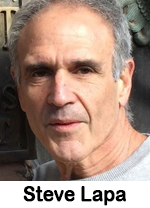
Industry Views

Pending Business: A Little Change Can Do You Good

By Steve Lapa
Lapcom Communications Corp
President

imLast week, with little time left on the clock, Disney and Charter Communications made a deal so that Charter customers could continue to watch Disney programming. Phew! Just in time for 15 million Charter cable customers to have access to that 53-year-old American institution called “Monday Night Football.”

It’s amazing how the two sides came together just in time to preserve the TV viewing habits of millions of football fans and all those millions of ad dollars sold into the broadcasts. Although both Disney and Charter lobbed streaming options at viewers to help ease the temporary pain, in the end, cooler heads prevailed, and a deal was struck.

Not so fast, somebody buried a headline.

Just before Labor Day, the Charter guys were claiming the current cable TV bundling model ain’t what it used to be, in effect acknowledging the nearly 5 million people a year who cut the cable. The cable bundle value proposition is changing before our blurry gameday eyes, and more options are becoming accessible every day. Does any of this “I can get this somewhere else” ring familiar?

Try this at home. Ask any Gen Z people you know how often they listen to the radio. (Gen Z are roughly between nine and 26 years old.) Now ask the Millennials you know (roughly 27 to 42 years old). The results will frighten you as you realize the greatest freebie electronic entertainment ever invented is losing the future faster than cord cutters on steroids.

If you have been in the terrestrial radio business for longer than five years, you are aware of the melting ice cube future of radio. Even our friends in the newspaper business are changing with the times, looking for writers who will report specifically on Taylor Swift and Beyonce. They tour the world generating crazy numbers in ticket and music sales. Their appearances and social media impact everything from fashion to politics. How is that for changing a future value proposition?

Sports fan or not, are you in touch with the Coach Prime phenomenon happening at the University of Colorado? The story was featured on the soon-to-be 56-year-old “60 Minutes.”

Deon Sanders is changing college football in Boulder as fans gobble up seats at over $500 a piece.

The point of this column is simple. From cable to pop culture to Coach Prime, leadership is innovating, finding new ways to re-invent and re-package a premise as old as song and sport, a premise much older than the terrestrial radio business. Maybe we can all learn from what we sell.

Steve Lapa is the president of Lapcom Communications Corp. based in Palm Beach Gardens, FL. Lapcom is a media sales, marketing, and development consultancy. Contact Steve Lapa via email at: Steve@Lapcomventures.com.

Industry News

TALKERS News Notes

The Minneapolis Star-Tribune reports that the NBA’s Timberwolves will not renew their deal with Audacy’s WCCO-AM for the team’s game broadcasts beginning with this 23-24 season. Team spokeswoman Sara Perez states, “We appreciated our partnership with WCCO and the radio broadcast opportunities we were able to accomplish with them. However, we are looking forward to announcing a new radio broadcast partnership in the weeks to come.”

FOX News Channel chief political anchor Bret Baier will present an exclusive interview with Saudi Arabia’s Crown Prince Mohammed bin Salman on his “Special Report” program on September 20 at 6:00 pm ET. This is bin Salman’s first interview with a major American news network since 2019. FNC says, “The pre-taped, no-holds-barred interview will cover a range of topics about the future of the kingdom and relations with the United States. Baier will anchor “Special Report” from Saudi Arabia on September 19 and 20 and present a behind-the-scenes look at the kingdom, conducting adjacent interviews with other Saudi officials as well.