By Frank Morano
City Councilor
New York City 51st District
Staten Island
 For most of my life, the sound of an AM signal has been my constant companion. Long before I ever spoke into a microphone professionally, I was the kid hiding under the covers with a transistor radio, slowly turning the dial, discovering voices, ideas, communities, and worlds far beyond my bedroom. AM radio didn’t just shape my career – it shaped who I am.
That’s why, as both a lifelong AM radio listener and a longtime AM broadcaster (77WABC and WNYM-AM “970 The Answer”), I’m introducing legislation in the New York City Council to require that all City-owned and City-contracted vehicles continue to include functioning AM receivers. I’m proud of my work in government, but this one is personal. Because AM radio isn’t just entertainment or nostalgia – it’s infrastructure. It’s public safety. It’s the backbone of our emergency communications system. And it’s in danger.
When Everything Else Fails, AM Radio Doesn’t
We don’t have to imagine what happens when modern communications collapse. We’ve lived it.
On September 11, 2001, when cell networks jammed almost immediately, millions of New Yorkers turned to AM radio for news, instructions, and reassurance.
In the 2003 Northeast Blackout, AM signals were among the very few communications systems still functioning across multiple states.
During Superstorm Sandy, when much of the region lost power and internet for days, AM remained a critical lifeline for emergency updates, evacuation information, and weather alerts.
These weren’t theoretical scenarios. They were real moments of crisis – and AM radio proved its value every single time.
When the lights go out, AM stays on. When cell networks are overwhelmed, AM cuts through. When the internet fails, AM continues broadcasting. It is the most resilient form of mass communication ever created, and FEMA and the National Weather Service still rely on AM frequencies for a reason: they reach people when nothing else can.
AM Radio Is Still the Soundtrack of America
Beyond emergencies, AM radio remains woven into the cultural fabric of this country. It’s where Americans talk to each other – about politics, sports, faith, overnight oddities, neighborhood issues, and everything in between. It’s one of the last places where anyone can call in, join the conversation, and be part of a community.
The same AM dial that once carried the voices announcing D-Day, the moon landing, and the gritty street reporting of New York legends still carries the news, opinions, and debates that shape American life today. There is something uniquely democratic about the AM band: it is accessible, unpretentious, inexpensive, and available to everyone.
That’s worth preserving. Especially now, as some automakers – particularly in the electric vehicle space – phase AM radios out of new models, citing interference or cost concerns.
Cities and States Can Lead Where Washington Waits
Congress is considering the “AM Radio for Every Vehicle Act,” and I support it wholeheartedly. But federal action can take time. Cities and states can move faster.
New York City’s legislation can be a model:
- If municipalities require AM receivers in the vehicles they procure…
- If state governments do the same for their fleets…
- And if enough jurisdictions stand firm…
Automakers will have no choice but to keep AM radio in every vehicle they sell.
Government can’t – and shouldn’t – tell anyone what to listen to. But we absolutely can ensure that the option to listen still exists. And that, when disaster strikes, the public can rely on a system proven over nearly a century to work under the toughest circumstances imaginable.
The Signal Must Go On
AM radio isn’t a relic. It’s a lifeline. It’s a civic space. It’s one of the last great mediums that belongs to the people. As someone who owes much of his career – and much of his identity – to those airwaves, I feel a responsibility to protect them.
By acting locally here in New York City, I hope we inspire communities across the country to do the same. If we want the AM dial to be there for the next blackout, the next storm, or the next unthinkable moment, the time to act is now.
Because when everything else goes silent, AM radio still speaks.
And we need to make sure it always will.
Frank Morano was recently elected City Councilor representing New York City’s 51st district. Prior to that he forged a distinguished career in talk radio at WABC and WNYM in New York. Councilor Morano can be reached via email at frank@moranoforcouncil.com.
Share this with your network


 Hello from Las Vegas, where I am both eager and anxious for CES2026.
  Network TV often delivers Nielsen hashmarks. No viewers! The no numbers reports started coming in over 20 years ago and they met with silence. Often on Holiday nights, long weekends, NBC, CBS, ABC or FOX delivered no measurable audience. Simultaneously, online video stars were attracting millions of views. In 2007, the media world witnessed the audience shift from broadcast TV to online video. In the following years, media buyers made the definition of a bad investment: Between the time a buy was placed on network TV to the day of air, the audience diminished. Every month. Year after year.
 1972. The company was headed by Dr. Jerrel Jones, who passed recently. His daughter, current owner and president Mary Ellen Jones, says, “My parents built The Milwaukee Courier and WNOV to give Milwaukee’s Black community a voice when few existed. Passing that responsibility forward was not taken lightly. Civic Media is committed to honoring that legacy while investing in the future of trusted media.” The company says that Dr. Robert “Biko” Baker will join as operations manager for both the radio station and newspaper. Civic Media CEO Sage Weil comments, “Acquiring The Milwaukee Courier and WNOV is both an opportunity and a responsibility. These are trusted institutions with deep roots in Milwaukee, and our role is to steward that legacy while investing in their future – modernizing operations, expanding digital reach, and ensuring they continue to serve the community with integrity. We’re proud to have Dr. Robert ‘Biko’ Baker lead this work.”
 says, “This interactive session brings together four distinguished executives representing key areas across today’s audio landscape, offering attendees an opportunity to learn practical leadership skills, modern management strategies, and actionable insights for navigating a rapidly evolving industry.” Panelists will include: Erik Hellum, chief operating officer, Townsquare Media Group; Dara M. Kalvort, VP of digital sales, StreamGuys; Kieran Geffert, SVP and market manager, Audacy San Francisco; and Mary Boyle, VP & general manager, WGN Radio Chicago – Nexstar Media Inc.
  At the very first CES in 1967, audio cassettes were disrupting 8-track tapes. Back to the future: Artificial Intelligence now threatens to disrupt almost everything.
 If you missed yesterday’s webinar, look for the replay which will be posted today at
  Annual Digital Sales Mentorship Program. Candidates now have until December 29 to apply. MIW says, “This year-long program is a career-accelerating opportunity designed to strengthen the next generation of women leaders in digital radio sales. One outstanding female seller or manager will be selected to receive personalized, hands-on mentorship from a top industry expert; an opportunity that can reshape a career trajectory.”
 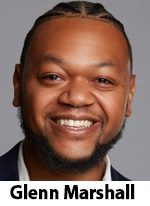 “Glenn’s combination of experience, authenticity and professionalism will immediately strengthen our afternoon reporting and bring a recognizable, trusted voice to our evening anchoring. We’re excited to welcome Glenn and see the impact he will have on our newsroom and the Chicago audience.” Marshall says, “Chicago made me. I listened to WBBM Newsradio as a kid and dreamed of one day being part of the voices that inform this city. Now I get to continue telling the stories that matter to the neighborhoods I know and love. I am proud to join the team and shine a light on the issues and victories that shape our communities every day. Thanks to Craig Schwalb, Kevin Cassidy and everyone at Audacy for this opportunity.”
 across documentary, entertainment, news, sports, and corporate audio.” NYFestivals EVP Rose Anderson adds, “The robust world of audio storytelling today is fully represented in the 2026 edition of the Grand Jury. From audiobooks to podcasts and video podcasts, from investigative journalism to live events, and from mystery to social justice, this year’s men and women of the jury volunteer their time and lend their expertise.”
 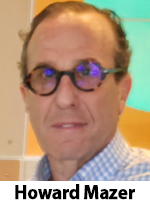 January 1. Co-president of the Urban One Audio Division Eddie Harrell says, “For more than three decades, Howard has been a steady, visionary leader for our Baltimore cluster. His commitment to excellence, his instinct
 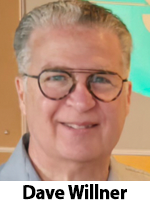 for developing talent, and his deep understanding of this market have strengthened our stations and helped shape the culture of our entire audio division.” Willner began his career with Urban One and transitioned to account executive before rising to national sales manager, general sales manager and ultimately, director of sales. Harrell adds, “Dave has had the benefit of learning the business under Howard’s guidance for many years, and he embodies the forward-thinking leadership we need for the next chapter. I’m confident he will build on Howard’s strong foundation and continue to advance the success of the Baltimore market.” The company says Mazer will work closely with Willner through the end of the year to ensure a smooth and seamless transition.
 show alongside Ted Woodward, has worked his entire 55-year career in the Wichita market. He got his start in 1970 at KWBB as a news anchor and moved to KEYN-FM in the mid-1970s as news director. He joined KNSS in 1998 as news director and eventually became program director at the station. During his career he’s won numerous awards, including a Marconi Award for Outstanding Talent. Audacy Wichita SVP and market manager Tommy Castor says, “Steve’s name is synonymous with Wichita radio. His leadership, integrity, and unmatched storytelling have shaped this station and enriched the lives of our listeners for more than half a century.” McIntosh comments, “It has been the honor of my life to share Kansas news and Kansas stories with Kansas people. Thank you to everyone who has been part of this incredible journey.” The station will present a public farewell broadcast on December 12.
  connect with listeners, deliver compelling talk content, and handle breaking news and severe weather with credibility, confidence, and energy. As part of our award-winning team, you’ll shape the conversation every day by interviewing newsmakers, reacting to breaking stories, and engaging directly with the audience on-air and online.
  chairman and CEO Bob Pittman comments, “We’re pleased with our third quarter performance, generating Adjusted EBITDA of $205 million, slightly above the midpoint of our guidance range, and our consolidated revenue was down 1.1% compared to prior year, at the high end of our guidance, and up 2.8% excluding political revenue. And we continue to take important steps in the evolution of our company – last week we announced our new relationship with Amazon Ads, which will provide advertisers using Amazon DSP access to our vast audio portfolio, and just this morning we announced our new TikTok partnership, which will bring TikTok creators into iHeart’s ecosystem. We are committed to exploring new ways to unlock the value of our unparalleled assets, maximizing the unique position we occupy in the evolving media landscape, and creating innovative cross-platform opportunities to bring new products and services to our consumers and our advertising partners.”
 comments, “I’m honored and excited to take on this new role and continue building on the incredible momentum our teams have created. Bonneville Seattle is home to passionate, talented individuals who care deeply about our brands, our partners, and our community. I look forward to helping us grow even stronger – together.” Bonneville Seattle SVP and market manager Cathy Cangiano states, “Crista has consistently demonstrated outstanding leadership, strategic insight, and a deep commitment to relationship-building. Her promotion is a testament to the impact she’s made and the confidence we have in her ability to lead us into the future. Crista was the clear choice for this role, and I’m thrilled to partner with her as we shape the next chapter for Bonneville Seattle. Her vision and energy will be instrumental in our continued growth.”
 stories of America’s heroes, the families who serve by their side, and how Fisher House plays a role in their journey. This program is appropriate for the entire Veterans Day Weekend and is a fitting, patriotic, and inspirational holiday programming alternative for all formats. Listeners will hear their emotional stories fighting for our freedoms, how they sustained their injuries, and the welcoming homes Fisher House provides for them and their loved ones while they endure their painful and painstaking recoveries. This year’s program features a special focus on the incredibly inspiring victories our wounded warriors enjoy on the field of competitive, adaptive sports. Fisher House supports the Wounded Warrior Games and the lnvictus Games as a vital part of the physical, emotional, and mental healing process for our wounded veterans. Listeners will hear about the riveting war stories detailing the injuries these heroes sustained, the ensuing medical and therapeutic healing process, right through the triumph on the field of international sports, as these brave veterans continue their dedication of service, representing America in international competition. For more information on this radio special, available cash and barter free, contact Larry O’Connor at 562.665.9537 or
 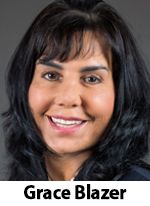 results has made her an invaluable leader within iHeartMedia.” Blazer has been with iHeartMedia since 2013 and serves as national news, talk, and sports brand coordinator, news director for the Florida News Network, program director for Miami’s WIOD and WINZ, and program director for Tampa’s WFLA. Market president Shari Gonzalez adds, “At iHeartMedia Miami, we’re fortunate to have exceptional programming leadership, and Grace is a shining example of that excellence. With 12 years of unwavering passion, strategic vision and meaningful impact across our organization, Grace has consistently raised the bar. We’re thrilled to recognize her achievements and promote her to lead our dynamic cluster into the future.” Blazer comments, “I’m incredibly proud and excited to step into my new role at iHeartMedia Miami. iHeartMedia is a powerhouse of creativity and bold ideas, and I’m energized by the opportunity to help shape our Miami brands growth and collaborate with some of the most extraordinary programmers in the industry.”
  Confidence is down. Costco is mobbed.
 Civic Media’s news/talk network, managing schedules, talent, quality control, and compliance with broadcast regulations. Key responsibilities include selecting programs, coaching on-air personalities and shows, developing promotional strategies, and ensuring the station’s sound and content align with its brand and audience needs. They blend creativity and business acumen, using audience research and ratings data to shape programming and achieve business goals.”
  says he’ll “oversee all aspects of sports talk content across the network, including daily technical operations, social media strategy, and brand management. He will build a talented team of hosts and producers responsible for compelling on-air programming – featuring original content, interviews, benchmarks, and fan interaction.” Williams says, “There’s never been a more exciting time to be in audio – the industry is thriving, innovative, and constantly evolving. This is a unique opportunity to build on the incredible foundation created by our partners at Audacy and BetMGM and combine it with the reach, heritage, and credibility of Westwood One Sports. I’m honored to help shape the next chapter, delivering smart, entertaining, and authentic sports content for listeners everywhere.”
 16% year-over-year decline in the percentage of Americans who say they get their news ‘often’ from apps like Instagram, Facebook, TikTok and X.2. In this rapidly changing landscape, consumers are increasingly turning to All News Radio for local news, trusted voices, and fact-based reporting.” Borelli cites as evidence for this Nielsen data indicating that Audacy all-news stations are up 11% versus last year and adds that’s coming off a presidential election year. Ben Mevorach is vice president of news at WINS, New York and he says, “As the number of places to get news continues to grow, the number of places to find news that is credible, trustworthy, and without bias is rapidly shrinking. People constantly tell us that 1010 WINS is their sole source for news they can trust.”
  The groaning and moaning that “radio is losing younger demos and will die tomorrow” misses the point. What attracts younger audiences? What has always attracted younger audiences? NEW STUFF. New clothes, shows, slang, ideas… NEW. When you “found” radio, you found a top 40 station that was saturated in the latest music, events and ATTITUDE. Radio remains vital by presenting and celebrating new, shocking, contest prizes, revolutionary ideas, hosts, jocks… NEW.
 The world of blogs and vlogs has been loaded with largely erroneous news of MTV closing. New owner, Paramount Global, is searching for divisions showing no growth. If MTV is now a liability, it may be a target for a shutdown.
 of the Gods has powered thousands of hours of programming fun. Recently, I saw the latest edition of his book.
 Like many of you, I love “Ancient Aliens” on the History Channel narrated by the formidable Robert Clotworthy. Robert is a great guest on my show, “Sterling Every Damn Night” and he puts up with whatever nonsense that gets tossed at him. Thank you, Robert.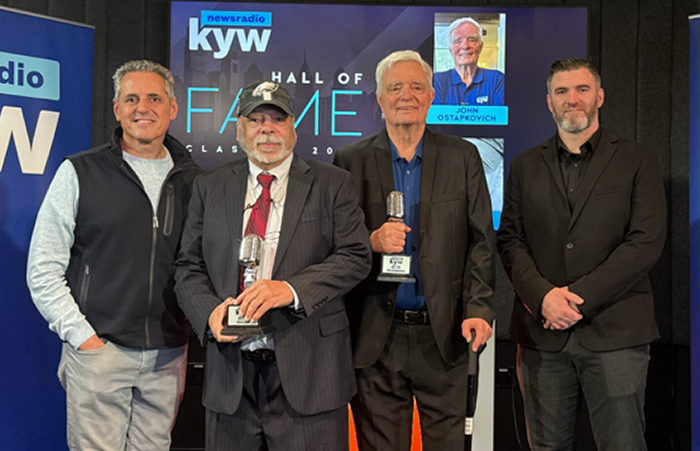
 and radio industry CEOs are pleased with the probability that they will be loosened. Cumulus Media president and CEO Mary G. Berner states, “We’re encouraged that Chairman Carr and the FCC are advancing the 2022 Quadrennial Review. Quickly modernizing the radio ownership rules is essential for listeners who rely on local radio every day. With updated
  rules, companies like ours can invest more locally, diversify our offerings, and compete effectively in today’s rapidly evolving audio landscape. We look forward to working with the Commission to make these updates.” Beasley Media Group CEO Caroline Beasley comments, “We would like to thank Chairman Carr for moving forward with the quadrennial review on this critical endeavor. This is a defining moment for our industry to ensure that local radio can continue to fulfill its essential public service mission for decades to come. We look forward to working with the Commission to implement common-sense reforms that will allow broadcasters to compete fairly and keep serving the local audiences who rely on us every day.”
 Sure, radio’s superpower is that we’re live. But 75% of all advertising dollars are now spent on digital. And Netflix, YouTube, and podcast platforms have conditioned consumers to expect that their content will wait for them (“on-demand”), not the other way around (“linear,” meaning real-time on-air). If your best content disappears the moment it airs, you’re leaking value. Think: time-shifted, searchable, and shareable.
 Joyce Wirthlin says, “We are excited and fortunate to welcome Rick back to iHeart to lead programming for our cluster. His proven leadership, creativity and track record of building winning stations will be invaluable for our listeners and partners in Salt Lake City.” Vaughn comments, “This is an incredible opportunity to help shape the future of iHeart Salt Lake City. iHeartMedia is committed to excellence, innovation and growth, and I’m excited to return to the iHeart family to collaborate with such a talented team, create compelling content, engage listeners across every platform, and deliver outstanding results for our advertising partners.”
 launch of Freedom Journeys, a new multimedia storytelling initiative celebrating pivotal figures in Philadelphia’s past and present. Freedom Journeys, created in partnership with Renee Chenault Fattah and Love Now Media, will highlight 250 iconic Black Philadelphians — living and deceased — whose lives and work have helped shape the city. WURD president and CEO Sara M. Lomax says, “Founder’s Day will be a wonderful evening in a beautiful setting — where we will celebrate my father’s life and legacy, have great food, amazing live music and soul-filling affirmations of our culture. But we also aren’t going to shy away from what’s happening in this country. WURD has never done that, and this year’s Freedom Journeys is both celebration and resistance.”
 Grief for the loss of Charlie Kirk is palpable around the world. Broadcasters who interviewed him or had anything to do with the Turning Point organization were deeply touched by his tragic death.
 Amazon learned that there are high volume sales for specific categories of products. High demand equals high value to the seller. Items such as diapers, printer ink, staplers, batteries, etc. Being brilliant, Amazon created “Amazon Basics.” Same products, white labeled. Amazon doesn’t manufacture batteries; they just slap their logos on what America needs most. That’s why Mr. Bezos has a bigger boat than you.