By Dr. Andrew Gladding, EdD
Chief Engineer
WMCA / WNYM, New York
The power of broadcast radio stems from its genesis, which is the use of audio technology and storytelling to transmit messages to large audiences. As industry professionals, we are all acquainted with the power and reach that our trade provides. However, all stories must begin with the spark of an idea. In the case of the curious collaboration between a college radio station in New York and a community radio station in South Africa, this idea started with a simple conversation.
The relationship between 88.7FM WRHU Radio Hofstra University and 89.5FM Bush Radio in Cape Town South Africa began purely as a matter of proximity. In the winter of 2018, I happened upon Bush Radio while in South Africa while on a family vacation. Meeting the passionate broadcasters at Bush Radio has resulted in a fruitful broadcast collaboration spanning six years and many exchanges of audio, information and support between our two broadcast organizations. Students at WRHU in New York, WRCT in Pittsburg and members of Bush Radio co-produce a weekly show called “The 1World Community Radio Show,” which features interviews and music from around the world. WRHU’s Ricky Hubert, WRCT’s Cody Hmelar and Bush Radio host Lydia Marwanqana connect weekly to create a truly unique program that provides a world stage for young, aspiring talent. The show has become a centerpiece of programming for both stations and an example of how stations across the globe can work together to create engaging, community focused audio content. It has also allowed staff members from both stations to develop insight into each other’s cultures and communities.

Pictured above (from l-r) are: Sturgeon Records President David Chapman, Salem NY Chief Engineer Andy Gladding, Bush Radio engineer Renato Van Schalkwyk, WRHU general manager John Mullen, Bush Radio managing director Brenda Leonard, Bush Radio host Jasnine Roberts, WCWP general manager Dan Cox and WKZE “Night Shade” host Paul Higgins at the Bush Radio Studios in Salt River, Cape Town.
In the fall of 2024, members of Bush Radio came to New York City and Washington DC to cover the presidential elections. The purpose of the trip was to find new ways to combat journalistic misinformation. The visit exposed Bush Radio staff members to American journalistic values, broadcast operational practices provided the international broadcasters with an up-front look at the US democratic process in action.
In February of this year, In the spirit of maintaining and strengthening our broadcast partnership, five members of New York radio and audio media , including myself, traveled to Cape Town to see how the Bush Radio folks used their FM reach and power to serve their community. The goals of this part of the exchange were to deepen our understanding of South African media, operations, practices and workplace culture. We went into this journey with our minds and hearts wide open, ready to see how the craft that we know and love was practiced on the other side the world.

Pictured above is Andy Gladding working with Bush Radio engineer Renato Van Schalkwyk to install Comrex hardware in the Bush Radio Air Studio.
The results of this visit were eye opening. During our visit to Cape Town, we observed several similarities between our stations in New York and our South African counterparts. The Bush Radio staff was extremely dedicated to their station and took great pride in serving their community. They used their centrally located studies as both a broadcast center and training facility, with a thriving mentorship and intern program. We also noticed that they followed almost identical practices and standards as we do in the USA, ranging from technical specifications for broadcast engineering to maintaining programmatical integrity. Even the energy and excitement among the staff in the studios and reporting from the field was comparable to any well-run US broadcast entity. This is mainly due to the fact that the folks who run Bush Radio, specifically Managing Director Brenda Leonard and Program Director Adrian Louw, execute a comprehensive and extensive training and operational workflow at the station. Bush Radio holds the proud distinction of being the first licensed community radio station in South Africa, which was achieved with great effort and sacrifice during a time when the practice of community radio was non-existent in the country. Therefore, the management is very observant and powerful of the weight that they carry and this respect is passed along to the station members.
We also noticed some stark differences. Due to the relatively young nature of the South African democracy, there appeared to be a deeper connection between station and community. Bush Radio is involved in many different aspects of Cape Town governance, culture and outreach and this is reflected in their on-air product and station ethos. We also observed that many members of the general public were familiar with the station and proudly considered themselves to be regular listeners and supporters. The station was closely intertwined within the fabric of the community, which is both wide and diverse.
We also noticed that there was an intrinsic willingness between Bush and other community stations to work together. During our visit, we had the opportunity to visit a number of stations in communities around the Western Cape region, including Zibonele FM and The Voice of the Cape. We heard the term “partnership” and “sister station” during our visit many times, which demonstrated a visible willingness between teams at different organizations to work together and collaborate. I personally believe that this positive attitude for partnership and outreach has been a driving force in the successful collaboration WRHU has enjoyed with Bush Radio.
During our visit, the New York contingent felt this energy and openness, which in turn motivated us to jump into the spirit of the occasion. I personally worked with the Bush station engineering team on some facility maintenance and technical improvements, while other members of the crew lent their wisdom and knowledge to the venture. Laura Schaffer, the General Manager of Salem Media of New York had sent us down with a “broadcasters care package,” comprised of surplus equipment and spare parts from New York. The staff at Bush Radio was happy to receive the gear and began using it almost immediately.
The exchange of knowledge was not limited to technical engineering. WRHU’s John Mullen and Dan Cox ran a workshop on sales, marketing and workflow, while Sturgeon Records owner and engineer Dave Chapman taught the station members multi-track production. WKZE’s Paul Higgins, a world music producer, worked with the station’s air staff on interviewing techniques and even conducted an interview with famed producer Steve Lillywhite on 89.5FM, which was re-broadcast to the USA live. The experience of giving and sharing knowledge was both exciting and rewarding.
However, what we received in return was even more fulfilling. Even though we were strangers from another part of the world, we felt strangely at home at 89.5FM. The folks at Bush Radio were excited to show us their station, city and culture and made sure that we enjoyed a completely immersive experience. We saw all sides of the area, from the sparkling beaches and stunning views of the harbor from the top of Table Mountain to areas that were struggling and people that were fighting to survive. Throughout all of our travels, we noticed one constant: Radio was an integral part of all of the communities that we visited. Part of this can be attributed to a lack of broadband access across the region, but I personally believe a larger factor was based around the spirit of the South African people trusting in and embracing their local radio stations.
Considering this current period of uncertainty and transition in the US, it was refreshing to experience radio being used as a force for community connectivity, outreach and positivity in a far-away part of the world. Our team returned from the trip, refreshed with new ideas on how we could use our experience to grow and improve our own stations. One of these action items has gone into effect almost immediately. Since our return, the 1World Community Show has grown into an open-source network, which includes new domestic and international partners. Stations on the network now include WRCT-Pittsburgh, WCWP-LIU Post, WKZE-Red Hook, KCSS-UC Stanislaus, WVCR-Siena College and Kinvara Community Radio in Ireland, in addition to WRHU and Bush, all eager to share audio content and ideas. I personally hope to see the connection between all of our stations, along with this beautiful collaborative relationship, grow larger and endure way into the future. As one Bush Radio station member told me, “the color of our skin may be different, we may pray to other gods and we are from separate countries and cultures. However, our love for radio is above all that, which makes us all the same.” Considering the diversity of storytelling that we each do with the power of broadcasting, it’s nice to know that our passion for the craft and industry can unite us and break down barriers. I look forward to our next adventure with the Bush Radio staff. If anyone reading this would like to get involved in radio outreach and establish a similar program or help expand technical support for our new “sister stations,” please feel free to reach out. Your contributions will not be unappreciated. You can find out more about the 1World Community Radio Network at www.1worldcommunityradio.com
Dr. Andrew Gladding his chief engineer at Salem Media Group’s WMCA and WNYM in New York. He can be emailed at andrew.gladding@salemcommunications.com


 d replaces it with FOX Sports Radio’s “The Odd Couple” with Rob Parker and Kelvin Washington. Napear broke the news himself tweeting out, “BREAKING NEWS: I was just informed they are pulling the plug on my show. My thanks to you for your support and @RyaninSactown who did a great job.” Napear references on-air producer Ryan Bohamera. Napear was a host on KHTK, Sacramento and TV voice of the NBA’s Kings but was fired after a media exchange with DeMarcus Cousins over the Black Lives Matter movement.
  “We are competing in an attention economy,” and Magid COO Jaime Spencer reckons that “the playing field is massive.”
 with the station across town anymore. It’s competing with 50,000 news brands, nearly half a million podcasts, and an infinite scroll of feeds that never sleep.
 sports talk KSAC-AM/K284CM, effective September 2. This comes five years after he was fired by Bonneville’s KHTK, Sacramento and the Kings after a social media exchange with former Kings player DeMarcus Cousins about the Black Lives Matter movement and used the phrase, “all lives matter.” Napear sued Bonneville and lost but is currently appealing that ruling. Napear tells the Bee, “It’s going to be the Grant Napear show that people have listened to for decades. I’m competitive. I’m not only coming back to Sacramento. I’m coming back to win.”
  Metrics and “Share of Ear” Report, MRI-Simmons, Screen Engine/ASI, Podscribe, and Magellan AI. Four of the key findings from this are: 1) Podcast ad campaigns are too light: No brand is coming close to “saturating” podcast audiences; Brands should allocate 5% of digital budgets to podcasting; 2) After five years with a median age of 33 to 34, podcast audiences finally age to 36, reflecting broader appeal with older audiences; 3) Screen Engine/ASI: Podcast audiences offer CTV advertisers significant incremental reach; and 4) Podcasts tighten their grip on audio audiences: Among podcast listeners, 35% of all audio time spent now goes to podcasts.
 WTOP.com, Outstanding Newscast and the Best in Show Award for all radio for Outstanding News Operation. WTOP director of news and programming Julia Ziegler comments, “In addition to the breaking news, traffic and weather WTOP offers, we have also made a concerted effort to offer a balanced news diet to our consumers across platforms. There are great ‘good news’ stories happening across the DC region every day. It is a great honor to see some of them honored in this way.”
 Yesterday’s column
 councilmember Kevin DeLeon and councilmember Gil Cedillo along with former labor leader Ron Herrera – reveals them uttering racist remarks, derogatory comments toward council colleagues, and disruptive, racially charged rhetoric about how the City Council could “skew” redistricting. The station says, “Now that a full year has passed, KBLA Talk 1580 will host two important conversations unpacking what transpired in the community since these divisive, hurtful comments were made and what the future holds for the City of Los Angeles.” Tavis Smiley will host a show featuring community voices on October 9 from 5:00 pm to 7:00 pm. Then on October 12 (from 5:00 pm to 7:00 pm), the Institute for Nonviolence in Los Angeles will host “Days of Dialog: The Anatomy of Anti-Black Racism and Bigotry.”
  responded to former Sacramento Kings player DeMarcus Cousins’ social media post asking him what he thought of Black Lives Matter and Napear responded, “ALL LIVES MATTER… EVERY SINGLE ONE.” Bonneville fired him citing a clause in his contract that holds him responsible for anything that “might discredit the goodwill, good name or reputation” of the company. In allowing the wrongful termination suit to go forward, Judge Drozd wrote that Napear “has stated a plausible cause for retaliation” under California Labor Code sections 1101 and 1102, stating further that “the court finds that plaintiff has sufficiently alleged a ‘rule, regulation, or policy’ under (section) 1101 by alleging … defendant used his termination ‘as an example to all other employees of the Company as an implicit warning that anyone that dared to speak out publicly and criticize the politics of the Black Lives Matter movement would be summarily terminated.’”
  dismissed Napear’s suit last month but gave him 21 days to file an amended suit. Napear was let go after former Kings center
  says of their decision in 2021 to go with Outkick, “The timing was perfect, but we also had a chance to grow what we were already doing. We didn’t have to leave Nashville. We own our intellectual property; you don’t have that with radio companies. We’re able to form our own show company, so to speak, and we’re part of the much larger grand scheme of Clay’s vision.” Gallagher’s piece looks at the digital frontier the trio began exploring with Outkick and chronicles their return to the Nashville airwaves.
  stations. In the bigger picture, Fischer writes, “Today, no one radio host commands the same level of power and influence that Limbaugh did, but a number of new voices are emerging — blending the reach of traditional and digital platforms — and collectively proving to be more powerful in shaping conservative opinion for younger audiences.” TALKERS magazine publisher Michael Harrison is quoted in the piece saying, “The world is changing and there are questions as to how Limbaugh, had he lived and remained healthy — based upon his mindset and his approach to the business — would have remained as pertinent as he was. He was not as flexible when it came to social media and some of the other forms that it takes right now to be a media presence as opposed to just a radio presence.”
  All this month, I am outlining revenue-producing strategies and tactics, proven by advertisers’ results (which pay us all). If you missed our first two installments, here are “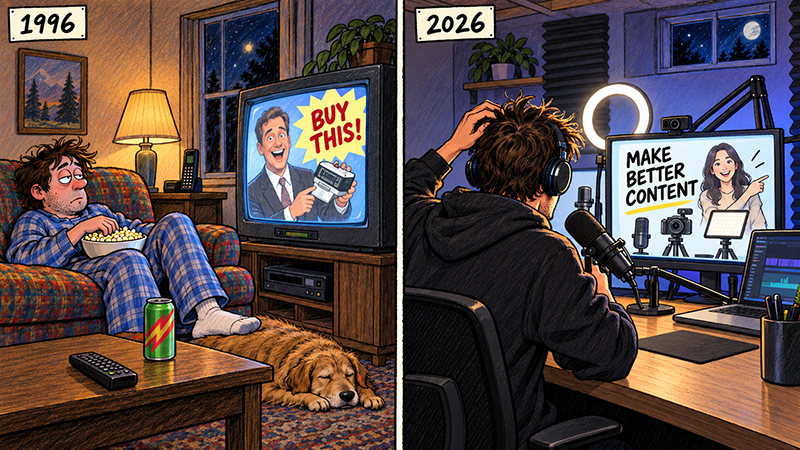
 My father recently called my attention to something hiding in plain sight. He was watching YouTube and noticed ads for StreamYard, Riverside, Sprizzy and other companies selling tools and services to people who want to produce, distribute, or promote their own media. “They are advertising on consumer venues!” he told me. That was the part that caught his attention.
 keep his interview with a Senate candidate off the air shows just how far this Administration’s campaign of censorship and control has gone. This is now the second time in a matter of months that a late-night host has disclosed they had to bury an interview because of FCC intimidation, and there is no way to know how many other editorial decisions across the country have quietly been shaped by this same pressure. No host, local affiliate, or network should have to weigh federal retaliation before booking a guest for a newsworthy interview. Any attempt to pressure broadcasters into self-censorship undermines both press freedom and the public’s right to hear from candidates in their communities seeking public office.
 wide range of disciplines, from News Programs, Documentaries, and Talk Programs to On-Air Talent, Craft, and Entertainment. Specialized category groups spotlight groundbreaking work in Digital, Podcast, and Audio Book content, while Programming Formats and Promotion/Open & ID recognize the creative standards and imaging innovation driving radio forward.” New York Festivals EVP Rose Anderson says, “Here’s to Radio – the original social media. Awards do more than keep score: they honor creative excellence, mastery of craft, they can change your life, and they offer an opportunity to take your place in industry history!”
  thrilled to have Tommy join the Salt Lake City team. His winning track record, industry expertise, and commitment to excellence make him a tremendous addition to iHeartMedia. Tommy’s leadership will inspire those around him and help position our team for even greater success in the years ahead.” Castor comments, “I’m honored to join the iHeartMedia team in Salt Lake City and lead such a talented group of professionals. This market has an incredible media landscape and strong community connections. I look forward to building on the SLC team’s success and positioning iHeartMedia as the premier media partner in the marketplace.”
 department. Marcus is now serving as SVP, finance and strategic planning, and Montijo rises to SVP, controller and accounting. Salem CEO David Santrella says, “Salem is entering an important new chapter, and Autumn and Monica will be key members of the leadership team helping us shape it. They know Salem and our businesses extremely well, and I have tremendous confidence in both of them and the teams they lead.”
 By Walter Sabo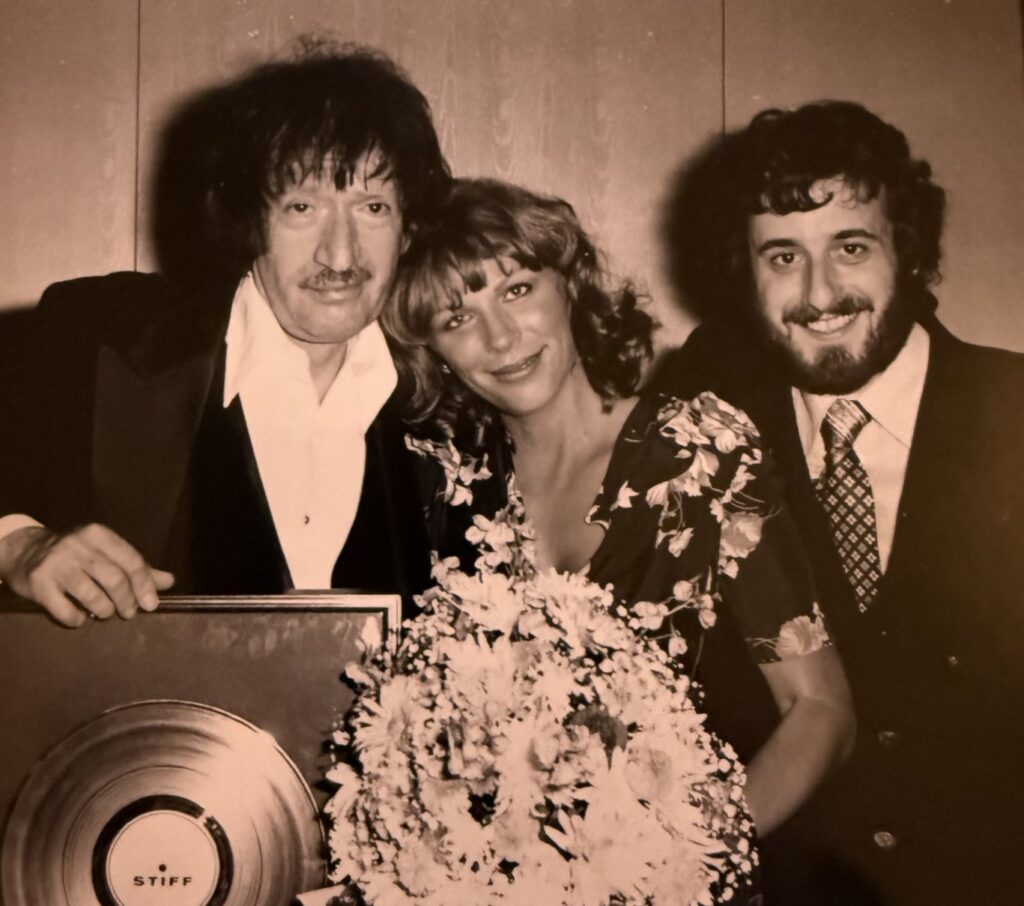
 Dickey Broadcasting Company announces, “an exciting new chapter” for Sports Radio 680 The Fan in Atlanta as veteran broadcaster John Kincade joins Matt Chernoff weekdays from 2:00 pm to 6:00 pm for the all-new “Kincade & Chernoff Show.” The pairing brings together two of Atlanta’s most respected and recognizable sports radio personalities. The new show will feature the latest sports news, interviews, and debate.
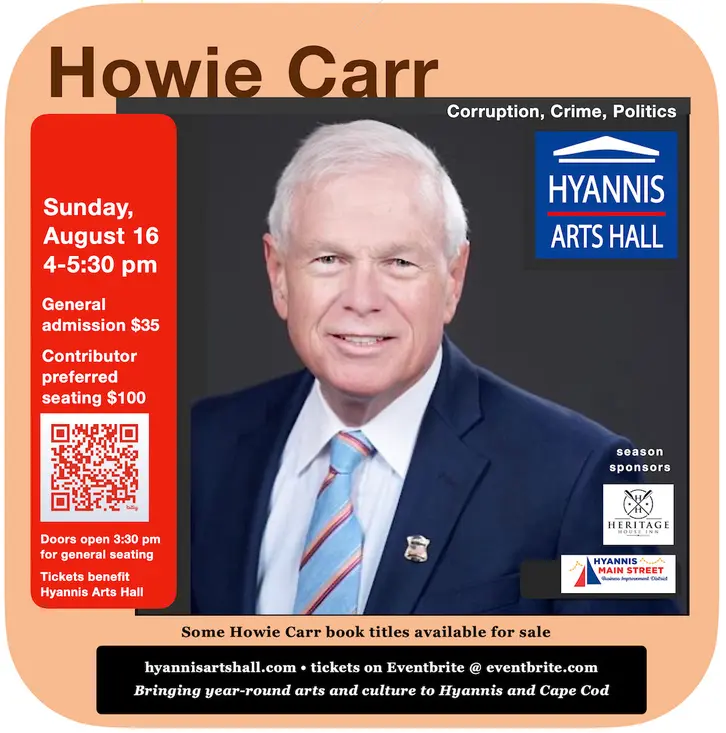 Long known as the kind of radio talk show host who can “draw a crowd,” legendary New England personality, best-selling author, newspaper columnist, and broadcasting entrepreneur