 By Andy Gladding, Ed.D.
WMCA 570 / WNYM 970 Radio, NY
WRHU 88.7 FM, Hofstra University
Chief Engineer
Following the 2024 election cycle, there has been a flurry of conversation and speculation over the diminishing role linear media played in deciding the outcome of high-profile national races. With both the Trump and Harris teams choosing to heavily engage with social media influencers, digital media outlets and podcasters, campaign operatives have demonstrated that they are willing to shift their political ad spending into newer forms of broadcast messaging. This has called into question just how much influence and effectiveness legacy media has over audiences in the current media market.
However, not every country shares this perception. In 2020, WRHU Radio Hofstra University in New York formed an alliance with 89.5FM Bush Radio in Cape Town, South Africa. Bush Radio is the oldest community radio station in South Africa, having long been an established voice for the Cape Town area since the early 1990s. With programming in three languages and a highly diverse staff, the station is deeply ingrained in the fabric of the Cape Town media space. The parallel goals of WRHU and Bush Radio, specifically emphasis on local journalism, community programming and educational radio training, provided a strong foundation for the stations to build this joint venture. The purpose of this partnership was to explore the power and reach of community radio in each station’s respective broadcast area. Since the inception of this relationship, both stations have enjoyed a continuous flow and exchange of ideas, goals and programming, even co-producing a weekly show called “1World Radio,” which highlights news, talk and music content featured WRHU and Bush Radio.
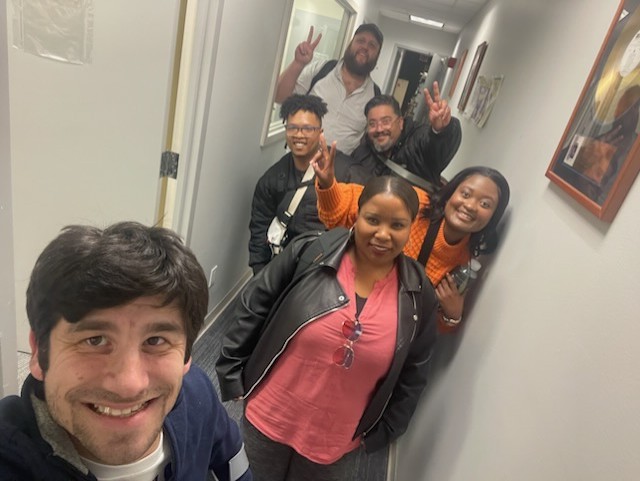
Bush Radio journalists Jasnine Roberts, Lydia Marwanqana, Renato Van Schalkwyk, and Adrian Louw tour the Salem Radio New York facilities with chief engineer Andy Gladding (pictured in rear) and assistant production manager Alex Garrett (pictured in front).
As part of this alliance, the stations were able to engage in a radio exchange program commencing just before the 2024 U.S. elections. With monies gained from a cultural grant, Bush Radio sent five radio journalists abroad to New York and Washington, DC to cover the national elections. The purpose of this trip was for the Bush Radio journalists to have the opportunity to see the American democratic process up close and later report their findings back to the Cape Town listening audience.
During the New York leg of their journey, I had the pleasure of offering our colleagues from WRHU’s “sister station” an up close and personal look at some of the New York’s finest broadcast institutions. The Bush Radio journalists, using WRHU as their base of operations, had the chance to visit New York Public Radio, Salem Media of New York, Long Island News Radio and fellow NCE broadcasters at WHPC and WCWP. Bush Radio members had the opportunity to interview local politicians, interface with student journalists and even participate in some radio broadcasts, including AM970’s “The Arthur Aidala Power Hour” “The One Leg Up Podcast” with Alex Garrett and WRHU’s Hofstra’s Morning Wake Up Call.
At the beginning of their visit, the Bush Radio team had a number of pre-conceived notions about the American electoral process, national media and cultural ideals. They were all aware of the large impact that American media has had on the rest of the world, with most of their impressions of the USA generally rooted in older idioms of American pop culture, specifically things they had seen on MTV, NBC, ABC and other international network programming originating from the United States. They believed the American elections were similar to the south African cycle, with campaigns lasting only for a few months and a generally receptive population to the post-election outcomes.
However, after spending some time in New York City, Washington, D.C. and Long Island conducting interviews and analyzing news reporting during their visit, their perspective was much different. The Bush Radio journalists were amazed at the drastic differences in reporting they saw across different news outlets. They observed that different stations were geared to provide favorable reporting to targeted audiences, which was something they noted didn’t happen back in South Africa. They were also surprised at how divided and polarized Americans were, summing the experience to how people would choose sides as if they were rooting for a favorite football or soccer team. Finally, they noticed that while the national media seemed to be coalescing around Harris as their preferred candidate, the polling was pointing towards a Trump victory. The stark differences between the bias of the media verses the national momentum was also surprising to them.
According to the Bush Radio journalists, they felt that linear network and community broadcasting carried a much larger influence back home than it did in the United States. They believed that this was partially because much of their domestic population does not have access to broadband internet, which meant that many still relied on terrestrial broadcasting to receive their information. However, they also observed that many people they spoke to had developed a distrust of the media. The South African journalists believed that much of this sentiment stemmed from apparent media bias, since the national reporting didn’t seem to accurately reflect the polling trends. They also pointed out that due to the wide array of media outlets and digital content providers that were available to the public, there seemed to be a dilution of credibility across all media sources, as the sheer volume of stories made it difficult for people to fact check all of the decentralized information.
However, the Bush journalists also observed that many Americans held the First Amendment in high regard. Freedom of speech and expression is a relatively young concept in post-apartheid South Africa. The journalists were amazed at the confidence and accessibility Americans presented when it came to sharing personal opinions or thoughts. This, according to the Bush Radio journalists, was not a widely accepted practice back home.
Many of the journalists were also amazed at the willingness of different groups to cross “traditional cultural lines” to vote for candidates that were from different ethnic backgrounds. They noted that back home, voters from specific racial backgrounds would generally align with candidates that were of a similar race. According to the journalists, this demonstrated that the idea of being “American” alongside the marketing of a candidate was a unique force that could work against ingrained or learned racial stereotypes and biases.
Despite the contentious nature of the elections and the high level of emotion generated by the outcome, the Bush Radio folks believed that the American democratic process was indeed intact and that their role as community radio journalists was now more important than ever. They noted that if they could be the “standard-bearers” of the news and produce reliable and credible content, it would draw greater listenership to their linear programming. According to the journalists, credibility was the most important element a radio station could have, especially as people around the world look for new ways to consume information. They acknowledged the fact that regardless of our cultural differences, they saw a similar passion for broadcasting and community service among their radio counterparts in New York, especially after interfacing with the students at WRHU. They also learned a very valuable lesson during their visit, specifically that New York pizza has the power to bring opposing groups together, as it was their observation this celebrated cuisine seemed to be served at every management meeting that required uncomfortable discussions or decision making. As one of the Bush journalists exclaimed after enjoying his first slice, “this pizza could solve all of the world’s problems.”
As a continuation of the WRHU-Bush Radio partnership, members of WRHU have been invited to travel to Cape Town in February and participate in the reporting on the results of the South African elections. Based on the feedback from the South African journalists, I am confident that this experience will be just as rewarding and exciting as it was for the Bush Radio participants.
1World Radio airs every Tuesday between 4:00 pm and 5:00 pm on WRHU, Radio Hofstra University.
Dr. Andrew Gladding is the chief engineer of the Salem Media stations in New York City – WMCA 570 / WNYM 970 – as well as WRHU 88.7 FM, Hofstra University, where he also serves as a lecturer on communications. He can be reached at 516-527-0764 or andyg@nycradio.com.



 Along with restructuring, WVON is ending months of speculation on who will be replacing veteran talk show host Perri Small who retired last November. WVON has tapped former politician Jesse Jackson, Jr to host its afternoon drive show. “The Jesse Jackson Jr Show” will air Monday through Thursday from 3:00 – 6:00 pm. This is Jackson Jr’s first foray into broadcasting (with support via the syndication arm of Tavis Smiley‘s Smiley Audio Media). He previously served as a U.S. Representative of Illinois’ 2nd Congressional District from 1995 to 2012. WVON’s current afternoon host, Atiba Buchanan, has agreed to continue his involvement at the station and his new role will be announced shortly.
  WVON has chosen Cleopatra Draper to replace midday host Perri Small for its coveted midday slot. Draper has worked in various capacities at WVON since 2019 including as a fill-in host. She holds a master’s in social work from the University of Illinois Chicago and has a passion for getting young people involved socially and politically in community-building. Draper’s show will air weekdays from 9:00 am-12:00 noon. In addition, WVON’s long-time host Matt McGill will be expanding his show to air weekdays from 12:00 noon until 3:00 pm, while Lynn Richardson’s hourly financial show “The Millionaire’s Roundtable” is being moved to 5:00 am as a lead-in to WVON’s morning drive show, “The Rufus Williams’ Show.” This begins a new era of talk radio for Chicago’s Black talk powerhouse which has been among the national leaders of this format since 1986. “We feel our new lineup is optimal for the changes that are occurring in our country and globally,” said company CEO, Melody Spann Cooper. “To have an opportunity to provide a platform for someone as talented as Jesse Jr and to introduce the station to a new generation of thought leaders with Cleopatra, positions WVON to continue to shake things up in Chicago and beyond.” WVON-The Talk of Chicago has established itself as one of Chicago’s premier content providers. For 61 years, the station has been considered one of the most credible African American media institutions in the nation providing an interactive forum for its vast listening audience to discuss social, economic and political issues that impact the Black community locally and nationally. WVON is a subsidiary of Midway Broadcasting Corporation, whose properties also include WRLL Radio and VONtv.
 FOX Sports Radio Features Live Broadcast from Orange Bowl. FOX Sports Radio’s “Two Pros and Cup of Joe” with (pictured above l-r) Brady Quinn, LaVar Arrington and Jonas Knox will broadcast live from Fort Lauderdale, beginning this morning (1/8), as part of the network’s coverage of the Orange Bowl featuring a matchup between Quinn’s alma mater Notre Dame and Arrington’s alma mater Penn State tomorrow (1/9).
 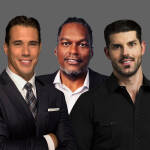 With a spot in the National Championship on the line for the Fighting Irish and Nittany Lions, “Two Pros and a Cup of Joe” will bring all the excitement before, during and after the game as the show broadcasts live from 6:00 am – 9:00 am ET at Le Meridien Dania Beach, the media hotel for the game, from January 8 – 10, 2025. “Two Pros and a Cup of Joe” featuring Quinn – former Notre Dame Quarterback who set 36 single-season and career records, and was a first-round draft pick; LaVar Arrington – College Football Hall of Famer, three-time Pro Bowl Linebacker and No. 2 overall draft pick; and sports radio veteran Jonas Knox is available nationwide on more than 380 stations, in addition to FOX Sports Radio’s channel on iHeartRadio and www.FOXSportsRadio.com.
 iHeartMedia, the and the National Football League (NFL) today (1/8) announced an extension to the exclusive partnership that first launched the
  The long-running, liberty-based syndicated show “ArmedAmericanRadio” and its sister property “AARDailyDefense,” owned and hosted by one of the nation’s leading Second Amendment advocates, Mark Walters, continues to add affiliates. Walters kicks off 2025 on a roll with new affiliates: KLID-AM, Poplar Bluff, MO; WBNR, Beacon, NY; WKDP-AM Corbin/Lexington, KY; WKDP-FM, Corbin/Lexington KY; KOMY-AM, Santa Cruz, CA; WLNA-AM, Peekskill, NY; WAJZ-FM, Albany, NY; and WGHQ-AM, Poughkeepsie, NY. Walters, among his many civic activities, is on the Board of Directors of the Citizens Committee for the Right to Keep and Bear Arms.
 The horrific murder of UnitedHealthcare CEO Brian Thompson at the hands of Luigi Mangione at the end of 2024 was a wake-up call for the talk media industry.
 Adell Media announced today (1/6) the addition of “Your Morning Show with Michael DelGiorno” to the lineup at 910 AM – Detroit’s News Talk Superstation (WFDF-AM), effective immediately live weekdays 6:00 am – 9:00 am ET. This clearance marks the 50th affiliate for the program, which joined Premiere Networks’ national lineup in October 2024. With a motto of “so much information, so little understanding,” DelGiorno engages listeners with entertaining discussion that goes beyond the latest news and political headlines to include lifestyle, pop culture topics and humor. The goal of the show is to help the audience start their day with fun, witty and interesting conversation that’s also informative. Since the station re-launched in September 2023 with a 24/7 lineup of news and conservative talk, as well as local news, weather and traffic from Total Traffic & Weather Network and breaking news coverage from ABC Radio, the station’s audience has grown +500% to date (Source: Nielsen Audio, PPM, NOV24 v SEP23, MoSu 6a-12m, P6+).
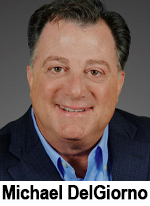 “Michael DelGiorno is a perfect fit to lead our impressive weekday lineup featuring the biggest talent in talk radio,” said Kevin Adell, CEO. Adell Media. “In just over a year since launching our conservative talk format, we continue to see incredible audience gains and look forward to continued growth and success as we provide a leading source for news and information in our community.” “I’m always singing, ‘Oh, how I wish again, I was back in Michigan!’ So, it’s a song come true for me,” said DelGiorno. “All joking aside, as a Flint native, I’m thrilled to be coming home to start the day off right on Detroit’s Superstation and just in time for my Lions’ first Super Bowl!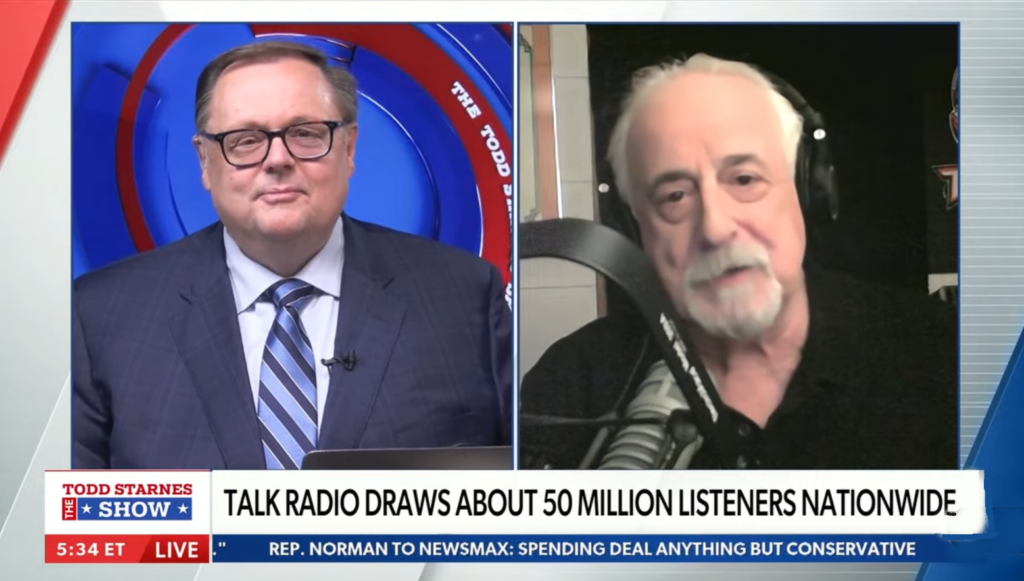
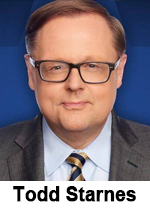 available free of charge to radio stations around the nation.Special guests include Gov. Mike Huckabee, actress Sam Sorbo, and Pastor Robert Jeffress. Stations interested in broadcasting the show should reach out to todd@starnesmediagroup.com.
 Reckoning that “Americans have never seemed more optimistic, eager for the second Trump administration agenda,” consultant Holland Cooke urges that radio “share the buzz” already building ahead of January 20.Cooke’s client stations are selling “Inaugural History Minute” features for air beginning January 5; and he’s offering the scripts for use elsewhere at HollandCooke.com. Worth looking into!
 The Cumulus Media | Westwood One Audio Active Group® conducted an analysis of six recent quarterly studies spanning Spring 2023 to Fall 2024.
 Cumulus Media announced yesterday (12/5) that KCMO 95.7 FM and 710 AM, has added longtime Kansas City broadcaster Kevin Kietzman to the station’s weekday programming lineup with the launch of his new midday show, “Kevin Kietzman Uncanceled.” The program debuted this week and airs on KCMO Monday through Friday from 10:00 am-11:00 am. Kietzman is a well-known voice in the Midwest, having hosted his highly successful sports/talk radio show in Kansas City for over two decades. He is currently the host of the “Kevin Kietzman Has Issues” podcast, covering Kansas City news, sports, and politics. Donna Baker, regional VP/MM, Cumulus Kansas City, tells TALKERS, “Under Pete’s leadership, KCMO Talk Radio is one of the fastest growing stations in the Midwest. Kevin’s passion and commitment to his craft make him the perfect fit for the KCMO Talk Radio audience and our client partners.” Pete Mundo, KCMO PD and morning show host, commented: “During my years in Kansas City, we have delivered on our promise, ‘If it’s happening IN KCMO, it’s ON KCMO.’ There are few who have entertained and informed Kansas City listeners for over two decades like Kevin Kietzman. Kevin’s ability to engage fans, whether the topic of today is our Championship sports teams, the local news landscape, national politics, or the pop culture world, make him the ideal addition to KCMO Talk Radio.” Kevin Kietzman said: “It’s great to be back on radio but even better to be a part of something as exciting as KCMO Talk Radio, now on 95.7 FM. I’ve known Pete Mundo for years and absolutely nobody in KC media works harder or is more dedicated to serving listeners than Pete and the management team at Cumulus Media. It’s a sweet spot to follow his popular morning show where Kansas City listens every day to learn what’s going on throughout Missouri and Kansas.” Kietzman added: “These are historic times. Americans have spoken loudly that we are a free speech society, we have the most popular sports team in the world in our city, and I can’t wait to be back on air to talk about it all. I look forward to hearing from so many of you that have listened throughout the years. Let’s go!”
 Newsmax launched on DIRECTV Latin America’s leading media technology company in connectivity and entertainment in the region – one recognized for its multi-platform experience. The distribution move comes as millions around the globe are tracking news about the recent presidential election and the upcoming administration of President-elect Donald Trump.
 The ratings competition for eyeballs and eardrums between multi-platform news content providers has grown increasingly fierce as burgeoning interest in politics – especially during this remarkably heated 2024 election cycle – has driven huge audiences to information venues seeking the latest data and ideological affirmation. The correlation between MSNBC’s notable ratings declines after the “Morning Joe” visit to Mar-a-Lago illustrated the sensitivity of branding and audience expectations within this volatile arena. So, what media outlets did Americans turn to for political news during the heated 2024 presidential election? Pew Research did some digging to find out and Newsmax has earned bragging rights for being among the top U.S. news brands for Americans seeking political news. The Pew survey for September of 2024 asked close to 10,000 Americans: “What news source do you turn to most often for political news?” The question was open ended — with Pew giving no possible responses as respondents gave their own answers. The Pew Study found Newsmax ranked among the top news outlets and networks and tied with media giants X (formerly Twitter) and YouTube — as respondents’ go-to source for citizens seeking political news. Newsmax even ranked ahead of the Associated Press and local news, and was just one percentage point behind NBC, CBS, MSNBC, and The New York Times. Major established news outlets FOX News, CNN, and ABC News led the pack. “Multiple studies continue to show Newsmax is a major news player, and we are continuing to rise,” Newsmax Inc. CEO Chris Ruddy tells TALKERS. “The credit belongs to our team here and our viewers who are tired of old media and want the quality journalism we’re providing.” The Pew study confirms a
  Radio syndication firm, Key Networks and Bloomberg Audio, a leading provider of radio business news in the U.S., announce that Bloomberg Audio and Audacy have renewed their agreement to deliver Bloomberg Audio business and consumer news programming across the majority of Audacy’s 26 all-news and news talk stations. Audacy owns and operates many of the most influential news and news talk stations in America, including 92.3 FM and 1010 WINS in New York, News KNX-FM 97.1 and 1070 AM News Radio (KNX-AM/FM) in Los Angeles, WBBM Newsradio (WBBM-AM/WCFS-FM) in Chicago, and more.
  Bloomberg Audio has been Audacy’s primary business and consumer news provider for several years. Under the new multi-year agreement, Bloomberg Audio will continue to provide Audacy stations with access to its world-class radio news content, including live, customized reports, “Bloomberg Money Minutes,” and specialty features including: “Bloomberg Business of Sports,” “Bloomberg Business of Entertainment,” “Green Report,” “Small Business Report,” “Real Estate Report,” and more. “We’re thrilled to extend our partnership with Bloomberg Radio, a trusted leader in business news, to continue delivering top-tier, timely financial and consumer content to our listeners,” said Jeff Sottolano, chief programming officer, Audacy. “This collaboration strengthens our commitment to providing unparalleled business news coverage across our all-news and news talk stations, ensuring our audiences have access to the insights and information they need.”
 Rumble, the high-growth video platform and cloud services provider, announced that the much-anticipated fourth season of “Surviving Barstool” will move to Rumble, unedited and uncensored, beginning today (12/2). Rumble users and Barstool fans can subscribe to the Barstool Sports Rumble channel
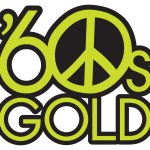 Greg Souchick (l) and Rick Minard (r) expressed their appreciation for the popular music host with a huge mural on the side of a building in downtown Bradford at 181 Main Street. Phelps was overwhelmed by the rendering and said he’s headed up to north central Pennsylvania to see it himself. We’re not sure if any other radio talent has ever had such a tribute. Phelps said, “I’ve had a racehorse named after me and a flag flown over the U.S. Capitol, but I’m truly stunned by this incredible mural. My phans are phantastic!” Part of Phelps’ schtick is he spells all Fs with PH. He is known for his fast-talking, retro style of broadcasting and for making American geography a focal point of his show. TALKERS publisher Michael Harrison states, “Phelps is a remarkably creative disc jockey who uses the element of ‘talk’ in a most entertaining and productive way by tying local towns, villages and communities around America into his show and saluting each with special attention to detail. He is my seven-year-old grandson and geography buff, Oliver Harrison‘s favorite radio star. Don’t think I don’t take notice of such things.” Phelps is heard nationally on SXM’s channel 73 M-F 6:00 am – 12:00 noon ET.
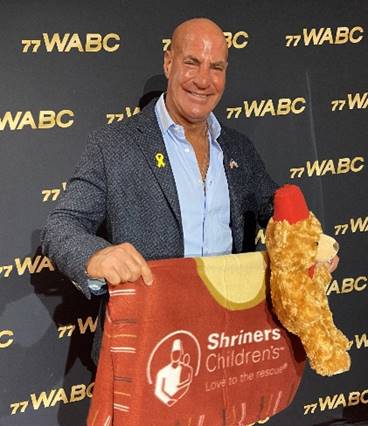 We See a Pattern of Philanthropy Developing Here.77WABC, New York has continually been using its powerful platform to support charities and people in need – in addition to creating exciting live and local talk radio. The station is partnering now with Shriners Children’s™️for a multi-media campaign that will increase awareness and support for the mission of providing The Most Amazing Care Anywhere™️. Started on November 18 and running through Giving Tuesday on December 3, 77WABC is running promos on air and in its e-newsletter soliciting donations to Shriners Children’s healthcare system.
  WABC Radio personality and legendary New York TV anchor Ernie Anastos is the voice of the campaign. On Giving Tuesday, WABC will expand the promotion to include a stream display on the 77WABC app, video social media posts from all talent, and pre-rolls on its podcasts, with the call to action to donate to Shriners Children’s. Donations to Shriners Children’s on Giving Tuesday will be 3X matched by one of their supporters for triple the impact on children’s health. In addition, on Giving Tuesday listeners will be invited to donate $225 per person to the WABC Radio Foundation, with net proceeds earmarked for Shriners Children’s, to be part of an intimate, 40-person audience for a live broadcast of “Sid & Friends In The Morning” with host Sid Rosenberg (pictured above).
  The live broadcast will take place in January at Studio 77, WABC Radio’s state-of-the-art audio/video event space. These audience members will have the opportunity for a picture with Sid and will receive a Shriners Children’s “Love to the rescue” blanket. In addition, a silent auction to benefit Shriners Children’s will take place for listeners attending the live broadcast, who will have the opportunity to bid on Shriners Children’s “Love to the rescue” blankets. “Shriners Children’s gives hope to children and their families across the country and around the world, regardless of their ability to pay,” said John Catsimatidis, owner of Red Apple Media and WABC Radio. “At WABC Radio, we are proud to help support Shriners Children’s mission to deliver specialty medical care to children.” “77WABC is committed to serving our community across the New York City area,” added Chad Lopez, president, Red Apple Media and WABC Radio. “By partnering with Shriners Children’s, we are able to bring awareness and help raise funds for their charitable mission.”
 The effort by KISS 104.1 (WALR), 95.5 WSB (WSBB-FM/WSB-AM), B98.5 (WSB-FM) and 97.1 The River (WSRV) generated 12,272 meals for food-insecure individuals in Georgia. “We have the best listeners in Atlanta. Each year they support these terrific events and help us do good for the communities we serve,” said Chris Eagan, SVP audience/programming for Cox Media Group. “This is what live and local radio is truly all about.” “We are grateful to the Cox Media Group radio station teams and personalities who continue to show an unwavering commitment to supporting the Food Bank’s efforts during the holiday season,” said Kyle Waide, president/CEO of the Atlanta Community Food Bank. “Our partnership with Cox Media Group helps us amplify the prominent issue of food insecurity among our neighbors, and these events underscore the generosity and willingness of the community to help those in need.” During the holidays, food becomes a focal point for many family gatherings, which deepens the despair felt by many neighbors who are already struggling. Thirteen percent of Georgians and 18 percent of children in Georgia are estimated to be food insecure. Among communities of color, food insecurity can be as much as two or three times higher than their white neighbors. Every dollar donated can make a giant impact. The Food Bank’s processes and partners help them transform every dollar donated into up to three meals.
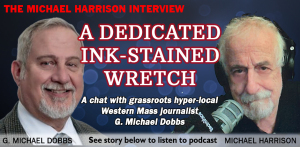 Legendary journalist and all-around local media hero in Western Massachusetts, G. Michael Dobbs, is this week’s guest on the award-winning PodcastOne series, “The Michael Harrison Interview.” Harrison states, “Western Mass is a special place I’ve called home for the past 40 years. Although I have had several simultaneous homes in different parts of the country during this stretch of time, the Springfield, Massachusetts area has played a very important role in my life. And in this beautiful, ‘salt of the earth’ segment of America, my guest is well-known to just about all its civically, socially and politically active citizens. His half-century career has been a testimony to the power and importance of local media… which, as we all know, is rapidly becoming an endangered species.” After decades of service, the recently retired executive editor of Reminder Publishing, continues his multi-faceted career in mass communications. Harrison comments, “I’m not sure he understands the meaning of the word retirement.” In his no-frills-down-to-the-basics career, Dobbs has worked as a newspaper reporter and editor, freelance writer, radio talk show host, college instructor and was the editor of two nationally distributed magazines about animation. He has written seven books to date and continues to write as well as appear as a host for Focus Springfield cable television. Harrison adds, “He has covered hundreds of school board and city council meetings; conducted thousands of interviews with local leaders; knows just about everything involved in how local government operates; and is an expert on cigars, brandy, old films, cartoons, comics, and even strippers. He’s an amazing guy and a quintessential example of the tremendous importance of local, grassroots journalism in sustaining and preserving American freedom and democracy.” The conversation with Dobbs started out with Harrison appearing as a guest on the media practitioner’s local podcast titled, “The Ink-stained Wretch with G. Michael Dobbs.” But, according to Harrison, “The conversation went deep into some very meaty material, so I decided to dip into it and extract some content for my own podcast.” To listen to the podcast in its entirety, please
  For the last 10 years, Edison Research’s quarterly “Share of Ear” study has been a highly respected examination of time spent with audio in America. Edison surveys 4,000 Americans annually to measure daily reach and time spent with all forms of audio. Each report is based on a four-quarter rolling average. The most recent Q3 2024 survey is comprised of Q4 2023, Q1 2024, Q2 2024, and Q3 2024. This week’s Cumulus Media | Westwood One Audio Active Group® blog is an analysis of the just released Q3 2024 data and focuses on what advertisers care most about – ad-supported audio.
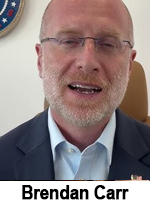 Last night (11/17), President-elect Donald Trump announced his selection of Brendan Carr to be the chairman of the Federal Communications Commission (FCC). Trump praised Carr as a “warrior for free speech” and someone who has “fought against the regulatory lawfare that has stifled Americans’ Freedoms and held back our Economy.” Trump further stated, Carr will “end the regulatory onslaught that has been crippling America’s Job Creators and Innovators and ensure that the FCC delivers for rural America.” Carr is currently the leading Republican in the FCC. He is one of five commissioners leading the agency, all of whom are appointed by the president pending Senate confirmation. In response to the nomination, Carr thanked Trump in a post on X, saying, “I am humbled and honored to serve as chairman of the FCC. Now we get to work.” In a follow up post, Carr stated, “We must dismantle the censorship cartel and restore free speech rights for everyday Americans.” Carr was the central figure in the complaint against NBC’s “Saturday Night Live” for having VP Kamala Harris in a skit on the program without extending a similar opportunity to Donald Trump to remain in accordance with FCC rules to ensure equal time is granted on networks. At that time, Carr posted to X, “This is a clear and blatant effort to evade the FCC’s Equal Time rule,” he said on X. “The purpose of the rule is to avoid exactly this type of biased and partisan conduct – a licensed broadcaster using the public airwaves to exert its influence for one candidate on the eve of an election.” (EDITOR’S NOTE: Some of the recent information being disseminated about broadcasting “networks” being licensed by the FCC has been misstated or misinterpreted by politicians and the media alike. For the most part, TV networks are non-licensed content providers. The licenses are held by the individual stations, groups of stations and their owners with whom they affiliate.)