By Erik Cudd
 From my teenage years to today, radio has been the career of my adult life. When I first began listening in my teens, I was drawn less to the music and more to the conversation. I tuned into stations not for my favorite songs, but because I enjoyed hearing people talk, debate, and share ideas. Over my lifetime, I have seen many changes in the medium. The news/talk format, in particular, has always fascinated me for its mix of news, commentary, and immediacy.
In such a time as this, because radio is the medium I know best and love most, I write this appeal to those influential in news/talk. My hope is that you will step forward once again as the architects and innovators you have always been, and raise a rallying cry for this unique moment. The freedoms and ambitions that make the format so vital also create challenges. By design, it invites sharp opinions, spirited disagreement, and cultural edge. Those qualities are its strengths. But in our current climate, they also carry the risk of drifting into tribalism and rhetoric that can spill over into something more dangerous.
This is not an implication that I believe news/talk is responsible for the death of Charlie Kirk. I would like to be crystal clear. What I am saying is that a perfect storm has been gathering for many years, and no one can deny the polarized, charged landscape we now inhabit. And that storm is not radio’s sole responsibility. Television, social media, and digital platforms have found their profit margins in spaces that thrive on provocation. Cable news leans on conflict. Social media algorithms reward outrage. Digital outlets chase clicks and controversy. Radio is part of this broader ecosystem, not apart from it. And while no single medium created our current atmosphere, each has a role to play in reflecting on its impact and considering how best to move forward.
This is not about drawing a simple line between “toxic” and “non-toxic” content. Such judgments are rarely clear, and program directors deserve the benefit of the doubt. Yet it may be worth asking whether radio, like all media, could benefit from a renewed look at how editorial choices can help keep conversations as civil and constructive as possible. Debate and controversy will always be part of the medium, but escalation does not need to be the only outcome.
The September 10 tragedy underscored this in more ways than one. Beyond the event itself, the aftermath played out across digital spaces, where ordinary citizens made comments that, while protected speech, resulted in lost jobs, reputational damage, and news coverage. The lesson is not that speech should be curtailed, but that our civic discourse is increasingly fragile. And because radio is one of the most intimate and influential media, its choices ripple outward into that discourse in profound ways.
Audiences are noticing. As someone in my early 50s, squarely within talk radio’s target demographic, I should be a loyal listener. Yet I find myself tuning in less often, not from a lack of loyalty, but because I long to hear more voices who can thoughtfully engage both sides of an issue, giving each perspective a fair hearing and treating every listener as though their view matters. That is why I believe there may be room to pull back a bit, to allow for more variety, nuance, and genuine curiosity in how issues are approached.
Serious does not mean boring. Civility does not mean dull. Across platforms, authenticity and curiosity consistently earn audiences. Podcasts like SmartLess and Armchair Expert succeed not by stoking outrage but by elevating storytelling and connection. Public affairs series such as Frontline and American Experience continue to attract loyal audiences through rigorous, measured reporting. Nonfiction authors like Malcolm Gladwell and Brené Brown demonstrate that thoughtful exploration can reach mass audiences. These examples are proof that depth and balance can succeed when executed with energy and creativity.
Radio is uniquely positioned to do the same. The path forward is not retreat from controversy but innovation. Maybe it begins by encouraging new hosts who bring curiosity, empathy, and an equal openness to both sides of an issue, alongside conviction. It could include piloting alternative formats in off-peak slots where experimentation can thrive. It will require recalibrating success metrics to value loyalty, digital engagement, and cross-platform trust, not just short-term spikes. And it may also mean weaving national voices together with local conversations so that stations strengthen both their reach and their roots.
I do not write this from a high perch. I write as a member of the audience who also walked the halls of the station and still believes in the power of the medium. My words are not meant as accusation but as an open hand in friendship. What I am asking is simple: perhaps it is time for a more purposeful, deliberate engagement of conversation in the conference room. To sit together and ask if everything that airs is doing what it should. To take a long, hard look at whether anything might need to be discussed, reconsidered, or rebalanced in light of what we have all just witnessed.
Radio, because of its intimacy and reach, is uniquely positioned to lead by example. By being more proactive in its own yard, radio could encourage the same self-reflection across media, and even among the public itself. That is not retreat. That is leadership.
Radio still matters. Its intimacy can at times divide, but it can also renew. The question is not whether talk radio will remain bold, it always will, but whether it can channel that boldness in a way that builds the public square rather than fractures it.
The opportunity is here: to prove that freedom and responsibility can coexist, and that doing so is good for the culture, and good for the business.
Erik Cudd has worked in radio and media since 1991. He can be emailed at erik@cudd.us.
Share this with your network



 Westwood One’s long running, late night program “America at Night,” as of last night’s program (11/13). His replacement will be KTRS, St. Louis morning host McGraw Milhaven, slated to begin on December 1. Valdes took over the reins of the program in upon the passing of its longtime host Jim Bohannon in October of 2022. Stay tuned for updates and developments as they are available. Milhaven states, “I’m deeply grateful to Westwood One for entrusting me with “America at Night” — a show that builds on a proud tradition of engaging listeners during one of radio’s most meaningful times. It’s both an incredible honor and a profound responsibility. From listening to Larry King and Jim Bohannon in high school — too intimidated to call in — to now being named host of this show, this journey has exceeded anything I could have imagined. My nightly mission is simple: to seek out great stories from great storytellers — and to share a few of my own along the way.”
  About his show, McCullough says, “‘That KEVIN Show’ doesn’t whisper opinions – it detonates them. In a media world allergic to truth and humor, we bring both, with a healthy dose of common sense. I’m deeply thankful for the opportunity to grow this show with the team at Salem, and I couldn’t be more excited about what’s ahead.” McCullough is already in the Salem sphere as a columnist for Townhall.com and a regular contributor to the Salem News Channel and BizTV. Salem SVP of spoken word format Phil Boyce comments, “Kevin McCullough is one of the most engaging communicators in talk radio. He brings a bold voice with strong convictions, a great sense of humor, and a deep faith that shines through in every broadcast. We’re thrilled to welcome That KEVIN Show to SRN and know it will connect powerfully with listeners across both our news/talk and Christian talk stations.” The KEVIN Show will also produce weekend editions airing from 8:00 am to 10:00 am ET on the Salem News Channel and 9:00 pm to 11:00 pm ET on SRN Radio.
 the same period a year ago. Urban One CEO and president Alfred C. Liggins, III says, “Third quarter results came in slightly softer than expected across the board. Core radio, excluding political, finished down 8.1%, and our Radio segment is currently pacing down 30.2% all-in and 6.4% ex-political for the fourth quarter of 2025. Revenues at our Reach Media and Digital segments were down 40.0% and 30.0% respectively, which was on the lower end of expectations. Cable TV advertising was down 5.4% and affiliate revenue was down 9.1% driven by continuing subscriber churn. In light of the soft overall market conditions, we are reducing our full year guidance from $60 million of Adjusted EBITDA to $56 to $58 million. Our focus remains on controlling costs, managing debt, leverage and liquidity. During the third quarter of 2025, we repurchased $4.5 million of our 2028 Notes at an average price of approximately 52.0% of par, reducing our outstanding debt balance to $487.8 million.”
  enhancing the subscriber experience through new content, deeper personalization, and continued innovation across every stage of the customer journey, driving greater engagement and value for our listeners. At the same time, we’re scaling our digital advertising business and strengthening our leadership in podcasting. Across each of these areas, we’re leveraging our unique assets to deliver sustainable profitability and long-term value for our shareholders — a strategy that is already delivering as we raise our full year guidance.” During the quarter the satcaster expanded and developed its roster of high-profile voices. It extended its agreement with Andy Cohen and celebrated the 10th anniversary of his flagship channel, Radio Andy. Stephen A. Smith also debuted on the platform, launching new political and sports programs and renewed its agreement with Megyn Kelly, expanding the partnership to include the upcoming Megyn Kelly Channel.
  Civic Media’s news/talk network, managing schedules, talent, quality control, and compliance with broadcast regulations. Key responsibilities include selecting programs, coaching on-air personalities and shows, developing promotional strategies, and ensuring the station’s sound and content align with its brand and audience needs. They blend creativity and business acumen, using audience research and ratings data to shape programming and achieve business goals.”
  comments, “It has been such a privilege to be part of the NewsTalkSTL team from the outset. I am thrilled to be joining ‘The Mike Ferguson in the Morning Show’ as co-host. I can’t wait to be part of the conversation with
  Mike and our NewsTalkSTL listeners every weekday morning.” Ferguson adds, “Susie is the perfect addition to the show. We’re fortunate to be able to add someone who does such great work in the conservative movement through RedState and knows our community here in St. Louis. Our audience knows Susie, likes her, and respects her. We’re going to miss Gabe, but we’re excited about what Susie brings to the show.” NewsTalk STL is head on three signals in the region: KNBS-FM, Bowling Green; KLJY-HD2, St. Louis; and translator K270BW, Bellefontaine, Missouri.
 charge inflated prices, according to a report by Reuters. At the heart of the complaint is the charge that Nielsen is providing access to the national broadcast radio ratings only if the client spends a lot of extra money on
  the separate local ratings. Cumulus argues that Nielsen’s policy forces them to buy ratings in U.S. markets where it doesn’t operate stations in order to have the complete national ratings data. Nielsen has stated that Cumulus’ suit is “entirely without merit” and “we will respond accordingly.” The complaint also says Nielsen is “degrading product quality, raising prices without justification and blocking competitors from gaining footholds in the industry.”
  it appears that allowing the former programmer to resign, firing half the news department, and pulling back on advertising and marketing didn’t work the ratings magic they originally had hoped for. In my opinion, KFI has seemed rudderless since Robin Bertolucci left the programming spot last November. The current programmer Brian Long, meanwhile, is also in charge of KLAC (570 AM) and KEIB (1150 AM), but with no time, a limited budget, and a decimated news department, the result is what it is. I don’t blame him at all. For his part, O’Kelly is keeping it positive, posting on Facebook, ‘All jobs end. It is not our lives or our health. Perspective is paramount. There is nothing to be sad about here. I’m genuinely excited for the future.’” Kelly is ranked #83 in the TALKERS 2025 Heavy Hundred.
  market manager Steve Sinicropi says, “We are proud to launch UPSTATE RED and bring a new conservative voice to the Upstate region. ‘UPSTATE RED’ will be a premier destination for principled conversation, insightful news, and engaging talk with some of the biggest names in national talk radio, providing the most important news and information to the Upstate.” The programming lineup includes Premiere Networks’ Glenn Beck, Clay Travis & Buck Sexton, Sean Hannity, and Jesse Kelly, as well as Michael DelGiorno in mornings, Westwood One’s Rich Valdes in late nights and FOX News Radio’s Will Cain.
 Sure, radio’s superpower is that we’re live. But 75% of all advertising dollars are now spent on digital. And Netflix, YouTube, and podcast platforms have conditioned consumers to expect that their content will wait for them (“on-demand”), not the other way around (“linear,” meaning real-time on-air). If your best content disappears the moment it airs, you’re leaking value. Think: time-shifted, searchable, and shareable.
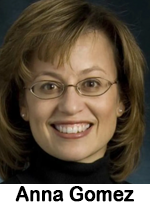 Federal Communications Commissioner Anna M. Gomez issued a statement criticizing the Commission’s threats against ABC that, in part, led to the suspension of the “Jimmy Kimmel Live!” program. Her statement is as follows: “We cannot allow an inexcusable act of political violence to be twisted into ajustification for government censorship and control. First, an ABC reporter was told that his coverage amounted to hate speech and that he should be prosecuted simply for doing his job. Then, the FCC threatened to go after this same network, seizing on a late-night comedian’s inopportune joke as a pretext to punish speech it disliked. That led to a shameful show of cowardly corporate capitulation by ABC that has put the foundation of the First Amendment in danger.
 “FOX & Friends Weekend” with Rachel Campos-Duffy, Charlie Hurt and Griff Jenkins hosting live outside State Farm Stadium. Maria Bartiromo will anchor “Sunday Morning Futures” from the same location. “Saturday in America” host and co-host of “Outnumbered” Kayleigh McEnany and “FOX & Friends” co-host Lawrence Jones will present live special coverage of the memorial proceedings.
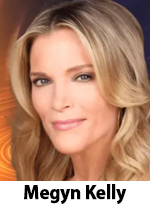 her SiriusXM podcast, former FOX News Channel star Megyn Kelly criticized FOX for, as she calls it, talking like he was theirs. “It’s really bothering me how FOX News is talking about Charlie, like he was theirs — he wasn’t. It’s a lie. Just stop.” Kelly accuses FOX of making Kirk persona non grata after the company fired Tucker Carlson because Kirk was supportive of Carlson. The story from Newsmax adds that “Kirk appeared to be completely absent from FOX News in 2023 after Carlson’s firing and early 2024 – though Kelly claimed the network would give him brief appearances to cover for their effective ban.” The Newsmax piece goes on to quote Kirk on the matter. “Since Tucker’s departure, I haven’t been on. And so we had to do an event without FOX. And that was a great thing, man, because sometimes desperation is the mother of innovation, right?”
  Carolina Senate District 12 seat – Justin Bradley, Lee Bright and Hope Blackley – will take part in the 90-minute debate in which WORD hosts Joey Hudson and Bill Frady will moderate the debate. Audacy South Carolina operations manager Mark Hendrix says, “This debate will give our listeners and the community a chance to hear directly from the candidates, understand their positions, and make informed decisions as election day approaches.”
 and “Up First” stayed in the #1 and #2 spots, respectively. News/talk radio related shows of note include Cumulus Podcast Network’s “VINCE” rising two places to #11 and iHeart Audience Network’s “Armstrong & Getty On Demand” climbs two places to #22. The ranker is based on weekly average downloads for participating publishers.
 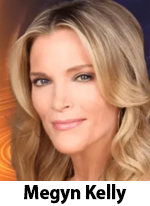 Salem Radio Network announces that Megyn Kelly is hosting “The Charlie Kirk Show” today (9/17). This week, guest hosts have included Vice President JD Vance and Glenn Beck. It appears SRN will continue to present more high-profile talk media personalities as guest host of the show. Additionally, Salem Radio Network will provide live coverage of the Charlie Kirk Memorial Service from State Farm Stadium in Glendale, Arizona this Sunday, anchored by SRN’s White House correspondent Greg Clugston.
 Region and Darla Isham is appointed vice president, Northern Region. Other excutive appointments include Aaron Carreno as SVP of product; John Scott as VP of marketing, and Drew Smith as VP of technology. Weil comments, “This leadership restructuring reflects our commitment to providing exceptional service to our listeners and communities across our coverage areas. Each of these executives brings deep experience and a passion for local broadcasting that aligns perfectly with our mission to serve as the voice of our communities.”
 Sports” from 6:00 am to 9:00 am, “Nine2Noon” hosted by John Kuhn and Ramie Makhlouf, “The Mason Crosby Show” with Mitch Thunder Nelles from 12:00 noon to 2:00 pm, and “Wisconsin Sports Daily,” hosted Steve “Sparky” Fifer remaining in PM drive. Audacy Wisconsin SVP Jason Bjorson says, “As we celebrate the station’s 20th anniversary, we wanted to match our listeners’ passion by assembling the dream team here at ‘The Fan.’ With legendary names and two former Green Bay Packers players on our roster, we are going full-throttle. We’re excited to bring our fans the best talent in the market and give them the most entertaining sports coverage Wisconsin has to offer.”
 guest host because he specifically asked for the honor, so he can share his thoughts and remembrances on the passing of his personal friend. SRN adds, “We have received permission from Premiere Networks to allow Glenn to do this, even though he may be on a competing station in some radio markets. This is one of those rare times where competitors unite for the common good. We wanted our stations to know this special broadcast has been approved. It promises to be memorable radio.” SRN says other major stars will fill in during the coming days. Vice President JD Vance guest-hosted live from The White House on Monday and Tuesday’s show was hosted by Matt Walsh, Michael Knowles and Ben Shapiro.
 that listening has grown across all demographics and time periods versus the Fall 2024 Nationwide report. Some key takeaways are: 1) Among persons 25-54, total U.S. AM/FM radio AQH has grown +6%, powered by a +19% increase in the Portable People Meter markets; 2) Weekends and nights have the greatest growth compared to Fall 2024; 3) Versus Fall 2024, Spring 2025 total U.S. audience growth is greater among men versus women and has increased in older demographics; and 4) Total U.S. Spring 2025 audience growth is up significantly among college graduates and upscale $75K+ income Americans. The blog post notes that the PPM audience growth is due to Nielsen’s three-minute qualifier modernization, which provides a significantly more comprehensive and realistic definition of AM/FM radio’s audience and their listening behavior. Nielsen found 23% of PPM listening occasions were three or four minutes. Under the old five-minute listening qualifier rule, none of this tuning would have received listening credit. Effective with the January 2025 PPM survey, Nielsen began crediting tuning occasions that are three minutes or greater.
  Charlie Kirk’s tragic assassination shook the talk radio world. Emotions were raw, and broadcasters across the spectrum tried to capture that moment for their audiences. Charles Heller of KVOI in Tucson
 Grief for the loss of Charlie Kirk is palpable around the world. Broadcasters who interviewed him or had anything to do with the Turning Point organization were deeply touched by his tragic death.
 Audacy’s WFAN, New York enters into a strategic partnership with creator-led digital sports media company Jomboy Media to air the “Talkin’ Yanks” show each Saturday at 2:00 pm ET. Audacy chief business officerand New York market president Chris Oliviero says, “WFAN and Jomboy Media both are committed to bringing Yankees fans the most relevant and engaging content of their favorite team whenever and wherever they want to consume it. Together, the combined influence and reach of both brands will elevate the experience for the pinstripe faithful and shine an even greater spotlight on New York’s all-time pastime, baseball.”
 My kitchen faucet wouldn’t shut off. It died, of old age. Things start doing that when your “new” house turns 25.
 accuses FOX of “engaging in an extensive and unlawful campaign to block competition in the market for right-leaning pay television news, including Newsmax.”
  A FOX spokesperson responded with the following: “Newsmax cannot sue their way out of their own competitive failures in the marketplace to chase headlines simply because they can’t attract viewers.” Newsmax issued the following statement in response to that saying, “If Newsmax was such a ratings failure, why has FOX spent so much time, energy, and resources to suppress us, block us, and denigrate us? The answer is obvious. Also please note that FOX in its statement does not deny any of our serious allegations.”
 exclude or marginalize competitors like Newsmax. Further, Newsmax alleges that FOX News, “described in the complaint as a ‘must-have’ channel for distributors, leverages its market power to impose restrictions that harm consumers, stifle competition, and drive-up costs across the pay TV ecosystem.” Specifically, Newsmax alleges that “FOX conditions access to FOX News on
  agreements by distributors not to carry or to restrict competing right-leaning news channels. If distributors carry Newsmax, FOX forces them to also carry low-demand channels like FOX Business or FOX Sports 2 in their most widely viewed tiers, triggering potentially tens of millions in extra fees. These clauses penalize distributors for placing Newsmax in basic packages by requiring simultaneous promotion of FOX less popular channels.” Also, Newsmax alleges that FOX has pressured its guests to not appear on Newsmax, as well as has run online smear campaigns and hired private investigators targeting Newsmax executives to damage the Company’s credibility. Newsmax is asking the court to: 1) Declare FOX’s conduct unlawful under federal and state antitrust laws; 2) Award monetary damages as permitted by law; 3) Enjoin FOX from continuing exclusionary contracts and monopolistic practices; and 4) Order equitable relief to restore competition in right-leaning pay TV news.
 “Longtimers” and notes that 77% of “First-Years” are consuming podcasts while actually watching the video compared to 69% of “Longtimers” doing the same. Edison says that most new consumers and established podcast fans are actively watching while listening to video podcasts but that video is even more important for engaging with new audiences. While “Longtimers” currently have an affinity for audio only podcasts, that may change over time. Edison concludes that although podcasting is an audio-first platform, “many creators and marketers are likely missing an audience acquisition and engagement opportunity by not considering how to fit video content and video platforms into their strategic planning.”
 Artificial intelligence now makes it possible to replicate a human voice with striking accuracy. For broadcasters, podcasters, and content creators, the central question is: When does using or imitating a voice become a legal problem? The answer depends on the person being imitated, the purpose of the use, and the rights attached to that voice. Below is a six-bucket framework to help evaluate the risk.