By Matthew B. Harrison
TALKERS, VP/Associate Publisher
Harrison Legal Group, Senior Partner
Goodphone Communications, Executive Producer
 AI is now embedded in the modern newsroom. Not as a headline, not as a novelty, but as infrastructure. It drafts outlines, summarizes complex reporting, surfaces background details, and accelerates prep for live conversations. For media creators operating under relentless deadlines, that efficiency is not theoretical. It is practical and daily.
That reality raises a quiet but consequential legal question. When AI contributes to your research, what does verification now require?
Professional hosts are not reading raw chatbot answers on air and calling it journalism. That caricature misses the real issue. What is actually happening is subtler and far more common.
AI now sits inside research workflows. Producers use it for background. Hosts use it to summarize reporting. Teams use it to outline controversies or draft rundowns. Most of the time, it works. Sometimes, however, it invents.
When that invention involves a real person and a serious allegation, the legal analysis looks familiar.
For public figures, defamation requires proof of actual malice – knowledge of falsity or reckless disregard for truth. For private figures, negligence is usually enough. In both cases, the focus is not on the tool. It is on the content creator’s conduct.
AI does not change the elements. It changes the context in which reasonableness is judged.
Courts have long held that repeating a defamatory statement can create liability, even if someone else said it first. If you rely on a blog, and that blog relied on AI, and the allegation is false, the question becomes whether your reliance was reasonable.
Was the source reputable? Was the claim inherently improbable? Were there obvious red flags? Was contradictory information readily available?
AI’s reputation for “hallucinating” facts now forms part of that backdrop. Widespread awareness that these systems can fabricate citations, merge identities, or invent accusations becomes relevant when a court evaluates your verification choices.
This does not mean using AI indicates reckless disregard. It means using AI does not excuse skipping verification when the stakes are high.
The more specific and damaging the claim, the greater the duty to confirm it through independent, reliable sources. Not another prompt. Not a circular reference to the same unverified blog. Rather, a primary record, official statement, or established reporting.
Documentation matters. If challenged, being able to show that you checked multiple sources before broadcast can be decisive.
None of this is new doctrine. What is new is how seamlessly AI blends into ordinary research habits. That integration makes it easier to forget that the legal question is still about human judgment.
The law will not ask whether your workflow was efficient. It will ask whether your conduct was reasonable under the circumstances.
In the age of AI, verification is not a courtesy. It is risk management.
Matthew B. Harrison is a media and intellectual property attorney who advises radio hosts, content creators, and creative entrepreneurs. He has written extensively on fair use, AI law, and the future of digital rights. Reach him at Matthew@HarrisonLegalGroup.com or read more at TALKERS.com.



 signals as WSCR-AM/FM “The Score” and news/talk WCCO-AM. Audacy president and CEO Kelli Turner comments, “Debbie Kenyon has been a pillar of our business for over a quarter century, and her elevation to regional president for our Central region is a testament to her ability to drive innovation and deliver consistent performance. Her appointment supports our commitment to empower our teams and build on our unmatched presence in local markets and communities while fully leveraging our scale and reach.” Kenyon joins Jeff Federman, Mark Hannon, Claudia Menegus and chief business officer Chris Oliviero in regional president roles overseeing key Audacy markets.
 hosting his radio show on Cumulus Media’s WXNT-AM, Indianapolis “Indy’s Sports Ticket 1430 AM” and he will be exclusive to OutKick starting April 1. OutKick senior vice president and managing editor Gary Schreier says, “Dan Dakich has been a vital part of OutKick’s success. He provides unique insight and never hides from sharing his opinion. That combination is what OutKick stands for and we’re thrilled to have him for the years to come.” Dakich comments, “I’m beyond thrilled to continue as the host of ‘Don’t @ Me.’ This journey with OutKick has been incredible and has allowed me to share my opinion unapologetically. I can’t wait for what’s to come as my OutKick show continues to stand out among other sports shows that are afraid to speak their minds.”
 Let’s start with what NOT to do, The 7 Deadly Sins Of Small Business Advertising:
 “conducting a search for a new director of sales, a dynamic leader who values their connection with the Long Island community. The ideal candidate will be a high-energy seller experienced in developing custom marketing solutions leveraging assets like broadcast media, digital capabilities, and event marketing. Leadership experience, a passion for driving results, and a talent for building strong client relationships are essential.”
  $600 million of debt, “substantially deleveraging its balance sheet and enhancing its ability to execute on strategic priorities.” The company says it will continue operating in the ordinary course throughout the process, with no impact to employees, partners, or listeners.
 macroeconomic and industry-wide pressures we have faced have remained unrelenting. Against that backdrop, it became clear that Cumulus’s remaining debt burden limited our ability to fully realize the company’s potential, and this agreement represents a major step forward. The prepackaged process is intended to address the company’s debt efficiently with no disruption to our operations, our people, and our strategies. On emergence, a stronger financial foundation will better position Cumulus to continue investing in premium content, enriched audience experiences, advertiser performance enhancements, and the ongoing growth of our digital marketing offerings.” Cumulus has filed a proposed Plan of Reorganization that incorporates the terms of the RSA and is subject to approval by the Court. The requisite majority of debtholders committed to vote in favor of the Plan, which calls for the cancellation of 100% of the company’s existing funded indebtedness in exchange for 100% of the company’s reorganized equity and $50 million of new convertible notes, as well as the amendment and restatement of the company’s asset-based revolving credit facility to provide continued liquidity. Cumulus expects that the Court will hold a hearing to consider the approval of the Plan within 60 days of the filing date and that the company will emerge from bankruptcy following receipt of required regulatory approvals from the Federal Communications Commission.
 Unless you live in Hawaii and Arizona (except the Navajo Nation) or American Samoa, Guam, the Northern Mariana Islands, Puerto Rico and the U.S. Virgin Islands, your clocks will change when we “Spring Forward” on Sunday 3/8.
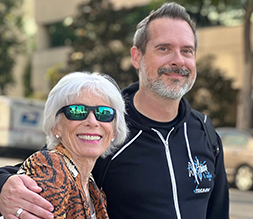 program audio, and vice president of operations roles. Take On The Day CEO Ron Hartenbaum says, “Dan has been critical to the on-going success of the radio program, podcast, live events, and pushing the growth of the video product to new levels of engagement. His ability to get things done is simply amazing.” Brady comments, “I’m humbled to be recognized in this elevated role by the managing partners and more importantly Dr. Laura as we continue to propel her legendary brand. Continuing to work with our partners at SiriusXM and their team in this new capacity is a true honor.”
 daily lineup: “Daybreak with Brian and Jamie” airing 6:00 am to 9:00 am (starring Brian Noonan and Jamie Martinson); “The Jeff Santos Show,” airing from 2:00 pm to 5:00 pm; and “Nite Lite With Pete Schwaba and Greg Bach” airing from 5:00 pm to 7:00 pm. Civic Media vice president of product Aaron Carreno said, “We’re excited to refresh our programming with the addition of new radio shows and a continuous stream of digital content that meets audiences wherever they are. This growth reflects our commitment to delivering fresh voices, diverse perspectives, and engaging storytelling across every platform. By strengthening both our on-air and digital presence, we’re creating more opportunities for our community to connect, discover, and stay informed—anytime, anywhere.”
 “Podcasting’s momentum strengthened in 2025, with audio remaining the foundation of the medium while video helped bring in new audiences. What’s most compelling is the diversity podcasting now delivers across content, platforms, and consumers. Triton’s report highlights where new listeners are engaging and how their evolving behaviors – including shopping and purchase intent – are creating a highly engaged audience that is increasingly attractive for brand investment.” One key finding from the study is that “consumption preferences vary sharply by genre. Categories primarily consumed via audio are Science (58%), History (56%), Fiction (54%), Arts (51%), and True Crime (50%), while Music (34%), Sports (32%), Kids & Family (31%), Comedy (30%), News (30%) skew more heavily toward exclusive video consumption. This emphasizes a need for differentiated content and monetization strategies.”
  Carter Sherman and Kai Wright. Guardian U.S. editor Betsy Reed says, “This project is a major step toward bringing audio and video journalism to American audiences, showcasing the breadth of our global content and reporting muscle. It’s also
  the latest step in our ongoing US expansion, which we’ve seen in recent months across politics, media, sports, culture, breaking news, and more.” Carter has been serving the Guardian as reproductive health and justice reporter since 2023 and recently published the book, The Second Coming: Sex and the Next Generation’s Fight Over Its Future (2025, Gallery). Wright was most recently host and managing editor of Notes From America with Kai Wright and has served with WNYC, New York.
  Robertson states, “Expanding WDAE’s heritage brand strengthens our long-standing broadcast and marketing partnerships with the Tampa Bay Rays, Buccaneers, Lightning, Florida Gators and USF Bulls. This evolution also reflects our continued commitment to serving Tampa Bay listeners across multiple platforms.” WDAE program director and midday host Nick Wize adds, “I am beyond excited for Tampa Bay sports fans. This is a championship market, and we’re delivering a strong, engaging lineup that brings fans closer to the teams and conversations they care about most.”
 7:00 pm to 10:00 pm beginning tonight (2/2). KIRO-FM director of news and talk programming Bryan Buckalew states, “Chad has a unique ability to break down complex issues in a way that’s engaging and accessible. He respects the intelligence of the audience, values facts, and understands how to connect with listeners in a meaningful way. He’s a strong addition to our evening programming.”
 Streaming radio and podcasts don’t just add reach. They double down on impact by warming the audience before they ever click.” The company adds, “Audio brings something no other channel can touch. It’s literally in your audience’s ears. It’s personal. It’s focused. And it shows up during moments where screens aren’t competing for attention, like commuting, working, cooking, unwinding. That’s when messaging sticks. Audio builds familiarity and trust early in the journey, so when someone sees your display ad, social post, or paid search result later, they’re not meeting your brand for the first time. They already recognize you. And recognition drives response.”
  WKNR-AM “ESPN Cleveland.” The station says in a social media post, “Since joining the station in 2018, he’s played a key role in shaping programming, managing content across platforms, and helping drive the station’s expanding digital strategy. We’re excited to see Jordan lead our programming and content vision now and into the future. Well deserved!”
 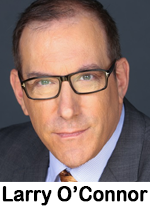 clarity, and consistency, earning the respect of audiences, peers, and industry leaders alike. He brings decades of experience across writing, podcasts, broadcast, and live events, along with a proven record of leadership, audience growth, and editorial excellence to one of the nation’s most influential conservative platforms. O’Connor is known for his deep understanding of the political and cultural landscape. His career spans multiple media formats, and he has built a large, loyal national audience by combining sharp analysis, principled conservatism, and engaging conversations.” O’Connor has been writing for Townhall and HotAir since 2016. His daily podcast, LARRY, is streamed at 12:00 noon ET on Townhall.com and YouTube. O’Connor comments, “Townhall has been a cornerstone of the conservative movement for decades, and I’m incredibly honored and excited to take on the role of editor. This is a platform with a powerful legacy, an outstanding team of contributors, and a loyal audience that cares deeply about ideas, culture, and the future of our country. I’m eager to build on that foundation, elevate strong conservative voices, and help Townhall continue to inform, challenge, and inspire readers every day.”
 appeal of the District Court’s ruling on Cumulus’ request to seal the record and protect witnesses’ identities. That request was granted by the District Court. Cumulus Media is suing Nielsen alleging that the company is illegally leveraging its dominance over national and local radio audience data to stifle rivals and charge inflated prices. At the heart of the complaint is the charge that Nielsen is providing access to the national broadcast radio ratings only if the client spends a lot of extra money on the separate local ratings. Cumulus argues that Nielsen’s policy forces them to buy ratings in U.S. markets where it doesn’t operate stations in order to have the complete national ratings data.
 the way the commission is operating. She took issue with FCC Chair Brendan Carr’s interpretation of how the Commission should ensure that licensees operate in the public interest. She stated, “For months, this FCC has asserted an apparent roving mandate to police speech that this Administration does not like, invoking an undefined and unchecked concept known as the ‘public interest’ standard.
 commercially unreasonable rate for its Nationwide Report may cause it to have to do away with the Nationwide Report altogether. This testimony accompanied Nielsen’s request for a stay pending appeal as it appeals to the Second Circuit. This is the latest in action in Cumulus’ suit alleging that
  Nielsen is illegally leveraging its dominance over national and local radio audience data to stifle rivals and charge inflated prices. Judge Vargas denied the stay pending appeal but did grant an administrative stay will be in effect only until January 16, 2026, to allow Nielsen time to file a motion for a stay in the Second Circuit Court of Appeals. Tunkel’s testimony states that the order would cause Nielsen “significant irreparable harm if required to comply with the Court’s ruling during the pendency of Nielsen’s appeal… As a result, Nielsen would not be able to apply that policy in any of the at least ten negotiations with clients that Nielsen expects to have in 2026. If Nielsen is unable to apply the Network Policy, then it will be hindered in its ability to ensure that it can recover the costs of collecting the local radio-ratings data that make up the Nationwide report and spread those costs appropriately across the customers that use the products generated from those joint costs. If Nielsen cannot recover these costs, then it may have to retire the Nationwide report, similar to when Nielsen retired its other national data product, RADAR. If it does not retire the Nationwide report, it may have to pass a higher share of the costs of collecting local data on to other customers, including local radio stations, hurting Nielsen’s negotiating position with respect to those customers, as well as those customers themselves.”
 Media | Westwood One says, “The relaunch marks Bongino’s most extensive digital commitment to date, designed to meet increasing audience demand for long-form and in-depth content. The two-hour format strengthens the show’s position as a major voice in independent media, offering a highly engaging, daily destination for listeners seeking headline analysis, guest interviews, cultural commentary, and special ‘Bongino Army’ segments.” Bongino comments, “I’m excited to get back behind the mic and reconnect directly with the audience. This show has always been about cutting through the noise and talking honestly about what matters. We’re coming back bigger, bolder, and always unfiltered — exactly how people want it.” Westwood One and Cumulus Podcast Network president Collin Jones adds, “Dan Bongino is back! Few voices in talk media command the loyalty and firepower that Dan brings. His audience? Formidable. His influence? Undeniable. This promises to be an incredible journey as Dan drives the national conversation daily on the most important issues at hand, with authority that has been hard-fought and well-earned. Westwood One is beyond proud to help power the next chapter of ‘The Dan Bongino Show.’”
 midday talk host Allen Stiles (right) to afternoons to join “The Drive Guys with Kevin Gleason” (left) as a co-host, effective January 12. The station says, “Allen is no stranger to Sactown Sports listeners. He has already been a key part of the Sactown Sports family as the host of ‘The Allen Stiles Show, which currently airs weekdays from 10:00 am to 2:00 pm, building a strong connection with the audience through his knowledge, passion, and engaging style.” The station has not indicated its plans for the midday daypart.
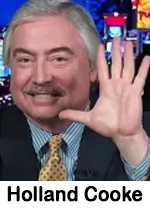 We sell advertisers the attention we earn, and earning it has never been tougher. When we design client stations’ billboards, we’re not “writing a 60” or “a 30,” or even “a 10.” It’s a one-second spot. At a glance, someone driving needs to understand what the station delivers, and why to listen.
 Every media creator knows this moment. You are building a segment, you find the clip that makes the point land, and then the hesitation kicks in. Can I use this? Or am I about to invite a problem that distracts from the work itself?