


Industry Views

SABO SEZ: Managing the Meters is a Fatal Time Waster

By Walter Sabo
a.k.a. Walter Sterling, Host
WPHT, Philadelphia, “Walter Sterling Every Damn Night”
and TMN syndicated, “Sterling on Sunday”

imgAt first, I thought it was a joke. When I realized there were serious people having serious meetings about the joke, it became both horrific and symptomatic

The sitcom is called: MANAGING THE METERS. Note: As a suited consultant I was a prime mover to get Arbitron off diaries and onto meters.

Worldly success is often the result of being highly focused on what one can control versus imagining what can be controlled. Nielsen can manage their meters. You can’t.

Imagining what can be controlled has led to wasting time playing MANAGING THE METERS.  To participate one must learn where Nielsen meters are placed, which station has which meters, and who is carrying “your” meters. Yes, one can learn, for example, that a 19-year-old in Glendale listens to KIIS-FM for 17 hours a week. More than 17 hours in radio conference rooms will be spent playing whack-a-mole with that 19-year-old’s meter; where will it land next?

Playing MANAGING THE METERS is a major time waster and cume killer. Once upon a time many music stations embraced “request line call-in research.” Shudder. Stations would tally which songs were getting how-many requests and make on-air playlists based on those counts. Obviously call-in request playlists would appeal primarily to existing listeners and do nothing to reach new listeners. Sure, P1s are appeased but cume always dies.

And here we are: Super-serving meter holders who already listen to a station will appease P1s but cume will diminish every month. It is pure myth that “talk” is high TSL and low cume.  In fact, most current talking stations do everything possible to lower cume. Casual cuming is virtually impossible. (Who is talking? What’s the number? Thanks for holding on! Who has time to hold on?). The MANAGING THE METERS fantasy gives “science” to cume-killing actions and reactions.

MANAGING THE METERS, rather than making better, bigger shows has resulted in fear, indecision, and the crime of overthinking. Nothing could be worse for a medium that thrives on emotional wallops than turning feelings into math.

What to do when tempted to play MANAGING THE METERS:

Go for a pleasant walk and imagine a better show, new promotions, fresh promos and surprising, possibly weird topics.
Eat your favorite ice cream and imagine a better show, new promotions, fresh promos and surprising, possibly weird topics.
Call your father and thank him and imagine a better show, new promotions, fresh promos and surprising, possibly weird topics.
Remember that innovative programmers who CREATE – rather than copy – great stations give all of their attention to P2s and then imagine a better show, new promotions, fresh promos and surprising, possibly weird topics.

Walter Sabo has been a C Suite action partner for companies such as SiriusXM, Hearst, Press Broadcasting, Gannett, RKO General and many other leading media outlets. His company HITVIEWS, in 2007, was the first to identify and monetize video influencers.. His nightly show “Walter Sterling Every Damn Night” is heard on WPHT, Philadelphia. His syndicated show, “Sterling On Sunday,” from Talk Media Network, airs 10:00 pm-1:00 am ET, and is now in its 10th year of success. He can be reached by email at sabowalter@gmail.com.
Industry News

Charlie Kirk Engaging with Students on College Campuses

img

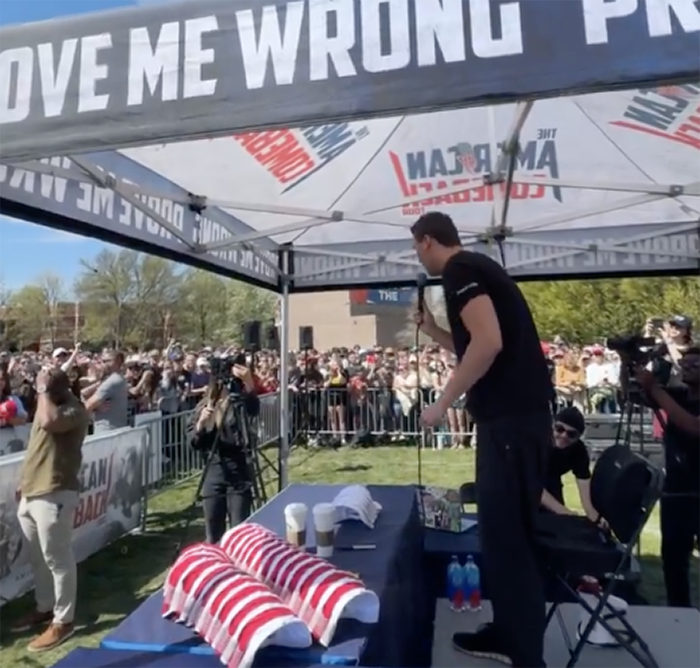
Salem Radio Network nationally syndicated talk host Charlie Kirk is visiting college campuses to engage with students, specifically students who disagree with him. According to KIVI-TV, Boise, the founder of Turning Point USA is on “The American Comeback” tour and was at the campus of Boise State University yesterday (4/15). On the tour, Kirk talks with students who disagree with him under a pop-up tent with the words, “Prove Me Wrong,” emblazoned along its top. Kirk will visit Washington State University in Pullman, Washington tomorrow (4/17). Kirk is pictured above at the event on the Boise State campus.

Industry News

Cumulus to Employ Quu’s Dashboard Visual Messaging

img

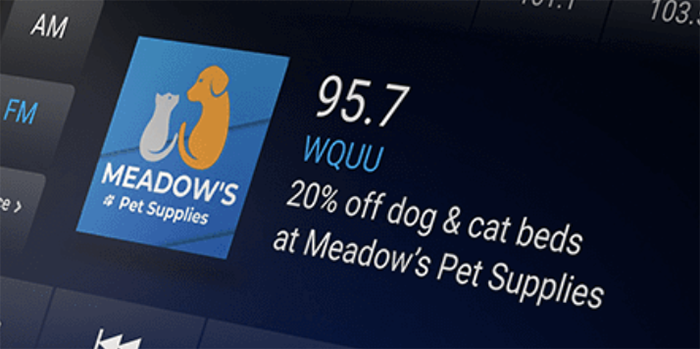
Cumulus Media says it is expanding its ability to help advertisers connect with consumers on the go via Quu’s in-dash messaging technology across its 400 radio stations. The company’s stations will leverage Quu’s content management system, 24/7 dashboard display monitor, Xperi’s Rapid technology and DTS AutoStage, and more, to enhance in-car listening experiences and help drive ratings and revenue. Some markets will also offer Quu’s patented Content Partnership sponsorship, bringing fresh opportunities for advertisers. Cumulus president of operations Dave Milner states, “Visual content solutions generate sustainable revenue growth and significantly enhance in-car engagement, where listeners spend the most time with our stations. This expansion underscores Cumulus’s commitment to delivering premium content and sales experiences that meet the evolving needs of our audience and clients.”

Industry News

Benztown and P1Media Group Present Imaging Webinar

Benztown and P1 Media Group and co-presenting an imaging webinar this Thursday (6/13) at 2:00 pm ET. The free program is titled, “Getting the Most From Your Station Imaging Voice,” hosted by Benztown CEO Andreas Sannemann and P1 Media Group partner Ken Benson. It will feature Atlas Talent Agency voiceover pro Rachel McGrath. You can register for the webinar here.

Industry News

WWO: Study Shows Radio Ads More Engaging Than TV Ads

This week’s blog from Cumulus Media | Westwood One’s Audio Active Group looks at data from a Mediaprobe study using electrodermal activity (via a special monitor attached to the respondent’s hand) to determine their reactions to ads in actual AM/FM radio segments. Mediaprobe says the electrodermal sensor “allows out-of-lab and real-time measurement of unconscious reactions to ads and mediaim content, providing an accurate assessment of the audience’s attentiveness and engagement.” Some of the key findings include: 1) Despite lacking “sight, sound, and motion,” AM/FM radio programming was +13% more engaging than Mediaprobe’s norm for television in the U.S. For advertisers, this means the AM/FM radio context for their ads has greater engagement than the TV context; 2) Overall, AM/FM radio advertising’s Emotional Impact Score (EIS) outperformed TV advertising by +12%. These new findings validate the recently released Dentsu/Lumen study, which revealed audio ads outperform video for attention and brand recall; 3) AM/FM radio news was the most impactful genre, consistently measuring as a high-quality contextual environment for advertising (+14% greater than Mediaprobe TV News norms and +8% than total AM/FM radio); 4) Mediaprobe audio benchmarks reveal the sound contrast between AM/FM radio programming and the ads drives higher attention and brand recall. For example, ads with music and jingles perform very well in spoken word programming due to the contrast; and 5) Creative best practices: Use female voiceovers, jingles, and include five brand mentions. See the blog post here.

Industry News

Benztown Enhances News/Talk Imaging Library

Benztown announces that it is enhancing Benztown Branding’s Ambush News/Talk Audio Imaging Library and is featuring the signature voice of JJ Surma. Benztown says, “The new Ambush library takes the imaging of spoken-word radio stations to the next level in quality, freshness, and resonance. Surma was recently namedim one the most successful voices in audio branding as a 2023 honoree of the Benztown 50 list of the top 50 voiceover professionals in the U.S. and Canada.” The Ambush audio imaging library is written and produced by imaging director Scott Phillips. Benztown VP, sales & operations Masa Patterson says, “JJ is world class, serving as the imaging voice for some of the best NT stations in America. Combining him with a production talent like Scott Phillips and retooling the content plan has Ambush positioned as a top-of-class resource for audio producers in the spoken word space.” Surma adds, “Scotty Phillips is an amazing writer and producer, and Ambush is a legendary resource that I leaned into many times in my years as a creative services director. The opportunity to bring my energy to such a respected and trusted audio library and company has me all fired up!” Listen to an audio composite of Benztown’s Ambush News/Talk audio imaging library here.

Industry News

TALKERS 2026 Video: Lee Habeeb Presents “The Art of Storytelling”

img

Noted raconteur and documentarian Lee Habeeb kicks off TALKERS 2026: Radio’s Next Chapter with an engaging morning presentation titled, “The Art of Storytelling.” Habeeb, the charismatic producer, host, and writer of the wildly popular syndicated news/talk radio series “Our American Stories,” makes a case for the effective use of storytelling in all aspects of talk radio citing several iconic episodes of American history as examples of the endless wealth of material available to hosts. Stay tuned to TALKERS daily posts of new video of the outstanding sessions that recently took place (6/5) at the 28th installment of the talk media industry’s longest running and most important national gathering. To see the Habeeb presentation in its informative and inspirational entirety, please click here.

Industry News

Salem Creators Agency Debuts to Represent Faith-Centric and Family-Focused Talent

Salem Creators Agency Debuts to Represent Faith-Centric and Family-Focused Talent

Salem Media reveals the launch of Salem Creators Agency, a new venture it says is focused on “helping faith-centric and family-friendly talent grow their careers across publishing, podcasting, live events, speaking engagements, music, film, and TV.” In conjunction with the launch, SCA signs Christian content creator, speaker, imgand media personality Jason Jackson Jr. as its first client. Salem Media CEO David Santrella states, “For years, we’ve worked alongside some of the most influential voices in media. Many of them are looking for more than platform monetization. They want a partner who not only understands their audience and shares their values but also has the experience to help them continue building their brands. Launching SCA is a natural next step for us.” SCA managing director Andrew Samalot adds, “As we’ve worked alongside creators over the last several years, we’ve seen firsthand that the most successful talent aren’t just building social media audiences – they’re building brands, businesses, and platforms that extend far beyond any single channel. Our role is to help them identify those opportunities, navigate them strategically, and surround them with representation they can trust as they continue growing their influence and impact.”

Industry News

TALKERS 2026 Provided Color with Insight Into the Modern Era of Talk Media

img

Pictured above: The dynamic duo of Beth Troutman (l) and Bo Thompson (r), co-hosts of the highly successful WBT, Charlotte morning show, “Good Morning BT,” got rave reviews for their presentation “Behind the Scenes at a Major News/Talk Morning Show” at TALKERS 2026 on June 5 at Hofstra University.  In addition to their conference presentation, their four-hour show that morning emanated live from Hofstra’s state-of-the-art WRHU-FM studios. Michael Harrison describes the duo – ranked number 49 on the TALKERS Heavy Hundred – as “engaging, informative, and dazzling.”

Stay tuned to TALKERS for extensive text, photo, and video coverage of the Talk Media conference of the year in the coming days, weeks and months ahead. 

Industry News

Montana Talk Host Wins Congressional Primary

Montana talk radio host Aaron Flint is projected to win the Republican primary for the U.S. House seat for Montana’s 1st imgCongressional District. Flint is host of the morning drive show “Montana Talks” heard across Townsquare Media news/talk stations in Montana, including KBUL, Billings and KMMS, Bozeman. Flint took leave of his radio show to run for office. According to the Associated Press, Flint will face the winner of the four-way race in the Democratic primary. Flint’s campaign says he is emphasizing “making the Montana dream affordable again,” by reducing regulatory burdens on building homes, encouraging trades education and boosting the U.S. timber industry.

Industry News

New York Festivals Radio Awards Announce Winners

img

New York Festivals Storytellers Gala announces the 2026 Radio Awards winners and American media companies taking home trophies include ESPN, NPR, Alabama Media Group, WBEZ, SiriusXM, Bloomberg, iHeartMedia and CBS News. NYF says, “Engaging storytelling and audio innovation took center stage at the 2026 Storytellers Gala virtual event, celebrating the achievements of global creators in radio and podcasting. Innovative audio storytelling from creators across six continents was evaluated by the New York Festivals 2026 Radio Awards Grand Jury. This year’s winners reflect the impressive range of the medium, spanning audiobooks, podcasts, drama, documentaries, breaking news, entertainment, and music, and showcasing work from global networks, production companies, and independent storytellers.” For the second consecutive year, CBC/Radio-Canada was named New York Festivals Radio Awards Broadcaster of the Year. See all the winners here.

Job Opportunity

Lotus Seeks Assistant Production Manager in Seattle

Lotus Seattle is seeking a highly organized and detail-oriented Assistant Production Manager to support the daily operations of the Production Department within a fast-paced broadcast radio environment. This role assists with the coordination, scheduling, creation, and delivery of commercial imgproduction, station imaging, promotional audio, and other broadcast content across multiple stations and digital platforms. The Assistant Production Manager works closely with Programming, Sales, Traffic, Promotions, and On-Air staff to ensure all production elements are completed accurately, creatively, and on schedule while maintaining Lotus Seattle Corp. quality standards and FCC compliance requirements. This position requires strong audio production skills, creativity, technical proficiency, and the ability to effectively manage multiple deadlines in a dynamic broadcasting environment. See more and apply here.

Industry News

Heritage Band Gunhill Road Cracks a Million Listens/Views Fueled by Talk Radio Exposure

img

Talk radio-fueled music group Gunhill Road has surpassed one million listens and views on a variety of online platforms including YouTube. The four-member ensemble, consisting of Steve GoldrichPaul ReischBrian Koonin, and (TALKERS founder) Michael Harrison, has found a new worldwide online audience fueled largely by interviews and airplay on news/talk radio, specifically over the past six years. The group is known for its provocative lyrics and subject matter (which makes it popular with talk show hosts), along with eye-catching videos (produced by Matthew B. Harrison) and an array of superbly played musical styles. Gunhill Road has been writing and recording a wide variety of songs contained in four albums since the late-sixties, including the 1973 top 40 hit single, “Back When My Hair Was Short.” The group’s colorful history was the subject of a 2017 feature film documentary titled, “Every 40 Years.” They will be releasing their long-awaited fifth album in late June.

​Formed in Mount Vernon, New York by Steve Goldrich and Glenn Leopold in the late-sixties and named after an iconic thoroughfare in the Bronx, Gunhill Road has grown through several musical and personnel chapters for more than a half century. In its current incarnation, Gunhill Road addresses such compelling themes as politics, technology, relationships, aging, animal welfare, modern anxiety, the First Amendment and other issues that are aligned with the topics discussed on talk radio.

​Gunhill Road’s internet hits include:

“Idiots” click here

“AI (No Robots Were Injured in the Recording of this Song)” click here

“Close My Ears” click here

“Damn Scammers” click here

“Don’t Stop Talking” click here

“I Know You’re Real” click here

For more information about Gunhill Road call Barbara Kurland at TALKERS: 413-565-5413

Industry Views

When Your Voice Becomes the Product

img

By Matthew B. Harrison  
TALKERS, VP/Associate Publisher
Harrison Legal Group, Senior Partner
Goodphone Communications, Executive Producer

imgFor years, Harrison Legal Group has informed media creators about the legal risks of using copyrighted clips, songs, images, and broadcasts without permission. The issue became central enough to inspire my book, Playing the Clip: The Definitive Digital Media Creator’s Guide to Fair Use (TALKERS Books, 2026). The premise was straightforward: modern media runs on borrowed material, but borrowing comes with legal exposure.

Now the fight is shifting toward something more personal.

The voice itself.

Not the recording. Not necessarily the script. The identity embedded in the sound.

That distinction is becoming increasingly important as AI voice systems improve to the point where listeners can recognize a performer even when the company insists it used a “different actor” or synthetic generation. The Scarlett Johansson dispute with OpenAI may become the defining example. Johansson alleged that OpenAI created a voice assistant that sounded “eerily similar” to her after she declined the company’s request to license her actual voice. OpenAI denied intentionally imitating her and stated the voice belonged to another actress but still paused what they branded the “Sky” voice after backlash intensified.

The case matters because it exposes a legal gray area many creators misunderstand.

A voice is generally not protected by copyright law in the same way a song recording is. But a recognizable voice may still trigger claims involving the right of publicity, false endorsement, unfair competition, or misappropriation of identity. In other words, the legal risk is often not “you copied audio.” The risk is “you exploited identity.”

That distinction matters for broadcasters, podcasters, advertisers, and AI companies experimenting with synthetic hosts, cloned announcers, or celebrity-style narration.

If listeners reasonably believe a celebrity endorsed, participated in, or authorized the content, the legal exposure changes dramatically.

Read more….

Another recent example involves Dua Lipa and Samsung. According to reports, Lipa alleges Samsung used her image on television packaging without authorization, creating the impression she endorsed the product. Samsung reportedly claims the image came from a third-party provider that assured the company all rights were cleared.

That defense may sound familiar to media professionals.

“We got it from somebody else.”

Legally, that is often not enough.

A broadcaster cannot avoid defamation liability merely because a guest made the statement. A publisher cannot automatically avoid infringement exposure because a freelancer supplied the material. And a company may not avoid publicity-rights claims simply because a vendor promised the paperwork existed.

The underlying legal theme is the same: delegation is not immunity.

The AI layer complicates things further because modern systems do not necessarily reproduce exact copies. Instead, they generate approximations that may still evoke a specific person strongly enough to create marketplace confusion.

Courts have dealt with similar issues before. Bette Midler and Tom Waits both successfully sued over soundalike performances used in advertising after declining to participate themselves. The principle is not new. AI simply makes imitation faster, cheaper, and easier to distribute.

That should concern media creators who assume these disputes only affect billion-dollar tech companies.

They do not.

A local station, podcast producer, YouTube creator, or advertiser can now generate celebrity-adjacent voices in seconds. The barrier to entry collapsed. The liability did not.

The safest question is no longer merely “Do we own the audio?”

It is: “Whose identity does this remind people of?”

That answer may determine whether the next lawsuit is really about technology at all.

Or simply old-fashioned commercial exploitation wearing futuristic clothing.

Get your copy of “Play the Clip: The Definitive Digital Media Creator’s Guide to Fair Use” by filling out the request form at HarrisonMediaLaw.com.

Matthew B. Harrison is a media and intellectual property attorney who advises radio hosts, content creators, and creative entrepreneurs. He has written extensively on fair use, AI law, and the future of digital rights. Reach him at Matthew@HarrisonLegalGroup.com or read more at TALKERS.com.

Industry News

Horizon Broadcasting Launches Spokane News/Talker

Horizon Broadcasting is firing up a new news/talk station in the Spokane-Coeur d’ Alene market on KBNW at 107.1 FM and KSBN at 1230 AM. The company says that 107.1 FM | 1230 AM News Radio KBNW is being led by Keith Shipman, who has served as president & CEO of the Washington State Association of Broadcasters for the past decade and Roger Nelson, a Spokane broadcaster who’s served with the KXLY Broadcast Group and Phase 3 Digital. Shipman says, “Local imgbroadcasting is at its best when it informs, connects and serves the community. Our goal is to provide timely, relevant information that keeps the Spokane-Coeur d’Alene metropolitan area well informed, whether it’s breaking news, traffic slowdowns, severe weather or the stories shaping our region each day.” Nelson adds, “After more than 25 years in Spokane broadcasting, I’ve seen how important live and local news is when people need it most. News Radio KBNW is built to be present at the start and end of every weekday, delivering reliable information people can depend on, along with engaging and entertaining talk programs the rest of the broadcast day.”  The two say the news staff will consist of Steve Wilke, Joe Paisley, Erich Ebel and Scott Carlon.  Talk programs will include: Dave Ramsey, Mike Gallagaher, Lars Larson, and Armstrong & Getty.

Industry Views

Monday Memo: AI Side Hustles

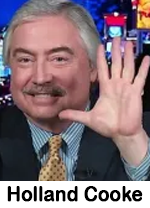
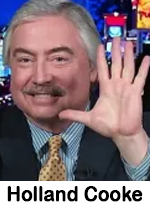
By Holland Cooke
Consultant

imgJason Reddick’s The Complete Guide to AI Side Hustles is aimed at beginners trying to build passive income. But read it through a broadcaster’s lens and it suggests a blueprint for how radio talent and podcasters can leverage AI to expand their influence, diversify revenue, and stay indispensable in a media economy that rewards relevance and speed.

His central thesis is simple: AI doesn’t create talent – it amplifies it. And that’s especially advantageous if you are already a communicator.

AI Enhanced Audio Services: Your Voice, Supercharged

Reddick writes about “leveraged skills,” and the most leveraged skill you have is your voice. Consider exploiting AI tools to offer:

  • local tourism audio guides,
  • church or nonprofit announcements,
  • fundraising video narration,
  • audio newsletters for local businesses,
  • corporate training narration,
  • e-learning or product demonstration voiceovers.

Each of these is high-trust, high-value, and repeatable. Businesses want a real human voice, and if you’re on radio or have a popular podcast, local businesses already know and trust your voice. AI simply lets you scale it. 

Repurposing: Your Secret Weapon

Reddick emphasizes turning one idea into multiple assets. You already generate hours of content. With AI, that becomes:

  • a monologue turned into a newsletter or newspaper column,
  • a segment turned into a blog post,
  • a rant turned into a daily, shareable email.

You’re already doing the hard part. AI helps multiply the output.

“Small, Fast, Useful”

Reddick likes what he calls “microproducts” – simple digital items that solve a problem quickly. As a broadcaster or podcaster, you already know how to explain things clearly and in plain English.

Whether you are repackaging interviews you already do or advertisers you already have (or want), or exploring your own personal interests, or simply addressing the everyday issues you yourself confront as a consumer, what can AI help you produce?

  • “How to Explain Tech Problems to Customer Support”
  • “How to Write a Complaint That Gets Results”
  • “Explaining Big News Stories to Young Children”
  • “Talking to Teens About Online Safety”
  • “How to Cancel SiriusXM Without the Runaround”
  • “Welcome! Starter Kit if You’re New to the Area”
  • “How to Sound Confident on Conference Calls”
  • “Airport Survival Guide for Infrequent Flyers”

Why These Work: They’re “evergreen” (relevant today and a year from now), high-utility (solves a problem quickly, low-lift (AI drafts, you refine), and trust-based (your voice + clarity = credibility).

If AI can scale your talent, the only limit now is your imagination. You can read the first two chapters of “The Complete Guide to AI Side Hustles,” free, here.

Holland Cooke (HollandCooke.com) is a consultant working the intersection of broadcasting and the Internet. Follow HC on Twitter @HollandCooke and connect on LinkedIn

Industry News

Beasley Best Community of Caring Initiative Launches

In recognition of Mental Health Awareness Month this May, Beasley Media Group says it is leveraging the power of its Beasley Best Community of Caring initiative to support imglisteners and spark meaningful conversations around mental well-being. Throughout the month, Beasley stations nationwide will deliver on-air PSAs, share informative and relatable online stories, and extend supportive messaging through Quu dashboard displays. Beasley chief communications officer Heidi Raphael says, “Mental health touches everyone in some way. If we can use our platforms – on-air, online, and in the car – to encourage even one person to check in, reach out, or take a moment for themselves, then we’re making a difference – and that’s what Community of Caring is all about.”

Industry News

KFYO, Lubbock Talk Host Chad Hasty Dies at 43

Longtime talk radio show host Chad Hasty died in his sleep Thursday morning at the age of 43. Townsquare Media, owner of KFYO, Lubbock, Texas states that it is deeply saddened to share the news of Hasty’s passing. The station says, “Chad joined Lubbock radio in 2003 and soon became the voice of imgKFYO’s morning show. In 2021, ‘The Chad Hasty Show’ moved to late afternoons, where he continued informing and entertaining audiences across the region. Whether cutting through the news of the day or interviewing some of the most prominent political figures in the state and country, Chad always delivered an engaging and thought-provoking show for his loyal listeners.” Townsquare Media Lubbock market president Dan Endom adds, “We are stunned and heartbroken by the sudden passing of our beloved KFYO family member, Chad Hasty. Chad was not only a brilliant on-air host, but an even better friend. Our deepest condolences go out to [his wife] Jennifer and his baby girl, Ava. It’s hard to imagine not seeing his welcoming presence roaming the halls of Townsquare Media Lubbock.”

Industry News

Cumulus Reports 2026 Q1 Revenue Down 12.2%

Cumulus Media is first out of the gate reporting its operating results for the first quarter of 2026. Net revenue for the company was $164.4 million, a decline of 12.2% from the same period in 2025. Cumulus saw its net loss shrink by almost half to $16.9 million compared to Q1 of img2025. The company reports declines in all segments of its business; even digital revenue was off 8.3% ($33.5 million). Network spot revenue was down 25% ($33 million), and broadcast spot revenue was $67.7 million, a decline of 16.3% from Q1 of 2025. Cumulus president and CEO Mary G. Berner says, “We are pleased to report first quarter earnings. The Court’s recent approval of our reorganization plan marks a pivotal milestone in strengthening our financial foundation and positioning the company to compete in the evolving media landscape. While we await FCC approval of the plan, we remain focused on leveraging our core strengths to drive long-term value creation.”

Industry News

Cumulus Names Webb PD for KABC and KSFO

Cumulus Media promotes Art Webb to program director for news/talk stations KABC, Los Angeles and KSFO, San Francisco. He has been serving as assistant program director and executive producer for both stations since 2017. He takes over for Luis Segura, who recently imgassumed the operations manager role at the company’s WMAL-FM, Washington. Cumulus regional vice president Larry Blumhagen states, “Art has proven to be exceptionally dedicated and creative in his years as APD for KABC. We are eager to watch him bring those qualities to the role of program director for KABC and KSFO.” Webb comments, “I’m excited to step into this role and build on the strong foundation already in place at both stations. Our focus remains on creating engaging, relevant content that truly connects with California listeners while continuing to elevate the incredible work of our talented teams. With such outstanding rosters in Los Angeles and San Francisco, I’m looking forward to sharing in much success together.”

Industry News

TALKERS News Notes

Triton Digital Collaborates with Nielsen Audio. Nielsen and Triton Digital are collaborating to integrate Triton Digital’s Podcast Metrics Demos+ into Nielsen’s cross-media planning tool, Nielsen Media Impact (NMI). Managing director of Nielsen Audio Rich Tunkel says, “Our collaboration with Triton Digital makes it easier for advertisers to evaluate and plan podcasts alongside, and with the same level of precision, comparability and confidence as other media channels, delivering a critical need.”

Seaboard Networks to Distribute Wrestling Show. Seaboard Networks is now distributing “Wrestling with Heart by Stanley Karr” – a one-hour program hosted by wrestling fanatic Stanley Karr. Seaboard’s marketing solutions consultant Bob Stei states, “Wrestling has a fan base of millions of people. This is a good place for them to enjoy banter on their favorite topic.”

Nielsen Names DeTraglia to Executive Post. Nielsen is appointing Julie DeTraglia head of content and strategic insights. In this role, she’ll lead strategy for Nielsen’s editorial marketing content, which includes social media, insights articles, client communications, events, sales enablement tools and podcasts. Nielsen head of global marketing Sacha Weinberg states, “Julie has a rare talent for transforming data into clear, actionable strategy. She doesn’t just look at where the market has been – she identifies the signals that tell us where it’s going next. Her ability to synthesize deep historical insights with current market dynamics will be a gamechanger for how we deliver value to our clients in a constantly evolving landscape.” DeTraglia most recently served as vice president of ads measurement at Netflix.

Industry News

Mike McVay to Receive MIW Honor

Mentoring and Inspiring Women in Radio, Inc announces that McVay Media president Mike McVay is the recipient of the 3rd Annual MIW Erica Farber Impact Award that recognizes individuals “who drive meaningful change by actively engaging with impactful organizations and generously imgcontributing their time, expertise, and resources. Honorees are true champions of service, demonstrating an unwavering commitment to fostering growth and progress within the industry.” McVay was presented with the award by Erica Farber on April 20, at the MIW Lipstick & Lobster Dinner at Maggiano’s. MIW board president Sheila Kirby states, “Mike McVay has been a consistent and powerful advocate for both the radio industry and the advancement of women within it. His willingness to share his time, expertise, and influence has made a lasting impact on MIW and the broader community we serve. Mike doesn’t just support the mission, he actively helps move it forward, and that kind of leadership is exactly what the Erica Farber Impact Award represents.”

Industry News

Shapiro Joins CNN as Contributor

Former longtime NPR journalist Ari Shapiro joins CNN as a contributor. CNN says, “Shapiro will bring his distinctive voice and signature wit to CNN’s on-air and digital programming, and will co-host a new video podcast titled, “Engagement Party,” alongside longtime colleague and friend, CNN anchor and analyst Audie Cornish. CNN says that on “Engagement Party,” Cornish and Shapiro will share the culture and ideas they’re engaging with – and why they’re obsessed. It will premiere on Friday, May 22.

Industry News

Murphy Named to Executive Post at Crossover Media Group

Media sales executive John Murphy is named vice president of strategic partnerships for Crossover Media Group. The move marks a reunion for Murphy with members of the Crossover Media Group team, with whom he’s worked as both a partner and a client. Most recently, Murphy served as senior vice president of content monetization at Veritone. In his new imgrole with Crossover, Murphy will work to secure new content as well as to expand the company’s client portfolio. Crossover managing member Sue Freund says, “We’ve known and worked with John for many years; his excellent relationships throughout the content and advertising communities make him a tremendous addition to our team in building strategic partnerships with clients, agencies, and content providers as we continue to grow. He has a proven track record of building high-performing sales organizations, monetizing premium content, and delivering performance-driven advertising solutions for brands, agencies and media partners.” Murphy comments, “I’m excited to be joining Crossover Media Group. The team has built a strong reputation for delivering results-driven solutions for both creators and advertisers, and I look forward to contributing to that momentum. There’s a clear opportunity to unlock new growth across partnerships, and I’m eager to help scale the business while driving meaningful value for clients.”

Industry Views

Creators, Commentators, or Publishers: Liability Remains the Same

By Matthew B. Harrison
TALKERS, VP/Associate Publisher
Harrison Media Law, Senior Partner
Goodphone Communications, Executive Producer

imgThe rise of independent, talk show-style political commentary on YouTube has created a new class of media actors who do not see themselves as broadcasters, journalists, or publishers. They see themselves as creators. That distinction is real in terms of identity, tone, and platform. It is not real where it matters most: liability.

The difference exists in how the work is produced and presented. It disappears the moment the content is published.

In practice, these creators are engaging in acts that courts have long recognized as publication. They are selecting topics, framing narratives, editing clips, and distributing content to large audiences. Those decisions are not neutral. They are editorial.

The absence of FCC regulation in this space has created a persistent misunderstanding. Traditional broadcasters operate under a regulatory framework that includes licensing and content restrictions. Independent creators do not. But the lack of FCC oversight does not reduce exposure. It removes one layer of regulation while leaving the core legal risk fully intact.

Defamation law applies equally to both groups. A false statement of fact about a real person that causes reputational harm can give rise to liability whether it is spoken on a licensed radio station or uploaded to a monetized YouTube channel. The standards may differ depending on whether the subject is a public or private figure, but the underlying obligation remains the same: accuracy matters.

There is no YouTube exception. There is no creator carveout. The law does not care how the content was distributed, what the platform calls you, or how you see yourself. It cares who made the statement, who chose to publish it, and whether it was false.

The structure of YouTube content introduces additional risk. Many creators rely on rapid production cycles and clip-based commentary. This increases the likelihood of error, particularly when context is compressed or omitted. Editing choices that seem minor from a production standpoint can materially change meaning, which is precisely the type of conduct that courts examine in defamation and false light claims.

Monetization further complicates the analysis. Revenue from ads, memberships, or sponsorships strengthens the argument that content is commercial in nature. That does not eliminate First Amendment protections, but it can influence how a court evaluates intent and reasonableness.

There is also a tendency to assume that platform norms provide a form of protection. If a piece of content is allowed to remain online, or even promoted by an algorithm, it can feel implicitly validated. That assumption is misplaced. Platform enforcement decisions are not legal determinations. They are business judgments.

The most important point is simple and often overlooked. Liability does not turn on intent. It turns on what was said, whether it was false, and whether reasonable steps were taken to verify it.

The platform may change how content looks. It may change how fast it spreads. It may change who gets to participate.

It does not change the consequences of getting it wrong.

Time passes. Technology and fancy packaging change. Exposure and liability do not. 

Matthew B. Harrison is a media and intellectual property attorney who advises talk show hosts, content creators, and creative entrepreneurs. He has written extensively on fair use, AI law, and the future of digital rights. Reach him at Matthew@HarrisonMediaLaw.com or read more at TALKERS.com.

Job Opportunity

Lotus Seeks Part-Time News Staffer in Seattle

Lotus Seattle is looking for an experienced part-time news anchor, reporter, and news editor for all-news KNWN “Northwest Newsradio 97-7, AM 1000.” The ideal candidate will help prepare and deliver engagingimg news content, report on breaking news events, serve as board operator for special programming, and produce special projects and programming as assigned. This position does feature regular hours of board operator work, writing, producing, as well as anchoring newscasts. On occasion the position will offer extra hours during the week to cover shifts for those who are ill or on vacation. Learn more and apply here.

Industry News

Beasley 2025 Q4 Net Revenue Falls 21.1%

Beasley Broadcast Group reports net revenue of $53 million in the fourth quarter of 2025, a decline of 21.1% from the same period in 2024. For the full year of 2025, net revenue was $205.9 million, a decrease of 14.3% from the full year of 2024. Regarding the Q4 2025 numbers, Beasley says they “reflect persistent weakness in the traditional agencyimg advertising market that was partially offset by the continued expansion of our high-margin, owned-and-operated direct digital revenues. Beasley recorded an operating loss of approximately $230.0 million in the fourth quarter of 2025, compared to operating income of $7.6 million in the fourth quarter of 2024, driven primarily by a non-cash FCC license impairment charge of $224.8 million, reflecting the company’s updated assessment of the fair value of its broadcast licenses in light of continued secular pressures on the radio industry, as well as $1.7 million in other operating expenses.”

Beasley CEO Caroline Beasley states, “2025 was a year of meaningful transformation for Beasley. Against a persistently challenging advertising environment — marked by continued secular pressure on traditional audio and the ongoing contraction of agency-driven revenue channels — imgwe made tangible progress reshaping this company for long-term value creation. Our digital business delivered record performance, with digital revenue representing approximately 24% of net revenue, up from roughly 19% of net revenue in 2024, and digital segment operating margins reached record levels as our continued shift toward owned-and-operated and programmatic products gained traction across our markets… Building on this progress, we recently announced a debt exchange transaction with our second lien bondholders, pursuant to which we expect to reduce our second lien debt by approximately 50% and repay roughly $15 million of our first lien debt. Upon completion of the transaction, which is subject to bondholder participation and expected to close by the end of April, we anticipate total outstanding debt will be reduced to approximately $110 million from $220 million today. We believe this transaction will meaningfully strengthen our balance sheet, enhance financial flexibility, and better position the Company to execute on its strategic priorities. Following its completion, our focus will shift toward further deleveraging through EBITDA growth and continued portfolio optimization.”

Industry News

Debbie Kenyon to Lead Central U.S. Markets for Audacy

Audacy promotes Debbie Kenyon to regional president for its Central U.S. markets. Kenyon currently manages the company’s Detroit stations, and her new responsibilities will include Chicago, Cleveland, Minneapolis, Milwaukee and Madison. She’ll oversee such heritageimg signals as WSCR-AM/FM “The Score” and news/talk WCCO-AM. Audacy president and CEO Kelli Turner comments, “Debbie Kenyon has been a pillar of our business for over a quarter century, and her elevation to regional president for our Central region is a testament to her ability to drive innovation and deliver consistent performance. Her appointment supports our commitment to empower our teams and build on our unmatched presence in local markets and communities while fully leveraging our scale and reach.” Kenyon joins Jeff Federman, Mark Hannon, Claudia Menegus and chief business officer Chris Oliviero in regional president roles overseeing key Audacy markets.

Industry News

Dan Dakich Re-Ups with Outkick; Exits WXNT, Indy Radio Show

Multimedia sports platform OutKick and sports personality Dan Dakich sign a multi-year contract for Dakich to continue as the host of the “Don’t @ Me” program. As part of the new deal, Dakich will step away fromimg hosting his radio show on Cumulus Media’s WXNT-AM, Indianapolis “Indy’s Sports Ticket 1430 AM” and he will be exclusive to OutKick starting April 1. OutKick senior vice president and managing editor Gary Schreier says, “Dan Dakich has been a vital part of OutKick’s success. He provides unique insight and never hides from sharing his opinion. That combination is what OutKick stands for and we’re thrilled to have him for the years to come.” Dakich comments, “I’m beyond thrilled to continue as the host of ‘Don’t @ Me.’ This journey with OutKick has been incredible and has allowed me to share my opinion unapologetically. I can’t wait for what’s to come as my OutKick show continues to stand out among other sports shows that are afraid to speak their minds.”

Industry Views

Monday Memo: Anatomy of a Results-Producing Spot

By Holland Cooke
Consultant

imgLet’s start with what NOT to do, The 7 Deadly Sins Of Small Business Advertising:

  1. Talking about yourself too much. Customers care lots less about your story than their problem.
  2. Using clichés. “Quality service,” “relaxing atmosphere,” “friendly staff,” and “committed to excellence” are noise. WORST: the hollow “for all your ____ needs.”
  3. Listing everything you do. Think: message, not menu.
  4. Trying to sound big. Avoid that corporate sound I described in last week’s column here. It distances you from your prospect.
  5. Trying to be clever instead of clear. If they don’t get it instantly, they move on. And you risk seeming unserious.
  6. Too much copy, so the spot sounds rushed, a motor-mouth pitch. Instead, let it breathe.
  7. Ending with a weak call to action. “Visit us today” is not a call to action. It’s a shrug.

Your messaging will instantly improve if – in the words of George Constanza – you “do the opposite” of committing these sins.

A strong ad has four parts:

  1. A clear, strong opening line. “When you lie in bed at night, do you hear a scratching sound?” The opening line should speak directly to the customer’s life. Note Magic Words “you” and “your.” Start in their world – with their dilemma – and walk-them-into your world, how you fix it.
  2. A simple promise. Tell them what they get —  not what you do. “Call before noon and sleep on a new mattress tonight.” Problem solved. A promise is emotional, not technical.
  3. A reason to believe. Keep it short. “Sameday service, even on weekends,” or “We’ve solved this problem for 20 years.”
  4. A strong call to action. Tell them exactly what to do next. Be specific and immediate. “Click to find out – in just seconds – to find out what your house is worth.” Or “Instant cash for your car. Call for our offer.”

This is #3 in my 3-part series about optimizing commercial copy, the fundamentals we’re covering in Sales meetings as I visit client stations this spring. If you missed the first two installments, here are “If It Doesn’t Matter to the Customer, It Doesn’t Matter” and “Your Local Advantage.” And help yourself to my free E-book, “Spot-On: Commercial Copy Points That Earned The Benjamins,” 12 more pages of what-worked, collected in my travels.

Holland Cooke (HollandCooke.com) is a consultant working the intersection of broadcasting and the Internet. Follow HC on Twitter @HollandCooke and connect on LinkedIn

Job Opportunity

Connoisseur Seeks Long Island Sales Pro

Recent promotions at Connoisseur Media’s Long Island station group have created an opening at director of sales. Connoisseur says it isimg “conducting a search for a new director of sales, a dynamic leader who values their connection with the Long Island community.  The ideal candidate will be a high-energy seller experienced in developing custom marketing solutions leveraging assets like broadcast media, digital capabilities, and event marketing.  Leadership experience, a passion for driving results, and a talent for building strong client relationships are essential.” See more and apply here.

Industry News

Cumulus Announces Chapter 11 Pre-Pack to Eliminate $600 Million in Debt

In a surprise announcement this morning (3/5), Cumulus Media Inc reveals it has entered into a comprehensive restructuring support agreement (RSA) with a group of its lenders to eliminate approximatelyimg $600 million of debt, “substantially deleveraging its balance sheet and enhancing its ability to execute on strategic priorities.” The company says it will continue operating in the ordinary course throughout the process, with no impact to employees, partners, or listeners.

Cumulus president and CEO Mary G. Berner states, “While we have outperformed the market on many of our most important metrics, including share gains in both local and digital revenue, the broader imgmacroeconomic and industry-wide pressures we have faced have remained unrelenting. Against that backdrop, it became clear that Cumulus’s remaining debt burden limited our ability to fully realize the company’s potential, and this agreement represents a major step forward. The prepackaged process is intended to address the company’s debt efficiently with no disruption to our operations, our people, and our strategies. On emergence, a stronger financial foundation will better position Cumulus to continue investing in premium content, enriched audience experiences, advertiser performance enhancements, and the ongoing growth of our digital marketing offerings.” Cumulus has filed a proposed Plan of Reorganization that incorporates the terms of the RSA and is subject to approval by the Court. The requisite majority of debtholders committed to vote in favor of the Plan, which calls for the cancellation of 100% of the company’s existing funded indebtedness in exchange for 100% of the company’s reorganized equity and $50 million of new convertible notes, as well as the amendment and restatement of the company’s asset-based revolving credit facility to provide continued liquidity. Cumulus expects that the Court will hold a hearing to consider the approval of the Plan within 60 days of the filing date and that the company will emerge from bankruptcy following receipt of required regulatory approvals from the Federal Communications Commission.

Industry Views

Spring-Forward Show Prep

By Holland Cooke
Consultant

imgUnless you live in Hawaii and Arizona (except the Navajo Nation) or American Samoa, Guam, the Northern Mariana Islands, Puerto Rico and the U.S. Virgin Islands, your clocks will change when we “Spring Forward” on Sunday 3/8.

Every year, that one missing hour becomes a big topic of conversation. So, it’s an opportunity to flex your local radio advantage. Plan now to empathize with the emotional and practical adjustments listeners are confronting, including…  

Darker Mornings
Positive:

  • Later sunrise can feel cozy, especially for people who enjoy easing into the day.
  • Early-morning workers may appreciate the quieter, calmer pre-dawn hours.

Negative:

  • For many, waking up in darkness can be jarring.
  • Kids heading to school and commuters on the road face reduced visibility.

Longer Evenings
Positive:

  • More daylight after work boosts mood, encourages outdoor activity, and feels like the unofficial start of spring.
  • Families get more time outside; businesses tied to recreation, dining, and retail see a lift.

Negative:

  • Evening routines shift, especially for parents managing homework, sports, and bedtime.
  • People who work late may feel the day stretching uncomfortably long.

Sleep Disruption
Positive:

  • Some listeners welcome the psychological “reset” of a seasonal shift.
  • A later sunset can help night owls feel more aligned with the clock.

Negative:

  • Losing an hour can hit hard.
  • Many experience grogginess, irritability, and a few days of circadian chaos.

Health and Mood
Positive:

  • More evening light is a proven mood-booster.
  • For those prone to Seasonal Affective Disorder, the extended daylight is a relief.

Negative:

  • The abrupt change can trigger fatigue, headaches, and short-term stress.
  • Sleep-deprived mornings can amplify anxiety.

Productivity and Daily Rhythm
Positive:

  • Longer evenings can inspire productivity, exercise, and social plans.
  • People feel like they “get their life back” after winter.

Negative:

  • Morning productivity tanks for a few days as bodies adjust.
  • Parents, shift workers, and early risers feel the strain most acutely.

Safety Considerations
Positive:

  • More daylight during high-traffic evening hours improves visibility and reduces accident risk.

Negative:

  • Darker mornings increase hazards for pedestrians, cyclists, and schoolchildren.
  • Sleep deprivation contributes to slower reaction times.

Energy Consumption
Positive:

  • Longer daylight in the evening can reduce lighting needs.
  • Outdoor activity replaces indoor energy use.

Negative:

  • Darker mornings mean more lights, heat, and coffee makers running earlier.
  • Any savings are inconsistent and vary by region.

Impact on Schedules
Positive:

  • The seasonal shift feels like a milestone — spring is coming.
  • People use the change as a cue to refresh routines.

Negative:

  • Parents, pet owners, and anyone with a rigid schedule face a tough adjustment.
  • “Losing an hour” becomes a shared gripe.

So, What’s a Radio Station To Do?
This is where local radio can shine – being human, helpful, and hyper-local.

  • Songs about time: Cyndi Lauper’s “Time After Time,” Cher’s “If I Could Turn Back Time,” etc.
  • Explain the history of Daylight Saving Time(NOTE: it’s “Saving,” not “Savings”).
  • Ask callers how they feel about DST. You’ll get strong opinions on both sides…and stories.
  • “What will you do with your longer evenings?”
  • Giveaways that fit the moment: Coffee cards, breakfast treats, outdoor gear, spring-cleaning kits.
  • Partner with advertisers: “Spring Ahead Specials,” etc.
  • Interview a local health pro about sleep.

Holland Cooke (HollandCooke.com) is a consultant working the intersection of broadcasting and the Internet. Follow HC on Twitter @HollandCooke and connect on LinkedIn

Industry News

Dan Brady Promoted at Take On the Day LLC

Dr. Laura Schlessinger’s Take On the Day, LLC and Crossover Media Group Dan Brady is promoted to vice president/general manager in which he’ll oversee the day-to-day operations of the company. Brady moves up from chief call producer, director of podcast operations &img program audio, and vice president of operations roles. Take On The Day CEO Ron Hartenbaum says, “Dan has been critical to the on-going success of the radio program, podcast, live events, and pushing the growth of the video product to new levels of engagement. His ability to get things done is simply amazing.” Brady comments, “I’m humbled to be recognized in this elevated role by the managing partners and more importantly Dr. Laura as we continue to propel her legendary brand. Continuing to work with our partners at SiriusXM and their team in this new capacity is a true honor.”

Industry Views

Reckless Disregard in the Age of AI: What Verification Now Requires

By Matthew B. Harrison
TALKERS, VP/Associate Publisher
Harrison Media Law, Senior Partner
Goodphone Communications, Executive Producer

imgAI is now embedded in the modern newsroom. Not as a headline, not as a novelty, but as infrastructure. It drafts outlines, summarizes complex reporting, surfaces background details, and accelerates prep for live conversations. For media creators operating under relentless deadlines, that efficiency is not theoretical. It is practical and daily.

That reality raises a quiet but consequential legal question. When AI contributes to your research, what does verification now require?

Professional hosts are not reading raw chatbot answers on air and calling it journalism. That caricature misses the real issue. What is actually happening is subtler and far more common.

AI now sits inside research workflows. Producers use it for background. Hosts use it to summarize reporting. Teams use it to outline controversies or draft rundowns. Most of the time, it works. Sometimes, however, it invents.

When that invention involves a real person and a serious allegation, the legal analysis looks familiar.

For public figures, defamation requires proof of actual malice – knowledge of falsity or reckless disregard for truth. For private figures, negligence is usually enough. In both cases, the focus is not on the tool. It is on the content creator’s conduct.

AI does not change the elements. It changes the context in which reasonableness is judged.

Courts have long held that repeating a defamatory statement can create liability, even if someone else said it first. If you rely on a blog, and that blog relied on AI, and the allegation is false, the question becomes whether your reliance was reasonable.

Was the source reputable? Was the claim inherently improbable? Were there obvious red flags?  Was contradictory information readily available?

AI’s reputation for “hallucinating” facts now forms part of that backdrop. Widespread awareness that these systems can fabricate citations, merge identities, or invent accusations becomes relevant when a court evaluates your verification choices.

This does not mean using AI indicates reckless disregard. It means using AI does not excuse skipping verification when the stakes are high.

The more specific and damaging the claim, the greater the duty to confirm it through independent, reliable sources. Not another prompt. Not a circular reference to the same unverified blog. Rather, a primary record, official statement, or established reporting.

Documentation matters. If challenged, being able to show that you checked multiple sources before broadcast can be decisive.

None of this is new doctrine. What is new is how seamlessly AI blends into ordinary research habits. That integration makes it easier to forget that the legal question is still about human judgment.

The law will not ask whether your workflow was efficient. It will ask whether your conduct was reasonable under the circumstances.

In the age of AI, verification is not a courtesy. It is risk management.

Matthew B. Harrison is a media and intellectual property attorney who advises radio hosts, content creators, and creative entrepreneurs. He has written extensively on fair use, AI law, and the future of digital rights. Reach him at Matthew@HarrisonMediaLaw.com or read more at TALKERS.com.

Industry News

Civic Media Unveils New Talk Lineup for Four Stations

Civic Media announces a revamped news/talk lineup for four of its Wisconsin stations as the Civic Media Network programming will air on: WXCO, Wausau; WMDX, Madison; WAUK, Milwaukee; and WISS, Oshkosh-Appleton. The company unveils three new shows in the newimg daily lineup: “Daybreak with Brian and Jamie” airing 6:00 am to 9:00 am (starring Brian Noonan and Jamie Martinson); “The Jeff Santos Show,” airing from 2:00 pm to 5:00 pm; and “Nite Lite With Pete Schwaba and Greg Bach” airing from 5:00 pm to 7:00 pm. Civic Media vice president of product Aaron Carreno said, “We’re excited to refresh our programming with the addition of new radio shows and a continuous stream of digital content that meets audiences wherever they are. This growth reflects our commitment to delivering fresh voices, diverse perspectives, and engaging storytelling across every platform. By strengthening both our on-air and digital presence, we’re creating more opportunities for our community to connect, discover, and stay informed—anytime, anywhere.”