
Industry News

Round Three of Holiday 2023 PPMs Released

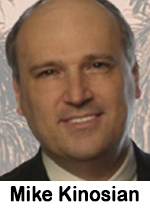
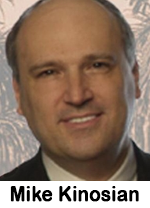
imThe third of four rounds of ratings data from Nielsen Audio’s Holiday 2023 PPM survey has been released for 12 markets including Portland, Charlotte, San Antonio, Sacramento, Pittsburgh, Salt Lake City, Las Vegas, Orlando, Cincinnati, Cleveland, Kansas City, and Columbus. The survey period covered December 7, 2023, through January 3, 2024. Today, TALKERS magazine managing editor Mike Kinosian presents his Ratings Takeaways for this group of markets. In Portland, Alpha Media’s news/talk KXL-FM falls a full share to a 4.9 share (weekly, 6+ AQH share) dropping from the #3 rank to #6, while iHeartMedia’s news/talk KEX-AM loses one-tenth to finish with a 1.1 share good for the #21 rank. In San Antonio, iHeartMedia news/talk WOAI dips three-tenths to a 2.4 share good for the #15 rank, while Alpha Media’s news/talk KTSA sheds two-tenths to finish with a 1.8 share and is steady at the #19 rank. In Salt Lake City, Bonneville’s news/talk KSL-AM/FM declines 2.8 share for a 3.6 share finish that leaves it ranked #9, while iHeartMedia news/talk KNRS-AM/FM dips six-tenths to a 2.2 share good for the #17 rank. See Mike Kinosian’s complete Ratings Takeaways from this group of markets here.

Industry News

TALKERS News Notes

OutKick announces that FOX News contributor, New York Times best-selling author and former professional wrestler, Tyrus, a.k.a. George Murdoch, joins the platform to host the new show, “Maintaining with Tyrus.” The first episode launches on February 1 featuring a sit-down with talk TV host Piers Morgan, followed by interviews with Wolf of Wall Street inspiration Jordan Belfort, and “How America Works” host Mike Rowe.

ESPN is expanding the reach of its ESPN podcast offerings starting January 29 as ESPN2 will televise an ESPN video podcast every weekday from 2:00 pm to 3:00 pm ET. The premiering lineup will include: “First Draft,” “The Hoop Collective,” “The Lowe Post,” “The Mina Kimes Show” and “The Elle Duncan Show.” Mike Foss, ESPN SVP, production says, “This strategic content initiative provides our ESPN podcasts with a tremendous opportunity for continued growth and audience expansion, while simultaneously lending compelling content to our ESPN2 television lineup.”

New England Public Media promotes Elizabeth Román to managing editor – daily and digital news. NEPM says, “Although her title did not dramatically change, her responsibilities have evolved and Román will now be taking the lead on delivering daily news programming on the radio, NEPM website and social media channels.” Román says, “As a lifelong Springfield resident and Western Massachusetts native. I’m excited to continue working with our skilled news department to bring you even more stories that highlight the needs, concerns and successes of the people living and working in this community.”

Cumulus Media’s Westwood One is presenting play-by-play coverage of this weekend’s NFL Conference Championships presented by lead sponsor Intuit Turbo Tax. Doubleheader coverage begins with the pregame show at 2:00 pm ET on Sunday before the Kansas City Chiefs and the Baltimore Ravens meet for the AFC Championship game and the Detroit Lions battle the San Francisco 49ers in the NFC Championship game.

Industry News

Round Two of Holiday 2023 PPMs Released

imThe second of four rounds of ratings data from Nielsen Audio’s Holiday 2023 PPM survey has been released for 12 markets including Washington, Boston, Miami, Seattle, Detroit, Phoenix, Minneapolis, San Diego, Tampa, Denver, Baltimore, and St. Louis. The survey period covered December 7, 2023 – January 3, 2024. Today, TALKERS magazine managing editor Mike Kinosian presents his Ratings Takeaways from this group of markets. In Washington, Cumulus Media’s news/talk WMAL-FM dips four-tenths to a 3.1 share (weekly, 6+ AHQ share) but remains ranked #9, while Hubbard Broadcasting’s all-news WTOP-FM loses three-tenths to finish with a 6.3 share good for the #4 rank. In Boston, iHeartMedia’s news/talk WRKO added two-tenths for a 3.1 share finish that lifts it to the #9 rank, while sister all-news WBZ-AM declines four-tenths to a 4.7 share but remains ranked #5. In Detroit, Cumulus Media’s news/talk WJR rises one-tenth to a 2.4 share and climbs to the #15 rank, while Audacy’s all-news WWJ is steady at a 4.3 share and remains ranked #9. See Mike Kinosian’s complete Ratings Takeaways from this group of markets here.

Industry News

TV and Radio Legend Charles Osgood Dies at 91

The broadcasting industry is mourning Charles Osgood, who passed away on Tuesday (1/23) at his home in New Jersey at age 91 after a battle with dementia. Osgood spent 45 years of his broadcasting career at CBS News, hosting the iconic “CBS Sunday Morning” program from 1994 through 2016.im During his CBS career, he appeared on every CBS News program including “CBS Morning News,” the “CBS Evening News with Dan Rather” and the “CBS Sunday Night News.” For almost 46 years he produced his nationally syndicated radio feature, “The Osgood File,” from which he signed off with his signature phrase, “I’ll see you on the radio.” As Osgood was preparing to retire from “CBS Morning News” in 2016, he was a guest on TALKERS magazine founder Michael Harrison’s podcast. You can listen to that program here. Also, TALKERS magazine managing editor Mike Kinosian – then serving as special features editor for Inside Radio – had the opportunity to profile Osgood. You can read that here.

Industry News

Round One of Holiday 2023 PPM Ratings Released

imThe first of four rounds of ratings data from Nielsen Audio’s Holiday 2023 PPM survey has been released for 12 markets including New York, Los Angeles, Chicago, San Francisco, Dallas, Houston, Atlanta, Philadelphia, Nassau-Suffolk (Long Island), Riverside-San Bernardino-Ontario, San Jose, and Middlesex-Somerset-Union (New Jersey). The ratings period covered December 7, 2023 – January 3, 2024. Today, TALKERS magazine managing editor Mike Kinosian presents his Ratings Takeaways from this group of markets. In New York, Red Apple Media’s news/talk WABC adds two-tenths to finish with a 3.0 share (weekly, 6+ AQH share) and remains ranked #11, while iHeartMedia’s news/talk WOR tacks on one-tenth for a 1.2 share finish good for the #21 rank, and Audacy’s all-news WINS-FM falls two-tenths to a 3.9 share but rises to the #9 rank. In Los Angeles, iHeartMedia news/talk KFI loses half a share to finish with a 4.6 share pulling it from the #2 to the #4 rank, while Audacy’s all-news KNX-AM/FM loses two-tenths to finish with a 2.5 share good for the #12 rank. In Chicago, Nexstar Media Group’s news/talk WGN-AM dips two-tenths for a 2.6 share finish leaving it ranked #11, while Cumulus Media’s news/talk WLS-AM is steady at a 1.7 share good for the #19 rank, and Audacy’s all-news WBBM-AM/WCFS-FM loses three-tenths to finish with a 4.9 share and remaining ranked #4. See Mike Kinosian’s complete Ratings Takeaways here.

Features

Remembering Charles Osgood

By Mike Kinosian
TALKERS magazine
Managing Editor

imDespite his seemingly nonchalant, bad boy on-air persona, David Letterman is exceptionally respectful of broadcasting and its history.

An easily discernable gleam could be seen in the late-night talk host’s eyes when – in 1993 – he formally announced he was jumping to CBS-TV.

One would be naïve not to think that the astonishingly lucrative payday played a significant part in his exhilaration, but Letterman was genuinely enthusiastic about joining the “Tiffany Network.” The entertainment division helped sculpt that vaulted reputation, but the Eye Network’s image was also greatly enhanced by its stellar news department.

Names of those who’ve graced CBS news broadcasts read like a veritable “Who’s Who” of the industry, with the incomparable Walter Cronkite at the very top.

Additionally, there’s Murrow. Sevareid. Collingwood. Rather. Reasoner. Wallace. Edwards. Kuralt. Safer. Mudd. Bradley. Schieffer. Stahl. Rooney. Burdett. Pauley. Hottelet. Chung. Threlkeld. O’Donnell. That just scratches the surface.

Perhaps no one on that – or any similar – list is more erudite, witty and thought provoking than Charles Osgood (Wood).

In a special April 18, 2005 NAB presentation in Las Vegas, the man who did as much for boosting bowtie sales (far pre-dating Tucker Carlson) received the Paul White Award from the RTNDA.

Established in 1956, the recognition carries on the name of CBS’ first news director.

Illustrious company

Past Paul White Award recipients have included Edward R. Murrow, Dan Rather, Bob Schieffer, Ed Bradley, Tom Brokaw, Ted Koppel, Peter Jennings, and Jane Pauley, who succeeded Osgood on CBS-TV’s “Sunday Morning” in 2016. Osgood humbly noted, “I’ve known about the Paul White Award for a long time and have been there to see others get it. It’s obviously a very distinguished company I join. I was there when [former CBS News Division President] Richard Salant [received] it and certainly regard it with a lot of respect. If you hang around long enough, it finally gets to be your turn.”

There’s a parallel with this recognition and Osgood’s 1990 induction to the NAB Hall of Fame. “[Neither] one is the kind of thing you campaign for,” he remarked. “The first I heard about it is when they called and told me it happened. There’s no tension about it and no disappointment that you didn’t get it.”    

Mistaken identity

Rich, God-given voice with which Osgood was blessed became evident at an early age. “My dad was a textile salesman and executive. His name was Charles Osgood Wood – I’m actually Charles Osgood Wood, the third. I’d answer the phone and the person on the other end would [automatically assume they were talking to my father]. He and I talked almost exactly alike.” 

Somewhat of a built-in schizophrenia existed in the famed broadcaster. A friend with whom he’d frequently play tennis noticed that when the multiple Peabody and Emmy Award winner screwed up he’d say, “Come on Osgood.” As a result, “I’d be harder on ‘Osgood’ than I would be on ‘Wood.’ You don’t talk to yourself when you do something right – you just sort of smile.”

Distinctive difference

Understandably, the natural tendency was to automatically link the instantly likable Osgood to CBS for his impeccable long-running role as voice/writer of CBS Radio’s “The Osgood File” and for hosting duties of CBS-TV’s “Sunday Morning.” In addition, he spent six years (1981-1987) as anchor of “The CBS Sunday Night News.”

Many, however, forget that predating those résumé credits, he toiled for ABC.

When he began there, ABC – as luck would have it – already had an announcer named Charles Woods. “In those days, some staff announcers did newscasts,” Osgood explained. “They hired me, but said they didn’t want to have a Charles Woods and a Charles Wood. When they told me to pick a name, I used my middle name as my last name. It’s worked out well and is a little more distinctive and professional.”

Safe haven

Selection of another type made a great impact on his life, as the broadcaster with the industry’s most stylish writing style was an Economics major at New York’s Fordham University. “I never really had an idea that this is what I was cut out to do,” Osgood candidly stated. “As a result, I never took any writing or editing courses. When I started [in broadcasting], I really hung on by my fingernails and just did it the best way I could think of. It took more than a couple of years to get a sense of what I could do. If I’d started the kinds of things in journalism school that I do now, they would have said, ‘No – that’s not how you do it.’ I would have had it drummed out of me early on.” 

Thankfully though, someone realized a broadcaster existed within Osgood and the New York native became actively involved at Fordham’s campus radio station. “That was my locker – the place I’d go between classes,” he pointed out. “At least in those days, regardless of your [declared major], you really majored in Philosophy. You learned things like ethics, logic and cosmology. That really turned out to be pretty useful for what I’m doing.”

Never was there a moment’s regret for the father of five that he didn’t pursue a career in economics. “I’m not even sure I understood what economics was when I decided to make it my major,” Osgood sheepishly admitted. “I knew it had something to do with money and I thought it would be good to know something about that.” 

Sailing with Uncle Walter

As things eventuated, it was immaterial that Osgood never took any college journalism courses. “I went to the best school of broadcast journalism that you could go to, [because] I got to work with Walter Cronkite and a pretty potent lineup of [other] people,” Osgood asserted. “I was often in the same room and could see how Walter’s mind worked and his idea of telling a story. He’s the most centered guy you’re ever going to meet and is very tough.”

Fabled anchorman Cronkite was also managing editor of “The CBS Evening News,” a responsibility he took very seriously. “He was a newsman and kept asking questions of everybody; I have all the respect in the world for him,” Osgood reverently recalled of Cronkite, who was 92 when he died in 2009. “Within a year after I went to work in the CBS newsroom, I found myself sailing in a boat with Walter Cronkite. I felt like I died and went to heaven.” 

Mid-1950s on-air job at Washington, DC classical outlet WGMS enabled Osgood to display his familiarity with – and dexterity to handle –  names like Nikolay Rimsky-Korsakoff. “I really did like that kind of music,” the long time ASCAP member emphasized. “They [eventually] gave me a job that was like the assistant to the GM. It paid all of about $25 a week, but I learned a little bit about station management. WGMS was sold to RKO General and I ended up being program director and, for a time, co-manager.”

Ahead of its time

Also dotting Osgood’s notable vitae is a 1963 stint as general manager of Hartford’s WHCT, the country’s first pay television station. “It was an over-the-air station that CBS owned at one time. It had a mechanism that would encode both picture and sound.”

Subscribers paid $125 for a decoder that needed to be attached to their television set; however, Osgood readily conceded it wasn’t exactly the ideal system. “Color was starting to come on strong, but this only worked in black and white, [so] we had a few strikes against us going in. We were, however, able to play ‘subsequent first-run’ movies – [films] that hadn’t yet been seen in local theaters.”

A tape inside the decoder recorded what a subscriber watched and customers were sent a bill once a month. “The system as an experiment failed, but it was not a bad idea,” Osgood maintained. “Now, of course, we have pay-per-view television, which is essentially the same thing.” 

Shared versus singular responsibilities

Each Osgood-fronted “Sunday Morning” broadcast concluded with the affable host reminding viewers that he would, “See you on the radio,” which was his way of reinforcing that radio is a visual medium. “You create pictures in your own mind and those are much richer than the ones that can be shown on television,” Osgood contended. “On television, what you see is what you get and [that medium] is very pre-occupied with the picture. There’s often wonderful writing there, but television people don’t tend to think about that or the sound at all.”

Images are their main focus and having had vast experience in each medium, Osgood opined that radio is a much more individual effort. “You decide what you’re going to do; you write it; and you do it. You can take all the credit or blame for whatever you do on radio. Television is a collaborative process. There are producers, writers and photographers. One person really can’t take any bows.”

Demanding schedule

One hour separated each of his four daily “Osgood File” features. The general rule was that Osgood didn’t start writing the next one until he finished delivering the last. “If it takes more than an hour, I’m in a lot of trouble,” he deadpanned. “I have to write it in somewhat less than an hour.”

Preparation for that Monday through Friday workday ritual began at the petrifying time of 2:30 am. “It somehow always feels like a horrible mistake when the alarm goes off then,” Osgood declared in his perfectly inflected trademark delivery. “I’m usually in the office at 4:30 am. I have to get my ducks in a row before [doing the first piece] so I know what I’m going to do the rest of the morning. You spend part of that time reading to see what’s there in the way of tape and to see what news stories are of interest that morning.” 

Newspapers, wire sources and the internet provided plenty of possibilities, so Osgood didn’t start worrying about what he was going to put on paper until he arrived at the office. “The news is a constantly refreshing source of material,” he commented. “If you’re doing something that has to last for a long time, you have a different problem. It’s just a question of what you can get your teeth into.”

Road to Sunday Morning

Four-year tour of duty (1967 – 1971) as morning anchor/reporter at New York City’s all-news WCBS-AM got Osgood accustomed to getting up early; he had the luxury of sleeping in until 4:30 am each Sunday. “You have no idea how much later 4:30 am is than 2:30 am,” he convincingly put forth. “I don’t have to get up early on Saturdays. There are [‘Osgood File’] shows, but they’re repeats of things that were done during the week. It’s a great delight to wake up on a Saturday and then realize I can go back to sleep, but it’s still never that late. I get up by 7:00 am.”

Energetic Osgood actually preferred a slow news day when it came to doing his 90-minute Sunday television broadcast. “I’m certain I’m the only network TV anchor who hopes there’s no news. We’ve worked on the show all week and want to do the broadcast that was planned. Some of our shows have themes or, at least, have connections between the pieces. If there’s a big story, you might have to throw something out and that may – or may not – hold up the following week.”                                                    

Succeeding Charles Kuralt as host of “Sunday Morning” nearly 30 years ago (4/10/1994) was a tough act for Osgood to follow, especially since he viewed “On The Road” legend Kuralt as a great personal hero. “He was one of the best who ever came along,” Osgood succinctly stressed. “Charles was a country boy with that wonderful North Carolina accent and had a way of using the language. I thought he was simply terrific. He taught me a lot, [including] not to imitate or copy what you hear. He was in control of every sentence he put down and had an idea of how he wanted to come across to the audience; he was really brilliant.”

Admiration for his predecessor

No advance notice was given to Osgood that his colleague – who would die of complications from lupus in 1997 at just 62 – was planning to leave the Sunday morning show. “I remember getting up one day at the usual hour and putting on my socks in a dark room,” Osgood recollected. “I had the radio on and heard Charlie had announced his retirement. That was terrible news and it never even occurred to me that CBS might ask me to replace him. For one thing, I was older than Charles [by approximately 20 months]. You don’t replace a person who retires with someone older, but that’s what happened. The real reason I got the job was they needed someone whose first name is Charles.”       

Sunday’s audience was conditioned to expect a high-level broadcast, and Osgood acknowledged that made the transition much easier. “As long as I didn’t try to be Charles and try to do an imitation of him, I thought I’d be okay [provided] the audience would put up with me long enough to get used to me.”

Certain things about the CBS-TV show were the same every week. “When we change something, the audience usually doesn’t like it at first,” Osgood contended. “It was especially daunting for me at the beginning because [Kuralt] was so terrific.” 

All tied up

Play a visual word association game about Osgood and “bowtie” will invariably be the first response, but he viewed that fashion statement as a relatively new choice. “I’ve only been doing it for 20 years,” he quipped tongue-in-cheek.

It all began when he wore a clip-on bowtie to work one day. CBS-TV “Evening News” writer John Mosedale admonished Osgood to never wear a clip-on. “He actually walked me into the men’s room and taught me how to tie a bowtie. When you teach an old dog a new trick, he wants to keep doing it. I wear a bowtie when I do speaking dates or television. The excuse I use for my attire is that I get dressed in the dark.”

Write stuff

This author of six books (the last one, 2004’s “Defending Baltimore Against Enemy Attack”) also formerly wrote a “USA Weekend” column and a King Features’ syndicated column. Moreover, he had a full plate with four daily CBS Radio shows (via Westwood One) and a weekly morning television show. “I always have a book that I’m either thinking about or actually in the process of writing,” CBS’ “Poet In Residence’ disclosed. “I’ve been talking with publishers about several book ideas, but they’re not far enough along to really [discuss] at this point. The [leisure time] thing I do more than anything else is fooling around at the piano; I like doing that.”

Unexpected situations like receiving the Paul White Award; being inducted into the NAB Hall Of Fame; and replacing Charles Kuralt as host of CBS Sunday Morning seemed to be the norm for the 1999 International Radio & Television Society Foundation award winner for Significant Achievement.

Long-range plans

With that as a backdrop, it was noteworthy that Osgood never considered himself to be a permanent replacement for Dan Rather on the “CBS Evening News” – a job that would eventually go to Katie Couric in 2006. “I’m not a candidate for anything,” Osgood vehemently insisted to me in our conversation, “[although] I do think it’s important that the ‘CBS Evening News’ be our flagship show. When they asked Bob Schieffer what he thought about doing ‘The Evening News,’ he said it was something to keep him busy until he was old enough to be on ‘60 Minutes.’”   

More than satisfied to have carried on with his radio and television assignments, Osgood – who had a summer residence in France – didn’t look forward to retirement. “I like vacations, but I like them because they are vacations. It’s nice to get away from work, but that’s only if you’re working. I hope they realize I intend to continue to do this for a long time. If it stops being fun, that’s when it’s time to hang it up.”

Mike Kinosian can be emailed at Mike.Kinosian@gmail.com

Industry News

Nexstar Media Group Launches NewsNation Audio Network

Nexstar Media Group announces that its NewsNation cable news channel launches the NewsNation Audio Network, a service that provides ready-to-air audio clips for participating radio stations and audio platforms. The company says, “Leveraging the vast newsgathering resources of NewsNation, the newim audio service provides radio stations access to NewsNation content. The NewsNation Audio Network will offer an ongoing, daily service of audio clips featuring coverage from its reporters and breaking news stories from across the nation and around the globe. Radio newsrooms can sign up for access at NewsNationAudio.com. Audio can be downloaded at NewsNationAudio.com or can be delivered directly to newsroom systems including NewsBoss.”

Industry Views

Pending Business: One Billion and Counting

By Steve Lapa
Lapcom Communucations Corp
President

imLet’s talk streaming because I don’t get what is happening. Maybe you do.

Talk shows place decent cameras in the radio studio, maybe one in the control room, possibly a third at a “producer’s” desk, a flat screen or two with cool visuals in the background to fulfill the coolness quotient, push the video stream to YouTube or another platform and wait for the throngs of followers to find the talk radio show, view, subscribe and stay with it until the numbers are staggering.

Sometimes the video stream is promoted on air or your station’s website and the expectation is the online audience will skyrocket. After several months, the viewer numbers don’t skyrocket, or maybe the numbers develop modestly, but sales becomes the art of packaging. Because the scale necessary to move the sales needle is still not happening.

This is not a hypothetical. This is happening today at some of the best radio stations delivering high-level radio programming in markets of all sizes around the country. Why do we struggle with how to turn the best radio programming in the world into competitive online video content?

The short answer is great talk radio programming is just that: great radio programming. But herein lies the dilemma. Great talk radio talent, in any format, are natural masters of the foundational elements that can make their YouTube, Rumble, and other social media video platforms gain audience and successfully generate revenue.

Let’s identify the most important reason why:

1. Authentic. Show me one successful talk radio host in any talk radio format who does not exude “authentic.” Agree or disagree with the host on politics, sports, finances or fishing, great talk show hosts are authentic, and their audience can sense the passion coming through in every show. Now, let’s identify the nasty four-letter word, stopping many great talk talents and their content from performing competitively on current social media video platforms. That four-letter word?

2. Show. Most great talk radio talents understand what it takes to put on a great “show.” Mechanics, formatics, and unique skills are developed over time designed to maximize Nielsen performance. But often, many of these – forgive me here – old media “show” skills are not relevant to the huge audience now consuming 1 billion hours of YouTube video every day. Yet we persist and video stream the radio “show” with the expectation an online audience will skyrocket, sales will explode, and the future is as easy as hitting the send button. It just does not work that way.

The radio industry has developed many of the greatest “authentic” talents in the world. How will we plan for a future that has billions of hours of consumption?

Steve Lapa is the president of Lapcom Communications Corp. based in Palm Beach Gardens, FL. Lapcom is a media sales, marketing, and development consultancy. Contact Steve Lapa via email at: Steve@Lapcomventures.com.

Industry News

TALKERS News Notes

Cable news network NewsNation launches a new Sunday public affairs program titled, “The Hill Sunday with Chris Stirewalt.” The show will debut on March 3 at 10:00 am ET. NewsNation president of news Michael Corn states, “We are delighted that Chris will be joining the new weekend lineup. He is a legendary figure in Washington and one of the most respected, intelligent, and well-sourced journalists covering U.S. politics.”

Digital sports platform OutKick announces that it finished 2023 with the most growth year over year amongst its competitive set in total multiplatform unique visitors, delivering a monthly average of 7.2 million total multiplatform unique visitors, up 65% versus 2022, according to Comscore. OutKick founder Clay Travis says,“2023 was a tremendous year for OutKick. We’ve added new shows, top-tier talent, and most importantly continued to generate engaging content with a roster that’s unfiltered and fearless.”

PodcastOne renews the exclusive sales and distribution rights for the “Our Fake History” podcast, created and hosted by Canadian high school history teacher Sebastian Major. PodcastOne chief content officer Eli Dvorkin says, “We’re thrilled to continue our long-term relationship with Sebastian and ‘Our Fake History.’ This podcast is a leader in debunking or verifying historical myths and legends while instilling the sort of knowledge that makes any listener just that much smarter.”

Industry News

WWO: Study Reveals What Ads Resonate with Podcast Listeners

Westwood One’s Audio Active Group blog presents data from the Cumulus Media and Signal Hill Insights Podcast Download report. The companies retained MARU/Matchbox to conduct an in-depth study of 608 weekly podcast consumers in October 2023 and this blog post focuses on podcast ads. The study finds that podcast consumers prefer funny and entertaining ads but 78% say they currently hearim more ads that communicate dry features/benefits. Additionally, research indicates that converting existing demand and creating future demand require different creative/copy approaches and different media strategies. Converting existing demand is most efficiently achieved by tightly targeting those “in the market” with rational messaging of product and price information that persuades them to choose the advertiser’s product over others. Creating future demand is most efficiently achieved by targeting very broad audiences of “all category buyers” with emotional messaging that is designed to stand out and be enjoyed by consumers, creating positive memories of the brand that will influence future purchase decisions. Finally, podcast consumers are invested in the success of their favorite shows. Half of weekly podcasts consumers said they wouldn’t mind a couple of extra ads per show so their favorite podcasts could continue. See the full blog post here.

Industry Views

SABO SEZ: Reflections on the Death of Sears and “Mass Appeal” Radio

By Walter Sabo
Consultant, Sabo Media Implementers
A.K.A. Walter Sterling
Radio Host, “Sterling On Sunday”
Talk Media Network

imSears used to sell everything. Tractors, tires, insurance, investments, chickens. In 2004, Sears was the dominant retailer in America. By the end of the decade, it was feverishly closing stores and dying.

Marketers blame the failure on aging store decor, failure to support the brand online, and merchandise offerings that were too broad. Circuit CityCompUSAFirestone and other highly targeted stores were super-serving specific product lines and diminishing the appeal of Sears’ profit leaders.

Nope. If a broad product line was the problem, Walmart would be a very small business. Operationally, Sears died from within by centralizing all buying and selling decisions. Local stores had zero autonomy and therefore were unable to stay ahead of customer preference trends. The bureaucracy was poison. Financially, Sears was a publicly traded company managed in the end by Wall Street speculators who probably wanted it to fail for their own gain.

SHOCKING WALMART NEWS: Walmart is the highest grossing company in the world. Larger than Chinese oil refineries, General MotorsVolkswagen, and Microsoft. It is the highest grossing company in the world.

Walmart’s decision strategy is surprisingly decentralized. It learned from Sears’ mistake. The employees you see working in Walmart are in charge. Each employee is assigned to a department. They see the profit and loss for their department and for each item they are selling. Employees are shown those numbers from day one. Walmart associates are expected to keep shelves stocked and to stay ahead of demand by ordering from distribution centers on their handheld computers.

No checking with corporate or clearing adds.

In times of crisis, such as hurricanes, Walmart colleagues can donate food, water, and other supplies to rescue workers without chain of command approval. Just do it. After one local disaster, a Walmart corporate type commented on the vast amount of donations made by a local store: “That’s a good use of autonomy.”

Walmart also learned from Sears how not to finance their company: 50% of Walmart is held by founder Sam Walton’s dependents and the Waltons control the board of directors.

So… what does this mean to you?

Walter Sabo was a founding architect of SiriusXM and began the recruitment of Howard Stern. He has consulted RKO General, PARADE magazine, Hearst BroadcastingPress Broadcasting, and other premium brands. He launched the first company to engage online video influencers, Hitviews. As an executive, he was EVP of NBC FM RADIO giving Dr. Ruth Westheimer her first media job and fostering the creation of adult contemporary. As VP ABC Radio Networks, Sabo hired Ringo Starr to be a DJ for a 24-hour special.

Industry News

CES100th, Radio Roots

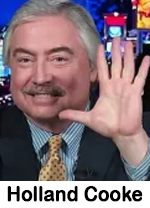
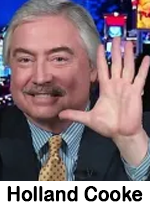
By Holland Cooke
Consultant

imIf you’ve been seeing CES coverage on network and cable newscasts this week, you’ve heard it called “the Consumer Electronics Show,” despite we-the-media being told not to. They want us to say “CES,” although, years ago, the Consumer Electronics Association changed its name to the Consumer Technology Association, not its first rebrand.

Back in 1924, it was the Radio Manufacturers’ Association, and eventually it became the Radio & Television Manufacturers’ Association. For all those years – and for decades after it morphed into the CEA – this organization advocated for companies that made… things.

Back-to-the-future: Many of the big stories at CES2024 aren’t about products that come in a box. Artificial Intelligence is big here this year, nonchalantly referred to as “AI.” But – because we should avoid initials that aren’t self-explanatory – you’re hearing CES called “the Consumer Electronics Show;” and smart reporters use “Artificial Intelligence” on first reference.

And one particularly insightful session I attended got me thinking about radio’s “initials.” When we say our call letters, do listeners think about what we were, or what we can do now do?

“All Media is Social Media” panelist Isabel Perry, VP of emerging technology at pioneering digital agency DEPT said a mouthful, in a savvy British accent: “Your brand is not what you tell your customers. It’s what your customers tell each other about you.” And declaring that “media is now communal,” fellow panelist and former TikTok executive Melissa Eccles urged “Invite people to participate.”

Robotic music stations with too many commercials are disadvantaged. Swifties don’t need FM to hear Taylor. She’s already on their phones…and Alexa, and SiriusXM, and YouTube, and streams. Talk radio that’s I-talk-you-listen is a caricature. Media consumers expect to interact. As Larry King said, “I never learned anything while I was talking.”

Yes, there are huge TVs and flying cars here, and CES is still gadget heaven. But 100 years ago – when families sat around large AM receivers, seeming to watch what they were hearing – simply broadcasting at-them was a business. I leave Las Vegas reaffirmed that ENGAGING people is now, in gambling parlance, table stakes.

Covering CES this week for TALKERS, I’m also offering stations 60-second reports. Help yourself at HollandCooke.com.

Holland Cooke (HollandCooke.com) is a consultant working at the intersection of broadcasting and the Internet. He is the author of “Close Like Crazy: Local Direct Leads, Pitches & Specs That Earned the Benjamins” and “Confidential: Negotiation Checklist for Weekend Talk Radio.” Follow HC on Twitter @HollandCooke

Industry Views

Benztown CEO/Founder Andreas Sannemann is This Week’s Guest on Harrison Podcast

The CEO/founder of Benztown, one of the world’s most successful creators and suppliers of radio station jingles and imaging, Andreas Sannemann is this week’s guest on the award-winning PodcastOne series, “The Michael Harrison Interview.” Sannemann is a leading international audio imaging specialist, composer and entrepreneur based at Benztown’s European headquarters in Stuttgart, Germany. He joined forces with Dave “Chachi” Denes (who is a past guest on this podcast) and Oliver Klenk in 2008 to form the company.  Benztown’s American headquarters are located in Glendale, California. The international production giant provides imaging and other types of programming content and branding to radio stations in the United States, Germany, England, Australia, New Zealand, and more servicing over 2,300 affiliates on six continents. Audio imaging for the 21st Century and beyond – that’s Sannemann’s mission! Michael Harrison says, “I’ve been talking with broadcast industry leaders around the globe, as we lead up to the United Nations ‘World Radio Day 2024’ on February 13, to acquire a greater comprehension of the massive scope of this medium beyond the US. Sannemann and I discuss the state of radio around the world from his knowledgeable perspective in Germany.  I’ve always had a special place in my heart for jingles and imaging. The audio jingle has gone through many incarnations over the years, but our modern world has not grown so sophisticated as to relegate them to being a relic of the past. Catchy, ear-wormy jingles are still a major part of product branding, and this continues to be a rich and valued tradition in the radio business where personalities, shows and especially stations regularly present a harmonic group of people singing names and call letters. Jingles and imaging are a key part of the radio ‘esthetic.’ Radio-lovers and audiophiles will find this conversation illuminating.” Harrison is serving as executive advisor to UNESCO for “World Radio Day 2024.” Listen to the podcast in its entirety here

Industry Views

CES2024: AI, Sustainability, “TV,” Inclusivity

By Holland Cooke
Consultant

imAfter 4G enabled Uber and other apps now-common, inventors are flexing 5G. And grab-the-armrest for what 6G and 7G will bring. Just when we’re blasé about Wi-Fi, we are told that Li-Fi will use light to transmit data.

Artificial Intelligence? ChatGPT was training wheels. AI’s impact is just beginning to unfold. As it does, Consumer Technology Association research points to concerns over privacy, disinformation, safety, and job loss. 74% believe the federal government should regulate AI safety.

Sustainability is huge here: Solar panels – some are small foil strips — will replace batteries in many applications. And we’re seeing a cube-shaped portable inflatable “smartfarm” that can grow produce anywhere.

What we used to call “a television” becomes the Intelligent Hub for your home, connecting with appliances, security cameras, and thermal imaging for tele-health. It’s an e-commerce platform, like your smartphone… interactive – like betting on live games – and with immersive experiences Netflix is rolling out.

Inclusivity is big business at CES: We’re seeing hearable glasses for people who are vision AND hearing impaired, including some “chic” designs. And lots of tech here helps us as we age. With women’s health a $1.2 trillion market, mattress sensors can trigger cooling during menopause. And Artificial Intelligence will bring drug discovery breakthroughs.

I’m reporting for TALKERS readers, every day this week. Help yourself to today’s report here: http://getonthenet.com/CES2024-Thursday.mp3. It can air until Friday. And I’ll be posting daily 60-second reports you can download at HollandCooke.com.

Holland Cooke (HollandCooke.com) is a consultant working at the intersection of broadcasting and the Internet. He is the author of “Close Like Crazy: Local Direct Leads, Pitches & Specs That Earned the Benjamins” and “Confidential: Negotiation Checklist for Weekend Talk Radio.” Follow HC on Twitter @HollandCooke

Industry Views

CES2024: Tech Trends Research Revealed

By Holland Cooke
Consultant

imHello from Las Vegas, where your undaunted correspondent dutifully suffered the long, long line snaking through the ballroom corridors at Mandalay Bay for what is, each year, a data feast: the Consumer Technology Association’s “Tech Trends to Watch” presentation.

Appetizers:

– After 4G enabled Uber and other applications now common, inventors here are flexing 5G. And grab-the-armrest for what 6G and 7G will bring. Just when we’re blasé about Wi-Fi, we’re told that Li-Fi will use light to transmit data.

– Artificial Intelligence: ChatGPT was training wheels. AI’s impact is just beginning to unfold. As it does, CTA research points to consumer concerns over privacy, disinformation, safety, and job loss. 74% believe the federal government should regulate AI safety.

– Sustainability: Solar panels of all shapes and sizes will replace batteries in many applications. A foil strip on your dog’s collar powers the tag you use to call him from your smartphone. And we’re seeing an inflatable portable smartfarm.

– Inclusivity: Fitness trackers for the wheelchair-bound. Hearable glasses for those vision AND hearing impaired, “chic” designs. Lots of tech for the aging, including…

– Health + Wellness: With women’s health a $1.2 trillion USA market, mattress sensors trigger cooling during menopause. AI will bring drug discovery breakthroughs.

– Mobility: EV goes marine with the Mercury 30E outboard. We’re seeing E-bikes and construction equipment. Critical issues: peace-of-mind about battery range and quicker charging, and “values” choices about using less gasoline.

– TV becomes the Intelligent Hub for your home, connecting with appliances, security cameras, and thermal imaging for tele-health. It’s an E-commerce platform “like a smartphone ecosystem.” More interactive (betting on live games), and immersive experiences Netflix will roll-out.

– Audio? CTA research points to a “rising growth in older podcast listeners:” and how podcasters will monetize superfans.

Here’s the entrée (I hope you’re hungry):

https://cdn.ces.tech/ces/media/pdfs/2024/ces-tech-trends-preso.pdf

I’m reporting for TALKERS readers, every day this week. Help yourself to today’s report here: http://getonthenet.com/CES2024-Wednesday.mp3. It can air until Friday. And I’ll be posting daily 60-second reports you can download at HollandCooke.com.

Holland Cooke (HollandCooke.com) is a consultant working at the intersection of broadcasting and the Internet. He is the author of “Close Like Crazy: Local Direct Leads, Pitches & Specs That Earned the Benjamins” and “Confidential: Negotiation Checklist for Weekend Talk Radio.” Follow HC on Twitter @HollandCooke

Industry News

iHeartMedia Expands Partnership with Magnite

iHeartMedia and independent sell-side advertising company Magnite are launching a marketplace that brings together iHeartMedia’s broadcast radio, streaming radio and podcast assets for inclusion in omnichannel programmatic media buys. Built from a custom implementation of Magnite’s SpringServe ad serving technology, the marketplace enables advertisers to transact with a data-driven approach viaim real-time-bidding across iHeartMedia’s broadcast and digital audio inventory through a single activation channel. iHeartMedia chief data officer and president of revenue strategies Brian Kaminsky says, “With today’s consumers spending a third of their media time with audio, expanding programmatic’s access to iHeart’s audio assets is imperative for the industry. Not only are we expanding what role programmatic can play for advertisers, we are also improving the efficacy of their campaigns by allowing them to use real-time data to message their audience in the most engaging way possible, in an environment of trust and interest. We’re excited to expand our partnership with Magnite because they have proven expertise in programmatic and the ability to build technology fit for the unique needs of audio advertising to take its place in omnichannel.”

Industry News

TALKERS News Notes

The new radio program, “Lou Dobbs Tonight,” officially launched on the John Fredericks Media Network. The program airs daily from 7:00 pm to 8:00 pm ET. JFMN says, the program “will provide a platform for robust discussions on politics, culture, and current affairs. The show aims to engage listeners in conversations that challenge conventional narratives and offer a fresh perspective on the issues that matter most. It is a radio news/talk show for lovers of America!”

Triton Digital announces its integration with Amazon Publisher Services, expanding access to premium audio inventory at scale for Amazon DSP advertisers. Triton says, “This integration enables Amazon Ads’ unique interactive audio ads on Alexa-enabled devices to appear across shared APS and Triton Digital publishers, delivering an engaging advertising experience to listeners and enhanced inventory monetization to publishers.”

CNN Audio says award-winning journalist and CNN chief medical correspondent Dr. Sanjay  Gupta “will delve deeper into how weight fits into our understanding of what it means to be healthy in the ninth season of his podcast, ‘Chasing  Life  with Dr.  Sanjay  Gupta,’ beginning January 16.”

AdLarge announces its partnership with Fable & Folly Podcast Network for exclusive ad sales. AdLarge says, “This partnership underscores AdLarge’s dedication to amplifying underrepresented voices within the podcast community. With over 100 audio fiction podcasts, featuring compelling stories ranging from small town conspiracies, to sci-fi comedies, to Dungeons & Dragons improv, the Fable & Folly Network pushes the boundaries of representation in media.”

Industry News

Audacy Files for Chapter 11 and Enters into Restructuring Support Agreement

On Sunday (1/7) Audacy, Inc entered into a restructuring support agreement (RSA) with a supermajority of its debtholders on the terms of a comprehensive restructuring that the company says will “significantly deleverage its balance sheet and further position Audacy for long-term growth.” Through the restructuring, Audacy and its debtholders will undertake a deleveraging transaction to equitize approximately $1.6 billion of funded debt, a reduction of 80% from approximately $1.9 billion to approximately $350 million. The company does not expect any operational impact from the restructuring, and trade and other unsecured creditors will not be impaired. To implement the deleveraging transaction contemplated in the RSA, Audacy and certain of its subsidiaries commenced prepackaged Chapter 11im proceedings in the United States Bankruptcy Court for the Southern District of Texas and has filed a proposed Plan of Reorganization that incorporates the terms of the RSA and is subject to approval by the Court. Under the terms of the RSA, a supermajority of debtholders committed to vote in favor of the Plan, which, when approved, will reduce Audacy’s funded debt from approximately $1.9 billion to approximately $350 million. Audacy’s debtholders will receive equity in reorganized Audacy. Audacy expects that the Court will hold a hearing to consider the approval of the Plan in February and to emerge from bankruptcy once regulatory approval is obtained from the Federal Communications Commission. Audacy has filed with the Court a series of customary “First Day Motions” to obtain Court authority for the Company to continue operating its business in the ordinary course without disruption to its advertisers, vendors, partners or employees. Audacy expects to operate normally during this restructuring process under its current leadership team. During the Chapter 11 process, certain of Audacy’s existing lenders have committed to provide $57 million in debtor-in-possession (“DIP”) financing, comprised of $32 million of a new term loan and a $25 million upsize of the Company’s existing accounts receivables financing facility from $75 million to $100 million. Subject to the Court’s approval, the DIP financing and the Company’s cash from operations and available reserves is expected to enable Audacy to fulfill commitments to employees, advertisers, partners and vendors. Audacy common stock will continue to trade over-the-counter under the symbol “AUDA” through the pendency of the Chapter 11 process. The shares are expected to be canceled and receive no distribution as part of Audacy’s restructuring. Audacy chairman, president and CEO David J. Field states, “Over the past few years, we have strategically transformed Audacy into a leading, scaled multi-platform audio content and entertainment company through our acquisition of CBS Radio and by building leading complementary positions in podcasting, audio networks, live events, digital marketing solutions and our direct-to-consumer streaming platform. While our transformation has enhanced our competitive position, the perfect storm of sustained macroeconomic challenges over the past four years facing the traditional advertising market has led to a sharp reduction of several billion dollars in cumulative radio ad spending. These market factors have severely impacted our financial condition and necessitated our balance sheet restructuring. With our scaled leadership position, our uniquely differentiated premium audio content and a robust capital structure, we believe Audacy will emerge well positioned to continue its innovation and growth in the dynamic audio business.”

Industry News

Nielsen Releases December 2023 PPM Survey Data

imOver the Christmas and New Year’s holiday break, Nielsen Audio released data from the December 2023 ratings period for all 48 PPM markets that covered November 9 through December 6. TALKERS magazine managing editor Mike Kinosian presents his Ratings Takeaways from all PPM markets. Some of the notable ratings stories from the December 2023 period include in New York City, Red Apple Media’s news/talk WABC falls two-tenths to a 2.8 share (weekly, 6+ AQH share) good for the #11 rank, while iHeartMedia’s news/talk WOR also dips two-tenths to a 1.1 share and remains ranked #22. In Washington, Cumulus Media’s news/talk WMAL-FM, sheds 1.1 shares for a 3.5 share finish that leaves it ranked #9, while Hubbard Broadcasting’s all-news WTOP-FM falls a half share to a 6.9 share but remains ranked #3. In Seattle, Bonneville’s news/talk KIRO-FM loses six-tenths for a 4.1 share finish and falls to the #9 rank, while the company’s sister news/talk KTTH-AM is steady with a 1.6 share good for the #22 rank, and Lotus Communications’ talk KVI-AM, rises one-tenth to a 1.6 share and ties for the #22 rank. In San Antonio, iHeartMedia’s news/talk WOAI falls four-tenths to a 2.7 share but remains ranked #14, while Alpha Media’s news/talk dips two-tenths to a 2.0 share that leaves it ranked #19. In Orlando, iHeartMedia’s talk WTKS-FM loses three-tenths for a 3.6 share finish but remains ranked #10, while Cox Media Group’s news/talk WDBO-AM sheds four-tenths for a 3.2 share and stays locked in the #13 rank. And in Milwaukee, iHeartMedia’s news/talk WISN finishes its third month in a row at #1 even though it lost 1.1 shares to finish with a 9.6 share, while Good Karma Brands’ news/talk WTMJ-AM is down one-tenth for a 7.6 share that pushes its back to the #3 rank. See Mike Kinosian’s Ratings Takeways from all 48 PPM markets here.

Job Opportunity

Zimmer Marketing Seeks PD for KZRG, Joplin, Missouri

Zimmer Marketing has a rare opening for program director for news/talk KZRG-AM, Joplin, Missouri. The company says, “KZRG has facilities typically found only in Top 30 markets, a strong staff, and location in an affordable, growing, mid-sized market. You’ll have a huge voice in programming as well asim flexibility rarely found in corporate-structured environments.” Duties include: Managing the station’s audio image via branding, focusing on timely and frequent updates; overseeing social media and creating content that relates to the station’s brand and target audience; hosting a daily on-air shift; proficiency with Google’s G Suite, Selector, and Wide Orbit Automation system; and coaching staff. Learn more at https://zimmermarketing.com/. Send your resume and audio to Mark Zimmer at: mark@zrimarketing.com

Industry News

F.P. Santangelo Joins “95.7 The Game”

Former MLB player and Bay Area sports personality F.P. Santangelo joins Audacy’s KGMZ-FM, San Francisco as a part-time host, according to a story in the San Francisco Chronicle. Santangelo was host of the evening show on Cumulus Media’s crosstown sports talk KNBR until November when he andim several other KNBR staffers were released from the station in a budget move. Santangelo’s first shift on “The Game” will be as a fill-in host for Dan Dibley on the afternoon drive show “Willard and Dibs” tomorrow (12/21). Also let go from KNBR last month was digital team member Jake Hutchinson, who recently joined “The Game” in a similar capacity. He says, “I am truly grateful to Audacy and 95.7 for this opportunity and recognition of what I bring to the table. The people I’ve worked next to from 95.7 have always been motivated, innovative and encouraging. They were enormously fun to share press boxes and interview rooms with, and I am ecstatic to now be able to work with them.” Read the San Francisco Chronicle piece here.

Industry News

Remembering Jim Ladd

imAs TALKERS magazine reported yesterday, rock radio personality Jim Ladd died over the weekend at age 75 after suffering a heart attack. In remembering Ladd and his contributions to the radio industry, TALKERS magazine managing editor Mike Kinosian presents a profile piece on Ladd that he wrote years ago while serving as special features editor for Inside Radio. Read the entire piece here.

Features

Ladd Have Mercy

imLOS ANGELES – As students, enthusiasts and caretakers of this wonderful medium, we’re keenly aware that radio’s “Golden Age” boasted an incredible array of entertainers and broadcasters.

With lifestyles, technology and society being what they are today, it’s almost inconceivable to imagine that families would actually gather around the radio and attentively listen – and indeed hang onto – each and every word that emanated from that mysterious entertainment-laden box sitting in the living room.

Fundamentally important back then, of course, was a concept known as “Theater Of The Mind.”

No one embodied and personified it better than one of the bigger-than-life talents of that era: Orson Welles.

Most are familiar with his epic “War Of The Worlds.”

Pictures Set In Songs

The list of other outstanding “Mercury Theater” presentations Welles was responsible for is much too lengthy to cite here, but his legendary “Theater Of The Mind” mystique lived on nightly in Los Angeles, where Jim Ladd was a welcome guest for Southern California listeners dating back to 1969 and hosted a regular show on SiriusXM’s Deep Tracks channel the past 11 years.

Theater Of The Mind so perfectly describes what Ladd tried to do, although it’s not radio drama in the pure sense. “What I [attempt] at night is to show you pictures and do that by playing sets of songs,” the (then) highly popular KLOS-FM, Los Angeles 10:00 pm – 2:00 am personality remarked to me. “If you follow the lyric content of each song, as well as the song’s emotional feel, it should tell you a story with a beginning, middle and end. Thus, it’s theater.”

Throwback To Creativity

In addition to providing his special spin to Theater Of The Mind, Ladd was also responsible for keeping another bit of radio history on life-support.

Most air personalities are required to adhere to strictly enforced music lists, but Ladd’s nightly, four-hour, Los Angeles air-shift was a throwback to the days of “free-form” radio.

The result was similar to what existed in April 1967, when a new phenomenon started taking shape. “That was the beginning of FM and this multi-billion dollar industry,” Ladd recalled. “[Free-form] started on a station [KMPX, San Francisco] where the phone was literally disconnected, because they couldn’t pay the bill. [Tom Donahue] had an idea; he went there and it took off. For a while before deregulation, that’s what all FM radio did in any market. Free-form worked great, until they killed the golden goose.”

Right Place, Right Time

Southern California native Ladd was extremely fortunate to have been able to launch his radio career in the country’s second-largest market. “Part of it was timing,” he admitted. “I was at a little station in Long Beach [KNAC-FM] that decided it was going to try this new, hippie, underground thing. They didn’t know what it was, but [the feeling was to] hire some hippies and see if they could make some money with it. I happened to be right there at that time.”

A frustrated musician, who wanted to be a songwriter, Ladd recounted a life-altering conversation he and a buddy had in a car. “My friend said that I should be in radio. I was 19 or 20 at the time and your friends at that age seldom notice anything but themselves. For some reason, that stuck with me. Thank God, FM was in its infancy and they’d take complete novices like me off the street and give us shows. Owners didn’t know anything about the Grateful Dead or The Who, but we did.”

Check Mate

Instead of walking into a studio and following a computer-generated music log, Ladd was given freedom to use his imagination. His only preparation was what was happening in life.

Resulting sharp, clever music sets he composed weren’t written out in advance. “The way I work is to turn the music up loud and get the song working on me,” he commented. “Once [that happens], it keys in my mind what will fit next.”

Such an intricate process included a mental checklist. “I’ve figured out the lyrics will work, but I need to know how the song I’m playing ends and how the next song begins,” he explained. “If I’m playing a balls-out rocker, I can’t go into some acoustic piece. In that way, it’s really like a chess game. I have to plan these things to start every single segue as I’m doing it. That’s the way that works best for me.”

There were nights, however, that Ladd knew that he “[didn’t] have it,” but as he maintained, “I’ve been doing it long enough to put on a good professional show. Sometimes, I don’t have what I’m striving for, which is to make a connection with the audience. Without having to prompt them or explain anything, my audience lights up the phones. They call because they get what I’m doing. Once that connection is made, then look out, because the rocket is taking off.”

Gracefully Handling The Tragedy

Recalling the horrific September 11, 2001 “Attack On America,” Ladd noted that although it was one of the country’s greatest tragedies, “It was easy to immerse myself into something like that. It so moved me that I had no problem thinking of songs to play or what I wanted to say.”

Judy Collins’ version of “Amazing Grace” was the first song he played when he went on the air that night. “Believe it or not, it set the tone for what I did for … the next two weeks.”

As it usually did, the audience – even or perhaps especially in this painful period – stepped up to the plate. “This is the thing about free-form radio that’s so precious to me,” Ladd emphasized. “Nobody called me on 9/11 with an idiot request. When I played sets of 9/11 songs, everybody was calling in with [appropriate] suggestions. Second only to dealing with the tragedy, the hardest part was to know when I could play groups like AC/DC again. I found that very difficult; you can only feel your way through it.”

 Loyal Listeners

In his third tour of duty at (then ABC-owned) classic rocker KLOS, Ladd was a legitimate cult figure in the Southland for his work at legendary cross-town rocker KMET.

Southern California listeners were stunned on Valentine’s Day 1987 when the “The Mighty Met” (now Audacy smooth AC KTWV) – became smooth jazz “The Wave.”

Also on Ladd’s impressive resume were stints at Los Angeles outlets KLSX and KEDG.

The notion of an air personality “connecting” with the audience is both elementary and elusive. Ladd was a rare case of a non-drive time music personality who amassed a loyal, vocal following.

Grateful for such audience allegiance, Ladd didn’t take it for granted. “My audience has been that loyal from KMET to KLOS and all the [other] stations in between. My part of the bargain is that I won’t lie to them or let them down by doing a format. I was off the air twice in my career for two years each. That was very difficult, but because I did that, I’ve earned the right to do this and I think the audience responds to that.”

Offered jobs by stations that wanted the “Jim Ladd” name, he opined, “They didn’t understand what that meant. They thought they could just plug in my name, not let me do what I did and it would be the same thing.”

Your Attention Please

Evenings and nights were Ladd’s domain throughout his career. “I wouldn’t want to do middays or afternoon drive,” pointed out the personality known for his “Lord have mercy” exclamations. “Listening habits are such that you can’t sit and listen like you can at night. People are working, picking up the kids and doing life.”

Much like Welles’ Mercury Theater, Ladd’s show required attention. Otherwise, it was just like playing one song after another, without making that all-important connection. “The audience’s side of the bargain is that they have to bring their attention to the show,” he insisted. “I’ve done [6:00 pm – 10:00 pm] in my career and that worked out very well. The show is a bit different, in that, it’s not quite as eclectic. I don’t know if I’d be playing Judy Collins and Johnny Cash in [that time]; maybe – but maybe not.”

Convinced his free-form style could be utilized elsewhere, Ladd, nevertheless, pondered that to his knowledge, “I’m the Alamo – the last guy standing. That’s certainly the case in a major market. The big tragedy is that there are so many talented [personalities] who, although they wouldn’t do the same show that I do, could do free-form radio. We’re losing all that talent. I’m not the only guy in the world who can do it. I’m the one who was stubborn enough to say that I won’t follow a list – I just won’t do it.”

Powerful Trinity

Among those who influenced Ladd’s on-air style were former MTV personality and ex-KEDG program director J.J. Jackson; veteran Los Angeles air talent Raechel Donahue, who went on to do 7:00 pm -12:00 midnight in Denver at KQMT “The Mountain”; longtime KMET personality the late B. Mitchel Reed; KMET’s Pat Kelley; Cynthia Fox; Jack Snyder; and the late, underrated Mary Turner. “The wonderful, beautiful part of free-form radio – and most importantly – at KMET was that it wasn’t about being a star,” Ladd asserted. “What we were doing was our part of the ‘social revolution’ at the time. It was like a triad: The people on the street, the music, and us. We took the message of Dr. [Martin Luther] King and combined it with the music of Bob Dylan.”

One highly significant aspect in noting those former KMET staffers was that they’d each listen to everyone else’s show and it elevated their own game. “I’d hear Cynthia do a great segue, or Mary would do a great segment and that would inspire me,” Ladd enthused. “What I miss most is that kind of camaraderie – it’s just me now. I can’t tune in to hear someone else’s great segue. When I heard one of my colleagues do something that touched me, the first thing I wanted to do was to call them and tell them it was great. The second thing was that – from their subject matter – I got 15 different ideas to use when I got to work that night. That was the beauty of it.”

Role Model

National audiences became aware of the iconic Los Angeles talent through shows such as “Innerview,” “Headsets,” and “Jim Ladd’s Living Room.”

Considerably more than someone who voiced a script for a syndicated show, Ladd spent a great deal of time scrutinizing the fine art of interviewing. “I ripped off just about everything I know about interviewing people from Elliot Mintz,” he confided to me. “Elliott was my role model. He’d interview the Shah of Iran one week and John Lennon & Yoko Ono the following week. He’d talk with everyone in a warm, low-key and intelligent manner. It was completely unlike anything [else] I’d heard at the time and that really impressed me.”

The “Innerview” show had an 11-year run and was carried by 160 stations. “It was the first of its kind,” boasted Ladd, whose other syndication work involved voiceovers for an overseas television show. “I’m very proud of the work we did [on ‘Innerview’]. I did 99% of the interviews in the front room of my house in an artistic community in Laurel Canyon. People would immediately be put in a very comfortable place. It’s not a studio – it’s my home.”

The Work Is The Key

Another reason why people felt at ease was that, instead of focusing on a person’s life, Ladd addressed their work. “They loved that. Rather than talking about how many girls they had, what kind of drugs they did and life backstage, I studied every word of every lyric of the new album they wanted to talk about and grilled them about their songs on the environment. It would require six to eight hours of preparation. Then there was another 20 – 25 hours to write the one-hour show; it was a lot of work.”

Writing became such a worthwhile experience that, in 1991, he penned “Radio Waves: Life And Revolution On The FM Dial.”

As a result of these syndicated projects, this immensely respected rock personality diversified himself; the book became a big hit. “I guess I’m a radio guy who learned how to become a writer,” Ladd mused. “In order to get up enough courage to write my book, I read authors I like. I was required to do a great deal of writing for ‘Innerview’ and would write out what I’d say – which is something I never do [on my live show]. You’d also end up with two hours of tape and pick out what the person was going to say, how I was going to introduce it and what song would follow it.”

A Distant Second

Whenever anyone asked Ladd to name his favorite band, he qualified his answer by separating the Beatles.

The quartet, he stressed, had to be placed in a completely different category.

After that’s been done, he named the Doors as his favorite.

The same applied to his most memorable radio experiences, with KMET being the Beatles’ equivalent. “We were at the right place at the right time with the right people. We loved each other and there’s never been anything else like it.”

Nonetheless, he quickly stated that his favorite time is the next time he was able to sit behind a microphone. “The reason for that is [KLOS’-then program director] Rita Wilde,” he proclaimed. “I don’t know how I got so lucky to have a boss who was [such a great on-air personality] and so supportive. If it weren’t for Rita Wilde, I wouldn’t be on the air – that’s just a fact. I want to keep free-form radio alive for the audience, but I also owe her to make this happen. She’s under a lot of pressure [when it comes to my show]. When I go in at 10:00 pm, the format literally stops. I can’t think of another boss in the world who would understand that.”

Numbers Game

His multi-decade Los Angeles track record and loyal following notwithstanding, Ladd still realized that ratings played a role in dictating his employment; however, as he declared, “Rita is one of the first people I’ve ever worked for in this business I trust when she says the numbers are up or down.  Sometimes in my career I’ve found out from people who didn’t work at the station that my show was doing great. When there’s a down book, [management is usually] right there.”

Ultimate People Skills

Certain managers and programmers, he claimed, kept good books a secret from him; however, “Rita calls immediately when I have an up book. If I have a down book, I don’t hear from her; I have to call her. That says volumes to me. We’ll deal with a problem, but she doesn’t want to get me upset. She might tell me that I’m playing too much of this or not enough of that, but she never says anything [threatening]. It’s always from a helpful and suggestive [stance]. When the numbers are good, she leaves me totally alone. From my perspective, you can’t ask for more than that. Her people skills are unbelievable.”

In addition to have wanted to keep free-form radio alive as long as possible, Ladd disclosed that he wanted “to walk away before I can no longer do my job. I don’t know when it will happen, but the next stage in my life will probably be to write fulltime – I’m working on it.”

Contact TALKERS Managing Editor Mike Kinosian at Mike.Kinosian@gmail.com

Industry News

GBH News Establishes Equity and Justice Unit

GBH News announces the creation of a new multiplatform unit that will focus on racial and socioeconomic equity issues in Greater Boston and beyond. GBH says the Equity and Justice unit will develop regional and national interest stories around these key topics, expanding its commitment to community events, engaging directly with the audience, and elevating community voices using the GBH News platform. GBH president and CEO Susan Goldberg says, “Shining a light on inequity – whether around healthcare, housing, income, or other topics – is an important job for our news organization. As the nation’s largest producer of public media content, we want to ensure awareness of these pressing issues is woven into the stories we tell, the way we work, and the platforms on which we share news and information.”

Industry News

Cox Media Group Promotes Two Executives

Cox Media Group announces the promotion of two senior leaders who “support the company’s commitment to local journalism and service to the communities they serve.” Misti Turnbull is elevated to vice president of news and Jordan Cipala is named vice president of strategy & operations. Turnbullim most recently served as executive director of news with a focus on broadcast, digital content, and streaming content. CMG EVP of content, product, innovation, and research Marian Pittman says, “Misti understands CMG’s pursuit of journalism excellence. Her knowledge of multi-platform content strategies and imaudience insights makes us better every day. She exemplifies the power of dedication and what it takes to be the best.” In his new role as VP of strategy & operations, Jordan Cipala will be responsible for evaluating business development opportunities, bolstering CMG’s market-intelligence capabilities, managing M&A and integration efforts, and supporting more streamlined collaboration and execution across CMG’s business units. CMG president and CEO Dan York comments, “Jordan has been an indispensable member of the CMG team in leading our annual strategic planning process, supporting our Board interactions, and operationalizing our M&A efforts. We’re thrilled to promote from within and reward his invaluable expertise and dedication to CMG’s future and continued evolution.”

Industry News

Binnie Media Promotes Sales Executives

Binnie Media announces that Eliza Tremblay is been promoted from general manager of the Seacoastim cluster of radio stations to the director of sales operations for the state of Maine. At the same time, Bronwyn Lapointe is promoted from managing outdoor properties to director of sales operations for the state of New Hampshire. Binnie imMedia EVP Faith Francis says, “Both Eliza and Bronwyn have been crucial to our success in key areas of the business, and this will give them the ability to affect change on a broader scale. We have created a great work culture here at Binnie Media, allowing people to have flexibility with accountability, and as we all know, women can multi-task!” The company says that late last year Cindi Skillin was promoted to vice president of finance, making Binnie Media’s executive team a dynamic, and diverse group. Binnie president and CEO Massimo Rosati adds, “We love this business, value our people, and always try to promote from within.”

Industry News

Townsquare Promotes Sam Gagliardi to VP of Content for New Jersey Markets

Townsquare Media officially announces the promotion of Sam Gagliardi to vice president of content for the Monmouth-Ocean and Trenton-Princeton markets. In this new role, Gagliardi has oversight of all brands in the two markets, including news/talk WKXW-FM “New Jersey 101.5” and five music brands.im Gagliardi, who goes by Sam Elliot on the air, most recently served as the director of content for Townsquare’s Monmouth-Ocean market. Gagliardi says, “I sincerely thank the leadership at Townsquare – Bill Wilson, Erik Hellum, Jared Willig, and Brian Lang — for this incredible opportunity. Collaborating with the skilled professionals at the iconic brands of ‘New Jersey 101.5’ and PST presents an amazing opportunity. I am excited about working with such a highly talented group and look forward to engaging in collaborative efforts with the fantastic on-air and online creators at the Jersey Shore.”

Industry News

Affiliate Sales Pro Tim McDonald Retires

Imaging and voiceover firm Benztown announces that longtime affiliate sales pro Tim McDonald is retiring from the radio business after a successful 40-year career. McDonald joined Benztown in 2019 as a member of its affiliate sales team. Benztown president Dave “Chachi” Denes says, “I’ve learned immensely from Tim. He’s contributed greatly to our success and I’m thankful to have worked with him over the last five years. We thank him for sharing his talents with us and wish him every success in his next chapter.”

Industry Views

Pending Business: When the Package Doesn’t Work

By Steve Lapa
Lapcom Communications Corp
President

imIt happens to everyone at least once.

You present your package with every asset at your disposal to make the campaign a winner – host read radio, podcast, X(Twitter), Instagram, Facebook, YouTube, and anything else at your disposal. You work with your manager for pricing, coordinate the digital team for input, and touch base with your business department for the all-clear. Your presentation is an award winner, your enthusiasm is contagious and the deal closes. The campaign launches and to your shock and dismay the feedback from your client is utter disappointment as results are anemic. You verify everything is running properly, digital and social media are coordinated, yet the anticipated tsunami of results is barely a rain shower.

Are you kidding me right now? What in the world happened? A little history and a little reality will help you right the ship.

It’s been 60 years since Marshall McLuhan taught us the “medium is the message” and arguably became the original disruptor. He was so far ahead of his time, Musk, Zuckerberg, and Altman would be challenged. The bottom line is McLuhan got it right as we still stumble our way through the performance side of the ads.

Let us examine how we package and sell 60 years later.

Mistake #1- All creative is the same. In the example above, I listed 6 common platforms many local hosts utilize daily to spread the word.

A) Sellers focus on packaging scale, competitive efficiency and closing the business.
B) Hosts focus on product and content acceptability.
C) Managers focus on deal points.
D) Traffic and business focus on integrating systems.
E) Production is ready to deliver the deadline.
F) STOP!!!! Who is focused on matching the platform or medium with high impact creative messaging? “50% OFF” is an empty value proposition when there is no product sell-in. Who is making sure EVERY asset is delivering the creativity that engages and motivates the listener/viewer for each medium?

Mistake #2. I got this. Wake up! The multi-platform package is more complicated than the beta binomial curve for duplication. Oops, did I lose you? The concept is the radio listener may or may not be the podcast listener who may or may not be the YouTube viewer, who may or may not be the Facebook follower, and so on. You are the sales pro who put this package in motion, yet did you stop to think through: Does each medium have a unique campaign with different frequency, creative updates and feedback loops? Do you have any idea how many daily tweets it takes to sell that product or service? Or are you applying branding metrics to sales goals? And that is just the beginning.

We often forget, YouTube, Facebook, Instagram, are barely 20 years old and we are still learning. Yet our terrestrial radio station heritage goes back over 100 years, so you think, “I Got this.” To paraphrase the great Marshall McLuhan, don’t drive into the future using only a rear-view mirror.

Steve Lapa is the president of Lapcom Communications Corp. based in Palm Beach Gardens, FL. Lapcom is a media sales, marketing, and development consultancy. Contact Steve Lapa via email at: Steve@Lapcomventures.com.

Industry News

Round Four of November PPMs Released

imThe fourth of four rounds of ratings information from Nielsen Audio’s November PPM survey has been released for 12 markets including Austin, Raleigh, Indianapolis, Milwaukee, Nashville, Providence, Norfolk, Jacksonville, West Palm Beach, Greensboro, Memphis, and Hartford. The survey period covered October 12 through November 8. Today, TALKERS magazine managing editor Mike Kinosian presents his Ratings Takeaways from this group of markets. In Milwaukee, iHeartMedia news/talk WISN adds a full share for a 10.7 share (weekly, 6+ AQH share) finish that keeps it ranked #1, while Good Karma Brands news/talk WTMJ loses 1.9 shares for a 7.7 share but remains ranked #2. In Nashville, Cumulus Media news/talk WWTN-FM is flat with a 5.7 share and remains ranked #5, while iHeartMedia news/talk WLAC-AM inches up one-tenth and remains ranked #19. In West Palm Beach, Hubbard Broadcasting news/talk WFTL adds four-tenths for a 2.7 share and stays locked in the #9 rank, while iHeartMedia talk WZZR-FM adds two-tenths for a 2.0 share and climbs to the #11 rank, and iHeartMedia’s news/talk WJNO is flat with a 1.2 share but falls back to the #15 rank. See Mike Kinosian’s complete Ratings Takeaways from this group of markets here.

Industry News

Sean Hannity’s DeSantis vs Newsom Debate Averages 4.75 Million Viewers

The FOX News ChannelDeSantis vs. Newsom: The Great Red vs. Blue State Debate” show that was aired last week was the second most-watched program in linear television, averaging a total of 4.75im million viewers, according to data from Nielsen Media Research. The Sean Hannity-hosted program pulled in 742,000 viewers in the 25-54 demo, which FNC says represented nearly 73% of the cable news share in total viewers and 77% of the cable news share in the key demo. Additionally, the Hannity-hosted post-debate show earned 3.4 million total viewers and 541,000 in the A25-54 demo.

Industry News

Round Three of November PPMs Released

imThe third of four rounds of ratings data from Nielsen Audio’s November 2023 PPM survey has been released for 12 markets including Portland, Charlotte, San Antonio, Sacramento, Pittsburgh, Salt Lake City, Las Vegas, Orlando, Cincinnati, Cleveland, Kansas City, and Columbus. The survey period covered October 12 through November 8. Today, TALKERS magazine managing editor Mike Kinosian presents his Ratings Takeaways from this group of markets. In Portland, Alpha Media news/talk KXL-FM is flat with a 6.9 share (weekly, 6+ AQH share) but rises to the #2 rank, while iHeartMedia’s crosstown news/talk KEX-AM dips one-tenth to a 1.6 share and remains ranked #21. In San Antonio, iHeartMedia news/talk WOAI adds three-tenths to finish with a 3.1 share but falls back to the #14 rank, while Alpha Media’s news/talk KTSA declines four-tenths to a 2.2 share and slips to the #17 rank. In Salt Lake City, Bonneville news/talk KSL-AM/FM loses eight-tenths and wraps the survey with a 6.1 share that leaves it ranked #4, while iHeartMedia news/talk KNRS-AM/FM rises a full share to a 3.9 share and leaps to the #9 rank. See Mike Kinosian’s complete Ratings Takeaways from this group of markets here.