Industry Views

Pending Business: In Radio Sales, It Pays to Be a Great Listener

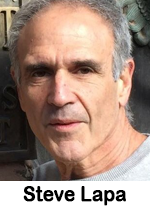
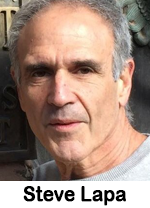
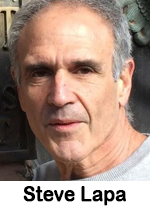
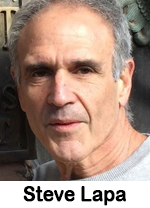
By Steve Lapa
Lapcom Communications Corp
President

Do you still struggle with keeping the dialogue moving in the right direction on your sales calls? Let’s face it, if you are not careful you could violate one of the golden rules of selling talk radio – be a great listener.

First calls are the most difficult, especially in this era of Zoom, Teams, etc. You try your best to develop rapport, build chemistry and move through a needs analysis as you learn about your potential advertiser. High achieving sellers have that special skill of blending questions and fun facts that build common ground while navigating the needs analysis through a range of questions designed to qualify the prospect and confirm a follow-up call.

Sounds simple enough, but why do most sellers fall short in the starting blocks. There is no mystery here to solve, this is Selling 101 that starts with preparation and ends with a commission check. Let’s walk through some start points:

If you are responsible for any of the 26.5 billion minutes viewed of “Suits” on Netflix, you know that Harvey Spector (lead character) earned millions doing homework and knowing how to ask the right questions. How about you? Are you prepared to ask the right questions and listen to the answers that will lead you to comeback with the right proposal? Sometimes keeping the dialogue moving can be challenging. Perhaps you’ve asked too many questions that went nowhere or just resulted in one-word answers. What to do? A recent article in Make It quoted Matt Abrahams, a public speaking expert at Stanford University’s Graduate School of Business, who suggests saying, “Tell me more” during a conversation is the secret sauce behind improving the communication flow.

Makes sense. Showing genuine interest in what your advertiser is saying, allowing more information to be shared, with you spending more time as the listener helps everyone develop better rapport and move closer to a win-win. I have always been a big fan of another Golden Rule of Sales: “Words matter.” Have you ever finished a call and asked yourself, “Why did I say that!?” It all goes back to preparation. If you know what to ask, how to allow your advertiser to expand on a key point, and do more listening than talking, your sales should increase, and your commission checks will show it!

Steve Lapa is the president of Lapcom Communications Corp. based in Palm Beach Gardens, FL. Lapcom is a media sales, marketing, and development consultancy. Contact Steve Lapa via email at: Steve@Lapcomventures.com.

Industry Views

Monday Memo: Gradually, They Know You

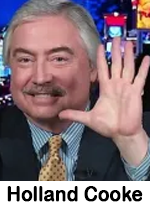
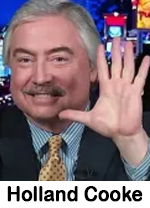
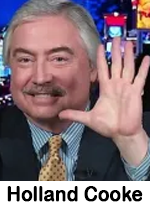
By Holland Cooke
Consultant

imThanks to those who sent comments on last week’s column “Beware The Banter.” For those asking how-much-is-too-much, this follow-up.

The old “Dick Van Dyke Show” depicted the life of TV writers. Collaborators Rob Petrie, Sally Rogers, and Buddy Sorrell spent their workdays in an office, riffing. The weekly script that emerged was careful with show host Alan Brady’s brand. He was a personality viewers came to know, one week at a time.

In offices like that, there’s a living document they call “The Bible.” For that first pilot episode, it might have been a single page of bullet points. A more recent example might have fleshed-out sitcom characters in broad strokes: Jerry is a comedian. He and Elaine used to date, now they’re friends. Elaine is from Maryland and she can’t dance.

Week-by-week, as we come to know these fictitious friends, new details humanize them further, and “The Bible” gets thicker. It guides writers, so they don’t burst our bubble by telling us Elaine is from Connecticut.

im

Similarly, your listeners come to know you, accruing your identity, one anecdote at a time. You may be as-surprised-as-flattered when you meet a listener who plays-back something about your life that you might not even remember sharing.

So, know that they know you. And when the boss or the consultant reminds you how mentally busy listeners are – and encourages you to keep-the-show-moving – you needn’t fret that you’ll sound like Sgt. Joe Friday in “Dragnet.” Final TV reference, I promise.

My point: The litmus test for whatever you share is relatability. I was born on the same day as one of the children of 50+ year WTIC, Hartford morning host Bob Steele, and my dad was forever bonded by his amusing baby stories. They were nuanced references, not longwinded rambles.

Remain humble about listeners’ attention.

Holland Cooke (HollandCooke.com) is a consultant working at the intersection of broadcasting and the Internet. He is the author of “Confidential: Negotiation Checklist for Weekend Talk Radio;” and “Close Like Crazy: Local Direct Leads, Pitches & Specs That Earned the Benjamins.” Follow HC on Twitter @HollandCooke

Industry Views

Pending Business: Still Learning

By Steve Lapa
Lapcom Communications Corp
President

I think it was the great Michelangelo who said, “I’m still learning.” Three simple words that can make or break any of us in marketing.

I am still amazed at the success and customer loyalty at Trader Joe’s. Why is it that a homespun marketing approach develops loyalty, when I have found more competitive prices and sometimes higher quality foods elsewhere?

Yet there I was lost in the regular South Florida Sunday crowd, standing in line, basket-to-basket, ready to check out. I have never heard or seen an ad for Trader Joe’s, yet the store was packed. The scene at the 59th Street store in Manhattan was quite similar last year when I spent three months in the city, or the one in D.C. close to my daughter’s home, even the Trader Joe’s in Sandy Springs, Georgia near my other daughter’s home was slammed on a Sunday three years ago.

Too much information for a column on sales and marketing?  Believe it or not, I still can’t figure out how with no frequent buyer program, super discounts, or incentive marketing I became such a frequent shopper. I guess just like Michelangelo, I’m still learning.

Here is what I have learned from Trader Joe’s that connects the dots to our sales and marketing world.

— Keep it simple. Ever notice how the prices are clear, easy to read and seem to present a perceived value? How does your presentation packaging stand up? Does it take an IT expert to understand how to interpret your computer driven proposals?

— Everyone has something positive to say. I have never heard any of the folks at any of those locations say a negative word, even when parking was a game of musical cars. How about you? Are still blaming the boss for higher pricing or tighter credit?

— Variety is in the eye of the customer. Other stores with more square footage have greater variety. Sometimes you need it, most of the time you don’t. How many times have you thought to yourself, “There are just too many options in this pitch.”

— Got a complaint? We can fix that. Somebody please show us a local radio station training for excellent customer service. It just isn’t a long-term commitment. Maybe a perceived unnecessary expense in our business.

— Consistency. Like every successful enterprise that is public facing, consistency and dependability build trust and customer loyalty. How about us?

Sales and marketing are a dynamic process that is always adjusting to the competitive landscape and the needs of the customer. And that is why we should all follow Michelangelo’s lead and never stop learning.

Steve Lapa is the president of Lapcom Communications Corp. based in Palm Beach Gardens, FL. Lapcom is a media sales, marketing, and development consultancy. Contact Steve Lapa via email at: Steve@Lapcomventures.com.

Industry Views

Monday Memo: Beware the Banter

By Holland Cooke
Consultant

imRadio talkers: What is this hour about? How will listeners benefit from listening? And how long do you expect them to wait to hear that?

To quote Jerry Seinfeld…

“There is no such thing as an attention span. This whole idea of an attention span is, I think, a misnomer. People have an infinite attention span if you are entertaining them.”

Are they entertained hearing about your weekend? About your sidekick/board-op/screener’s weekend? By a long, self-amused, produced show intro? Or are they quickly engaged, by your invitation to weigh-in-on topic du jour? Or by your offering them Q+A access to a guest who can address their concerns?

What if they believe the promos?

 As each day’s news causes us all to wonder “What NEXT???” smart stations methodically invite on-hour listening appointments, for “stay close to the news… a quick update, throughout your busy day.” Whether that’s a network feed or a local newscast, whoever delivers it reckons what is relevant to the lives of the mentally busy, in-car listeners our advertisers want as customers. In consultant-speak, it’s “take-home pay” for tuning-in.

im

They may listen mostly to other stations that play music, but those stations aren’t as informative. So – as the weather forecast signals the end of that on-hour update – can you freeze the driver’s index finger in mid-air between the steering wheel and the button for “Kiss” or “Magic” or “Cat Country?”

 Does your A-block rock?

Most common miscalculation I hear? Extended banter before the first break. A-block ends with (finally) a specific, inviting call-in proposition or teases the guest coming up… after the break, when the show really begins.

Better: Tee-up what’s-up immediately as the hour begins. Try this: Make the very first thing you say a question which includes “you” and/or “your.” Then say hello, and swap takes on that topic with your sidekick/board-op/screener.

One warning: Sounding so-quickly-engaging may divert your screener. The phone’s already ringing.

Holland Cooke (HollandCooke.com) is a consultant working at the intersection of broadcasting and the Internet. He is the author of “Your Trusted Voice: How to Attract New Clients More Efficiently than Competitors Who Spend a Fortune on Advertising.” Follow HC on Twitter @HollandCooke

Industry Views

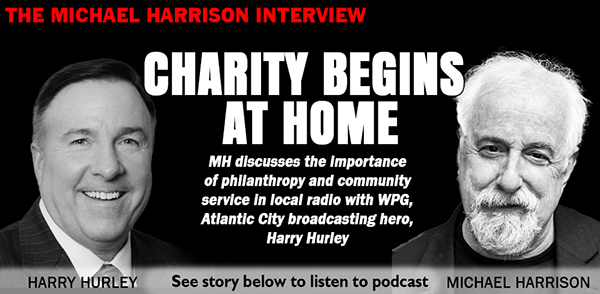
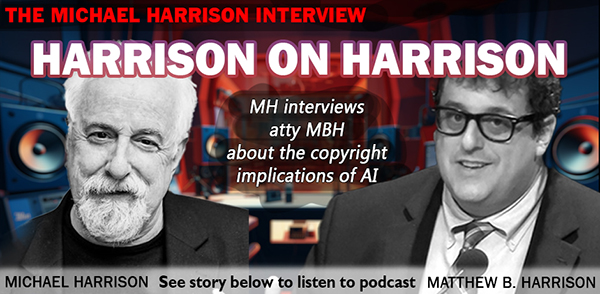
Matthew B. Harrison is This Week’s Guest on Harrison Podcast

Two generations of the Harrison radio family meet on mic discussing the copyright implications of artificial intelligence as Matthew B. Harrison is this week’s guest on the award-winning PodcastOne series, “The Michael Harrison Interview.” Matthew, the son of Michael, is VP/associate publisher of TALKERS in addition to being a media and intellectual property attorney, talent manager and audio/video producer.  His latest productions, “I Got a Line in New York City” (www.igotaline.com) and “My Friend is Going Away” (www.myfriendisgoingaway.com) are experimental exercises in the utilization of AI graphics in the music video genre. On this podcast, Harrison and Harrison bring into focus the somewhat murky application of copyright law in communications and the arts as we hurtle into the frontier age of artificial intelligence. Listen to the podcast in its entirety here

Industry Views

In Pursuit of Younger Demos

By Walter Sabo
Consultant, Sabo Media
A.K.A. Walter Sterling
Radio Host, “Sterling On Sunday”
Talk Media Network

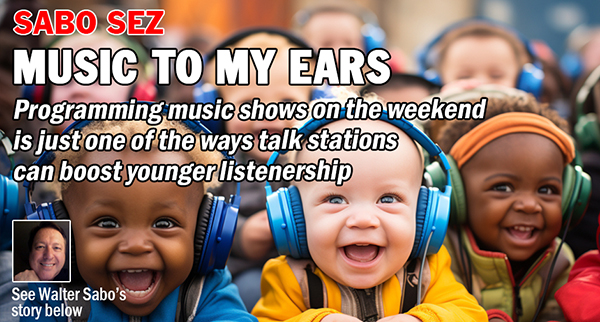
imThe persistent liability of most talk stations is that they attract a high percentage of listeners over the age of 65. Consider that many of those older listeners are attracted to radio shows that are talking for companionship and comfort.
There are simple, tested techniques to incorporate in an on-air presentation that will appeal to a younger listener. If put on the air these tips will also enhance a station’s PPM results.

— Bumper music is unnecessary, it makes breaks seem longer. If it is necessary to use bumper music it should have been recorded after the year 2000. 2000 was obviously 23 years ago. A 35-year-old was 12 in 2000.

— Young people are busy with work, kids, life. They are attracted to radio that matches their pace. The shorter the calls, the younger the callers will be. DO NOT thank callers for holding on – that’s a screener’s job. Thank a caller for holding on and you signal that it takes a long time to get on the air. Busy people won’t call to be put on hold!

— The editorial page of any newspaper has the lowest readership. Comics, horoscope, and entertainment have the highest. Quote the editorial page and you’ll wake up grandpa and scare away the new mom. Did you know Taylor Swift has a new boyfriend?

— Everyone is attracted to mirrors of their lives. We engage with people who have similar problems with their kids, in-laws, jobs, money, car. How would you make a friend at a party? Those techniques will work for you on the air. What did your mother tell you about party talk? “Don’t talk about politics or religion, talk about the weather and the shrimp”

— The easiest way to attract younger listeners and repel older listeners is to play music on the weekend. Targeted, researched music that appeals to the exact audience age you covet. WABC features several music shows on the weekend. Sabo Media’s charter clients include “New Jersey 101.5” and “Real Radio Orlando” They air music all weekend, talk all week.

BONUS: Music on the weekend puts a station on concert, movie, music, club, and bar buys!

Just like a music station, a talk station must present a consistent package of entertainment, topics, news stories, music selection, production elements must appeal to your target listener. No wavering.

im

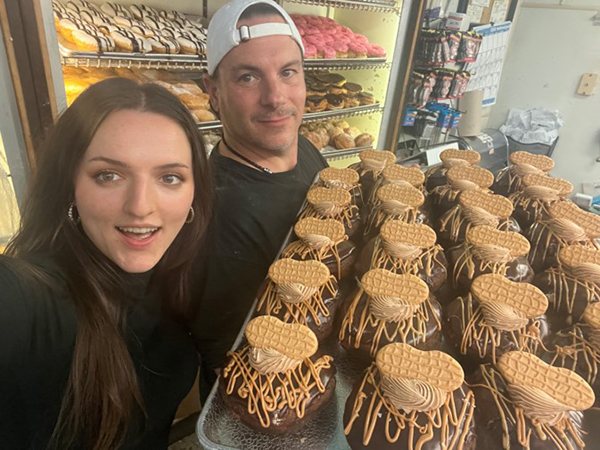
Above is a picture of two of Sterling On Sunday’s loyal listeners. Steven and Casandra of Burlington, NJ. Steven owns the bakery, Casandra works there and is a junior in college.

Walter Sabo founded Sabo Media to work with innovative media companies such as RKO, SiriusXM Satellite Radio, PARADE magazine, Pegasus, Apollo Advisers and others. He produces and hosts the successful talk show, Sterling On Sunday. Last Sunday the topics included how to know what’s in the custard in donuts.www.waltersterlingshow.com. Walter Sabo can be emailed at walter@sabomedia.com.

Industry Views

Pending Business: Demo Talk

By Steve Lapa
Lapcom Communications Corp
President

imAttention news/talk radio sellers! Get ready to meet your new best friend… and it is not who you think it is.
Take a guess. Could it be a mega budget opening up from an advertiser targeting 55+?

No. How about your closest competitor admitting defeat and conceding it no longer makes sense to compete?

Close, but this could be better. This is the part where your new best friend becomes such a giant ally, making your demographic pitch so valid, you are left stone-cold speechless. This is where “The Golden Bachelor” answers the double “Jeopardy” question and you could become the next Ken Jennings of news/talk radio ad sales. Give up? Here is the story line.

The New York Times article “TV Networks’ Last Best Hope: Boomers” saluted, validated, recognized, and just about honored the news/talk radio 55+ audience value proposition. We could be talking about a new day for news/talk radio sellers.

When the highly resourced sales teams from linear network TV begin telling the same demographic value story that news/talk radio sellers have been telling forever, well then, it is time to start popping the champagne in your local sales department.

It seems that linear network TV programmers are finally conceding the 60+ audience is the remaining core audience for your favorite network television programs. According to the article, franchise programs like “Grey’s Anatomy,” and “The Voice” have median viewers over 64. Wait, what? Dr. Meredith Grey and the crew at Seattle Mercy are now appealing to seniors? It may have taken 400+ episodes, but the last man standing is indeed grey! The sellers at NBC, ABC, CBS, and FOX could start singing from the same demographic page as news/talk sellers and the harmonics are sounding wonderful.

Please don’t be silly enough to think this will ever get truly competitive. No friends, this is where everyone wins if the selling stays at the value level. Media habits are changing at mach 4 speed, and nobody knows the change part of the business better than the terrestrial radio business. From fragmentation to consolidation, we’ve seen it all. Is the best yet to come?

Smart radio sales teams will embrace this opportunity. Do you still pitch the “older demo” value proposition with the anecdotal Grace Slick is 83, Mick Jagger is 80, and Elton John is 76? Time to start talking about the scene where 70-year-old Jerry Seinfeld says to 74-year-old Kramer, “I’m movin’ to Florida! You comin’ with me or not?”

Steve Lapa is the president of Lapcom Communications Corp. based in Palm Beach Gardens, FL. Lapcom is a media sales, marketing, and development consultancy. Contact Steve Lapa via email at: Steve@Lapcomventures.com.

Industry Views

Monday Memo: Sell Yourself a Schedule

By Holland Cooke
Consultant

imI asked my pal, longtime radio seller, now retired: “How often were you asked, ‘How much would you charge for ONE commercial?’”

“Many times!” he guffawed. “I told ‘em ‘Keep your money! It won’t work!’” And he would explain to the prospect that repetition is the key to radio advertising.

Pitch like your happiest advertisers

Smart reps schedule commercial flights using the Radio Advertising Bureau’s Optimum Effective Scheduling formula (OES), because “message retention and recall begins after three exposures.”

Don’t stop there. I don’t know WHEN I’ll need to buy a tire, but when that next nail finds me, I know WHERE I will buy, because that retailer advertises enough to own “tires” in my mind. Purchasing a whole car is more foreseeable, and I’ve read that it takes many buyers 90 days to pull the trigger. So, if the copy is just right, always-on always works.

Programmers: Are you selling your station, on its own air, with the frequency we preach to clients? And – no matter how often you freshen your imaging – is the benefit statement as consistent as the many ways “Liberty-Liberty-Libbberty” assures us “you only pay for what you need?”

im

Sales 101: “Your best prospect is…”

Say it with me: “…an existing customer.”

To be clear: Nothing you say on-air will add cume, because the only people who hear your imaging are already listening.

Hey, who wouldn’t want a bigger budget for billboards over the Interstate? But it’s…the Interstate. Many who give it a glance (at most) don’t even live here. Some of those who do might give you a try. And whether they do or whether they don’t, there’s very little you can do to keep them sitting in a parked car, listening. So how can we invite them back more often?

Tip: On-hour news appointments, “a quick [name of network] update, throughout your busy day” as the world we live in has listeners wondering “What NEXT???” This is increasingly useful for music stations, with music now commoditized by non-broadcast competitors.

Rip me off

On-air promos accomplish three things:

— Defining the station, labeling your button in the listener’s mind.

— Asking for more occasions of listening, thus the newscast tip above.

— Listeners REMEMBER having-listened. Not just opportune in diary markets, where we want diarykeepers to round-up. 😉 In PPM markets, awareness drives use. So, in both cases, ratings are a memory test. And this matters even if you don’t subscribe to ratings, because advertisers need prospects to hear that tire commercial multiple times.

So, it’s worth your time to review all imaging and promos now airing. Of each piece, ask yourself: What does this accomplish? Does this convey why/when/how the listener should/can listen more often?

To hear 21 examples of imaging work I’ve done for client stations, click “DO listeners understand why to spend more time with you?” at HollandCooke.com

OK…ONE exception…

I asked my bud, who sold a lotta radio for a lotta years: “What if the request to buy ONE commercial was a pop-the-question surprise, to air when the hopeful groom knew she would be listening?”

“Ka-CHING!” he winked, “and I’d nick him good! You know what that ring cost?”

Holland Cooke (HollandCooke.com) is a consultant working at the intersection of broadcasting and the Internet. He is the author of “Spot-On: Commercial Copy Points That Earned The Benjamins,” a FREE download; and “Your Trusted Voice: How to Attract New Clients More Efficiently than Competitors Who Spend a Fortune on Advertising.” Follow HC on Twitter @HollandCooke

Industry Views

Pending Business: A Little Change Can Do You Good

By Steve Lapa
Lapcom Communications Corp
President

imLast week, with little time left on the clock, Disney and Charter Communications made a deal so that Charter customers could continue to watch Disney programming. Phew! Just in time for 15 million Charter cable customers to have access to that 53-year-old American institution called “Monday Night Football.”
It’s amazing how the two sides came together just in time to preserve the TV viewing habits of millions of football fans and all those millions of ad dollars sold into the broadcasts. Although both Disney and Charter lobbed streaming options at viewers to help ease the temporary pain, in the end, cooler heads prevailed, and a deal was struck.

Not so fast, somebody buried a headline.

Just before Labor Day, the Charter guys were claiming the current cable TV bundling model ain’t what it used to be, in effect acknowledging the nearly 5 million people a year who cut the cable. The cable bundle value proposition is changing before our blurry gameday eyes, and more options are becoming accessible every day. Does any of this “I can get this somewhere else” ring familiar?

Try this at home. Ask any Gen Z people you know how often they listen to the radio. (Gen Z are roughly between nine and 26 years old.) Now ask the Millennials you know (roughly 27 to 42 years old). The results will frighten you as you realize the greatest freebie electronic entertainment ever invented is losing the future faster than cord cutters on steroids.

If you have been in the terrestrial radio business for longer than five years, you are aware of the melting ice cube future of radio. Even our friends in the newspaper business are changing with the times, looking for writers who will report specifically on Taylor Swift and Beyonce. They tour the world generating crazy numbers in ticket and music sales. Their appearances and social media impact everything from fashion to politics. How is that for changing a future value proposition?

Sports fan or not, are you in touch with the Coach Prime phenomenon happening at the University of Colorado? The story was featured on the soon-to-be 56-year-old “60 Minutes.”

Deon Sanders is changing college football in Boulder as fans gobble up seats at over $500 a piece.

The point of this column is simple. From cable to pop culture to Coach Prime, leadership is innovating, finding new ways to re-invent and re-package a premise as old as song and sport, a premise much older than the terrestrial radio business. Maybe we can all learn from what we sell.

Steve Lapa is the president of Lapcom Communications Corp. based in Palm Beach Gardens, FL. Lapcom is a media sales, marketing, and development consultancy. Contact Steve Lapa via email at: Steve@Lapcomventures.com.

Industry Views

Monday Memo: Why Not Just Podcast?

By Holland Cooke
Consultant

imI’m occasionally asked this by attorneys, real estate agents, personal finance advisors, and other local retail service professionals who are disappointed with results they’re getting from hosting weekend ask-the-expert call-in shows.

The Good News: Anyone can podcast.
The Bad News: Anyone can podcast.

That’s evident from the way many podcasts sound, without the planning and polish of a broadcast-quality presentation that demonstrates your expertise and comforting counsel.

So here’s Part 2 of the 2-part series that began here last week: Yes, DO podcast. Data from respected Edison Research demonstrates that podcasting attained “mainstream media” status back in 2016. So do accommodate your prospective clients’ appetite for on-demand media.

im

But who will know your podcast…exists? Lots of radio listeners and social media followers…IF the podcast is part of a coordinated multi-platform marketing strategy. A well-executed, well-promoted weekend show is the hub. Picture an octopus. The torso is the radio show. Appendages include podcasts – both whole hours on-demand and “snack-size” single topic solutions – and aircheck clips linked from social media posts, informative blog posts about issues callers raise, E-newsletter, etc.

Said another way: If the weekend show is a stand-alone, return-on-investment for brokering those hours can be dubious.

And – unlike hobbyist-sounding podcasters self-publishing in obscurity – you’re “real” because you’re on radio.

Holland Cooke (HollandCooke.com) is a consultant working at the intersection of broadcasting and the Internet. He is the author of “Spot-On: Commercial Copy Points That Earned The Benjamins,” a FREE download. Follow HC on Twitter @HollandCooke

Industry Views

Pending Business: No Time for the Fat Lady

By Steve Lapa
Lapcom Communications Corp
President

imIf you are a seller in the terrestrial radio business, please listen carefully. That faint voice you hear could be the Fat Lady warming up – old Brunhilde ready to wrap it up and put an end to that long, sad Wagnerian opera, known as traditional, transactional radio sales.

I’m not kidding here, folks.

When one of the big boys on the ownership side starts getting serious about real-time bidding for radio inventory, we are talking GoogleYouTubeAdSense-style modeling and that can move your radio station’s ad inventory faster than the super computers used to create this year’s NFL schedule.

Did you hear about what it takes to appease CBS, NBC, ABC, FOX, Paramount, ESPN, Amazon, and YouTube when they spend $112 billion in rights fees? Let us just say, you can’t please all the buyers all the time, but if you want to please some of the buyers some of the time you forget the sticky notes and call in the super-computer guys. I digress.

Not familiar with the bidding process developed by Google for ads primarily on YouTube videos? It is as easy and as much fun as eBay, Vegas, and your favorite silent charity auction all rolled into one.

Recent estimates put Google’s YouTube ad income at about $30 billion, arguably double the size of the entire commercial radio business. This of course does not include the estimated $165 billion from Google search ads, etc. They know the real-time bidding process better than any of us.

Imagine yourself a radio station owner, like I was, only this time having the daily revenue responsibility of 16 commercials per hour on 25 news/talk radio stations. Even if you focus on Monday-Friday and the traditional 6A-7P model, do your math, then think like a pro. NFL 2023-style supercomputer or old school peddle power? The caveat? Has anyone reading this column spoken to a human seller from the Google bidding platform? OOPS! There goes that Fat Lady again, getting a little louder this time.

Not so fast, Fat Lady, there is a silver lining for the skilled, high-achieving seller in this high stakes, real-time bidding future. Remember, Bugsy Siegel started some of this “bidding” on the Vegas strip in 1946. “Monday Night Football” launched in 1970 moving TV coverage into a multi-billion-dollar ad machine and Google started the online version of all this somewhere in 2005. My point is that fine-tuning for profit takes time and resources. The big boys just gave you a peek behind the curtain and showed you the future. The sellers who worked for me heard this opera in 2007, when one million iPhones were sold. That number now is over 2.3 billion. The future is here and moves fast. Refine your skills daily, learn, grow, and become so valuable to your organization, your name is always at the top of the “Don’t even think about it” list.

Someone please tell the Fat Lady to stop warming up and find a different stage… for now.

Steve Lapa is the president of Lapcom Communications Corp. based in Palm Beach Gardens, FL. Lapcom is a media sales, marketing, and development consultancy. Contact Steve Lapa via email at: Steve@Lapcomventures.com

Industry Views

Monday Memo: “You are about to enter another dimension,” The Radio Zone

By Holland Cooke
Consultant

imMany news/talk stations broker weekend hours to professionals who host ask-the-expert shows to attract new clients.

AND IT WORKS…IF…the show (for lack of a more diplomatic way to say this) doesn’t suck. And if it isn’t a well-kept secret available only to those listening in real-time. Make it the hub of a broadcast/podcast/social media strategy. In some markets where I don’t have a client station, I work directly with weekenders, setting-up the workflow for that strategy; and coaching the hosts, because their stations don’t.

But don’t take my word for it. I asked ChatGPT: “In the style of Rod Serling, explain how attorneys, real estate agents, and financial advisors can attract new clients by hosting ask-the-expert radio call-in shows.” MOMENTS later, the robot replied…

“You’re about to embark on a journey where the boundaries of expertise and the airwaves blur, a place where the seekers of knowledge and the purveyors of guidance converge. Welcome, dear listener, to the realm of the ask-the-expert radio call-in show. In this enigmatic space, attorneys, real estate agents, and financial advisors have found a conduit to attract new clients unlike any other.

Picture, if you will, an attorney stepping into the radio spotlight

 The air is charged with anticipation as listeners dial in with their legal queries. With a voice as authoritative as the gavel’s echo, the attorney navigates the complexities of the law, unraveling legal mysteries for all to hear. As each answer resonates through the airwaves, trust is built, and seekers of legal counsel find themselves drawn to this beacon of clarity. The attorney has become not only a voice but a guide, attracting clients who yearn for someone to navigate their legal twilight zone.

im

And now, shift your gaze to the real estate agent who steps into the radio’s embrace

 The lines are buzzing with questions about the labyrinthine world of property transactions. With each response, the agent paints a picture of market trends, property values, and the elusive art of negotiation. As the agent’s insights cascade through the radio waves, an aura of expertise takes shape. Those yearning for a steady hand to navigate the winding corridors of real estate find solace in the agent’s voice. The agent has transformed into a beacon, attracting clients who seek someone to illuminate the path to their real estate dreams.

Finally, consider the financial advisor entering the radio’s sphere

 The lines light up with inquiries about investments, retirement, and securing financial futures. With a voice as reassuring as a well-balanced portfolio, the advisor deciphers the complexities of financial planning. Each word uttered becomes a thread in the tapestry of financial security. Listeners, entranced by the advisor’s insights, recognize a sage who can guide them through the tumultuous sea of monetary choices. The financial advisor becomes a lighthouse, attracting clients who crave a steady hand to navigate their financial voyage.

In this realm of radio airwaves, where seekers become callers and experts become guides, attorneys, real estate agents, and financial advisors have discovered a conduit to attract new clients. As their voices resonate with wisdom and authority, as their advice slices through the enigma of their fields, a bond of trust is forged. These experts, illuminated by the radio’s glow, become beacons in the darkness, attracting clients who yearn for guidance in the vast twilight zones of law, real estate, and finance. And so, dear listener, the call-in show becomes not just a program but a nexus where seekers and guides converge, bridging the gaps between knowledge and curiosity, between questions and answers. Welcome to the radio’s embrace, where the experts illuminate the unknown, one call at a time.”

Cue the music.

Next week here: “Why not just podcast?”

Holland Cooke (HollandCooke.com) is a consultant working at the intersection of broadcasting and the Internet. He is the author of “Spot-On: Commercial Copy Points That Earned The Benjamins,” a FREE download; and “Multiply Your Podcast Subscribers, Without Buying Clicks,” available from Talkers books. Follow HC on Twitter @HollandCooke

Industry Views

Talk Host Rick Smith is This Week’s Guest on Harrison Podcast

Maverick talk show host, Rick Smith is this week’s guest on the award-winning PodcastOne series, “The Michael Harrison Interview.” Ranked by TALKERS at number 100 on the journal’s Heavy Hundred list, Smith – who has positioned himself as a tell-it-like-it is champion of the working class – is described by Michael Harrison as “somewhat of a square peg in a scene dominated by round holes on both the left and the right.” The Chicago-based genre-bender is a 30-year Teamster trucker-turned-working-class talker heard 9:00 pm to 11:00 pm ET on dozens of radio stations across the U.S. – a mix of commercial and public. He tells Harrison, “I’m not a red hat, I’m not a blue hat… I’m a hard hat.” His left-of-center talk media footprint is enhanced by exposure on a variety of cable TV channels including Free Speech TVDirecTVDish and more. He has a successful podcast with millions of downloads, and he streams on FacebookXTwitch and YouTube. All this is accomplished with a modest, independent operation run by two people and a homemade studio. His show’s slogan is “Where working people come to talk.” Listen to the podcast in its entirety here.

Industry Views

Pending Business: Persistence vs Passion

By Steve Lapa
Lapcom Communications Corp
President

imWhich is the more important “check the box” trait – persistence or passion?

Is it easier for your air talent to answer that one? Of course, we want passionate on-air talent – those who live for the opportunity to get behind the mic, break it all down for the audience or deliver the critical information that can save lives and calm the fears of an anxious audience.

In a week, for the 22nd time we will remember the events of 9/11. During that historic window of time, I had the privilege of experiencing firsthand the passion that drives great on-air talent to power through the most difficult unknown to stay close to their audience and calm the fears of an audience in shock.

But we must also consider the day-to-day. How about your on-air talent and their producers who compete every day for that exclusive interview that will surely drive audience levels, advertiser results, and maybe a bonus or promotion?

They power through the multiple calls that are not returned, the polite put-off and unkept promises. Especially stinging is when a competitor winds up with the prize.

Persistence or passion? Stop. Right there you must consider the Abraham Lincoln theory of persistence. His mother died when he was nine, he went bankrupt at 27, had a nervous breakdown before he was 30, lost eight elections, finally in 1860 was elected president of the United States and one year later faced the greatest internal conflict in the history of our country – the Civil War.

Let’s go to sales.

Anyone passionate about selling? My number one theory in recruiting sellers from South Florida to San Francisco was and still is, nobody grows up wanting to sell radio advertising. On the other hand, many of us were and still may be passionate about being ON the radio (before or alongside podcasting, YouTube, Rumble, Tik-Tok and Instagram). The passion to perform runs deep through all media, music, theatre, sports, the law, medicine, even business. The passion to sell? Now that is one complicated conversation.

For what it’s worth, here is my theory. It takes both passion and persistence to be great. What attracts any high achiever to a long-term career typically begins with a passion play. A love for the game and the need to achieve. The harder you chase the dream, the more persistence comes into play. The more you learn the ins and outs of refining persistence, the more you will hit your stride in performing.

And there you have it! Touch those three magic “Ps” every day, passion, persistence, performance and the fourth will come your way: Profit!

Steve Lapa is the president of Lapcom Communications Corp. based in Palm Beach Gardens, FL. Lapcom is a media sales, marketing, and development consultancy. Contact Steve Lapa via email at: Steve@Lapcomventures.com.

Industry Views

Politeness, Punctuality and Power

By Walter Sabo
Consultant, Sabo Media
A.K.A. Walter Sterling
Radio Host, Sterling On Sunday
Talk Media Network

imFor decades the power-lunch spot in Manhattan was the beautiful Four Seasons restaurant. Check it out: A history of the Four Seasons Restaurant in New York City – Four Seasons new ownership (townandcountrymag.com)

Top clients would host luncheons at the Four Seasons with Sabo Media. These included Walter Anderson, former chairman/CEO of PARADE magazine who was a regular customer. If the lunch was scheduled for 12:30 pm and I arrived at 12:15 pm, Anderson was already there. Next time, I would arrive at 12:05 pm for the 12:30 pm lunch; he was already there.

The restaurant manager/maître d’ explained that, “The most powerful person always arrives first.” Of course. The most powerful person could control where she sat, where she faced and what your view of the room would be. When Walter Anderson hosted future lunches, I arrived at about 11:15 am for the 12:30 pm meet!

If I had any early career success it was not because I knew anything, it was because of Eleanor Ranft, my assistant. Prior to working with me she had been Robert Sarnoff‘s assistant for 20 years. Robert, as-in-son of the General. (Eleanor knew how to address letters to ambassadors.) At the end of the workday, she would go over the telephone call sheet and make sure I had returned every call. Neither of us were going home unless I returned every call.

When addressing emails, the most powerful people return the emails instantly. Test it, send a note to the most powerful people you know, see what happens. Mel KarmazinBob PittmanHoward SternMichael HarrisonChris OlivieroKraig KitchinDavid YadgaroffBill WhiteLee HarrisDan MasonJarl MohnMarc Rowan instant answers. Instant response keeps a person in the deal-flow, the conversation and the action. Instant response makes them powerful.

Conversely, for weeks I tried to have lunch with a local market EVP, no answer. I didn’t want a job; I was trying to place a sales order for an agency friend! No answer. Finally, I asked the market program director why I never heard from his boss. Answer, “He doesn’t think you can do anything for him.” Obviously, the order went to a different company.

A common trait of every star I’ve had the privilege to know is that they are all extremely polite. For example, Randy ThomasCharlie VanDykeBruce Morrow, Howard Stern, the late Casey KasemElvis Duran are kindness and manners personified. They send thank you notes. Their interpersonal attitude is to share experience rather than to say look it up yourself. Many top executives built their entire career by sending thank you notes.

That being said, THANK YOU for being a client of Sabo Media. Thank you for clearing “Sterling On Sunday” on stations like KMOX, KMBZ-FM, WPHT, KDKA and Albany’s Talk 1300.  Have a pleasant Labor Day.

Walter Sterling-Sabo can be contacted at Walter@sabomedia.com or 646.678.1110 mobile. He’ll answer immediately. Sabo Media’s robust client list over the years has included PARADE magazine, Sirius Satellite Radio, The Wall Street Journal Radio Service, RKO, Salem, and CBS. Sabo was the first to monetize online video stars and influencers through his company HITVIEWS.

Industry Views

13-Year-Old Singer/Songwriter Stella Mabry Discusses Bullying on Harrison Podcast

Stella Mabry – a stunningly talented 13-year-old singer/songwriter from Owensboro, Kentucky – is this week’s guest on the award-winning PodcastOne series, “The Michael Harrison Interview.” At the tender age of 10, Stella was the victim of school bullying… but she did something about it. She wrote a song as a message to her tormentor titled, “Mean Girl,” and it proved to be a far more effective defense mechanism and diplomatic bridge than a nasty verbal or physical escalation of the problem. The power of music made a huge difference.

Stella’s parents had already recognized their daughter’s musical talent at an early age and gave her lessons and encouragement. But her dad was so taken with the quality of the anti-bullying song that he booked her into a local studio, recorded a rough demo and sent it to his old friend in Los Angeles. That old friend happened to be Les Garland – one of the most plugged in-pop media executives of the past half century – a brilliant radio programmer-turned-innovative-media-entrepreneur who, among his long list of achievements, co-founded MTV.

Garland was so impressed by the song and its back story that he played it for a couple of his buddies in the LA music scene – Sasha Krivtsov and Paul Mirkovich from the famed NBC’s “The Voice” house-band. They loved it and agreed to record it with Stella in the renowned L.A. studio, Sound Factory. With Garland now serving as executive producer, the entire band with instruments in hand was in-studio to record the song as well as a number of other tracks written and performed by Stella. The track “Mean Girl” and its accompanying music video are being released TODAY (8/22). Check it out on YouTube at www.MeanGirlVideo.com.

Michael Harrison says, “Bullying is a major societal cancer with devastating impact. Although with us since the dawn of time – bullying is a worsening problem that torments so many of our children in this era of social media where there’s no relief from taunts, lies and cruelty 24/7 even at home – away from school or the playground. It can lead to depression, unspeakable violence, and teen suicide. I am gratified to be able to interview this young woman about this deeply important topic at such a key point in what could very well become a major musical career. She is authentic, talented and on a meaningful mission. I encourage my colleagues in talk media to book her as a back-to-school guest as soon as possible… before the music media world gobbles her up.” Harrison suggests that interested hosts and producers contact him directly at michael@talkers.com.

Listen to the podcast in its entirety here.

Industry Views

Pending Business: Head Start

By Steve Lapa
Lapcom Communications Corp
President

imIt’s time to start planning your holiday strategy.

Wait, what? You have not finished Q3 and here I am pushing Q4?

The fourth quarter is easily the most time consuming, thought provoking, overwhelming mish-mash time of the year for every Baby Boomer and Millennial walking the planet. Especially those of us who earn our keep marketing. The transition window from Q3 to Q4 is the perfect time to lock down your plan and that window is about to open.

Let us review priority planning:

If you sell at the national level, your upfronts are in play and gradually moving to the won-lost report as you juggle and balance your daily avails.

If you sell at the local level here are five thought starters, so start thinking:

— Second Opinions. As we review everything from our insurance, financial, legal and medical needs, everyone can use another set of eyes on the prize. Plans change, laws change, life happens. Suggest messaging that works. Start prospecting now.

— Gift Giving. Last year over $200 billion was spent on the holiday season. Will your audience spend more this year than they did last year? Considering online research is a part of daily life, when do the purchase decisions really begin?

— Politics. You don’t need this column to remind you nearly 13 million watched the debate on August 24. Voters are interested in how this tumultuous political scene will ultimately play out. Politics is big business, and nobody covers it better than talk radio. We are in this window through 2024, get focused on where you need to be.

— Holiday Travel. Just this past week, our family get together was impacted by airline delays, rescheduling, and traffic. Travelers will plan earlier and smarter. You may or may not have contacts at the airlines but consider all the businesses that thrive based on travel and tourism.

— Weather. Is there a market that is immune? From hurricanes and wildfires to snowstorms and floods, weather is a factor that can impact your business flow in both a positive and negative way. As we say here in Florida, Be Prepared!

I am guessing you have thought about everything you’ve just read. I never assume the gap from thinking to doing happens. You know what they say about assuming…

Steve Lapa is the president of Lapcom Communications Corp. based in Palm Beach Gardens, FL. Lapcom is a media sales, marketing, and development consultancy. Contact Steve Lapa via email at: Steve@Lapcomventures.com.

Industry Views

Emotional Is Local

By Walter Sabo
Consultant, Sabo Media
A.K.A. Walter Sterling
Radio Host, Sterling On Sunday
Talk Media Network

imMentioning a local street name won’t do it. Constant local references is not LOCAL LIVE, it’s a GOOGLE MAP!

For years, as VP/GM of the ABC Radio Networks, I explained to affiliates that, yes, our six network services were in fact local programming – local to a demographic.  The networks reached specific demographics and therefore were local to the heart and soul of a specific listener. (Yes, this usually worked!)

Today, true local programming hits an emotional moment in the day of the listener.  For example, by far the most topic response from listeners on “Sterling on Sunday” is to stories about my sister-in-law. The premise of these stories is that your sister-in-law controls your marriage. I share the horrors of life with my sister-in-law. The email, phone and Facebook response from listeners is stunning.

The greatest response to any host is when a listener is compelled to say “YES!” within the solitude of their car. That emotional response comes when a host shares their personal feelings, life events and experiences. It rarely comes from an interesting observation about today’s editorial page. Let me suggest that it NEVER comes from an interesting observation about today’s editorial page.

Bonding emotions are the result of a host’s personal, intimate revelations

Sharing personal, intimate emotions are pre-emptive. While other hosts may duplicate endless, dreary, old age attracting rants against Democrats, no two hosts have the same emotional life-events.

Mother-in-law, kid, marriage, sex, personal impact stories are singular, unique and MEMORABLE. Listeners return to hosts who tell personal, emotional stories. They want to hear what happens next, they remember the last host revelation and anticipate the next. Many radio stars share their personal stories every single day like Howard Stern and Elvis Duran.

Shared emotional appeal transcends demographics and geography. Emotions are universal and the foundation of a unique hit show.

Walter Sabo is Walter Sterling. Host of the hit Talk Media Network syndicated show “Sterling on Sunday. LIVE 10PM-1AM EST. Heard live 10:00 pm – 1:00 am live on affiliates KMOX, WPHT, KDKA, KMBZ-FM; and dozens more. Contact Walter at Walter@sabomedia.com, 646.678.1110. www.waltersterlingshow.com

Industry Views

Monday Memo: Improving Results from Endorsement Spots

By Holland Cooke
Consultant

imThe stations I work with make big money with live endorsement spots delivered by familiar local on-air personalities. Remember them? With most AM/FM broadcast hours now robotic or non-local, your relationship with the listener is precious and can be leveraged… carefully.

Quality vs. Quantity

The more products or services you endorse, the less special each pitch will be. You’re asking the listener’s trust each time, so asking too often can sound insincere. So back-to-back “I’m [name] for [account]” is verboten, and that can happen when spots you voice air outside your show.

 “Tell me a story”

 When the late, great Don Hewitt – the father of “60 Minutes” – spoke at a NAB convention years ago, he told us that he was often asked, “Why is this the most successful TV news show of all time?” And he said, “I can tell you in four words: ‘Tell me a story,’” which every piece did.

Describe your personal experience with the advertiser’s product or service in before-and-after fashion – problem was, problem solved – in a relatable way.

im

 OOPS!  Do you say, “I haven’t sold you yet?”

Often, these are long-standing advertiser relationships.  Two cautions:

If you’ve been touting an advertiser for a while, DON’T say so. “For years, I’ve been telling you about [name of business]” = “…and I haven’t sold you yet, have I?” Instead, keep the pitch fresh.

And keep it customer-centric rather than talking about a store. In one spot I heard, for a sewing supply retailer, the well-intentioned host sounded awestruck as he recited the store’s inventory (“over fifteen hundred bolts of fabric!”). That’s the store’s problem. Instead, solve the listener’s problem: “Imagine the money you could save if you made all your kids’ back-to-school clothes this year?  [advertiser] will give you free lessons!”

Avoid saying…

 “MY GOOD FRIENDS AT [name of business],” which sounds phony.

“All-new:” Say “new,” if it IS new, AND if newness is a listener benefit (and say why).

“…AND MUCH MORE,” which means nothing. Weed-out stuff like this, and you’ll give copy more time to breathe.

“Needs,” as in: “FOR ALL YOUR [product category] NEEDS” (the ultimate “BLAH, BLAH, BLAH”).

Holland Cooke (HollandCooke.com) is a consultant working at the intersection of broadcasting and the Internet. He is the author of “Spot-On: Commercial Copy Points That Earned The Benjamins,” a FREE download; and “Multiply Your Podcast Subscribers, Without Buying Clicks,” available from Talkers books. Follow HC on Twitter @HollandCooke

Industry Views

Radio to the Rescue: Maui KAOI Radio Stations Air 24/7 Disaster Coverage

As Southern California radio is currently diving into the process of serving its communities with supportive coverage of Hurricane Hilary’s devastating floods and wind damage, Hawaiian radio stations have stepped up the plate and offering vital support to its listeners. Once again, the medium of radio provides reliable and accurate information to populations under the threat of natural disasters.

The KAOI Radio Group on Maui consists of six legacy Maui County stations, four FMs – KAOI-FM, KDLX-FM, KNUQ-FM, KHEI-FM, and two AM stations, Maui’s only news/talk station KAOI-AM, and Hawaiian music KEWE-AM. The group has translators further solidifying its coverage all of Maui County.  The group is locally owned by Visionary Related Entertainment, based on Maui since 1988.

Coverage of the fires began when the first alert was issued for the Lahaina fire and later confirmed as “contained” only to have it restart later. Local coverage of the “up country” fire in the Kula area continued non-stop with intensive service to Lahaina as soon as the fire was confirmed as having restarted. The stations relied on coverage by AM station morning newsman Jack Gist, afternoon and evening host Garry Forsberg, and group president/GM/owner John Detz. Live reports around the Island were supplied by local talk show hosts including head of the Maui Chamber of CommerceMaui Humane Society, local attorney David Cain, Maui Mayor Richard Bissen, and many others. All stations have remained on the air 24/7 reporting breaking news and community resource information.

TALKERS publisher Michael Harrison obtained an exclusive interview with group owner John Detz conducted yesterday (Sunday 8/20). Listen to their conversation here.

Industry Views

Monday Memo: Embrace “Car Radio”

By Holland Cooke
Consultant

imAs this week’s first Republican presidential debate looms, my FOX News Radio-affiliated client stations are irked. Thanks to their network, they’re carrying it live, and locally sponsored, and promo-ing it aplenty. A couple of my clients will travel to Milwaukee to wrap pre- and post-game color around the play-by-play. So, yuh, they’re irked.

Listen somewhere else

 FOX News Radio newscasts invite listeners to hear the debate live, at FoxNewsRadio.com. Hello?

I talked one client down-off-the-ledge, by reminding him that anyone who wants to watch the debate, and can, will. And that anyone who’s driving cannot and won’t likely drive distractedly-enough to somehow stream it from a website in-car.

For decades, I’ve scripted promos for events like this, and the Super Bowl and World Series, by offering that “if you’ll be in the car tonight,” and/or “if you can’t be near TV,” and/or “if you’ll be at work,” we’ve got it on radio.

Hey, if I was FOX News Radio, I’d do the same thing. But when one client called to complain and asked “could you at least add ‘…and many of these FOX News Radio stations?’” he was told they’d run-it-up-the-flagpole.

im

It could be worse. You’re not a TV station.

THEY should be livid, as NBC uses affiliates’ air to say watch Peacock. Channel-surf, and you will be lured to Paramount+ or Discovery+ or Disney+.

And this didn’t happen overnight, as I demonstrated several years ago in a TV report about the TV switch-pitch (https://youtu.be/2o3CpTz66JY).

So, embrace radio’s preeminence in-car, and not just when plugging special coverage. Program and promote everything as though you’re talking to busy people behind the wheel. Nobody sitting stiller will feel rushed.

Holland Cooke (HollandCooke.com) is a consultant working at the intersection of broadcasting and the Internet. He is the author of “Spot-On: Commercial Copy Points That Earned The Benjamins,” a FREE download; and “Multiply Your Podcast Subscribers, Without Buying Clicks,” available from Talkers books. Follow HC on Twitter @HollandCooke

Industry Views

Pending Business: TV Knows Best

By Steve Lapa
Lapcom Communications Corp
President

imBulletin: “Linear TV” is no longer the winner.

Linear TV is tech talk for combining over the air and cable TV, and according to Nielsen, July 2023 was the first-time streaming TV was the winner, as streaming captured most TV viewing.

From Netflix to YouTube, we are watching more content on streaming channels than linear TV. You have read about the resurgence in “Suits,” the legal drama that originally aired 2011-2019 and is now drawing 18 billion minutes of viewing on Netflix. Whether those 18 billion minutes are part Meghan Markle curiosity or part writers’ strike, does not matter. Those 18 billion minutes of viewing helped drive streaming viewership to an all-time high. Maybe streaming grabbed a page from that old radio handbook that starts with “Content is King.”

But the companies controlling the streaming ad-free experience on Netflix, Disney, Hulu, etc. seized the opportunity and raised rates. Soon, it will cost you more every month to watch your favorite content ad-free.

Wait a minute! Did I just say the ad-free experience as in commercial free or no interruptions? Did the streaming guys just take another page from the well-worn radio programming handbook and turn the commercial-free model upside down to increase income? Streaming channels will deliver commercial free programming and charge you anywhere from $13.99- $21.99 a month as the fees double and triple depending on when you started your subscription.

How about our friends at Amazon Prime jumping on “Thursday Night Football,” or Apple and Peacock pushing baseball? Do not forget the YouTube NFL packages starting at $250. No, this is not a veiled plug for paid programming, nor is it a critique of the value propositions offered in the streaming world. Time for a long look in the mirror:

— The commercial-free experience began when radio programmers dropped the commercials, programmed longer, commercial-free segments to drive listenership and ratings up. In the short term it worked. My hand is in the air, guilty as charged. Maybe I was one of the lone radio management voices who asked, “Then what, run the spots and drive the audience away? Are we sending the wrong message?” We were dumb. After commercial free came rates, packages, and promotions. None of us said, “Raise the rates when the commercial-free stops!” The streaming guys got it right – just raise the rates.

— There is no older radio programming mantra than “Content is King.” You can name the iconic talents with one word, Howard, Rush, Imus, yet major radio organizations struggle as they search for great, soon-to-be iconic talent. It is faster, easier, and more lucrative to become a Tik-Tok, YouTube, or Instagram star.

These are all just examples of how radio was first in and stopped innovating. There is some good news on the horizon. Facebook is stepping back from the news business as news organizations ban together and ask for compensation. This could be the first chink in Facebook’s 113-billion-dollar ad armor. Maybe not. Either way, the old school top-of-the-hour newscast, or large market all-news radio should be re-imagined, opening the door to the next generation of innovators.

Steve Lapa is the president of Lapcom Communications Corp. based in Palm Beach Gardens, FL. Lapcom is a media sales, marketing, and development consultancy. Contact Steve Lapa via email at: Steve@Lapcomventures.com.

Industry Views

Pending Business: Nobody Cut Their Way to the Top

EDITORS NOTE:  In addition to conveying a powerful message, the article below by industry expert, consultant and TALKERS contributor Steve Lapa contains a tremendous limited-time opportunity for the readers of this publication to partake in a free offer to receive a valuable radio sales support tool.  We strongly suggest that readers involved in any way with radio sales read this article and take advantage of Steve Lapa’s offer at the end of the piece.    

By Steve Lapa
Lapcom Communications Corp
President

imRadio station personnel could be facing the worst environment – ever!

Endless bankruptcy headlines. Painful personnel cuts. Soaring retail prices. A number of radio companies are struggling, preparing for the worst and there is no cavalry in sight. No matter where we start sorting through the current tsunami of problems, every solution typically ends up in the same place: more income.

I could never understand why we don’t just cut to the chase. It would be a lot more efficient and a lot less painful if we all agreed on one premise – nobody cut their way to the top. Cost conscious, attention to expense detail and planned expansion is one thing… however destroying motivation, morale, passion and attraction for the radio business is fatal. Yet we continue to repeat the same mistakes. What do they say about doing the same thing over and over and hoping for a different outcome?

Imagine if you invented the medium today. Simple advertiser pitch: reach 83-90% of the US population for a CPM lower than your favorite Starbucks drink. Yet, radio still has the never-ending low man on the electronic media totem pole advertising image. Consider all those direct response advertisers who started on radio and “graduate” to TV. Where were the radio sellers partnered with creators focused on performance? It’s a mess, I know. What does it take to power through a mess like the one we are in now? How do we come out the other side generating income for our companies, our families, and ourselves?

Start by looking in the mirror. Re-commit to getting your skills razor sharp and get your focus laser targeted. If you are a seller, manager or owner, re-educate yourself. If you are on the programming or on-air side, passionate about your content, help your sellers and managers. Time to learn the skills necessary to help your team and yourself at the same time. The radio business is becoming so undervalued and distressed, beaten down by too much debt and not enough disciplined, strategic thinking.

Let me step up. I AM WILLING  to share my 40+ years of proven sales and management performance system with you for FREE. No risk, no exchange of dollars, because if we do not fix the radio problem NOW, we all go down together. Radio companies are preparing for the worst. Stop waiting, stop hoping. Go to https://3MinutePlanner.com and take advantage of my offer to help. Sellers, managers, owners, new-think programmers and talents, time to mount up and join the radio cavalry!

Steve Lapa is the president of Lapcom Communications Corp. based in Palm Beach Gardens, FL. Lapcom is a media sales, marketing, and development consultancy. Contact Steve Lapa via email at: Steve@Lapcomventures.com.

Industry Views

Monday Memo: Entitled? Or Enabling?

By Holland Cooke
Consultant

imThose are the two consultant buzzwords that hosts I coach are hearing in their sleep. And a couple more “E” words: Empathy and Empower.

“The Greatest Generation” led the way

My dad spent 3+ years half a world away during World War II and when he and the rest of “our boys” came marching home, the world we grew up in was set in motion. After all the sacrifices those years asked, life was good again, better than ever for my parents, children of the Great Depression.

Our grandfatherly president – a war hero general – built us an Interstate Highway System, and Dinah Shore sang, “See the USA in a Chevrolet.” The G.I. Bill helped vets through college, and low-interest mortgages fueled a housing boom. Life was good in the leafy cul de sac, where 78.3 million people my age were born. 65-some million of us are still around, wearing progressive lenses and comfortable shoes, insured by Medicare and collecting Social Security.

im

Now, it’s our turn

Like that two-front war we survived in the 1940s, we are again doubly challenged.

  • COVID knocked the world off-balance. Those now indignantly second-guessing a better-safe-than-sorry shutdown don’t seem to recall freezer trucks as makeshift morgues. We chuckle as Zoom tells workers to come back to the office, but labor unions are flexing their muscle in this full employment economy. That’ll happen when a virus subtracts a million Americans WHILE Boomers retire, and others reassess and subsist on the gig economy. The New Normal isn’t.
  • Anger as the new joy. And it’s not all Trump’s fault. He didn’t invent grievance and resentment. He just made it popular; and soreheads one-up each other in social media that seems like consequence-free venting, until the next gun nut opens fire.

Listeners are wondering “What NEXT???”

Eggs are down, gas is up again (since last month, though down almost 20% in a year). Tornadoes, floods, scorching heat, baseball-size hail, devastating wildfires… all of which raise prices. We shoot down China’s spy balloon, and their (and Russia’s) war ships loiter off Alaska. Trump! Hunter! 2024! After all the fuss about vaccines, polio resurfaces in New York and leprosy (!) cases are rising in Florida. No wonder Barbie is breaking box office records.

Is the appeal of solutions not obvious? More useful than argument? While everyone is coping, are we offering noise? Or news-you-can-use?

I’m cautioning any talker willing to listen… to listen. “Enabling” dialogue is the-opposite-of “entitled” monologue. Empower listeners, by letting them weigh-in. Empower them with access to guests whose advice they value. Three-way talk like that enables them (and enables them to quote you).

Your empathy is a gift.

Holland Cooke (HollandCooke.com) is a consultant working at the intersection of broadcasting and the Internet. He is the author of “Spot-On: Commercial Copy Points That Earned The Benjamins,” a FREE download; and “Multiply Your Podcast Subscribers, Without Buying Clicks,” available from Talkers books. Follow HC on Twitter @HollandCooke

Industry Views

Kim Komando is This Week’s Guest on Harrison Podcast

im

Syndicated talk radio star, newspaper columnist, and internationally renowned technology expert Kim Komando is this week’s guest on the award-winning PodcastOne series, “The Michael Harrison Interview.” Known to her millions of listeners and readers as “America’s Digital Goddess,” Komando has been burning up the news and talk radio airwaves as a leading authority on the evolving technology and sociological impact of the digital era for the past three decades. Among her numerous honors, she is a Radio Hall of Fame inductee and past recipient of the TALKERS magazine Woman of the Year award. This outstanding broadcaster and modern-day thinker produces, hosts, and distributes a weekend radio talk show, a couple of new daily shows and a number of short-form features about computers and digital technology from her studio at WestStar TalkRadio Network in Phoenix, Arizona along with her husband Barry Young, a legendary radio personality in his own right and an extremely adept businessman. Together they built a multi-million-dollar empire based on her keen intelligence, outstanding personality and extraordinary understanding of the new era. Harrison and Komando engage in an illuminating conversation about the benefits and dangers of artificial intelligence and other technological developments that are changing the world at lightning speed, including the two-pronged threat of Big Tech’s growing domestic power and China’s push for international hegemony. Don’t miss this! Listen to the podcast in its entirety here.

Industry Views

ENOUGH! The Selling Culture Has Failed Radio

By Walter Sabo
Consultant, Sabo Media
A.K.A. Walter Sterling
Radio Host, Sterling On Sunday
Talk Media Network

The creeping culture of sales-determines-all has brought the industry to this moment of despair. The selling culture has failed the medium. It is time to, once again, segregate the sales and programming departments. Take the budgets away from the program directors and inspire them to create exciting UNPREDICTABLE programming.

Earnings calls for most radio companies were held this week. Not pretty. Declarations of the demise of radio are constant, emotional, and desperate. Bleak conditions in the radio industry have occurred before. A review of past crises and how they were overcome is constructive, urgent, and essential.

For example, in 1952, network TV was launched and showed signs of success. NBCABC, and CBS moved their money from radio to TV. Longform radio shows were cancelled leaving stations across the country with a problem. At the time, most radio stations were small shops, usually family-owned, therefore the need to add hours of local programming was a financial challenge. The solution was presented by a programmer.

Todd Storz’ family owned stations in Omaha, Kansas City, Minneapolis, New Orleans, St Louis and Oklahoma City. He was young and obsessed with radio. His stations were losing money and the future, without network show blocks, was uncertain. Todd ate at a diner daily and noticed that even after it closed, the waitresses put their own money in the jukebox to hear the same songs they had heard all day. Hit after hit. Todd created a list of the top 40 songs, built a production sound and put it on his Omaha station. The station was #1 overnight. His top 40 format was aired on his owned stations with the same results.

Ruth Meyer was the program director of WMCA, New York where she established the GOOD GUYS dynasty. Before WMCA Ruth was the PD of Storz’s station in Kansas City. I asked her who did what at Storz and she said, “It was all Todd.” Todd was a programmer who never spent a day in sales. Storz’s programming idea changed and, yes, saved the industry.

When Todd died at 38 years of age his father – a businessman – took over the company. After Todd’s death, the stations died too. Why? Storz station manager Deane Johnson explained, “Todd’s death [and the control of the radio stations falling to Todd’s father] brought about a shift from a ‘programming company’ to a ‘money company.’”

Radio’s next challenge was FM. It is a popular myth that the shift from AM listening to FM was driven by the higher quality of the FM signal. FM’s signal had been available since 1948. No one listened.

You don’t go to iMAX to watch the huge, superior white screen. You go to watch a movie on the huge superior white screen. When the FCC mandated an end to AM/FM simulcasts, the general managers had no idea what to do and isn’t it time for golf?

Obsessed, very young radio fanboy programmers such as Michael Harrison and Allen Shaw joined with frustrated senior programmers like B. Mitchel ReedScott MuniMurray the K and Tom Donahue to EXPERIMENT with new programming techniques. They imagined and implemented progressive rock, free-form, album rock. THEN the crowds came to FM to hear exciting UNPREDICTABLE programming.

In 1966, Tom O’Neil, the founder/chairman of RKO General owned many money-losing, major market stations. The solution? Better sellers? Better sales training? A sales master course? No. The answer was Bill Drake. O’Neil hired Bill Drake and allowed him to create exciting UNPREDICABLE programming. Drake’s programming saved many RKO stations and was copied by hundreds of stations across the country. Drake’s programming saved them, too.

ALL of radio’s challenges today can be solved with programming invented by programmers free to program. Enough with “it’s not in the budget.” Enough with “it will bring in money.” Enough with “it’s good for sales.” Enough with talent having to generate half their salary in billing to be retained. Enough!

Unleash today’s program directors to follow their instincts, their facts and no more having to check with corporate. Why? Because checking with corporate hasn’t worked. Checking with corporate stops the flow of ideas, it freezes them in time. Radio is live, in the moment. When radio programming is frozen in time it MUST failGive up corporate engagement. Let programmers surprise you.

To quote a mentor, ABC Radio Network’s VP Dick McCauley (a sales guy), “A great salesperson is one who has a great product.” He said it a lot.

Walter Sabo was the youngest executive vice president in the history of NBC. He was the programming consultant to RKO General longer than Bill Drake. According to a Sirius corporate EVP, “Sirius exists because of what Walter Sabo did.”  He hosts a Talk Media Network radio show as Walter M. Sterling, “Sterling on Sunday.” Find out more here: www.waltersterlingshow.com  Contact him at walter@sabomedia.com or 646.678.1110

Industry Views

Pending Business: The Agony of Complacency

By Steve Lapa
Lapcom Communications Corp
President

imWhat happens when the world-wide leader is for sale? When they stopped spanning the globe 25 years ago, I thought the budget cut would help the leader. I could still hear the great Jim McKay describing the agony as Vinko Bogataj rolled down that ski slope in utter defeat. There were so many different images of the thrill of victory, but for most of the 37 seasons of “Wide World of Sports,” the agony of defeat was forever connected to that helpless Yugoslavian skier.

Maybe the real story of Disney/ABC/ESPN’s “Wide World of Sports” is lost in the silo of being first in on the marketing ladder and not recognizing opportunity.

The world-wide leader was the first to televise Wimbledon, the Indy 500, and who could forget the Pro Bowlers Tour? Not recognizing the need to expand into targeted sports coverage, pre-empt competitive efforts, and experiment with new media may be a flaw in an otherwise crown jewel. Did Mickey Mouse see the “Rugrats” coming? You mean history repeats itself when the successful get complacent and positive paranoia is the domain of the dot-com entrepreneurs?

Ok, it’s getting a little heavy here. This column is about sales and marketing, not business theory or case studies. Or is it?

The lessons here are classic and are a direct connect to your commission check.

ESPN is searching for answers, and when billions in ad sales, cable fees, streaming subscriptions and theme park attendance isn’t enough to goose the growth curve, well, Houston, we’ve got a problem. But let’s learn how to work with what surrounds us.

— What are the biggest challenges to your business base?

— Can you identify the challenges in your control, and which are not?

— How would you rank your competitors?

— As your local ad market shifts into more digital advertising, who are the winners?

— Can you name the five biggest digital-social media ad spenders in your market?

— Do you keep updated on new ad marketing opportunities presented to your clients?

Forgive the blurry lines that connected the dots in the Disney-ABC-ESPN story. The business lesson, however, is clear. Sellers can only control what they are asked to sell. But when complacency sets in at any level, take a time out and rethink your playbook.

Steve Lapa is the president of Lapcom Communications Corp. based in Palm Beach Gardens, FL. Lapcom is a media sales, marketing, and development consultancy. Contact Steve Lapa via email at: Steve@Lapcomventures.com.

Industry Views

Monday Memo: Connie Welcomes the Stranger’s Call

By Holland Cooke
Consultant

imShe was the agent I enjoyed working with most over three decades I was an active real estate investor. We remain good friends, and her technique informs the work I do coaching agents – and attorneys and financial advisors and other professionals – who host ask-the-expert radio shows.

Understand the difference between “advertising” and “marketing”

Achievers like Connie do. Do you? Erroneously, these terms are often used interchangeably.

— Advertising asks shoppers to pick your product off a crowded shelf.

— Marketing makes them want to.

High-volume agents typically allocate 30% of net income to marketing, which produces leads. Lower-volume agents spend as much, or more, on advertising, which produces fewer leads. If you’re handing out mouse pads in the era of iPad, you’re late.

And you’re bucking human nature: Every…single…day, we are bombarded by SO many advertising pitches, that we lean-back-from commercials. But we lean-into storytelling, when the story hits home. One of the few things that can keep someone sitting in a parked car with the key on Accessories is the on-air attorney untangling the caller’s dilemma when it is REAL relatable.

im

“Can you recommend a plumber?”

The caller isn’t Connie’s client…yet. The stranger got her name from someone else Connie had helped. Reputation. Word-of-mouth. “Got a pen?” she asks. “I’m going to give you his cell number. And let me know if he can’t help you and I’ll recommend someone else who’s helped me lately.” THAT is marketing GOLD. Instant relationship.

As is the attorney whose weekend call-in show offers that “the lawyer is in, the meter is off.” One that I coached offers words-to-live-by: “If you want someone to think you can help them, help them.”

Expensive syndicated TV spots – or hokey locally produced ads – and look-alike billboards – all blur-together in a wall of noise. As do agents’ radio copy that “If I can’t sell your house, I’LL buy it!” and attorneys hedging that “If we don’t win, you don’t pay.”

Yes, advertise. But rather than squandering that airtime touting yourself, do a commercial disguised as an informative feature, snack-size how-to guidance. And offer more-about-that in a free download checklist or podcast or other asset on your memorable domain name website. Or “Ask me!” by calling your memorable phone number. Tell ‘em, rather than just trying to sell ‘em, and you’ll sell more of ‘em.

Big-spending competitors look alike. You can sound different.

It’s the oldest, most-proven concept in marketing: Free samples, of your expertise and comforting counsel. Your trusted voice can differentiate you. Done right, these shows have callers asking, “May I call you at the office on Monday?” even before the host invites them to. BUT…

In too many cases, that weekend show is a well-kept secret, under-promoted by the station, and only available in real-time…UNLESS…the radio show is just one element of a coordinated interactive multi-platform strategy, which harvests and addresses your prospects’ relatable concerns via podcast, social media, email, those commercials I describe above, and a voicemail tactic SO obvious that few spot the opportunity.

Lots of work? You bet! An organized production routine is key. Find a producer – a Robin to your Batman – who can keep that conveyor belt humming, and he or she is every bit the hero as Connie’s plumber.

Holland Cooke (HollandCooke.com) is a consultant working at the intersection of broadcasting and the Internet. He is the author of “Spot-On: Commercial Copy Points That Earned The Benjamins,” a FREE download; and “Multiply Your Podcast Subscribers, Without Buying Clicks,” available from Talkers books. Follow HC on Twitter @HollandCooke

Industry Views

Sabo Sez: Consolidation Has Been Radio’s Savior

By Walter Sabo
Consultant, Sabo Media
A.K.A. Walter Sterling
Radio Host, Sterling On Sunday
Talk Media Network

imHALF of all radio stations in the United States lose money – at least they did back in 1991. The NAB used to put out an annual report revealing how many radio stations were profitable. Usually half the stations in America lost money. Since consolidation, the NAB stopped putting out that report. It is reasonable to believe that far, far fewer stations lose money today.  Shared costs, real estate, technical economies due to digital equipment versus analog all indicate that there must be fewer money-losing properties.

The business of radio is very strong and appealing to investors. Apollo Advisers was the first money-in Sirius. The Apollo fund recently bought Cox radio. Marc Rowan, Apollo’s CEO is the smartest guy in any room. Rowan doesn’t invest in hunches; he buys businesses that grow return on investment.

In 1970, 7% of all ad dollars went to radio. Today, 7% of all ad dollars go to radio.  In 1970, Procter & Gamble spent almost zero dollars in radio. Thanks to consolidation and the vision of Randy Michaels, radio has shifted from a “frequency” ad buy to a “reach”  buy. Reach commands higher rates and more sophisticated advertisers. The RAB’s Erica Farber and Sound Mind’s Kraig Kitchin focused on winning P&G dollars. Today, Procter & Gamble is a top-five radio advertiser.

Are you sick and tired of “experts” saying that radio is slow to digital?  Radio is not slow, radio was first-in. Mark Cuban put thousands of stations on Broadcast.com in the 1990s. Today radio leads the list of most downloaded podcasts. NPR has been the leader in podcasting since Alex Bennett started the industry. Under Bob Pittman and Jarl MohniHeart and NPR dominate downloads.

Why the pessimism and anxiety in the hallways?  It started with the management of consolidation. There are major consulting firms to help employees go through mergers. Consolidating an industry and its workforce is both an art and science. No radio company sought or engaged experienced expertise to manage consolidation. Instead, when a quarter’s revenue was missed, people were fired. Your friends in the next office were suddenly out of work. Layoffs should have happened all at once, based on a strategic plan. There is no plan. Firings are executed on random dates, with no notice; a horrible practice that continues. That’s why you’re miserable. No plan.

Radio stations in Canada, Europe, Australia and the UK are having excellent years. Canadian Music Week conventions, Commercial Broadcasters of Australia and European conferences are bursting with optimism and good news about radio. Why? Consider this possibility: Most radio companies outside the US are owned and managed by executives with a programming background. To do their jobs, programmers must be optimistic about the future. A salesperson’s job requires them to spend their days listening to media buyers’ objections to advertising on radio – negotiators! It sucks.

Consumers like or love radio. The reason SiriusXM Satellite Radio has 34 million listeners PAYING for radio is that listeners want MORE stations. Much, perhaps most, “music discovery” comes from radio listening. 53% of Americans will listen to radio today. In 1970, 53% of Americans listened to radio daily.

Walter Sabo was the youngest executive vice president in the history of NBC. The youngest VP in the history of ABC. He was a consultant to RKO General longer than Bill Drake. Walter was the in-house consultant to Sirius for eight years. He has never written a resume. Contact him at walter@sabomedia.com. or mobile 646-678-1110. Hear Walter Sterling at www.waltersterlingshow.com.

Industry Views

Pending Business: The Big 20 Countdown

By Steve Lapa
Lapcom Communications Corp
President

imNo, this isn’t about college football or New Year’s Eve. Wait, maybe it is.

This is about getting you to start the 20 benchmarks every news/talk or sports talk manager, seller, even owner should be reviewing, analyzing, and preparing on their 2023/2024 calendars.

Call me the Detail Doctor, because as we all know the dollars are in the details.

Let’s start with August:

— College Football kicks off at the end of the month and your packages are closing out.

— The NFL season kickoff is full of new competition, so close, close, close.

— Labor Day is on the way and depending on your market dynamics unique packages could swing momentum your way.

— Early 2024 upfronts should be game planned now.

— Review your recruitment profile.

September:

— Election Day is 9 weeks away. Are you ready?

— Do you finalize goals/budgets for 2024?

— The Jewish community observes High Holidays at the end of the month.

October:

— Tweak your Q4 packages.

— Thanksgiving

— Christmas. Sunday/Monday this year.

— Too early for New Year’s Eve? Sunday/Monday this year.

— Financial Category. We all want second opinions, right?

— Legal. ditto

— Lock in your 2024 goals.

— Monitor pacing for 2024 upfront.

November:

— Check your crystal ball for final 2023/early 2024 performance.

— Daylight Saving Time ends. Change those clocks!

— Start thinking Vegas, baby for the February 11, 2024 Super Bowl.

— How did those upfronts close?

December:

— Renewals for 2024 done?

— Pacing for 2024?

— Actual selling days in the month is deceptive.

— Review those wins AND losses.

— Happy New Year.

This exercise is a simple, functional start point. Every seller, manager, and owner will add, delete, or adopt this list. My hope is you will move to do something to help your 2023 income finish big and 2024 start even bigger!

Steve Lapa is the president of Lapcom Communications Corp. based in Palm Beach Gardens, FL. Lapcom is a media sales, marketing, and development consultancy. Contact Steve Lapa via email at: Steve@Lapcomventures.com.

Industry Views

Monday Memo: Do You Still Have the Dream?

By Holland Cooke
Consultant

imFellow longtime, long-ago DJs: You know what I’m talking about. And it’s a life sentence, eh?

Like The Manchurian Candidate…or Jason Bourne…we share a recurring nightmare. But in our case, the dread is fear of dead air.

You’re on-air, alone in the building, late at night, as studio equipment starts failing, one device at a time. Then the phone.

Computers? I was of the vinyl and tape era, but if you jocked later on, that early Scott Studios screen locks-up. As does the other computer. So, you can’t just…read things.

im


The only thing that works is the microphone. And as you vamp, desperately…the reverb seems to be getting deeper…

It could be worse. You’re not on TV.

As one of our colleagues recommended here a couple weeks ago: “Prep like the phone is broken.”

Holland Cooke (HollandCooke.com) is a consultant working at the intersection of broadcasting and the Internet. He is the author of “Spot-On: Commercial Copy Points That Earned The Benjamins,” a FREE download; and the E-book and FREE on-air radio features Inflation Hacks: Save Those Benjamins;” and Multiply Your Podcast Subscribers, Without Buying Clicks,” available from Talkers books. Follow HC on Twitter @HollandCooke

Industry Views

Don’t Leave Cash on the Nightstand

By Walter Sabo
Consultant, Sabo Media
A.K.A. Walter Sterling
Radio Host, Sterling On Sunday
Talk Media Network

imAmazing fact: In ancient times, from 1962-1972, the highest-paid on-air talent in New York City was “an overnight guy.” He was paid salary plus sales response. I’m talking about Long John Nebel on WOR, WNBC, then WMCA. Long John’s live reads moved product because his audience was captive. One-to-one his listeners were attached to their radios in the truck cab, night watchman’s building lobby, parents pacing with their babies, students cramming. His background was not in radio; he was a skilled auctioneer. Obviously, the same listeners exist today – and are anxious for someone to talk to them. Check out this old clip of Nebel in action: https://youtu.be/wYMCkpYFtbk

One of today’s bizarre misconceptions is that overnights/late nights are not important for sales or audience share. Totally and completely wrong!

— As an executive, when launching a new format, any new format, the first time period I staffed was overnights. Late-night, overnight is the doorway to a station. Listening patterns to AM drive are habitual, hard to change. Late night listening is discretionary. Audiences will sample new radio offerings when they seek pure entertainment rather than essential utility elements.

— Late-night cume feeds morning drive. Study the flow of audience from late-night to morning drive, you will be surprised how much of the AM drive cume depends on the last station heard before turning off the radio.

— No distractions. It is easier to sell any product or idea to a person who is giving you 100% of their attention rather than rushing to work, calming the kids and remembering to avoid road construction. As George Noory’s success confirms, the percent of listeners who act on a commercial message is higher overnights than at any other time period.

— Every format has a default hour – one hour of the day when it will have its largest audience share. For all-news, for example, it’s always 5:00 am – 6:00 am. Lite FM’s, 1:00 pm. Live, local talk: 11:00 pm.  Listeners seek companionship, sympathy and empathy from talk shows.  If a station offers a “best of” at 11:00 pm, it is ignoring the built-in strategic advantage of the talk format. 11:00 pm is primetime.

— Rate integrity. A station may charge top dollar for morning drive. Upon further study those high rates usually come with nighttime bonus spots.  Bonus spots cut the rate in half. The nighttime results story can stand on its own and command premium pricing without bonusing.

Walter Sabo was the youngest executive vice president in the history of NBC. The youngest VP in the history of ABC. He was a consultant to RKO General longer than Bill Drake. Walter was the in-house consultant to Sirius for eight years. He has never written a resume. Contact him at walter@sabomedia.com. or mobile 646-678-1110. Hear Walter Sterling at www.waltersterlingshow.com.