


Why Teasing Isn’t for Every Talk Show Host
By Russ Ray Rollins
Host of Monsters in the Morning
Real Radio 104.1 FM, Orlando
 After over three decades as a talk show host, I’ve come to appreciate one essential truth about this industry: there’s no one-size-fits-all formula for success. Program directors, executives, and consultants often believe their advice applies universally, but experience has taught me otherwise. The reality? Not every tip or trick works for every host—or every audience.
One of the most debated techniques in talk radio is the “tease”- that carefully crafted promise of what’s coming next. Let me be upfront: I stopped listening to other radio hosts years ago. Not because I don’t respect or enjoy their work, but because I found myself inadvertently borrowing their ideas. It’s a slippery slope when you admire the craft so deeply.
That said, a while back, I broke my own rule and tuned into a show that had an intriguing topic. They had me hooked – until the host abruptly went to break with, “Coming up next, a representative from the Central Florida Humane Society will be in to talk about the kitten population.” And just like that, I was out. I changed the station and never returned.
Here’s my hot take: I hate the art of the tease.
Over the years, I’ve had countless consultants and program directors insist, “Russ, you have to tease your next segment!” My response? “No, I don’t.” Here’s why:
• A “Tease” Can Be a Turnoff
Sometimes the next segment, by title alone, doesn’t sound exciting—but we can make it fun. A dull-sounding topic doesn’t mean the content itself won’t surprise and engage listeners. Forcing a tease risks losing people before we even get the chance to surprise them.
• Radio is About Being in the Moment
What if I don’t know exactly what’s coming next? Talk radio thrives on spontaneity. Some of the best segments are born during the break—fresh, unfiltered, and relevant to what’s happening in real-time. Why box myself in with a tease that may no longer fit the moment?
• The Sponsored Segment Conundrum
Let’s be honest: not every segment is a home run. Sponsored content or sales-driven segments are part of the job, but they’re rarely the most engaging part of the show. A forced tease in these cases feels insincere, and listeners can tell.
The hosts I’ve always admired – legends like Ron & Ron, Jim Philips, and Howard Stern – didn’t rely on teases to keep me tuned in. I stayed with Ron & Ron out of loyalty. I listened to Jim Philips because I wanted to know what had him fired up that day. I followed Howard Stern because I couldn’t wait to hear the next crazy thing he’d say. None of them felt the need to force-feed a tease.
That’s not to say teases don’t work for some hosts. I’ve heard great teases that kept me glued to the dial. I’ve even used them myself when it made sense – but only when it felt authentic. The problem arises when consultants push the idea that a tease is mandatory in every break.
Talk radio is a deeply personal medium. It’s about connecting with your audience in a way that feels genuine. A great host knows their strengths and plays to them, even if it means breaking the so-called rules.
So, to my fellow talk show hosts: take the advice of consultants and program directors with a grain of salt. What works for one show might not work for you. And if you’re like me, don’t be afraid to ditch the tease. Sometimes, the best way to keep your audience engaged is to simply be yourself.
Russ Ray Rollins is the longtime host of the successful ensemble show, “Monsters in the Morning” heard on Real Radio 104.1 FM, Orlando. He can be emailed at russrollins1@me.com.
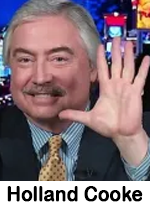 Your topic is often plucked from the on-hour newscast, asking callers’ take on what you reckon to be top-of-mind and relevant to listeners you target.
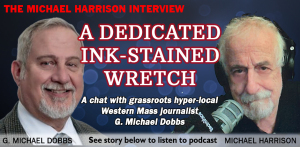 Legendary journalist and all-around local media hero in Western Massachusetts, G. Michael Dobbs, is this week’s guest on the award-winning PodcastOne series, “The Michael Harrison Interview.” Harrison states, “Western Mass is a special place I’ve called home for the past 40 years. Although I have had several simultaneous homes in different parts of the country during this stretch of time, the Springfield, Massachusetts area has played a very important role in my life. And in this beautiful, ‘salt of the earth’ segment of America, my guest is well-known to just about all its civically, socially and politically active citizens. His half-century career has been a testimony to the power and importance of local media… which, as we all know, is rapidly becoming an endangered species.” After decades of service, the recently retired executive editor of Reminder Publishing, continues his multi-faceted career in mass communications. Harrison comments, “I’m not sure he understands the meaning of the word retirement.” In his no-frills-down-to-the-basics career, Dobbs has worked as a newspaper reporter and editor, freelance writer, radio talk show host, college instructor and was the editor of two nationally distributed magazines about animation. He has written seven books to date and continues to write as well as appear as a host for Focus Springfield cable television. Harrison adds, “He has covered hundreds of school board and city council meetings; conducted thousands of interviews with local leaders; knows just about everything involved in how local government operates; and is an expert on cigars, brandy, old films, cartoons, comics, and even strippers. He’s an amazing guy and a quintessential example of the tremendous importance of local, grassroots journalism in sustaining and preserving American freedom and democracy.” The conversation with Dobbs started out with Harrison appearing as a guest on the media practitioner’s local podcast titled, “The Ink-stained Wretch with G. Michael Dobbs.” But, according to Harrison, “The conversation went deep into some very meaty material, so I decided to dip into it and extract some content for my own podcast.” To listen to the podcast in its entirety, please
  Chris Licht was executive producer of the Steven Colbert show. Then he took the job of CEO of CNN. There was unpleasantness. Thanks to our shared position on the Newhouse School Advisory Board at Syracuse University, I learned how he is advancing his career while seeking the right job.
 This presidential election cycle provided a number of insights, revelations, and takeaway lessons for news/talk radio. And by using the term “news/talk radio” I mean all spoken word platforms on the AM/FM dial including commercial, public, educational, and ethnic outlets that provide news, politics, and commentary. They are all RADIO.
 Let’s continue our ongoing series of articles about fair use. A recent case highlights fair use considerations in audio media and podcasting, particularly concerning music and short audio clips used in intros, where some creators assume that brief snippets automatically qualify as “fair use.” Legal experts clarify that using a song clip, even if brief, doesn’t inherently meet fair use criteria. Courts have emphasized that fair use hinges not just on brevity but also on factors like purpose, nature, and market impact on the original work. Music clips, even short ones, are often seen as significant portions of the original content, carrying substantial value, making unauthorized use in podcasts or similar formats legally risky.
 As media creators in radio and podcasting explore ways to legally incorporate external audio, the fair use factor of “purpose and character” is crucial. This factor assesses whether the use is “transformative”—adding new expression or meaning—or merely reproduces the original’s essence, potentially infringing on copyright.
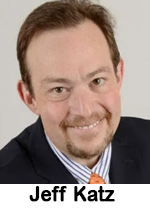 Media analyst, broadcaster, and trade journal publisher Michael Harrison appeared on the popular Jeff Katz afternoon drive show on WRVA, Richmond yesterday (10/29) to discuss comments he made earlier in TALKERS about the historic significance of former President Donald Trump‘s recent three-hour guest spot on the “Joe Rogan Experience” podcast. To listen to the fascinating discussion, please