



By Matthew B. Harrison
TALKERS, VP/Associate Publisher
Harrison Media Law, Senior Partner
Goodphone Communications, Executive Producer
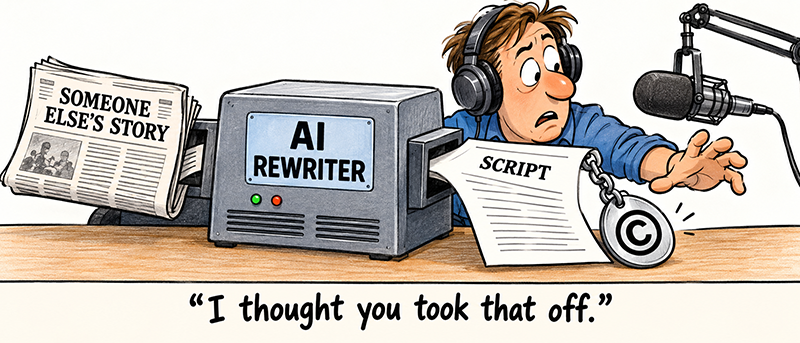
 Your competitor breaks a story. You can report the facts, but you cannot assume that running its article through AI makes the resulting script yours to use. A rewrite button is not a rights-clearance department.
A September federal appeals court ruling supplies a useful reminder. Ross Intelligence used Westlaw’s editorial summaries of judicial decisions to train a competing AI legal-research service. The Third Circuit rejected its fair use defense: the underlying court opinions were available, but Westlaw’s original summaries carried copyright protection.
The court focused on Ross’s commercial competition, similar purpose, and market harm. Using AI did not make that copying fair. Ross’s tool was not generative AI, however, so the ruling does not decide every dispute involving chatbots or AI-written scripts.
For broadcasters, the distinction is familiar. Nobody owns the fact that the mayor resigned; somebody may own the original language explaining what happened. Fair use can permit borrowing for reporting or commentary, but neither attribution nor changing a few words automatically resolves the copyright question.
Follow the facts, write your account, and evaluate what you borrow. Expect the same consideration when someone uses your material. AI can speed up production. It cannot supply permission you never obtained.
Matthew B. Harrison is a media and intellectual property attorney who advises radio hosts, content creators, and creative entrepreneurs. He has written extensively on fair use, AI law, and the future of digital rights. Reach him at Matthew@HarrisonMediaLaw.com or read more at TALKERS.com.