

NAB Show: Hot Digital Trends: What to Know About Video, Podcasts, AI
By Holland Cooke
Consultant
 My notes from a real useful session with Amazon’s Andy Slater, Audacy’s Michael Biemolt, and YouTube’s Neha Taleja, moderated by WTOP’S John Wardock.
Video trends:
- Internet Advertising Bureau: Digital video revenue is strong, +25.4% year-over-year.
- “It’s an accelerant” to podcasting. “Multi-modal engagement finds your audience where they are.”
- Adding video to audio work builds trust. When they see the-face-behind-the-voice, they know you more.
- “You’ve likely created the bulk of the content.” Adding video, “you’re repurposing.”
- Low cost of entry. “You have an iPhone, buy a tripod.”
- 233 million Americans have at least one smart TV, another distribution channel.
- To be smart TV-friendly: solid lighting, quality mic, upgrade camera, catchy graphics/colors, make-up.
- What makes someone click? Thumbnails!
- NOT doing video is “a lost opportunity.”
Podcasts:
- Podcast Time Spent Listening recently eclipsed Spoken Word radio TSL.
- 58% of Americans are monthly podcast consumers.
- “Audio + Video = podcasting in 2026.”
- Service used most for consumption: YouTube 39% — Spotify 20% — Apple Podcasts 11%
- “YouTube [#2 search tool, second only to owner Google] is a podcast discovery engine.”
- IAB: 2025 podcast revenue: $2.9 billion.
- “If you’re a radio station, you’re already in the audio business.”
- Cannibalizing radio listening? No. “Your audience wants to spend time with your talent. Make it more convenient.”
- “Podcasting was in ‘the training mode.’ Now it’s ready to run a marathon.”
AI trends:
- Check out new YouTube AI tools! Among features: A/B testing thumbnails.
- See also: OpusClip, Headliner, Descript, VivIQ, Riverside.
- AI apps can translate work to other languages.
- “Use it to save manhours. You have a very smart [virtual] intern.”
During Q+A, I asked: “You’ve given us some real useful ‘Do’s.’ What are the ‘Don’t’s?”
- “Nonauthentic content”
- “Anything forced, unnatural”
- “Not listening. Losing connection with your audience.”
- “Be careful with sports betting content, which dates quickly, short shelf life.”
If you missed any of this week’s NAB Show updates, click here.
Holland Cooke (HollandCooke.com) is a consultant working the intersection of broadcasting and the Internet. Follow HC on Twitter @HollandCooke and connect on LinkedIn
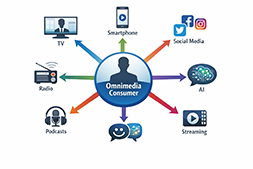 with the station across town anymore. It’s competing with 50,000 news brands, nearly half a million podcasts, and an infinite scroll of feeds that never sleep.
 As a newly minted program director (remember them?), I found the 1980 “NAB Radio Programming Conference” downright enchanting. New-tech cart machines (remember them?) would FIND the splice! And after the cart played, a flashing light saved careless DJs from accidentally playing it again.
 Time Spent Listening to podcasts has now surpassed TSL with spoken word radio. And both are fraught.
 In “
In “ Good News/Bad News: Fender‑benders, slip‑and‑falls, and other “injuries caused by the negligent, careless, or reckless actions of others” will always happen. That’s the good news…for personal injury attorneys. Their bad news is that supply WAY-exceeds demand, and their advertising reflects it.
 If you work in radio, you’ve heard every flavor of AI anxiety. Some fear it will wipe out jobs. Others treat it like a super shortcut – cranking-out spots, promos, and proposals faster and cheaper. Kate O’Neill’s
  Small businesses often underestimate their greatest competitive edge. It’s not price. It’s not selection.
 Unless you live in Hawaii and Arizona (except the Navajo Nation) or American Samoa, Guam, the Northern Mariana Islands, Puerto Rico and the U.S. Virgin Islands, your clocks will change when we “Spring Forward” on Sunday 3/8.
 Your prospect – or, worse, an existing advertiser with cold feet – says “We tried radio. It didn’t work.” Often, the copy is the culprit, because it’s inside-out.
 If you work in radio, you’ve heard every flavor of AI anxiety. Some fear it will wipe out jobs. Others treat it like a super shortcut – cranking-out spots, promos, and proposals faster and cheaper. Kate O’Neill’s “
 Every radio conference agenda and much of what’s-up in the trade press and chat groups is about exploiting Artificial Intelligence. Often these conversations land in one of two places: fear (“Will this replace us?”) or fascination (“Look what it can do!”). Both miss the point.
 If you’re on-air, it’s an important part of your job. Here’s what I see and hear working:
 Linear broadcast media have never been more challenged. Internet video now commands far more viewing time than over-the-air TV. And their own networks are hijacking viewers! Your local NBC station tells you to watch Peacock. ABC points you to Disney+. CBS pushes Paramount+. Affiliates are effectively forced to promote their own competition.
 Notice how often you see one in TV commercials, even when the product has nothing to do with pets? I see spots for a local building supply outlet, in which the owner’s dog ambles through every shot, then plops down – seeming to smile – among employees in the closing shot.
 Often, when visiting client stations, I ride shotgun on a sales call, and it’s always a masterclass. Retailers have a canny, insightful feel for their customers (our listeners). And accompanying these reps, I feel like I’m “Dancing With The Stars.”
 Evidence that your correspondent is a nerd: my airplane read for my CES back-N-forth was Successful AI Product Creation: A 9-Step Framework by Shub Agarwal (Wiley). If you haven’t got time for all 307 pages, here’s what I gleaned, pertinent to radio:
 Cutting edge technology is on display — and on wheels — this week here in Las Vegas.
 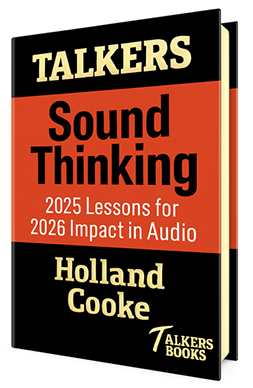 appreciate this real estate, and your feedback.
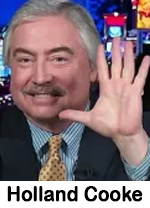 At the very first CES in 1967, audio cassettes were disrupting 8-track tapes. Back to the future: Artificial Intelligence now threatens to disrupt almost everything.
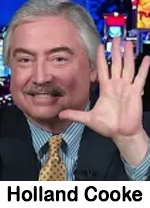 If you missed yesterday’s webinar, look for the replay which will be posted today at