By Erik Cudd
 From my teenage years to today, radio has been the career of my adult life. When I first began listening in my teens, I was drawn less to the music and more to the conversation. I tuned into stations not for my favorite songs, but because I enjoyed hearing people talk, debate, and share ideas. Over my lifetime, I have seen many changes in the medium. The news/talk format, in particular, has always fascinated me for its mix of news, commentary, and immediacy.
In such a time as this, because radio is the medium I know best and love most, I write this appeal to those influential in news/talk. My hope is that you will step forward once again as the architects and innovators you have always been, and raise a rallying cry for this unique moment. The freedoms and ambitions that make the format so vital also create challenges. By design, it invites sharp opinions, spirited disagreement, and cultural edge. Those qualities are its strengths. But in our current climate, they also carry the risk of drifting into tribalism and rhetoric that can spill over into something more dangerous.
This is not an implication that I believe news/talk is responsible for the death of Charlie Kirk. I would like to be crystal clear. What I am saying is that a perfect storm has been gathering for many years, and no one can deny the polarized, charged landscape we now inhabit. And that storm is not radio’s sole responsibility. Television, social media, and digital platforms have found their profit margins in spaces that thrive on provocation. Cable news leans on conflict. Social media algorithms reward outrage. Digital outlets chase clicks and controversy. Radio is part of this broader ecosystem, not apart from it. And while no single medium created our current atmosphere, each has a role to play in reflecting on its impact and considering how best to move forward.
This is not about drawing a simple line between “toxic” and “non-toxic” content. Such judgments are rarely clear, and program directors deserve the benefit of the doubt. Yet it may be worth asking whether radio, like all media, could benefit from a renewed look at how editorial choices can help keep conversations as civil and constructive as possible. Debate and controversy will always be part of the medium, but escalation does not need to be the only outcome.
The September 10 tragedy underscored this in more ways than one. Beyond the event itself, the aftermath played out across digital spaces, where ordinary citizens made comments that, while protected speech, resulted in lost jobs, reputational damage, and news coverage. The lesson is not that speech should be curtailed, but that our civic discourse is increasingly fragile. And because radio is one of the most intimate and influential media, its choices ripple outward into that discourse in profound ways.
Audiences are noticing. As someone in my early 50s, squarely within talk radio’s target demographic, I should be a loyal listener. Yet I find myself tuning in less often, not from a lack of loyalty, but because I long to hear more voices who can thoughtfully engage both sides of an issue, giving each perspective a fair hearing and treating every listener as though their view matters. That is why I believe there may be room to pull back a bit, to allow for more variety, nuance, and genuine curiosity in how issues are approached.
Serious does not mean boring. Civility does not mean dull. Across platforms, authenticity and curiosity consistently earn audiences. Podcasts like SmartLess and Armchair Expert succeed not by stoking outrage but by elevating storytelling and connection. Public affairs series such as Frontline and American Experience continue to attract loyal audiences through rigorous, measured reporting. Nonfiction authors like Malcolm Gladwell and Brené Brown demonstrate that thoughtful exploration can reach mass audiences. These examples are proof that depth and balance can succeed when executed with energy and creativity.
Radio is uniquely positioned to do the same. The path forward is not retreat from controversy but innovation. Maybe it begins by encouraging new hosts who bring curiosity, empathy, and an equal openness to both sides of an issue, alongside conviction. It could include piloting alternative formats in off-peak slots where experimentation can thrive. It will require recalibrating success metrics to value loyalty, digital engagement, and cross-platform trust, not just short-term spikes. And it may also mean weaving national voices together with local conversations so that stations strengthen both their reach and their roots.
I do not write this from a high perch. I write as a member of the audience who also walked the halls of the station and still believes in the power of the medium. My words are not meant as accusation but as an open hand in friendship. What I am asking is simple: perhaps it is time for a more purposeful, deliberate engagement of conversation in the conference room. To sit together and ask if everything that airs is doing what it should. To take a long, hard look at whether anything might need to be discussed, reconsidered, or rebalanced in light of what we have all just witnessed.
Radio, because of its intimacy and reach, is uniquely positioned to lead by example. By being more proactive in its own yard, radio could encourage the same self-reflection across media, and even among the public itself. That is not retreat. That is leadership.
Radio still matters. Its intimacy can at times divide, but it can also renew. The question is not whether talk radio will remain bold, it always will, but whether it can channel that boldness in a way that builds the public square rather than fractures it.
The opportunity is here: to prove that freedom and responsibility can coexist, and that doing so is good for the culture, and good for the business.
Erik Cudd has worked in radio and media since 1991. He can be emailed at erik@cudd.us.
Share this with your network


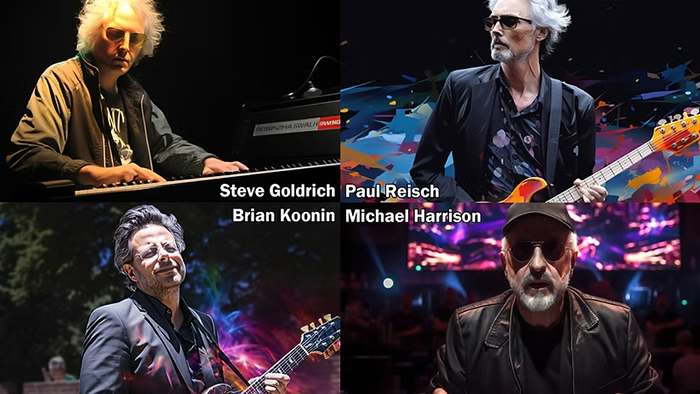
 and the gut-wrenching chaos of informational overload. Non-partisan lyrics cry out: “Too much information clogging up my brain… and I can’t change the station; it’s driving me insane!” Co-written and performed by band members Steve Goldrich, Paul Reisch, Brian Koonin, and Michael Harrison, the dramatic images accompanying the music include a dynamic montage of exasperated people being driven to the brink of madness by the pressure of what feels like non-stop, negative NOISE. Produced by
  Every talk host knows the move: play the clip. It might be a moment from late-night TV, a political ad, or a viral post that sets the table for the segment. It’s how commentary comes alive – listeners hear it, react to it, and stay tuned for your take.
 CNN, FOX News Media, NBC News, and Newsmax are declining to sign the agreement. A joint statement from ABC News, CBS News, CNN, FOX News Media, and NBC News says, “Today, we join virtually every other news organization in declining to agree to the Pentagon’s new requirements, which would restrict journalists’ ability to keep the nation and the world informed of important national security issues. The policy is without precedent and threatens core journalistic protections. We will continue to cover the U.S. military as each of our organizations has done for many decades, upholding the principles of a free and independent press.” Newsmax adds, “We are working in conjunction with other media outlets to resolve the situation. We believe the requirements are unnecessary and onerous and hope that the Pentagon will review the matter further.”
 The most common mistake podcasters make is assuming the microphone alone creates an audience. Too many would-be hosts hit Record without a clear strategy for WHY they’re doing a show, WHO it’s for, and what makes it DIFFERENT from millions of other podcasts.
 eldest son, FNC is in the doghouse. Newsmax published an account of the interview which quotes Trump Jr. saying, “Honestly, I don’t watch it anymore because it is so ridiculous. They try so hard to be unbiased that they’re actually biased against conservatives at this point. But this shouldn’t be surprising. These are networks that banned me for two-and-a-half. I’m barely on anymore. I know my father was banned.” However, TALKERS has learned that Donald Trump Jr. appeared on FOX News Channel four times recently – on August 13 and September 3, 11, and 12. He told Salcedo
  “FOX’s approach has left conservatives silenced while Democrats and establishment figures get free rein.” The president recently complained about FNC in a post on Truth Social in which he singled out White House correspondent Peter Doocy for talking to Arizona Senator Mark Kelly about his healthcare agenda. He wrote, “Why is Fox News and Peter Doocy putting on Democrat Senator Mark Kelly to talk about, totally unabated or challenged, Healthcare?” SiriusXM’s Megyn Kelly recently complained about FOX News Channel’s coverage of Charlie Kirk’s slaying, saying, “It’s really bothering me how FOX News is talking about Charlie, like he was theirs — he wasn’t. It’s a lie. Just stop.”
 company’s WRNW-FM, Milwaukee “97.3 The Game,” and KBME-AM, Houston “SportsTalk 790” morning host Sean Salisbury. Salisbury tweeted, “It’s been a hell of a run the last 8 years [at] SportsTalk 790. I fully understand the financial decisions that corporate has to make. I appreciate the great bosses at iHeart that I got to work with and here in Houston, who have become friends too. Very grateful for good coworkers and the talent you hear daily on the SportsTalk 790 lineup. I’m so blessed to have worked with special teammates/friends on my show every morning, you know my love for you guys!” Also, a victim of this latest round of cuts is Salt Lake City market manager Joyce Wirthlin.
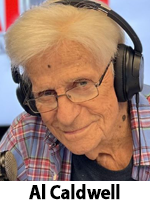 Beaumont region for over five decades known for his authenticity, passion, and a deep love for Beaumont and its people. Caldwell is now 89 yet he continues to wake up at 4:00 am to entertain and inform his long standing and loyal fan base. Chamber president Amy Lavoi says, “Al Caldwell is more than just a radio personality – he’s the voice of our community. Through decades of broadcasting and public service, Al has uplifted this city with his humor, insight, and compassion. We are honored to recognize him as our 2025 Man of the Year.” Caldwell comments, “This community has given me so much over the years and being recognized by the Chamber as ‘Man of the Year’ is truly humbling. I love telling stories, sharing laughs, connecting with listeners, and waking up before the sun to be part of their day.” The award will be presented at the Chamber’s Annual Meeting on October 7 at the Beaumont Civic Center.
 As a media consultant, my team has had the privilege of being engaged extensively by members of the C-Suite. Becoming a member of the C-Suite is a common goal. To get into any group, acceptance often depends on acting and appearing like established members. Here are some of the actions observed of business masters whom we consulted:
 Jimmy Kimmel’s first monologue back after the recent suspension had the audience laughing and gasping, and, in the hands of countless radio hosts and podcasters, replaying. Within hours, clips of his bit weren’t just being shared online. They were being chopped up, (re)framed, and (re)analyzed as if they were original show content. For listeners, that remix feels fresh. For lawyers, it is a fair use minefield.
 several capacities over the past 20 years but was most recently with crosstown sports talker WIP-FM co-hosting with Ike Reese. Beasley Media Group Philadelphia Paul Blake says, “Jon Marks is a proven leader and a trusted voice in Philadelphia sports. His credibility, passion, and connection with our audience will be instrumental in driving The Fanatic’s continued growth and success in the market.” Marks comments, “I’m beyond excited for this opportunity. Philadelphia is the best sports city in the country, and the fans here are as passionate as they come. To be able to talk sports with them every day in this new time slot is an honor, and I can’t wait to bring that same energy and passion to middays on The Fanatic.”
 Have you noticed a profile pattern for the mass shooters and political assassins? 20-30 years old. Living at home or close.
 Charlie Kirk’s tragic assassination shook the talk radio world. Emotions were raw, and broadcasters across the spectrum tried to capture that moment for their audiences. Charles Heller of KVOI in Tucson
  In the wake of Charlie Kirk’s murder, one would expect every company that owns a talk radio station, every network that syndicates conservative voices, and every corporation that employs talk radio hosts to issue a unified statement of defiance. This was not just an attack on Charlie; it was an attack on the entire industry of talk radio, on the free exchange of ideas, and on the First Amendment itself. Yet, shockingly, most of these companies have remained silent. That silence is unacceptable. At a moment like this, the industry should stand shoulder to shoulder and declare to the world: we will not be intimidated, we will not be silenced, and we will never abandon the microphone.
 Amazon learned that there are high volume sales for specific categories of products. High demand equals high value to the seller. Items such as diapers, printer ink, staplers, batteries, etc. Being brilliant, Amazon created “Amazon Basics.” Same products, white labeled. Amazon doesn’t manufacture batteries; they just slap their logos on what America needs most. That’s why Mr. Bezos has a bigger boat than you.
 exclusive sales rep for the Australian market. With this deal, Australian advertisers will be able to access Audacy’s titles as part of their audio campaigns. The partnership broadens the breadth of available content for LiSTNR audiences and increases the reach for clients, with access to a range of titles including “Office Ladies with Jenna Fischer and Angela Kinsley,” “Fly on the Wall with David Spade and Dana Carvey,” “Search Engine,” “The Moth” and dozens of podcasts from CBS Sports and CBS News & Entertainment.
 Audacy’s WFAN, New York enters into a strategic partnership with creator-led digital sports media company Jomboy Media to air the “Talkin’ Yanks” show each Saturday at 2:00 pm ET. Audacy chief business officerand New York market president Chris Oliviero says, “WFAN and Jomboy Media both are committed to bringing Yankees fans the most relevant and engaging content of their favorite team whenever and wherever they want to consume it. Together, the combined influence and reach of both brands will elevate the experience for the pinstripe faithful and shine an even greater spotlight on New York’s all-time pastime, baseball.”
 The board of directors of the New York State Broadcasters Association names Red Apple Media CEO John Catsimatidis the New York Broadcaster of the Year for 2025. Catsimatidis will be honored at the NYSBA Broadcast Leadership and Hall of Fame Luncheon in New York City on October 22. NYSBA president David Donovan says, “We are honored to have him as NYSBA’s Broadcaster of the Year. John has had unparalleled success turning around 77WABC and expanding Red Apple Media throughout the country. He has led legislative efforts to keep AM radio in vehicles, a vital issue for all New Yorkers.” Catsimatidis comments, “Thank you, Dave and the Board of the New York State Broadcasters Association for this honor. Radio is an integral part of listeners’ lives and often the only source of information during times of disaster. I ask everyone in radio to alert their listeners that car manufacturers are risking lives by taking AM off the dashboard of new cars. Together, we can stop this, and we must stop it.” Catsimatidis entered the radio business with the purchase WABC-AM in March 2020 and has since added WLIR-FM, Hampton Bays and WRCR-AM, Haverstraw to his portfolio of stations.
 After 40 years on the air in the Rochester market, legendary radio personality Brother Wease is exiting iHeartMedia’s talk WAIO-FM where he’s been hosting the late morning show for the past two years (he’d been hosting the morning drive show there since November of 2008). According to the Democrat & Chronicle, Brother Wease told his audience that the company is flipping the talk station to rock and he, along with air personality Deanna King, are being let go. Brother Wease launched his on-air career on rock WCMF in 1984 in overnights and moved to morning drive in 1985. The show took off and became a highly successful one in the market for years. He left WCMF in late 2007 after contract talks with then-Entercom broke down and resurfaced on WAIO.
  Nashville “102.5 The Game” after being unable to strike a deal to renew his show. The new program will air live weekdays at 2:00 pm and goes online as a podcast by 3:30 pm that day. He tells the paper, “I was fortunate enough to have what I feel is an incredibly loyal core audience and I plan to provide for them a daily show every day that isn’t behind a paywall and 440 Sports gives me that opportunity. With very limited commercial interruption, the podcast should be able to get most people in Nashville through their afternoon commute.”