

CLIPPING JUSTICE: Fair Use in Media Creation
By Matthew B. Harrison
TALKERS, VP/Associate Publisher
Harrison Legal Group, Senior Partner
Goodphone Communications, Executive Producer
 Let’s continue our ongoing series of articles about fair use. A recent case highlights fair use considerations in audio media and podcasting, particularly concerning music and short audio clips used in intros, where some creators assume that brief snippets automatically qualify as “fair use.” Legal experts clarify that using a song clip, even if brief, doesn’t inherently meet fair use criteria. Courts have emphasized that fair use hinges not just on brevity but also on factors like purpose, nature, and market impact on the original work. Music clips, even short ones, are often seen as significant portions of the original content, carrying substantial value, making unauthorized use in podcasts or similar formats legally risky.
The concept of “transformative use” is crucial in fair use evaluations; content must add new meaning or context to the original rather than simply reformatting it. For instance, the landmark 2 Live Crew case involving their parody of Roy Orbison’s “Pretty Woman” underscored that transformative uses might still face challenges if they impact the original’s market value. This demonstrates that merely placing music in a new setting doesn’t automatically render it transformative.
To mitigate risks, media creators often incorporate shorter clips alongside commentary or critique, which tends to align more closely with fair use. Collaboration or seeking permissions can often be a more practical approach to using impactful content without risking costly legal disputes. Legal sources, including Loeb & Loeb, emphasize that while fair use is an evolving area, obtaining permissions—or using royalty-free alternatives—is often the most straightforward route for creators.
A recent example in Thiccc Boy Productions v. Swindelle illustrates these principles in action. Swindelle, a YouTube creator, used clips from Thiccc Boy Productions’ podcast, hosted by Brendan Schaub, in his reaction videos, asserting a fair use defense due to added commentary. The court ruled in Swindelle’s favor, noting his commentary was transformative and unlikely to harm the original podcast’s market. This decision aligns with trends following Warhol Foundation v. Goldsmith, which clarified that “transformative” uses must contribute clear commentary or critique to meet fair use standards rather than merely repurposing the original.
For today’s media creators, consulting legal guidance before integrating copyrighted material is crucial as copyright law adapts to new digital contexts.
Media attorney, Matthew B. Harrison is VP/associate publisher, TALKERS; Senior Partner, Harrison Legal Group; and executive producer, Goodphone Communications. He is available for private consultation and media industry contract representation. He can be reached by phone at 724-484-3529 or email at Matthew@HarrisonLegalGroup.com
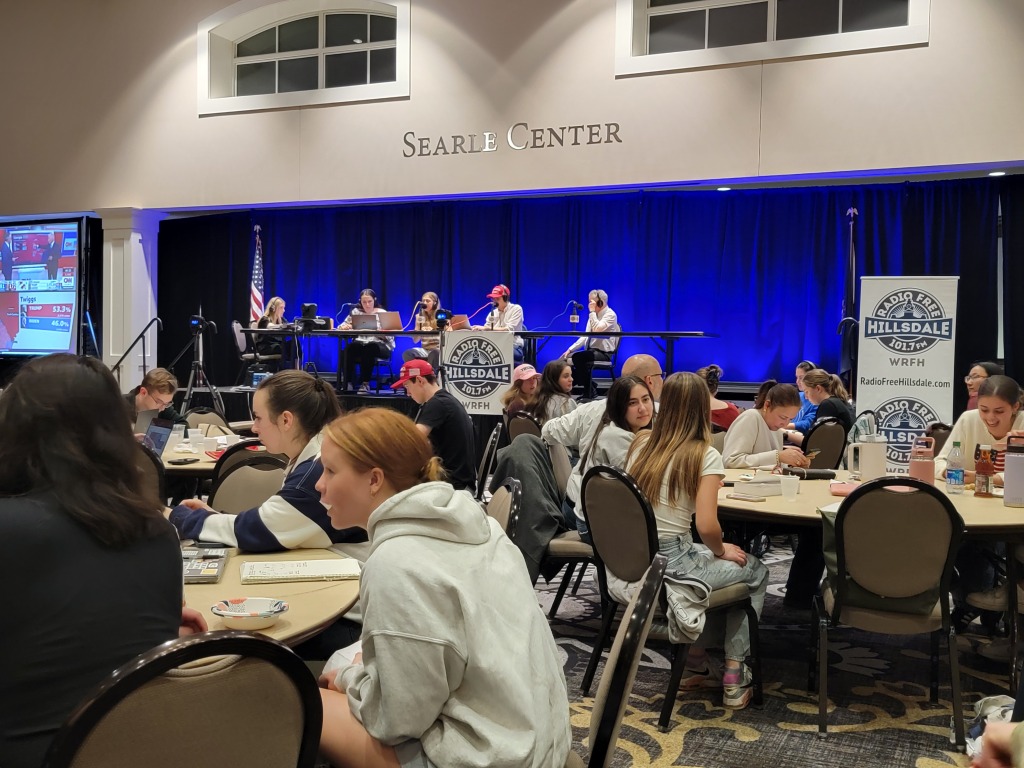 Journalism is alive and well within certain college radio circles. On Election Night (11/5), the WRFH/Radio Free Hillsdale 101.7 FM student broadcast team hosted live coverage from the Searle Center on Hillsdale College’s campus in Hillsdale, MI and invited students, faculty, and staff to attend and watch election results roll in and listen to analysis. Student anchors were joined by the presidents of Hillsdale College Republicans and Hillsdale College Democrats, three members of the Hillsdale faculty, a candidate for the Michigan State House, a candidate for the Michigan Supreme Court, and reporters from the Detroit News, the Daily Caller, the Center Square, and the Daily Signal. Back at the WRFH studios, the station’s news team worked to update listeners with results from state and local races all night long. More than 200 people came out to the broadcast in action. WRFH GM Scot Bertram tells TALKERS, “It was a home-run event! Students work hard to prep for this quite unpredictable night. There’s an enormous amount of planning and research involved to set everything up. Then the night unfolds, and they realize it’s a ton of fun, as well. I’ve heard from more than a few students who took part in our previous Election Night events that it’s one of their best experiences on campus and really drew them deeper into the journalism program here at Hillsdale.”
 The Broadcasters Foundation of America has launched its annual Year-End Giving Campaign, which seeks to raise donations from tax-deductible personal contributions to the Guardian Fund and corporate contributions to the Angel Initiative. The Broadcasters Foundation, a 501c3 charity, is the only charity devoted exclusively to helping colleagues who are in dire need of monthly or emergency financial assistance due to life-altering illness or a disaster. “We are devoted exclusively to providing aid to colleagues in broadcasting who are suffering from extreme illness, or hardship from a devastating disaster,” stated Tim McCarthy, president of the Broadcasters Foundation. “We also take care of colleagues who have retired. Grants are supported solely by contributions from individuals and companies within our industry and offer a ‘hand-up’ to our colleagues during trying times. We’re asking everyone in broadcasting to please consider including the Broadcasters Foundation in your 2024 charitable giving.” Over the past 20 years, the Broadcasters Foundation has distributed over $15 million in aid to colleagues nationwide, across all states and territories, who need it most. “Requests for aid continue to grow exponentially as more of our peers and their families are affected by severe illness or disasters, such as the recent flurry of destructive hurricanes,” explained Scott Herman, chairman of the Broadcasters Foundation. “Whether it’s a monthly grant or one-time aid in response to an emergency, the Broadcasters Foundation is often a refuge and beacon of hope for colleagues whose lives have been upended by unforeseen and tragic circumstances. Please consider a donation. Donations go directly to helping our colleagues who are in desperate need.” For more information about the Broadcasters Foundation, including how to apply for aid or make a donation, visit
 These episodes feature Chachi’s special guests Al Roker, longtime weatherman on NBC’s The Today Show and co-anchor of the iconic morning show’s third hour, and Patsy Smullin, owner/president of California Oregon Broadcasting, and host of the successful television interview series, Up Close and Personal. Roker and Smullin will be among those honored next week as Giants of Broadcasting by the Library of American Broadcasting Foundation at the 2024 Giants of Broadcasting & Electronic Arts luncheon and awards ceremony. The event will be held on Tuesday, November 12th at Gotham Hall in New York City. To listen to these new “Chachi Loves Everybody” podcast episodes, please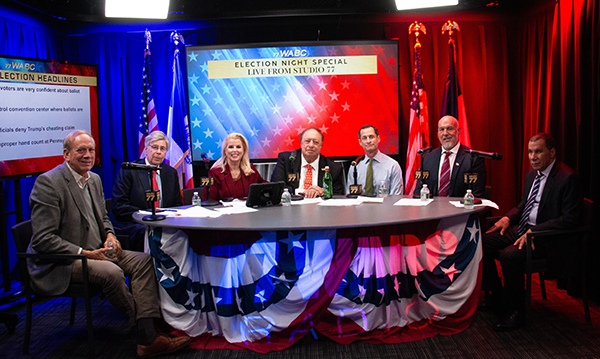
 This drop is partly due to selling their Wilmington station and closing some digital businesses. Despite this, Beasley saw growth in digital and political advertising. They earned $1.2 million in operating income this quarter, a significant improvement from last year’s $85.5 million loss, which included large non-cash impairment costs. This quarter’s net loss was $3.6 million, much lower than last year’s $67.5 million loss, as Beasley reduced expenses and interest costs. Digital revenue continues to grow, now making up 19.4% of total revenue. Beasley’s CEO, Caroline Beasley, noted that digital transformation and political ads helped offset challenges in traditional radio advertising. She emphasized ongoing efforts to streamline operations, improve finances, and focus on their digital platforms. To see the full report please
 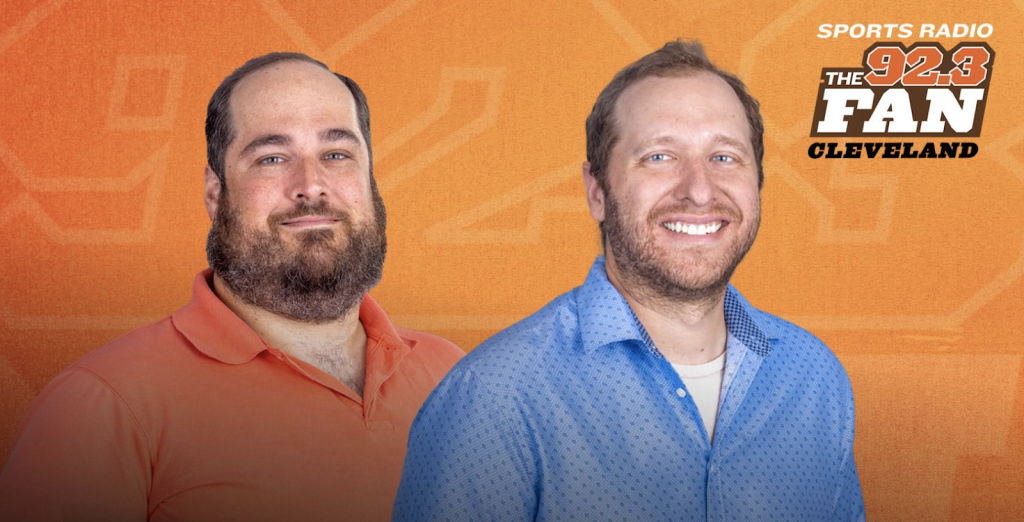 Audacy names Jonathan Peterlin (pictured above right) as afternoon show co-host on 92.3 The Fan (WKRK-FM) in Cleveland. Peterlin will join co-host Nick Wilson (above left) and be heard weekdays from 2:00 to 7:00 pm ET. Peterlin had previously served as the station’s evening host since 2022. “We believe Jonathan’s addition and presence on the show will bring a unique passion and energy to afternoon drive,” said Keith Britton, the station’s brand manager. “He has shown both the ability and readiness for this move and we are full speed ahead in our commitment to providing our listeners with the most engaging sports talk and entertainment on a daily basis.” “92.3 The Fan and its listeners have been with me through every major chapter of my life, and this station has been a constant presence in my world,” said Peterlin. “Afternoon drive in Cleveland is the pinnacle of what I’ve always aspired to, and I truly couldn’t imagine a better person to share this journey with than my good friend, Nick Wilson. I’m extremely thankful for the chance to continue this journey with the listeners and the team at 92.3 The Fan.”
 As media creators in radio and podcasting explore ways to legally incorporate external audio, the fair use factor of “purpose and character” is crucial. This factor assesses whether the use is “transformative”—adding new expression or meaning—or merely reproduces the original’s essence, potentially infringing on copyright.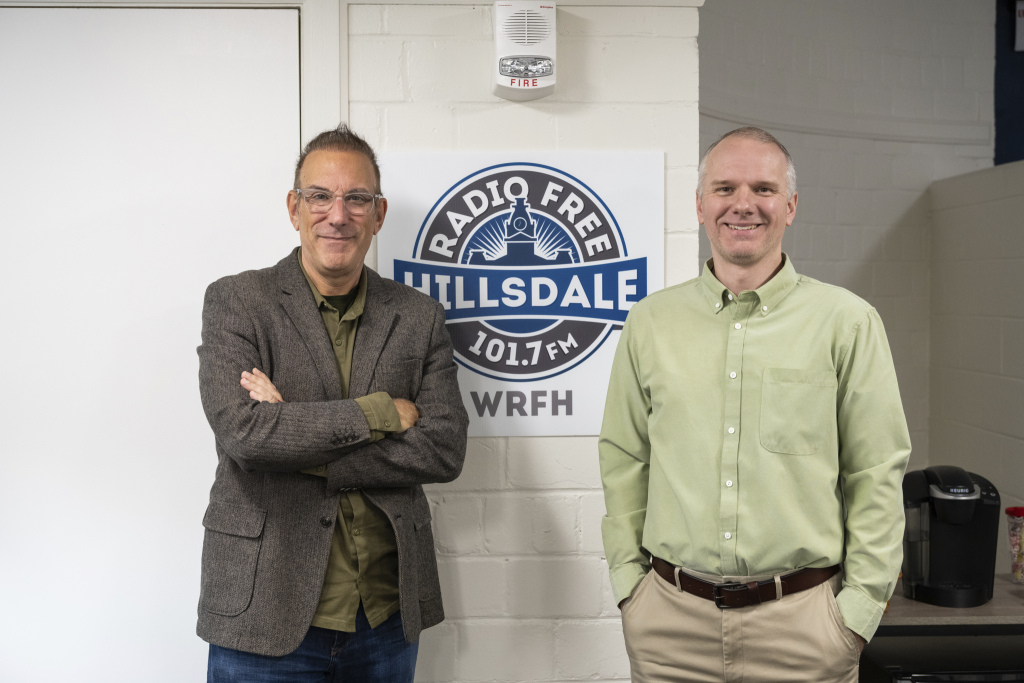
 Take advantage of the new media order. Initially, TiVo was a hit because you could pause live TV and go to the bathroom whenever you wanted. Bathroom breaks while watching live TV was a revelation. As you were going to the bathroom, your relationship with media was being re-wired in your brain. In a matter of months, you were able to watch what you wanted, whenever you wanted. DECADES of TV scheduling strategies became anachronistic. It’s November. Do you know when your favorite shows are airing on TV? No! No need you’ll watch them whenever you want!
 Cumulus Media Inc. today (11/4) announced operating results for the three and nine months ended September 30, 2024. Mary G. Berner, president and CEO of Cumulus Media, said, “During the third quarter, we delivered revenue and EBITDA in-line with pacing commentary and analyst estimates. Given the market challenges, we maintained our focus on what we can control. Specifically, we continued investing to drive growth in our digital businesses, including in digital marketing services which increased revenue nearly 40% in the quarter; capitalizing on areas of improvement in national and political ad spending; maximizing operating cash flow; and improving operating leverage through ongoing expense reductions.” Berner continued, “Looking forward, the advertising environment remains uncertain. Nonetheless, Cumulus has a valuable set of assets with which to navigate that uncertainty including: profitable and fast-growing digital businesses; a vast national platform that can reach audiences whenever and wherever they choose to listen; extensive feet-on-the-street local sales capabilities which allow us to walk product through the door; premium programming with particular strength in sports and news/talk; an extensive untapped audio library; and a leadership team with a strong track record of expense management and disciplined stewardship of capital. As we continue to execute against our priorities, we see many paths for leveraging these assets to maximize the value they produce for our shareholders.”
 ave decided, with the full support of WISN-AM and its parent iHeartMedia, to transition my program to podcast only effective at the end of this year.
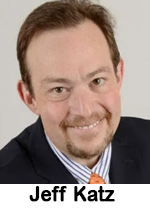 Media analyst, broadcaster, and trade journal publisher Michael Harrison appeared on the popular Jeff Katz afternoon drive show on WRVA, Richmond yesterday (10/29) to discuss comments he made earlier in TALKERS about the historic significance of former President Donald Trump‘s recent three-hour guest spot on the “Joe Rogan Experience” podcast. To listen to the fascinating discussion, please
 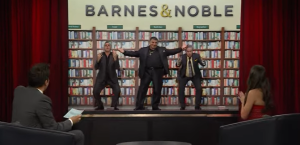 Proving There’s More to Life in America this Week than Just Presidential Politics. Pictured above is Salem Radio Networks (SRN) East Coast affiliate relations manager Jim Bligh – a frequent “player” in NYC-based skits on “Saturday Night Live“ in addition to appearing in theatrical feature films – joined NBC’s “The Tonight Show with Jimmy Fallon” on Tuesday 10/29). Fallon and Grammy-winning guest Olivia Rodrigo played “What’s Behind Me?”…a charade style game with Fallon describing action happening as her back was turned. Blight – far right – acted out a scene of Three Mobsters doing Yoga at a Barnes & Noble. See Bligh’s skit by
 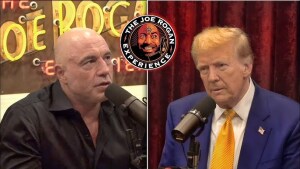 At the Monday morning (10/28) TALKERS editorial meeting, Harrison said, “The hoopla over this podcast appearance and its enormous profile within election news coverage clearly indicates we have arrived at a point where the terms ‘mainstream,’ ‘legacy,’ ‘alternative,’ ‘grassroots,’ and the like have to be reevaluated in conveying impact and importance – both individually, and certainly collectively – in the marketplace of ideas and the industries that serve it.” Harrison added, “This is especially true of Rogan’s individual impact as indicated by 1) the deference he was paid by a former president and major party candidate in showing up three-hours late for a live rally attended by thousands in which he actually implied that this podcast interview was a priority and more important to ‘winning’ than arriving on time for the event; 2) the tsunami of news coverage this podcast generated; 3) the passive aggressive irreverence granted a somewhat oblivious Trump by Rogan both during and following the interview; and 4) the sheer enormity of Rogan’s raw numbers on Spotify and YouTube, unfettered by FCC regulation.”
 “When iHeartMedia New York partnered with the New York Road Runners (NYRR) to produce this inaugural radio broadcast of the marathon, it was a no-brainer to put Len at the helm of the broadcast,” said Tom Cuddy, program director for 710 WOR. “His association with New York sports, during his more than 50-year television career, and his ‘second life’ as co-host of the WOR morning show since 2015, ensure that Len will make this a can’t-miss broadcast.” “I’m honored to be hosting WOR’s maiden voyage with the TCS New York City Marathon,” said Berman. “I’ve hosted TV coverage of the event many times and it’s consistently one of the best days of the year in the city. We look forward to conveying that same message to our listeners.”
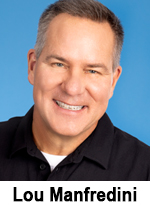 “I have been blessed to call WGN Radio home for the past three decades,” Manfredini tells TALKERS. “But in the end, it’s all about our listeners. I’m excited to continue to help them better understand how their homes work, show them they can have fun, and, of course, remind them to never hold a nail for someone else.” The Chicagoland native will be celebrating his 30th anniversary on WGN Radio in 2025. Mr. Manfredini first appeared on the station as a guest on the Bob Collins Show in 1995 following a letter writing campaign to pitch a call-in home improvement show on WGN.
 “We are delighted that Lou will be with us for his 30th year and beyond,” said WGN Radio VP/GM Mary Sandberg Boyle. “In the nearly 30 years since first appearing on WGN Radio, Lou’s presence across the media world has evolved considerably. Yet, what truly sets him apart is his natural gift of connecting to and interacting with our listeners in the special way that only radio does. Making those listener ‘connections’ has historically been – and will continue to be – the very fabric of WGN 720.” Manfredini can also be heard on weekday segments with John Williams (Mondays), Lisa Dent (Thursdays) and Bob Sirott (Fridays).
  It will be carried by LibertyNewsRadio.com or video stream at TheBigMigShow on Rumble. For additional information or press inquiries, please contact Sam Bushman at 801-756-9133 or LibertyRoundTable@gmail.com.