By Matthew B. Harrison
TALKERS, VP/Associate Publisher
Harrison Media Law, Senior Partner
Goodphone Communications, Executive Producer
 The Problem Is No Longer Spotting a Joke. The Problem Is Spotting Reality
Every seasoned broadcaster or media creator has a radar for nonsense. You have spent years vetting sources, confirming facts, and throwing out anything that feels unreliable. The complication now is that artificial intelligence can wrap unreliable content in a polished package that looks and sounds legitimate.
This article is not aimed at people creating AI impersonation channels. If that is your hobby, nothing here will make you feel more confident about it. This is for the professionals whose job is to keep the information stream as clean as possible. You are not making deepfakes. You are trying to avoid stepping in them and trying even harder not to amplify them.
Once something looks real and sounds real, a significant segment of your audience will assume it is real. That changes the amount of scrutiny you need to apply. The burden now falls on people like you to pause before reacting.
Two Clips That Tell the Whole Story
Consider two current examples. The first is the synthetic Biden speech that appears all over social media. It presents a younger, steadier president delivering remarks that many supporters wish he would make. It is polished, convincing, and created entirely by artificial intelligence.
The second is the cartoonish Trump fighter jet video that shows him dropping waste on unsuspecting civilians. No one believes it is real. Yet both types of content live in the same online ecosystem and both get shared widely.
The underlying facts do not matter once the clip begins circulating. If you repeat it on the air without checking it, you become the next link in the distribution chain. Not every untrue clip is misinformation. People get things wrong without intending to deceive, and the law recognizes that. What changes here is the plausibility. When an artificial performance can fool a reasonable viewer, the difference between a mistake and a misleading impression becomes something a finder of fact sorts out later. Your audience cannot make that distinction in real time.
Parody and Satire Still Exist, but AI Is Blurring the Edges
Parody imitates a person to comment on that person. Satire uses the imitation to comment on something else. These categories worked because traditional impersonations were obvious. A cartoon voice or exaggerated caricature did not fool anyone.
A convincing AI impersonation removes the cues that signal it is a joke. It sounds like the celebrity. It looks like the celebrity. It uses words that fit the celebrity’s public image. It stops functioning as commentary and becomes a manufactured performance that appears authentic. That is when broadcasters get pulled into the confusion even though they had nothing to do with the creation.
When the Fake Version Starts Crowding Out the Real One
Public figures choose when and where to speak. A Robert De Niro interview has weight because he rarely gives them. A carefully planned appearance on a respected platform signals importance.
When dozens of artificial De Niros begin posting daily commentary, the significance of the real appearance is reduced. The market becomes crowded. Authenticity becomes harder to protect. This is not only a reputational issue. It is an economic one rooted in scarcity and control.
You may think you are sharing a harmless clip. In reality, you might be participating in the dilution of someone’s legitimate business asset.
Disclaimers Are Not Shields
Many deepfake channels use disclaimers. They say things like this is parody or this is not the real person. A parking garage can also post a sign that it is not responsible for damage to your car. That does not absolve them when something collapses on your vehicle.
A disclaimer that no one negotiates or meaningfully acknowledges does not protect the creator or the people who share the clip. If viewers believe it is real, the disclaimer (often hidden in plain sight) is irrelevant.
The Liability No One Expects: Damage You Did Not Create
You can become responsible for the fallout without ever touching the original video. If you talk about a deepfake on the air, share it on social media, or frame it as something that might be true, you help it spread. Your audience trusts you. If you repeat something inaccurate, even unintentionally, they begin questioning your judgment. One believable deepfake can undermine years of credibility.
Platforms Profit From the Confusion
Here is the structural issue that rarely gets discussed. Platforms have every financial incentive to push deepfakes. They generate engagement. Engagement generates revenue. Revenue satisfies stockholders. This stands in tension with the spirit of Section 230, which was designed to protect neutral platforms, not platforms that amplify synthetic speech they know is likely to deceive.
If a platform has the ability to detect and label deepfakes and chooses not to, the responsibility shifts to you. The platform benefits. You absorb the risk.
What Media Professionals Should Do
You do not need new laws. You do not need to give warnings to your audience. You do not need to panic. You do need to stay sharp.
Here is the quick test. Ask yourself four questions.
Is the source authenticated?
Has the real person ever said anything similar?
Is the platform known for synthetic or poorly moderated content?
Does anything feel slightly off even when the clip looks perfect?
If any answer gives you pause, treat the clip as suspect. Treat it as content, not truth.
Final Thought (at Least for Now)
Artificial intelligence will only become more convincing. Your role is not to serve as a gatekeeper. Your role is to maintain professional judgment. When a clip sits between obviously fake and plausibly real, that is the moment to verify and, when necessary, seek guidance. There is little doubt that the inevitable proliferation of phony internet “shows” is about to bloom into a controversial legal, ethical, and financial industry issue.
Matthew B. Harrison is a media and intellectual property attorney who advises radio hosts, content creators, and creative entrepreneurs. He has written extensively on fair use, AI law, and the future of digital rights. Reach him at Matthew@HarrisonMediaLaw.com or read more at TALKERS.com.
Share this with your network



 serve in the public interest, the FCC yesterday issued a Guidance on Political Equal Opportunities Requirement for Broadcast Television Stations. While the memorandum is written to television stations, it obvious applies to radio stations as well. The memo ultimately addresses the 1959 order that exempts broadcasters from providing equal time to qualified candidates on any: (1) bona fide newscast; (2) bona fide news interview; (3) bona fidenews documentary (if the appearance of the candidate is incidental to the presentation of the subject or subjects covered by the news documentary); or (4) on-the-spot coverage of bona fide news events (including but not limited to political conventions and activities incidental thereto). Programs such as “The Tonight Show” and “The View” are cited as entertainment shows in which an interview segment can qualify as a bona fide news interview. Regarding this, the memo concludes with two important paragraphs:
 (1/20) on make his debut on FOX News Channel’s “Hannity.” Priebus is a former Republican National Committee chairman and served as White House chief of staff to Donald Trump in 2017. He currently is president of Michael Best & Friedrich LLP, chairman of Michael Best Strategies and is a senior adviser to Centerview Partners. He also holds roles on President Trump’s Intelligence Advisory and Oversight boards.
 the way the commission is operating. She took issue with FCC Chair Brendan Carr’s interpretation of how the Commission should ensure that licensees operate in the public interest. She stated, “For months, this FCC has asserted an apparent roving mandate to police speech that this Administration does not like, invoking an undefined and unchecked concept known as the ‘public interest’ standard.
 competition local radio stations today face for audiences and vital advertising revenues from online and satellite content providers and digital ad platforms not subject to any comparable restrictions on their scale and scope; the dire negative effects that consumer and advertiser substitution of competing digital audio content and advertising for traditional radio has had on the listenership and advertising revenues garnered by local radio stations, including in mid-sized and small markets; and how the retention of asymmetric ownership restrictions has prevented radio broadcasters from gaining local scale to take advantage of important economic efficiencies, obtain investment capital, and better compete for audiences and advertising revenues, and thus enhance – or even maintain – their provision of news, emergency information, and valued entertainment and sports programming in local communities across the country at no cost to the public.” Responding to testimony from musicFirst Coalition and the Future of Music Coalition – referred to as the Coalitions – NAB writes, “First, the fact that the Coalitions continue to hold themselves out as protectors of small, local independent broadcasters not just borders on the absurd but crosses over into full-blown absurdity. The Coalitions represent the interests of the music industry, which is dominated by three consolidated international record labels. Compared to even the largest radio station groups, the giant record labels are the 800-pound gorillas of the music world. Those three labels earn billions more in revenue than the approximately 11,000 full-power commercial AM/FM stations combined. As NAB earlier reported, the three major music companies jointly generated about $2.9 million per hour in 2023. In remarkable contrast, in 2023 and 2024 the vast majority of radio stations garnered less – and often much less – than $2.9 million per year in advertising revenues. Needless to say, the Coalitions have never explained how local radio stations earning such low levels of revenue (and even lower, if any, profits) are supposed to keep talented employees and provide high quality programming, including popular music, sports, and informational programming, such as weather updates and emergency information, OTA and free to the public without achieving increased local scale, greater economic efficiencies, and more robust ad revenues.
  Common Stock and Class D Common Stock at a ratio of 10 for 1. The company states, “The reverse stock split is being conducted to regain compliance with the $1.00 minimum bid price requirement for continued listing on the Nasdaq Capital Market with respect shares of the Company’s Class D Common Stock.” No fractional shares of Common Stock will be issued in connection with the reverse stock split. Holders of stock who would otherwise receive a fractional share will receive cash in lieu of the fractional share equal to the closing sales price of the stock on the effective date – in this case January 22.
 About Money, the newest release from bestselling author and “The Ramsey Show” co-host Jade Warshaw. Ramsey Press says, “Warshaw draws from her own journey of paying off more than $460,000 of debt to offer readers a clear, practical way forward. She pairs honest storytelling with simple, hands-on tools readers can use to break cycles and build confidence that lasts. Unlike traditional money books that focus only on tactics. Warshaw adds, “People don’t need just another plan — they need a way to understand what keeps pulling them off track. When you deal with the emotional weight behind your money choices, that’s when real progress starts.”
 accountability in government spending and policy. He has also served as executive director of the Medina County Republican Party and as national director of state legislation for Make America Healthy Again (MAHA) Action. Un Durwood says, “We’re creating a space where Northeast Ohioans can engage with the issues that matter most to them. Whether you agree or disagree, this show is about elevating the conversation and encouraging active participation in our community’s future. Educating and enlightening our fellow Ohioans in a style that encourages active audience engagement is what drives and motivates me. I look forward to mixing it up with those in our audience with whom I agree — and with those with whom I disagree.”
 appreciate this real estate, and your feedback.
 1972. The company was headed by Dr. Jerrel Jones, who passed recently. His daughter, current owner and president Mary Ellen Jones, says, “My parents built The Milwaukee Courier and WNOV to give Milwaukee’s Black community a voice when few existed. Passing that responsibility forward was not taken lightly. Civic Media is committed to honoring that legacy while investing in the future of trusted media.” The company says that Dr. Robert “Biko” Baker will join as operations manager for both the radio station and newspaper. Civic Media CEO Sage Weil comments, “Acquiring The Milwaukee Courier and WNOV is both an opportunity and a responsibility. These are trusted institutions with deep roots in Milwaukee, and our role is to steward that legacy while investing in their future – modernizing operations, expanding digital reach, and ensuring they continue to serve the community with integrity. We’re proud to have Dr. Robert ‘Biko’ Baker lead this work.”
 rate increases. Cumulus argued, “Nielsen, a monopolist engaging in anticompetitive behavior, holds all of the power during contract negotiations, resulting in an unequal bargaining dynamic that is ripe for retaliation. For example, Nielsen can and has raised its rates significantly during negotiations.
  If identifying information is revealed to Nielsen’s businesspeople, Nielsen can retaliate with additional rate increases, resulting in manifest injustice to these third parties actively involved or who will be involved in negotiations with Nielsen.” After denying Cumulus’ request on December 4, Cumulus filed a supplemental brief and on December 15 Judge Jeannette Vargas agreed with Cumulus, writing, “Cumulus has established that sufficient countervailing factors – in particular, the privacy interests of these non-party declarants, the lack of bearing these narrowly tailored redactions have on the merits of this action, and the non-party declarants’ susceptibility to economic retaliation – outweigh the strong presumption in favor of public access to judicial documents.”
  Carr. Facing regulatory scrutiny, the San Francisco Bay Area station demoted well-regarded journalists and sharply curtailed its political coverage for months. As pressure has eased, KCBS has gradually resumed more ambitious reporting, reflecting tensions between regulatory oversight and editorial independence.” Carr accused the station of failing to operate in the public interest and threatened an investigation. This was enough for Audacy management to back off its reporting. Tau writes, “KCBS demoted a well-liked anchor and dialed back on political programming, people said. For months, reporters were dissuaded from pursuing political or controversial topics and instead encouraged to focus on human interest stories, according to the current and former staffers.” The piece notes that anchor Bret Burkhart, the one to first present the ICE actions on the radio, was demoted. He eventually left the station for another position.
  Mel Robbins Podcast,” “SmartLess” and “Up First,” from NPR. Representing a mix of news, advice and celebrity interviews, they were drawn from a shortlist of 25 programs the Globes had previously deemed eligible. The nominations avoided politics or controversy by passing on popular podcasts from the shortlist, such as conservative-leaning programs ‘The Megyn Kelly Show,’ ‘The Tucker Carlson Show,’ ‘The Ben Shapiro Show,’ Candace Owen’s ‘Candace’ and, most notably, ‘The Joe Rogan Experience,’ which topped Spotify, Apple and YouTube’s list of weekly podcast charts this year. The left-leaning ‘Pod Save America’ also was snubbed, as were popular true crime podcasts like ‘Morbid’ and ‘Rotten Mango.’” Kennedy notes in his report that Ben Shapiro lobbied hard for his show. “Shapiro had launched an all-out Golden Globes publicity campaign for his decade-old podcast, on which he’s spoken with the likes of U.S. Vice President JD Vance and Ukrainian President Volodymyr Zelenskyy in the past year. In addition to making the rounds with industry publications, Shapiro also secured massive billboard space in New York City’s Times Square.”
  Whitmer to the KNSS morning show alongside Ted Woodward. ‘Woodward and Whit’ will build on the foundation of smart, local conversation that our listeners expect by delivering the essential news, candid analysis and enjoyable banter that starts the day right. This is a powerful pairing that promises to keep the Wichita community informed and engaged.” Whitmer has been hosting an eponymous two-hour weekend show for KNSS since 2018. He’s a veteran of Kansas politics having served in roles for local, state, and national Republican campaigns. Whitmer currently serves as the Chairman of the Sedgwick County Republicans. He says, “I’m honored to join Ted Woodward on ‘Woodward & Whit,’ stepping into the big shoes left by Steve McIntosh, who dedicated over 50 years to Wichita mornings. I look forward to bringing news coverage, straight talk, common-sense discussion and a little fun to help our community start the day on the right note.”
 publication RockTownNow.com. Saga COO Wayne Leland states, “Tom understands what makes local media matter. His role at Harrisonburg Media Group positions us to grow our brands and expand the value we deliver to our listeners, readers, and advertisers. We’re excited to have him leading the team.” Nankival comments, “I am thrilled to rejoin Saga as VP and general manager of the Harrisonburg Media Group, which is a shining star in our company. My job is to keep it performing at a high level and serving the Shen Valley community with unwavering commitment and dedication.”
 show alongside Ted Woodward, has worked his entire 55-year career in the Wichita market. He got his start in 1970 at KWBB as a news anchor and moved to KEYN-FM in the mid-1970s as news director. He joined KNSS in 1998 as news director and eventually became program director at the station. During his career he’s won numerous awards, including a Marconi Award for Outstanding Talent. Audacy Wichita SVP and market manager Tommy Castor says, “Steve’s name is synonymous with Wichita radio. His leadership, integrity, and unmatched storytelling have shaped this station and enriched the lives of our listeners for more than half a century.” McIntosh comments, “It has been the honor of my life to share Kansas news and Kansas stories with Kansas people. Thank you to everyone who has been part of this incredible journey.” The station will present a public farewell broadcast on December 12.
  former Milwaukee County attorney, and former Republican legislative staffer Todd Allbaugh are no longer airing. The Milwaukee Journal-Sentinel reports that Allbaugh announced his exit via social media and said the reason was budgetary – for “the long-term financial viability of the company.” Allbaugh noted that he was told of the change before his did his final show, adding, “They did not have to give me a last show. It was immensely appreciated.”
  formats. The program is available in three versions: three-hour, one-hour, 25-minutes and 30-minutes and are hosted by radio personality Larry O’Connor, morning drive host at WMAL-FM, Washington, DC. It features stories of America’s military heroes, the families who serve by their side, and how Fisher House plays a role in their journey. Listeners will hear their emotional stories fighting for our freedoms, how they sustained their injuries, and the welcoming homes Fisher House provides for them and their loved ones while they endure their painful and painstaking recoveries. This year’s program features a special focus on the incredibly inspiring victories our wounded warriors enjoy on the field of competitive, adaptive sports. Fisher House supports the Wounded Warrior Games and the lnvictus Games as a vital part of the physical, emotional, and mental healing process for our wounded veterans. For more information on this radio special, available cash and barter free, contact Larry O’Connor at 562-665-9537 or
  For most of my life, the sound of an AM signal has been my constant companion. Long before I ever spoke into a microphone professionally, I was the kid hiding under the covers with a transistor radio, slowly turning the dial, discovering voices, ideas, communities, and worlds far beyond my bedroom. AM radio didn’t just shape my career – it shaped who I am.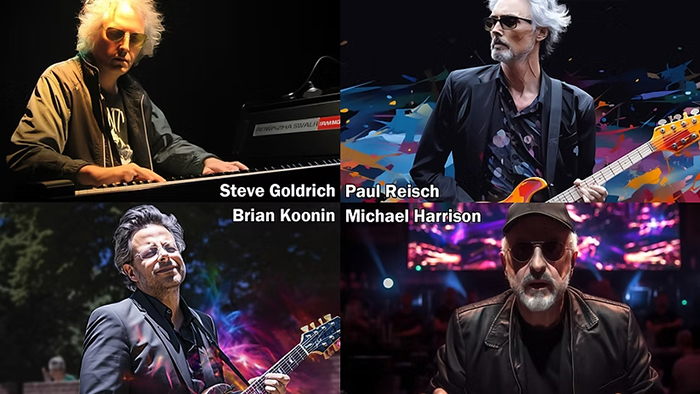
 Atlanta Journal-Constitution. The Compass Media Networks host is heard in Atlanta on Cox Media Group’s WSB-AM/WSBB-FM. His first piece was printed in September in the wake of the slaying of Charlie Kirk. His latest column is titled, “Democrats are hungry, Republicans complacent and all politics is national,” and
 stories of America’s heroes, the families who serve by their side, and how Fisher House plays a role in their journey. This program is appropriate for the entire Veterans Day Weekend and is a fitting, patriotic, and inspirational holiday programming alternative for all formats. Listeners will hear their emotional stories fighting for our freedoms, how they sustained their injuries, and the welcoming homes Fisher House provides for them and their loved ones while they endure their painful and painstaking recoveries. This year’s program features a special focus on the incredibly inspiring victories our wounded warriors enjoy on the field of competitive, adaptive sports. Fisher House supports the Wounded Warrior Games and the lnvictus Games as a vital part of the physical, emotional, and mental healing process for our wounded veterans. Listeners will hear about the riveting war stories detailing the injuries these heroes sustained, the ensuing medical and therapeutic healing process, right through the triumph on the field of international sports, as these brave veterans continue their dedication of service, representing America in international competition. For more information on this radio special, available cash and barter free, contact Larry O’Connor at 562.665.9537 or
 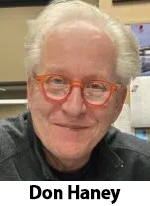 Don Haney and Minnesota Public Radio’s Dan Gunderson will leave their respective employers over the next 10 days. Both news pro spoke with Forum Communications’ The Forum about their careers. Haney covered news in Fargo for nearly 50 years. He joined WDAY in 1982, then
 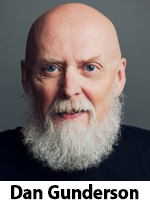 moved to KFGO in 1995. Seventy-two year old Haney has been working part time with KFGO since last spring. Gunderson, who joined MPR in 1987, say he got into journalism because he enjoyed writing so much. About his radio work he says, “I liked the idea of taking voices and sounds and putting them together in something interesting. It’s like a craft, where you take this raw material, interviews, and facts, and you try to make it into something meaningful.”
 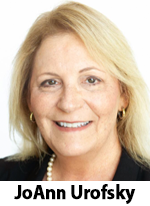 from the public media organization based at The University of South Florida, capping a career of 45 years in radio and public media. She says, “My time at WUSF has been incredibly rewarding. I am proud that our commitment to public service – building community through trusted journalism, classical music, jazz, and culture – has remained steadfast. As I step away, I’m confident this mission is in excellent hands with a new generation of talented leaders and innovators dedicated to serving the community through public media.”