Industry News

FNC’s Baier and MacCallum to Moderate Republican Primary Debate

The first Republican primary debate will take place on August 23 on FOX News Channel with anchors Bret Baier and Martha MacCallum serving as co-moderators. The event takes place live from 9:00 pm to 11:00 pmim from the Fiserv Forum in Milwaukee. FOX News Media president and executive editor Jay Wallace comments, “We are extremely proud to have Bret and Martha moderating the first debate of the 2024 presidential election season as Americans learn more about the candidates ahead of exercising their constitutional right to vote.”

Industry News

AFSP Honors Audacy with Public Education Lifesaver Award

im

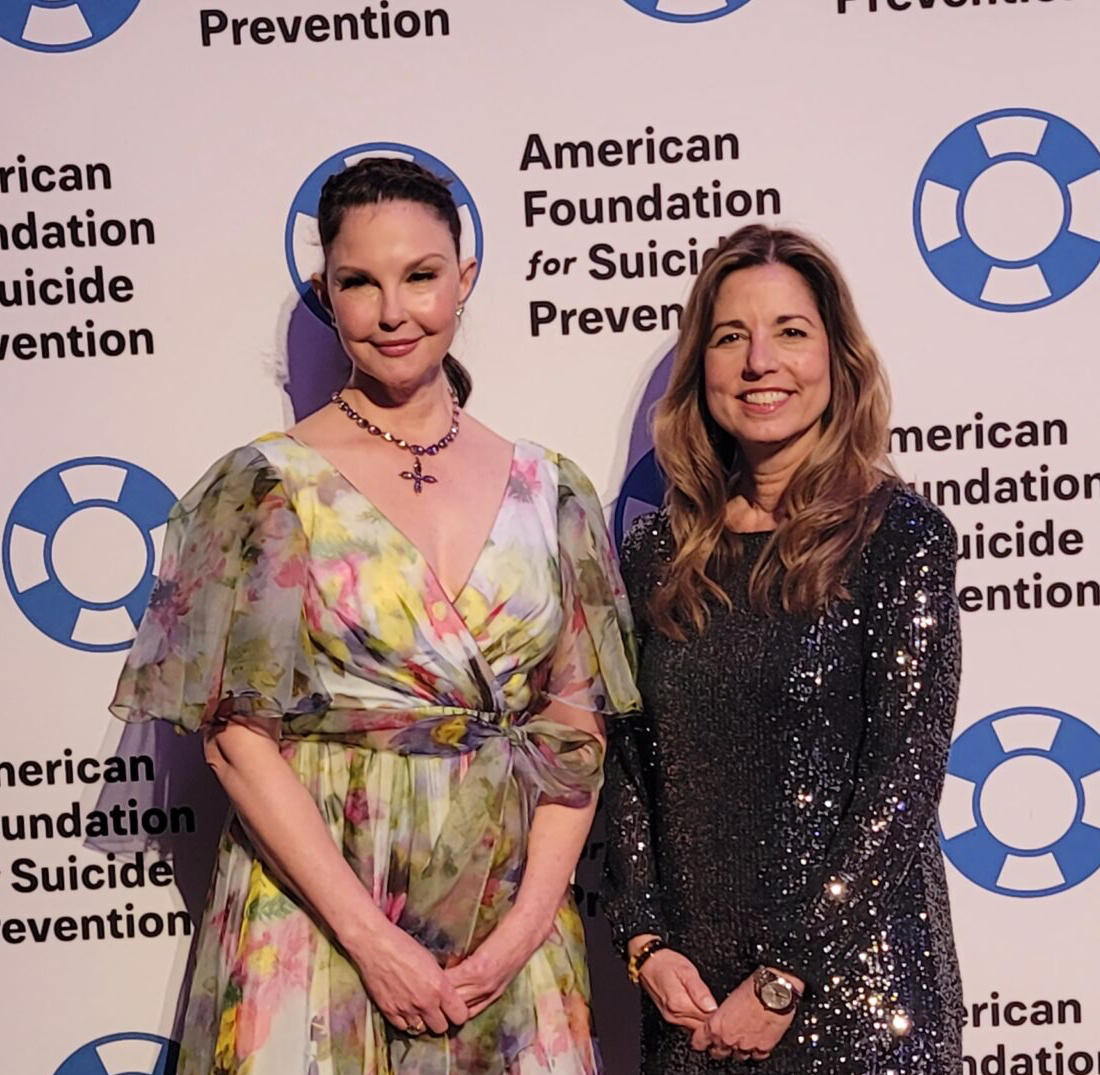
The American Foundation for Suicide Prevention recognized Audacy’s “I’m Listening” program and the company’s continued support of mental health with a Public Education Lifesaver Award during the organization’s annual AFSP Gala in New York City. The event honors those that have gone above and beyond in drawing attention to the cause of suicide prevention, elevating public discourse around mental health and suicide, and successfully creating actual change within our society to end this leading cause of death.  Pictured above are Audacy COO Susan Larkin (right) and actor, author, and mental health advocate Ashley Judd (left), who received the Survivor of Suicide Loss Lifesaver Award in honor of her work following her mother Naomi Judd’s suicide.

Industry News

New England Public Media Brings Monte Belmonte Aboard for New Radio Show and Podcast

New England Public Media tells TALKERS that it is hiring Western Massachusetts morning personality Monte Belmonte as host and executive producer of a new radio show and podcast “celebrating life in Western Massachusetts.” Belmonte has been hosting “Mornings with Monte” at Saga Communications’ triple A WRSI, Turners Falls, MA “93.9 The River.” Also joining Belmonte at NEPM is Kaliis Smith, who served as evening personality at WRSI and served as a regular guest on Belmonte’s show. With NEPM, Smith will be the show’s digital producer and will join Belmonte on air.

NEPM president Matt Abramovitz says, “When you listen to Monte Belmonte, you hear not only a great host with a devotion to his craft, but also a person who is committed to building and bolstering his community. Sharing the unique voices and stories of our region and using the airwaves for the common good is what public media is all about. We are excited to have Monte bring his enthusiasm and love of western Massachusetts to NEPM each day.” The programming will launch later this winter. Belmonte comments, “I’ve been a huge fan of New England Public Media since I moved west of Worcester 20 years ago. The station’s trusted reputation and broad reach was a big draw for me, as was the opportunity to work alongside people I’ve known and admired for years. I’m excited to get to work building a new show that’s all about celebrating what’s good about living here, meeting interesting neighbors and being a better community because of it.”

Industry News

Bob Kevoian Dies at 75

“The Bob & Tom Show” co-founder Bob Kevoian died on Friday at the age of 75 after a three-year battle with cancer. With partner Tom imgGriswold, the two launched The Bob & Tom Show in 1983 and the WFBQ, Indianapolis-based program took off, going into syndicated in 1995. The program, still led by Griswold, is heard on some 100 affiliate stations. Kevoian retired from the show in 2015. Kevoian went public with his cancer diagnosis in 2023 and launched “The Bob & Cancer Show” podcast with his wife Becky and Whit Grayson.

Industry Views

Talk Radio Mile Markers

By Pamela Garber, LMHC
Grand Central Counseling Group
New York

imgIn a piece I recently wrote for TALKERS I encouraged talk show hosts and producers to book more guests from the mental health profession to provide much-needed relief from the alarming level of anxiety afflicting American society. Since then, the non-stop news cycle, replete with the media pushing people’s buttons to keep them sucked in, has me further convinced this need would benefit the medium as well as the public. Win-win.

People today are negatively impacted by fear, pressure, disgust and confusion. Pressure to keep up with runaway technology. Fear of crushing financial responsibilities and institutional betrayal. Anger over ever-lurking danger from scams, identity theft, and violent assault on the street. Confusion over rapidly changing values, diminishment of ethics, and contentious relationships.

The result: talk radio listeners (as well as potential ones) are drowning in anxiety.

Where does the tumult of an increasingly noisy and uncertain world reach a daily crescendo?  On news/talk radio, of course. That unto itself is not a bad thing. The airing of news and views in the public marketplace of ideas is both therapeutic and a healthy exercise of our First Amendment rights. It is also grimly entertaining.

However, as both a therapist in practice for over two decades and a guest on many talk show interviews, I strongly believe that people need an occasional “spoonful” of relief to “help the medicine go down.” It’s not that I’m advocating sugar coating the content. But even just acknowledging the problems real people are facing from a human perspective can alleviate pain.

Mile markers to the rescue

My experience as a running enthusiast evokes a talk radio reference to the “mile markers” that dot the paths of long-distance races.

It was at mile 18 in the New York Marathon when I first yearned for a mile marker. Mile markers are those coveted little stations along the running races where everyone who extends their arm to offer runners a cup of water or Gatorade is Florence Nightingale to each participant who grabs the “reward.”

A little mile marker has such a big impact on going the distance in races (and in life). Life is hilly, sometimes suddenly downhill, with sprints and injuries, struggling to keep pace, and pretending to be slow. Mile markers in real life give us a boost.  That occasional mental health expert popping up every now and then as a news/talk radio element can put things in context, offer solutions, and stop the spread of those deadly words: “I can’t listen to this anymore; It make me too anxious.”

Check out this talk radio hit, “Close My Ears,” by Gunhill Road by clicking here.

Pamela Garber, LMHC is a practicing therapist based in NYC and South Florida and a longtime guest mental health commentator on radio and television news programs across the nation. She can be contacted by phone at 646-745-6709 or email at Pamelagarber@gmail.com.  Her website is Grandcentralcounselinggroup.com.

Industry News

Philadelphia to Be Prominent in Beasley’s America’s 250th Initiative

Beasley Media Group announces that in celebration of America’s 250th anniversary, its Community of Caring Initiative will roll out across on-air, digital, and in-car platforms, leading up to the historic milestone with Philadelphia playing a key role as the birthplace of American independence. The company says that as part of the initiative, stations will air public service announcements multiple times daily, ringing to lifeimg the defining moments of 1776 – from the leadership of Benjamin Franklin and John Adams to the actions of the Continental Congress and George Washington’s crossing of the Delaware. These messages will be complemented by live and recorded interviews throughout 2026, featuring special guests sharing stories and perspectives tied to America’s founding and evolution. Beasley chief communications officer Heidi Raphael adds, “At this pivotal time in our nation’s history, Philadelphia holds an especially unique and powerful place in telling America’s story. Through our Community of Caring Initiative, we’re proud to share that story across our platforms – connecting our audiences to the past while celebrating what lies ahead.”

Industry Views

Creators, Commentators, or Publishers: Liability Remains the Same

By Matthew B. Harrison
TALKERS, VP/Associate Publisher
Harrison Media Law, Senior Partner
Goodphone Communications, Executive Producer
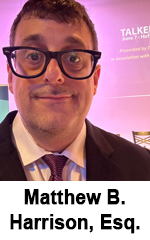
imgThe rise of independent, talk show-style political commentary on YouTube has created a new class of media actors who do not see themselves as broadcasters, journalists, or publishers. They see themselves as creators. That distinction is real in terms of identity, tone, and platform. It is not real where it matters most: liability.

The difference exists in how the work is produced and presented. It disappears the moment the content is published.

In practice, these creators are engaging in acts that courts have long recognized as publication. They are selecting topics, framing narratives, editing clips, and distributing content to large audiences. Those decisions are not neutral. They are editorial.

The absence of FCC regulation in this space has created a persistent misunderstanding. Traditional broadcasters operate under a regulatory framework that includes licensing and content restrictions. Independent creators do not. But the lack of FCC oversight does not reduce exposure. It removes one layer of regulation while leaving the core legal risk fully intact.

Defamation law applies equally to both groups. A false statement of fact about a real person that causes reputational harm can give rise to liability whether it is spoken on a licensed radio station or uploaded to a monetized YouTube channel. The standards may differ depending on whether the subject is a public or private figure, but the underlying obligation remains the same: accuracy matters.

There is no YouTube exception. There is no creator carveout. The law does not care how the content was distributed, what the platform calls you, or how you see yourself. It cares who made the statement, who chose to publish it, and whether it was false.

The structure of YouTube content introduces additional risk. Many creators rely on rapid production cycles and clip-based commentary. This increases the likelihood of error, particularly when context is compressed or omitted. Editing choices that seem minor from a production standpoint can materially change meaning, which is precisely the type of conduct that courts examine in defamation and false light claims.

Monetization further complicates the analysis. Revenue from ads, memberships, or sponsorships strengthens the argument that content is commercial in nature. That does not eliminate First Amendment protections, but it can influence how a court evaluates intent and reasonableness.

There is also a tendency to assume that platform norms provide a form of protection. If a piece of content is allowed to remain online, or even promoted by an algorithm, it can feel implicitly validated. That assumption is misplaced. Platform enforcement decisions are not legal determinations. They are business judgments.

The most important point is simple and often overlooked. Liability does not turn on intent. It turns on what was said, whether it was false, and whether reasonable steps were taken to verify it.

The platform may change how content looks. It may change how fast it spreads. It may change who gets to participate.

It does not change the consequences of getting it wrong.

Time passes. Technology and fancy packaging change. Exposure and liability do not. 

Matthew B. Harrison is a media and intellectual property attorney who advises talk show hosts, content creators, and creative entrepreneurs. He has written extensively on fair use, AI law, and the future of digital rights. Reach him at Matthew@HarrisonMediaLaw.com or read more at TALKERS.com.

Industry News

Dr. Murray Sabrin Launches Weekly Podcast

img

Noted “public intellectual” and longtime talk media guest Dr. Murray Sabrin has launched a weekly video podcast titled, “Health, Wealth, and the Pursuit of Happiness.”  In it, he interviews experts and colorful figures from the worlds of health care, finance, and politics in addition to sharing his own commentaries. A prolific author, Substack columnist, and public speaker, Sabrin has been one of the most sought-after guests in news/talk media for the past three decades. He is one of America’s most visible experts on libertarianism and free market economics – ideologies that have strong followings within the influential arena of talk radio. Sabrin is emeritus professor of finance at Ramapo College of New Jersey, an associate scholar at the Mises Institute, and a former Libertarian Party standard bearer for governor in the Garden State. He is the founder of a grassroots movement, “Make Americans Financially Independent (MAFI)” – a counterpoint to the present tendency toward runaway, unconstitutional government spending that has led the U.S. to take on trillions of dollars in stifling debt. Sabrin’s guest on the debut installment of the podcast is psychotherapist Joe Sansone. To view the podcast, please click here. To book Dr. Sabrin as a guest, please call Victoria Jones at 917-865-3991 or email: victoria@dcradiocompany.com.

Industry Views

Sabo Sez: The “Constant Threat” Isn’t Exactly What It’s Cracked Up to Be

By Walter Sabo 
A.K.A. Walter Sterling, Radio Talk Show Host

imgAssessing the hourly threat to the very existence of the medium of radio is a popular hobby among conventioneers. The audience levels for radio are astonishingly constant since 1970, but according to “radio people,” they are living at the edge of a volcano. Spotify radio, SiriusXM radio, Pandora radio, TuneIn radio, Internet radio, there are all kinds of radio! General Motors wants to throw AM/FM radio out of the car as in “do you really need radio in the car?” Radio’s response to the in-car-removal threat is by promising non-stop typhoons and hurricanes.

The actual threats to established radio companies are non-established radio companies. With the death of meaningful on-air competition, a consolidated industry can easily anticipate the strategies of all major “brands” (formerly known as stations). What cannot be anticipated are actions that are a true threat: Outlier owners throwing creative grenades into the sleepy radio ecosystem.

All viable radio formats launched as unanticipated surprises. New formats are greeted with hostility and predictions of doom. All of them. Yes, even adult contemporary. Eventually – or tomorrow – a new format will be deployed by a desperate owner with a handful of stations, an owner with a retailer’s mentality will go for broke with a format – or a series of shows – that will not be anticipated, cannot be duplicated and is not cheap.

See the threat? A true threat will be a new format that successfully attacks the core of dozens – hundreds of established stations, stations owned by venture capital. It will not be anticipated, cannot be duplicated by hundreds of stations and does not “scale” i.e. isn’t cheap. But the new format would be so rapaciously embraced by the public that it would force all other stations to completely change their on-air content and their sales strategies. Imagine the impact of that threat.

Walter Sabo has been a C-Suite action partner for companies such as SiriusXM, Hearst, Press Broadcasting, Gannett, RKO General, and many others. His nightly show “Walter Sterling Every Damn Night” is heard on WPHT, Philadelphia. His syndicated show, “Sterling On Sunday,” from Talk Media Network, airs 10:00 pm-1:00 am ET, and is now in its 10th year of success. He recently began hosting “Another Side of Midnight” weekends on WABC, New York. He can be reached by email at sabowalter@gmail.com or phoned at 646-678-1110.

Industry News

Westwood One: Radio Reaches 64% of Registered Voters

A blog post by the Cumulus Media | Westwood One Audio Active Group using data from Edison Research’s Share of Ear study says “AM/FM radio is an alternative to YouTube and CTV that can generate strong voter reach and impact during election seasons.” Using the recent Q4 2025 Share of Ear study, the post says data reveals how politicalimg agencies can use AM/FM radio in their upcoming media plans. Some key points include:1) AM/FM radio has a 64% share of ad-supported audio among registered voters; 2) AM/FM radio has substantial shares (62% to 65%) among Independents, Republicans, and Democrats: 3) Marketers and media agencies significantly underestimate AM/FM radio listening shares and dramatically overestimate Spotify and Pandora audiences; and 4) Digital audio only reaches a third of Americans. With AM/FM radio, reach soars to 73%. See the blog post here.

Industry News

Cumulus Says 2025 Annual Report Filing Late Due to Bankruptcy Proceedings

Cumulus Media files a notice with the Securities and Exchange Commission revealing that it is unable to files its annual 10-K with the Commission due to its status in Chapter 11 bankruptcy protection.img Specifically, since the company must get permission from the court to retain PricewaterhouseCoopers LLP as the independent registered public accounting firm for the company and its subsidiaries to complete the 10-K, it must wait to clear the objection hurdle expected to be complete by April 8. Cumulus notes that the ultimate timing of its filing of its Annual Report is dependent upon entry of the order.

Industry News

TALKERS News Notes

WYPR Announces Local Programming. Baltimore Public Media announces an update. To WYPR’s daily programming schedule that programming director Maxie Jackson says “aligns with Baltimore Public Media’s mission to connect, inform, and enrich the voices and communities of Baltimore and the world.” This includes news director Mat Bush hosting the live “WYPR News Roundup” every Friday at 2:00 pm as well as the addition of staffers including executive producer Amy Walters, senior producer Malarie Pinkard-Pierre, producer Elizabeth Nonemaker, and senior podcast producer Mark Gunnery. Jackson adds, “This growth would not be possible without our members, who have stepped up in a major way since the dissolution of the Corporation for Public Broadcasting. We’re seeing historic levels of engagement in our fundraising drives and translating that investment into action and expanded options for our audiences.”

WRFH Wins College Station of the Year from MAB. Hillsdale College’s radio station WRFH-FM, Hillsdale “Radio Free Hillsdale 101.7 FM” is named 2026 College Audio Station of the Year by the Michigan Association of Broadcasters during its 2026 College Audio Awards. This is the fourth consecutive year and fifth time since 2019 WRFH has won the honor.

Industry News

WOR’s Curtis Sliwa Raises Ire of NY GOP After Skit with Mamdani

Some of New York’s Republicans are up in arms over former New York City mayoral candidate Curtis Sliwa’s performing a skit with New York Mayor Zohran Mamdani that promoted adoption of cats. Sliwa – a well-known cat lover and proponent of cart adoption – recorded the skit withimg Mamdani that was shown at the Inner Circle, the annual press corps roast. Some Republicans are accusing Sliwa of cozying up to the Democrat mayor who beat him in November. But Sliwa, who is now part of the WOR, New York morning show, tells The New York Times that its hypocritical of Republicans and WABC owner John Catsimatidis to complain, noting that “Mr. Catsimatidis met with Mr. Mamdani last week and that Mr. Trump has met with the mayor in the Oval Office.” See The New York Times story here.

Industry News

Tavis Smiley to Interview Excluded California Gubernatorial Candidates

Today (3/25) at 10:00 am PT, KBLA, Los Angeles-based, nationally syndicated talk radio host Tavis Smiley will interview the four candidatesimg who were excluded from the recently canceled March 24 KABC-TV | University of Southern California gubernatorial debate. Smiley says he’ll speak with Xavier Becerra, Tony Thurmond, Betty Yee, and Antonio Villaraigosa separately in four 15-minute segments about the race, their campaigns, and their plans for California’s future. He adds, “It’s no coincidence that the four gubernatorial candidates who were excluded from a debate hosted by ABC7 and USC – canceled due to public outcry – are now appearing on KBLA Talk 1580, a Los Angeles-based, Black-owned, progressive radio station, to discuss their campaigns and the race for California’s top office.”

Industry Views

Providing Support and Comfort to the Suffering Masses

By Pamela Garber, LMHC
Grand Central Counseling Group
New York

imgIn ongoing discussions about the dwindling relevance of radio in the modern world, the medium is grudgingly defended as a reliable “first responder” during times of public emergencies.

Nothing beats having an old-fashioned battery powered radio handy when confronted by hurricanes, tornados, blizzards, earthquakes, wildfires, floods, blackouts, and (dare I say it) weapons of war. Yes, radio is quite useful in the thick of natural “disasters” when the grid goes down, and the lights go out.

However, we are missing a huge opportunity by limiting radio to the roleimg of modern-day media Sterno.

I’ve been a practicing therapist in New York and South Florida for the past 25 years, and although not a host, I have served, and continue to participate, as a guest on broadcasts across the nation, discussing the emotional connections between hot news topics and people’s feelings. I am not alone in the perception that people of my profession have performed for decades as fully invested members of the talk radio family.

During this period, it has become obvious that the one-time talk radio mainstay of the in-house or “go to” mental health professional has become an endangered species. Some of the biggest names in radio were practicing therapists. They were a familiar part of the talk (even news/talk) format. Without turning this into a historical essay or a scold, it is sad to note that most of them are gone.

Ironically, now more than ever, the deeply troubling events in the world, the nation, and our local communities, constituting news and statistics, are bringing deep emotional pain and crippling anxiety to the masses… especially the kind of people likely to tune in to talk radio. Professionals. Businesspeople. Workers. Parents.

Looking for younger demos? Gen-Z is perhaps the most anxiety-plagued segment of the population. These “kids” need support, guidance, and understanding.

Hurricanes and heat waves are not the only disasters that call for the helpful and healing power of radio.

The hot topics of the day: crime, inflation, corruption, disease, ignorance, racial strife, and identity politics – not to mention the ever-lingering threat of nuclear devastation – are not merely subjects (and excuses) to vent blame, anger and hate. They contribute to an environment of deep fear and institutionalized discomfort. There are millions of real-life, personal “disasters” going on out there, exacerbated by relationship betrayals and family breakdowns, that make a heavy snowstorm feel like an adventure by comparison.

Stoking people’s fear and anger with cherry-picked cherry bombs is only a small part of the equation when it comes to serving the desperate needs of both current and potential listeners.

It would be a good thing to bring back to the talk radio menu some psychology shows and professional purveyors of emotional clarity, available in the local communities, as guests to dole out much sought compassion, empathy, guidance, and old fashioned advice.

Pamela Garber, LMHC is a practicing therapist based in NYC and South Florida and a longtime guest mental health commentator on radio and television news programs across the nation. She can be contacted by phone at 646-745-6709 or email at Pamelagarber@gmail.com.  Her website is Grandcentralcounselinggroup.com.

Industry News

FCC Commissioner Gomez Criticizes “Unlawful” Nexstar-Tegna Merger

FCC Commissioner Anna M. Gomez issued a statement on Friday (3/20) after the FCC’s Media Bureau approved the Nexstar/TEGNA merger, which Gomez notes violates the existing 39% national ownership cap inimg federal law. She says, “The FCC has once again chosen bureaucratic cover over public accountability. This merger was approved behind closed doors with no open process, no full Commission vote, and no transparency for the consumers and communities who will bear the consequences. A transaction of this magnitude, which includes new and novel issues before the FCC, demands open deliberation before the full Commission, not a quiet sign-off meant to avoid public scrutiny. Given the increasingly alarming pace of reckless media consolidation, the American public deserves to know how and why this decision was made.

“Local journalism is under extraordinary strain. Across the country, newsrooms are being consolidated, reporters laid off, and editorial decisions made far from the communities broadcast stations are licensed to serve. The Nexstar/TEGNA merger will accelerate exactly that trend, concentrating broadcast power in fewer corporate hands, shrinking independent editorial voices, and prioritizing national business interests over local needs. Nexstar has already begun cutting newsrooms throughout the country, and as these billion-dollar companies grow even larger, their increased negotiating leverage will drive up fees that translate into higher monthly bills for those families who can least afford them. The consequences of this rubber stamp approval will be felt in living rooms and newsrooms across the country, resulting in fewer voices, less competition, and higher costs for consumers.”

Industry News

Gomez Calls Out FCC’s “Intimidation Tactics”

FCC Commissioner Anna M. Gomez responds to FCC Chairman Brendan Carr’s recent statements tying broadcasters’ public service obligations to reporting about the Iran conflict and warning them about airing “hoaxes and news distortions.” She writes: “Once again, this FCCimg pretends it has the power to control news coverage. In reality, the FCC has vanishingly little power over national news networks. It licenses local broadcast stations, not networks, and no licenses are up for renewal until 2028. Early renewal attempts are exceedingly rare, and the process is so demanding that any effort would almost certainly fail, especially given the well-documented First Amendment violations underlying these moves. These threats are grounded in neither reality nor law and would not survive judicial scrutiny, just as other recent attempts by this Administration to push beyond constitutional limits have repeatedly failed in court.

“The concern over the chilling effect of these actions, however, is very real. Over the past year, this FCC has attacked the media as part of a years-long campaign by this Administration and its allies to discredit factual, independent coverage while blaming the press for growing public distrust. Meanwhile, it is the FCC’s own credibility and public trust that are rapidly eroding.

“Out of the many politically motivated FCC investigations targeting perceived government critics, not a single one has resulted in an enforcement action. This follows a well-established pattern of threatened investigations, broadcast license revocations, and regulatory harassment aimed at pressuring broadcasters and their corporate parents to comply or capitulate in advance. We cannot give this FCC more power than it has. Broadcasters, journalists, and the public should recognize these empty threats for what they are and fight to defend the First Amendment against any attempt to control or intimidate the press.”

Industry News

FCC Chair Threatens Licenses of Those Broadcasting “Fake News”

Over the weekend, Federal Communications Commission Chairman Brendan Carr posted to social media a warning to licensees that they face losing their licenses when renewal time comes. He posted: “Broadcasters that are running hoaxes and news distortions – also known as the fake news – have a chance now to correct course before theirimg license renewals come up. The law is clear.  Broadcasters must operate in the public interest, and they will lose their licenses if they do not. And frankly, changing course is in their own business interests since trust in legacy media has now fallen to an all time low of just 9% and are ratings disasters. The American people have subsidized broadcasters to the tune of billions of dollars by providing free access to the nation’s airwaves. It is very important to bring trust back into media, which has earned itself the label of fake news. When a political candidate is able to win a landslide election victory after in the face of hoaxes and distortions, there is something very wrong.  It means the public has lost faith and confidence in the media.  And we can’t allow that to happen. Time for change!” Carr included a Truth Social post from President Donald Trump in which he complains about papers such as The New York Times and The Wall Street Journal reporting on a strike against the U.S. base in Saudi Arabia that hit five refueling tanker planes. Trump said the reporting was intentionally wrong.

Industry News

Michael Harrison Discusses His Rock Radio Days (and More) on Video Podcast

TALKERS publisher and iconic radio programmer/personality Michael Harrison talks about his colorful 59-year career in radio including his early days as a pioneer in the progressive rock genre and founder of the “Album Oriented Rock” (AOR) format in the early 1970s through his present-day involvement in spoken word media.  All this and more was recorded (3/5)img during an informal conversation with his longtime friend, music industry publicist Anne Leighton on her YouTube program, “The Anne Leighton Inclusion Interview.”  Harrison talks about the evolution of radio and its influence on popular culture through more than a half century of imgbroadcasting adventures including his present-day role as a member of the classic rock band, Gunhill Road.  Harrison states, “Anne is such a unique player in this business – a longtime proponent of music discovery – she has such a respect for the artists and their fans.  Her podcast is SO refreshingly grassroots. It was a remarkable, fun experience talking with her about all that cool stuff.” Fans of music and radio history should not miss this.  To view this installment of the Anne Leighton Inclusion Interview in its entirety, please click HERE.

Industry News

TALKERS News Notes

Koehl Named Senior Fellow at D2C. Longtime talk radio professional Corny Koehl, whose career includes positions producing Dr. Laura Schlessinger, Suze Orman, Satellite Sisters, and Harpo Radio, is named Inaugural Senior Fellow at The Dedication to Community (D2C) Justice Institute at University of Mount St.Vincent. In this new role. Koehl will play a foundational role in shaping the Institute’s mission to advance justice-centered communication, public engagement and narrative change.

Tom Donahue Show to Launch on April 4. Talk media pro Tom Donahue says his program Truth Matters will debut on April 4 and will transition from SRN satellite distribution to online streaming and podcast audio file delivery to stations. The show will still air at 9:00 pm ET Saturday nights via direct stream from K-Star Talk Radio Network and will be heard on Talk Stream Live, World Broadcasting Network, “930 AM The Answer,” and later Sunday nights on KCAA Radio.

Industry News

Curtis Sliwa Joins Larry Mendte for WOR Mornings

img

iHeartMedia news/talk WOR, New York announces that longtime NYC media personality Curtis Sliwa is joining the station’s morning drive show alongside Larry Mendte. “Curtis Sliwa and Larry Mendte in the Morning” will debut on Monday (3/9) in the 6:00 am to 10:00 am daypart. Sliwa had been working for crosstown news/talk WABC but took leave to run for mayor of New York on the Republican ticket. He says, “It’s been four months since the end of the New York City Mayoral election and most places I go people have asked me to come back to talk radio, so that’s what I’m going to do. I’m going to the best radio station in New York City, joining my friends of 30 years Mark Simone and Sean Hannity. It’s a full circle moment for me as my first radio station appearance for me was in 1971 when WOR’s Arlene Francis interviewed me as a kid, and I’ve been talking on the radio since.” Larry Mendte comments, “I couldn’t be more excited. Curtis is not only a legendary talk radio host, but an iconic New Yorker. What an honor to get to team up with him to get New Yorkers started every weekday.” The station adds that Gracie Award winner and 29-year WOR veteran Natalie Vacca will serve as executive producer for the new show.

Industry News

LeGeyt Reiterates Need for Ownership Deregulation at NAB State Leadership Conference

During yesterday’s gathering of broadcasters in Washington, DC for the National Association of Broadcasters’ annual State Leadership Conference, NAB president and CEO Curtis LeGeyt delivered remarks to some 570 attendees, “outlining the urgent need to modernize outdated regulations that prevent local stations from competing on a level playingimg field with global technology platforms.” He underscored broadcasters’ unique and essential role in public safety, civic engagement and strengthening local democracy. Additionally, broadcasters heard from key policymakers shaping broadcast policy, including Sen. Ed Markey (D-MA), who spoke about the enduring value of broadcast radio and his leadership on the bipartisan effort to pass the AM Radio for Every Vehicle Act… and U.S. Rep. Richard Hudson (R-NC), chairman of the House Energy and Commerce Subcommittee on Communications and Technology, who spoke about the need for broadcast ownership rules to reflect today’s landscape and the importance of keeping AM radio in cars.

Industry News

TALKERS News Notes

New York Archbishop to Host New Program. SiriusXM announces that new Archbishop of New York Ronald Hicks will host a new program for SiriusXM’s Catholic Channel, titled, “All Good Things with Archbishop Hicks. The program takes over the time slot previously held by Cardinal Timothy Dolan, who hosted “Conversations with Cardinal Dolan.”

Louisville Public Media Adds New Programs. Louisville Public Media expands its lineup with three new programs: “Sports in America” with David Greene from PRX and WHYY; “Click Here” with Dina Temple-Raston from PRX and Recorded Future News; and “Eastern Standard” from WEKU in Richmond, Kentucky. LPM president and CEO Kenya Young comments, “In listening to our audiences — those who have supported LPM for years and those we have yet to reach — one thing is unmistakably clear: people value programming that speaks to where they live. They want journalism and storytelling grounded in their communities, their state and the issues that shape their lives.”

Kevin Frazier to Appear at BFOA Gala. Broadcasters Foundation of America announces that “Entertainment Tonight” co-host Kevin Frazier will introduce Stephen A Smith, the recipient of the BFOA’s inaugural Broadcast Personality of the Year Award at the organization’s Gala and Fundraiser taking place Monday (3/9) at the Plaza Hotel in New York City.

Industry Views

Reckless Disregard in the Age of AI: What Verification Now Requires

By Matthew B. Harrison
TALKERS, VP/Associate Publisher
Harrison Media Law, Senior Partner
Goodphone Communications, Executive Producer

imgAI is now embedded in the modern newsroom. Not as a headline, not as a novelty, but as infrastructure. It drafts outlines, summarizes complex reporting, surfaces background details, and accelerates prep for live conversations. For media creators operating under relentless deadlines, that efficiency is not theoretical. It is practical and daily.

That reality raises a quiet but consequential legal question. When AI contributes to your research, what does verification now require?

Professional hosts are not reading raw chatbot answers on air and calling it journalism. That caricature misses the real issue. What is actually happening is subtler and far more common.

AI now sits inside research workflows. Producers use it for background. Hosts use it to summarize reporting. Teams use it to outline controversies or draft rundowns. Most of the time, it works. Sometimes, however, it invents.

When that invention involves a real person and a serious allegation, the legal analysis looks familiar.

For public figures, defamation requires proof of actual malice – knowledge of falsity or reckless disregard for truth. For private figures, negligence is usually enough. In both cases, the focus is not on the tool. It is on the content creator’s conduct.

AI does not change the elements. It changes the context in which reasonableness is judged.

Courts have long held that repeating a defamatory statement can create liability, even if someone else said it first. If you rely on a blog, and that blog relied on AI, and the allegation is false, the question becomes whether your reliance was reasonable.

Was the source reputable? Was the claim inherently improbable? Were there obvious red flags?  Was contradictory information readily available?

AI’s reputation for “hallucinating” facts now forms part of that backdrop. Widespread awareness that these systems can fabricate citations, merge identities, or invent accusations becomes relevant when a court evaluates your verification choices.

This does not mean using AI indicates reckless disregard. It means using AI does not excuse skipping verification when the stakes are high.

The more specific and damaging the claim, the greater the duty to confirm it through independent, reliable sources. Not another prompt. Not a circular reference to the same unverified blog. Rather, a primary record, official statement, or established reporting.

Documentation matters. If challenged, being able to show that you checked multiple sources before broadcast can be decisive.

None of this is new doctrine. What is new is how seamlessly AI blends into ordinary research habits. That integration makes it easier to forget that the legal question is still about human judgment.

The law will not ask whether your workflow was efficient. It will ask whether your conduct was reasonable under the circumstances.

In the age of AI, verification is not a courtesy. It is risk management.

Matthew B. Harrison is a media and intellectual property attorney who advises radio hosts, content creators, and creative entrepreneurs. He has written extensively on fair use, AI law, and the future of digital rights. Reach him at Matthew@HarrisonMediaLaw.com or read more at TALKERS.com.

Industry Views

Progressive Talk Media Star Thom Hartmann Interviewed

UFCO Hartmann copy

WYD Media nationally syndicated progressive talk show host, Thom Hartmann is Michael Harrison‘s guest this week on Up Close Far Out – a YouTube video presentation of broadcast industry trade publication TALKERS magazine.  Hartmann is one of – if not THE – most influential and longest running progressive radio and talk media commentators on the scene today.  His daily program is heard on several hundred radio stations as well as the SiriusXM Progress 127 channel, Free Speech TV, Substack, YouTube, and Facebook. He is a prolific best-selling author and publishes a widely read daily newsletter, the Hartmann Report. Hartmann is currently ranked number 8 on the prestigious TALKERS Heavy Hundred list of the 100 Most Important Radio Talk Show Hosts in America.  Harrison and Hartmann discuss the state of news/talk media, the challenge of covering the Trump presidency, and both commentators’ concern about the administration’s escalating infringement on First Amendment rights. To experience the video in its entirety please click HERE.

Industry News

SAG-AFTRA Criticizes Nexstar News Cuts

SAG-AFTRA is condemning Nexstar Media Group’s decision to eliminate SAG-AFTRA positions at WGN-TV in Chicago and lay off multiple journalists at KTLA in Los Angeles and at stations across the country. SAG-AFTRA says, “These cuts strike a serious blow to a trusted source of news and information on which these communities depend.” SAG-AFTRA president Sean Astin comments, “By laying off journalists across the country, Nexstar is eroding the resources and talent that local communities rely on for trusted news. These actions highlight the risks of media consolidation and underscore the urgent need for regulators and the company to prioritize the public interest and the professionals who serve it.”

Industry Views

If the Bot Lies, Who Pays?

By Matthew B. Harrison
TALKERS, VP/Associate Publisher
Harrison Media Law, Senior Partner
Goodphone Communications, Executive Producer 

img

A reporter recently asked a clean question with sharp edges: “Who is responsible when an AI defames someone?”
It sounds futuristic. It isn’t. It’s a standard defamation analysis dressed in new technology.
The most publicized early test involved radio host Mark Walters, who sued OpenAI after ChatGPT falsely stated he had been accused of embezzlement. The case was dismissed in federal court in Georgia in 2024. The court concluded the complaint did not plausibly allege the required level of fault. No federal appellate court has yet imposed defamation liability on an AI developer for a hallucinated statement alone.
That matters.
Defamation still requires a false statement of fact, publication to a third party, fault, and damages. An AI system cannot form intent. It cannot know falsity. It is not a legal person. But an AI output can absolutely contain a false statement about a real individual.
Courts will not ask whether “the AI defamed.” They will ask who published the statement.
Publication is broader than many assume. It does not require a broadcast tower. It requires communication to at least one third party. If a chatbot produces a false statement visible only to the person who prompted it and that person is the subject of the statement, there is typically no publication. The moment that output is emailed, posted, quoted, aired, or incorporated into a script, publication is satisfied.
The AI session itself is not the problem. Distribution is.
That is where fault enters the picture.
For public figures, plaintiffs must prove actual malice: knowledge of falsity or reckless disregard for truth. “The computer said it” is not a defense. If a host repeats a serious allegation generated by a system widely known to hallucinate and fails to verify it, a plaintiff will argue reckless disregard. For private figures, negligence is usually enough. Failing to check an AI-generated accusation against readily available sources may meet that standard.
The technology does not lower the bar. Nor does it create a new type of immunity. It simply changes the source of the words.
The unsettled frontier is developer exposure under Section 230 and product liability theories. Courts have not yet produced a controlling appellate decision holding a model developer liable in defamation solely because a model generated a false statement. That question remains open, but it is not yet answered in plaintiffs’ favor.
Here is the practical reality for media professionals.
An AI can generate the sentence.
You are the one who makes it public.
That’s where liability is found.
Matthew B. Harrison is a media and intellectual property attorney who advises radio hosts, content creators, and creative entrepreneurs. He has written extensively on fair use, AI law, and the future of digital rights. Reach him at Matthew@HarrisonMediaLaw.com or read more at TALKERS.com.
Industry News

FCC Chairman Carr Announces Pledge America Campaign

Federal Communications Commission chairman Brendan Carr is announcing the agency’s Pledge America Campaign designed to dovetail with the celebration of the 250th anniversary of America’s independence. The announcement says that “consistent with their longstanding public interest obligations, America’s broadcasters play a key role in educating, informing, and entertaining viewers and listeners all across America, and they are particularly well suited to air programming that is responsive to the needs and interests of their local communities.  The Pledge America Campaign enables broadcasters to lend their voices in support of Task Force 250 and the celebration of America’s 250th birthday by airingimg patriotic, pro-America content that celebrates the American journey and inspires its citizens by highlighting the historic accomplishments of this great nation from our founding through the Trump Administration today.” Carr adds, “On July 4, 2026, America will celebrate the 250th Anniversary of the signing of the Declaration of Independence. That revolutionary document set forth our founding principles – including Life, Liberty, and the pursuit of Happiness – and put America on a collision course with destiny.  Over the following centuries, the American story has defined modern history and spread freedom, opportunity, and prosperity across the globe.  As America’s 250th anniversary approaches, it is important to reflect on the ideals and events that have defined our past while keeping an eye towards our country’s bright future. The White House is leading our national celebration of this historic event with the Salute to America 250 Task Force, which calls on the federal government, among others, to mark this momentous occasion.  As part of this effort, I am calling on broadcasters to pledge to provide programming that promotes civic education, national pride, and our shared history.” Carr shares some examples stations could use, including:

Running PSAs, short segments, or full specials specifically promoting civic education, inspiring local stories, and American history.

  • Including segments during regular news programming that highlight local sites that are significant to American and regional history, such as National Park Service sites.
  • Starting each broadcast day with the “Star Spangled Banner” or Pledge of Allegiance.
  • Airing music by America’s greatest composers, such as John Philip Sousa, Aaron Copland, Duke Ellington, or George Gershwin.
  • Providing daily “Today in American History” announcements highlighting significant events that took place on that day in history.
  • Partnering with community organizations and other groups that are already working hard to bring America’s stories of unity, perseverance, and triumph to light.
Industry Views

TALKERS Magazine Enthusiastically Supports the 2026 IBS Conference in New York as its Presenting Sponsor

By Matthew B. Harrison
TALKERS, VP/Associate Publisher
Harrison Media Law, Senior Partner
Goodphone Communications, Executive Producer 

imgTALKERS magazine, the leading trade publication serving America’s professional broadcast talk radio and associated digital communities since 1990, is pleased to participate as the presenting sponsor of the Intercollegiate Broadcasting System (IBS) conference for the second consecutive year. The conference is currently underway in New York.

IBS NYC 2026 – America’s preeminent annual college radio and media gathering began last night (2/19) and continues today and tomorrow (2/20-21) at the Sheraton Times Square Hotel in midtown Manhattan. The non-profit, volunteer-driven, IBS has been diligently serving student broadcasters since 1940, and its services are needed today more than ever.

Campus broadcasting continues to take on growing importance as theimg radio industry (and its related fields) seeks to connect with and develop a next generation of professional practitioners as well as engaged audiences. TALKERS is honored to again provide financial support, encouragement, experience, and advice to the dedicated organizers of this very special event.

We highly recommend that radio and media professionals attend this dynamic gathering because the grass roots future of the field oozes out of its content-rich meeting rooms, exhibition areas, and hallways. It provides fertile ground at which to network with almost a thousand wide-eyed up and coming stars in both talent and management – the next generation of professional industry movers and shakers. From the high school, college, and university perspective, the fact that it continues to be a must-attend conference for dedicated students of communication and professional media hopefuls remains a self-evident truth. Here, in the early stages of the second quarter of the 21st century, everybody’s in show biz and everybody’s a star. To quote Ray Davies, “There are stars in every city, in every house and on every street.”

The skills of modern communication are a vocational necessity well beyond entering a career in radio, TV or podcasting. The abilities to produce a podcast, YouTube video, social media campaign, cogent press release, or “talk show” constitute a minimal level of modern age literacy needed in almost all fields of endeavor going forward.

Since its launch nearly four decades ago, TALKERS magazine has been a potent presence at the intersection of media creation, education, and accountability. That’s why our support of the Intercollegiate Broadcasting System (IBS) conference isn’t just symbolic – it’s practical.

The next generation of broadcasters, podcasters, digital hosts, producers, and media entrepreneurs is already building the future of this industry. IBS has been helping them do that – consistently, seriously, and without shortcuts – for decades.

Campus stations are often where experimentation happens first:

  • New formats
  • New voices
  • New distribution models
  • New cultural conversations
  • New technology
  • New legal frontiers

IBS recognizes that reality and treats student media creators with the same seriousness the industry demands at the professional level. This aligns directly with our TALKERS mission: supporting informed, responsible, creative media across emerging platforms.

We’re not simply sponsoring a conference.  We’re investing in the people who will define the next era of media.

For more information on the 2026 IBS conference, please click HERE.

Matthew B. Harrison is a media and intellectual property attorney who advises radio hosts, content creators, and creative entrepreneurs. He has written extensively on fair use, AI law, and the future of digital rights. Reach him at Matthew@HarrisonMediaLaw.com or read more at TALKERS.com.

Industry News

Colbert-Talarico Interview Draws Attention to Equal Time Rule as FCC Commissioners Disagree About its Interpretation

It’s no surprise to regular TALKERS readers that FCC Chairman Brendan Carr and Democratic Commissioner Anna M. Gomez disagree – at least to some degree – on how the equal time rule should be appliedimg to television and radio programming. After the back-and-forth between The Late Show’s Stephen Colbert and CBS attorneys over the interview with U.S. Senate candidate U.S. Rep. James Talarico that did not air on CBS television but was pushed out on the show’s social media accounts instead, broadcasters – including news/talk radio programmers and hosts – may be confused about how the equal time rule is being applied.

For her part, Gomez issued the following statement: “This is yet another troubling example of corporate capitulation in the face of this Administration’s broader campaign to censor and control speech. The imgFCC has no lawful authority to pressure broadcasters for political purposes or to create a climate that chills free expression. CBS is fully protected under the First Amendment to determine what interviews it airs, which makes its decision to yield to political pressure all the more disappointing. It is no secret that Paramount, CBS’s parent company, has regulatory matters before the government, but corporate interests cannot justify retreating from airing newsworthy content. The FCC is powerless to impose restrictions on protected speech, and any attempt to intimidate broadcasters into self-censorship undermines both press freedom and public trust. I once again urge broadcasters and their parent companies to stand firm against these unlawful pressures and continue exercising their constitutional right to speak freely and without government interference.”

As far as news/talk radio is concerned, TALKERS editors have pointed out that in most cases, talk radio stations and their hosts are usually happy to have any qualified candidate be interviewed – whetherimg Republican or Democrat. Often, Democratic candidates balk at being interviewed by conservative hosts for fear they will not get a “friendly” interview as their Republican opponent might have. Regardless, the law is about equal time, and the matter late night shows are dealing with is assuming they qualify for the “bona fide news” exemption that excuses them from the equal time rule. Chairman Carr’s position is there is no blanket exemption; it is taken on a case-by-case basis.

Industry News

CBS Pulls Planned Colbert Interview with Texas Senate Candidate Amid FCC Equal-Time Concerns

A planned interview between “The Late Show with Stephen Colbert” and Texas State Rep. James Talarico, a Democratic candidate for U.S. Senate, was pulled from broadcast at the last-minute last night (2/16) after CBS executives cited concerns related to federal broadcast regulations.

Colbert talked about the decision during the show’s opening monologue, telling viewers that network attorneys had advised against airing theimg interview due to potential implications under the Federal Communications Commission’s “equal time” rule. The rule requires broadcast licensees to provide equal opportunities to legally qualified candidates for public office if one candidate is given airtime.

Historically, late-night talk shows have relied on exemptions to the rule, including classifications as “bona fide news interviews” or entertainment programming. However, recent statements from FCC leadership have prompted renewed scrutiny.

imgFCC Chairman Brendan Carr has indicated that the Commission is reviewing how those exemptions are applied, particularly in the context of high-profile entertainment programs that feature political figures. While no formal rule change has been adopted, CBS reportedly acted out of caution, concerned that airing the interview could trigger equal-time obligations for opposing candidates.

Colbert said CBS had initially instructed him not to reference the decision on air, a directive he chose to disregard. During the broadcast, he explained the network’s reasoning to viewers and criticized the uncertainty surrounding the FCC’s current posture on candidate appearances.

The interview itself was recorded but not broadcast on CBS. Instead, it was released online through The Late Show’s digital platforms. The FCC’s equal-time rules apply to over-the-air broadcasters but do not extend to online streaming or social media platforms, allowing the interview to be distributed outside the broadcast context.

Colbert took the opportunity to point out what he characterized as uneven regulatory treatment across media platforms, noting that political commentary on talk radio continues without comparable intervention. The FCC has not announced any new enforcement actions related to talk radio or late-night television programming.

Neither CBS nor the FCC issued formal statements Monday night addressing the specific decision. Carr has not publicly commented on the Colbert episode but has previously stated that the Commission is obligated to ensure consistent application of federal communications law.

The incident has renewed debate within the media industry over how equal-time rules should apply in a fragmented media landscape where political discourse routinely occurs across broadcast, cable, and digital platforms.

Industry News

iHeartRadio’s “Thank a Teacher” Campaign Announces 2026 Winners

For more than a decade, iHeartRadio has partnered with education non-profit DonorsChoose to launch the Thank a Teacher contest in 160 radio markets to ask listeners to nominate their favorite teacher for a chance toimg be celebrated on-air and transform their classrooms with a $5,000 DonorsChoose gift card. iHeartMedia president of programming operations and digital music says, “iHeartRadio’s ‘Thank a Teacher’ aims to shine a light on the quiet and positive work happening in classrooms across the country and to offer a very public thank you to the teachers who are doing so much.” Over the course of the contest 60,000 teachers were nominated for $50,000 in gift cards shared by the 10 final winners. See the winners here.