By Matthew B. Harrison
TALKERS, VP/Associate Publisher
Harrison Legal Group, Senior Partner
Goodphone Communications, Executive Producer
 A political candidate sits down for a broadcast interview. The host asks questions. The conversation reaches into policy, personality, controversy, and campaign issues… just another day in the world of talk radio.
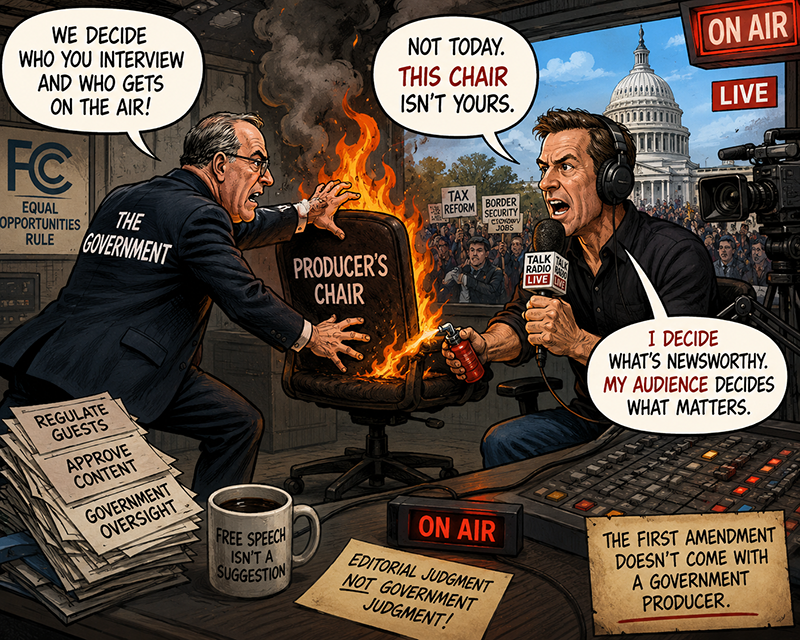
To the FCC, depending on the program and the circumstances, it may raise a different question: did the station give one legally qualified candidate a broadcast “use” of its facilities that now triggers equal opportunities for opponents? That question sits at the center of ABC’s dispute with the FCC over “The View,” and it deserves the attention of every broadcaster who books public officials, candidates, advocates, and political personalities.
This is not an article about whether anyone likes “The View.” That is the wrong question. The better question is whether the government should decide, after the fact, that a long-running interview program no longer qualifies as a bona fide news interview program because regulators dislike, distrust, or second-guess its guest selection.
The Equal Opportunities Rule, often called “equal time,” is not the Fairness Doctrine. The Fairness Doctrine is gone. However, equal opportunity requirements remain part of broadcast law. In general terms, when a broadcast station permits a legally qualified candidate to “use” its facilities, opposing legally qualified candidates for the same office may be entitled to comparable opportunity, unless an exemption applies.
One such exemption covers bona fide news interviews.
That exemption matters because it allows broadcasters to cover politics without turning every meaningful candidate interview into a scheduling trap. The law recognizes that a news judgment is different from a campaign favor. A host may interview a candidate because that candidate is newsworthy, controversial, powerful, interesting, or central to a public issue, not because the station has endorsed the campaign.
ABC’s argument is that “The View“ already cleared that hurdle more than two decades ago, when the FCC treated it as a bona fide news interview program. ABC now says the Commission has forced the issue back onto the table and is effectively asking whether the government should dictate which candidates the program may feature. That is why ABC’s filing points beyond daytime television and directly toward talk radio.
Talk radio should not dismiss that warning. The format routinely features candidates and officeholders without immediately inviting every opponent. Sometimes the reason is obvious: one guest is in the news and the others are not. Sometimes the reason is practical: a candidate accepts and the opponent declines. Sometimes the reason is editorial: the host believes one interview will better serve the audience.
Those are normal programming judgments. But if regulators start looking behind those judgments for partisan motive, the risk changes. The question becomes less “Was this guest newsworthy?” and more “Can you prove to the government that your reason was acceptable?” That is a dangerous shift for any medium built around editorial discretion.
This does not mean broadcasters should panic or stop booking candidates. It does mean stations, networks and programs should tighten their habits. Know when a guest is a legally qualified candidate. Understand when an appearance may count as a use. Keep clean records. Preserve the editorial reason for the booking. Make sure producers and hosts know the difference between a campaign appearance, a news interview, and paid political time.
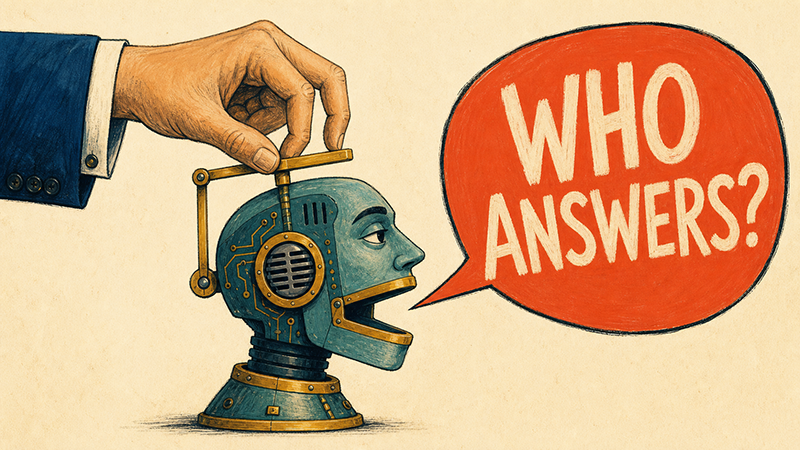
The larger warning is simple: broadcast talk is regulated speech in a way podcasts, YouTube shows, and most streaming programs are not. That distinction already matters for indecency, sponsorship identification, public files, political files, and license obligations. Now it may matter again in the heart of the format itself: who gets invited to talk.
The government should not sit in the producer’s chair. But broadcasters should not pretend the chair is invisible. The best protection is not silence. It is disciplined editorial judgment, documented in real time, applied consistently, and defended as what it is: the broadcaster’s constitutional role in deciding what is newsworthy for its audience.
Matthew B. Harrison is a media and intellectual property attorney who advises radio hosts, content creators, and creative entrepreneurs. He has written extensively on fair use, AI law, and the future of digital rights. Reach him at Matthew@HarrisonLegalGroup.com or read more at TALKERS.com.




 Security Bureau, as well as the agency’s Consumer and Governmental Affairs Bureau. FCC Chairman Brendan Carr states, “I want to congratulate Danielle on her nomination to serve as a Commissioner on the FCC. Danielle is a dedicated public servant and has worked with skill and distinction on some of the most important matters before the agency. Danielle has delivered policy wins across the FCC’s economic agenda – from bridging the digital divide and protecting consumers to advancing public safety. With the advice and consent of the Senate, Danielle would make a terrific Commissioner.”
 Congress can change it. I am not alone in that conclusion. Republicans with deep firsthand knowledge of this issue agree. Former FCC Commissioner Mike O’Rielly has been unequivocal that the FCC lacks authority to change the cap. Former House Majority Leader Tom DeLay, who negotiated the 39 percent compromise, has stressed that Congress wrote the cap into law specifically to keep the FCC from changing it. And Senate Commerce Chair Ted Cruz has said he is skeptical a change can be made absent an act of Congress.”
 SiriusXM today (8/6) announced that Jenny Tartikoff has been named senior vice president and head of communications, effective August 10, 2026. Tartikoff will report to president and chief content officer Scott Greenstein and lead SiriusXM’s overall communications and public relations strategy and execution. She will be responsible for promoting the company’s content and business narrative while serving as a senior advisor to the company’s leadership team on major business developments and high-profile moments. Tartikoff brings more than 20 years of communications experience across media, entertainment, and technology. She most recently served as EVP, Global Communications at Paramount Pictures, where she led internal and external corporate communications, corporate social responsibility and awards strategy for the studio’s live-action and animation properties. During her tenure, Tartikoff guided the company’s communications through the industry’s post-pandemic recovery and the evolution of Paramount’s multi-platform release strategy.

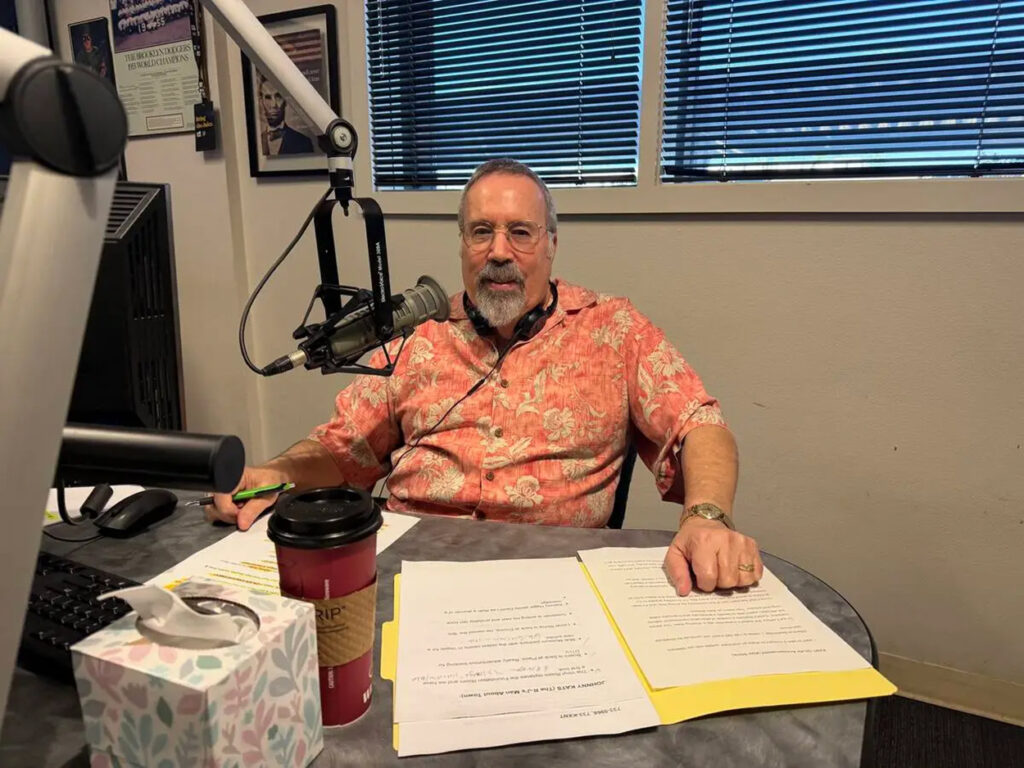

 Veteran journalist, author, political commentator, and 77WABC Radio personality Dominic Carter was honored with the American Heritage Award at the Kings County Conservative Party’s Annual American Heritage Reception on July 23 at the Knights of Baron DeKalb in Sheepshead Bay, Brooklyn. The event celebrated Carter’s more than four decades in broadcast journalism, recognizing his distinguished career as a radio host, television commentator, author, and one of New York’s most respected media voices.
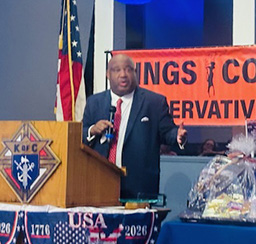 Frances Vella Marrone, the reception brought together elected officials, candidates, community leaders, and supporters to recognize Carter’s professional achievements while celebrating the values of perseverance, public service, and the American Dream.
 In Full Stack Human: The Mindset Upgrade You Need to Stay Human in a World Ruled by Technology (2026, Wiley Books) Dara Simkin and Tane Hunter describe a 2026 media landscape where people face information overload, shrinking attention spans, negativity fatigue, algorithmic manipulation, and constant distraction.
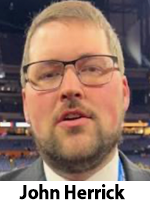 reporting. While this chapter has come to an end, I remain committed to the values that have guided my career: serving the public, pursuing the truth, and treating people with fairness and respect. I want to thank my colleagues, mentors, friends, and family – especially my wife and sons – for their support throughout this journey. I look forward to what comes next and the opportunity to continue contributing meaningful work. I will still be broadcasting games, and I will continue to be a member of the Indiana University Radio Network.” This comes on the heels of the spring firing of late morning talk host Rob Kendall and the subsequent exit of late morning co-host Casey Daniels, who left of her own volition.
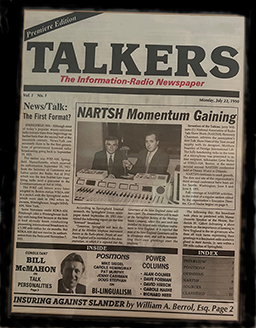 devoted to chronicling the development and growth of what he envisioned as “the coming talk radio phenomenon of the nineties.” The publication went on to publish as a newspaper on newsprint evolving into a glossy magazine and eventually an online publication fully devoted to serving the needs of talk radio and eventually a variety of spoken word platforms that have collectively become known as talk media. TALKERS also contributed to the growth of the field by producing 28 national conventions / conferences in New York and two in Los Angeles, more than 50 groundbreaking radio rows, dozens of talk show host tours of international hot spots, and thousands of hours of spoken word syndicated and online programming. Throughout its colorful history, TALKERS always maintained a neutral position regarding politics except for, as Harrison puts it, “unwavering support of the First Amendment.”
 dangerous and would allow two or three corporations to dominate local television news, reducing competition, independent journalism, and threatening religious broadcasters.” He noted that conservative organizations including CPAC, the National Religious Broadcasters, and the Zionist Organization of America oppose lifting these ownership limits. Ruddy also took the opportunity to address how broadcasters view the American people, saying, “Polling consistently shows Americans are far more center-right than portrayed by the legacy media. There is a growing disconnect between public opinion and media narratives.”
  Senator Darline Graham (R-SC), sister of late Senator Lindsey Graham. FNC says, “During the interview Senator Graham will reflect on her brother’s legacy, the shared values that shaped their family and upbringing and her decision to carry on his public service representing the people of South Carolina following his passing.”
 local newsrooms, silence community reporting, and drive-up costs for the American families who depend on local stations for news and emergency alerts. A free and diverse media landscape depends on real limits on how much of the public airwaves any one company can control, and this FCC is now poised to allow local broadcasters to sell those airwaves off to the highest bidder. Congress set the 39 percent national ownership cap in federal law, and only Congress has the authority to raise or eliminate it. The Commission cannot waive away that limit simply because these corporate behemoths want to get out from under it.”
 the endorsement of President Donald J. Trump and backing from first responders, emergency managers, public safety organizations and community leaders nationwide. NAB president and CEO Curtis LeGeyt says, “The time for Congress to act is now. Hundreds of broadcasters from across the country alongside nearly one million AM radio listeners have reached out to their members of Congress to support the AM Radio for Every Vehicle Act and protect this essential public safety resource. We are grateful to our congressional champions who have led this bipartisan effort every step of the way. Congress has everything it needs to act. It is time to finish the job and send this bill to the president’s desk.”
 Weather Channel president Tom O’Brien states, “Ray and Scott represent the very best of what The Weather Channel Radio Network stands for. Their careers are a testament to more than longevity; it is the genuine sense of public responsibility that has guided every forecast, emergency and broadcast for 30 years. We are immensely proud to celebrate this remarkable milestone with them.”
 in the early 1960s. WCNC-TV reports that local radio fan Johnny Caudle has launched a Change.org petition to save some of the history. He tells WCNC-TV, “I heard the land was for sale and knowing the radio background industry the way I do, I know that that probably means the towers are going down and the place is going to be bulldozed and redeveloped. So, I started thinking we need to save something.” Caudle says he’s not trying to kill any deal that would see the land developed but just wants “to preserve something.” The story indicates the property has an assessed value of $3.5 million. Urban One has not made a public statement about the future of the property.
  posture. ABC did not come to the Federal Communications Commission asking for anything. The Commission compelled ABC to file the Petition for Declaratory Ruling at issue here, directing the network to explain why the government. should not dictate which political candidates may appear on The View—even though the Commission itself resolved that very question in ABC’s favor more than two decades ago, ruling in 2002 that The View is a bona fide news program not subject to the equal opportunities requirement.
 FCC officials. Gomez filed a petition for mandamus with the United States Court of Appeals for the District of Columbia seeking to compel action by the FCC on such petition. Instead, of responding to the mandamus petition, on June 22 the Commission filed its response and included a copy of an unpublished letter dismissing the News Distortion Petition that was signed by the Acting Chief of the Media Bureau on delegated authority.
 administration and the Supreme Court’s ruling. She wrote: “This decision puts at risk how Congress intended independent agencies to function in American democracy. When Congress established the Federal Communications Commission, it made a deliberate choice to create a multi-member, multi-party, independent body insulated from political pressure precisely because the decisions this agency makes about who can speak over the public airwaves, how spectrum is allocated, and how communications markets are regulated, are too consequential to be made on the basis of political loyalty. We are already seeing what political control of this agency looks like in practice, through investigations targeting broadcasters and government critics for coverage this administration finds unfavorable.