


Take Back the Airwaves: Why Radio’s Future Belongs to Main Street, Not Wall Street
By John Caracciolo
President/CEO
JVC Broadcasting
 The recent shutdown of CBS News Radio isn’t just another media headline – it’s a wake-up call. A clear example of what happens when decisions about our information, our communities, and our voices are made in corporate boardrooms disconnected from real life.
This wasn’t a programming failure. It wasn’t a lack of audience. It was an accounting decision – made by people who don’t live in the communities radio serves, don’t rely on it, and don’t understand its true value. And that’s exactly why they got it wrong.
Radio has never been more important. In an era flooded with misinformation, algorithm-driven content, and faceless digital noise, radio remains immediate, local, and – most importantly – trusted. It’s the one medium that still shows up live, every day, in real time, for real people.
Radio isn’t dying. It’s being stripped down by people who don’t know how to grow it. But here’s the truth: this moment isn’t just a loss – it’s an opening. A rare and powerful opportunity to rebuild something better. Because what’s missing right now isn’t demand. It’s leadership. This is the moment to create a new kind of radio network – one built not for Wall Street, but for Main Street. A network designed to empower local stations, not replace them. One that helps stations monetize their greatest strength: localism. Local voices. Local news. Local advertisers. Local trust.
Let’s be clear about something: consolidation itself isn’t the enemy. When done right, consolidation can be a powerful tool – one that strengthens local newsrooms, provides resources, and creates the scale needed to compete in a modern media landscape. But there’s a line. When consolidation is used purely for profit – when it strips stations of their local identity, cuts talent, and replaces service with spreadsheets – that’s when it fails. Profit must be our servant, not our master. The future of radio depends on getting that balance right. We need smart, strategic growth that invests in journalism, expands local reporting, and gives stations the tools to thrive – not survive. We need leadership that understands scale should support localism, not suffocate it. That’s where the opportunity is right now.
The future is a network that works differently – a network that partners with local stations to amplify their voices, not drown them out. One that provides national scale where it matters – news gathering, distribution, sales infrastructure – while keeping content authentic and rooted in the community. A network that helps local stations win. Because local radio doesn’t need to be replaced – it needs to be reinforced.
Imagine a network that:
- Delivers credible, trusted national news while allowing stations to localize and own the story • Builds shared revenue models that actually benefit local operators.
- Gives advertisers access to both national reach and local impact.
- Invests in talent, not cuts it.
- Uses modern tools – digital, streaming, social – to extend radio’s reach without losing its soul.
That’s not just possible – it’s necessary. This is how we make radio competitive again. Not by shrinking it, but by strengthening what made it great in the first place. And let’s be honest – no one is better positioned to build this than the people who actually believe in radio. We have the tools. We have the experience. We have the relationships. And most importantly, we understand the audience because we’re part of it.
This is the time to act. The vacuum left by corporate retreat is real, and it won’t stay empty for long. Either Main Street steps in to rebuild radio with purpose, or something else will fill that space – and it won’t have the same commitment to trust, community, or truth.
So, let’s not waste this moment. Let’s take back the airwaves from bureaucratic investors who see radio as a line item instead of a lifeline. Let’s build a network that works for stations, communities, and listeners. Let’s make radio great again – not by looking backward, but by building forward. This isn’t the end of radio. It’s the beginning of its next chapter. And this time, we’re writing it. Let the revolution begin my friends, who’s with me?
John Caracciolo is the president and CEO of JVC Broadcasting. He can be emailed at johnc@jvcbroadcasting.com or phoned at 631-648-2525.
 music-driven and spoken-word programming. Maryland Media One CEO Steve Clendenin says, “The landscape of radio programming is changing. We’re here to partner with stations to develop and distribute top-tier music and spoken-word formats and content. Our goal is to help stations grow with compelling programming that is affordable, easy to implement, and designed for today’s radio and streaming environment.” Among the first offerings available through Seaboard Networks is the Outdoor Radio Network, a full-time programming format built around hunting, fishing, conservation, and outdoor lifestyle content.
 Sports Enterprises CEO Kit Geis, and WFAN personality and former NFL star Tiki Barber and takes place on Monday (3/23) at 2:00 pm ET. Audacy says the webinar will cover: Why avidity, not reach, is the real currency in sports marketing; Where diehard fans spend their time; How Gen Z is reshaping fandom; and What real performance looks like for the biggest sports marketers today.
 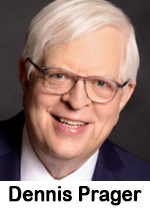 in Los Angeles Superior Court, he says he “still had some feeling and ability to move his toes” but was “otherwise unable to move his limbs and/or breathe on his own” when he was admitted to Cedars-Sinai. Prager accuses the staff at Cedar Sinai of failing to routinely turn him over and as a result he developed stage four pressure ulcers. The suit charges that the other two facilities “failed to take steps to adequately treat the pressure wounds. He claims his wife Susan begged Rancho Los Amigos staff to perform ostomy surgery so that Prager would not be in constant danger of sepsis, but Rancho Los Amigos refused.” The suit adds, “Thus, Prager did not heal, and he continued to be exposed on a daily basis to fecal bacteria pouring into his very deep open wounds.” The suit says his medical costs have exceeded $5 million over the last 13 months, a bill that “continues to grow at a staggering pace with each and every day.”
  “designed to help brands reach and engage multicultural audiences across today’s digital media landscape.” AURN CEO Chesley Maddox-Dorsey says, “AURN has always been committed to helping brands connect authentically with multicultural audiences. Our partnership with AdGrid allows us to expand that connection beyond audio and into the broader digital ecosystem, giving advertisers new ways to reach these influential audiences with scale, cultural relevance and measurable results.”
 syndication via Talk Media Network. The program will be fed live weekdays from 5:00 pm to 6:00 pm ET. Hooser says his program is a “one-hour conservative talk program that focuses on recapping the day’s events and brings a fresh perspective on the big stories of the day with fun conversation and great daily guests.” The program is based at Steckline Communications’ KQAM, Wichita where he serves as operations manager.
 Carrier Bureau, helping implement the Act. In the webinar titled “30th Anniversary of the 96 Act: What Did We Learn?” panelists will explore how lessons from the past 30 years can drive innovation and competition for consumers today. Topics will include artificial intelligence, media, competition, convergence, access, and cybersecurity. The three separate panels will include Panel 1 looking at “The Legislative Process That Led to the Act; Panel 2 will address “FCC Implementation of the Act”; and Panel 3 will focus on “Today’s Challenges.” Interested parties can join online via the
  “conducting a search for a new director of sales, a dynamic leader who values their connection with the Long Island community. The ideal candidate will be a high-energy seller experienced in developing custom marketing solutions leveraging assets like broadcast media, digital capabilities, and event marketing. Leadership experience, a passion for driving results, and a talent for building strong client relationships are essential.”
  audience looking for real-time news and opinion.” Salem News VP and general manager Cary Pahigian adds, “Expanding Salem News Channel onto Prime Video allows us to bring our programming to one of the largest streaming audiences in the world. As more viewers shift to streaming platforms for news and commentary, we are focused on ensuring Salem’s voices and perspectives are available wherever audiences are watching.”
 Unless you live in Hawaii and Arizona (except the Navajo Nation) or American Samoa, Guam, the Northern Mariana Islands, Puerto Rico and the U.S. Virgin Islands, your clocks will change when we “Spring Forward” on Sunday 3/8.
 field with global technology platforms.” He underscored broadcasters’ unique and essential role in public safety, civic engagement and strengthening local democracy. Additionally, broadcasters heard from key policymakers shaping broadcast policy, including Sen. Ed Markey (D-MA), who spoke about the enduring value of broadcast radio and his leadership on the bipartisan effort to pass the AM Radio for Every Vehicle Act… and U.S. Rep. Richard Hudson (R-NC), chairman of the House Energy and Commerce Subcommittee on Communications and Technology, who spoke about the need for broadcast ownership rules to reflect today’s landscape and the importance of keeping AM radio in cars.
 AI is now embedded in the modern newsroom. Not as a headline, not as a novelty, but as infrastructure. It drafts outlines, summarizes complex reporting, surfaces background details, and accelerates prep for live conversations. For media creators operating under relentless deadlines, that efficiency is not theoretical. It is practical and daily.
 Station owner John Catsimatidis says, “Big name personalities define WABC Radio. Sean is a powerful addition to our Sunday lineup and another example of WABC’s unmatched ability to attract major talent and deliver must-hear talk. The show is going to be fast, fearless, and honest, with smart conversation, sharp opinion, and honest discussion about the stories driving the country.” Spicer comments, “WABC Radio doesn’t whisper, it leads! It is one of the most iconic and influential radio stations in the U.S. WABC Radio listeners expect truth, energy, and authenticity, and that’s exactly what I’m going to give them. I couldn’t be more excited to join the incredible 77WABC lineup.”
 Colin Cowherd” to the program lineup at WJBR-AM, Tampa “Florida Alumni Radio 1010AM” in the 112:00 noon to 3:00 pm daypart. The program will also be simulcast on 92.1 FM in Hillsborough County, 103.1 FM in Pinellas County, and 104.7 HD2. The show will air weekdays from Noon – 3:00 p.m. ET.
 company says Charlamagne Tha God will join the festival alongside some of the Black Effect’s most popular personalities for a day full of live podcast tapings and informative discussions aimed at aspiring podcasters in the Black community. Charlamagne Tha God says, “Each year we return to Atlanta with purpose and intention to amplify storytelling, champion community, and celebrate excellence in podcasting with thousands of our cousins from around the world.”
 audience over indexes for a slew of major purchase categories.” Some of the key findings in the study include: 1) The number of sports-formatted AM/FM radio stations has grown +14% over the last decade, while revenue shares increased +38%; 2) According to Nielsen, the sports format ranks an astonishing number one in streaming shares among 25-54s and 18-34s, while in-car listening is the dominant location of listening among over-the-air sports AM/FM radio listeners; 3) Advertising on sports AM/FM radio is more effective than TV sports because the AM/FM radio audience is far more attentive and sports engaged; and 4) Ranked third in income of twenty-four AM/FM radio formats, the sports format has seen household incomes grow 17% since 2020.
  patriotic, pro-America content that celebrates the American journey and inspires its citizens by highlighting the historic accomplishments of this great nation from our founding through the Trump Administration today.” Carr adds, “On July 4, 2026, America will celebrate the 250th Anniversary of the signing of the Declaration of Independence. That revolutionary document set forth our founding principles – including Life, Liberty, and the pursuit of Happiness – and put America on a collision course with destiny. Over the following centuries, the American story has defined modern history and spread freedom, opportunity, and prosperity across the globe. As America’s 250th anniversary approaches, it is important to reflect on the ideals and events that have defined our past while keeping an eye towards our country’s bright future. The White House is leading our national celebration of this historic event with the Salute to America 250 Task Force, which calls on the federal government, among others, to mark this momentous occasion. As part of this effort, I am calling on broadcasters to pledge to provide programming that promotes civic education, national pride, and our shared history.” Carr shares some examples stations could use, including:
 purchasing power – backed by a population of nearly 70 million that is a leading ethnicity in growth – has now reached $4.1 trillion and continues to grow more than twice as fast as that of non‑Latinos. iHeartMedia says, “The impact of this can only be measured in global scale: If isolated, the GDP of current U.S. Latinos would rank fifth in the world, having surged from $2.2 trillion in 2015 to $4 trillion.” iHeartLatino president and chief creative officer Enrique Santos says, “Bicultural Latinos are not just an audience — they are a cultural vanguard, driving tastes, trends and conversations across every platform while powering one of the fastest‑growing segments of the U.S. economy and redefining what it means to be American. For brands, the takeaway is clear: culture is the strategy — language is the tactic. Those who lead with cultural intelligence, not just translation, earn more than attention, they earn long-term loyalty and trust.” The study also finds that audio is important to this demographic. The study finds: “Broadcast reaches 9 in 10 Latinos monthly, according to Nielsen, and this new research shows that Bicultural Latino radio listening is diverse – 92 percent listen in English, 78 percent listen in Spanish – and 65 percent of Bicultural Latinos prefer listening to radio/music/podcasts equally in Spanish and English. Additionally, the research shows that 98 percent are listening to music weekly, 63 percent tune into podcasts weekly and 69 percent engage with live sports through audio.”
 TALKERS magazine, the leading trade publication serving America’s professional broadcast talk radio and associated digital communities since 1990, is pleased to participate as the presenting sponsor of the Intercollegiate Broadcasting System (IBS) conference for the second consecutive year. The conference is currently underway in New York.
 radio industry (and its related fields) seeks to connect with and develop a next generation of professional practitioners as well as engaged audiences. TALKERS is honored to again provide financial support, encouragement, experience, and advice to the dedicated organizers of this very special event.
 “Podcasting’s momentum strengthened in 2025, with audio remaining the foundation of the medium while video helped bring in new audiences. What’s most compelling is the diversity podcasting now delivers across content, platforms, and consumers. Triton’s report highlights where new listeners are engaging and how their evolving behaviors – including shopping and purchase intent – are creating a highly engaged audience that is increasingly attractive for brand investment.” One key finding from the study is that “consumption preferences vary sharply by genre. Categories primarily consumed via audio are Science (58%), History (56%), Fiction (54%), Arts (51%), and True Crime (50%), while Music (34%), Sports (32%), Kids & Family (31%), Comedy (30%), News (30%) skew more heavily toward exclusive video consumption. This emphasizes a need for differentiated content and monetization strategies.”
  “Darn, if we were on FM everything would get better.” Not true. This writer launched many of the successful talk formats on FM stations in the early 1990s. The ones that worked, such as KLSX, Los Angeles; WTKS, Orlando; and New Jersey 101.5 in Trenton, were produced for the unique demands of FM. Then and today, the FM band cume utilized the radio in a completely different manner than AM audiences. The competition on FM isn’t another talk show. It’s Chapelle Roan and Taylor Swift. Ya know, billion-dollar Taylor Swift. The production values of FM music stations set the expectations of “the sound.” “Let’s pay some bills…” Followed by bumper music! Followed by eight minutes of commercials for Med Alert is just not what FMers are used to hearing on Elvis Duran. (Elvis is doing a talk show.)
 rising leaders in digital sales and strategy, providing direct access to industry executives, structured mentorship, and strategic guidance at a time when audio and digital integration has never been more critical to client success.” Reid comments, “I’m honored to be selected as an MIW Digital Mentee. This mentorship is an opportunity to strengthen my leadership skills, learn from industry leaders shaping the future of digital and audio, and continue delivering smarter, more effective advertising solutions in a rapidly evolving media landscape.”
 “‘Outspoken’ has built a devoted following by tackling Arizona’s biggest political, social and cultural issues with insight, humor and a willingness to challenge conventional thinking. The expanded time slot allows the show to dig deeper into the stories shaping the state and the nation, while continuing to engage listeners and viewers through spirited conversation. The change will help position KTAR News’ marquee afternoon drive show during a pivotal election year in front of larger audiences, bringing the hosts’ signature blend of bold opinions, sharp analysis and lively debate to the heart of the drive‑time lineup. Outspoken will continue to push the conversation forward with exclusive guests and the Faceoff roundtable conversation every Wednesday.” The station also brings back “Arizona’s Evening News,” hosted by Becky Lynn and Joe Huizenga, from 6:00 pm to 7:00 pm. It will keep listeners and viewers tuned into local programming with a news program focused on in-depth conversation. Bonneville says the new program schedule reflects the end of the two-year run of The Chris & Joe Show in the 2:00 pm to 4:00 pm daypart with the departure of talk host Chris Merrill.