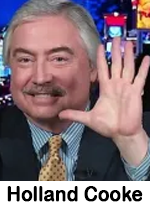
By Holland Cooke
Consultant
 Music radio’s competitors were vinyl, then tape, then CDs – before smartphone streaming and satellite radio offered more portability and variety. And before consolidation, broadcasters were under less of the revenue pressure that now commercializes many stations beyond listeners’ tolerance. TALKERS NAB Show coverage included Edison Research founder Larry Rosin lamenting “many, many [music] stations now loading all their spots into two interminable breaks per hour.” I cringe hearing FMs struggle to remain among listeners’ music appliances. And I fret that monologue-heavy talk radio is relinquishing interactive dialogue to social media.
Before moving to all-news, and eventually news/talk, I worked in music formats less-structured than today’s. So now I hear music radio as an outsider, more like a consumer. Which got me wondering: How does my format sound to music consultants? So, I asked several whose work I respect.
Beware the one-joke act
Mike McVay reckons that “listeners want to know a little bit about a lot of things,” a point other colleagues echo. Explaining that “music radio is all about variety,” adult contemporary specialist Gary Berkowitz: “To me, listeners are tired of all this political back and forth. Sure, it has its place, but it’s like if music radio only played five different artists!” Jon Holiday – who customizes station playlists for a variety of formats – asks “are talk listeners getting what they want?” Calling some formats “very artist-heavy,” he thinks stations were right to play so much Taylor Swift in 2024, certainly her year. And 2025 sure is Trump’s, but Holiday calls “banging the same drum all day, every day” the most common flaw he hears on talk radio.
McVay says listeners like “stories that pull on their heart strings. It’s why “NBC Nightly News” ends with a touching story. It’s not fluff. It’s information relief.” He also recommends topics you are likely to overhear at the next table during lunch: “Discretionary Time Information” (binge-worthy shows on Apple+, Max, Netflix). Health. And – lately more than ever – what Mike calls “purse” stories (think: eggs). Been to Costco? On weekends it’s mobbed. Ask any member and they’ll recite a shopping list of Kirkland-brand bargains.
Play the hits
When Gary Berkowitz – then an accomplished music programmer – took over stately WJR, he “approached it like it was a music station, the only difference was my ‘songs’ were my personalities, news coverage and, at the time, play-by-play of all the major Detroit teams.” He bought a jingle package “to ‘decorate’ the station;” and “got ‘JR involved with everything that was happening in Detroit. All I did was put it all together and present it like my top-40 upbringing taught me.”
I can relate. Before I programmed all-news WTOP, Washington, I had no news experience. I came from a music FM. The WTOP staff I inherited was impressive, and their work was solid, but the station wasn’t “programmed enough.” I was sent there to convert Cume to Average Quarter Hour – the blocking-and-tackling formatics fundamental to music radio. We owned “the Top news…instantly” image, and we said those very words LOTS. But research told us that traffic and weather were “the hits;” and how we presented them moved the needle.

Great talkers are great listeners
In every transaction, consumers now expect to interact; and “listeners like to hear others’ voices,” Mike McVay observes: “When the audience is comfortable enough to weigh in with an opinion, their own story, or a reaction, you’ve created a ‘friend circle.’” Jon Holiday tells morning shows he works with to “take time going into breaks to be topical and interact with callers.” And engage by texting and social media. And don’t just push-TO listeners. Be quick to REPLY, and you will make them feel special.
Yet, in three decades coaching talk hosts, the most unwelcome word I say seems to be “callers.” Imitating gifted Rush Limbaugh, many hosts are prone to windy monologue, rather than inviting the busy dialogue that makes a station sound popular (something local advertisers notice). DJs deftly weaving interactivity into music shows often sound more inviting than sermonizing talkers. Holiday remembers El Rushbo as “a master at having fun, particularly in his early days as a syndicated personality.”
Prescription: Local
Twenty years ago at the TALKERS conference, publisher Michael Harrison’s advice was elegantly simple: “Give them something they can’t get anywhere else.” Especially now, with so many non-local audio competitors. Regardless of format, helpful local information can increase Occasions of Tune-In per week.
Simply doing local news is a start. But does yours enable the listener by telling what an item means to him or her? On any given day, what you’re overhearing at lunch is something big that’s happening somewhere else. Can you explain the local impact? “National news needs to mean something to me, my community, my region or state,” according to McVay.
With weather so erratic in so many places, owning that image is gold. If you’re news/talk, don’t assume that you’re the market’s weather station. If you’re music, don’t assume you can’t be. Noting typical news/talk demographics, Jon Holiday surmises that, “as we get older, we seem to be more interested in weather.”
And as successful music stations have always done, show up! Gary Berkowitz had WJR go all-in on Detroit’s Thanksgiving Day parade, “with our people all over the parade route. It was better than the TV coverage!”
Holland Cooke (HollandCooke.com) is a consultant working the intersection of broadcasting and the Internet. Follow HC on Twitter @HollandCooke and connect on LinkedIn
Share this with your network


 driving brand preference is ‘mental availability’: how well known a brand is, and how easily it comes to mind. Brands with low mental availability tend to struggle, rejected in favor of more familiar rivals. Or not considered in the first place. Brands with high mental availability don’t have to push so hard to sell, so tend to have higher market shares and better margins.” The authors also advise, “Always aim to get more customers from all segments of the market. It’s the main way brands grow.” The blog post concludes that AM/FM radio makes your media plan better by increasing reach. One example is illustrated as follows: Edison’s “Share of Ear” study of ad-supported audio reveals the combined persons 18+ daily reach of Pandora and Spotify is only 12% of Americans. Adding podcasts causes reach to surge to 29%. The introduction of AM/FM radio lifts daily reach to 74%.
  change. Both organizations share a vision of advancing equity, social justice and civic engagement for future generations.” BIN president Tony Coles adds, “This powerful collaboration will deliver important, unbiased information to our audiences, promote civic engagement, and foster inclusive dialogue. In today’s news environment, our responsibility is to ensure the stories, commitment and goals of civic and community leaders are heard by our listeners and carried forward by future generations.” BIN will advance the mission of the Obama Presidential Center in the runup to opening in 2026 by sharing and distributing stories focused on President Obama’s legacy, community-driven initiatives on the South Side of Chicago and engaging in national conversations around equity, democracy and change.
 Dozens of brand-new audio hardware and software companies have been launched during the past 20 years. These start-ups are usually funded by venture capital money. VC money is not invested to return a profit, it’s poured in to – pour it in. Their money is “different” than the cashflow that fuels your business. Start-up money buys time to profit.
 The Storm,” “Girl, How’d You Get That Gig?” hosted by Amy Gutierrez and Celeste Gehring, and Rod Brooks’ “Quality Hang with Rod Brooks & Friends” debut on Friday (5/23). Jeremiah Crowe says, “After launching Bay Area Sports Collective in early March, it became apparent there were other hosts who wanted to join our team. We are proud to expand our growing podcast network with additional hosts the local Bay Area sports fans know and trust. The future looks bright for the collective and our fans.”
 NPR’s “NPR News Now” and “Up First” remain in the #1 and #2 positions, respectively. Other radio-related podcasts of note include Salem Podcast Network’s “The Charlie Kirk Show” steady at #6, Cumulus Podcast Network’s “VINCE” falling five places to #8 and iHeartRadio’s “The Clay Travis and Buck Sexton Show” dipping one place to #14.
 In a ruling that should catch the attention of every talk host and media creator dabbling in AI, a Georgia court has dismissed “Armed American Radio” syndicated host Mark Walters’ defamation lawsuit against OpenAI. The case revolved around a disturbing but increasingly common glitch: a chatbot “hallucinating” canonically false but believable information.
 “Brad vs. Everyone” is joining iHeartPodcasts. Polumbo’s podcast featured him covering “the most interesting and entertaining stories in politics and on the internet from a center-right, independent perspective.” He comments, “I’m thrilled to launch this partnership with Premiere Networks and iHeartPodcasts, and to work with their fantastic team to bring ‘Brad vs. Everyone’ to new audiences. It’s an honor to join a network with incredible talent and massive reach, and I look forward to the podcast reaching new heights!”
 TALKERS publisher Michael Harrison introduced the term in the 1990s, inviting us to think-beyond the real-time audio we were sending up those towers. What he described seemed conceptual, even futuristic, back then, when we were still logging-onto AOL via dial-up (screech).
 1940s, when broadcast dominated mass communications in the U.S. Since then, the media marketplace has changed drastically – from widespread deployment of cable and satellite television networks to the rise of social media, podcasts, and streaming. Local broadcasters compete directly with Big Tech, streaming services, and social media platforms in the marketplace of consumer content. Yet, unlike their competitors such as YouTube and Facebook, broadcasters are limited by the ownership rules in how many households and consumers they can reach. This is an inherent disadvantage.” The letter adds, “By eliminating the national television cap, local TV duopoly restrictions, and local radio ownership caps, broadcasters can better achieve the scale and efficiencies necessary to compete – and to attract vital investment – in a fragmented and rapidly evolving information market.”
  floated debilitating rate regulation schemes that target national network broadcasters for their newsrooms’ editorial decisions, harassed private companies for their Diversity, Equity, and Inclusion efforts, and threatened tech companies that respond to consumer demands for content moderation and fact-checking. Separately, they have attempted to shutter Voice of America and sought retribution against lawful residents that protest Administration policies.” She cited two occasions where presidents – FDR in 1939, and John F. Kennedy in the early 1960s – asked their FCC Chairs to shut down media outlets critical of their policies and those FCC Chairmen boldly refused.
  distributed over 30 podcasts with Bloomberg Media that offer critical news alongside compelling storytelling across the world of business and finance. We are thrilled to continue our partnership to develop, distribute and monetize this impressive lineup and grow our audience worldwide. With an impressive lineup of upcoming shows in the pipeline, our renewed partnership will continue to leverage iHeart’s massive audience reach to expand upon Bloomberg’s community of listeners and provide them with engaging content across the current economic landscape.”
 same period in 2024. The company reports that net broadcast revenue was $39.8 million, down 13.6% from Q1 in 2024, and digital media revenue also fell to $10.2 million, a decline of about 4.5%. Salem’s net loss for the quarter was $7.1 million compared to the net loss of $5.1 million it reported in Q1 of 2024.
 Right now, dozens of well-suited, over-priced, unpleasant lawyers are fighting in Hollywood over the title credit their client should receive on a movie, TV show, or book cover. Placement within the credit roll at the end of a show is a battleground of egos and legalities. Part of the process of securing proper credit is governed by multiple union rules negotiated by multiple unions and corporate dictates of corporate masters. (You don’t get to be CEO of Paramount by being a nice guy.)
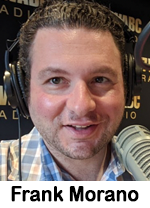 successful there, will have a general election campaign to run in the fall for the next term. Morano issued a statement over the weekend regarding his status. He said, “When I was elected, I had expected to continue hosting my radio show until the swearing-in. However, due to concerns about equal-time rules for the upcoming election and uncertainty around what outside work I’ll be allowed to do once I take office, the decision was made that I would no longer host ‘The Other Side of Midnight’ and would step away from the Red Apple Audio Network for now. This wasn’t a decision I made lightly—or one I made at all, frankly—but I completely understand the reasoning behind it. I’m incredibly grateful to the station’s ownership and management for the opportunity to do a show I loved, with a team I respected, for an audience I adored… I do hope to be back on the radio in some form soon. But for now, I’m off the air.
  decreased 2.2% for the quarter to $22 million compared to the same period last year. Saga reports a net loss of $1.6 million for the quarter consistent with the same period last year. Looking ahead, the company says revenue pacing for the second quarter remains uncertain but is improving as the quarter progresses. For the second quarter Saga is currently pacing down mid-single digits. April was down high-single digits. May improved to being down low-single digits and June is approximately flat with the same period last year.
 followed by The New York Times’ “The Daily” at #2, NPR’s “Up First” at #3, NBC News’ Dateline NBC at #4, and FOX Audio Network’s “FOX News Hourly Update” at #5. Other radio-centric podcasts of note include Cumulus Podcast Network’s “The Shawn Ryan Show” rising two spots to #6, and Silverloch’s “VINCE” falling 11 places to #18.
  investment. Other notes from the first quarter include: Revenue from new business accounted for 18% of net revenue; Local revenue, including digital packages sold locally, accounted for 71% of net revenue; Digital revenue was comparable to the first quarter of 2024 but increased 6% year-over-year to $10.8 million, on a same-station basis; Digital revenue accounted for 22% of net revenue; and Digital segment operating margin was 18%. Beasley CEO Caroline Beasley says, “Our first quarter results
 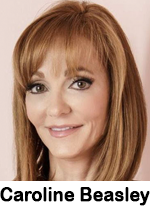 reflect the strength of our ongoing transformation and the resilience of our core strategy. While revenue was impacted by persistent macroeconomic headwinds, we mitigated this through disciplined cost management, operational streamlining, and continued momentum in our digital business, resulting in an Operating Loss of $2.0 million and year-over-year Adjusted EBITDA growth. Digital revenue now represents over 20% of total revenue, and the meaningful expansion in digital segment operating income underscores the scalability of our platform and the impact of our strategic investments. As we look ahead, we remain focused on unlocking margin expansion, accelerating our digital evolution, and driving long-term value for our stockholders through thoughtful execution and innovation. We are particularly encouraged by the continued growth in our high-margin digital offerings and the early success of new digital and content initiatives. With a more agile operating structure, a differentiated content portfolio, and deepened advertiser engagement, we believe Beasley is well-positioned to navigate short-term market challenges while building a more durable and diversified revenue base.”
 Fan.” Former University of Kentucky standout and Indiana Miss Basketball Bria Goss will provide the game analysis, and long-time broadcaster John Nolan will deliver the play-by-play on the Old National Bank Radio Network. Radio One sports format captain Jeff Rickard says, “Basketball is such an integral part of the Indiana community, and the Fever are certainly a big part of that story. For ‘107.5 The Fan’ to be able to share in telling the story of this exciting chapter in Indiana’s pro basketball history is a wonderful opportunity. We’re thrilled we can bring Fever fans a little closer to the action.”
 “It won’t work on FM.” Country. Country was predicted to be a failing format for the FM band. At the dawn of FM proliferation in the 1970s, the future of the band was viewed with fear and skepticism. Why wouldn’t country music work on the FM band? The conventional chatter said that “country needs to be on AM because truckers drive long distances and AM signals cover long distances. FM does not.”
 When a blogger found “no biography, or further information about the woman who is supposedly presenting this show,” it forced Australian Radio Network to
  Global, the parent company of CBS, have begun charging what’s known as ‘reverse’ retransmission fees to broadcasters. The networks demand a share of broadcasters’ revenue for the right to use their content. This practice was once unheard of, but some networks now regularly require more than 100% of broadcasters’ retransmission fees as ‘reverse’ fees, leaving broadcasters to sustain themselves solely on whatever ad sales they can make with their limited inventory (also capped by the networks, and often amounts to only a few minutes of airtime per hour). This funnels more and more money out of local markets and local journalism and into the hands of mega media corporations, who threaten broadcasters with content blackouts if they don’t get sky-high payouts.” They go on to argue that the “problem gets even worse with providers like YouTube TV and Hulu Live. Under their affiliate agreements with the networks, local affiliates can’t even negotiate for online providers to carry the content. The networks do it for them and pay the affiliates whatever they deem reasonable (sometimes, nothing). This gives the networks total control over streaming distribution while robbing local stations of revenue and autonomy in the rapidly growing online video space. What was once a mechanism to support hometown news is now a corporate racket. Instead of investing in local reporters, meteorologists, and producers, local broadcasters’ funds are siphoned to bloated national newsrooms that churn out anti-Trump propaganda and woke talking points. Meanwhile, higher cable bills pass the cost to everyday Americans.”
  YouTube that will stream live from 10:00 pm to 1:00 am ET, beginning this Friday (5/9). The show is being produced by Joshua Chaires and will be available on Spreaker and iHeartRadio beginning this month. Richardson says his goal is to eventually make the show available to terrestrial radio stations all over the country via XDS feed.