TALKERS Legal Series on Fair Use (Part 3): The Nature of the Copyrighted Work
By Matthew B. Harrison
TALKERS, VP/Associate Publisher
Harrison Media Law, Senior Partner
Goodphone Communications, Executive Producer
This is the third installment of a multi-part TALKERS Legal Series on Fair Use for the Media Creator. The first installment is here. The second installment is here.
The “Nature of the Copyrighted Work” is a key factor in fair use analysis, with courts more likely to allow the use of factual works, such as news reports, than highly creative works like music or films. The landmark case Feist Publications, Inc. v. Rural Telephone Service Co. established that mere facts, like telephone numbers, cannot be copyrighted unless presented with originality. In media, factual content like news clips may support a fair use defense, while creative works like syndicated talk shows are more protected. Broadcasters should add commentary or criticism when using factual material and be cautious when reusing creative content. Understanding this factual-creative spectrum is critical for media creators navigating copyright law.
In the context of fair use, courts are more likely to allow the use of factual works, such as news reports, historical accounts, or other informational content, than highly creative works like songs, movies, or artwork. The theory behind this is that factual works generally serve a public interest – society benefits from the free exchange of information and ideas, and we want “the system” to encourage this. On the other hand, creative works involve more personal expression, and copyright law is designed to protect that artistic effort (and allow for monetization thereof.) This distinction plays a crucial role in determining fair use, as courts are more protective of creative works because they represent a higher degree of originality and personal investment.
Classic Case: Feist Publications, Inc. v. Rural Telephone Service Co. (1991)
A landmark case that helps illustrate this factor is Feist Publications, Inc. v. Rural Telephone Service Co., which asked whether copyright protection could be applied to a seemingly factual work: a telephone directory. In this case, Rural Telephone Service Co., a public utility, created a telephone directory of its customers’ names, addresses, and phone numbers. Feist Publications, a company that produced a larger, regional telephone directory, copied some of these listings and was sued by Rural for copyright infringement.
Rural argued that its directory was protected by copyright, but Feist countered that the information in the directory (names, addresses, and phone numbers) was purely factual and, therefore, not eligible for copyright protection.
The Supreme Court ruled in favor of Feist, stating that facts are not protected by copyright because they are not original to the author. The Court held that Rural’s directory did not qualify for copyright protection because it lacked creativity and originality – it was simply a compilation of facts (names and numbers). The case established the principle that mere facts are ineligible for copyright protection, even if they are compiled in an organized way.
This case is significant because it underscores that factual information, like a telephone directory, cannot be copyrighted unless there is a creative element involved in its presentation, such as an original selection or arrangement of the facts.
Application to Radio and Media:
When it comes to radio, news, or media content, the nature of the copyrighted work often comes into play, especially in cases where factual content (such as news clips or interviews) is being reused. Courts may treat factual works more leniently in fair use cases, allowing them to be repurposed for commentary, criticism, or reporting, as they serve a public interest. However, creative works, like talk shows, are given more protection because they represent original artistic expression. The more creative the work, the less likely its unauthorized use will be considered fair use.
An Example – Associated Press v. Meltwater U.S. Holdings (2013)
While not specific to radio, this case highlights the issue of using factual content in media. Associated Press (AP) sued Meltwater, a news aggregation service, for copying parts of AP’s news articles and distributing them without permission.
The court found in favor of the Associated Press, stating that even though AP’s articles contained factual information, they were written with creativity and journalistic skill – thus, they were still copyrightable. The nature of the work was not purely factual, as it involved a degree of originality in the writing and presentation. This case illustrates that while factual works may be more likely to fall under fair use, their specific presentation or creative treatment can still be protected.
Radio Case Example: Syndicated Content and Commentary
A case that touches on the nature of copyrighted works in radio can be seen in disputes over syndicated talk shows or political commentary. Stations that rebroadcast these shows without proper licensing agreements may argue fair use, but their success often depends on whether the work being used is factual or creative. For example, if a station replays a news clip or political speech, the fact that the content is factual might support a fair use defense. However, if they replay a syndicated talk show where a host offers personal opinions or creative commentary, it would be considered a more creative work, requiring higher protection. In some cases, radio stations have argued that the rebroadcasting of certain content (like portions of interviews or speeches) qualifies as fair use because it’s factual and in the public interest. Still, if the content also involves a unique editorial style or commentary, the courts may treat it as more creative and therefore not subject to fair use.
Practical takeaways for media creators:
• Factual vs. creative: When considering whether fair use applies, broadcasters should analyze whether the content they’re using is more factual or creative. Factual works (such as news reports) are more likely to be protected by fair use, while creative works (like music or dramas) are less likely.
• Add commentary or criticism: Even when using factual content, it’s crucial to add commentary, analysis, or criticism to support a fair use defense. Simply republishing factual material without transformation can still lead to copyright infringement.
• Be mindful of syndicated content: Syndicated content, such as talk shows, often involves a mix of factual information and creative opinion. Replaying such content without proper licensing can lead to legal challenges, as courts may view this as a use of creative work.
The nature of the copyrighted work plays a crucial role in fair use analysis. While factual works are more likely to be used under fair use, creative works enjoy stronger protection. Media creators, including broadcasters and radio stations, need to be aware of this distinction and ensure that their use of copyrighted material is both transformative and legally defensible. By understanding the factual-creative spectrum, media creators can better navigate the complexities of copyright law.
Media attorney, Matthew B. Harrison is VP/associate publisher, TALKERS; Senior Partner, Harrison Media Law; and executive producer, Goodphone Communications. He is available for private consultation and media industry contract representation. He can be reached by phone at 724-484-3529 or email at matthew@harrisonmedialaw.com
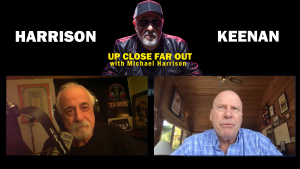 Keenan coached big time teams in the Soviet Union, Russia, Canada, China, the U.S. and more for over five decades! What does it take to be a leader in the competitive and often cutthroat world of major league professional sports? How have the generations of young athletes changed over this stretch of time? What is the state of sportsmanship in today’s culture? What is it like dealing with the media from a professional sports perspective? How is sports culture different around the world? How is gambling impacting sports? Is hockey enjoying healthy growth as both a sport and a business? These questions and more are tackled in an informative and universally interesting conversation between Harrison and Keenan. Keenan, considered one of hockey’s most controversial and intriguing figures, has just released an autobiography titled Iron Mike: My Life Behind the Bench (Randon House Canada, 2024).
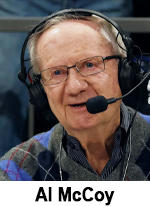 Phoenix Suns Ring of Honor member and legendary radio play-by-play announcer Al McCoy has passed away peacefully at the age of 91. The longest tenured team broadcaster in NBA history, McCoy was widely known as the “dean of NBA broadcasters” for his years of service and unique broadcasting style. He served 51 seasons as “The Voice of the Suns,” calling his first game on September 27, 1972 and his last on May 11, 2023. McCoy’s unforgettable calls of the most memorable moments in Suns history, including three trips to the NBA Finals, and his trademark phrases from “Shazam!” to “Zing Go the Strings” to “Heartbreak Hotel” have cemented his legacy throughout Arizona and the NBA. His distinctive voice, vivid descriptions and deep knowledge of the game created a unique style that remained a staple for more than five decades. McCoy will long be known as the Voice of the Phoenix Suns. His many contributions to basketball and sports broadcasting were recognized when he received the Curt Gowdy Media Award from the Naismith Basketball Hall of Fame in 2007. The first play-by-play announcer inducted into the Arizona Broadcasters Hall of Fame in 2004 and a 2009 inductee into the Arizona Sports Hall of Fame, McCoy earned the team’s highest honor when he became the 15th person inducted into the Suns Ring of Honor in 2017. Funeral services are pending.
 operators who contributed with greatness to the radio industry and have since passed away. The eight radio legends take their place in the Radio Hall of Fame immediately are: Chuck Blore – On-Air Personality; Alan Colmes – On-Air Personality; Charlie Douglas – On-Air Personality; Jim Ladd – On-Air Personality; Maria Martin – Journalist; Byron McGregor – On-Air Personality; Percy Sutton – Executive; and Rusty Walker – Programming Executive and On-Air Personality. The Radio Hall of Fame will recognize its 2024 class of inductees at the 2024 Radio Hall of Fame induction ceremony on September 19, at the Omni Nashville in Nashville.
 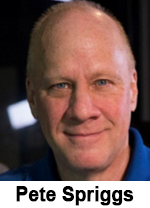 Atlanta radio programmer Pete Spriggs will be among this year’s inductees to the Legends of Georgia Radio Hall of Fame. He commented to The Atlanta Journal-Constitution’s Rodney Ho, “It’s really great to be recognized with so many fantastic broadcasters. It was a blessing to have Cox Radio hand me the keys [to Atlanta news/talk WSB-AM] to work beside such great talent. We all accomplished some great things together.” Spriggs took over as program director of WSB-AM in 2000 and served as director of branding and programming. WSB-AM was the top billing radio station in America for four consecutive years. In 2010, Spriggs managed the addition of an FM signal (WSBB) and the departure of Neal Boortz, as well as bringing in new talent such as Herman Cain, Erick Erickson, Eric Von Haessler, and Mark Arum. The station also acquired Rush Limbaugh from cross-town rival WGST. WSB-AM earned multiple Marconi Awards,
  including 2018’s “Major Market Station of the Year.” Spriggs retired in February 2020. Also named as part of the third annual Hall of Fame inductees are Rome Radio Partners managing partner Howard Toole; Steve Craig; Bobby Ellerbee; Bob Helbush; Brady McGraw; and Wendy Williams. The Friends of Georgia Radio will celebrate the inductees into the Legends Hall of Fame next month (8/24) at the Sandy Springs Performing Arts Center.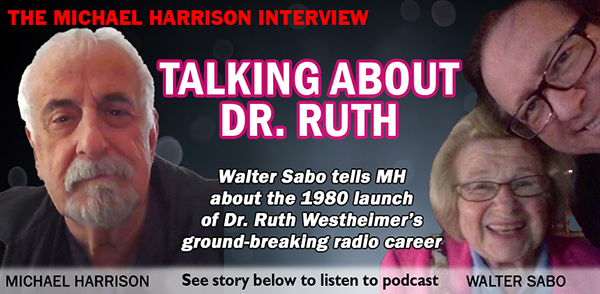
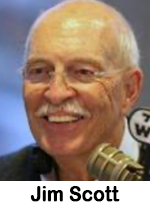 his wife Donna Boland announced. Scott worked in Cincinnati for 47 years, first at WSAI and then at WLW as morning host. During his long and successful radio career in Cincinnati, the Binghamton, New York native immersed himself in charity work with the March of Dimes, the Salvation Army, the United Way, and others. He retired from WLW in 2015. He was diagnosed with amyotrophic lateral sclerosis in 2021 and went public the diagnosis last year.
 commercial radio station in Memphis, Tennessee, featuring a conservative talk radio format. It is the only locally owned news/talk station in the Memphis area. Known as ‘The Mighty 990,’ the station is owned by Todd Starnes via Starnes Media Group, LLC. The station serves the Memphis metropolitan area. KWAM’s studios are located in Memphis, while the transmitter is in Marion, Arkansas. KWAM signed on the air on February 9, 1947.”
 (R-VA) will lead the investigation. They say, “NPR is entrusted with Americans’ hard-earned tax dollars. Serious allegations from a then-senior editor who spent decades at NPR reveal NPR engages in viewpoint discrimination and ideological bias that caters to a narrow, leftwing audience. From dismissing all debate over the origins of the COVID-19 pandemic to statistics about NPR’s editorial staff significantly skewing to the Democratic party, these allegations are deeply troubling and merit congressional investigation. This hearing will provide Members an opportunity to question NPR’s leadership directly about concerns we’re hearing from our constituents across the nation.” NPR president and CEO Katherine Maher is invited to testify.
 “Draft Legislation to Preserve Americans’ Access to AM Radio” is the title of a legislative hearing that House Energy and Commerce Committee chair
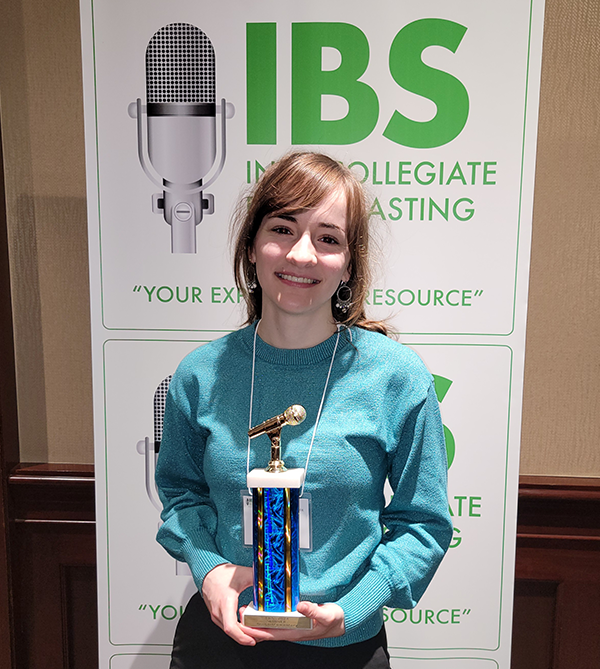
 from 8:00 am to 10:00 am ET on 90 Audacy stations nationwide. Led by Nick Kostos and Ken Barkley, co-hosts of “You Better You Bet,” “BetQL Countdown to Tip-Off” will serve as breakdowns of the men’s college basketball tournament, featuring a mix of sports betting insight. The show will also welcome talent from across Audacy’s portfolio of sports stations.
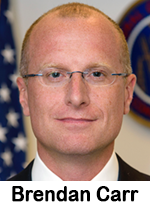 Indeed, TikTok has been caught engaging in a pattern of illicit surveillance and making false statements about personnel in Beijing accessing sensitive U.S. user data. These facts were laid bare for the world to see when the House Energy and Commerce Committee held a TikTok oversight hearing last year. And that is why there is now a broad, bipartisan consensus that TikTok cannot continue to operate in the U.S. in its current form. I want to applaud the strong, bipartisan leadership that Members of Congress have shown in advancing this bill, which would definitively resolve the serious national security threats TikTok poses by banning the app or requiring that it genuinely sever ties to the CCP. This is a smart, threat-specific bill that would address a clear and present danger. I hope that this bill will soon become law.”
 questions as it did answers about what young broadcasters entering professional media today should be prepared for in navigating the unpredictably turbulent waters of the next decade and beyond. Among the sweeping panorama of topics covered in his address, Harrison told the students, “When looking to the future, don’t be too sure that current events will follow a predictable script. There are always ‘black swan events’ that change the storyline and our expectations in an instant. Plus, there are multiple outcomes, possibilities, and forks in the road for almost every situation.” Regarding the current focus on artificial intelligence, Harrison advised, “All technology is a double-edged sword and AI will prove to be a particularly consequential one with both positive and negative implications. However, don’t fall into the age-old trap of thinking that productions and performances created or enhanced by new technology are necessarily ‘artificial’ or ‘fake.’ New tools not only create new art, they have an irrepressible influence on giving rise to new culture. The immediate years ahead are likely going to provide us with the challenging question of ‘what does it mean to be truly human?’” Harrison concluded, “As young broadcasting students in 2024 looking to make a difference in the world, be prepared to face the challenge of following your dreams, ideals and inspiration while confronting the harsh realities of making a living in a stressed environment of relentless change. We live our lives in this business at the dangerous intersection between art and commerce.”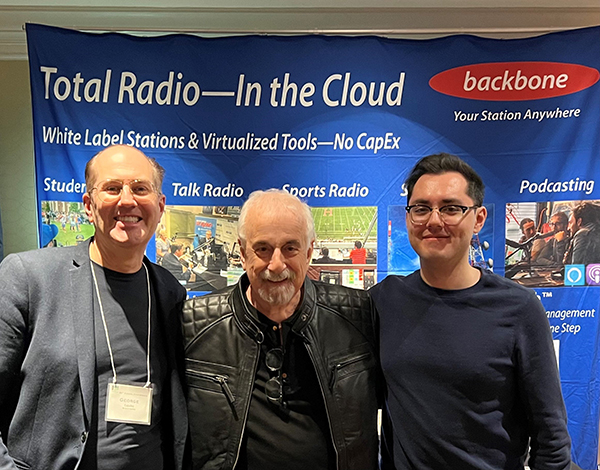
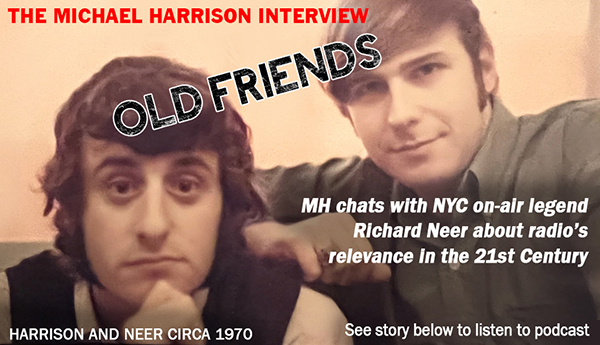
 During his CBS career, he appeared on every CBS News program including “CBS Morning News,” the “CBS Evening News with Dan Rather” and the “CBS Sunday Night News.” For almost 46 years he produced his nationally syndicated radio feature, “The Osgood File,” from which he signed off with his signature phrase, “I’ll see you on the radio.” As Osgood was preparing to retire from “CBS Morning News” in 2016, he was a guest on TALKERS magazine founder Michael Harrison’s podcast.
  can advance their mission and enable them to better-serve communities with quicker alerts and more local news, he shared broadcasters’ concerns about AI without appropriate guardrails in place. He presented three primary concerns; 1) that the use of broadcasters’ news content in AI models, without authorization, diminishes their audience trust and their reinvestment in local news; 2) the use of AI to doctor, manipulate or misappropriate the likeness of trusted radio or television personalities risks spreading misinformation or even perpetrating fraud; and 3) the rising prevalence of deepfakes make it increasingly burdensome for both newsrooms and users to identify and distinguish legitimate, copyrighted broadcast content, from the unvetted and potentially inaccurate content being generated by AI.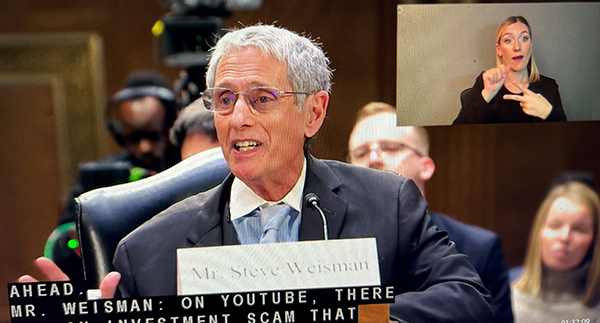
 WRHU-FM, Hempstead, New York chief engineer Andy Gladding played a role in organizing the November 8 event when eight university and high school owned-and-operated stations broadcasting in the 88.1-88.9 segment of the FM band in the number one media market in the country join together to celebrate their love of college radio. Starting at 12:00 noon ET, “The Big 88” will become New York and New Jersey’s largest college radio station, covering an FM broadcast footprint of over 120 miles. In a story written for TALKERS magazine, Gladding says that despite the rash of American colleges selling their radio properties, the New York market has a vibrant college radio community. He says college radio stations have a special value. “I have spent 20 years working as a student volunteer and administrator at WRHU, ‘Radio Hofstra University,’ and have seen first-hand how college radio contributes to the growth and success of students looking to pursue a career in radio, television and digital media. Students and community volunteers who participate at college radio stations find themselves engaged in a diverse community of voices, opinions and music. While their approach and interests may be different, their practice at the college radio station unites them with one unified goal: to serve the listening audience by creating imaginative and alternative audio programming using the university’s FM transmission facility as their channel to the world.
  College radio is a special place on the FM dial. Listeners know it as the channel at the low end of the band where student and volunteer DJs have free reign to play music not usually heard from commercial operators. College students recognize it as a place where they can hone their broadcasting skills and put their passion and talents to work to prepare for a career in the industry. Hiring managers recognize it as a proving ground that provides quality pre-professional development and a destination to seek out qualified candidates to fill entry level media industry roles.
 Segment” every Friday at 11:45 am. Salem New York VP and general manager Jerry Crowley says, “At a time when politics and legal matters are inextricably linked, like at no time in America’s glorious past, AM970 has brought Mike Gallagher and Arthur Aidala together to make sense of it all.” Aidala adds, “Mike Gallagher consistently delivers informed and intelligent conversation to a vast national audience. I’m grateful for the opportunity to visit with him each Friday and provide context and insight to the legal issues of the day. I hope Mike and his listeners are as excited as I am.”
 personalities, programmers and operators who contributed with greatness to the radio industry and have since passed away. The 2023 class includes: talk radio personality Bob Grant, Saga Communications chief Ed Christian, and talk personality Long John Nebel. Radio Hall of Fame co-chair Kraig T. Kitchin comments, “It’s heartfelt recognition to see these individuals and their career contributions to the radio industry recognized with this induction. They’ve made a forever impact on the audiences and businesses they interacted with and for that, we’re grateful.”
  being inducted into the New York State Broadcasters Association’s Hall of Fame this year. Matthews served as host of the WHAM-AM, Rochester evening sports talk show for 35 years. He was also a newspaper sports columnist and a regular contributor to the Gannett News Service.
  inductee worked most of his career in Chicago, spinning the hits at stations including WLS, WCFL, WMAQ, WBBM and WJMK. A private family interment has been held.
 years ago on KLIF and then ‘The Ticket’ you could tell he was a special communicator. He truly is one of Dallas radio’s great storytellers and he kept it going with Susquehanna and then Cumulus all these years. Not many have that kind of staying power. We wish him every happiness in his well-deserved retirement.” Hitzges states, “I’m so proud to be a part of what ‘The Ticket’ has built – a ratings dominator in a fantastic sports city. I shall so miss the daily ‘rush’ of being on the air. But after 48 consecutive years on the air in Dallas doing sports talk, it’s time to move on to the next phase of my life, whatever that may be.”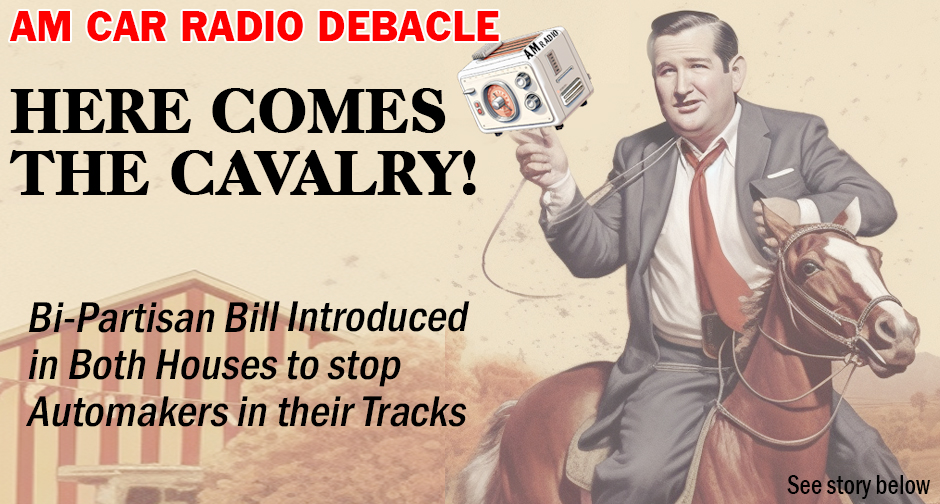
 Westwood One syndicated series “Off The Record With Mary Turner” in which she presented interviews with and personality profiles of some of the biggest musical stars of the day. Turner and Pattiz were married in the early 80s and the two shared what friends described as a happy relationship until his death this past December at 79 due to throat cancer. Turner had her own health issue battling substance abuse in the early 90s, which she bravely overcame. She became a UCLA-certified drug and alcohol counselor and received a Ph.D. in clinical psychology. She went on to be appointed chairwoman of the Betty Ford Center at Eisenhower Hospital in Rancho Mirage. TALKERS publisher Michael Harrison, who worked with Turner at both KMET and Westwood One says, “Mary Turner was one of the main pillars upon which the great KMET was built. Nicknamed ‘The Burner,’ she was a pioneer in album rock radio and an iconic role model for women in the industry. She was solid on the air – providing music fans a panoramic window into the culture. She related to artists with an authenticity that engendered trust and they really opened up to her.” As of press time, further details on this story are not available.