Industry News

Urban One-Backed Casino Referendum in Richmond Fails

Media firm Urban One poured about $4.3 million into the campaign to convince voters to approve the Richmond Grand Resort & Casino – a project in which it was partnered with Churchill Downs. The referendum failed by a margin of 58% to 42%. Altogether, Urban One and Churchill Downs spent $10 million promoting the project. Urban One founder and board chair Cathy Hughes recently appearedim on Gospel WPZZ-FM, Richmond to discuss the project and the referendum and lamented the amount of money they’d spent on the process, saying, “God has blessed me with enough to build the Richmond Grand. But $10 million is what the final [campaign] bill looks like. Such a waste. I am so mad at this opposition. Do you know how much good I could have done with $10 million? I had to pay the lawyers, the accountants, and the lobbyists… just to get the opportunity for you all to vote.” Casinos have already been approved in four Virginia cities, but the project was extremely controversial in Richmond.

Features

How News/Talk Radio Should Adapt to Attract and Retain a Younger Audience

By Bill Bartholomew
Talk Host/Podcaster/Journalist/Musician

imFolks in the Gen Z and millennial demographics are heavily engaged in political issues, care about news in their communities and the world, and are constantly bombarded with content.  So why are they less likely to tune into and interact with news/talk radio than older demographics?

Talk radio has historically skewed older, and from an ad portfolio standpoint, is often targeted at the coveted 35-54 and 55+ demographics.  However, in a world where social media influencers and podcasters supply information to millions of young consumers, news/talk radio should be able to effectively compete for the ears of younger generations in a comparable, if not expanded way.

For all of the anecdotal and hard evidence that terrestrial radio may be trending in a downward direction, the format continues to have a vast reach.  It is convenient to engage with it in automobiles, and occasionally in home or office settings.  Yet, while younger generations listen to radio, news/talk is not the format that they turn to by and large.

Unlike many digital-first content producers, radio retains a unique quality: authority.  By virtue of editorial standards, FCC regulation and brand – things that social media and podcasts often lack – radio has the unique ability to deliver credible, vetted, nuanced and universally trustworthy content that can instantaneously adapt to meet the needs of the moment.  This is true in everything from natural disasters to rapidly evolving breaking news stories, providing a channel for immediate, reactionary insight and analysis.

There are several steps that news/talk radio should pursue in earnest to adapt to the current climate of content consumption, particularly by younger listeners, that can reach, and most importantly, retain broader, younger, more diverse and more engaged audiences.

  1. Introduce younger people into the conversation.

Too often, Gen Z and millennials are skewered by older hosts, mocked for their perceived naivety, unchecked optimism and me-first approach.  While some of these qualities can be accurate, that approach reflects a disconnect between older generations and the experience of younger ones.  Millennials and Gen Z have grown up in a post-9/11 world replete with “endless wars”, the fallout from the 2008 financial crisis, runaway student debt, a massive housing crisis, the mental health stressors of social media, Covid19’s impact on traditional youth experiences, climate change, a deeply bifurcated political environment and a constantly evolving quest for social justice.  Through these experiences, younger generations offer an important perspective that should be assigned the same news value as experts from older generations.

Are you discussing shifts towards electric vehicles?  Bring on someone from Gen Z to share their perspective on why steps towards carbon neutrality are important to them.  Engaging a conversation on the president’s approval rating?  Perhaps younger conservative and leftist voices should be included in the conversation.  Discussing immigration?  How about the perspective of a younger member of a Latino organization?

By giving younger generations and more diverse guests a platform, stations can simultaneously expand their content and reach.  With consistency, the station’s brand will become more familiar to younger potential listeners who may be inclined to tune in to hear someone who shares their identity and perspective on – here’s that word again – a platform of authority.  Let the guest do the work of establishing the credibility and importance of your station or talk show to younger audiences by posting about their appearance on social media, sharing audio clips and mentioning to their peers.  It will build familiarity and trust among those generations, who in turn, will begin to tune in on a more regular basis.

Stations should also consider bringing more younger, competent voices into on-air roles, whether that be through reporting, segments, fill-in hosts, weekend shows or full-time hosts.

  1. Meet the audience where they are: their phones. 

As mentioned above, the convenience of simply turning on AM/FM radio is highly appealing in automobiles, though as Apple Carplay continues to adapt and evolve, digital-first content is likely to become as simple and convenient in the near future.

Talk radio needs to make consuming their product on smartphones as simple and direct as turning on a traditional radio.  This means no clunky websites, no lengthy pre-roll spots, a reliable stream connection and a “one touch” means of turning on and off the station.  This should also mean expanding talk shows to high-quality video livestreams, following in the footsteps of the top YouTube and Twitch performers; developing unique content for TikTok and Instagram; building podcasts that are focused on specific issues, and; providing interaction via text and chat.

Radio has the ability to be the ultimate livestreamer, social media influencer and podcaster, but rarely harnesses these platforms in a meaningful way.

It is not enough to simply strive to “expand a digital presence”; stations and shows must engage in the hard work of building platform-specific content with their brands.

  1. Music, cultural references and themes for the modern age.

A few weeks ago on a seemingly benign episode of the TV show FOX NFL Sunday, panelists Jimmy Johnson and Terry Bradshaw offered an example of the type of cultural adaptation that sophisticated writers and producers provide their brands.  While describing a fight between two football players, Mr. Johnson said something to the effect of “when it comes to these two, what’s that Taylor Swift song?”, and then in synch with Mr. Bradshaw, “bad blood!”.  It is highly unlikely that these two 70+ men listen to Taylor Swift’s music with any regularity or would simultaneously pull the “Bad Blood” reference.  Yet, with excellent preparation that played into the greater cultural moment as well as the specific, current Taylor Swift/NFL overlap, in a six-second span, FOX NFL Sunday was able to give the illusion that their panelists are contemporary, hip and plugged into “what is going on”.  Is your station or show plugged into what’s going on?  Do you use contemporary music for bumps?  Are your images – including headshots and social content – modern, interesting and engaging or are they more akin to a miscellaneous real estate agent?  You are a performer in an entertainment business that, while certainly paying homage to the past and lineage of the industry, must be contemporary in aural and visual presentation.  This goes for everything from wardrobe on video and in photo to fonts on graphic design.

How often do you or your producer read Pitchfork to learn about new music that is breaking this week?  How often do you or your producer read Variety to understand major trends that are happening in the broader entertainment industry?  What live events are you broadcasting from, covering and building partnerships with?  You should strive to be cutting edge.

  1. We need a friend now more than ever.

This is something that goes for all audiences, but particularly for younger ones.  It’s OK, in fact, great to be yourself, present yourself from your generation and retain the authoritative stance that has built your brand.  Take a look at the success that sports talker Mike Francesa enjoyed by leaning into his persona – and in turn – developing legions of younger listeners that fell in love with his dad-like delivery and frequent meltdowns.

Few things are as uncomfortable to see as a 40+ person dressing or acting like a teenager.  Younger listeners want that senior, experienced, trusted friend to entertain them, inform them, and at times, tell them that everything is going to be OK.  You can help make sense of the world for younger audiences, something that is absolutely essential in the modern era.

Through attracting younger listeners by including them in the conversation, effectively delivering content on smartphones, presenting a cutting-edge entertainment product and continuing to serve as a trusted friend, news/talk radio can greatly expand its reach, relevance and revenue.

To that point, some younger listeners who discover a radio station or show via any of the above entry points will likely work backwards to the traditional AM/FM dial.  Like the resurgence of vinyl records, AM radio in particular has the opportunity to become a hip delivery format for discerning younger listeners.

The big question is: are radio companies, stations and hosts prepared to do the hard work of reimaging their product?


Bill Bartholomew is a talk radio and podcast host/producer, journalist and musician based in Providence, Rhode Island. Email him at: william.f.bartholomew@gmail.com. 
Industry News

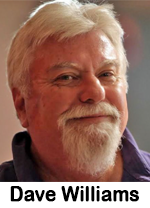
Dave Williams Retires from KLIF, Dallas

In a post on Facebook, KLIF, Dallas morning personality Dave Williams announces his retirement from the “DFW Morning News” program. He writes, “Three months ago I suffered a blackout seizure. I’ve been recuperating and undergoing tests since then. The medical news is as good as can be hoped: Iim didn’t have a stroke or a heart attack and I don’t have a brain tumor or anything like it. Turns out it’s just one of those unexplained things that happen and very likely will never happen again. I’ve been cleared to return to work but have decided to call it a career. I’m 72, I’ve been in radio for 54 years, and for the past 42 years, I’ve been getting out of bed in the middle of the night to go to work. I just discovered I like sleeping in a bit. I will miss the daily enjoyment of the job and especially the people with whom I worked. And, thanks most of all to those of you who listened each morning and found some informational and entertainment value mornings on KLIF. Nothing lasts forever but I’m going to try. Stay well, y’all. Love your life. This is the month for giving thanks.”

Industry News

Ramsey Solutions Offering Free Financial Peace U. to Veterans

In recognition of Veterans Day (11/11), Ramsey Solutions is offering its Financial Peace University to 10,000 veterans at no cost. Additionally, Ramsey Solutions is including three months of premium access to the EveryDollar budgeting app. And veterans who sign up for FPU will have the invaluable opportunity to participate in group coaching calls with Ramsey Solutions’ team of dedicated financial coaches. Theim company says, “The numbers don’t lie.  America’s military heroes are struggling with money. A recent survey conducted by Wounded Warrior Project finds six in 10 veterans did not have enough money to make ends meet at some point in the past year. The survey also finds the rising cost of goods is the top-rated source of financial strain.” Dave Ramsey comments, “Veterans who’ve selflessly served to protect our freedom deserve to feel freedom for themselves and their families. It’s not just about financial education; it’s about transformation. Winning with money takes sacrifice, perseverance and determination — qualities veterans know all about. We’ll give them the tools, and they’ll get it done.”

Industry Views

Pending Business: Fall Back

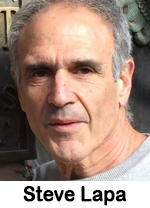
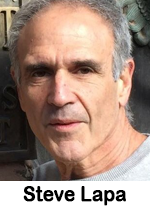
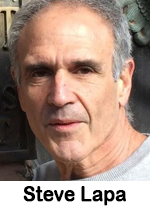
By Steve Lapa
Lapcom Communications Corp
President

imWe all need to learn how to fall back. This is not about daylight saving, retreating, or backpedaling. This is about learning from the most valuable brand in tech, the oracle, and the best practices all of us in sales and management must learn to apply.

Let us start with Apple. Demand for the iPhone 15 is not lighting the tech world on fire as slow sales do not even come close to measuring up to the numbers delivered by its predecessors like the iPhone 13 when sales jumped 47% two years ago. What happened to all those Apple fanatics who would line up outside Apple stores or flood the Internet with orders ready to buy the next iPhone?

The must-have Apple loyalists were slowed down by the glitches in the iPhone 15 as we have come to expect design perfection. And why not, when you have nearly 1.5 billion users worldwide and sell nearly 100 million iPhones in the first two quarters of this year? Perfection expectations go hand-in-hand with momentum, innovation, and sales. Perhaps the challenge after 16 years of “new and improved” was too much. Tech is not Tide and Apple is not Procter and Gamble.

What are the lessons we can learn from this lower sales cycle?

— Never assume an unqualified welcome sign from your core customers. We earn the welcome sign every day. Fix the problem faster.

— Always deliver on the promise of new and improved.

— Better to delay than disappoint.

Famed Wall Street guru Warren Buffett recently dealt with losses in several of his holdings by being transparent with his stockholders about the challenges at several of his companies and navigating an unfriendly stock market. This is the same Warren Buffett who supported the Cap Cities minnow (remember that company?) swallowing the ABC Radio whale and still is a stakeholder in media.

The 93-year Oracle of Omaha is nimble enough to shift strategies and adjust his investments to maximize results for his stakeholders.

The Buffett takeaways?

— When performance is not up to expectations, adjust the plan.

— Age can be an asset when experience counts.

— When you are in hole, stop digging.

How many traditional packages and sales promotions have you counted on as sure-fire sellers that unexpectedly failed? What does your fallback plan look like?

Steve Lapa is the president of Lapcom Communications Corp. based in Palm Beach Gardens, FL. Lapcom is a media sales, marketing, and development consultancy. Contact Steve Lapa via email at: Steve@Lapcomventures.com.

Industry Views

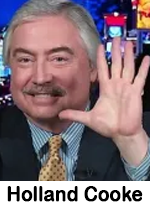
Monday Memo: TV Synergies

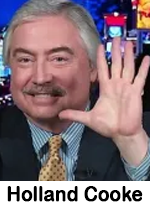
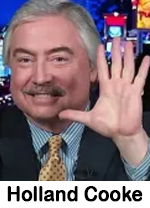
By Holland Cooke
Consultant

imI am always impressed when I see-and-hear radio and TV stations swapping product.

— The most obvious asset is weather. Many radio stations’ forecasts are voiced by local television meteorologists, often gratis because their boss assigned them to, as part of an information alliance. So, the radio station’s weather cred’ stands on the broad shoulders of the weather brand the TV station promotes so relentlessly.

— For some news/talk stations, simulcasting a television newscast is the only way they can air local news in the afternoon. Turn lemons into lemonade. Radio people who love to hate TV audio under-estimate how loyal viewers are; and how conspicuous and convenient this can make the radio station.

— Especially if the deal includes promos – on both stations – voiced by trusted local TV anchors, offering that “If you can’t be home in time to SEE us, you can HEAR us…”

— In every market where we have executed this strategy, the TV talent has remarked about how many compliments they get for being on radio.

— Deal point: During simulcast newscasts, the TV station supers “Heard live on WXXX 8:50 AM.”

How’s THIS for resourceful?  

— A radio station’s afternoon drive newscast consists of a 60-second live shot (or prerecorded live-on-tape) from a local TV newsroom, voiced by the TV anchor who ticks-off “the stories we’re following” that will be seen on evening newscasts.

— The radio station wraps it into a four-minute package, including:

— that live headline package, at the end of which

— the TV anchor hands off to radio’s traffic reporter, then…

— the traffic reporter teases weather into a radio spot, and…

— after the commercial, the weather comes on.

— And here’s the kicker…that live shot from the TV newsroom is a commercial for the TV station! To the listener’s ear, it’s a free newscast from a credible, branded source. Possibly a trade for TV time to advertise the radio station?

im

Another win-win synergy: Reciprocal excerpting, with attribution 

Translation: Each station gives blanket permission for the other to grab, from the air, whatever it wants, crediting the originating partner.

— There will be times when someone from the radio station is on-scene; or when radio scores a newsworthy interview that TV can use the audio of. More often, thinner-staffed radio will use TV sound more than vice-versa.

— When I programmed WTOP, Washington, WUSA9 let us help ourselves to their newscast audio (“And the mayor told Channel 9…”). Each day, our desk and theirs compared assignments, and we recorded every WUSA newscast.

— True story: The news director from NBC4 came to my office and said, “You can use OUR sound, and you don’t even have to say ‘Channel 4!’ Just STOP saying ‘Channel 9.’”

— It was a flattering offer, but we remained loyal to WUSA, the once-upon-a-time WTOP-TV. Decades later we were still getting mail addressed to “WTOP-TV.” And both stations being CBS affiliates contributed to the lingering impression that we were siblings, so the confusion was actually useful. Does your radio station have a long-lost TV brother? 

Radio takes TV where it otherwise can’t go: in-car

Note how aggressively TV stations are programming their apps and websites. They want to be a news brand, not just a news station.

— A smart TV station should want to give radio a ROSR (Reporter On-Scene Report) during the day (when radio audience is high and TV audience is low), because doing so serves to promote the upcoming evening TV newscast.

— WARNING, based on experience: This can be a tough sell to over-protective TV news directors, who may fret that by going-live on radio they’re alerting other TV stations to the story. Stinkin’ thinkin.’ Other TV stations could show up anyway, and they wouldn’t be as-well-known for covering the story as the TV station that’s also already reporting it on radio.

Local TV news is a hungry critter…

…with a limited budget. Which is why some TV stations toss-live to their radio partner’s host: “Gene, what are your callers saying about the congressman’s abrupt resignation?” Arrangements like this were commonplace even decades ago, when TV had to equip the radio studio with equipment more elaborate than modern day video chat requires.

The calculus is simple

Radio + TV > Radio – TV or TV – Radio

(Radio PLUS television is greater-than Radio MINUS television or television MINUS Radio.)

Even if you’re a music station that doesn’t do much news at all, these opportunities are worth exploring. At least trade spots, because neither station can afford to promote as much as it should.

Holland Cooke (HollandCooke.com) is a consultant working at the intersection of broadcasting and the Internet. He is the author of “Close Like Crazy: Local Direct Leads, Pitches & Specs That Earned the Benjamins” and “Confidential: Negotiation Checklist for Weekend Talk Radio.” Follow HC on Twitter @HollandCooke

Industry News

WFDF, Detroit Begins Simulcast on HD Signal

Detroit news/talk outlet WFDF-AM adds an FM HD signal to its broadcast via Audacy’s WOMC-HD2 at 104.3 FM. The Adell Media-owned station recently flipped from urban talk (with a very brief stint as sports talk in between) to conservative news/talk and now positions itself as “910 AM Superstation –im Detroit’s News/Talk Radio Station.” The station features local host Justin Barclay in morning drive with Premiere Networks syndicated shows including “The Glenn Beck Program,” “The Clay Travis & Buck Sexton Show,” “The Sean Hannity Show,” “The Jesse Kelly Show,” Key Networks’ “The Bill O’Reilly Show” and Red Apple Media’s “The Other Side of Midnight with Frank Morano.” The station is promoting itself with a heavy media schedule on iHeartMedia’s adult contemporary WNIC-FM, Detroit voiced by Sean Hannity. Adell Media CEO Kevin Adell says, “910 AM Superstation is living up to its name. The audience growth we’ve seen since launching our conservative news/talk lineup in September has been exponential, and we’re looking forward to reaching even more listeners on 104.3 HD2.”

Industry Views

International “1World Radio” Co-hosts Andy Gladding (USA) and Jamie-Lee Fredericks (South Africa) are This Week’s Guests on Harrison Podcast

The co-hosts of “1World Radio,” Andy Gladding and Jamie-Lee Fredericks, are this week’s guests on the award-winning PodcastOne series, “The Michael Harrison Interview.” Their weekly international radio show is a co-production of Gladding’s WRHU 88.7 FM, Hempstead, NY, USA and Fredericks’ Bush Radio 89.5 FM, Cape Town, South Africa. WRHU is a highly respected campus radio station broadcasting from Hofstra University on Long Island, just outside of New York City. The American co-host is also the chief engineer at WRHU as well as a college instructor. He simultaneously serves as chief engineer at Salem Media’s WNYM and WMCA in New York. The South African co-host is an air personality on Bush Radio – a dynamic young woman who grew up with an intense love of radio. The conversation explores the differences and similarities between their stations and how they reflect the cultures of their home nations. Not to be missed. Listen to the podcast in its entirety here.

Industry Views

Monday Memo: Stamina, Systems, Support

By Holland Cooke
Consltant

imFeel busy? Try keeping-up with these four:

— Like George Clooney’s character in “Up In The Air,” Mike McVay attained an elite status earned by only a handful when Continental Airlines was the principal carrier in Cleveland, his home base. And he’s still at it, consulting full-time since 1984.

— “Rhode Island’s anchorman” is ultimate split-shifter Gene Valicenti, who hosts 3 hours of radio on WPRO at 6AM (11 years), then at 6PM he co-anchors on NBC10 TV (31 years), both top-rated shows.

— For 10 years I’ve been riding 138 miles with owner Jay Philippone from his home in Pittsburgh to Connect FM + Sunny 106 in DuBois PA. He lived there when his children were young, then moved to the Burgh’ when he bought stations in nearer West Virginia; and “because you get home quicker from Pirates and Penguins and Steelers games.”

— And for 20 years I’ve followed owner Paul Gleiser “106.3 miles door-to-door” from his home in Dallas to KTBB + KRWR in Tyler-Longview. Why the trek? “My wife gets to do what she wants to do” in the culturally rich Metroplex, and where she is a university professor.

How DO they do it?

“On the cusp of my 65th birthday,” Jay laughs, “that’s a good question!” As bosses, he and Paul are innately motivated. Gene sets the alarm for 5AM, but – because “I just can’t wait to get on the radio — I find myself getting up earlier,” to execute a show he and his producers mapped-out the day before.

Their love for our craft is clear. Mike says he’s “up late and up early because l absolutely love what I’m doing. I really don’t feel like I’m working for the most part.”

im

Their routine seems anything-but

Gleiser has gone-though “a lot of tires” making his trans-Texas trek 4 days a week since 1991 (on Wednesdays in his ATW Creative Services studio in Dallas). And he makes the most of all those miles: “I’m in the News and Talk business, so I use that time to consume news and keep myself current.” As does Philippone; and all that back-N-forth time affords them an invaluable perspective listening in-car, where AM/FM radio is still #1.

Mike McVay travels 3 weeks a month (down from 48 weeks X 5 days pre-pandemic), unlike Gene Valicenti’s 6AM + 6PM gigs that keep him closer to home. And, yes, Gene naps between shows (“30 minutes, longer makes it worse”). But by 5PM he’s in the bustling NBC10 newsroom, where “I start to work on the 6P TV script” he’s given, “which I go through and rewrite almost every story and tease, to make the copy sound like me.” 

Technology: Friend or foe?

“Yes!” Gleiser quips. “There are only tradeoffs.” On the plus side, the pandemic-necessitated telecommuting that has transformed so many other industries has shown radio new options.

Jimmy Failla’s first affiliate remote was from KTBB, where – minutes before airtime – Internet service failed. If I hadn’t seen it in person, I wouldn’t have believed that we fed New York via an iPhone hotspot. And as Failla’s frequent fill-in, Paul has hosted the show from KTBB and from home in Dallas and in-studio at Fox/NY, and my trained ear can’t hear the difference. And when Valicenti does his radio show at home Monday and Friday mornings, he can even do his live NBC10 TV simulcast hit there.

Philippone raves about the Radio.cloud automation system “that allows us to work and manage the product and diagnose transmitter problems from anywhere.” But he confesses that “I’m still working on a perfect way to manage my In box, to be able to keep-up” with the volume of communication and information, the velocity of which is “lots faster than pre-Internet/pre-Email days.”

During my 17 years as McVay Media news/talk specialist, I learned lots from Mike about keeping organized. “Obsessive about detail and staying focused on the job at hand,” he types meeting notes in real-time. “I do everything I need to do as quickly as it can be done,” which also means making the most of all that time in-flight. He warns managers to “prioritize properly, so the crisis of one person doesn’t become a crisis for someone else.”

It takes a team 

Gene Valicenti admits “I got lucky with two good producers,” one at WPRO the other at NBC10. “They’re both fast and technologically-savvy,” and his radio producer “can quickly find something during commercial breaks.” He talks with both producers several times each day, and they talk to each other. “It’s all about cross-promoting, cross-purposing” on-air material from station-to-station, win-win.

Paul Gleiser IS his stations. He has a PD, but he himself is owner, GM, Sales Manager, Promotion Manager, and choosy endorsement spot talent. “It’s an unusual management structure,” in which “everybody is in Sales, and everybody knows their job, and has tenure, almost zero turnover” (the last couple openings were because two longtime staffers died suddenly, too young).

Jay Philippone is at his Pennsylvania stations Mondays (interacting with each staffer and finalizing his visit to-do list) and Tuesdays (“meetings day”) and Wednesdays (follow-through). He has a full-time GM and “she’s been on the job 30 years next month, someone to make sure things get done and ‘the trains run on time.’”

Hitting Pause 

Mike urges “find time to turn it off. Let your brain be on rest, and entertain yourself.” He’s a sports fan, and binge-watches his favorite TV shows. Jay will “take a half day and not work, just read,” and he calls that decompression “really, really worthwhile.”

But retirement? McVay: Nope. Gleiser: “And do WHAT?” Philippone: “I’ve been in radio since I was 19 and I love what I do.” When I ask “If you didn’t do this?” Jay admits “I don’t have an answer,” and he thinks “it would be easy to lose a sense of direction.” As did his retired friend who said “it sucks.”

Valicenti is struck by the reach of WPRO’s station stream: “You would not believe how many rely on it,” and when it hiccups “we hear about it!” And not just from locals using the station app and smart speakers. He has a big following in Florida, seasonal snowbirds and Rhode Island ex-pat retirees who are frequent callers. When the time comes? “Maybe doing a radio show from Florida,” where – vacationing recently in Naples – he was greeted by New England accents when spotted in restaurants callers had recommended.

Holland Cooke (HollandCooke.com) is a consultant working at the intersection of broadcasting and the Internet. He is the author of “Confidential: Negotiation Checklist for Weekend Talk Radioand “Close Like Crazy: Local Direct Leads, Pitches & Specs That Earned the Benjamins.” Follow HC on Twitter @HollandCooke

Industry News

Cumulus Media 2023 Q3 Revenue Falls 11%

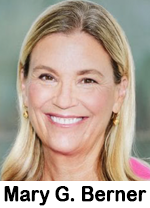
Cumulus Media Inc is the first audio group to report third quarter 2023 operating results in a year that’s been challenging for all media reliant on advertising. Today’s Q3 report reveals net revenue of $207 million, a decline of 11% over the same period in 2022. Cumulus reports net income during the quarter of $2.7 million, down 68% from a year ago. However, for the first nine months of 2023, the company reportsim a net loss of $19.8 million. Cumulus reports in segments, and for the Q3 period total broadcast radio revenue was $146 million, down 17.4% from a year ago. Spot revenue was down 15.2% while network revenue declined 22.8% from Q3 of 2022. Cumulus’ digital segment reports revenue of $37.2 million, an increase of 6.6%, year-over-year. Cumulus CEO Mary G. Berner states, “Third quarter revenue and Adjusted EBITDA finished in line with expectations with results reflecting the continued dichotomy between local imand national business lines. Despite the challenging environment, we maximized performance by continuing to focus on areas we can control, including growing each of our digital businesses, reducing costs, and improving our balance sheet through non-core asset sales and debt reduction. These actions have further improved the company’s revenue growth profile, operating leverage, financial flexibility, and strategic optionality and, collectively, position us to rebound when the advertising environment improves. While we are continuing to see weakness in national markets, as companies are starting to set their 2024 marketing budgets, we are seeing some initial indications from key national advertisers in several categories that sentiment is improving for next year. That tone, combined with the anticipation of a robust political spending cycle, gives us cautious optimism that we may be seeing the early signs of a market recovery.”

Industry News

Yesterday’s (10/25) Top News/Talk Media Stories

Congressman Mike Johnson (R-LA) is elected new Speaker of the House; the Israel-Hamas war and the controversy in the U.S. over publicly declaring support for either Israel or the Palestinians; former President Donald Trump’s legal battles; the 2024 presidential race; the U.S. migrant crisis; Supreme Court Justice Clarence Thomas’ forgiven RV loan; the FDA’s notice that COVID-19 vaccinations can bring an elevated risk of stroke if given in combination with flu shots to older people; and Hurricane Otis slams Acapulco, Mexico were some of the most-talked-about stories in news/talk media yesterday, according to ongoing research from TALKERS magazine.

Industry News

Audacy Releases Modern Blueprint for Audio Advertising

Audacy is releasing the fifth installment of its bi-annual audio thought leadership series, State of Audio: Level Up, that it calls “a modern blueprint for audio advertising, designed to provide a go-to playbook – including planning tips, creative how-to’s and innovative trends – to help advertisers level up the performance of their audio investments.” Audacy chief marketing officer Paul Suchman says, “Audio is proving itself as a must-have media for marketers. Our advertisers are embracing the power of multiim-platform audio with media plans that utilize radio, digital audio and podcasts, working together to reach audiences with unprecedented precision and drive quantifiable outcomes for their brands.” Some of the findings within the guide include: 1) Audio advertising works harder – driving more than two times the attention of TV and social media at more desirable CPMs; 2) Radio and digital audio are stronger together. A multi-platform audio strategy is so powerful that advertisers see 1.5 times the return on ad spend compared to digital-only campaigns; 3) Advertisers are leaving upwards of $6 billion in revenue on the table by not including total audio – a balanced mix of traditional broadcast radio and digital audio – in their media mix, according to a study conducted by Audacy and Neustar. The report also offers actionable tips for producing effective ads under the section titled, “5 Ways the Best Audio Ads Crush the Status Quo.” Here, Audacy says, “Advertising on the #1 reach media — Audio — will get you the most ears. But to keep them, your creative can’t just be good — it needs to be really freaking great.” See the report here.

Industry News

McNicholl Named FNC Miami Correspondent

FOX News Channel brings Danamarie McNicholl aboard as a Miami based correspondent, effective November 6. McNicholl is an Emmy Award-winning reporter who served with KFMB-TV, San Diego forim the past two years. Prior to that she served as a reporter and anchor for KREM-TV, Spokane. McNicholl holds a bachelor of arts degree in broadcast and electronic journalism from Gonzaga University and is currently finishing her master’s degree in criminal justice and cybersecurity at Boston University. She is also a member of The Miss America Organization and was named Miss Washington in 2018.

Industry Views

Pending Business: Your 2024 Ad Sales Forecast

By Steve Lapa
Lapcom Communications Corp
President

imYour crystal ball is still foggy, isn’t it?

Even worse, no matter how many times you try and shake it into a predictive submission, the answer is still the same, “Political-not sure, Weather Emergency-unforecastable.”

Nobody in business likes a lack of confidence, so “Not Sure” is a non-starter. For us radio fans, the variables in predicting a 2024 ad sales forecast are the most unforecastable, unpredictable, variables since the original gang of head-in-the-sand radio gurus pegged MTV as a 1981 fad.

And here we are, 42 years later where a pure-play music video channel challenging FM music radio, satellite music radio, music streaming and downloadable audio would include dating games and ridiculousness, once again saving America’s most-listened-to free music source: radio.

Remember 1981 when talk radio was mounting a competitive threat to all-news radio. Rush was 30, Hannity was 20, Bongino was seven and Ben Shapiro was not born yet. Anybody here have 42 years to wait out your 2024 predictions and get it right? How about 42 days late with your forecast?

Our new world of AI, super-speed computer analysis, blended into an ever-changing digital and social media landscape, under pressure from the economy, global events and the melting radio revenue ice cube has made predicting 2024 ad projections a Vegas skill game.

Thankfully, we have the experience, patience, and cooperation of radio’s leadership to adjust forecasting quarter by quarter, sort of. Back to the task at hand and how to navigate this cracked crystal ball as you mount your sales strategy into 2024.

— Keep your eye on the prize. Always remember, your current advertiser is your best advertiser. Take diligent care of your foundational base billing and that means super serving your customers, as competitors from every medium are monitoring, planning, and pricing a counter plan.

— Positive Paranoia. Thank you, Andy Grove. The third CEO of Intel and a driving force behind Silicon Valley’s original exponential growth knew how to channel innovation and competition into a positive zone. How about you?

— Never stop learning. What new strategies and sales techniques will you drive into next year.

— Something will drop out of your sales picture. What is it? Eventually a sale resource will drop out. Identify how you will compensate for the loss and how you will grow your business as a result.

— Do you have minimum and maximum goals? There are only so many accounts you can sell and service in a month. What is that number and how much do each of those accounts need to generate monthly?

— Attrition. The arch-enemy of sales. Some business never returns. Now what?

Many 2024 projections are falling in the ultra-conservative, no risk, under promise/overdeliver category. Yet there is a fine line between being too conservative and a vote of no confidence. What’s in your forecast?

Steve Lapa is the president of Lapcom Communications Corp. based in Palm Beach Gardens, FL. Lapcom is a media sales, marketing, and development consultancy. Contact Steve Lapa via email at: Steve@Lapcomventures.com.

Industry News

Yesterday’s (10/16) Top News/Talk Media Stories

Congressman Jim Jordan’s push to become the next House Speaker; the Israel-Hamas war and President Joe Biden’s planned Wednesday trip to Israel; the gag order imposed on former President Donald Trump and his legal battles; the 2024 presidential race; U.S. migrant crisis; and Supreme Court Justice Amy Coney Barrett calls for a SCOTUS ethics code were some of  the most-talked-about stories in news/talk media, according to ongoing research from TALKERS magazine.

Industry Views

Pending Business: When it Matters Most

By Steve Lapa
Lapcom Communications Corp
President

imIt may seem impossible, but you need to stay in your lane.

As we live through another dark chapter in world history, staying focused on what we do in sales and marketing will be a nearly impossible challenge. We live in a 24/7, always-on world constantly updating everything from everywhere.

As we work on the sales, marketing and management side, the news/talk and information programming side are in hyper mode logging on, weighing in, competing to never miss a beat. I remember when time stood still as the events of 9/11 shocked the world and time stood still. Talk radio hosts, producers and news departments tried their best to digest the events and offer some level of understanding to a listening audience. For the first time ever, the mainland of the United States of America had been attacked.

And here we are, frozen again. This time the events unfolded halfway around the world. Once again shock, unspeakable actions, thousands of innocent deaths, massive destruction. If you have been doing this long enough, we do have some level of experience with shocking events.

Once again, our talk radio hosts, producers and news teams will be a go-to source for millions of listeners across the country. How do we stay focused, selling, marketing, prospecting as local communities react to all this that is unfolding halfway around the world?

— Our thoughts and prayers are with those in harm’s way. As difficult as it may be, try and keep the opinionated politics away from your sales process.

— Keep the conversation neutral. A challenge for sure. If you are prepared there’s always positive to bring to your sales call.

— The calendar never quits. Halloween, Thanksgiving, Christmas, New Year’s, are all around the corner and with that a last-minute marketing opportunity.

— Why are 66% of the U.S. adults over 40 overweight?  Blame the men, we always skew those numbers. Just helping with a little small talk …

As challenging as the next few days and weeks may become, your news/talk radio station will become an important resource for adults on the go who need to know. As you formulate your presentations, stay focused on the unique benefits only your radio station’s lineup can deliver in times of crisis. Your on-air talent have earned the trust of the audience the old-fashioned way…. by being there when it mattered most.

Steve Lapa is the president of Lapcom Communications Corp. based in Palm Beach Gardens, FL. Lapcom is a media sales, marketing, and development consultancy. Contact Steve Lapa via email at: Steve@Lapcomventures.com.

Features

The Greatest Home Run

A sports moment for the ages, a botched radio call, a live broadcast believed lost forever… then miraculously rediscovered. What a story!

By Mark Wainwright

imThe History Channel calls it “The Most Dramatic Home Run in World Series History.” ESPN has often described it as the greatest home run of all time. To this day, it is the only World Series Game 7 walk-off home run.

Long-time baseball fans know the basic facts: On October 13, 1960, Bill Mazeroski of the Pittsburgh Pirates hit a line drive over the left field wall at Pittsburgh’s Forbes Field to win the World Series for the Pirates.

This was an iconic moment in baseball history, and an iconic moment in baseball broadcasting history, as well … although the Hall of Fame broadcaster who described the moment for the national radio audience probably wished he could have done a second take!
im

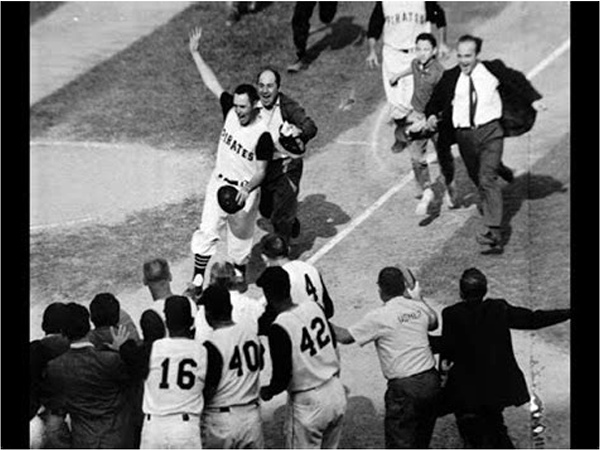
Above: Bill Mazeroski crosses the plate for the Game 7 victory! (photo courtesy YouTube)

It was a dramatic finish to an astonishing World Series, but as often happens, the backstory of that moment and how it was broadcast– and everything that led up to it – has been largely forgotten. As we follow this year’s MLB playoffs (while taking note of the anniversary), it’s worthwhile to look back at an earlier, very different era of post-season baseball…

******************************

The 1960 World Series opponents could hardly have been more different. The New York Yankees of that era were a machine, and the 1960 team easily dominated the American League on their way to the pennant. In contrast, the Pittsburgh Pirates were a surprise. The Pirates had not been to the Series since 1927, they were coming off a mediocre 1959 season, and expectations were low… but they got off to a good start and managed to keep it going. With timely pitching, clutch hitting, lucky breaks, and a never-say-die attitude (21 of their 95 wins came in their final at-bat), the Pirates claimed the National League pennant. The Yankees were studs, while the Pirates were scrappers, and the first six games of the Series reflected the character and personality of the respective teams.

In their three wins, the Yankee sluggers clobbered Pittsburgh pitchers for 38 runs. Yet, the Pirates managed to hang on, squeezing out three close victories in response. It all came down to Game 7 at Forbes Field on the afternoon of Thursday, October 13. Not only were there multiple Hall-of-Famers on the field and in the dugouts, there were Hall-of-Famers in both the TV and radio broadcast booths:

NBC’s national TV broadcast (in “Living Color!”) was handled by Yankees announcer Mel Allen and the Pirates’ Bob Prince, while NBC’s national radio broadcast was called by the Chicago Cubs’ Jack Quinlan, and Chuck Thompson, the play-by-play voice of the Washington Senators… wait, what? The Washington Senators? Wasn’t Chuck Thompson the voice of the Baltimore Orioles forever? For most of his career, yes… but Thompson was caught in a business dispute between the Baltimore brewery that owned the Orioles and the Baltimore brewery that owned his broadcasting contract, so Chuck wound up in Washington for a while (alas, as so often happens in life, it was a battle between money and beer, and money won out).

Game 7 combined and concentrated all the craziness of the previous six. Both pitching staffs were tired, and the hitters took advantage; it is the only game in World Series history where no pitcher from either team recorded even a single strikeout. The Pirates jumped out to an early 2-0 lead, but the New York offense awakened and the Yankees took a 7-4 lead into the bottom of the eighth inning. That’s when things really started to get strange…

In the Pittsburgh half of the 8th, it appeared a routine ground ball would start a double-play and stall a potential Pittsburgh rally… but the ball took a bad hop and hit Yankee shortstop (and later, Hall of Fame broadcaster) Tony Kubek in the throat. He got up bleeding and gasping for air, and was taken to the hospital with bruised vocal cords and a swollen trachea.The injury didn’t damage Kubek’s future career, but it kept the Pirates alive, and they followed with five runs to take a 9-7 lead into the 9th inning. Just three outs away, and yet…

The Yankees scored two runs to tie it at 9-9. The tying run was another odd play; a hard shot toward first base looked like a game-ending (and Series-ending) double play, but Pittsburgh first baseman Rocky Nelson took the easy out at first… which turned the play into a fielders’ choice. Mickey Mantle (the runner already on first) dove back to base and avoided the tag, which gave the Yankee runner on third the opportunity to tie it up. The Yankee inning ended with a routine ground out, so it all came down to the bottom of the 9th.

New York manager Casey Stengel left Ralph Terry in to pitch the 9th, with 15-game-winner Art Ditmar warming in the bullpen, if needed. Second baseman Bill Mazeroski would lead off the inning for the Pirates. Mazeroski was much better known for his outstanding glove work than his hitting, but he had one of the Pirates’ hottest bats late in the season, and it paid off.

Ball one, high. Catcher Johnny Blanchard went to the mound to briefly confer with Terry. Up in the radio booth, Chuck Thompson was obviously caught up in the excitement of the moment and everything leading up to it:

“Well, a little while ago, when we mentioned that this one, in typical fashion, was going right to the wire, little did we know…”

Then, at 3:36 pm, the 1-0 pitch, and…

“Art Ditmar throws…”

(Chuck, no! Ditmar’s still in the bullpen! Terry’s pitching!)

Thompson called the following moments superbly when Mazeroski connected and the ball sailed over the wall at the 406’ mark. Pandemonium ensued as Mazeroski quickly rounded the bases. Fans poured onto the field; it looked like half of Pittsburgh was poised to welcome him at home plate.

Unfortunately, Thompson committed another gaffe in the midst of the uproar:

“Ladies and gentlemen, Mazeroski has hit a one-nothing pitch over the left field fence at Forbes Field to win the 1960 World Series for the Pittsburgh Pirates by a score of ten to nothing!”

(Chuck, no! Look at the scoreboard! Look at your scorecard!)

…to his credit, he corrected himself moments later.

As both a long-time broadcaster and a Baltimore native – someone who heard Chuck Thompson broadcast countless games for the Baltimore Orioles and the Baltimore Colts of the NFL – it’s bizarre to hear Thompson commit these gaffes. Chuck Thompson did NOT make mistakes like this; he just didn’t. In his 1996 autobiography, he called it “easily the most embarrassing moment of my career behind the microphone.” His flawed moment did not derail a stellar career. In 1993, he received the Ford C. Frick broadcasting award from the Baseball Hall of Fame, and his name is honored in Cooperstown alongside the greats of the sport.

There’s a YouTube link, of course. Whoever produced it did a nice job of capturing this iconic event in sports history. You’ll hear Chuck Thompson’s “flawed but endearing” (as Wikipedia describes it) radio call of the homer, combined with the actual broadcast video. Although the audio portion switches over to Mel Allen’s TV call toward the conclusion, this minor deviation from the archived radio recording does nothing to spoil the drama and excitement. And by the way… the story behind how and why the Game 7 telecast was preserved is amazing enough on its own. So stay tuned for our post-game wrap-up!

The Greatest Home Run!

******************************

EPILOGUE

Although NBC videotaped all seven games (in “Living Color!”), those recordings soon disappeared. As I’ve mentioned in previous articles, videotape was very expensive back then, the reels were cumbersome, and storage was an issue. Thus, networks often re-used the tapes for various purposes, wiping everything that was recorded previously. Countless hours of television history have been lost due to this practice. So why did the entire TV broadcast of Game 7 survive intact (at least in black-and-white)?

You can thank Hollywood singing star Bing Crosby. Bing held an ownership interest in the Pirates then and was a huge fan, but he was oddly superstitious about things. He believed that watching the game on television would jinx the team, and showing up at Forbes Field would have been even worse. So he and his wife took off for a brief vacation in France, where he listened to the broadcast on shortwave radio. However…

Crosby had a close relationship with Ampex (including a financial interest), and he asked the folks at Ampex to record the game so he could watch it upon his return (but only if the Pirates won!). It’s not clear whether they taped it and transferred it to kinescope film or if they filmed a kinescope directly from the live broadcast. In any event, a black-and-white kinescope was saved and presented to Crosby. Presumably, Bing enjoyed viewing it and subsequently stashed it in his basement – where it remained untouched for forty-nine years!

In 2009, long after Crosby’s death, Robert Bader – an executive from Bing Crosby Enterprises – was going through materials at Crosby’s former home in Hillsborough, California. He was looking for any useful recorded video that could be transferred to DVD and marketed, and he stumbled onto the five-reel set in Bing’s wine cellar! It is the only known copy of the historic game. The reels were preserved and digitized, and later broadcast as part of several retrospectives covering the 1960 World Series and Game 7 specifically.

So… what’s mellowing in your wine cellar?

******************************

Mark Wainwright is a veteran radio performer and voiceover artist who has spent decades working as a disc jockey, talk show host, and morning personality at well-known radio stations throughout the United States. He was most recently the morning host at WSYR in Syracuse, New York. Mark can be reached through his LinkedIn page or at: markwainwright@earthlink.net


Industry Views

The Problems Facing Radio Were Not Caused by Consolidation

By Walter Sabo
Consultant, Sabo Media Implementers
A.K.A. Walter Sterling
Radio Host, “Sterling On Sunday”
Talk Media Network

imAs your friends get fired and on-air hosts are replaced with WideOrbit and Profitable Software, the mournful refrain is to unfairly blame consolidation. Consolidation has, in fact, made the medium financially viable and brought hundreds of individual stations from a river of red ink to the glow of black ink. Prior to consolidation, over half the radio stations in the U.S. lost money – year after year. Not a secret stat, those numbers were revealed annually by the NAB.


The flaw in the deregulation law was the elimination of the rules regarding financing of station acquisitions. Previous regulations required a licensee to prove it had the financial resources to cover expenses through the term of the license. Licenses could not be purchased with debt. Licensees could not sell the license until it expired. Radio stations could not be used for speculatory financial gain. When those rules were tossed, the industry hit a financial tailspin from which it has not recovered. That’s the problem.

That is not a “problem” with radio. In talks with publisher Michael Harrison about his exciting role in the United Nations as executive advisor to World Radio Day 2024, we shared a key observation: The world’s radio industry is overwhelmingly enthusiastic. Working with clients in London, Toronto, Montreal, Amsterdam, Athens and Sydney, the passion for the medium continues to grow and is supported by audience engagement and response.

Internationally, there is a robust radio set design and manufacturing industry. European listeners seek clothing featuring radio set themes and artwork. Believe me, the food at the NAB Europe is much better than that crap served here.

Follow the money. Radio is not legacy media. Radio is proven media – proven for over 100 years. Local retail advertisers are a practical lot. They buy advertising that works for this weekend. If it doesn’t bring feet to the floor and dollars to the door, sponsors just don’t repeat-buy.

I was the in-house programming guru at SiriusXM Satellite Radio for eight years starting pre-launch. The reason Sirius exists is test after test revealed that Americans liked radio so much, used radio so much, they wanted more stations. More choice. More.

Consolidation, with considerable credit to Randy Michaels, allowed radio to convert from a frequency media buy to a reach media buy. That puts radio in budgets with TV. The opportunity right now is to actually monetize radio’s clout as a reach medium. Create scarcity. More spots mean cheaper spots, smaller budgets and higher expense. More spots mean much less efficiency for media buyers. Media buyers have to spend their budgets. They would prefer to spend that money with one or two outlets before lunch rather than having to “make the buy” by purchasing dozens and dozens of stations acquiring spots that are cheap, bonused, thrown in, flanked, and here are some tickets.  The fix starts with raising the price to meet the public’s perception and usage levels of radio.

Walter Sabo has grown audience share for a roster of clients that has included SiriusXM Satellite Radio, RKO, ABC, Apollo Advisors, Hearst, Wall Street Journal Radio and many others. Reach him at walter@sabomedia.com. Learn about his unique radio show at www.waltersterlingshow.com

Industry News

NYTimes: Radio Preferred Medium for Many in India

A piece in The New York Times by Karan Deep Singh that explores how radio is used by women in rural India to learn and to communicate shows just how important the medium is to many people in the world’s most populous country. The piece focuses on the community radio station “Alfaz-e-Mewat,” – the voice of the Mewati people. Singh notes that “even in a digital era, radio remains the preferred medium for millions of Indians.” Of the radio station he writes, “Its listeners are the million or so people of Nuh, a rural, agrarian district in the foothills of the Aravali mountains in the northern Indian state of Haryana. In this region — which has some of the country’s lowest female literacy rates, where early marriages are common and where violence against women is the norm — the station is the voice of change.” TALKERS founder Michael Harrison, who was recently appointed by UNESCO as executive advisor to the United Nations celebration of World Radio Day on February 13, 2024, states, “This story illustrates just how important the medium of on-air radio is to millions of people around the world. Not only for its accessibility in the many places on Earth, including the United States, that are not fully digitized – but as a grassroots weapon against poverty and injustice in all their many forms. What could be more important?” Read the Times piece here.

Industry Views

Pending Business: In Radio Sales, It Pays to Be a Great Listener

By Steve Lapa
Lapcom Communications Corp
President

Do you still struggle with keeping the dialogue moving in the right direction on your sales calls? Let’s face it, if you are not careful you could violate one of the golden rules of selling talk radio – be a great listener.

First calls are the most difficult, especially in this era of Zoom, Teams, etc. You try your best to develop rapport, build chemistry and move through a needs analysis as you learn about your potential advertiser. High achieving sellers have that special skill of blending questions and fun facts that build common ground while navigating the needs analysis through a range of questions designed to qualify the prospect and confirm a follow-up call.

Sounds simple enough, but why do most sellers fall short in the starting blocks. There is no mystery here to solve, this is Selling 101 that starts with preparation and ends with a commission check. Let’s walk through some start points:

If you are responsible for any of the 26.5 billion minutes viewed of “Suits” on Netflix, you know that Harvey Spector (lead character) earned millions doing homework and knowing how to ask the right questions. How about you? Are you prepared to ask the right questions and listen to the answers that will lead you to comeback with the right proposal? Sometimes keeping the dialogue moving can be challenging. Perhaps you’ve asked too many questions that went nowhere or just resulted in one-word answers. What to do? A recent article in Make It quoted Matt Abrahams, a public speaking expert at Stanford University’s Graduate School of Business, who suggests saying, “Tell me more” during a conversation is the secret sauce behind improving the communication flow.

Makes sense. Showing genuine interest in what your advertiser is saying, allowing more information to be shared, with you spending more time as the listener helps everyone develop better rapport and move closer to a win-win. I have always been a big fan of another Golden Rule of Sales: “Words matter.” Have you ever finished a call and asked yourself, “Why did I say that!?” It all goes back to preparation. If you know what to ask, how to allow your advertiser to expand on a key point, and do more listening than talking, your sales should increase, and your commission checks will show it!

Steve Lapa is the president of Lapcom Communications Corp. based in Palm Beach Gardens, FL. Lapcom is a media sales, marketing, and development consultancy. Contact Steve Lapa via email at: Steve@Lapcomventures.com.

Industry News

iHeartMedia Celebrates Three Years of The Black Effect Podcast Network

Media personality Charlamagne Tha God and iHeartMedia are celebrating the third anniversary of the debut of The Black Effect Podcast Network. The goal of the venture is for it to become “the world’s largest podcast publisher dedicated to Black listeners, bringing together the most influential and trusted voices in Black culture for stimulating conversations around social justice, pop culture, sports, mentalim health, news, comedy and more.” iHeartMedia says, “Three years into its mission, The Black Effect has cemented itself as the premiere destination for Black talent and Black listeners, launching over 30 exceptional shows – including ‘Carefully Reckless,’ ‘All The Smoke,’ and ‘Reasonably Shady’ – that cover a wide range of topics and amplify diverse voices and perspectives. Charlamagne Tha God adds, “As we celebrate three years of The Black Effect Podcast Network, we honor the power of representation, the resilience of our community, and the unwavering commitment to truth and excellence. Together, we’ve amplified voices and paved the way for a future where our narratives flourish.”

Industry News

RTDNA Files Request to Broadcast Trump Trial

On Thursday (10/5), the Radio Television Digital News Association (RTDNA) and a coalition of media outlets filed a legal request with the U.S. District Court of Washington D.C., formally asking for live audio and video coverage of the upcoming January 6th-related criminal trial against former President Donaldim Trump, currently on the docket for March 2024. RTDNA says it has consistently advocated for the public’s right to live audio and video coverage of the multiple trials facing the former president. RTDNA CEO Dan Shelley states, “For decades, RTDNA has been the nation’s leading advocate for cameras in courtroom. We believe Americans have a right to see for themselves if and how justice is administered to a former president of the United States. The only opportunity for the public to have any faith in the outcome of this trial is if people are able to see and hear the proceedings for themselves.”


Industry News

2024 New York Festivals Radio Awards is Open for Entries

im

The New York Festivals 2024 Radio Awards competition is open for entries today through January 31, 2024. New York Festivals Radio Awards SVP and executive director Rose Anderson says, “Our categories for investigative journalism and nonfiction series documentaries and social justice across all genres recognized how individual actions can change the world and the ability of the human spirit to triumph over adversity. Today’s storytellers are finding innovative ways to keep listeners informed, entertained, and engaged in our ever-changing and interconnected world so the New York Festivals Radio Awards has introduced eight new categories that encompass that robust creative spirit.” NYF’s new SciFi/Fantasy/Horror and Mystery Programs categories expand the Entertainment roster. Editorial/Viewpoint News Feature rounds out the journalism-based News Reports/Features category group providing a new outlook on current events, and Short Form Documentary offers additional opportunities to showcase distinctive points of view. New Podcast categories include Investigative Journalism Podcast and Mystery Podcast. New On-Air talent categories this year include News Correspondent/Reporter and Sports Correspondent/Reporter. For the second year, the National Press Club Award will go to the highest scoring entry in the News program categories Coverage of Breaking News Story, Coverage of Ongoing News Story, Nonfiction Series, and News Podcast. All Entries in NYF’s 2024 Radio Awards will be judged by the NYF Grand Jury of 200+ producers, directors, writers, and other creative media professionals from around the globe. See all the categories in this year’s contest here.

Industry News

KHTK, Sacramento Unveils New PM Drive Show

Bonneville sports talk outlet KHTK-AM, Sacramento “Sactown Sports 1140AM” launches a new afternoon drive show with Kevin “Whitey” Gleason moving from the midday show and being joined by market sports personality Kyle Draper for “The Drive Guys” airing from 2:00 pm to 6:00 pm. Kevin Gleason recently re-joined “Sactown Sports” and previously was part of the station’s “Rise Guys”im morning show from 1999-2011. Kyle Draper is the Sacramento Kings pre- and post-game host on NBC Sports California and was previously an anchor/host at NBC Sports Boston. Bonneville Sacramento SVP and market manager Steve Cottingim says, “We are excited to continue to elevate the Sactown Sports brand with the addition of ‘The Drive Guys.’ Kevin has been a fabric in the Sacramento community for four decades now and pairing him with Kyle Draper who is a familiar voice to our listeners through the Sacramento Kings broadcast just highlights our commitment to Sacramento sports.”

Industry News

Salem to Sell Church Products Business for $30 Million

Salem Media Group announces that it has entered into an agreement with Gloo LLC to sell its Salem Church Products business for $30 million. Salem says that when the transaction closes, scheduled for November 1, the parties will also enter into a $10 million multi-year agreement for Salem to advertise the Gloo platform’s products and services across Salem’s radio and digital platform that serves the Christianim audience. Salem Church Products creates and distributes resources for churches and ministries in the areas of church media, worship, children’s ministry, preaching, teaching and employment through online resources including WorshipHouse Media, SermonSearch, ChurchStaffing, Children’s Ministry Deals and many others. Salem COO David Evans says, “We are proud of the Church Products business we have built over the years. What started with a single website – SermonSearch – has grown into a successful organization providing valuable resources and services to local churches and their pastors. Any time we look to sell a business, we look for organizations that share our passion and that can take that business to the next level. Gloo is just such an organization and we couldn’t be more thrilled.”
Industry News

Talk Host Ian Freeman Sentenced After Bitcoin Money Laundering Conviction

Ian Freeman (below, left), the co-founder of the independent, nationally syndicated talk radio show “Free Talk Live,” was sentenced to eight years in prison after being convicted in federal court of laundering $10 million in what the feds called “romance scams and other internet fraud.” U.S. Attorney Jane E. Young states, “The defendant’s criminal conduct devastated many vulnerable people. Dozens of victims were identified during the investigation. Many of them lost their life’s savings by way of Freeman’s bitcoin moneyim laundering scheme. The Court recognized that an important part of this sentence was for the defendant to provide restitution to the victims. In financial crimes cases such as this, providing restitution to victims is one of the highest priorities of the U.S. Department of Justice and this Office.” Free Talk Live co-founder Mark Edge (right) tells TALKERS magazine, “It was a sad day for ‘Free Talk Live’ yesterday. Ian, our co-founder, received eight years in prison, followed by two on probation and a $40,000 fine. Restitution and forfeiture are as yet to be determined but will likely be six figures. Ian maintains his innocence but was taken into custody following sentencing. We were prepared for this possibility, as much as we could be. ‘Free Talk Live’ will go on seven nights a week from 7:00 pm to 10:00 pm ET.” See the U.S. Attorney’s Office press release here.
Industry Views

Pending Business: Still Learning

By Steve Lapa
Lapcom Communications Corp
President

I think it was the great Michelangelo who said, “I’m still learning.” Three simple words that can make or break any of us in marketing.

I am still amazed at the success and customer loyalty at Trader Joe’s. Why is it that a homespun marketing approach develops loyalty, when I have found more competitive prices and sometimes higher quality foods elsewhere?

Yet there I was lost in the regular South Florida Sunday crowd, standing in line, basket-to-basket, ready to check out. I have never heard or seen an ad for Trader Joe’s, yet the store was packed. The scene at the 59th Street store in Manhattan was quite similar last year when I spent three months in the city, or the one in D.C. close to my daughter’s home, even the Trader Joe’s in Sandy Springs, Georgia near my other daughter’s home was slammed on a Sunday three years ago.

Too much information for a column on sales and marketing?  Believe it or not, I still can’t figure out how with no frequent buyer program, super discounts, or incentive marketing I became such a frequent shopper. I guess just like Michelangelo, I’m still learning.

Here is what I have learned from Trader Joe’s that connects the dots to our sales and marketing world.

— Keep it simple. Ever notice how the prices are clear, easy to read and seem to present a perceived value? How does your presentation packaging stand up? Does it take an IT expert to understand how to interpret your computer driven proposals?

— Everyone has something positive to say. I have never heard any of the folks at any of those locations say a negative word, even when parking was a game of musical cars. How about you? Are still blaming the boss for higher pricing or tighter credit?

— Variety is in the eye of the customer. Other stores with more square footage have greater variety. Sometimes you need it, most of the time you don’t. How many times have you thought to yourself, “There are just too many options in this pitch.”

— Got a complaint? We can fix that. Somebody please show us a local radio station training for excellent customer service. It just isn’t a long-term commitment. Maybe a perceived unnecessary expense in our business.

— Consistency. Like every successful enterprise that is public facing, consistency and dependability build trust and customer loyalty. How about us?

Sales and marketing are a dynamic process that is always adjusting to the competitive landscape and the needs of the customer. And that is why we should all follow Michelangelo’s lead and never stop learning.

Steve Lapa is the president of Lapcom Communications Corp. based in Palm Beach Gardens, FL. Lapcom is a media sales, marketing, and development consultancy. Contact Steve Lapa via email at: Steve@Lapcomventures.com.

Industry News

iHeartMedia Names Terry Foxx Director of Talk for San Antonio and Austin

iHeartMedia appoints Terry Foxx to the position of director of talk programming for San Antonio and Austin. He was most recently director of programming and audience for the University of Texas’ public media outlet KUT-FM, Austin. iHeartMedia says, “As director of talk programming, Terry Foxx will beim responsible for redefining ‘News Radio 1200’ WOAI, ‘Ticket 760, and AM 1300 The Zone’s on-air experience by synergizing with local talent to deliver unparalleled talk, news, and sports broadcasts. As the flagship broadcast partner for the San Antonio Spurs, University of Texas and ‘The Joe Pags Show,’ among others, Terry will deepen these partnerships to offer exclusive content, ensuring the stations remain the region’s primary touchpoint for sports, news, and insightful commentary.” iHeartMedia San Antonio & Austin SVP of programming Jason McCollim says, “In Terry Foxx, we’ve found more than an expert, we’ve embraced a true team player who values respect as deeply as we do. His commitment to bettering our processes is evident, but it’s his unique blend of diplomacy, empathy, and patience in every interaction that truly sets him apart. With Terry, it’s not just about work, it’s about building lasting relationships.”

Industry Views

In Pursuit of Younger Demos

By Walter Sabo
Consultant, Sabo Media
A.K.A. Walter Sterling
Radio Host, “Sterling On Sunday”
Talk Media Network

imThe persistent liability of most talk stations is that they attract a high percentage of listeners over the age of 65. Consider that many of those older listeners are attracted to radio shows that are talking for companionship and comfort.
There are simple, tested techniques to incorporate in an on-air presentation that will appeal to a younger listener. If put on the air these tips will also enhance a station’s PPM results.

— Bumper music is unnecessary, it makes breaks seem longer. If it is necessary to use bumper music it should have been recorded after the year 2000. 2000 was obviously 23 years ago. A 35-year-old was 12 in 2000.

— Young people are busy with work, kids, life. They are attracted to radio that matches their pace. The shorter the calls, the younger the callers will be. DO NOT thank callers for holding on – that’s a screener’s job. Thank a caller for holding on and you signal that it takes a long time to get on the air. Busy people won’t call to be put on hold!

— The editorial page of any newspaper has the lowest readership. Comics, horoscope, and entertainment have the highest. Quote the editorial page and you’ll wake up grandpa and scare away the new mom. Did you know Taylor Swift has a new boyfriend?

— Everyone is attracted to mirrors of their lives. We engage with people who have similar problems with their kids, in-laws, jobs, money, car. How would you make a friend at a party? Those techniques will work for you on the air. What did your mother tell you about party talk? “Don’t talk about politics or religion, talk about the weather and the shrimp”

— The easiest way to attract younger listeners and repel older listeners is to play music on the weekend. Targeted, researched music that appeals to the exact audience age you covet. WABC features several music shows on the weekend. Sabo Media’s charter clients include “New Jersey 101.5” and “Real Radio Orlando” They air music all weekend, talk all week.

BONUS: Music on the weekend puts a station on concert, movie, music, club, and bar buys!

Just like a music station, a talk station must present a consistent package of entertainment, topics, news stories, music selection, production elements must appeal to your target listener. No wavering.

im

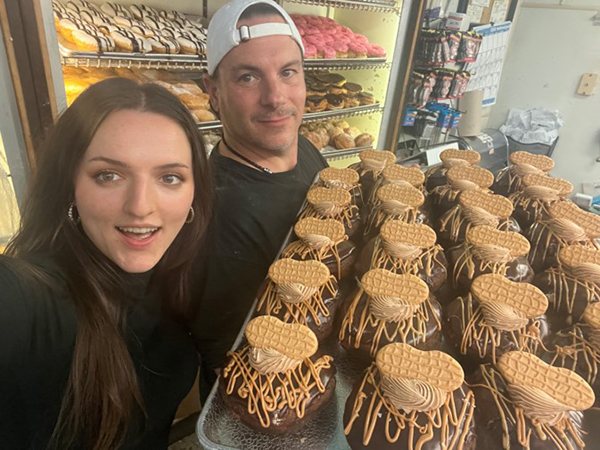
Above is a picture of two of Sterling On Sunday’s loyal listeners. Steven and Casandra of Burlington, NJ. Steven owns the bakery, Casandra works there and is a junior in college.

Walter Sabo founded Sabo Media to work with innovative media companies such as RKO, SiriusXM Satellite Radio, PARADE magazine, Pegasus, Apollo Advisers and others. He produces and hosts the successful talk show, Sterling On Sunday. Last Sunday the topics included how to know what’s in the custard in donuts.www.waltersterlingshow.com. Walter Sabo can be emailed at walter@sabomedia.com.

Industry Views

Pending Business: Demo Talk

By Steve Lapa
Lapcom Communications Corp
President

imAttention news/talk radio sellers! Get ready to meet your new best friend… and it is not who you think it is.
Take a guess. Could it be a mega budget opening up from an advertiser targeting 55+?

No. How about your closest competitor admitting defeat and conceding it no longer makes sense to compete?

Close, but this could be better. This is the part where your new best friend becomes such a giant ally, making your demographic pitch so valid, you are left stone-cold speechless. This is where “The Golden Bachelor” answers the double “Jeopardy” question and you could become the next Ken Jennings of news/talk radio ad sales. Give up? Here is the story line.

The New York Times article “TV Networks’ Last Best Hope: Boomers” saluted, validated, recognized, and just about honored the news/talk radio 55+ audience value proposition. We could be talking about a new day for news/talk radio sellers.

When the highly resourced sales teams from linear network TV begin telling the same demographic value story that news/talk radio sellers have been telling forever, well then, it is time to start popping the champagne in your local sales department.

It seems that linear network TV programmers are finally conceding the 60+ audience is the remaining core audience for your favorite network television programs. According to the article, franchise programs like “Grey’s Anatomy,” and “The Voice” have median viewers over 64. Wait, what? Dr. Meredith Grey and the crew at Seattle Mercy are now appealing to seniors? It may have taken 400+ episodes, but the last man standing is indeed grey! The sellers at NBC, ABC, CBS, and FOX could start singing from the same demographic page as news/talk sellers and the harmonics are sounding wonderful.

Please don’t be silly enough to think this will ever get truly competitive. No friends, this is where everyone wins if the selling stays at the value level. Media habits are changing at mach 4 speed, and nobody knows the change part of the business better than the terrestrial radio business. From fragmentation to consolidation, we’ve seen it all. Is the best yet to come?

Smart radio sales teams will embrace this opportunity. Do you still pitch the “older demo” value proposition with the anecdotal Grace Slick is 83, Mick Jagger is 80, and Elton John is 76? Time to start talking about the scene where 70-year-old Jerry Seinfeld says to 74-year-old Kramer, “I’m movin’ to Florida! You comin’ with me or not?”

Steve Lapa is the president of Lapcom Communications Corp. based in Palm Beach Gardens, FL. Lapcom is a media sales, marketing, and development consultancy. Contact Steve Lapa via email at: Steve@Lapcomventures.com.

Industry Views

Monday Memo: Sell Yourself a Schedule

By Holland Cooke
Consultant

imI asked my pal, longtime radio seller, now retired: “How often were you asked, ‘How much would you charge for ONE commercial?’”


“Many times!” he guffawed. “I told ‘em ‘Keep your money! It won’t work!’” And he would explain to the prospect that repetition is the key to radio advertising.

Pitch like your happiest advertisers

Smart reps schedule commercial flights using the Radio Advertising Bureau’s Optimum Effective Scheduling formula (OES), because “message retention and recall begins after three exposures.”

Don’t stop there. I don’t know WHEN I’ll need to buy a tire, but when that next nail finds me, I know WHERE I will buy, because that retailer advertises enough to own “tires” in my mind. Purchasing a whole car is more foreseeable, and I’ve read that it takes many buyers 90 days to pull the trigger. So, if the copy is just right, always-on always works.

Programmers: Are you selling your station, on its own air, with the frequency we preach to clients? And – no matter how often you freshen your imaging – is the benefit statement as consistent as the many ways “Liberty-Liberty-Libbberty” assures us “you only pay for what you need?”

im

Sales 101: “Your best prospect is…”

Say it with me: “…an existing customer.”

To be clear: Nothing you say on-air will add cume, because the only people who hear your imaging are already listening.

Hey, who wouldn’t want a bigger budget for billboards over the Interstate? But it’s…the Interstate. Many who give it a glance (at most) don’t even live here. Some of those who do might give you a try. And whether they do or whether they don’t, there’s very little you can do to keep them sitting in a parked car, listening. So how can we invite them back more often?

Tip: On-hour news appointments, “a quick [name of network] update, throughout your busy day” as the world we live in has listeners wondering “What NEXT???” This is increasingly useful for music stations, with music now commoditized by non-broadcast competitors.

Rip me off

On-air promos accomplish three things:

— Defining the station, labeling your button in the listener’s mind.

— Asking for more occasions of listening, thus the newscast tip above.

— Listeners REMEMBER having-listened. Not just opportune in diary markets, where we want diarykeepers to round-up. 😉 In PPM markets, awareness drives use. So, in both cases, ratings are a memory test. And this matters even if you don’t subscribe to ratings, because advertisers need prospects to hear that tire commercial multiple times.

So, it’s worth your time to review all imaging and promos now airing. Of each piece, ask yourself: What does this accomplish? Does this convey why/when/how the listener should/can listen more often?

To hear 21 examples of imaging work I’ve done for client stations, click “DO listeners understand why to spend more time with you?” at HollandCooke.com

OK…ONE exception…

I asked my bud, who sold a lotta radio for a lotta years: “What if the request to buy ONE commercial was a pop-the-question surprise, to air when the hopeful groom knew she would be listening?”

“Ka-CHING!” he winked, “and I’d nick him good! You know what that ring cost?”

Holland Cooke (HollandCooke.com) is a consultant working at the intersection of broadcasting and the Internet. He is the author of “Spot-On: Commercial Copy Points That Earned The Benjamins,” a FREE download; and “Your Trusted Voice: How to Attract New Clients More Efficiently than Competitors Who Spend a Fortune on Advertising.” Follow HC on Twitter @HollandCooke

Industry News

Beasley Media Group Launches Podcast Radio U.S. Format in Four Markets

Beasley Media Group is partnering with Podcast Radio and KMG Networks for a new “podcast multiplatform radio format in four regions across the company.” Beasley says this unique format will be available to listeners via broadcast on WCSX-HD2/W228CJ, Detroit “Podcast Radio Detroit”; WJBR-AM, Tampa (formerly WHFS-AM) “Podcast Radio Tampa Bay”; WSOC-HD3/W234BY, Charlotte “Podcast Radio Carolinas”; and WXKB-HD2/W243BM, Fort Myers & W268AH/W286AK, Naples, Florida “Podcast Radioim Southwest Florida.” The stations can also be streamed and consumed as podcasts via PodcastRadioUS.com. Podcast Radio states, “Podcast Radio features live ‘Podjocks’, including former KROQ-FM, Los Angeles personality and legendary Radio Hall of Famer Gene ‘Bean’ Baxter. The format will showcase the very best produced and popular podcasts from the United States and all over the world, including audio content from TedAudio (TedTalk), Wondery, Evergreen, Corus, and more! The initiative with Beasley is the first of its kind for the company in the United States. The format will be offered to radio stations and groups on a network/barter basis via KMG Networks. AdLarge Media has been selected to facilitate the network advertising sales.” Beasley Media Group chief content officer Justin Chase says, “Podcast Radio is an idea that Caroline Beasley and our team have been thinking about and researching for years and we’re excited to be the first to launch this format in the United States. This concept has been highly successful for Gerry [Edwards] and his team in the United Kingdom, and we believe our audience will fall in love with the Podcast Radio U.S. version we present on our stations.”