

Just Because You Found It Online Doesn’t Mean You Can Use It
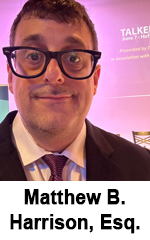
By Matthew B. Harrison
TALKERS, VP/Associate Publisher
Harrison Media Law, Senior Partner
Goodphone Communications, Executive Producer
 A New Jersey radio station thought they were just being clever online. They scanned a photo from New Jersey Monthly, cropped out the photographer’s credit line, and posted it on Facebook – inviting listeners to edit and reshare it for fun. ying to engage listeners to interact with the station with more than just their ears.”
But that station, WKXW 101.5, ended up in federal court.
Photographer Peter Murphy sued for copyright infringement and removal of attribution. The Third Circuit ruled against the station – finding that the image was used without permission, credit removed, and the photographer’s ability to license his work damaged.
It wasn’t fair use. It was infringement.
Fair Use Won’t Save You from Getting Sued
Fair use isn’t a free pass – it’s a defense. That means someone’s already accused you of infringement, and now it’s on you to justify it.
Even when it works, fair use still costs time and money. In the WKXW case, the station used the entire photo, failed to transform it, and encouraged widespread online sharing. The court saw that as market harm – one of the most important fair use factors.
And don’t assume you’re safe just because it wasn’t part of the broadcast. Courts have made clear that even social media posts by broadcasters can undermine the value of the original and trigger liability.
Don’t Ignore It Just Because It Feels Small
In my own experience with clients fending off these kinds of claims, sometimes it’s obvious. Other times it’s a bluff. But even bogus claims can cost you if you don’t take them seriously from the beginning.
License It, Link to It, or Leave It
If you didn’t create it or license it, don’t assume it’s fair game. Look for content with clear reuse rights. Better yet – link to the source instead of copying it.
Because if a copyright holder comes after you, your intentions won’t matter. Only your rights will.
Matthew B. Harrison is a media and intellectual property attorney who advises radio hosts, content creators, and creative entrepreneurs. He has written extensively on fair use, AI law, and the future of digital rights. Reach him at Matthew@HarrisonMediaLaw.com or read more at TALKERS.com.
 SmileyAudioMedia, Inc. announced today (1/31) that its flagship Los Angeles-based radio station, KBLA Talk 1580, will launch year two of its Climate Justice work. This $2 million, 12-month campaign will link and combat the relationship between climate change and poor health outcomes for African Americans, other people of color, and the poor. The campaign was recently named a national semifinalist for the American Climate Leadership Awards 2025 by ecoAmerica. Climate inequities have taken a toll with multiple health triggers in the Black community, such as extreme heat and poor air quality, made worse by the recent wildfires.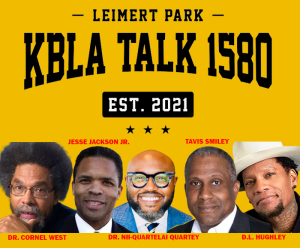

 NYF Radio Categories eligible for the award include News Program, News Report/Feature, Documentary, Entertainment, Promo, Digital, Podcast, and Student.
 In 2024, over 180 award-winning teams worldwide shared their acceptances, while industry leaders spotlighted their creative journeys in special segments. Additionally, the JusticeAid Award-winning submission will be honored at the JusticeAid Concert in May 2025 in New York City, showcasing the transformative power of music and the arts to raise awareness for civil rights and inspire positive change.
 Let’s continue our ongoing series of articles about fair use. A recent case highlights fair use considerations in audio media and podcasting, particularly concerning music and short audio clips used in intros, where some creators assume that brief snippets automatically qualify as “fair use.” Legal experts clarify that using a song clip, even if brief, doesn’t inherently meet fair use criteria. Courts have emphasized that fair use hinges not just on brevity but also on factors like purpose, nature, and market impact on the original work. Music clips, even short ones, are often seen as significant portions of the original content, carrying substantial value, making unauthorized use in podcasts or similar formats legally risky.
 already streamlined Emergency Grant Guidelines and Application Process to make it even easier and faster to get funds into the hands of broadcasters hit hardest by these storms. The situation is catastrophic for many of our colleagues and with insufficient or total lack of internet service, an individual or families cannot even submit an application.” Under the adjusted guidelines, broadcasters who have suffered catastrophic loss contact their market or general manager, who then fills out the Hurricanes Helene and Milton Group Submission Form for all of those within their station who are applying.
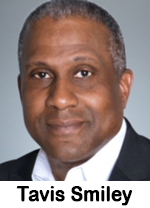
  California Science Center in Los Angeles tomorrow (6/18) live from 4:00 pm to 7:00 pm PT and the program will be broadcast live on C-SPAN. The event is being moderated by Smiley Audio Media chief and KBLA talk host Tavis Smiley and will feature leaders of the nation’s climate and environmental justice community. Los Angeles Mayor Karen Bass will offer remarks and Dr. Cornel West will deliver remarks on the intersection of Climate Justice and Juneteenth.
  subscriptions, and more. Veritonic CEO Scott Simonelli comments, “We take pride in our collaborations with visionary leaders, amplifying the impact of our solutions and elevating the value delivered to our clients. This seamless integration empowers us to furnish our clients with even more comprehensive, insightful, and actionable data. It equips them to finely tune their audio campaigns, ensuring optimal results while instilling confidence in the allocation of their advertising budget across channels.”
 The company says that the initiative will achieve these objectives with a robust schedule of climate-themed broadcasts and special programming during the next 12 months, four free community events (one per quarter), two town halls broadcast nationally from Los Angeles, and a savvy social media and marketing campaign. KBLA says its public and private partners in this initiative include: LADWP, Metro, the Port of Los Angeles, CalEndow, California Community Foundation, the Sierra Club, the South Coast Air Quality Management District and others who will join the campaign in Q2, Q3 and Q4. Chief visionary officer and nationally
 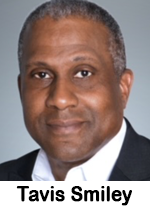 syndicated talk host Tavis Smiley says, “The harsher impacts of climate change weigh heavily on communities of color. In these underserved communities, families are less likely to have air conditioning, shade trees, bus shelters, water and energy effective appliances and other infrastructure that’s critical to mitigate a changing climate. As the most ‘trusted, credible and reliable’ media source in Southern California for African Americans and beyond, our talk station is committed to do more than just talk in these troubled times. There is a clear connection between Dr. King’s moral consistence on the notion of reverence for human life or the interconnected nature of life and the future of our world house. On this MLK holiday weekend, KBLA assigns itself the task of elevating the climate conversation by amplifying the voices of those who are most impacted by the climate catastrophes we are all witnessing in real time. In a real sense, climate is king.”
 News for its podcasts from John Solomon, Victor Davis Hanson, and “Bauer and Rose” on the SPN platform. The agreement allows Salem to market and sell the podcasts to its array of advertisers and provide additional promotional support. Salem SVP Phil Boyce says, “John Solomon and his team are a perfect fit for Salem and will provide an additional layer of news credibility to the stories he covers. When you add Victor Davis Hanson’s podcasts, and those of Bauer and Rose, it makes the partnership complete.” Solomon comments, “Salem Podcast Network has amassed one of the most formidable audiences and lineups in the industry. We are excited to be joining the team and introducing our news and analysis to a whole new audience.”
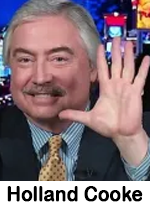 I’m occasionally asked this by attorneys, real estate agents, personal finance advisors, and other local retail service professionals who are disappointed with results they’re getting from hosting weekend ask-the-expert call-in shows.
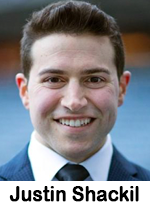 in for legendary play-by-play voice John Sterling for approximately 30 games, alongside Suzyn Waldman, during the 2023 season. Audacy New York market president Chris Oliviero states, “Justin is no stranger to the Bronx and his passion for the pinstripes make him the ideal person to join the iconic duo of John and Suzyn in the booth. His contributions to the broadcast last season were terrific and well received, so we’re excited to see him return in this enhanced role.”
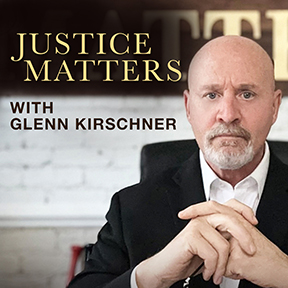 News/MSNBC legal analyst. In this podcast, he addresses matters related to politics, the law, government ethics, and the criminal judicial system. The podcast is published each Tuesday, Thursday, and Saturday. Crossover Media Group managing member Sue Freund says, “Glenn has earned an admirable reputation as one of America’s most respected legal and political analysts. He’s an ideal fit with our wide and diverse lineup of talk hosts appealing to listeners across demographics.” Crossover says this new podcast “joins a wide array of shows produced and/or represented by Crossover Media Group spanning the spectrum of political talk, analysis and opinion. The Crossover Media Group lineup also includes dozens of other popular podcasts and personalities in the genres of news, sports, true-crime, history, business, science, lifestyle, entertainment and pop culture – a content portfolio which recently expanded with the addition of ‘The Official Yellowstone Podcast.’”
 Carter Sherman and Kai Wright. Guardian U.S. editor Betsy Reed says, “This project is a major step toward bringing audio and video journalism to American audiences, showcasing the breadth of our global content and reporting muscle. It’s also
 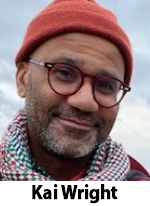 the latest step in our ongoing US expansion, which we’ve seen in recent months across politics, media, sports, culture, breaking news, and more.” Carter has been serving the Guardian as reproductive health and justice reporter since 2023 and recently published the book, The Second Coming: Sex and the Next Generation’s Fight Over Its Future (2025, Gallery). Wright was most recently host and managing editor of Notes From America with Kai Wright and has served with WNYC, New York.
  Every radio conference agenda and much of what’s-up in the trade press and chat groups is about exploiting Artificial Intelligence. Often these conversations land in one of two places: fear (“Will this replace us?”) or fascination (“Look what it can do!”). Both miss the point.
 “Darn, if we were on FM everything would get better.” Not true. This writer launched many of the successful talk formats on FM stations in the early 1990s. The ones that worked, such as KLSX, Los Angeles; WTKS, Orlando; and New Jersey 101.5 in Trenton, were produced for the unique demands of FM. Then and today, the FM band cume utilized the radio in a completely different manner than AM audiences. The competition on FM isn’t another talk show. It’s Chapelle Roan and Taylor Swift. Ya know, billion-dollar Taylor Swift. The production values of FM music stations set the expectations of “the sound.” “Let’s pay some bills…” Followed by bumper music! Followed by eight minutes of commercials for Med Alert is just not what FMers are used to hearing on Elvis Duran. (Elvis is doing a talk show.)
 If you’re on-air, it’s an important part of your job. Here’s what I see and hear working:
 TALKERS magazine, the leading trade publication serving America’s professional broadcast talk radio and associated digital communities since 1990, is pleased to participate as the presenting sponsor of the forthcoming Intercollegiate Broadcasting System (IBS) conference for the second consecutive year.
 and content for iHeart’s My Cultura podcast network. The first show from the collaboration will debut early 2026 featuring MLB’s 2025 Comeback Player of the Year and Rimas talent Ronald Acuña Jr. My Cultura Podcast Network head Leo Gomez states, “Sports aren’t just something the Latino community watches, it’s something we live. Sports are part of the culture, heritage and legacy that is woven into who we are. Partnering with Rimas Sports on amazing audio content curated by Bad Bunny and his team will allow us to bring sports and pop-culture icons like Ronald to listeners everywhere and share richer stories about how Latinos experience, elevate and redefine sports every day.”
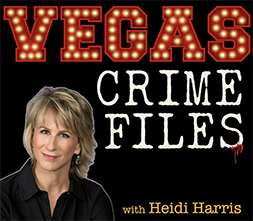 infamous and fascinating lesser-known crimes through firsthand accounts from those who investigated, prosecuted, and survived them. No Googled stories or AI scripts. Details you will hear nowhere else, from the people who are free to discuss what really happened in Vegas.” Harris says her first episode asks, “Who’s the guy in the barrel that was found in Lake Mead? I speak to the cold case detective who worked the case, and a journalist who grew up with the guy who just might be in the barrel!”
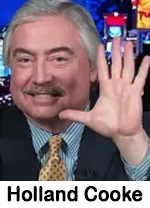 Linear broadcast media have never been more challenged. Internet video now commands far more viewing time than over-the-air TV. And their own networks are hijacking viewers! Your local NBC station tells you to watch Peacock. ABC points you to Disney+. CBS pushes Paramount+. Affiliates are effectively forced to promote their own competition.
 Streaming radio and podcasts don’t just add reach. They double down on impact by warming the audience before they ever click.” The company adds, “Audio brings something no other channel can touch. It’s literally in your audience’s ears. It’s personal. It’s focused. And it shows up during moments where screens aren’t competing for attention, like commuting, working, cooking, unwinding. That’s when messaging sticks. Audio builds familiarity and trust early in the journey, so when someone sees your display ad, social post, or paid search result later, they’re not meeting your brand for the first time. They already recognize you. And recognition drives response.”
  end-to-end, cloud-native operating system designed specifically for radio… powered by a suite of proprietary AI technologies that master, schedule, produce, and deliver each station directly to a Super Hi-Fi playout device at the transmitter.” Warshaw says, “Our mission is to have the best live and local radio experience in every market across America and Super Hi-Fi’s unique capabilities will allow us to do that in ways the industry just didn’t have before. We’re excited to work with them to drive forward and deliver the most compelling radio products in the industry.”
 politics! If you live and breathe politics, this is not the job for you. This is an 8-hour-a-day, full-time job doing prep, research, and living life that translates and relates to a 35-64-year-old. Must have an extremely strong work ethic, be sales department and client friendly, a team player and coachable, embrace all social media platforms daily, be a great interviewer, and have a proven track record of radio ratings success. The right fit for this job is extremely reliable, flexible and passionate about radio and digital audio mediums.
 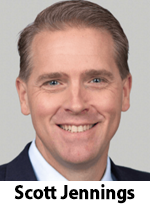 is a fearless communicator with unmatched credibility. His experience, intelligence, and no-nonsense delivery make him a strong addition to our primetime lineup. Scott doesn’t just react to the news — he shapes the conversation and arms listeners with insight they can use.” Jennings comments, “I’m thrilled to join the lineup at Seattle Red! My mission is to debunk liberal narratives, bring forward blockbuster news-making conversations, and give the audience a daily dose of common sense. Can’t wait to be part of this terrific station!”
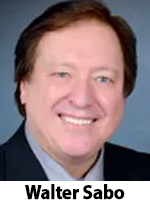 The plague of pessimism about the future of radio is fueled internally by radio employees. Doomsayers are logically found in the sales department. All day, salespeople meet with buyers. A buyer’s job is to negotiate a lower price by arguing radio’s negatives. The wall of negativity thrives within the work environment of a seller. Tough. But there is little or no reason for pessimism.
 For years, “protect your name and likeness” sounded like lawyer advice in search of a problem. Abstract. Defensive. Easy to ignore. That worked when misuse required effort, intent, and a human decision-maker willing to cross a line.